


 Claim Ownership
Hardpoints
Subscribed: 3Played: 6
Subscribe

© 2025
Description
Every week, former fighter pilots and current entrepreneurs Neal Rickner & Mike Smith provide unfiltered insights into the biggest stories in startups, energy, and national security.
33 Episodes
Reverse
In this episode of Hardpoints, Mike and Neal break down the opening days of a rapidly escalating war with Iran.
Following Operation Epic Fury - coordinated U.S. and Israeli strikes targeting Iran’s nuclear sites, missile infrastructure, and regime leadership—the conflict expands across the region. As of March 2 (the recording date), Khamenei is dead, four American servicemembers have been killed, Iran is striking back against U.S. bases, and the fight is spilling into Lebanon. Neal (a former Iraq war pilot) and Mike (a former targeteer) walk through what most headlines miss: what daylight strike operations mean for risk, how air defenses and “pucker factor” shape the first hours, and why tactical dominance doesn’t automatically translate into strategic success.
They dig into the hard questions:
- If Iran built a deep succession bench, what does “regime change” even mean operationally?
- Does the “80% oppose the regime” theory translate into action - or does pressure cause the population to rally around the flag?
- What happens if there’s no viable alternative power structure and Iran slides toward failed-state chaos?
- What does this conflict mean for the Strait of Hormuz, regional basing access, and global energy markets?
- And what lessons are China and Russia drawing - especially as U.S. credibility and the post-WWII order feel increasingly fragile?
The episode closes with a mailbag note on defending nuance in energy debates, plus goods/bads/others - from an 86-year-old father being honored for building community college foundations, to winter beach weather in February, to the U.S. government escalating pressure on Anthropic, and the accelerating reality of AI writing its own code - raising unsettling questions about where humanity fits in the intelligence spectrum as the world changes faster than we can absorb.
Hardpoints is the podcast about energy security in the startup economy - what’s changing, what it means, and why it matters.
Episode 34 tackles a seismic shift in U.S. climate policy: the administration’s February 12 move to strike down the EPA’s 2009 Endangerment Finding—the legal foundation underpinning nearly every major federal climate regulation for the past 17 years.
Mike and Neal break down what the Endangerment Finding actually did (and why it mattered), what its removal means for tailpipe rules, methane limits, power plant standards, and the broader regulatory framework—plus the real near-term impact: years of courtroom battles and massive uncertainty for businesses trying to plan, invest, and build.
They debate whether this change will meaningfully alter emissions trajectories in the short term, why state-level leadership (and global market forces) may keep climate action moving anyway, and what this moment signals for founders and investors navigating climate and energy startups. Neal argues it’s a collective action gut-punch; Mike counters that it’s a reminder people and companies still have agency—and that “in spite of” can still drive progress.
Also in this episode:
A mailbag note from the drone world on “not invented here” culture—and why requiring a flight medical for FPV competition feels like innovation going backwards
Goods, bads, and others: startup teams showing up on a Saturday, geopolitical posturing near Iran, Mike’s dog becoming his walking buddy, ICE warehouse spending, and why the accelerating pace of AI-written code has huge implications for careers, parenting, and the future
Episode 33 dives straight into the collision between national security priorities and AI safety red lines.
Mike and Neal unpack a brewing showdown: the Pentagon is pressuring major AI labs to sign onto an “any lawful use” policy by July 11, while Anthropic resists—refusing to allow its models to be used for fully autonomous weapons (no human-in-the-loop) or mass surveillance of Americans. The hosts break down what’s at stake in the kill chain, why “legal” doesn’t always mean “ethical,” and how a supply chain risk designation—typically reserved for foreign adversaries—could become a nuclear option against a U.S. startup.
They also explore the power dynamics: Anthropic’s growing enterprise dominance (including developer tooling like Claude Code), the implications of AI systems writing the software that improves themselves, and what it means when government leverage can threaten an entire business model—not just a contract.
Plus: a quick mailbag roundup (including a tipping debate), Neal’s snowy road trip with his boys, Mike’s “home is where my wife is” moment, and a shared worry about a too-warm Colorado winter and what that could mean for wildfire season.
Hardpoints is the podcast about energy security in the startup economy—what’s changing, what it means, and why it matters
Neal’s back from Munich with a ground-truth readout from the security ecosystem surrounding the Munich Security Conference—and the headline is simple: in Europe, Ukraine isn’t one topic among many. It’s the topic. Speaker after speaker, conversation after conversation, the tone is existential: how does Ukraine win, how does Europe sustain support, and what does the continent do if American leadership keeps wobbling?
From there, the conversation widens into what might be the most uncomfortable “vibe shift” Neal heard in real time: a defense company pitching “secure supply chain” on a slide… and proudly listing “no U.S. parts” right alongside “no Chinese parts.” The guys unpack what that implies—trust, procurement risk, political whiplash, and the slow-motion reality that allies can’t build their security posture around a partner they can’t predict.
They also dig into the major themes orbiting Munich: talk of strengthening a European pillar in defense, large-scale joint procurement, and the incentives (and resentment) that could drive Europe to build more capacity at home rather than defaulting to American primes forever. Then it gets even thornier: the push for AI governance in security, including the principle of humans in the loop for lethal decisions. Mike and Neal wrestle with the hard tradeoff—war rewards speed and tight OODA loops, and machines will always outpace people—so what would it take to make human-in-the-loop rules real instead of ceremonial? Are we headed toward a world of automated “murder TV” at scale, and if so, is there any realistic version of arms control that can slow it down?
Finally, Munich’s lens expands beyond Europe: the Global South becomes a strategic battleground, especially as China’s Belt & Road investments build infrastructure, influence, and supply-chain leverage. And in a moment of peak irony, climate change gets elevated as a primary security threat—right as U.S. policy trends in the opposite direction. The episode wraps with listener mail (including a bleak emissions fact that hits hard), plus the weekly goods/bads/others: ski week plans get rained out, baseball hope springs eternal, and Aclymate feels like it’s catching a tailwind.
If you’ve been looking for a clear, candid snapshot of how Europe is thinking about security right now—and what that means for alliances, defense industry, and the next phase of geopolitics—this one’s for you.
Ukraine’s power grid has become a frontline target—and drones are the weapon of choice.
In this episode of Hardpoints, Mike and Neal continue the new shorter-format series with a focused look at drone warfare, energy infrastructure, and the Ukraine defense startup surge. They break down how Russia’s winter missile-and-drone campaigns are designed to do more than destroy hardware—aiming instead for strategic pressure: cutting heat and power, degrading communications, and testing morale at national scale.
From Mike’s experience in cruise missile targeting and “systems effects” thinking, the conversation explores how attacks on energy infrastructure ripple outward into command-and-control, intelligence exposure, and operational paralysis. Neal then connects the dots to the rapid innovation cycle happening inside Ukraine—where startups, specialized funding, and battlefield iteration are accelerating the drone/electronic-warfare cat-and-mouse game from months to days.
They also debate what this means for the future of U.S. force structure—especially the role (and vulnerability) of high-value assets like aircraft carriers in an era of cheap, scalable drone threats.
Plus: a new listener mailbag segment, a heartfelt tribute to John McCain’s legacy, and a candid “goods, bads, and others” close.
Have thoughts or questions? Email hardpoints.show@gmail.com
and you might hear it on a future episode.
Global energy investment just hit $2.3 trillion—and batteries are at the center of it all.
In this episode of Hardpoints, Mike and Neal kick off a new, tighter format by unpacking what that staggering number actually means for energy security, national competitiveness, and the startup economy. They dig into why battery technology has become critical infrastructure, how the Inflation Reduction Act reshaped (and didn’t fully reshape) the market, and why critical minerals now sit at the intersection of climate policy and national defense.
The conversation spans:
Why batteries are becoming as geopolitically important as oil
The Trump administration’s critical minerals stockpile and what it gets right—and wrong
Domestic mining vs. environmental protection
Battery recycling, reuse, and the economics behind it
China’s dominance in battery manufacturing and the CATL–Ford controversy
National security risks hidden in battery firmware and supply chains
How tariffs, regulatory uncertainty, and politics are slowing real progress
The episode closes with reflections on current political unrest, civil liberties, and what it means when institutions fail to protect both security and democracy.
As always, Hardpoints connects the dots between energy, national security, and the startup economy—cutting through headlines to explain what’s changing, why it matters, and what comes next.
Have thoughts or questions? Email us at hardpoints.show@gmail.com
and we may feature them in a future episode.
In this episode of Hardpoints, Mike and Neal dive into the intersection of energy security and the startup economy, discussing the implications of recent events and policies on the energy landscape. Mike shares his experiences from recent travels and events, highlighting the growing opportunities in the promotional products industry. The conversation shifts to the challenges posed by the increasing demand for energy due to AI and tech giants, with Mike expressing support for a proposal that would require these companies to contribute to power generation infrastructure. They explore the evolving role of NATO in defense innovation and the need for the U.S. to adapt its energy strategies in light of global competition, particularly with China.
As the discussion progresses, Mike critiques the current administration's focus on fossil fuels and the missed opportunities in renewable energy. They analyze the implications of BP's recent write-down of green energy assets and the broader trends in the energy market, emphasizing the importance of innovation and investment in clean technologies. The episode concludes with a discussion on the future of energy production, the necessity of balancing national security with globalization, and the potential for the U.S. to reclaim its leadership in clean energy development.
Neal and Mike delve into the complexities of renewable energy, particularly focusing on offshore wind power and its potential to revolutionize the energy landscape in the U.S. They discuss the exponential growth potential of wind energy, the bureaucratic hurdles that have historically hindered progress, and the role of presidential authority in advancing renewable projects. The conversation shifts to the geopolitical implications of energy supply chains, particularly in the context of the ongoing conflict in Ukraine, where energy infrastructure is under threat. They explore the resilience of renewable energy sources compared to fossil fuels in war zones and the broader implications for national security.
The discussion then transitions to the startup economy, highlighting the rapid growth of AI-driven companies and the challenges faced by traditional venture capital models. Mike emphasizes the need for a shift in how businesses are built, advocating for a long-term vision over short-term gains. The episode concludes with reflections on the current state of the startup ecosystem, the importance of collaboration, and the necessity for a new approach to building sustainable businesses that can withstand economic fluctuations.
Hardpoints kicks off the new year with Mike and Neal swapping quick holiday stories—family downtime, e-bikes, skiing attempts—and then diving into a headline-dominating geopolitical event: Operation Absolute Resolve, a rapid U.S. special operations raid that allegedly captured Venezuelan leader Nicolás Maduro and his wife and brought them to the U.S. for prosecution. They unpack the whiplash of the operation’s tactical competence versus the strategic, legal, and moral chaos it creates—debating whether it’s clearly illegal under international law, murkier under U.S. law, and undeniably damaging to public trust in a civilian-controlled military when Congress is bypassed.They then shift to energy implications: Venezuela’s enormous reserves, near-term production uncertainty, and the idea that oil markets may not meaningfully benefit unless price and investment conditions align. The conversation explores motives beyond the stated “drugs” rationale—leaning toward oil interests, strongman politics, and spheres-of-influence thinking (Monroe Doctrine vibes, BRICS realignment, and implications for Russia/China/Iran influence in the Western Hemisphere). The biggest worry: the precedent this sets for global stability, especially Ukraine and Taiwan.In the back half, they pivot to the startup economy: layoffs, constrained fundraising, and a market that’s “selective but alive.” Mike notes climate tech is still tougher than the 2020–2021 boom, while AI is absorbing capital and reshaping what software businesses even are—pushing toward automation, fewer humans in workflows, and potentially long-term pressure on employment. They close with “goods/bads/others,” including burnout recovery, Colorado’s alarming lack of snow, concerns about rule-of-law erosion, and anger over reported retaliation against a prominent veteran-politician, ending on a sober note about institutions, accountability, and what comes next.
Managing risk is a huge part of being in the military, running a startup, and working national security. You have to push to find solutions, but you need to make sure it all doesn't blow up.In **“Pushing the Edge,”** Mike and Neal connect all three worlds — cockpits, data centers, and battlefields — to ask a hard question: *how far can you lean forward before you cross the line from bold to reckless?* They start with the grind of startup life and climate tech, where regulations in one country shape markets everywhere and climate change itself becomes “the greatest market forcing mechanism in history.” From there, they get into what it means to move from survival mode to disruption mode as a founder, and why defining culture and identity early can be the difference between being merely “world famous” and truly **world class**.On the national security and energy front, they dig into DOE’s rare earths push, mining landfills, and the tension between environmentalism and actually *building big stuff*. They wrestle with AI in critical infrastructure — grids, water systems, even aviation — and whether we’re quietly trading resilience for efficiency and new cyber vulnerabilities. That flows into a candid look at Anduril’s troubled drone tests, why failure is normal in frontier tech, and where pushing too fast can become unacceptable risk.Finally, they turn to the startup economy and duty: the collapse of Builder.ai as a kind of mini-Theranos, what ESG *really* is (risk management, not vibes), and why governance and personal responsibility matter from junior engineer to board member. The episode closes on the “Don’t Give Up the Ship” controversy, illegal orders, and the moral obligations of people in uniform — plus some personal good/bad/ugly on snowless Colorado winters, camping with kids, and a tech bubble that’s starting to feel wobbly.If you care about energy, defense, AI, or building companies that don’t implode under their own hype, this one’s a dense, honest lap around the track.
In this episode of Hardpoints, hosts Mike Smith and Neal Rickner delve into the intersection of energy security and the startup economy, exploring how these forces shape our world. They share personal anecdotes about Thanksgiving traditions, discuss the intricacies of cooking the perfect turkey, and reflect on the broader implications of societal and technological changes. The conversation also touches on the challenges of capitalism, the role of government in energy production, and the potential impacts of AI on the workforce. Join them for a thought-provoking discussion that blends humor, insight, and a touch of nostalgia.
In this episode of Hardpoints, hosts Mike Smith and Neal Rickner delve into the intricate world of rigged systems, from gambling scandals involving NBA players to the broader implications of a "casino economy." They explore how these dynamics affect everything from sports to energy security, and discuss the societal impacts of these rigged games. Tune in for a thought-provoking conversation that challenges the status quo and uncovers the hidden forces shaping our world.
Aging jokes aside, Neal & Mike riff on precision in speech—why lazy phrases (“hate mail,” “to be honest…”) muddy debate and how clear language shapes how we think (Carlin’s “shell shock” → “PTSD” thread).
Renewables overtake coal (H1 2025): Big milestone globally, driven heavily by China/India. Celebration tempered by frustration that U.S. policy/industry missteps are ceding ground (TPI bankruptcy, Ørsted layoffs).
Coal’s collapse, policy whiplash: A massive Powder River Basin lease draws a token bid—coal’s economics keep sliding even as “energy dominance” rhetoric persists.
The looming electricity crunch: AI, chips, and reshoring point to a ~36–38 GW near-term generation gap; utilities already seeking rate hikes. Gas is the fast bridge—but turbines and supply chains are bottlenecked.
What households can do: Rooftop solar pencils out better as grid prices rise. DIY route = buy panels, do the racking/wiring, hire a master electrician for the final tie-in; tools like Project Sunroof help size a system.
Ukraine, Russia & energy war: Targeting of energy assets escalates; Ukraine’s deep-strike capability pressures Russia’s infrastructure while Russian casualties and cash burn mount—energy flows are central to the war of attrition.
Domestic politics turn combustible: Trump’s troop deployments to Chicago/Portland get labeled “war zones.” The hosts argue the facts don’t match the imagery, worry about legal overreach, and call for principled refusals of unlawful orders.
Autonomy on the highway: $100M more into autonomous trucking (Einride). Long-haul seen as the first big AV beachhead; EV trucking still constrained by charging/logistics.
A clever hybrid hack: Spotlight on REVOY’s powered “booster” trailer module—effectively turns diesel semis into hybrids with regen and swappable batteries to slash fuel costs without replacing tractors.
In this episode of Hardpoints, hosts Mike Smith and Neal Rickner are joined by Alexander McCoy, a veterans advocate and climate campaign leader, to explore the intricate connections between energy security, national policy, and climate change. The discussion delves into the historical and ongoing roles of oil companies, the importance of transitioning to renewable energy, and the impact of these dynamics on national security and the economy. With insights from McCoy's experiences in the Marines and his work with veterans, the conversation highlights the need for accountability, innovation, and a collective effort to create a sustainable future.
In this episode, Mike Smith and Neal Rickner discuss the intersection of energy security and the startup economy, touching on various themes such as public speaking, fundraising challenges, political violence, and the importance of free speech. They explore the implications of recent political events, the need for moral courage in leadership, and the urgency of improving energy infrastructure to meet growing demands, particularly in the context of AI. The conversation also delves into the role of government in fostering innovation and the challenges faced in renewable energy development, all while reflecting on the economic realities of current policies. The dialogue emphasizes the need for a unifying vision in politics and the dangers of divisive rhetoric.
Neal lands a lead investor—unlocking insider commitments and government matching funds—buying his company ~18 months of runway and hard-won momentum. Mike talks small-team turbulence and a parenting weekend that went sideways (bee sting + campout sushi). From there, the guys dive into the energy-policy whiplash hitting wind projects and what it signals for U.S. energy security and AI-driven load growth. Then they zoom out: memes, militarization, and a six-point “authoritarian playbook” (undermining norms, information control, polarization/scapegoating, weakening rule of law, cult of personality, and crisis exploitation). They wrestle with the legality of domestic Guard deployments, whether institutions will hold through 2026, and the real-world burden on officers asked to refuse illegal orders.
In this episode of Hardpoints, Mike and Neal weave personal stories—like sleepless nights, scout projects, and time outdoors—into heavier discussions on U.S. politics, national security, and the economy. They critique the deployment of National Guard troops in Washington, D.C. as a troubling sign of authoritarian overreach, debate the implications of a proposed government stake in Intel, and unpack Trump’s approach to Russia and Ukraine. Along the way, they highlight the fragility of democratic institutions, the danger of moral compromise, and the importance of individual responsibility. The episode closes with personal reflections on service, youth mentorship, and building tools for climate literacy.
This week on Hardpoints, Mike returns from an epic, no-internet, log-hopping backpacking trip in Colorado’s San Juan Mountains, while Neal hustles through high-stakes fundraising and startup networking in Austin. The two dive into a whirlwind of hot-button issues—from Trump’s military moves in D.C., Epstein-fueled political distractions, and the looming Putin summit in Alaska, to Israel’s Gaza strategy, wildfire devastation in the West, and the dangerous heat building in the Gulf of Mexico. Along the way, they debate the future of ESG, swap takes on GPT-5, and flag a brewing Supreme Court fight over same-sex marriage. Equal parts adventure recap, unfiltered political analysis, and tech talk—this episode is as unpredictable as the news cycle itself.
In this fiery and deeply personal episode of Hard Points, Mike and Neal dive into the illusion of leadership in American politics, kicking off with a sobering analysis of the proposed "Golden Dome" missile defense system and why it’s more fantasy than feasible.
They chart the rise of China in advanced manufacturing and warn of America’s self-inflicted industrial decline. The duo laments the Democratic Party’s tone-deaf messaging, misplaced priorities, and inability to meet the moment—especially as the country faces real economic and social crossroads.
Along the way, they touch on everything from trans rights and national security to rail infrastructure and the politics of distraction. Raw, unscripted, and urgent, this episode is a call for vision, coherence, and actual leadership in a time of crisis.
Conspiracy theories thrive where the official story falls flat—when the world feels rigged, unfair, or just off. This episode of Hardpoints meets that unease head-on. We unpack the real forces behind the chaos—from missing Epstein files to chemtrail hearings and tech fraud—and explore why the loudest voices offering answers are often selling something. Because the truth? It's messier, less cinematic—but far more important to face.
Follow us here: https://linktr.ee/valormedianetwork
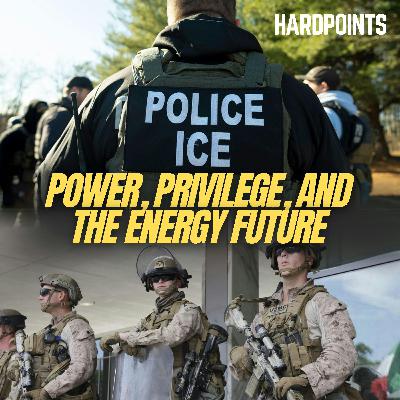
This episode of Hardpoints explores the intersection of power—political, economic, and literal. Mike and Neal dissect how America's priorities are shifting: ICE receives a staggering budget increase while climate-fueled disasters gut the insurance industry, startups navigate rising costs and wealth concentration, and tech giants buy into speculative energy futures like fusion. Against this backdrop, they debate the balance between liberty and control, question the integrity of markets, and share hope that innovation—especially in energy—might still deliver progress, if equity and urgency can catch up with capital.

Comments

Download from Google Play

Download from App Store
 United States