


 Claim Ownership
History Files
Subscribed: 68Played: 665
Subscribe

© Blake Hamilton
Description
What's up history buffs! Welcome to History Files, the podcast that has your curiosity craving covered.
102 Episodes
Reverse
In this episode, I speak to Dr Liz Killen, a wealth of knowledge regarding all matter scientific. Drawing on her experience working with Australian and UK reactors, she helps me unpack the concerns around nuclear safety and the benefits of nuclear medicine and energy. Moreover, she describes her experience visiting the world's most infamous nuclear disaster site and explains why a repeat of this nature is highly unlikely in the context of Australia.

Join us in this riveting episode as we unravel the fascinating story behind the petrodollar system and its influence as the global reserve currency. We'll take you on a journey back in time to the 1970s when the petrodollar was born, the result of a groundbreaking agreement between the US and Saudi Arabia. Discover how this strategic move forever changed the landscape of the global economy and cemented the US dollar's position as the world's foremost currency.
We will provide insights into the geopolitical chess game that shaped this pivotal moment in economic history, and explore the ripple effects that continue to be felt today. We'll examine the consequences of the petrodollar system for oil-producing nations, the role of OPEC, and the impact on global trade and financial markets.
We'll also discuss the future of the petrodollar amidst rising concerns about its stability, and explore the potential challengers to the US dollar's reign as the global reserve currency. Don't miss this enthralling episode that delves deep into the world of petrodollars, economic power plays, and the ever-shifting dynamics of the global financial system.
In this episode, we speak to Heavily Armed Clown, the co-creator of the viral website WFT happened in 1971. We discuss monetary history, the breaking of the gold standard under Nixson, and its impact on the Cold War.
Modern History HSC: In this episode we explore what it would have been like to live under Stalin during the early years of the Soviet Union. We discuss Stalin's cult of personality and how the Soviets become the new religion with Stalin as the messiah. We look at how he improved the lives of many and arguably made one of the largest contributions to Russia in recorded history in terms of industrial advancement, but at the cost of many lives. It's a complicated world in Life under Stalin.
History Files: This episode is a must-listen, fellow teacher Chris is back with me to discuss the inner circle of the Nazi Party.
Modern History HSC Podcast: Assess the effectiveness of the strategies used by Allied forces against Japan in the period 1942–1945.
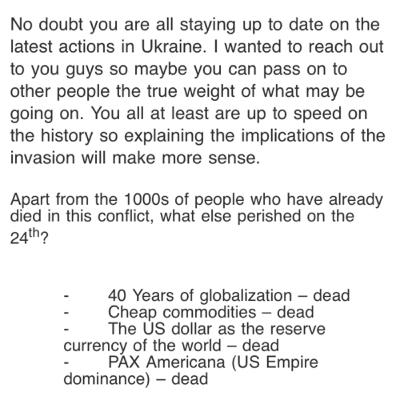
Modern History HSC Podcast: This is a bit of a catch-up episode with some of the students from season one. We discuss war fatigue in Ukraine, Chinese flying objects and AUKUS.
Modern History HSC Podcast: In this episode, we discuss a question sent in by a student out of Barellan, so a big shout out to all educators and students in the Riverina. The student asks, to what extent did Hitler and Stalin use terror to consolidate power leading up to 1939?
Modern History HSC Podcast: To what extent is the following statement true? Japan had little choice but to bomb Pearl Harbour if it wanted to achieve its foreign policy aims in the Pacific.
Modern History HSC Podcast: We have just remastered one of our most popular episodes. Join us on a deep dive into understanding the big three ideologies.
Modern History HSC Podcast: In this episode, we have a fascinating conversation with Michael Adams. Writer, producer and of particular interest to us, the creator of the Forgotten Australia Podcast. Michael’s 4-year labour of love to uncover Australia’s forgotten stories has yielded a collection of amazing never-before-heard accounts of Australians living through some of the nation’s most turbulent years. In this interview, we primarily focus our attention on the interwar years, at a time when Australia was on the brink of civil war.
https://chng.it/mfBzV7Xmst
In this episode, I speak to Quirindi Highschool Year 11 students Jedd, Taylor and Chase. This is their first time on the POD and they killed it. Each student was given the job of analysing a different source that related to Pearl Harbor and its bombing on December 7th 1941. Most importantly, displaying the skills of DAMMIT.
Australian political leaders responded to the Great Depression with a mixture of austerity measures and social welfare programs. At the height of the depression in 1932, the nation was split regarding the two priorities of stability vs welfare, so much so, that tension between Federal and State leadership almost culminated in a civil crisis. It is clear, that this serious lack of coordination affected the success of the economic recovery in Australia. With only a real improvement coming later in the 30s, largely due to non-political factors.
We are back with our first student episode for the year. This is a revision episode for the Australian national study and will cover the following areas:
1) What was it like for Australian soldiers returning home after WWI?
2) What were Australia's economic plans for a post-war boom in the 1920s?
3) Had the lives of women in Australia shifted? and if so to what extent?
Modern History HSC Podcast: I asked Chris Parker, the host of the Modern Gistory podcast and my greatest history podcast rival, to come on the show to do a 2022 Year in review, and this hour-long rant and banter fest will certainly not disappoint.
In this episode, we explore german politics from 1923 to 1933. How on earth does the Nazi Party go from being a fringe terrorist organisation to being the most popular political party in Germany in the space of a decade.
In this episode the gang discusses how the Nazis after achieving power in 1934 altered the lives of Jews, rivals political parties, German youth, women and the Catholic Church. Each student provides a reference to a primary and secondary source building their arguments from scratch.
I have put the call out across the land of NSW to get the best three tips for the Modern History HSC, this is a must-listen.

This is a masterclass on the following questions as Frank unpacks China's "miracle" reforms, and brutal crackdowns.
a. What is the legacy of the Great Leap forward on the social conditions in China?
b. Explain the impact of the Cultural Revolution on the leadership of the Chinese Communist Party.
c. Explain the nature of Deng Xiaoping’s reforms, both the modernizations and crackdowns.
d. Explain why the Chinese government mobilized the army in Tiananmen Square in 1989.
e. Evaluate the impact of the events of Tiananmen Square on China and its standing in the world.
In this episode Darcey, Tahj, Will and PJ discuss how the end of WWI set the ground work for nationism, chaos and dictatorship.

Comments

Download from Google Play

Download from App Store
 United States