


 Claim Ownership
History of Philosophy Audio Archive
Subscribed: 68Played: 3,128
Subscribe

© William Engels
Description
Curated lectures, interviews, and talks with philosophers, social scientists, and historians together in one place. Each week, we explore brand new research in history, economics, psychology, political science, philosophy, indigenous studies, and human rights while presenting the work of canonical scholars in a way that is accessible to newcomers while retaining interest for students and specialists. If you are an author in nonfiction or a scholar in the humanities/social sciences and are interested in being interviewed for the show please email me at williamengels@substack.com or @Bluesky.
228 Episodes
Reverse
Support this work on PatreonRead the full write-up on this archive on William Engels's Substack, Hemlock.Part 1 of 2:We all have our little solipsistic delusions, ghastly intuitions of utter singularity: that we are the only one in the house who ever fills the ice-cube tray, who unloads the clean dishwasher, who occasionally pees in the shower, whose eyelid twitches on first dates; that only we take casualness terribly seriously; that only we fashion supplication into courtesy; that only we hear the whiny pathos in a dog's yawn, the timeless sigh in the opening of the hermetically-sealed jar, the splattered laugh in the frying egg, the minor-D lament in the vacuum's scream; that only we feel the panic at sunset the rookie kindergartner feels at his mother's retreat. That only we love the only-we. That only we need the only-we. Solipsism binds us together, J.D. knows. That we feel lonely in a crowd; stop not to dwell on what's brought the crowd into being. That we are, always, faces in a crowd."-Westward The Course Of Empire Takes Its Way", Girl With Curious HairIn an act of desperate folly, I have collated (by my count, which could be wrong) twenty-nine different recordings of DFW, (29!) - and placed them in as strict a chronological order as the otherwise-degraded catalogues of 90s and 00s public radio metadata will allow. There are various (much older) DFW audio archive projects - which I have used to make this - but they are half the size/accuracy/detail of THIS behemoth. May its 14 hour bulk guide you through the 14-hour night of the Winter Solstice. Depending on latitude.If you listen to this, you are empowered to say with a straight face that you have heard every interview that David Foster Wallace ever gave. This is my holiday gift to all of you, and my sign-off for the year, as I head home for Christmas.Enjoy.Music Credits: Creative Commons: Chopin, Raindrop Prelude Op 28 No 15, CC-0 performed by Rousseau (YouTube)
Support this work on PatreonRead the full write-up on this archive on William Engels's Substack, Hemlock.Part 2 of 2:We all have our little solipsistic delusions, ghastly intuitions of utter singularity: that we are the only one in the house who ever fills the ice-cube tray, who unloads the clean dishwasher, who occasionally pees in the shower, whose eyelid twitches on first dates; that only we take casualness terribly seriously; that only we fashion supplication into courtesy; that only we hear the whiny pathos in a dog's yawn, the timeless sigh in the opening of the hermetically-sealed jar, the splattered laugh in the frying egg, the minor-D lament in the vacuum's scream; that only we feel the panic at sunset the rookie kindergartner feels at his mother's retreat. That only we love the only-we. That only we need the only-we. Solipsism binds us together, J.D. knows. That we feel lonely in a crowd; stop not to dwell on what's brought the crowd into being. That we are, always, faces in a crowd."-Westward The Course Of Empire Takes Its Way", Girl With Curious HairIn an act of desperate folly, I have collated (by my count, which could be wrong) twenty-nine different recordings of DFW, (29!) - and placed them in as strict a chronological order as the otherwise-degraded catalogues of 90s and 00s public radio metadata will allow. There are various (much older) DFW audio archive projects - which I have used to make this - but they are half the size/accuracy/detail of THIS behemoth. May its 14 hour bulk guide you through the 14-hour night of the Winter Solstice. Depending on latitude.If you listen to this, you are empowered to say with a straight face that you have heard every interview that David Foster Wallace ever gave. This is my holiday gift to all of you, and my sign-off for the year, as I head home for Christmas.Enjoy.Music Credits: Creative Commons: Chopin, Raindrop Prelude Op 28 No 15, CC-0 performed by Rousseau (YouTube)
SOCIALSWill’s Patreon - patreon.com/c/hemlockpatreonWill’s Substack (Hemlock) - williamengels.substack.comBad Role Models on YouTube: youtube.com/@hemlock-ytThe Big BRM Playlist on YouTubeBad Role Models is a co-production of Richard Sinex, Thomas Vanek, and William Engels.ERRATA:I said "Nicholas Drake" when I meant "Thomas A. Drake" the pre-Snowden NSA whistleblower who condemned Stellar Winds (I said "Solar Winds") and the Trailblazer Project as unconstitutional.REFERENCESThe Technological Republic: Hard Power, Soft Belief, and the Future of the West by Nicholas W. Zamiska and Alexander C. KarpThe Philosopher in the Valley: Alex Karp, Palantir, and the Rise of the Surveillance State by Michael SteinbergerThe Contrarian: Peter Thiel and Silicon Valley's Pursuit of Power by Max ChafkinNobody's Girl: A Memoir of Surviving Abuse and Fighting for Justice by Virginia Roberts GiuffreThe Collapse of Complex Societies: New Studies in Archaeology by Joseph A. TainterTotal Information Awareness (US Domestic Surveillance Proposal)Machines of Loving Grace (Hemlock Podcast Episode)

SOUND CREDIT: The Chamber Stage (YouTube)Support the boys (Thomas Vanek & Richard Sinex) and I on Patreon and YouTube:https://patreon.com/c/hemlockpatreonhttps://www.youtube.com/@hemlock-ytBecause someone will ask: the Nixon tape is from Feb 1st 1972 and features the Reverend Billy Graham giving his fascinating interpretation of the Jewish Question in the Oval Office. Nixon concludes (its' a little garbled on the tape) by saying "I believe it. I can't say it but I believe it."https://www.nixonlibrary.gov/white-house-tapes/662/conversation-662-004The books in question are "The Contrarian" by Max Chafkin (the better book, for the record) and "The Philosopher in the Valley" by Michael Steinberger.

Looks like we're stuck with the Bad Elves, Frodo.You can find Jake’s work on his website, (The Rip Current) and you can find his podcast (same name) on Spotify, Apple, and YouTube. His 2022 book The Loop: How Technology is Creating a World Without Choices and How to Fight Back is available on Amazon. He also writes under The Rip Current on Substack: https://theripcurrent.substack.com/Support my work and keep this channel alive on Patreon:https://www.patreon.com/c/HemlockPatreon

Hemlock #39Nuclear war, and nuclear risk, are still just as real and just as close as they have been during the tensest eras of the Cold War. I had questions about where suspected nuclear flashpoints were forming - in South Korea, Saudi Arabia, Turkey, Japan, and Iran - and wanted to review Trump's record of militarizing outer space, resuming nuclear testing, pre-emptively attacking Iran's nuclear reactor sites, and spending billions in a never-ending American quest for "Star Wars" or missile defense (in this latest iteration: not Reagan's SDI, but rather The Golden Dome). Which is why I invited Jack on the show.Jack Kennedy is the nuclear risk editorial fellow for the Bulletin of the Atomic Scientists. He is a doctoral candidate and research associate at the Centre for International Security at the Hertie School of Governance in Berlin. His research focuses include strategic stability under conditions of multipolarity, extended deterrence, and coercive diplomacy. He previously worked at the European Peacebuilding Liaison Office, and as a journalist. He holds a master’s degree from Johns Hopkins School of Advanced International Studies. You can read Jack's very insightful article Washington's neglect of South Korea's security concerns is a proliferation problem here. We had a wide-ranging and largely in-tune conversation about horizontal proliferation, nuclear latency, real policy wonk shit like specific treaties, and dug into the nuclear histories of the US, Iraq, Pakistan, South Africa, and North Korea.All this to say: this is how you don't blow up the world.References:1981 Iraqi Osirak Reactor Bombing (Operation Opera)Seymour Hersh Article about Iran's Nuclear Reactor Strike:I sort-of misremembered this article - estimates vary on how much the US strike set back the program. I said 'sixty days' which I heard somewhere but can't recall. Sy Hersh suggests 'years' but others imagine less, given that the centrifuges were likely not destroyed but merely buried. The size of the setback is ultimately immaterial to the point being made, a question of tactics. The principle of the strike itself was what made the situation dangerous and destabilizing and ultimately unworkable.https://seymourhersh.substack.com/p/was-it-obliteration?utm_source=publication-search
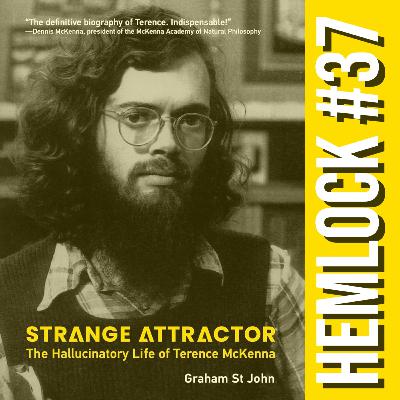
Buy Graham's book on Terence on Amazon!Graham's website: https://www.edgecentral.net/Reputable information about psilocybin and harm reduction:https://www.erowid.org/plants/mushrooms/mushrooms.shtmlJames Fadiman's book/manual: https://www.psychedelicexplorersguide.com/"We are the inheritors of one million years of striving for the unspeakable"-Terence McKennaMore on Patreon:https://patreon.com/c/hemlockpatreon

A Creative Commons Zero "No Rights Reserved" free, open-source audiobook, narrated by William Engels. This is from Part 1, titled "The Window," Chapters 1-5.One of the most beautifully written and mind-expanding works of modernist literature, Virginia Woolf's To The Lighthouse (1927) has recently entered the public domain. I wanted to celebrate by performing my way though the many "head-hops", metaphysical digressions, synesthetic collages, and iridescently shimmering prose passages that make up this short but potent work. Enjoy.Support this work on Patreon
History of Philosophy Audio Archive, Episode #177I have always loved Michael Sugrue, and I will never stop posting his talks. RIP to a legend (1957-2024). Always been curious about Goethe’s Faust (Parts I and II) and thought this was serve a good introduction. If looking for a physical copy, I have heard that the scholarly, complete, Princeton edition is really good.Hear all the updates on where the channel is going on my (free!) Patreon (Link to Hemlock Patreon).
Follow Dr. Roy on Social Media:Spotify | Apple Podcasts | YouTubeReferencesStephen Skowronek // "The Politics Presidents Make" (1993)Rational Choice Theory (1955) "A Behavioral Model of Rational Choice" by Herbert A. SimonThe Nixon movie I couldn't remember was "Secret Honor" (Robert Altman, 1984)Abramowitz et. al study of Southern Republicans https://journals.shareok.org/arp/article/view/366Goldsboro Nuclear Disaster (1961)Palomares Nuclear Incident (1966)Notable Esoteric Platonists: Leo Strauss and Allan BloomAspasia and Pericles the YoungerGroup 40/Project 40 and Richard NixonOtto Ambros (Third Reich Scientist/Operation Paperclip)Dialogues by Plato:Meno (Knowledge, geometry, 'rememberance')Republic (Justice, the Noble Lie)Laches (Instruction in courage)Symposium (Love, homosexuality, Diotima)Crito (Fidelity to the state, homeliness)Seventh Letter / Seventh Epistle (Esoteric Platonism)GAZA LINKS:Oxfam - https://www.oxfamamerica.org/explore/emergencies/gaza-and-israel-emergency-appeal/MSF (Doctors Without Borders) - https://www.msf.org/gaza-israel-warPalestinian Youth Movement - https://www.palestinianyouthmovement.com/
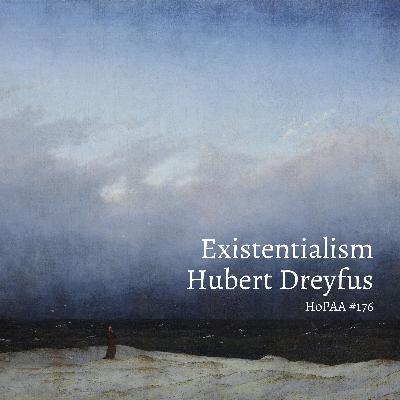
Support this work and unlock more of it (for free!) on Patreonhttps://patreon.com/c/hemlockpatreonThis is from Hubert Dreyfus' 2008 Berkeley undergraduate course Philosophy 7 "Existentialism in Literature and Film"https://archive.org/details/ucberkeley_webcast_itunesu_461120622\Course Description: The course will be organized around various attempts to reinterpret the Judeo/Christian God, and to determine in what sense, if at all, such a God is still a living God. We will study Dostoyevsky's and Kierkegaard's attempts to preserve a non-theological version of the God of Christianity, as well as Nietzsche's attempt to save us from belief in any version of God offered by our tradition. We will view and discuss three films that deal with related issues.Those films are, for the record:Hiroshima Mon Amour (Alain Resnais, 1959)The Third Man (Orson Welles, 1949)Breathless, French: "À bout de souffle" (Jean-Luc Godard, 1960)The books being read are:Fear and Trembling & The Sickness Unto Death (Kierkegaard)The Brothers Karamazov (Dostoevsky)Twilight of the Idols & The Gay Science (Nietzsche)Cover art is Caspar David Friedrich, "Monk by the Sea"
Support Sabrina's work and educate yourself on Israel, Palestine, and the US while connecting with likeminded people: Not only will you learn about the history, Zionism, US involvement and more, but it's a great way to connect with others who care about what's happening and learn ways that you can take action. The next class session starts January 10. Reserve your spot by December 12th and get a class journal (digital download) with space for notes, reflection questions, resource lists, an FAQ guide, and more!Follow Sabrina on Bluesky:https://bsky.app/profile/notetoselfzine.bsky.socialSIGN UP LINK FOR THE CLASS:https://www.eventbrite.com/e/6-week-course-on-israel-palestine-and-the-us-tickets-1809690195089

Demolishing the White House is just the beginning.Subscribe to Will Sanchez on Substack!https://substack.com/@philosophicalrebellionANNOUNCEMENTS:First: we are going to be soon starting a new audiobook series - this time it will be To The Lighthouse by Virginia Woolf - I will release it chapter by chapter, and the first chapter or two should be out within a week, if the Great Tao should accommodate. You can get updates on that and future open source audiobooks, narrated by me on the Patreon page.Second is that as we approach the finish line with Hubert Dreyfus’s Great Books course, I am looking for suggestions about where to go next, in terms of content - so if you are on Spotify please check the audience survey in this episode and vote on the things you want - If you’re not on Spotify then just email me with your desires, fantasies, crackpot ideas, and degenerate art and I will respond to you there: williamengels@substack.comLast is that this is an episode about politics in America, and William Sanchez and I leave no stone unturned, so if that’s not your cup of tea, then watch out for the fascism-free Virginia Woolf stuff that I’ll be making, as well as the more lighthearted project that I’m doing with my buddies Thomas and Richard over on Bad Role Models. But if it is your cup of tea, then you should support William’s work on Substack, and listen to my other interview with him. Links in the thing, as always.REFERENCESPaying for the Ballroom with Silicon Valley Tribute Money:https://www.wsj.com/us-news/law/youtube-to-pay-24-5-million-to-settle-lawsuit-brought-by-trump-808f6823?reflink=desktopwebshare_permalink$50K Signing Bonus for ICE Officershttps://bbc.com/news/articles/cqle5newg0noBipartisan Bill to Force Release of Epstein Files Being Jammedhttps://thehill.com/homenews/house/5482096-massie-discharge-petition-epstein/Reagan and US Indicted by ICJ in 1986 for Terrorism Against Nicaraguahttps://en.wikipedia.org/wiki/Nicaragua_vUnitedStatesBook: Bomb Power: The Modern Presidency and the National Security State by Garry Willshttps://www.goodreads.com/book/show/7254108-bomb-powerBernie Sanders' Saving American Democracy Amendmenthttps://en.wikipedia.org/wiki/Campaign_finance_reform_amendment#Saving_American_Democracy_Amendment
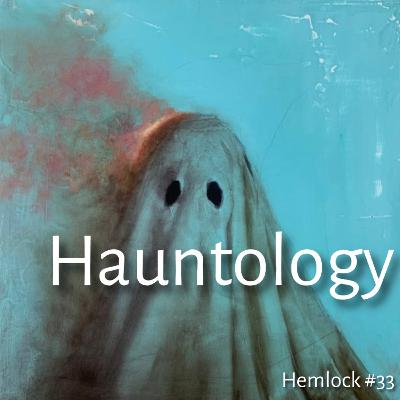
Even the dead are not safe.“It is easier to imagine the end of the world than it is to imagine the end of capitalism.” This statement, deliberately provocative, was made first by Continental philosopher Jean-Francois Lyotard before its later canonization by Mark Fisher in his 2009 theoretical masterpiece Capitalist Realism: Is there no alternative?. For Fisher, it is a call to action, and a structuring limit. Strictly speaking, it is probably an overstatement, at least without the implicit qualifier:As long as things continue as they have up until now.This is the statement: that our world is more likely to collapse from trophic exhaustion, reactive warfare, and molecular violence, than it is to shed capitalist practices and norms in favor of any of the many proposed alternatives. This same thought was expressed in another form - a case of convergent evolution emanating elsewhere in the landscape of literary Quotatia - humanity will go down in history as the first society that wouldn’t save itself because it wasn’t cost-effective.Advisory: discussion of death and suicide.References, Media Usage, and Sources:"NO" by Joy Harjo - September 2004"Resisting Left Melancholy" by Wendy BrownNB: If you cannot access this, try using sci-hub.se"Theses on the Philosophy of History" by Walter Benjamin - 1940Cover Art: "Smoldering Ghost: Happy Painting" by Michael PrettymanAmbience Tracks (Creative Commons) from Nemo's DreamscapesOutro Song: Beethoven, Piano Sonata No. 30, Movement 3, performed by Anastasia Huppmann (Creative Commons, YouTube)Excerpt from Fear and Loathing in Las Vegas by Hunter S Thompson.Ode to Mark Fisher: Part 1 - Introduction to Fisherology (Hemlock Substack)

Support the perpetuity and integrity of this work for just $5 per month, or hang out in the Patreon for free.Originally published as "On Wings of Art" (1984)."In this six-part series, renowned mythologist Joseph Campbell introduces and explores the unifying themes and mythological symbolism in James Joyce's three greatest literary works--A Portrait of the Artist as a Young Man, Ulysses, and Finnegan's Wake--arguing that these three major works were the precursors to a fourth, even greater novel that Joyce never got to write."From A Portrait of the Artist as a Young Man (1916):He turned away from her suddenly and set off across the strand. His cheeks were aflame; his body was aglow; his limbs were trembling. On and on and on and on he strode, far out over the sands, singing wildly to the sea, crying to greet the advent of the life that had cried to him.Her image had passed into his soul for ever and no word had broken the holy silence of his ecstasy. Her eyes had called him and his soul had leaped at the call. To live, to err, to fall, to triumph, to recreate life out of life! A wild angel had appeared to him, the angel of mortal youth and beauty, an envoy from the fair courts of life, to throw open before him in an instant of ecstasy the gates of all the ways of error and glory. On and on and on and on!He halted suddenly and heard his heart in the silence. How far had he walked? What hour was it?There was no human figure near him nor any sound borne to him over the air. But the tide was near the turn and already the day was on the wane. He turned landward and ran towards the shore and, running up the sloping beach, reckless of the sharp shingle, found a sandy nook amid a ring of tufted sandknolls and lay down there that the peace and silence of the evening might still the riot of his blood.He felt above him the vast indifferent dome and the calm processes of the heavenly bodies: and the earth beneath him, the earth that had borne him, had taken him to her breast.He closed his eyes in the languor of sleep. His eyelids trembled as if they felt the vast cyclic movement of the earth and her watchers, trembled as if they felt the strange light of some new world. His soul was swooning into some new world, fantastic, dim, uncertain as under sea, traversed by cloudy shapes and beings. A world, a glimmer or a flower? Glimmering and trembling, trembling and unfolding, a breaking light, an opening flower, it spread in endless succession to itself, breaking in full crimson and unfolding and fading to palest rose, leaf by leaf and wave of light by wave of light, flooding all the heavens with its soft flushes, every flush deeper than other.----------------------Please consider donating to support humanitarian relief and lifesaving medical care in Gaza. The links below are verified and reputable charities and individuals who are desperate for medical care, asylum, shelter, and safety in Palestine.Fundraisers, Palestine Support, and Good Programs:Amjad Hamad and his FamilyRulin and FamilySammar and her HusbandMSF (Doctors Without Borders)Palestinian Youth Movement
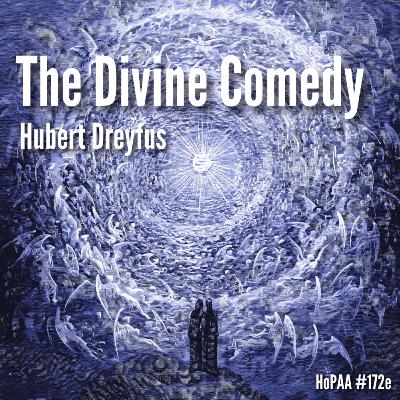
The ultimate theological journey through the midlife crisis, presented by existentialist philosopher Bert Dreyfus in 2006 at UC Berkeley. (REPUPLOAD)Please consider donating to support humanitarian relief and lifesaving medical care in Gaza. The links below are verified and reputable charities and individuals who are desperate for medical care, asylum, shelter, and safety in Palestine.Fundraisers, Palestine Support, and Good Programs:Amjad Hamad and his FamilyRulin and FamilySammar and her HusbandMSF (Doctors Without Borders)Palestinian Youth MovementRead more about Bert Dreyfus
Support the show on Patreon!A nice change of pace for me as I am put on the hot-seat and forced to properly explain myself for once. Interview by Roubin Thind, a social media manager and podcast connoisseur, running down topics ranging from diplomacy to education and back.
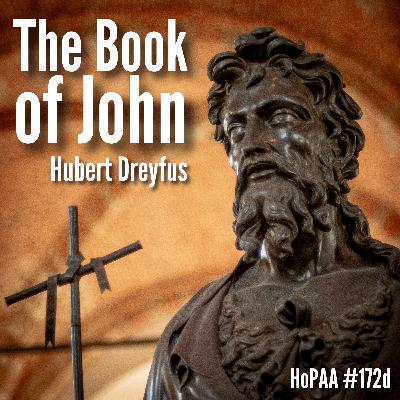
And the light shineth in darkness; and the darkness comprehended it not.John 1:5, King James VersionThis is Part Four of a multipart series on the Great Books of the Western Tradition by Berkeley Professor of Philosophy Bert Dreyfus, which you can begin here.The source material is found here on Internet Archive.Who is God? What does it mean to be anointed (chrīstós, in Koine Greek), emptied of self (kénōsis), or resurrected? What is the world, seen through the eyes of love? How does philosophy encounter Christianity? In this two-lecture episode, Dreyfus takes these concepts apart and analyzes them in the terms of Heidegger, literary theory, and the hermeneutic approaches of different Continental thinkers.Please consider donating to support humanitarian relief and lifesaving medical care in Gaza. The links below are verified and reputable charities and individuals who are desperate for medical care, asylum, shelter, and safety in Palestine.Fundraisers, Palestine Support, and Good Programs:Amjad Hamad and his FamilyRulin and FamilySammar and her HusbandMSF (Doctors Without Borders)Palestinian Youth Movement

Paul Thomas Anderson made this when he was 28. So did Richard and Will.A celebration of the greatest movie of our greatest living director. Hats off to you, man.advisory: child abuse, self-harm, suicide.“Ever since happiness heard your name, it has been running through the streets trying to find you.”―HafezMusic Credits:Violin version of Habañera by Katy AdelsonAria version of Habañera by Deutsch Opera BerlinTom Cruise Leaked Scientology Interview

Everything becomes its opposite. cw: animal harm, general doom.If this work is important to you, consider supporting my financial and creative independence on Patreon, for only $5 per month."All Watched Over By Machines of Loving Grace" (1967) by Richard BrautiganI like to think (andthe sooner the better!)of a cybernetic meadowwhere mammals and computerslive together in mutuallyprogramming harmonylike pure watertouching clear sky. I like to think(right now, please!)of a cybernetic forestfilled with pines and electronicswhere deer stroll peacefullypast computersas if they were flowerswith spinning blossoms. I like to think(it has to be!)of a cybernetic ecologywhere we are free of our laborsand joined back to nature,returned to our mammalbrothers and sisters,and all watched overby machines of loving grace.Poem: Batter my heart, three-person'd God by John DonneCredits:Richard Brautigan Reading "All Watched Over By Machines of Loving Grace"Palantir CEO Alex Karp Speaking in February 2025 in New York (End of Episode)Rachmaninoff, Prelude Op. 3 No. 2 in C-sharp Minor performed by Mr. Forte (Creative Commons)George Kennan, Memo PPS23, February 24th 1948. Declassified in June 1974.Books:The Assassination Complex by Jeremy Scahill and the Staff of The InterceptThe Power Elite by C. Wright Mills

Comments

Download from Google Play

Download from App Store
 United States