


 Claim Ownership
History of the Second World War
Subscribed: 2,615Played: 124,520
Subscribe

© Copyright Wesley Livesay
Description
History of the Second World War is a weekly podcast which will cover World War 2, beginning with the tumultuous years after the First World War, continuing into the descent into war during the 1930s, through the war years, and then into the post war aftermath.
328 Episodes
Reverse
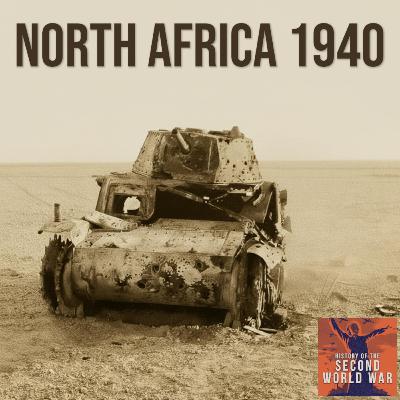
In Episode 243 of History of the Second World War, we explore the pivotal Battle of Beda Fomm in North Africa during January 1941 — the decisive follow-up to the British victory at Bardia that shattered Italian morale and control in Libya. With the Italian 10th Army decimated and retreating, British forces swiftly capitalized on their momentum, capturing thousands of prisoners and securing key Mediterranean territory. But this battlefield triumph had far-reaching consequences: it triggered Hitler’s decision to intervene by sending German reinforcements — including future legend Erwin Rommel — to bolster Italy, setting the stage for a new phase in North Africa that would reshape the war’s trajectory. Perfect for listeners who want to understand how one battle could ignite a global shift in strategy and leadership.
Contact advertising@airwavemedia.com to advertise on History of the Second World War.
History of the Second World War is part of the Airwave Media podcast network.
Learn more about your ad choices. Visit megaphone.fm/adchoices
In Episode 242 of History of the Second World War, we dive into Operation Compass, Britain’s first major offensive in North Africa in late 1940 — specifically focusing on the critical assault on Bardia, an Italian stronghold along the coast with formidable defenses. After initial successes capturing Sidi Barrani and forcing a chaotic Italian retreat, British forces now face the challenge of overcoming heavily fortified positions to continue their advance westward toward Tobruk and Benghazi. This episode explores how engineers, tanks like the Matilda, and coordinated infantry maneuvers broke through enemy lines — even as British planners gambled on outnumbered troops and unconventional tactics. You’ll also get a glimpse into the grim conditions inside Italian prisoner camps like Tobruk, where tens of thousands were crammed under brutal circumstances — setting the stage for what’s to come in the next episode: the final push to Beda Fomm.
Contact advertising@airwavemedia.com to advertise on History of the Second World War.
History of the Second World War is part of the Airwave Media podcast network.
Learn more about your ad choices. Visit megaphone.fm/adchoices
In Episode 241 of “History of the Second World War,” dive into the explosive opening of Operation Compass — Britain’s first major offensive in North Africa during WWII, launched in December 1940 against Italian fortified camps. Witness how British forces, including the 7th Armored and 4th Indian Divisions with their iconic Matilda tanks and devastating artillery, overwhelmed Italian defenses through clever flanking maneuvers and overwhelming firepower — even catching Italians off-guard during breakfast! The episode captures the rapid, almost unstoppable success of the attack, which far exceeded initial objectives, while also hinting at looming logistical challenges that would test British momentum.
Contact advertising@airwavemedia.com to advertise on History of the Second World War.
History of the Second World War is part of the Airwave Media podcast network.
Learn more about your ad choices. Visit megaphone.fm/adchoices
For this interview I was joined by Mark Stille to discuss his latest book, Pearl Harbor: Japan's Greatest Disaster. https://www.ospreypublishing.com/us/pearl-harbor-9781472865311/
Contact advertising@airwavemedia.com to advertise on History of the Second World War.
History of the Second World War is part of the Airwave Media podcast network.
Learn more about your ad choices. Visit megaphone.fm/adchoices
As Italy advances into Egypt, Britain quietly prepares its first major offensive — Operation Compass — in this tense buildup episode. We explore the friction between Churchill’s impatient push for victory and General Wavell’s insistence on realistic desert readiness, while massive reinforcements arrive: Matilda tanks, armored regiments, artillery, and supplies all vital to a bold strike through the Enba Gap. You’ll also see how Italy’s disastrous invasion of Greece shifts British priorities — from Egypt to the Balkans — with far-reaching consequences. This is the quiet storm before Operation Compass, where logistics, terrain, and leadership clash in the desert — setting the stage for one of WWII’s most consequential early battles.
Contact advertising@airwavemedia.com to advertise on History of the Second World War.
History of the Second World War is part of the Airwave Media podcast network.
Learn more about your ad choices. Visit megaphone.fm/adchoices
This time I was joined by Robert Forsyth to discuss his new book Defenders of the Reich: The Luftwaffe's War Against America's Bombers which you can purchase from Osprey publishing here: https://www.ospreypublishing.com/us/defenders-of-the-reich-9781472862860/
Contact advertising@airwavemedia.com to advertise on History of the Second World War.
History of the Second World War is part of the Airwave Media podcast network.
Learn more about your ad choices. Visit megaphone.fm/adchoices
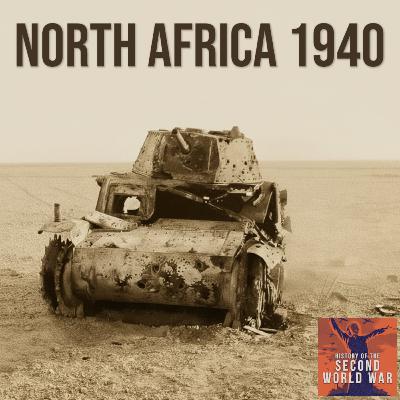
The first shots have been fired in the desert war! This episode covers the opening moves of the North African campaign in 1940. From small-scale raids and skirmishes to the first major Italian offensive, we'll see how both sides tested each other's strengths and weaknesses. While the Italians pushed into Egypt, their advance was hampered by logistical problems and a determined, if small, British resistance. The stage is set for a dramatic confrontation in the desert.
Contact advertising@airwavemedia.com to advertise on History of the Second World War.
History of the Second World War is part of the Airwave Media podcast network.
Learn more about your ad choices. Visit megaphone.fm/adchoices
This time I was joined by Anthony Tucker-Jones to discuss his new book Rhineland: Hitlers Last Defence 1944-45 which covers the Allied efforts in late 1944 and early 1945 to move their forces into western Germany.
Buy the Book: https://www.ospreypublishing.com/us/rhineland-9781472859921/
Used code WorldWar20 to get 20% off and Free Shipping!
Contact advertising@airwavemedia.com to advertise on History of the Second World War.
History of the Second World War is part of the Airwave Media podcast network.
Learn more about your ad choices. Visit megaphone.fm/adchoices
While the Italians were preparing for war, what were the British doing? This episode dives into the British perspective on the North African campaign in 1940. We'll explore the strategic importance of the Suez Canal, the desperate attempts to keep Italy out of the war, and the state of the British army in Egypt. Led by the often-underestimated General Wavell, the British were about to embark on a campaign that would defy all expectations.
Contact advertising@airwavemedia.com to advertise on History of the Second World War.
History of the Second World War is part of the Airwave Media podcast network.
Learn more about your ad choices. Visit megaphone.fm/adchoices
In this interview I was joined by Hans Smith to talk about his book Bombs Away: A B-17b Pilot's 'Small' Part in a Big War which covers the experiences of his Great Uncle Herbert Small who flew with the 384th Bomb Group during the war.
Bombs Away can be purchased here: https://shop.ingramspark.com/b/084?params=mP2MsCJWp54htljFc6ecBoyyXdmJ2aZaV9857QcJ7WN
Contact advertising@airwavemedia.com to advertise on History of the Second World War.
History of the Second World War is part of the Airwave Media podcast network.
Learn more about your ad choices. Visit megaphone.fm/adchoices

In the summer of 1940, with the fall of France, the war in North Africa began in earnest. On one side, the Italian army in Libya, massive in number but beset by industrial and logistical problems. On the other, a small British force in Egypt, tasked with defending the Suez Canal. This episode explores the Italian war effort in the opening months of the North African campaign, from the strategic decisions made in Rome to the realities of the desert war. Was the Italian army a paper tiger, or a force to be reckoned with?
Contact advertising@airwavemedia.com to advertise on History of the Second World War.
History of the Second World War is part of the Airwave Media podcast network.
Learn more about your ad choices. Visit megaphone.fm/adchoices
This time I was joined by Dr. Alan Allport to discuss his new book: Advance Britannia: The Epic Story of the Second World War, 1942-1945
You can order the book here: https://www.penguinrandomhouse.com/books/548833/advance-britannia-by-alan-allport/
Contact advertising@airwavemedia.com to advertise on History of the Second World War.
History of the Second World War is part of the Airwave Media podcast network.
Learn more about your ad choices. Visit megaphone.fm/adchoices
 1
1This summary episode explores the Spanish Civil War (1936-1939), the devastating conflict that served as a bloody rehearsal for World War II where competing political ideologies clashed with deadly consequences. Born from the collapse of Spain's military dictatorship and the struggle of the Second Spanish Republic against economic depression and social upheaval, the war erupted when General Francisco Franco launched a military coup from Spanish Morocco in July 1936. What followed was a brutal three-year conflict that split Spain between Franco's Nationalists—backed by fascist Italy and Nazi Germany—and the Republican Popular Front, a fractured coalition of republicans, communists, and anarchists supported by the Soviet Union and international volunteers in the famous International Brigades. The episode traces key battles from the siege of Madrid to the terror bombing of Guernica, while examining how internal divisions among the Republicans, particularly the violent May 1937 clashes between communists and anarchists in Barcelona, fatally weakened their cause. Ultimately, Franco's victory came at the cost of 350,000 lives and left Spain devastated, leading to decades of dictatorship while providing the major European powers with military experience and technology testing that would shape the coming world war—though each nation would learn selective lessons that suited their existing beliefs rather than the full reality of modern warfare.
Contact advertising@airwavemedia.com to advertise on History of the Second World War.
History of the Second World War is part of the Airwave Media podcast network.
Learn more about your ad choices. Visit megaphone.fm/adchoices
Prit Buttar joins the podcast for the second time to discuss his recently released book for Osprey Publishing titled Into the Reich: The Red Army's Advance to the Oder in 1945.
You can find out more about the book, and purchase your own copy here: https://www.ospreypublishing.com/us/into-the-reich-9781472866998/
Contact advertising@airwavemedia.com to advertise on History of the Second World War.
History of the Second World War is part of the Airwave Media podcast network.
Learn more about your ad choices. Visit megaphone.fm/adchoices
This summary episode revisits the rise of Italian fascism and Benito Mussolini's path to power during the tumultuous early 1920s. Born from Italy's sense of betrayal after World War I—when promised territorial gains in the Mediterranean never materialized—the fascist movement gained momentum as a bulwark against the growing Communist threat. Led by military veterans discharged into a war-ravaged economy, fascist squads found support among industrialists and political elites who saw them as the only force capable of matching Communist passion and violence. Mussolini's dramatic March on Rome in October 1922 proved to be a strategic masterstroke that, despite being poorly organized, succeeded when King Victor Emmanuel III chose not to declare martial law, instead appointing Mussolini as Prime Minister of Europe's first fascist government. What followed was a gradual consolidation of power, marked by the rigged 1924 elections under the Acerbo Law and the pivotal Matteotti murder, after which Mussolini fully embraced fascist violence and began reshaping Italian society. The episode traces how Mussolini's expansionist ambitions led to costly adventures in Ethiopia and the Spanish Civil War, ultimately leaving Italy militarily weakened and economically strained just as it prepared to enter World War II as Germany's junior partner—setting the stage for an even greater disaster than the first world war.
Contact advertising@airwavemedia.com to advertise on History of the Second World War.
History of the Second World War is part of the Airwave Media podcast network.
Learn more about your ad choices. Visit megaphone.fm/adchoices
For this interview I was joined by William Hiestand to discuss his upcoming book on the usage of airpower over the battlefield of Kursk in 1943. You can grab a copy here: https://www.ospreypublishing.com/us/kursk-1943-9781472865168/
Contact advertising@airwavemedia.com to advertise on History of the Second World War.
History of the Second World War is part of the Airwave Media podcast network.
Learn more about your ad choices. Visit megaphone.fm/adchoices
In this concluding episode of the Battle of Britain series, we examine the final outcomes and lasting impact of Germany's 1940 air campaign against Britain. While the Luftwaffe lost approximately 1,900 aircraft compared to the RAF's 1,600, the true failure lay in Germany's inability to achieve their strategic goal of neutralizing Fighter Command before the planned invasion. Despite inflated kill claims on both sides, Air Marshal Dowding's assessment reveals that German airfield attacks never came close to crippling RAF operations, with only two airfields rendered unfit for more than a few hours. The episode explores why the Luftwaffe's objectives were fundamentally beyond their capabilities, given the limited time window and insufficient understanding of what strategic bombing required. With Sea Lion postponed in September 1940, the focus shifts to how this victory - while preventing invasion - was far from ending the war, as Churchill's sobering October speech reminds us that "long, dark months of trials and tribulations" still lay ahead in the Mediterranean and beyond.
Contact advertising@airwavemedia.com to advertise on History of the Second World War.
History of the Second World War is part of the Airwave Media podcast network.
Learn more about your ad choices. Visit megaphone.fm/adchoices
This time I am joined by Richard Hargreaves to discuss his new book Opening the Gates of Hell: Operation Barbarossa.
Contact advertising@airwavemedia.com to advertise on History of the Second World War.
History of the Second World War is part of the Airwave Media podcast network.
Learn more about your ad choices. Visit megaphone.fm/adchoices
In this gripping episode, we explore the devastating German night bombing campaign known as the Blitz, which terrorized Britain from September 1940 to May 1941. While London bore the brunt of 57 consecutive nights of bombing that killed 40,000 people and destroyed over a million homes, many other British cities suffered similar devastation as the Luftwaffe attempted to break British morale and cripple the nation's war effort. Despite the widespread destruction, the RAF's Fighter Command was ill-prepared for night interceptions, lacking both aerial radar technology and adequate anti-aircraft defenses, leaving British civilians to endure the onslaught largely unprotected. From the famous use of London Tube stations as makeshift shelters to the remarkable grassroots organization of shelter committees, ordinary British citizens demonstrated extraordinary resilience in the face of nightly terror. Though the Luftwaffe dropped thousands of tons of bombs and caused immense suffering, their strategic goals remained unfulfilled – instead of breaking British spirit, the Blitz ultimately strengthened national resolve and became a defining symbol of wartime endurance that would echo through history.
Contact advertising@airwavemedia.com to advertise on History of the Second World War.
History of the Second World War is part of the Airwave Media podcast network.
Learn more about your ad choices. Visit megaphone.fm/adchoices
By the end of September 1940, the threat of German invasion had passed, but victory in the Battle of Britain sparked a bitter internal conflict within RAF Fighter Command. Air Vice-Marshal Keith Park of 11 Group, who had successfully defended southeastern England using small, quick-response fighter formations, found himself under attack from Air Vice-Marshal Leigh-Mallory of 12 Group, who advocated for "Big Wing" tactics—concentrating multiple squadrons into large formations. This strategic disagreement, fueled by inflated victory claims and personal ambitions, ultimately led to the removal of both Hugh Dowding, head of Fighter Command, and Park himself in late 1940. Despite their crucial roles in Britain's survival during the summer of 1940, these architects of victory were cast aside just as the threat they had defeated was transforming into the night bombing campaign of the Blitz.
Contact advertising@airwavemedia.com to advertise on History of the Second World War.
History of the Second World War is part of the Airwave Media podcast network.
Learn more about your ad choices. Visit megaphone.fm/adchoices


Download from Google Play

Download from App Store
 United States
🔴✅📺📱💻ALL>Movies>WATCH>ᗪOᗯᑎᒪOᗩᗪ>LINK>👉https://co.fastmovies.org
.o
Really enjoyed the discussion with Dr Alexander. However please get him to slow down a bit please. Either because of the speed he talks or editing, at times the chat was near indecipherable. I'm aware that things can be slowed-I tried but it was worse. Cheers from Cornwall UK
Very good