


 Claim Ownership
How My View Grew
Subscribed: 4Played: 94
Subscribe

© Copyright 2025 Amiel Handelsman
Description
If you’re weary of political polarization, nothing is more refreshing than nuanced thinking: ideas that reveal the complexity of what’s wrong in the world and how to make it better. But where does such thinking come from? Often, it’s from someone changing their mind—letting go of an old perspective and growing into a new one. Join executive coach Amiel Handelsman as he interviews nuanced thinkers about the origin stories of their big ideas. Each story offers a window into one of humanity’s greatest challenges like climate change, democracy, the culture wars, the wealth gap, Ukraine, and Israel. In weeks between interviews, Amiel offers tips for training your mind to navigate complex topics and difficult conversations.
41 Episodes
Reverse
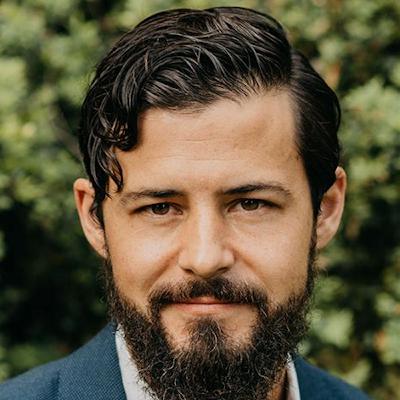
Another engaging riff with David Storey, Boston College philosophy professor and Spartan Race athlete. This time I take center stage. We explore why Americans are collectively depressed, why Democrats ignore power politics, why turning off phones and turning toward each other feels great, and how all of this is related. I make a case for phone-free schools. Dave helps me see even bigger benefits.We get political. We get personal. We refuse to give advice or answer the question, "What should the average person do?" **Key takeaways**11:00 Feeling bottled up? Recapture the oomph and lock arms with others15:00 The Tit-for-Tat strategy from the Prisoner's Dilemma21:00 Reclaiming power. "Don't step on me."23:00 Two reasons Democrats get complacent about power politics28:00 Want advice on what to do? Instead, ask yourself these four questions32:00 Conscious phone use through PSAs and intentional points of friction35:00 It's time to make public spaces public again38:00 Stricter phone policies in schools free teachers to teach, not police41:00 Adults exerting their agency. "Trust your moral compass."45:00 Moving beyond the hyper-individualistic story of America47:00 Laughter is something we create together**Resources**David's web site, including his podcast, Wisdom@Work**Subscribe to the podcast**To hear the origin stories of more big ideas, subscribe to How My View Grew on Apple Podcasts, Spotify or wherever you listen to podcasts.**Share the love**Leave me a rating or review on Apple Podcasts, Spotify or wherever you listen to podcasts.

In this five-minute episode of How My View Grew, I offer six ideas for Democrats and Never-Trumpers who haven't given up:Doing something is better than doing nothing.We're lousy at predicting the outcomes of our actions.The 2026 mid-terms are super-important.Winning in 2026 requires two distinct tasks.Dems and Never Trumpers need a new mood.Biden-to-Trump voters need permission structures, not shaming. **Subscribe to the podcast**To hear the origin stories of more big ideas, subscribe to How My View Grew on Apple Podcasts, Spotify or wherever you listen to podcasts.**Share the love**Leave me a rating or review on Apple Podcasts, Spotify or wherever you listen to podcasts.
Status differences, real and perceived, and the resentment that comes with them.Republicans use them to fire up voters and win elections. Democrats largely ignore them. To regain power and reverse the authoritarian tide, Democrats will need to take status differences seriously.My five-minute take.**Subscribe to the podcast**To hear the origin stories of more big ideas, subscribe to How My View Grew on Apple Podcasts, Spotify or wherever you listen to podcasts.**Share the love**Leave me a rating or review on Apple Podcasts, Spotify or wherever you listen to podcasts.
In this five-minute episode, which concludes season three, I share five thoughts that I think you will enjoy even though they're neither profound nor useful.Co-ed SleepoversLove OverestimatedPronouns EverywhereWhat Men DoA Bold Child**Subscribe to the podcast**To hear the origin stories of more big ideas, subscribe to How My View Grew on Apple Podcasts, Spotify or wherever you listen to podcasts.**Share the love**Leave me a rating or review on Apple Podcasts, Spotify or wherever you listen to podcasts.
Part two of a provocative conversation with David Storey, associate professor of philosophy at Boston College. **Key takeaways**0:45 The right has coded expertise as feminine2:45 How ironic: the manosphere exists in disembodied cyberspace6:00 What Fight Club was all about11:00 The retro-romantic part of MAGA13:00 The war on terror was a weak halfway house between the Cold War and MAGA17:00 The tech right as Nietzschean supermen19:00 Funneling alpha energy into a mass movement against Big Tech21:00 Can Democrats become more fluent in Christianity as they embrace economic populism?**Resources**David's web site, including his podcast, Wisdom@Work**Subscribe to the podcast**To hear the origin stories of more big ideas, subscribe to How My View Grew on Apple Podcasts, Spotify or wherever you listen to podcasts.**Share the love**Leave me a rating or review on Apple Podcasts, Spotify or wherever you listen to podcasts.
Part one of a fascinating and just plain fun conversation about the manosphere with David Storey, associate professor of philosophy at Boston College. Our first experiment in doing a "high-brow brocast." Big ideas with a casual vibe.**Key takeaways**4:00 Beards, mustaches, and the aesthetics of Trumpism7:15 When my mask threatens your identity12:10 Why this philosophy professor competes in Spartan races17:00 The laptop class manipulates bits, not its19:00 The economics behind the rise of the manosphere 24:00 The impact on young men of #metoo and the rise of girl-boss culture26:00 When the male body feels stuck, where does testosterone go?**Resources**David's web site, including his podcast, Wisdom@Work**Subscribe to the podcast**To hear the origin stories of more big ideas, subscribe to How My View Grew on Apple Podcasts, Spotify or wherever you listen to podcasts.**Share the love**Leave me a rating or review on Apple Podcasts, Spotify or wherever you listen to podcasts.
This past Saturday, I attended the No Kings protest in a Midwestern college town. I walked in with a spring in my step, yet left early with a frown on my face. In this 5-minute episode of How My View Grew, I explain why. It's a good-news, bad-news tale. **Subscribe to the podcast**To hear the origin stories of more big ideas, subscribe to How My View Grew on Apple Podcasts, Spotify or wherever you listen to podcasts.**Share the love**Leave me a rating or review on Apple Podcasts, Spotify or wherever you listen to podcasts.
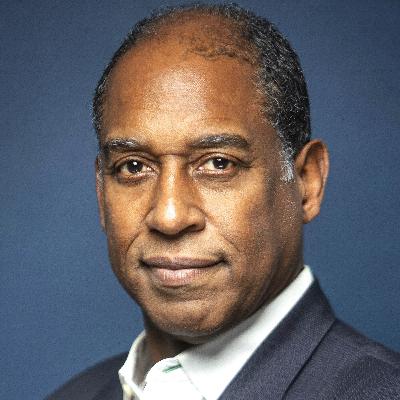
In this episode of How My View Grew, Greg Thomas describes how jazz saved him from hating so-called "white people" and how he learned to see the Black American experience as a hero's journey that is central to American history and culture.**Key takeaways**3:00 Early-life learning about rabid southern racists9:00 "I gotta pick up an instrument"13:30 The pathologizing of Black Americans by "white" liberals16:00 The depth and wisdom of Albert Murray, Ralph Ellison, and Stanley Crouch19:00 "This history has got my back" and the artificiality of "whiteness"22:00 The hero's journey23:30 Amiel's reflections**Resources**Jazz Leadership ProjectOmni-American Future Project“King of Cats,” Henry Louis Gates Jr’s long profile of Murray in The New YorkerThe Omni-Americans: Some Alternatives to the Folklore of White Supremacy by Albert Murray**Subscribe to the podcast**To hear the origin stories of more big ideas, subscribe to How My View Grew on Apple Podcasts, Spotify or wherever you listen to podcasts.**Share the love**Leave me a rating or review on Apple Podcasts, Spotify or wherever you listen to podcasts.
When right-wingers in the United States were in the wilderness for decades, they didn't just sit on their hands. They envisioned bold ways to change the country. When they came to power, they were ready to act.Setting aside whether you like those ideas, ask yourself this: if Republicans could do this, why can't Democrats? Are liberals and progressives incapable of imagining what they'll do when back in power? Or have they simply not yet grown this potential?Maybe it's time for all of us to not just play defense against the current mayhem but also to envision a better offense. If your party were to regain power, what would you want it to do?In this episode, I invite you to think audaciously and notice not only what you come up with, but also how this improves your mood for dealing with the current presidency and its agents of sycophancy.Imagine tomorrow so you have more power to act today.To get you started, I propose two audacious ideas for a post-Trump America.**Subscribe to the podcast**To hear the origin stories of more big ideas, subscribe to How My View Grew on Apple Podcasts, Spotify or wherever you listen to podcasts.**Share the love**Leave me a rating or review on Apple Podcasts, Spotify or wherever you listen to podcasts.
Let's admit it. The Trump presidency isn't just creating chaos and destruction with sadistic glee. It's also exhausting.What's exhausting isn't only the President, but also the mafia state he has built, many journalists who cover him, and progressives who frame the situation ideologically.In this 9-minute episode, I describe seven causes of Trump Mafia State Fatigue:The Bullshit Asymmetry PrincipleThe Gaslighting EffectFly in the EarAffirmative action for mediocrityThe double-edged corruption swordSanewashingProgressive ideological framing**Subscribe to the podcast**To hear the origin stories of more big ideas, subscribe to How My View Grew on Apple Podcasts, Spotify or wherever you listen to podcasts.**Share the love**Leave me a rating or review on Apple Podcasts, Spotify or wherever you listen to podcasts.
The first 100 days of the Trump presidency have brought destruction and chaos at astonishing speeds.Yet we've also seen demonstrations of courage, strength, and grace.In this 4-minute episode, I describe ten such bright spots. **Subscribe to the podcast**To hear the origin stories of more big ideas, subscribe to How My View Grew on Apple Podcasts, Spotify or wherever you listen to podcasts.**Share the love**Leave me a rating or review on Apple Podcasts, Spotify or wherever you listen to podcasts.
In this episode of How My View Grew, I offer nine ways that leaders of key American institutions—Congressional Democrats, the Supreme Court, universities, and law firms—can act differently when facing a warlord Administration. How do you act toward people whose primary modes are force and intimidation and who honor no laws, constitutions, or norms?**Subscribe to the podcast**To hear the origin stories of more big ideas, subscribe to How My View Grew on Apple Podcasts, Spotify or wherever you listen to podcasts.**Share the love**Leave me a rating or review on Apple Podcasts, Spotify or wherever you listen to podcasts.
Why have so many liberals and progressives felt shocked by the first two months of the second Trump Administration? Why, instead, did so many assume that "they would never do that?"In this short solo episode, I offer a possible answer. Liberals and progressives have a massive blind spot. They don't know who and what they are dealing with—namely, a worldview that is deeply entrenched in human culture yet widely misunderstood: the warlord or warrior. Once they see it, they—and conservatives committed to prudence, humility, and order—can abandon failed strategies and craft new ones.**Resources**What I saw at a MAGA conference: A Day at CPACTwo days with former Republicans who won't bend the knee for Trump: The Principles First conferenceWhy Trump and Vance looked weak and Zelensky looked strong**Subscribe to the podcast**To hear the origin stories of more big ideas, subscribe to How My View Grew on Apple Podcasts, Spotify or wherever you listen to podcasts.**Share the love**Leave me a rating or review on Apple Podcasts, Spotify or wherever you listen to podcasts.

The first two months of the new Administration in Washington DC have brought shocking degrees of chaos and disruption. Many people who didn't vote for the current President feel like they've been punched in the face and knocked to the ground. How in a situation like this do you get back up? What actions can you take to lift your mood and make things in the world better?This week's guest on How My View Grew, which launches season three of the podcast, is no stranger to this dilemma. Ari Weinzweig, co-founder of the Zingerman's Community of Businesses in Ann Arbor, Michigan, knows something about getting crushed by a global shock and then finding a way to get back up. In his case, the event was Russia's brutal full-scale invasion of Ukraine in 2022. How he got back up was by learning about Ukraine's Revolution of Dignity in 2014 and then using this as inspiration to bring dignity into the workplace. Ari's story offers a lesson about how to respond to disturbing and horrific events. It also raises a startling question: if millions of people felt a sense of dignity in the workplace, would they vote for demagogues claiming "you've been screwed" and promising to "fix it" for them? Or might they instead say, "No thanks. I'm good. If you want to be an autocrat, move to Russia?"**Key takeaways**5:00 When Ari was unconsciously competent at dignity10:00 "Putin isn't going to call me for advice"14:00 Inspiration from Ukraine's Revolution of Dignity25:00 Honoring dignity doesn't take more time27:00 Being authentic without dumping on others32:00 Showing employees the financial numbers36:00 "Maybe it's not because they're lazy." 43:00 Slipping daily and then gamefilming45:30 Amiel's reflections**Resources**A Revolution of Dignity in the Twenty-first Century Workplace, a pamphlet by AriZingerman's Deli in Ann Arbor, MichiganUkrainian civic activist Valerii Pekar on Ukraine's stunning resilience (How My View Grew)Historian Marci Shore on how to improve the world amidst evil (How My View Grew)Depolarize politics by escaping the drama triangle (How My View Grew)**Subscribe to the podcast**To hear the origin stories of more big ideas, subscribe to How My View Grew on Apple Podcasts, Spotify or wherever you listen to podcasts.**Share the love**Leave me a rating or review on Apple Podcasts, Spotify or wherever you listen to podcasts.
This is the final episode of season two. After taking a short break, we'll return in March with season three.In episode eight of this season, I introduced a way to depolarize politics and evoke more constructive moods: escaping the drama triangle. In this five-minute episode, I answer a related question: how do you escape the drama triangle? Here are four steps you can start using today.**Subscribe to the podcast**To hear the origin stories of more big ideas, subscribe to How My View Grew on Apple Podcasts, Spotify or wherever you listen to podcasts.**Share the love**Leave me a rating or review on Apple Podcasts, Spotify or wherever you listen to podcasts.
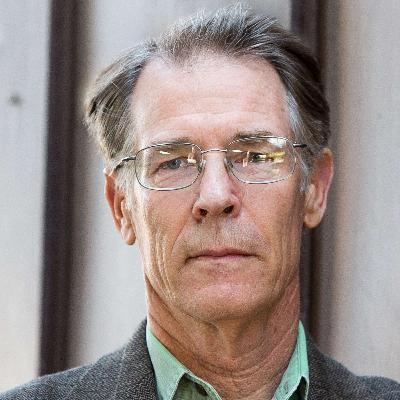
Kim Stanley ("Stan") Robinson is one of the world's most acclaimed and popular science fiction novelists, first famous for his Mars Trilogy. For the past two decades, Stan has been telling vivid stories in which climate change is catastrophic yet people invent ways of reversing it. What he imagines is so bold it takes your breath away, then fills you with hope and resolve that you didn't know existed within you.In his Science in the Capital trilogy, a Washington DC thriller, National Zoo animals roam the capital after a massive flood. The Gulf Stream shuts down. Then a tiny U.S. government agency with bold leadership funds massive global climate projects. That plus the election of an inspiring everyman new President saves the day. Two decades later, Ministry for the Future tells a very different heroic tale. Here the protagonist is a new international agency based in Zurich led by an Irishwoman. After a massive heat wave in Indian kills millions, she gets kidnapped by one of its survivors and eventually answers her captor's challenge to do more. She persuades central bankers to back a "carbon coin" that changes the rules of the economic game. Companies now earn money by keeping oil in the ground, slowing Antarctica's melting, and investing in other projects on a scale commensurate with the climate catastrophe. What led Robinson to dramatically rethink his bold ideas for reversing climate change? What can we learn from this about climate economics and the financial rules in capitalism? How might this learning shift us into more constructive moods as we face seemingly insurmountable challenges?Join me in exploring these questions in this new episode of How My View Grew.**Key takeaways**4:00 A DC thriller: the Gulf Stream slows down. Washington floods. Science and government save the day12:00 Stan gets criticized about economics and responds by reading more deeply. The virtues and limits of nationalizing banks.18:00 A new view of money and lessons from the 2008 financial crisis23:00 Paying companies to green the planet, changing the economic game28:45 Stop asking "Is it to late?" Focus instead on better versus worse33:30 Telling good stories that our culture ignores35:00 Stan's message to the Left: get over it40:00 Amiel's reflections**Resources**A reference site for Kim Stanley RobinsonAmiel's essay, "Beyond the false choice between despair and hope"**Subscribe to the podcast**To hear the origin stories of more big ideas, subscribe to How My View Grew on Apple Podcasts, Spotify or wherever you listen to podcasts.**Share the love**Leave me a rating or review on Apple Podcasts, Spotify or wherever you listen to podcasts.
In this 10-minute episode of How My View Grew, discover a powerful method for depolarizing politics and improving relationships: the drama triangle. Invented to support families in high-conflict situations, the drama triangle opens a new window into understanding political polarization, emotional intelligence, and difficult conversations. Listen in as I describe the victim, the persecutor, and the rescuer and how they show up in MAGA and liberal/progressive politics.**Subscribe to the podcast**To hear the origin stories of more big ideas, subscribe to How My View Grew on Apple Podcasts, Spotify or wherever you listen to podcasts.**Share the love**Leave me a rating or review on Apple Podcasts, Spotify or wherever you listen to podcasts.

As Donald Trump returns to the White House, many American citizens are willing to tear everything down. Where did these destructive inclinations come from? Might they partly reflect the way that voters learned history back in school? How well are we teaching history through the eyes of people living then so we can learn from their experiences? To what extent are we introducing students to their culture's proud traditions so they feel inspired to defend them rather than throw everything away?In this episode of How My View Grew, we explore these questions by hearing from someone from outside the United States. Lene Rachel Andersen is a Danish author, futurist, and economist. As a student, she knew history was important. However, when challenged by a classmate, she couldn't explain why. Lene sensed the disjointed nature of the history curriculum but couldn't pinpoint what was missing. Years later, as the result of a TV series she created that went awry, she discovered answers to both questions. Then postmodernism entered the scene, and Lene wondered: should we be teaching deconstruction to third graders—or can this wait until later?Lene's story reveals deep lessons for avoiding authoritarianism and meeting other challenges of our time.**Key takeaways**8:00 A classmate's question about history stump Lene12:00 Put yourself in the shoes of people in history14:00 To avoid authoritarianism and stupid wars, understand history and humans18:00 Pitfalls of the postmodern approach to history24:00 An exciting pilot project in a Danish public school27:00 Third grade teachers shouldn't be teaching deconstruction32:00 Amiel's reflections**Resources**Lene's web site"The Surprising Lesson of History"—from season one of this podcast**Subscribe to the podcast**To hear the origin stories of more big ideas, subscribe to How My View Grew on Apple Podcasts, Spotify or wherever you listen to podcasts.**Share the love**Leave me a rating or review on Apple Podcasts, Spotify or wherever you listen to podcasts.
In this short episode of How My View Grew, I offer an alternative to the false choice between despair and hope. After the recent U.S presidential election, many people in my orbit are feeling despair. Their response: search for signs of hope. But what if this is a false choice? What if we could gain access to other moods that are more constructive and powerful? Say hello to resolve and curiosity, two moods for this moment.**Resources**A Cabinet of buffoons, bomb throwers, and bottom-feeders? Republican Senators get to decide. My recent Medium essay.**Subscribe to the podcast**To hear the origin stories of more big ideas, subscribe to How My View Grew on Apple Podcasts, Spotify or wherever you listen to podcasts.**Share the love**Leave me a rating or review on Apple Podcasts, Spotify or wherever you listen to podcasts.
When new political leaders promote disruptive and even violent change, then people accustomed to pressing the gas pedal on change may choose instead to hit the breaks. Liberals become small "c" conservatives.In this episode of How My View Grew, I suggest that after November 5, 2024 every liberal in the United States became a small "c" conservative. Instead of pushing for change in society, liberals now have good reason to slow it down. That's because the changes coming with the new Trump Administration threaten to destroy or disrupt many things worth preserving, from liberal gains of the past 90 years to basic Constitutional protections we've had for two and a half centuries. Much that we Americans take for granted, everything from childhood immunizations to Constitutional freedoms to the rule of law, is now at risk. Someone needs to stand up and shout, "Stop." For decades, liberals associated this stance with Republicans, and for good reason. But today's Republican leader doesn't have a small "c" conservative bone in his body. His Administration will be about rapidly disrupting and destroying much that liberals—and all Americans—value. So, who will fill the void of slowing down change and preserving that which we hold most dear? Liberals.After making this case, I describe five steps liberals can take to embody such small "c" conservatism.**Key takeaways**2:00 The reactionary changes coming5:30 The two forms of conservatism: small "c" and big "C"8:30 Big "C" conservatism, the ideology, is whatever the Republican Party currently stands for13:30 Five steps liberals can take to conserve liberal gains and American traditions**Resources**My recent essay, "Nine tempting but unhelpful interpretations of Mr. Trump's victory"On Tyranny: Twenty Lessons from the Twentieth Century by Timothy Snyder**Subscribe to the podcast**To hear the origin stories of more big ideas, subscribe to How My View Grew on Apple Podcasts, Spotify or wherever you listen to podcasts.**Share the love**Leave me a rating or review on Apple Podcasts, Spotify or wherever you listen to podcasts.

Comments

Download from Google Play

Download from App Store
 United States