


 Claim Ownership
I Used To Think...
Subscribed: 3Played: 3
Subscribe

© Copyright 2024 All rights reserved.
Description
A podcast about people who were brave enough to change their mind.
28 Episodes
Reverse

Memphis, Tennessee is often considered the focal point for Christian Nationalism and conservative evangelicalism. My guest, Mark Hackett, grew up in this environment and refers to it as "white American evangelicalism." In our conversation, we discuss the characteristics of this type of Christianity and how it is unique to the South.
According to Mark, the moralism, patriarchy, and strict authoritarian structures found in white American evangelicalism are not aligned with the Gospel and true Christianity. Mark shares candidly about how him and his family painfully left their church due to corruption and toxic political discourse.
Mark shares how authentic Christianity is less about the afterlife and more about following the pattern that Jesus presents for how we live our lives and interact with others.
Sign up for Mark's newsletter: https://www.markhackett.com/newsletter
Check out Mark's website: https://www.markhackett.com/about-me
Mark's Article about his story: https://www.markhackett.com/writings/escaping-white-american-evangelicalism
References:
Jesus and John Wayne by Kristin Du Mez
The Flag and the Cross by Philip Gorski
Things we discuss:
Church culture in the South compared to California
Tolkien
What is Christian Nationalism?
Individualism in the church
The effects of Trumpism in Southern churches
Church abuse and corruption
Searching for a new church
What is true Christianity? What is the Gospel?
Why Mark shares his story via blogging and podcasting
--
Follow on Instagram: @iusedtothinkpodcast
Watch this episode on YouTube: https://www.youtube.com/@iusedtothinkpodcast

Pat talks about why he started the podcast, the importance of storytelling, deconstructing Christian fundamentalist faith, and what people should know about Gen-Z.
Learn more about the Weave project: https://weavers.org/
Join the Weaving Us community: https://weaving.us/
We discuss:
Growing up fundamentalist Christian
Faithful storytelling
Being quick to learn and not to judge
What others should know about Gen-Z
Gen-Z's cultural and economic context
Contact Pat: PATRICKTLEE7@GMAIL.COM
New Substack for the podcast! https://iusedtothink.substack.com/p/what-i-used-to-think-recovering-from?r=ljh57
Follow on Instagram: @iusedtothinkpodcast
Watch this episode on YouTube: https://www.youtube.com/@iusedtothinkpodcast

After diligently raising her children in the church and conservative Christianity, Regan was shocked when her son Jonas confessed to not believing in the existence of God. Regan discusses how she saw proper Christian parenting as a step-by-step process that guaranteed the perseverance of her children's faith. The shift in her son's faith made it difficult for Regan to watch other Christian parents send their kids off on missions trips or marry their kids to other young Christians.
We discuss Regan's journey leaving an abusive church, trusting a new community, and the developmental appropriateness of questioning belief during adolescence. She highlights the importance of retaining a loving and supportive relationship with her children, irrespective of their religious beliefs. Regan shares honestly about how her own faith has been challenged and refined as she navigates these realities.
Topics we discuss:
- Parenting
- Conservative Christianity
- Homeschooling
- Atheism
- Views on hell
- Eastern Orthodoxy
- Spiritual and church abuse
- Child development
- Leaving room for mystery in faith
- Importance of safe community
__
Contact Pat: PATRICKTLEE7@GMAIL.COM
New Substack for the podcast! https://iusedtothink.substack.com/p/what-i-used-to-think-recovering-from?r=ljh57
Follow on Instagram: @iusedtothinkpodcast
Watch this episode on YouTube: https://www.youtube.com/@iusedtothinkpodcast

When Marianne was 21 years old, she started dating, Tony, the man of her dreams. Initially smitten and deeply infatuated, she thought of him constantly. Then nine months into the relationship, these feelings began to fade and Marianne experienced intense emotional turmoil, leading her to question the nature of love and her connection with Tony. It affected her so deeply that she couldn't eat or sleep.
Marianne talks about how society has idolized romantic love and elevated it to a godlike status, expecting it to fulfill our every need. Doubt is not presented as a normal part of relationships but rather a sign that something is wrong. Through resources like Cheryl Paul's work on relationship anxiety, Marianne discovered that love is more about action and commitment rather than just feelings. She learned that love is a choice to commit to someone even when it's difficult.
Marianne's podcast about fantasy books: https://open.spotify.com/show/2AmfNU6P3iINRmE2x3uAgS?si=MNhfRqfkS8eEotCh4B4F8Q
Marianne's newly published children's book about children of immigrant parents: https://www.amazon.com/Came-Here-You-Marianne-Boules/dp/1662953585
Topics we discuss:
- Relationship anxiety
- Infatuation stage of a relationship
- Romantic love versus real love
- Love as a choice
- Elizabeth Gilbert's book "Eat, Pray, Love"
- Hozier's song "Take Me to Church"
- Romantic love as a deity in culture
- Doubt as a normal part of relationships
__
New Substack for the podcast! https://iusedtothink.substack.com/p/what-i-used-to-think-recovering-from?r=ljh57
Follow on Instagram: @iusedtothinkpodcast
Watch this episode on YouTube: https://www.youtube.com/@iusedtothinkpodcast

I created a new Substack for the podcast! It was time to revive my 2008 blogging skills. My first article is about my own "I Used to Think..." journey. Check it out here: https://iusedtothink.substack.com/p/what-i-used-to-think-recovering-from?r=ljh57
Follow on Instagram: @iusedtothinkpodcast
Watch this episode on YouTube: https://www.youtube.com/@iusedtothinkpodcast
_____
Guy assumed there would be a day where he finally felt complete as a person. Looking back, he realized that instead, life is a journey of moments of completion. I talk with Guy about the concepts of growth, maturity, and the journey towards personal completion. We explore metaphors like lighthouses and skyscrapers to illustrate the differences between internal transformation and external appearances. We talk about our childhood perceptions of adulthood and evolving understandings of what it means to be complete. Guy shares the importance of recognizing life milestones of "completion" such as becoming a parent for the first time. We also delve into the importance of self-awareness and the invaluable role of mentors and spiritual guidance in navigating the ongoing journey of personal growth.
Contact Pat:
DM me on Instagram! @iusedtothinkpodcast
Email: PATRICKTLEE7@GMAIL.COM

Chris started his first business when he was 19 years old. He worked hard at sustaining the business but lacked the experience and community he needed. By the time he was 21 years old, Chris had two failed business attempts under his belt. He tried going to college but realized it was not for him. Life felt bleak for Chris. In this episode, Chris walks us through his career journey, from dropping out of college to starting his own business - for the third time. Chris learned the value of working various jobs, even those he felt miserable in. He gained confidence as he received job offers despite not having a college degree. He also found a creative outlet through music production with his friend Keith. Chris talks about the importance of having the right network of people around him who can encourage him and keep him humble. He talks about his wife, Jen, and how meaningful her support has been for him as an entrepreneur.
Topics We Discuss:
Whether college is for everyone
Entrepreneurship
Overcoming failure
Being passionate about what you are working on
Assessing risk
Learning from criticism
Music production
Creativity
Board games
Having a supportive spouse/partner
Surrounding yourself with good people
Southern California traffic
Chris' LinkedIn: https://www.linkedin.com/in/itschrisnguyen
AfterGate Studios: Instagram @aftergatestudios
Transcript for this episode: https://share.descript.com/view/VRWR2x73Ay8
Contact Pat:
DM me on Instagram! @iusedtothinkpodcast
Email: PATRICKTLEE7@GMAIL.COM

When it came to the dating scene in high school, Keith was the "nice" guy - he would develop a friendship with a girl but never make a move. His fear of rejection and overall lack of social awareness led to heartbreak as he watched his seven year long crush slip away and eventually date another person. Out of desperation, Keith went on the Internet and looked up: "how to get out of the friend zone". He stumbled across an online community of pick-up artists, who offered advice on how to appear attractive to women - some of it unhelpful, and some of it helpful. He began to try different techniques, doing his best to implement them in a way that was authentic and fit his personality.
Keith talks about having freedom of outcome and not being needy in a relationship. He breaks down what is means to be a man of your purpose, being a man of freedom, and being grounded. He talks about giving value in a relationship by making sure your own "cup" is full before you try to connect with someone. He even gives proven tips on how to create a more effective online dating profile.
Topics We Discuss:
Dating in high school and college
Getting out of the friendzone
Online pick-up artist communities
Being authentic
"Pinging"
Dating culture today
Freedom of outcome
Being a man of purpose
Being grounded
Being a man of freedom
Not being needy
Building your own kingdom
How to create an attractive online dating profile
Contact Pat: PATRICKTLEE7@GMAIL.COM
DM me on Instagram! @iusedtothinkpodcast
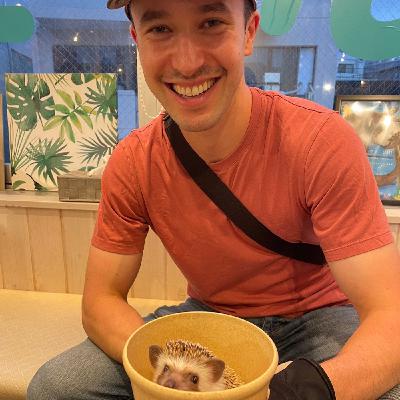
Our friend Rickey takes a life changing trip to Japan. We ask him about his expectations beforehand and document his reactions throughout the trip.
Topics we discuss:
- What is best convenience store in Japan?
- What is your impression of the Japanese people?
- Best food in Japan
- The amazing toilets in Japan
- Animal cafe experience
- Japanese marketing and advertisements
- Difference between Japanese and American fashion
Reach out to Pat:
PATRICKTLEE7@GMAIL.COM

In 2018, Tori was on the path to becoming a full-time missionary when the story broke that John Allen Chau, an young American missionary, was killed off the coast of North Sentinel Island by indigenous people he was trying to evangelize. Chau was determined to reach the island even though it was strictly off limits to all outsiders. This event gained global attention and greatly disturbed Tori. She began a journey of doubt and an unraveling of her worldview. In this episode we discuss the following topics:
Discovering faith by reading books written by atheists
Is it possible to be a Christian and not have certainty about God's existence?
How should Christians evangelize, keeping in mind Christianity's historical connection to colonialism?
What are other ways the Gospel can be presented other than Jesus dying for sins?
Does being a Christian simply mean assenting to a list religious concepts?
Practicing Christianity because it leads to human flourishing, not because it makes sense intellectually
The difference between what Gen-Z is looking for in Christianity and what past generations looked for
References:
"The Mission" documentary about Chau by National Geographic (https://films.nationalgeographic.com/the-mission)
The God Delusion book by famous atheist Richard Dawkins (https://en.wikipedia.org/wiki/The_God_Delusion)
"This Cultural Moment" podcast (https://open.spotify.com/show/5vc4AILCeO1HDAQV8jE8J4)
Surprised by Hope book by theologian N.T. Wright (https://www.goodreads.com/book/show/2319645.Surprised_by_Hope)
Contact Pat:
DM me on Instagram! @iusedtothinkpodcast
Email: PATRICKTLEE7@GMAIL.COM

Angela consistently found herself in positions of leadership throughout her life. From leading ministries at church, to becoming head pastor while working as the Executive Director for a non-profit. But when birthdays and holidays rolled around each year, she looked around and realized that that no one truly knew the real Angela.
Angela talks with us about how leadership can be isolating by nature and the importance of developing authentic friendships with people who recognize your value apart from your work.
The podcast's new Facebook page! https://www.facebook.com/iusedtothinkpodcast/
Discover more about Harambee Ministries:
https://www.harambeeministries.org/
Give to Harambee: https://harambeeministriesca-bloom.kindful.com/?campaign=1274146
About Angela Lee:
Angela Lee is a native East Coast kid but is happy to now call California home. Angela resides in Pasadena with her husband Paul, her 13-year-old bonus daughter Lizzie, 4-year-old, Justise (pronounced “justice”), and 3 year old, Ayla (like Kayla). Angela graduated from the University of Delaware with her degree in Human Services with a concentration in Clinical Services. She went on and applied her passion for youth by working with as a Counselor with Communities in Schools, Education Director for the Boys & Girls Club, and a Program Director for YMCA of Metropolitan Dallas.
Angela has served in ministry, bi-vocationally at first, and eventually full time for the last 13 years. In 2015, she moved to California to serve as a Junior High Pastor at Saddleback Church and in 2017 moved on to a Pastoral Position at Fellowship Monrovia where she has served and preached the last 6 years.
In January 2022, Angela responded to the call to neighborhood ministry which led her to now also serving as Executive Director at Harambee Ministries in Northwest Pasadena.
Angela’s family is bold and diverse with her father who is African American and her mother who is Puerto Rican. She is the oldest of four children and credits her parents for fostering her love for others and her strong commitment to service. Since being charged, by God, with raising Justise and Ayla, Angela has been inspired to continue her journey into racial justice and reconciliation and what it means to raise Black/Puerto Rican/Korean girls in America amidst the current cultural climate. She is a wife, mom, sister, pastor, preacher, friend, surviving on coffee and Peloton rides. She’s the most excited to add her newest title, “Auntie & Godmother” to her newest nephew in Minnesota.
Angela is passionate about Jesus, people, mental health, justice, reconciliation, Disneyland, and yummy food.
Transcript for this episode: https://share.descript.com/view/cOP4yabQrZd

What does the typical human lifestyle and experience look like on Earth? When Caleb visited India for the first time, he had a feeling he wasn't in Kansas anymore. The radical differences in culture, food, personal space, views of marriage, road etiquette, and language caused him to think about whether the American experience was common or not.
We discuss how over 50% of human beings live in either China, India, or the continent of Africa, and the implications that has on expectations, lifestyle, and happiness. Although ethnocentrism is often presented negatively, it is actually neutral in definition and being aware of it can help us more accurately understand other cultures. In addition, with an awareness of ethnocentrism, we talk about what makes Christianity a truly universal religion and the danger of conflating political agendas with Christian values.
Notes & Links from Caleb:
Men holding hands in India is not romantic or sexual. But it would be perceived that way in America.
https://scroll.in/article/889972/a-british-photographer-captures-the-very-indian-phenomenon-of-men-non-romantically-holding-hands
Horn honking in India - rampant - way of letting people know you are there.
https://www.linkedin.com/pulse/why-do-indians-honk-so-much-ca-nitin-brahma
Matrimonial Advertisements in Indian newspapers -- Marriage is viewed as more social contract / transactional
https://www.tribuneindia.com/classified/grommswanted
Life Expectancy: https://ourworldindata.org/life-expectancy
1800-1900 (19th Century): Average global life expectancy was 29 years old.
1950: Average global life expectancy was 46 years old. USA average was 68 years old.
2015: Average global life expectancy was 71 years old. USA average was 79 years old.
Womens vs. mens train cars in Delhi
https://en.wikipedia.org/wiki/Women-only_passenger_car#:~:text=Across%20India%2C%20all%20long%2Ddistance,are%20also%20allowed%20to%20travel.
https://www.npr.org/sections/goatsandsoda/2016/04/04/472997605/why-i-love-riding-on-the-women-only-car-on-delhis-metro
Americans Over 65 Years of Age: https://www.un.org/en/global-issues/population
1900: 2.2 Million
2009: 39.7 Million
2019: 54.1 Million
2040 (Projected): 80.8 Million
2060 (Projected): 90.7 Million
Population Growth (Global):
0000: 212 Million
1600: 646 Million
1800: 1 Billion
1900: 1.34 Billion
1950: 2.82 Billion
2000: 6.00 Billion
2022: 8.00 Billion
1.4 Billion - India 18%
1.4 Billion - China 18%
1.4 Billion - African Continent 18%
740 Million - European Continent 9.5%
330 Million - United States 4%
2037: 9.00 Billion (projected by UN)
Over half of the growth between 2022 and 2050 will be in Africa.
Research Links:
Percentage of Americans that View America as the best:
https://www.pewresearch.org/short-reads/2023/08/29/majority-of-americans-say-us-is-one-of-the-greatest-countries-in-the-world/
Transcript to this episode with Caleb: https://share.descript.com/view/pKliP76e2Bz
Pat's Contact: patricktlee7@gmail.com

Now I think...I can start a podcast ;)
Thank you, thank you, thank you for listening! New episode this Tuesday morning, and many more to come!
The pod's new YouTube channel: https://www.youtube.com/@iusedtothinkpodcast
Do you know someone who would be a good guest on the show? Reach out to me!
patricktlee7@gmail.com
What is the difference between control and influence? Which trait does a good leader exhibit?
Steven wrestled with these questions after coming to terms with his own failures as a pastor, business leader, father, and husband. Growing up with a natural ability to teach and explain, Steven realized that he had the skills to influence others. Yet the line between control and influence was difficult to walk. In this episode, we talk about the concept of "honoring others' agency" and how curiosity (rather than control) is one of the most powerful ways to help those around us in their journey to reach their full potential.
Topics:
Reframing
Selling
Hagar and Ishmael
Being a good father
Listening to respond vs. Listening to learn
References:
Clarity Focus Heart Coaching & Consulting: http://clarityfocusheart.com/my-story/ (Steven's leadership coaching non-profit)
Refocused Relationships: https://refocusedrelationships.com/ (Steven's ministry for LGBTQ+ members and their parents)
"Hitchhiker's Guide to the Galaxy" by Douglas Adams
"Sell Me This Pen" video with Jordan Belfort, the original Wolf of Wall Street: https://www.youtube.com/watch?v=vbQPxhIcFaQ
"The moral roots of liberal and conservatives" TED Talk with Jonathan Haidt: https://www.ted.com/talks/jonathan_haidt_the_moral_roots_of_liberals_and_conservatives?language=en
Transcript for Episode 13 with Steven: https://share.descript.com/view/zYHp2AdpQaj
Pat's Contact Info: patricktlee7@gmail.com

After law school, Gabby began working as an asylum officer for the U.S. government. Her experience moving from country to country as a child led her to seek a career in which she could work with immigrants. As she worked domestically with refugees seeking asylum in the U.S., she was disheartened by the wealthier and more fortunate refugees who took advantage of the immigration system.
The Department of Homeland Security later moved Gabby to the role of refugee officer, sending her to less developed countries to interview refugees directly in their countries of refuge. She heard stories of suffering and loss. Her view refugees began to change as she saw the true experience of the majority of refugees.
At the same time, Gabby started reading the Bible from cover to cover. She read verses about loving our neighbor and asked herself, "Who is my neighbor?" It became clear to her, that according to God, the foreigner and the sojourner were her neighbors - and that God had perfectly placed her in a position to love them.
"When you reap the harvest of your land, do not reap to the very edges of your field or gather the gleanings of your harvest. Do not go over your vineyard a second time or pick up the grapes that have fallen. Leave them for the poor and the foreigner. I am the Lord your God." - Leviticus 19:9-10 NIV
Topics mentioned in this interview:
Syrian refugee crisis
Immigration and the Bible
Growing up as an immigrant
ISIS
Muslim culture
God and the Israelites
Loving your neighbor
The poor and the sojourner
Travel
Contact Pat: patricktlee7@gmail.com
Transcript for this episode with Gabby: https://share.descript.com/view/alZafgUjAXV

Diana is from the Dominican Republic. She moved to the United States for college and became one of (approximately) ten Dominicans to ever attend UCLA. Diana saw this journey as an opportunity to start fresh - she associated America with happiness and Disneyland. However, her depression continued as she struggled to find community in a new environment.
During her time at school, her connection to her childhood Catholic faith began to change. She began attending a Christian club with roots in different traditions and found a community to belong to. She also discovered the role of love within Christianity and the love of God for the individual as well as the collective.
I now provide the transcript to episodes! Click here for Ep. 11 with Diana: https://share.descript.com/view/tKvUMbGrFzL
Contact Pat: patricktlee7@gmail.com

Give to camp here: https://bit.ly/3Nry6Md
"Honestly, as a therapist...you can't help people do work you haven't done."
Maria moved from the nature-filled Pacific Northwest to urban Los Angeles to pursue her dream of starting a camp for at-risk youth. Along the way, she realized that the world is much more "gray" than black and white. She learned how to live in the tension between accepting the complexities of the world while being upset at injustice. Maria talks about how we can all heal from traumas because our minds and bodies were built to heal. Eventually Maria was able to fulfill her dream of starting camp and creating life changing experiences for children in the foster system
References:
Dawn of Hope: non-profit organization that Maria started to host camp (https://dawnofhopela.org)
Royal Family Kids / For the Children: faith-based organization created to create life changing moments for children who have experiences relational trauma (https://www.forthechildren.org/about-us/camps)
Fuller Theological Seminary: interdenominational, Christian seminary in Pasadena, California (https://www.fuller.edu/about/)
80 Year Long Harvard Study on Happiness: https://www.theatlantic.com/ideas/archive/2023/01/harvard-happiness-study-relationships/672753/
I now provide the transcript to episodes! Click here for Ep. 10 with Maria: https://share.descript.com/view/mkNUyt4eDM5

Nathan's website: https://nathantudor.com
Nathan's book "The Empire's Lion": https://amzn.to/3YgEKrf
What do ancient Sumerian poems have to do with my life in 2023?
When we think of "myths", we often think of primitive stories containing outdated themes and un-relatable characters. In this episode, Nathan shows us that mythology is powerfully relevant...and may actually be what society needs more than ever.
Drawing from his experience studying myths at Oxford, Nathan tells about how he came to see fantasy as a legitimate genre and how that shift influenced him as a writer and author. Nathan shares that we are first "narrative beings long before we are scientific beings" and how great storytelling will always captivate us as humans.
References:
- Epic of Gilgamesh (ancient Mesopotamian epic poem)
- Star Wars: Episode V – The Empire Strikes Back (some sci-fi movie from the 80's)
- The BEMA Podcast (a podcast focusing on the Bible through the lens of historical context)
- The Iliad and The Odyssey (ancient Greek epic poems by Homer)
- Makoto Fujimura (what Pat references in this episode is from the book "Art + Faith" (https://amzn.to/3HPiXkZ))
- Ira Glass quote Nathan was referencing:
"Nobody tells this to people who are beginners, I wish someone told me. All of us who do creative work, we get into it because we have good taste. But there is this gap. For the first couple years you make stuff, it’s just not that good...But your taste, the thing that got you into the game, is still killer. And your taste is why your work disappoints you. A lot of people never get past this phase, they quit. Most people I know who do interesting, creative work went through years of this. We know our work doesn’t have this special thing that we want it to have. We all go through this. And if you are just starting out or you are still in this phase, you gotta know its normal and the most important thing you can do is do a lot of work. Put yourself on a deadline so that every week you will finish one story. It is only by going through a volume of work that you will close that gap, and your work will be as good as your ambitions. And I took longer to figure out how to do this than anyone I’ve ever met. It’s gonna take awhile. It’s normal to take awhile. You’ve just gotta fight your way through."

By all measures of success, John became successful at only 27 years old. As a young entrepreneur, he ran a booming dinner theater in his hometown of Jacksonville, Florida. Five nights a week of live entertainment from the best and most talented. In his words, "a cultural runaway success." He was active in the gay community, had a stint as a stripper, and also had a partner - contrary to the Baptist Christian beliefs he was raised with.
But the reality was, none of this made him happy.
John shares the story of the shifts that occurred over many years that led him to leave his restaurant, his partner, and a life that he could not sustain. He tells us about the importance of putting "Jesus in His rightful place" and the peace that brought him.
At the end of this episode, John's wife, Leah, joins us in a discussion about whether heterosexuality is necessary for a Christian, the difference between attraction and love, and what makes up our true identity.
References:
"The Chosen" (highly rated TV Series on the life of Jesus) - Dallas Jenkins

Jordon talks about beginnings of the re-enchantment phase and the reemergence of joy in his own life. He speaks of the importance of relating to the struggles of men and women in the Bible and acknowledging our true state. Only by recognizing our need can we take steps to rid of the things that harm us and begin to choose life.
Grocery shopping is a relatively easy task for most of us. Yet after experiencing the loss of his mom and a vigorous academic life in college, Jordon's mental health left him helpless in the cereal aisle. In this episode, Jordon breaks down three stages of growth in his life and the circumstances that led to each.
In a post-pandemic society, many of us have struggled with the loss of a dream or an ideal life. Jordon speaks about how he came to terms with this reality in his own journey and the steps he took to keep moving forward.
References in the episode:
RUF - Reformed University Fellowship (where Jordon and I met during our time at UCLA)
Richard Rohr - Franciscan priest and prominent spirituality author
The Shawshank Redemption - 1994 critically acclaimed film based on the Stephen King novel
"Fyodor, Frodo, and Finding Value" - Episode 3 of this podcast (https://iusedtothink.podbean.com/e/frodo-and-finding-value/)
Quotes:
"Get busy living or get busy dying." - The Shawshank Redemption

Comments

Download from Google Play

Download from App Store
 United States