


 Claim Ownership
ICT Podcast
Subscribed: 3Played: 25
Subscribe

© 2023 Anand Tamboli
Description
Innovation, communication, technology – a few key areas that are super important in today’s world. But no matter how much you talk about them, learn about them, and search about them, it doesn’t seem to be enough. There is always something new to learn and to practice. If you want to know what it takes to be a better innovator, better communicator, and leverage technology to make this world a better place, tune-in now. On this podcast, I bring new perspectives, ideas, tips, and techniques so that you can improve all these aspects of your life.
51 Episodes
Reverse

On today's show, I have Dr Rebecca L. Self. Rebecca is the co-founder and CEO of APOGEO Group, which specialises in accelerating the transformation of global organizations through leadership development and learning.Her research and work focus on building and maintaining cultures where people thrive, and the roles leaders as well as learning play. Today we are talking about a few challenges, particularly around innovation and transformation.In this episode, we discuss:Typical legacy enterprise challenges you are seeing these days.How do you pinpoint whether it is a technology or people/cultural problem?How can leaders find out issues or root causes behind abysmal employee engagements?In your work, how do you progress from diagnosis to the next step?Hit and miss efforts - is that an execution problem or diagnosis problem?Why many companies and leaders are not prepared to take risks or major steps in transformation?How do you recommend leaders paint futuristic scenarios? "Trying to change engine while flying..." - What would you say to leaders to convince taking larger change projects?What is that one tipping point when leaders go from "maybe or may not be" to "yes?"Do leaders need to be innovators to promote innovation in the organization? Rebecca L. Self has created transformational learning and media content for global audiences for over 20 years, first as a writer and producer for print and television, then as a Professor in US and European Universities, as Director of Content Development at the industry-leading digital learning firm Gronstedt Group, and as a strategic leadership advisor to multinational firms through Thunderbird School of Global Management and team coaching, rated by Bersin and Associates as one of the top 3 executive coaching firms in the world. Before founding APOGEO Group, Rebecca co-designed and delivered Thunderbird School of Global Management’s largest leadership development program in the Middle East, and worked with leaders at every level of organizations in over 40 countries. Rebecca spent over 15 years teaching in Universities in the United States and Europe on topics related to culture, communication, and leadership and has been named one of the top 10 Graduate Instructors at the University of Colorado and the Most Inspiring Professor at Franklin University Switzerland. Her work has been featured or published in business journals, academic presses, and consumer publications, including CERN’s IdeaSquare Journal of Experimental Innovation. She delivers keynote addresses to leadership forums and women’s professional networks around the world, including being an Invited speaker at TEDx London Business School.Support the show

Today on the podcast, I have someone who is often called the first leadership guru for the digital generation. Emmanuel Gobillot. He divides his time between researching and writing, speaking and consulting globally on leadership, collaboration and innovation. As an author of 6 bestsellers and three ebooks, Emmanuel is one of the foremost thinkers on new leadership and organisation models. And today, we are talking about the role of leadership in innovation and change. In this episode, we are talking about:What do you mean by "There must be a better way, and together we can find it?"What is the common theme in organisational culture that goes wrong often?How does formalisation hinder or restrict the progress in an organisation?How can leaders choose when to go formal way or otherwise?Go alone, or go together? Go far or go faster?Isn't then collaboration means we go slower?Quality-Cost-Delivery, is it possible to achieve all three?How to rock the boat when changing?How are things different post-Covid?Described as 'the first leadership guru for the digital generation' and 'the freshest voice in leadership today, Emmanuel divides his time between researching and writing, speaking and consulting globally on leadership, collaboration and innovation.He is the author of 6 UK and US bestsellers and three ebooks, establishing him as one of the foremost thinkers on new leadership and organisation models.Before starting his firm, Emmanuel was Director of FMCG Consulting and Leadership Services at HayGroup. A French National, Emmanuel moved to the UK in 1985. He holds an International Baccalaureate, a Master of Arts with Honours and a Diploma in Management Science.ABOUTICT Podcast is all about innovation, communication, and technology – a few key areas that are super important in today's world. If you want to know what it takes to be a better innovator, better communicator, and leverage technology to make this world a better place, please subscribe. Every week, I bring new perspectives, ideas, tips, and techniques so that you can improve all these aspects of your life. WEB: https://www.anandtamboli.comYOUTUBE: https://www.anandtamboli.com/youtubeLINKEDIN: https://www.anandtamboli.com/linkedinBOOKS: https://www.anandtamboli.com/amazonSupport the show

 1
1On today's show, I have Dr David Cropley. David is the Professor of Engineering Innovation at the University of South Australia and he specialises in helping people and organisations become better, more effective, problem solvers. Dr Cropley’s research interests range across creativity in education, the assessment of creativity and innovation in organisations, the role of creativity and innovation in terrorism and crime, and the nexus of creative problem-solving and engineering. We are talking about four lenses through which David sees innovation and the most important question - how can you become more innovative?In this episode, we are talking about:What does innovation mean to you? Your definition/mental model of innovation?Various criteria for a product, service, or business model to be innovative?The four lenses and more details about them.Details on the process, place, and personal aspect. I reckon people easily understand the product lens.How do I do it - as a business leader, small business owner, and individual working professional?Any easy and quick-to-follow tips you would like to recommend.David Cropley is a Professor of Engineering Innovation at the University of South Australia. He specialises in helping people and organisations become better, more effective, problem solvers.Dr Cropley has taught a variety of courses on engineering, including digital electronics, linear electronics, systems engineering, and engineering design. He teaches creativity and innovation across programs, from gifted education to management. Dr Cropley’s research interests range across creativity in education, the assessment of creativity and innovation in organisations, the role of creativity and innovation in terrorism and crime, and the nexus of creative problem-solving and engineering.Dr Cropley is the author/co-author of nine books including Creativity and Crime: A Psychological Analysis (Cambridge University Press, 2013); Creativity in Engineering: Novel Solutions to Complex Problems (Academic Press, 2015); The Psychology of Innovation in Organizations (Cambridge University Press, 2015), and Femina Problematis Solvendis – Problem-Solving Woman: A History of the Creativity of Women (Springer, 2020).Now a recognised expert in creative problem solving and innovation, Dr David Cropley was a scientific consultant and on-screen expert for the Australian ABC TV Documentaries Redesign My Brain (2013), Life at 9 (2014) and Redesign My Brain, Series 2 (2015). For more than 20 years, he has helped schools and organisations in Australia, the US, and Europe develop more effective, creative problem solvers.ABOUTICT Podcast is all about innovation, communication, and technology – a few key areas that are super important in today's world. If you want to know what it takes to be a better innovator, better communicator, and leverage technology to make this world a better place, please subscribe. Every week, I bring new perspectives, ideas, tips, and techniques so that you can improve all these aspects of your life. WEB: https://www.anandtamboli.comYOUTUBE: https://www.anandtamboli.com/youtubeLINKEDIN: https://www.anandtamboli.com/linkedinBOOKS: https://www.anandtamboli.com/amazonSupport the show

Today I have an award-winning scientist, futurist, and a thought leader, John Boudreau. John has produced over 200 publications, including more than 10 books. His research has been featured in HBR, Wall Street Journal, Fortune, and Business Week. Recently, John and his colleague Ravin, who also has been on this podcast earlier, published a book titled, "Work Without Jobs." So today I am delving into the ideas proposed in the book and what could it mean to you.In this episode, we are talking about:Deconstruction and reconstruction of work and jobs.How does that enable fluid and agile work?Does it apply to all industries? Why?Main obstacles and advice to adapt work without jobs model.The gig economy creates more insecurity for employees, how to work through that?Implications of new work operating system on culture.Leadership skills and competencies that are required to implement it.Dr John Boudreau is recognized worldwide as one of the leading evidence-based visionaries on the future of work and organization. He is known for his breakthrough research on the bridge between work, superior human capital, leadership and sustainable competitive advantage. His large-scale research studies and focused field research address the future of work and the global HR profession, work automation, HR measurement and analytics, decision-based HR, executive mobility, HR information systems, and organizational staffing and development.Dr Boudreau has produced over 200 publications, including more than 10 books. His research has been featured in Harvard Business Review, the Wall Street Journal, Fortune, and Business Week.Dr Boudreau is Professor Emeritus of Management and Organization and a Senior Research Scientist with the Center for Effective Organizations, at the Marshall School of Business, University of Southern California.ABOUTICT Podcast is all about innovation, communication, and technology – a few key areas that are super important in today's world. If you want to know what it takes to be a better innovator, better communicator, and leverage technology to make this world a better place, please subscribe. Every week, I bring new perspectives, ideas, tips, and techniques so that you can improve all these aspects of your life. WEB: https://www.anandtamboli.comYOUTUBE: https://www.anandtamboli.com/youtubeLINKEDIN: https://www.anandtamboli.com/linkedinBOOKS: https://www.anandtamboli.com/amazonSupport the show

Welcome to the ICT podcast. This is the second episode of season three. Today I am talking to a psychologist. Not in the way you might be guessing. But with someone who has a Ph.D. in Organizational Psychology, Liane Davey.A New York Times Bestselling author of three books, Liane is also known as the water cooler psychologist. And we are talking about team dynamics, leadership in current times, hybrid work environments, and so on.In this episode, we are talking about:Role of an organizational psychologistWhat does team dynamic mean?How has team dynamics evolved over the past decade?Issues with written communication in today's world.How can you handle written communication more effectively?Hybrid has complicated the whole situation, why?The one linchpin holding team dynamics together.Why a phone call is still the best option?What's the alternative for having water-cooler conversations?Practical advice for the new team managers.Liane Davey is a New York Times Bestselling author of three books, including The Good Fight: Use Productive Conflict to Get Your Team and Your Organization Back on Track and You First: Inspire Your Team to Grow Up, Get Along, and Get Stuff Done. Known as the Water Cooler Psychologist, she is a regular contributor to the Harvard Business Review and frequently called on by media outlets for her experience in leadership, team effectiveness, and productivity. As the co-founder of 3COze Inc., she advises companies such as Amazon, TD Bank, Walmart, UNICEF, 3M, and SONY. Liane has a PhD in Organizational Psychology. ABOUTICT Podcast is all about innovation, communication, and technology – a few key areas that are super important in today's world. If you want to know what it takes to be a better innovator, better communicator, and leverage technology to make this world a better place, please subscribe. Every week, I bring new perspectives, ideas, tips, and techniques so that you can improve all these aspects of your life. WEB: https://www.anandtamboli.comYOUTUBE: https://www.anandtamboli.com/youtubeLINKEDIN: https://www.anandtamboli.com/linkedinBOOKS: https://www.anandtamboli.com/amazonSupport the show

Welcome to the ICT podcast. This is the first episode of season three. In this episode, I have the Chairman and CEO of a well-known brand WD-40 Company, Garry Ridge.Garry is also an adjunct professor at the University of San Diego where he teaches the principles and practices of the corporate culture. In fact, in my conversation with him, I am delving into this further.In this episode, we are talking about:What does empathy mean to you? How do you practice it?What is the role of ego concerning empathy?What are some of the basic elements of distinctive culture at WD40?The obstacles faced when forming this tribe.Psychological safety is one of the main things that companies are now trying to achieve. What are your views on psychological safety at work?How do you foster such an environment?What are some of the major learning moments in your career?What would you advise your 20 yrs old self to do differently or do more?Garry O. Ridge is Chairman and CEO of WD-40 Company. He joined WD-40 Company in 1987 and held various leadership positions in the company before being appointed CEO in 1997. He is also an adjunct professor at the University of San Diego where he teaches the principles and practices of corporate culture in the Master of Science in Executive Leadership program. Garry is passionate about the learning and empowering organizational culture he has helped establish at the WD-40 Company. In 2009, he co-authored a book with Ken Blanchard outlining his effective leadership techniques, titled “Helping People Win at Work: A Business Philosophy Called ‘Don’t Mark My Paper, Help Me Get an A.’ ” A native of Australia, Mr Ridge holds a certificate in Modern Retailing and wholesale distribution and a Master of Science in Executive Leadership from the University of San Diego.ABOUTICT Podcast is all about innovation, communication, and technology – a few key areas that are super important in today's world. If you want to know what it takes to be a better innovator, better communicator, and leverage technology to make this world a better place, please subscribe. Every week, I bring new perspectives, ideas, tips, and techniques so that you can improve all these aspects of your life. WEB: https://www.anandtamboli.comYOUTUBE: https://www.anandtamboli.com/youtubeLINKEDIN: https://www.anandtamboli.com/linkedinBOOKS: https://www.anandtamboli.com/amazonSupport the show

One of the cliches in the business is, "Listen to your customers." So, of course, anyone and everyone will advise you about it. But exactly how to do that is still a mystery for many.Now I completely understand that listening to customers is essential, but how much should you listen? When should you listen? And when you shouldn't? And most importantly, don't we already listen enough?In this episode, we are talking about:Do you think companies listen enough to their customers?Do customers want more technology? Why?Don't you feel more tech also means customers could be misled or confused?What is the voice of a customer, in your opinion?How have things changed in the past two years?Isn't it true that customer doesn't know what they need? They can't articulate the solution themselves.How do you transform your brand into a customer-centric brand? What would be the first step?How can companies incorporate into their strategy?How can teams execute that at ground level?Frans Reichardt is a global speaker with over 35 years of experience in customer marketing and customer experience. He is also known as The Customer Listener. In recent years, Frans studied the power of feedback and the importance of listening to the voice of the customer. In his keynote speeches, he inspires and motivates professionals all over the world to listen to the voice of the customer in order to innovate, deliver frictionless customer experiences and work towards long-term sustainable customer relationships. In his keynotes, Frans shows the major shifts in customer behavior and customer loyalty and how brands and professionals can adapt to transform themselves into listening brands. In his eBook Listen Your Way To Customer SuCXess Frans shares 25 inspiring stories with tips and ideas for sustainable customer and employee happiness.ABOUTICT Podcast is all about innovation, communication, and technology – a few key areas that are super important in today's world. If you want to know what it takes to be a better innovator, better communicator, and leverage technology to make this world a better place, please subscribe. Every week, I bring new perspectives, ideas, tips, and techniques so that you can improve all these aspects of your life. WEB: https://www.anandtamboli.comLINKEDIN: https://www.anandtamboli.com/linkedinYOUTUBE: https://www.anandtamboli.com/youtubeBOOKS: https://www.anandtamboli.com/amazonSupport the show

Each time you make a decision, especially in a group setting, you are likely to be in a negotiation situation. Sometimes it is quite obvious; at other times, it is not.But one thing is clear that effective communication is directly proportional to effective negotiation. Better communication often translates into better negotiation. In today's episode, we will try and understand more about negotiation and get a few tips to get better at it.In this episode, we are talking about:What differentiates negotiation from other types of communication?How do you recognize when your conversation has become negotiation?Negotiation is win-win. What's the dark/invisible side of it?What is reactive devaluation? Why is it important?What is tactical empathy? How does it matter?More on "Why your offer is better than anything they could have in their pocket?"Three important things that one can do today to get better at negotiations?Limiting or damaging beliefs that stifle negotiation.How much being authentic and vulnerable can help or not help in negotiation?Dr. Savvas Trichas is a powerful keynote speaker who combines cutting-edge research with instruction creating motivational moments with practical value. He is a 3-times TEDx speaker (Las Vegas/USA, Lausanne/Switzerland, Athens/Greece). He has collaborated with several prestigious universities and organizations such as Stanford University, the University of Durham, the Ministry of Education and Culture, The Million Dollar Round Table, and the Association of Cyprus Banks. He is also associated with the FBI National Academy Associates Cyprus Police, where he serves as a guest lecturer on management, communication, and deception detection. In addition, Savvas Trichas is a Ph.D. holder in Human Resources Management and Marketing reviews manuscripts for international high-impact scientific journals related to leadership and organizational behavior, such as The Leadership Quarterly. His research interests focus on a specific nonverbal area, facial expressions, with his scientific publications ranking globally #1 and #2 in Google Scholar under the terms "leadership" and "facial expression." To be able to do so, he had to study the human face in depth. Consequently, he became an officially certified coder in the facial action coding system (FACS). FACS is a highly valid, widely used tool that combines anatomy with photo or video analysis observation to define exact facial muscle movement and intensity (Ekman, Friesen, & Hager, 2002; Trichas, 2015). Finally, when he's not on stage, Savvas is on TV analyzing important concepts of his expertise such as body language, leadership, lie detection, and psychology of communication.ABOUTICT Podcast is all about innovation, communication, and technology – a few key areas that are super important in today's world. If you want to know what it takes to be a better innovator, better communicator, and leverage technology to make this world a better place, please subscribe. Every week, I bring new perspectives, ideas, tips, and techniques so that you can improve all these aspects of your life. WEB: https://www.anandtamboli.comLINKEDIN: https://www.anandtamboli.com/linkedinYOUTUBE: https://www.anandtamboli.com/youtubeBOOKS: https://www.anandtamboli.com/amazonSupport the show

It sounds like a play of words that we are human beings and not human doings. And yet, most people are focused on doing things rather than being.The answer isn't that simple, as I have heard both sides of the argument. Some say that they focus on doing to be something or someone. At the same time, others say that they focus on being someone to do something.So, in today's episode, Ben and I are talking about the power of being and his new book.In this episode, we are talking about:Why did you write "The Power of Being?"What about the notion of 'doing something which leads to being something?'What challenges do we face when talking in terms of being versus doing?On adaptability.What is the meaning of connection to you?How is it different than social media connection?About the upcoming book "Love Work." Who is this book for?Ben Renshaw is one of the foremost leadership thinkers. Speaker, coach, and author, Ben's innovative worth leading organizations, senior executives, and entrepreneurs have brought him international acclaim. Formerly a classical violinist, Ben now plays a different tune getting the best out of people. He writes about leading and being successful in today's volatile world and is the author of ten popular books, including Being, Purpose, LEAD, and SuperCoaching. Ben's leadership development programs include 'Leading with Purpose,'' Leading Change,' and' Leading Sustainable Growth.' As an executive coach and leadership consultant, Ben has worked with clients like Allen & Overy, Aman Resorts, Barclays, Britvic, BT, Ghirardelli, Heathrow, Heinz, Henley Business School, Imperial Business School, InterContinental Hotels Group, KPMG, London Underground, Mandarin Oriental, M&S, P&G, Sainsbury's, Shiseido, Sky, UBS, Unilever, Virgin Media, and Warner Bros.Check out his upcoming book "Love Work."ABOUTICT Podcast is all about innovation, communication, and technology – a few key areas that are super important in today's world. If you want to know what it takes to be a better innovator, better communicator, and leverage technology to make this world a better place, please subscribe. Every week, I bring new perspectives, ideas, tips, and techniques so that you can improve all these aspects of your life. WEB: https://www.anandtamboli.comLINKEDIN: https://www.anandtamboli.com/linkedinYOUTUBE: https://www.anandtamboli.com/youtubeBOOKS: https://www.anandtamboli.com/amazonSupport the show

They say that anyone can answer a question but it takes smarts to ask the right question. And while it is true, questions and answers cannot be seen in siloes. They are always connected for obvious reasons. But more importantly, it is not just a question that needs smarts, but also an answer that needs intelligence. While a long-winded response is not a preferred answer, a concisely given incorrect answer is equally useless. So, what is Answer Intelligence (AQ), and how to develop it? I am talking with Brian Glibkowski in this episode to discuss more on it.In this episode, we are talking about:What is more important - asking the right question or answering appropriately?What makes or breaks an answer?Importance of recognizing what is being asked.How can one understand context?How to handle situations when you don't have a context?Origin of AQ (Answer Intelligence) framework.The six high AQ practices.Problems with overdoing only one aspect and how to avoid them?How AQ applies in a group setting?How does it help listeners?More resources to learn about AQ and practice.Dr. Brian Glibkowski is passionate about the role of questions and answers in business and society. Brian is an internationally recognized scholar. He is a recipient of the Emerald Citation of Excellence Award. His academic article was selected as one of the top 50 globally from 15,000 management articles in 300 peer-reviewed publications worldwide. His research on the six WH-questions (what, why when, where, who, how) as the Association of Human Resource Development recognized a common framework for communication and decision-making as one of ten articles that will shape the 21st century. He is a pioneer of a new science of answers called Answer Intelligence (AQ)™. He is the author of the book Answer Intelligence: Raise Your AQ (2021). Through AQ certification and associated assessments and tools, AQ is used by certified partners in the USA, UK, UAE, India, and Australia to benefit forward-thinking organizations worldwide.Dr. Glibkowski is a Professor and CEO of Semplar Science, the company established to commercialize his research. Learn more at www.RaiseYourAQ.com.ABOUTICT Podcast is all about innovation, communication, and technology – a few key areas that are super important in today's world. If you want to know what it takes to be a better innovator, better communicator, and leverage technology to make this world a better place, please subscribe. Every week, I bring new perspectives, ideas, tips, and techniques so that you can improve all these aspects of your life. WEB: https://www.anandtamboli.comLINKEDIN: https://www.anandtamboli.com/linkedinYOUTUBE: https://www.anandtamboli.com/youtubeBOOKS: https://www.anandtamboli.com/amazonSupport the show

Relationship management is commonly used in the context of managing relationships with your enterprise customers or clients. But did you know that if you become a truly relationship-centric organization, it is far easier to become customer-centric?In this episode, Maureen and I discuss business relationship management, the role, the function, and how it can add value to your organization's goals.In this episode, we are talking about:The difference between BRM and CRMWhy are BRM practices important in an organization?Product owner versus BRM.Where do PM, PMO, BA, CM, and BRM fit?How does BRM work beyond IT organization?What are the signs that an organization needs BRM?The business case for BRM function?How has this evolved post-pandemic?Importance of relationship-centered organization.Maureen Jesuthasan is a Senior Manager at West Monroe, a U.S.-based management consulting firm focused on industry, technology, and business transformation. She is an experienced strategist and decision-maker with a proven record of optimizing IT services while significantly reducing cost and increasing operational efficiency. As part of this process, she creates business specifications for enhancements through Business Relationship Management (BRM), Lean, and Lean Six Sigma capabilities. She has a bachelor's degree from Berry College and possesses advanced certifications in Business Relationship Management, Change Management, Lean, Lean Six Sigma, and ITIL. She is one of 10 individuals who has earned Master of Business Relationship (MBRM) certification. She is a recognized thought leader in building relationship-centered organizations and has presented at conferences and TEDx events on this topic. She is also working with a team sponsored by the Business Relationship Management Institute to develop a methodology that highlights how positive relationships can inspire value. ABOUTICT Podcast is all about innovation, communication, and technology – a few key areas that are super important in today's world. If you want to know what it takes to be a better innovator, better communicator, and leverage technology to make this world a better place, please subscribe. Every week, I bring new perspectives, ideas, tips, and techniques so that you can improve all these aspects of your life.WEB: https://www.anandtamboli.comLINKEDIN: https://www.anandtamboli.com/linkedinYOUTUBE: https://www.anandtamboli.com/youtubeBOOKS: https://www.anandtamboli.com/amazonSupport the show

You may have realized that our ability to achieve goals and lead a fulfilling life is often influenced by how we feel about ourselves. Which, in turn, largely depends on our self-awareness and the information we consume daily.So, in the world of social media and selfies, how do you stay in control? How do you handle information overload, stay assertive without being adamant? And how do you increase self-awareness?To talk about that, I have Shobha Nihalani on the podcast this week.In this episode, we are talking about:What prompted you to write about the reboot, reflect, and revive?What's wrong with wanting to improve after comparing on social media?Difference between positive self-dialogue and a negative one.How positive self-dialogue looks like?How does it affect self-esteem?How does self-esteem help in progress?Information overload affects self-esteem and internal dialogue.Tips for handling information overload.How to stay assertive but not adamant?Things one can do to increase self-esteem, self-awareness.The connection between work from home and self-awareness.Shobha has been a writer for over 25 years; she has lived in countries in Africa, Asia, North America, and Europe, currently resides in Hong Kong with her family. She has worked as a freelance journalist and later started her first book. Author of 8 novels and two non-fiction books, she took a slight detour in her career path to become a life coach last year. This change came about when she began to research and write her 11th book. Reboot Reflect Revive: Self-Esteem in a Selfie World shares inspiring stories, latest studies, and interviews that share insights related to self-esteem. She believes that our ability to achieve goals and lead a fulfilling life is often influenced by how we feel about ourselves. ABOUTICT Podcast is all about innovation, communication, and technology – a few key areas that are super important in today's world. If you want to know what it takes to be a better innovator, better communicator, and leverage technology to make this world a better place, please subscribe. Every week, I bring new perspectives, ideas, tips, and techniques so that you can improve all these aspects of your life.WEB: https://www.anandtamboli.comLINKEDIN: https://www.anandtamboli.com/linkedinYOUTUBE: https://www.anandtamboli.com/youtubeBOOKS: https://www.anandtamboli.com/amazonSupport the show

Office politics is such an interesting subject that people want to talk about it. But very few want to participate in it.How often have you experienced that good ideas and projects that make perfect sense don't go through, only because of office politics?So in this episode, Niven and I discuss why office politics is important and how to approach it with a positive mindset.In this episode we are talking about:Office politics, what is it and how does it come in the way of innovation?How does it impact the end results?The reason behind office politics.If you believe in a particular idea, how do you approach office politics?Even if you do everything right, you might be missing something.What's wrong with thinking about promotion?What went wrong with Blockbuster? (It's not about Netflix story) A spectrum of office politics and why it is important?How do you identify the type of political environment around you?What are the skills one needs to develop to sustain and thrive? Minefields to watch out for.Niven Postma has had a wide and varied career across multiple organizations and sectors, in South Africa and internationally, including being CEO of the Businesswomen’s Association (BWA), CEO of NOAH (Nurturing Orphans of AIDS for Humanity), Head of External Strategy, and then Head of the SARB Academy at the South African Reserve Bank and Head of Leadership and Culture for the Standard Bank Group (the largest bank by assets in Africa). She is a Harvard Business Review contributor, the author of the acclaimed book “If you don’t do politics, politics will do you – A guide to navigating office politics ethically and successfully”, a global strategy and culture consultant, and an expert lecturer and facilitator on women’s leadership development programs. She is also the Chairman of the Board of Cotlands, an NGO that does cutting-edge work in the Early Childhood Development space in South Africa and beyond. ABOUTICT Podcast is all about innovation, communication, and technology – a few key areas that are super important in today's world. If you want to know what it takes to be a better innovator, better communicator, and leverage technology to make this world a better place, please subscribe. Every week, I bring new perspectives, ideas, tips, and techniques so that you can improve all these aspects of your life.WEB: https://www.anandtamboli.comLINKEDIN: https://www.anandtamboli.com/linkedinYOUTUBE: https://www.anandtamboli.com/youtubeBOOKS: https://www.anandtamboli.com/amazonSupport the show
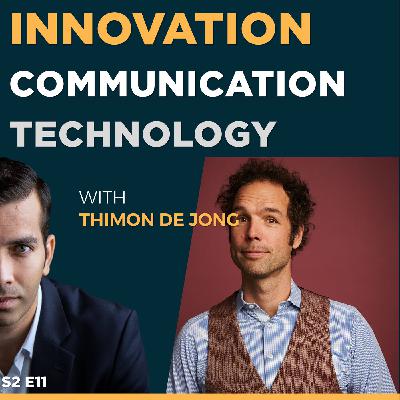
Crisis brings chaos, and chaos reshuffles the deck. And that can sometimes change things permanently. With the Covid crisis, many things would change forever, and some would come back to where they were before. But before it happens, there will be a phase, a phase of transformation and transition.And this is when we all have to be much more careful and alert because decisions made during this transition phase will impact our new setup. The new status quo, if you will.In this episode, Thimon and I are talking about this transition, how it might look like, what should you be doing as a business and as an individual?In this episode, we talk about:How might a post-covid comeback look like?What characterizes the post-covid world?Several things haven't been done during the last year and more. How does that change now?How have individuals and businesses managed expenses, and what it means now?Digital acceleration as well ad deceleration.How long will this post-covid transformation take?The best way businesses can manage multiple teams across geographies.Mental health repercussions post-covid.The reason behind the "great resignation" prediction.How can you control PTSD/S and PTG?If you are a people manager, what should you do in the next three months?What should you do in the next three months if you are an individual, solopreneur, working professional?Why shouldn't you work from home post-covid?Thimon de Jong is the founder of WHETSTON / strategic foresight; a think tank specialized in future human behavior & societal change and the implications for leadership & business strategy. He is a sought-after global (virtual) keynote presenter and leadership trainer. His clients include Morgan Stanley, Vodafone, IKEA, and Nike.Thimon also lectures at the social psychology department of Utrecht University, where he teaches master students how academic research can be practically applied to improve business strategy. He has a master's degree in Cultural Studies with a minor in International Business Studies. He is a former insight & strategy director at TrendsActive, a researcher at FreedomLab Future Studies, and editor-in-chief of RELOAD Magazine.ABOUTICT Podcast is all about innovation, communication, and technology – a few key areas that are super important in today's world. If you want to know what it takes to be a better innovator, better communicator, and leverage technology to make this world a better place, please subscribe. Every week, I bring new perspectives, ideas, tips, and techniques so that you can improve all these aspects of your life.WEB: https://www.anandtamboli.comLINKEDIN: https://www.anandtamboli.com/linkedinYOUTUBE: https://www.anandtamboli.com/youtubeBOOKS: https://www.anandtamboli.com/amazonSupport the show

When people do what makes them come alive, they deliver their best work. But the question is, how do you know what makes someone tick. How can you see and feel what others see and feel? This is when you need empathy. Now empathy is not just being in someone else's shoes. It's more than that. And today, Eksteen and I are going deeper into this subject.In this episode, we talk about:What is "Exponentially Me" all about?How does "doing what you love" fit in a corporate environment?Why do leaders miss seeing other's emotions?How do we appreciate other's preferences and working styles?Importance of diversity.What stops us from recognizing other's pain and emotions?How does that impact communication?Three levels of empathy.How do you enhance your abilities on these three levels?Does everyone have all three levels of empathy?How do these abilities grow at different stages and change over time? The best way you can develop three levels of empathy.Eksteen De Waal (MBA) is an international speaker, writer, author, thinker, and leadership consultant.With over 30 years of professional experience, Eksteen has a deep passion for team development and believes that compassion is at the heart of all truly successful organizations. He founded Exponentially Me, which focuses on corporate wellness by building resilience and empowering individuals to be their true selves in any corporate environment. These programs help people connect and discover the organization's heart that fans the flames of true engagement. He is a firm believer that performance follows passion. When people do what makes them come alive, they deliver their best work. His talks are delivered with a sense of compassion, inspiring people to bring their authentic selves to any situation they face. Through his own contrasting life experiences, Eksteen has embraced his uniqueness to live an exponentially joyful and flourishing life!ABOUTICT Podcast is all about innovation, communication, and technology – a few key areas that are super important in today's world. If you want to know what it takes to be a better innovator, better communicator, and leverage technology to make this world a better place, please subscribe. Every week, I bring new perspectives, ideas, tips, and techniques so that you can improve all these aspects of your life.WEB: https://www.anandtamboli.comLINKEDIN: https://www.anandtamboli.com/linkedinYOUTUBE: https://www.anandtamboli.com/youtubeBOOKS: https://www.anandtamboli.com/amazonSupport the show

What is the difference between user experience (UX) and customer experience (CX)? People often use these terms interchangeably and conflate. And that results in poor or sometimes terrible customer experience.I have Carsten Ley talking about what makes CX better and what breaks it for worse in this podcast episode.In this episode, we talk about:What's the difference between CX (customer experience) and UX (user experience)?Problem with tech companies and CX.Why do things go wrong in CX? Where are the usual gaps?Companies have had systems for quite some time; why are there still issues?The misconception of having a system.The interplay between departments and its impact.How and why are banks still ancient companies?How do you handle an angry customer?What people often ignore about CX?How complicated systems and processes are contributing to poor CX?How can companies fix CX problems and make them better?What can you as an individual do to make CX better?How do you stay positive and help customers?Carsten is an entrepreneur, enabler & project lead in experience management, OKRs, project & change management. After his 20+ year career in Banking, Consulting, Project & Customer Experience Management for companies like Deloitte, VW, Rolls-Royce, and Lazada in Europe, Latin America & South East Asia, he founded Asia PMO in 2018. His consulting firm is focused on getting clients fast and efficient into implementing company objectives, customer/ employee experience actions, and projects to foster a result- and team-oriented environment to excel in today's accelerated world. Besides helping 30+ clients sustainably implement Experience Management & OKRs, he is an internationally accomplished keynote speaker, trainer & Coach. He was recently elected in the top 150 CX global thought leaders.ABOUTICT Podcast is all about innovation, communication, and technology – a few key areas that are super important in today's world. If you want to know what it takes to be a better innovator, better communicator, and leverage technology to make this world a better place, please subscribe. Every week, I bring new perspectives, ideas, tips, and techniques so that you can improve all these aspects of your life.WEB: https://www.anandtamboli.comLINKEDIN: https://www.anandtamboli.com/linkedinYOUTUBE: https://www.anandtamboli.com/youtubeBOOKS: https://www.anandtamboli.com/amazonSupport the show

In most organizations, innovation as a practice doesn't have the same level of legitimacy as other teams and practices have. And part of the reason is institutional blindness.Unfortunately, institutional blindness is a real thing. As soon as a new employee joins the organization, they get too focused on their KPI, and they start to lose one of the most important aspects in innovation, context.So in this episode, I am talking with Neil Sequeira about innovation in large organizations.In this episode, we talk about:What is the business side of innovation?Why is it important to have a high-level view of your organization?Institutional blindness.Problem with KPI in innovation.Organization design not being supportive of innovative thinking.The biggest challenge in innovating in a large company.Should you have a separate innovation team?The problem of not being heard.Is it possible to make innovation legitimate?How to tackle this challenge?Neil is a connector, a joiner of dots - people, ideas, and things - to create and deliver value. While he is a chartered accountant by trade, his curious nature led him to various advisory, legal, software, hospitality, facilities management, and cash services industries before spending the last decade in the Australian telecommunications industry. Neil loves the first-hand experience of the joys, challenges, and heartbreak of creating and bringing ideas to life. But most of all, he loves to create platforms and opportunities to help other people find their authentic voices.ABOUTICT Podcast is all about innovation, communication, and technology – a few key areas that are super important in today’s world. If you want to know what it takes to be a better innovator, better communicator, and leverage technology to make this world a better place, please subscribe. Every week, I bring new perspectives, ideas, tips, and techniques so that you can improve all these aspects of your life.WEB: https://www.anandtamboli.comLINKEDIN: https://www.anandtamboli.com/linkedinYOUTUBE: https://www.anandtamboli.com/youtubeBOOKS: https://www.anandtamboli.com/amazonSupport the show

We all have heard about storytelling and we also know how they help in asserting certain values or to make a point.But how do you take people on a journey when something hasn't happened yet? Well, the answer may be future stories.I am chatting with Mike Wittenstein to understand more and learn, why future stories are more powerful?In this episode, we talk about:Is storytelling just a fad or something else?How do you differentiate a future story and one from the past?The practicality of future stories.Prototyping the future: What is it and why is it important?How do you prototype strategy?Who in the organization must be driving future stories?Designing service versus designing experience.Keeping bean-counters at bay.Clarity in communication for future stories.How do sci-fi movies fit in this?How do you encapsulate bigger organizational culture with only a few stories?Tips to practice future storytelling.Mike Wittenstein is a seasoned expert who consults and advises clients on strategy, change, experience design, and story. Mike works with leaders in specialty retail and other industries on how to fine-tune their business models and customer experience strategies as they face uncertain futures.Mike founded his company, Storyminers in 2002. And since that time, he and his team have served more than 800 organizations, from Fortune 100 sized companies to start-ups, providing them with game-changing yet practical ideas.Whether on-stage or online, Mike's thought-provoking presentations prepare working professionals to take early advantage of what's coming next.ABOUTICT Podcast is all about innovation, communication, and technology – a few key areas that are super important in today’s world. If you want to know what it takes to be a better innovator, better communicator, and leverage technology to make this world a better place, please subscribe. Every week, I bring new perspectives, ideas, tips, and techniques so that you can improve all these aspects of your life.WEB: https://www.anandtamboli.comLINKEDIN: https://www.anandtamboli.com/linkedinYOUTUBE: https://www.anandtamboli.com/youtubeBOOKS: https://www.anandtamboli.com/amazonSupport the show

Content creation doesn't make someone a thought leader. And talking about some cool technology or ideas doesn't make someone an innovator. I strongly believe that technology is not innovation, and innovation is not all about technology. Innovation is a very different ball game. It doesn't start with technology. It starts with you. Your purpose, your strengths, and the change you want to make in fellow human's lives.So, in today's episode, I have Saleema Vellani joining me from Washington DC. In this episode, we talk about:About the overlap between innovation and entrepreneurship.What is hybridpreneur?Why is the technology associated with innovation than real innovation?What is your definition of innovation?What does innovation have to do with connecting dots?Associative thinking and innovation.Why you must start with "what" and not with "why?"Future-proofing capabilities.Saleema is an entrepreneur, keynote speaker, an adjunct professor, and the author of Innovation Starts With “I”. At the age of 21, Saleema co-founded and launched Brazil’s top-rated language school to finance an orphanage and social development programs. Shortly after, she co-founded and ran a leading online translation agency in Italy to help companies expand their digital presence globally. For over 12 years, Saleema has led 100+ international organizations, nonprofits, and Fortune 500 companies to their next stage of growth and innovation.Currently, Saleema is the Founder and CEO of Ripple Impact, which is an accelerator and community that helps entrepreneurs grow their businesses and platforms. She also consults as an innovation strategist to the World Bank, teaches Design Thinking and Entrepreneurship at Johns Hopkins University, and is a frequent guest lecturer at business schools.ABOUTICT Podcast is all about innovation, communication, and technology – a few key areas that are super important in today’s world. If you want to know what it takes to be a better innovator, better communicator, and leverage technology to make this world a better place, please subscribe. Every week, I bring new perspectives, ideas, tips, and techniques so that you can improve all these aspects of your life.WEB: https://www.anandtamboli.comLINKEDIN: https://www.anandtamboli.com/linkedinYOUTUBE: https://www.anandtamboli.com/youtubeBOOKS: https://www.anandtamboli.com/amazonSupport the show

Most startups these days are rather too focused on which technology they use. How cool their AI system is and how deep their neural network is. The word "Agile" is thrown around like confetti in every possible discussion, and many of them do not really follow it in the right spirit.In this episode, I am talking with Anuj Sahni about this, joining from Aukland, New Zealand.In this episode, we talk about:In today's environment, why do some startups succeed and others don't?Why shouldn't you focus on technology? What's the alternative?What is economic value for customers?What can you do as a small business if you have missed some of the critical steps earlier?Using Agile versus agility.A few leading indicators of problems and/or success of your startup.Anuj is the founder of PICWA.io and is passionate about startups that make a positive impact. He helps startups take off successfully with his product-driven approach to tech and has worked with multiple high-growth startups in Israel, Australia, and the USA over the past 7 years. He has 2 patents under his belt and is a keen podcaster (WayForward.tv). ABOUTICT Podcast is all about innovation, communication, and technology – a few key areas that are super important in today’s world. If you want to know what it takes to be a better innovator, better communicator, and leverage technology to make this world a better place, please subscribe. Every week, I bring new perspectives, ideas, tips, and techniques so that you can improve all these aspects of your life.WEB: https://www.anandtamboli.comLINKEDIN: https://www.anandtamboli.com/linkedinYOUTUBE: https://www.anandtamboli.com/youtubeBOOKS: https://www.anandtamboli.com/amazonSupport the show

Comments

Download from Google Play

Download from App Store
 United States