


 Claim Ownership
IDEAS IN MOTION
Subscribed: 1Played: 25
Subscribe

© Dr S A Hamed Hosseini
Description
Podcasting personal ideas and speeches as an expert in global social studies, from a commonist point of view. Most episodes are produced out of my extra-teaching and extra-research projects.
166 Episodes
Reverse
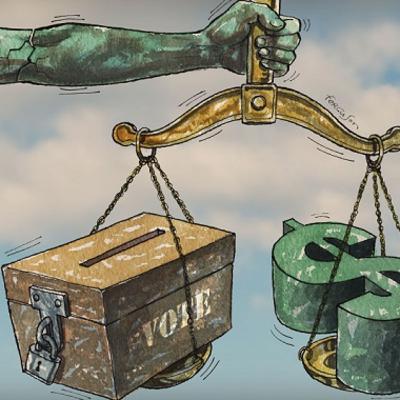
Hosseini in this episode debunks the myth of capitalist democracy that "Economic Liberalization brings about Political Liberalization!
He argues that in the 21st century where the liberal democracy is in demise as the result of losing its legitimacy and illiberal populism is on the rise, there are also great opportunities and motivations for realizing radical democracy as an alternative. This can be possible by liberating the politics from the influences of capitalist economy and extending democratic decision-making into the realms of politics, community and civil society, and socio-ecological systems (i.e. eco-centric democracy).
Does the future of democracy depend on the future of capitalism?
•Answer: Capitalism is inherently in contradiction to real democracy! Because it makes the politics subordinate to the economy,
•“Democracy must be extended into the very heart of economic sphere”!

Listen to the second part of the long article, The Well-living Paradigm by S A Hamed Hosseini

Listen to the first part of the long article, The well-living paradigm: reimagining quality of life in our turbulent world
By S A Haamed Hosseini
This article introduces the concept of ‘well-living’ as a transformative framework for reimagining quality of life in the face of current global socio-ecological challenges. Through a reflexive theoretical meta-analysis, it critically examines mainstream and reformist well-being discourses while drawing inspiration from transformative perspectives found in recent post-capitalist and indigenous movements. ‘Well-living’ is portrayed as both a civilizational endeavor and a multifaceted imperative, encompassing dimensions of creativity, liveability, conviviality, and alterity across various scales from individual to international contexts. Central to the ‘well-living’ paradigm are nine key qualities, including harmonious coexistence, aspirational foresight and purposefulness, solidarity, autonomy, authenticity, and integrity, thereby promoting an integrated approach to living in balance with oneself, others, and the natural world. Embracing ‘well-living’ as a goal and process can empower individuals and communities to challenge prevailing global capitalist paradigms, re-establish connections with the interconnected web of life, and strive for a more just, regenerative, and diverse world, accommodating multiple perspectives. Lastly, employing a 'commonist' perspective, the article outlines essential institutional and legislative-policy changes required to actualize the vision of 'well-living.'

How ‘Critically Open-minded’ are we? An Australian Perspective, through the World Values Survey (2005-2012)
Dr S A Hamed Hosseini
Professor Lawrence J. Saha
Abstract
Background:
In terms of theoretical background, the notion of ‘open-mindedness’ has been widely discussed in philosophy, and educational, organizational, and social psychological studies (as an aspect of individuals’ personality influenced by their social environment). However, it has not been a popular concept in sociology and anthropology. Despite growing attention to the issue of ‘open-mindedness’ outside the realm of sociology and the popularity of many subjects of sociological investigation that are directly related to this issue, no efforts have been made to develop a uniquely sociological definition or a social theory of open-mindedness.
In terms of social context, Australian society is known for its strong and colorful admiration of multiculturalism. As a modern society historically formed by immigration, Australia has formally adopted multiculturalism as its core value in making cultural and immigration policies. Despite all these historical and political moves towards a more culturally inclusive reorganization of social relations, racism, and negative attitudes towards refugees and ethnic minorities, not only persist but also continue to challenge the social cohesion in this country. The Australian economy has also taken significant steps towards corporate globalization by adopting economic rationalization policies and involving in regional and inter-regional trade agreements. Economic globalization, the escalation of population movements into Australia in recent decades as well as the proliferation of new communication technologies are at least in theory, widely expected to enhance people’s cultural openness and cosmopolitanism. Despite all these advancements, a number of studies and polls have observed that many Australians convey mixed feelings and uncertain, if not fully apprehensive, views about non-Western cultures and their ability to adopt and accommodate Australian/Western values like a liberal democracy.
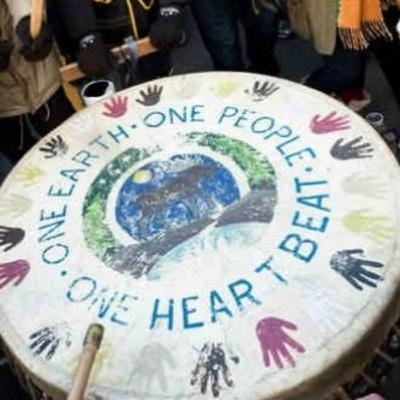
Social Movements for Global Alternatives: Livelihood, Collaboration, Transformation
Thursday, 14 July 2016: 09:20
Location: Hörsaal II (Neues Institutsgebäude (NIG))
Oral Presentation
S A Hamed Hosseini, The University of Newcastle, Australia
Barry GILLS, University of Helsinki, Finland
We live in a neoliberal era of multiple crises, social upheavals, and political flux. Yet the continuing confrontation between neoliberalism and its alternatives creates new possibilities for social and systemic transformation. Critical analysis of ideological divisions among today’s alternative projects/initiatives – via examining the historical, ideational, and practical roots of these differences – is important to understand past and present shortcomings and the continuing difficulties in creating coherent solutions. How do such projects construct alternative livelihood and social agency, beyond market-based individuation? To what extent do alternative initiatives engage collaboratively, and work across different approaches? The main objective of this paper is to examine how far the ‘alternatives to capital’ are being co-articulated, co-envisioned, and co-inspired, enabling cross-fertilizations, and integration. It proposes a comparative analytical framework to examine the co-evolution and contestations between a number of case studies that are influenced by four major alternative ideologies, i.e. ‘global Keynesianism’, ‘left inter-nationalism’, ‘solidarity economy’ and the ‘ecological commons’.
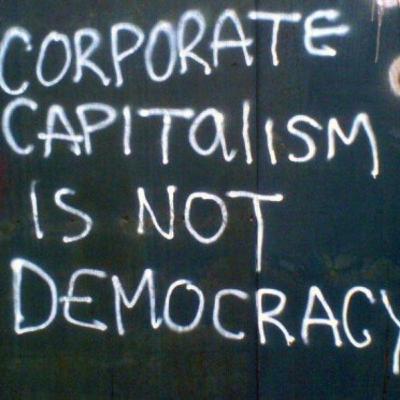
The Future of Capital and Its Alternatives in 21st Century: The Essentiality of Economic Democratization
Seyed A. HOSSEINI FARADONBEH, The University of Newcastle, Australia and Barry GILLS, University of Helsinki, Finland
Abstract Text:
In the 21st century, “Capital” requires a more comprehensive and applicable definition than merely a social process where money makes more money through production relations. Capital, in its material manifestation, is a socially organized ‘process’, through which surplus-value is produced and controlled by ‘unsustainable’ and ‘un-sovereign’ ways of exploiting labour (both manual and intellectual), land (and other commons), nature (non-renewable sources of energy and the earth’s bio-capacity including the climate). It is, however, important to equally emphasize, and theorize how Capital can also immaterially but objectively colonize and depoliticize societal/communal solidarities (from the level of the household, to the level of world community). Thus, a critical analysis of Capital/ist relations requires the theorization of not only the exploitation of labour, land and nature but also the systemic colonization of communal solidarities as non-material Commons, through the de-democratization of collective production and reproduction relations. Austerity regimes, for instance, are not only about protecting the corporate interest, e.g. by dispossessing social welfare, but also about an antagonistic relation towards democratic self-management, collaborative determination, and self-sufficient uses of resources. The colonization of social solidarities by Capital creates a fertile breeding ground for the resurgence of ethno-populist responses. We will argue here that the profound democratization of economic relations can liberate the transformative movements from the immense gravity of Capital by overcoming the dilemma of surviving while transforming ubiquitous capitalist relations.
Group: RC48 Social Movements, Collective Actions, and Social ChangeSession Selection: Future(s) of Democracy in the Post-Neoliberal Era: Problems, Protests, and Prospects
Abstract ID: 95391- Presentation at ISA World Congress of Sociology, Toronto, 15-28 July 2018

What makes us more ‘Critically Open-minded’ in a Globalized World? An Australian Perspective
S A Hamed Hosseini (The University of Newcastle)
Lawrence J Saha (The Australian National University)
ISA 2016 Conference Presentation, Vienna, Austria
Abstract
This paper defines and examines a new concept of ‘Critical Open-mindedness’ within an Australian context as a social-attitudinal collective phenomenon. This is in contrast to the popular social-psychological notions of open-mindedness as a cognitive-personal attribute. Our main objective is to investigate the relationship between Cognitive Open-mindedness, and Critical Open-mindedness. It draws on the data from the World Values Surveys (2005 and 2012) in Australia to operationalize both types of open-mindedness as composite indicators, composed of several dimensions. It then examines, using path analysis, the relationships of the two indicators on a number of mediating ideational, structural, and behavioral determinants. Critical Open-mindedness is found to be more dependent on socio-economic factors than Cognitive Open-mindedness does. However, the former is significantly and positively determined by the latter, especially the Social Trust and Anti-authoritarian dimensions of it. Critical Open-mindedness is also significantly and positively associated with the individuals’ tendency towards the political left, a cosmopolitan sense of belonging, confidence in environmental organizations, higher levels of education (the most important structural factor), gender (being female), confidence in humanitarian organizations, interest in politics, experiencing discrimination, and independence at work. We discuss the implications and consequences of the lack of Critical Open-mindedness to our understanding of our behavior regarding a range of social issues, for example, the creation of “negative collective identities” and social divisions through intolerant behavior. In this context, we argue that the “social collective” acts as a determinant rather than the characteristics or quality of individuals. Finally, we consider potential policy measures for fostering a healthy critical open-mindedness in the context of an increasingly globalized multicultural environment.
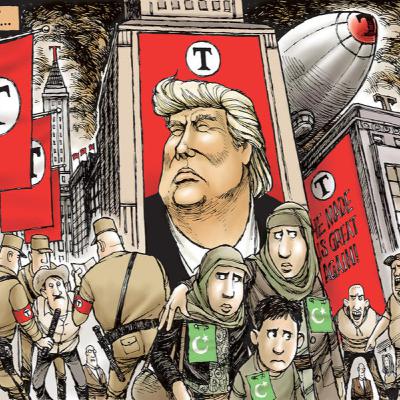
Theorizing the Rise of Right-Wing Populism in the Post-Globalist Era: Toward an Integrative Approach
ISA conference presentation, 2018, Toronto, Canada
Lawrence J. Saha, Australian National University
S A HamedHosseini, University of Newcastle
In this paper, we will present a critical review of the contemporary academic literature regarding the social nature and nurture of Rightwing Populism (RWP) as a macro-sociohistorical phenomenon. The main aim of this review is to address the existing theoretical shortcomings in sociological contributions to global studies, by highlighting the theoretical inconsistencies and gaps, in the literature, that distorts the potentials for constructing conceptual frameworks necessary to theorize the rise of new RWP in the new century. The review is structured around three main aspects of the phenomenon: (1) its social nature as a socio-historical phenomenon; (2) its social basis; and finally (3) the social mechanism and contextual factors that have given a global rise to RWP as a socio-political movement; a global network of movements that ironically defy globalism. Then we will discuss the possibility of developing a transformative sociological account with the capacity to be integrated with social psychological and psychological accounts. This paper will then be part of a series written by these authors that ultimately aims to facilitate the development of a macro-micro integrative framework for theorizing the subject.

From Well-being to Well-living: exploring the social meanings and determinants of living together
Presentation by S A Hamed Hosseini, 2016 Symposium of Health and Disability Research Network at UON.
In this paper, I will first briefly present the results of a quantitative analysis of data collected through the 2012 Australian version of the World Values Survey. Structural Equation Modelling (a rather sophisticated statistical method to explore interrelated variables/factors) is used to explore the social determinants of one of the most routine notions of wellbeing in the Australian context. The findings, as I will discuss, through being one of the most conservative, reductionist measures of the quality of life, clearly confirm the growing concerns around the inherent paradoxes of ‘being well’ in a capitalistic society.
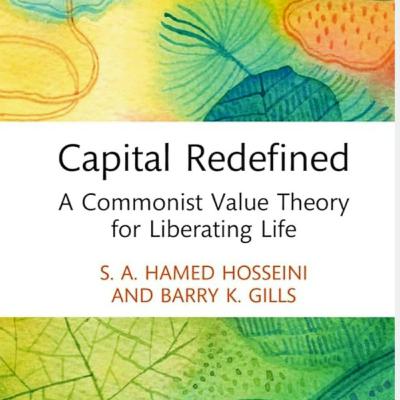
Listen to the second part of the fifth chapter of the book in this episode
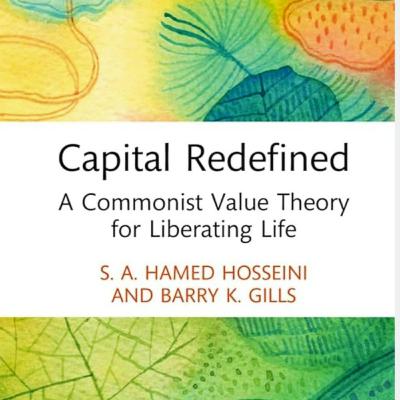
Listen to the first part of the fifth chapter of the book in this episode
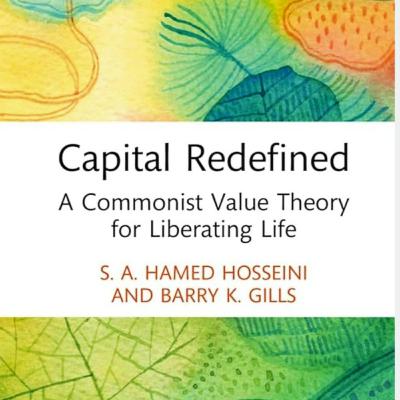
Listen to the fourth chapter of the book in this episode
Chapter 4 The modular architecture of capital
Abstract
This chapter introduces a modular framework that draws on the intersections between the Marxian theory of capital, critical realism, and the Aristotelian fourfold causation theory. The framework provides an inclusive approach that incorporates elements from these three theories, allowing for a more nuanced understanding of capital and its dynamics. It examines the concept of capital as ‘fetish value’ and its destructive operations, highlighting its erasure of ‘true value’ and the undermining of life’s self-sustenance. Capital is redefined as both “the product and the infra-process of perverting the fundamental causes of true value into the causes of fetish value. As the product, it is the corporeal manifestation of fetish value, and as the infra-process, it is essentially the abstraction and appropriation of fundamental commons.” The chapter redefines key Marxian concepts such as abstraction, reification, fetishization, and appropriation to illustrate the nature and architecture of capital. It delves into the infra-processes of de/commonization, which highlight how capital emerges and sustains itself through civilizing mechanisms, while also examining how counter-capital movements that aim to restore and reinvent true value can be incorporated into our theory of value.
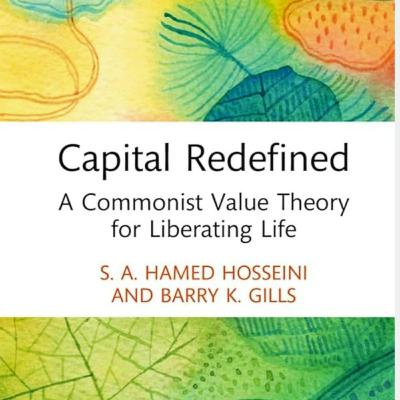
Listen to the third chapter of the book in this episode
Chapter 3 Toward a modular conception of capital: A metatheoretical
discussion
This chapter establishes the metatheoretical foundations for the
development of a novel model called the ‘commonist modular approach’ to
theorizing capital. It emphasizes that capital is not only characterized by
ongoing processes but also operates through modular structures, engaging in
diverse interactive socio-ecological mechanism. The focus is on examining the
connections between Marx's causal explanation, critical realism, the
Aristotelian doctrine of causality, and normative social theory. The chapter
adopts a pragmatic approach, piecing together compatible and complementary
elements from these philosophical traditions. Marx’s approach provides guidance
for analyzing capitalist dynamics, while critical realism offers insights into
understanding causality. The Aristotelian doctrine expands the concept of value
sources beyond labor, recognizing their multiplicity. By examining the
intersections between these traditions, the chapter lays the foundation for an
ontologically coherent framework for theorizing value. By integrating diverse
perspectives, this approach allows for a deeper understanding of the intricate
dynamics of capitalism, offering new pathways for transformative scholarship
within the realm of value theory.
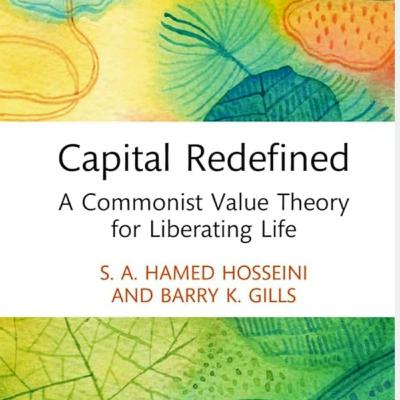
Listen to the second part of the second chapter of the book in this episode
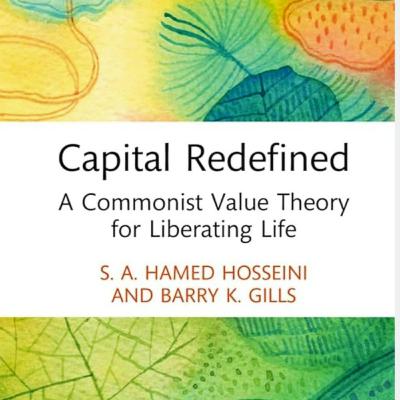
Listen to the first part of the second chapter of the book in this episode
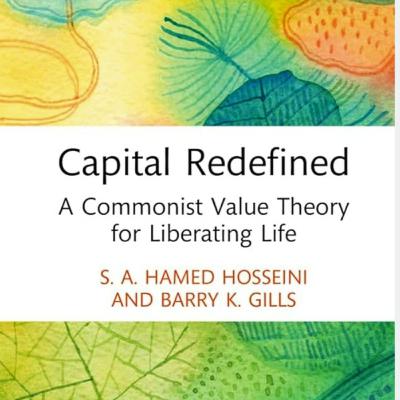
Listen to the second part of the first chapter of the book in this episode
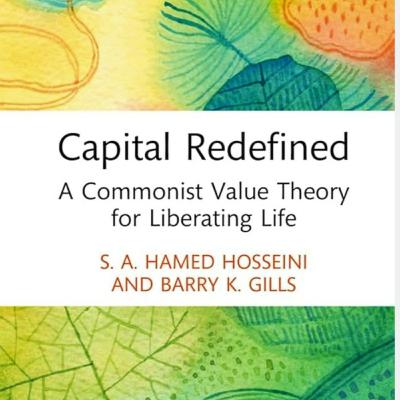
Listen to the first part of the first chapter of the book in this episode
Listen to the Epilogue chapter of the he boon in this final episode
Epilogue
This first edition of our short book remains a work in progress. It is an invitation to engage in a new and hopefully productive dialogue on how to address the challenges of understanding the intricate relationship between value and capital. We believe our proposed approach has also the potential to impact post-capitalist transformative theory and revolutionary praxis. We posit that ‘value’ must be re-examined and liberated from its subservient ties to capital. However, this must not come at the expense of disregarding how capital appropriates value. Under capitalism, value loses its inherent normativity, and Marxist critics have not provided a positive normative framework for capital as ‘value’ in motion. This conceptual ambiguity has led to confusion and division among critical theorists. ...
Listen to the third and final part of the sixth chapter of the book in this episode
Listen to the second part of the sixth chapter of the book in this episode

Comments

Download from Google Play

Download from App Store
 United States