


 Claim Ownership
IX Lab Research
Subscribed: 0Played: 0
Subscribe

© All rights reserved.
Description
Popularizing research in Information eXperience Lab at The University of Texas at Austin
12 Episodes
Reverse
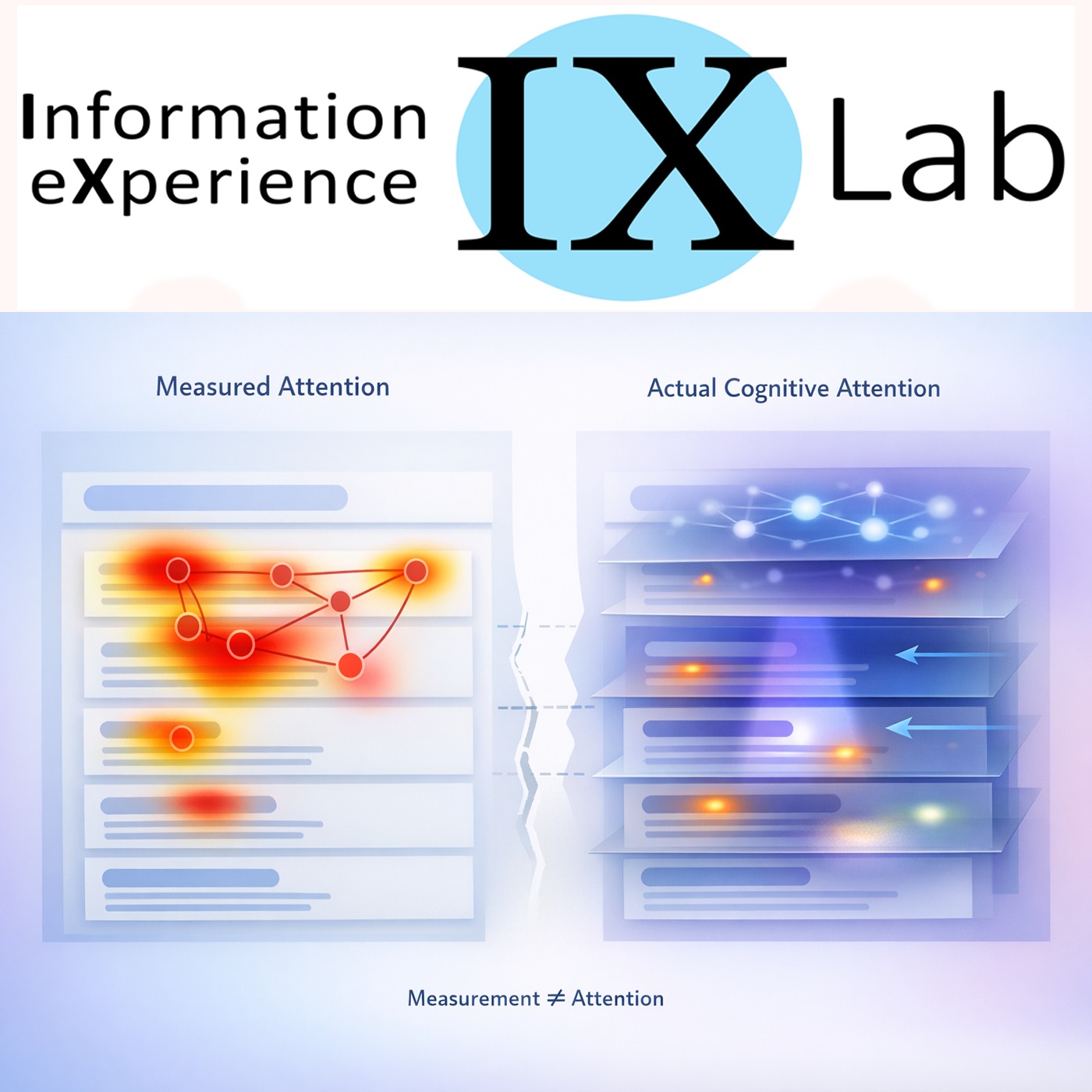
This perspective paper examines how the concept of human attention has been defined and measured within the CHIIR conference archives from 2016 to 2025. The authors reveal that while attention is a fundamental element of interactive information retrieval, it is rarely explicitly defined by researchers, who often rely on implicit assumptions rather than established cognitive theories. Through a systematic review of nineteen key papers, the study identifies visual attention as the primary area of focus, typically operationalized through eye-tracking metrics like fixation duration and gaze patterns. The text highlights a significant gap between methodological practice and theoretical foundations, noting that observable behaviors may not fully capture complex internal cognitive processes. To address these inconsistencies, the authors propose a theory-driven framework and recommend multi-method approaches to improve the rigor and reproducibility of future user studies. Ultimately, the source serves as a call to action for the research community to establish conceptual clarity when analyzing how users allocate their limited mental resources.
This research paper explores a sophisticated statistical framework for analyzing how people’s eyes move between different areas of an image. The authors utilize a Bayesian mixed-effects Markov model to study gaze transitions, allowing them to account for both individual differences and broader experimental factors. By tracking participants as they viewed distorted images of landmarks and artwork, the study investigated how image category and object recognition influence visual scanning patterns. Their findings indicate that the type of image being viewed significantly impacts gaze behavior, whereas whether a person recognized the image had a more subtle effect. Ultimately, the work demonstrates that this computational approach provides a more nuanced understanding of human visual attention than traditional analysis methods.
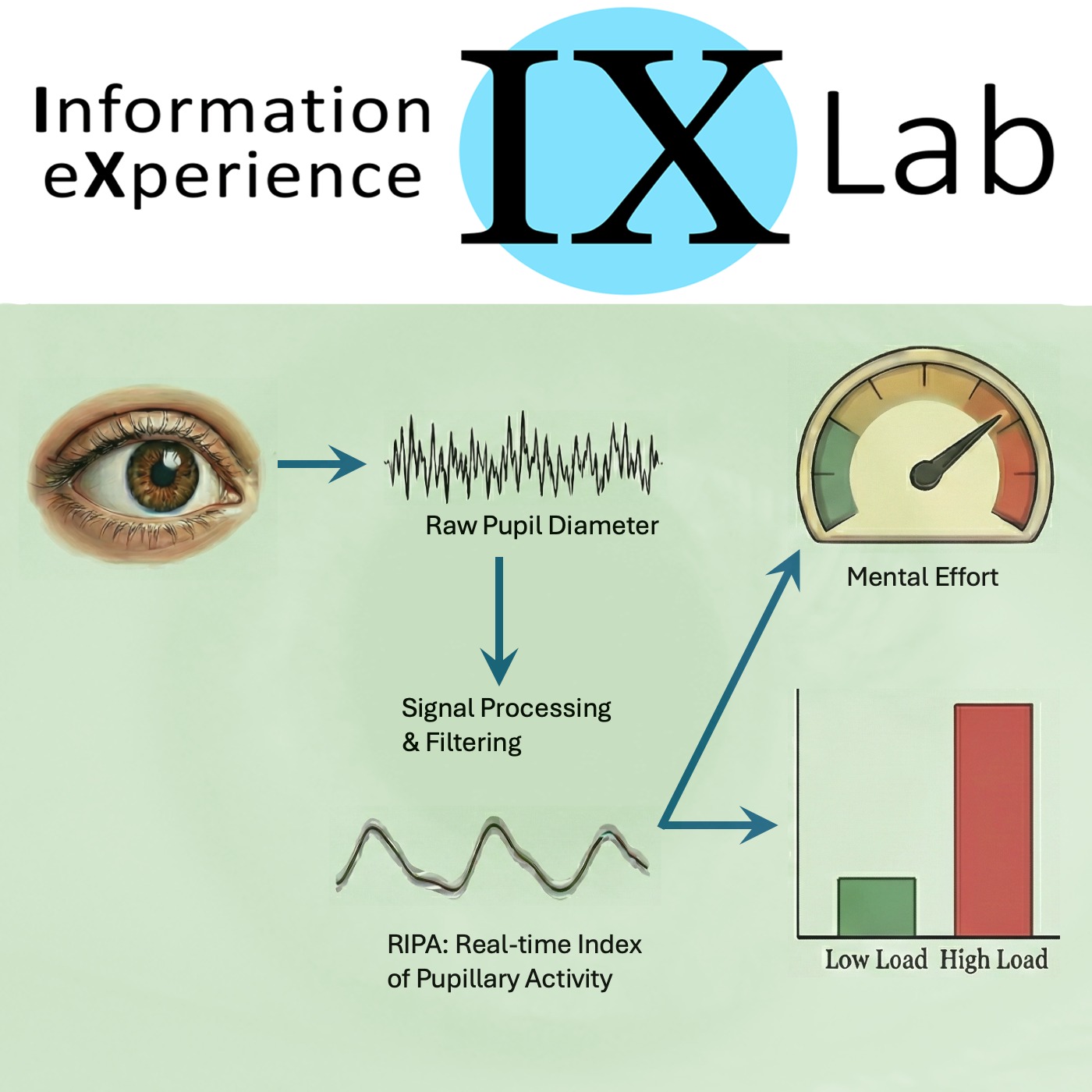
This article introduces RIPA2, an advanced pupillometric algorithm designed to measure mental effort in real time. By refining the parameters of Savitzky–Golay filters, the researchers successfully isolated pupil diameter fluctuations within specific frequency bands linked to cognitive load. The study validated this new method through both a structured N-back memory task and a naturalistic information-search task. Findings indicate that RIPA2 is more sensitive and reliable than its predecessor, effectively distinguishing between different levels of task difficulty and types of decision-making. The authors suggest this technology could enhance adaptive user interfaces and cognitive monitoring in professional or educational environments. This research provides a robust, low-latency solution for assessing psychological strain beyond traditional laboratory settings.

This paper presents a 2026 research study from the University of Texas at Austin examining how working memory capacity and task complexity influence a user's cognitive load and emotional state. By utilizing pupillometry and facial expression analysis, the researchers tracked the real-time mental effort of participants engaging in fact-checking and decision-making web searches. The findings reveal that complex decision-making significantly increases cognitive load, particularly for individuals with lower memory capacity who also experience higher levels of confusion and surprise. Conversely, users with higher memory capacity managed mental demands more efficiently and maintained positive emotions like joy and engagement during difficult tasks. This work suggests that digital interfaces should be designed to adapt to a user's unique cognitive profile to prevent information overload. Ultimately, the study highlights the deep intersection between human memory, emotional resilience, and information retrieval in modern computing environments.

This paper introduces g-Rel-READER, a specialized dataset designed to help researchers detect how humans judge the relevance of information using neurophysiological signals. By combining eye-tracking data and EEG recordings, the authors created a resource that maps brain activity and gaze patterns to specific words during reading tasks. The data was gathered from twenty-four participants who evaluated news stories for their usefulness in answering specific questions. This collection is unique because it provides precise spatial alignment between the text on the screen and the biological responses of the reader. Ultimately, the dataset aims to improve information retrieval systems by enabling them to recognize user interest and decision-making processes in real time.

Comments

Download from Google Play

Download from App Store
 United States