


 Claim Ownership
Impact Pricing
Subscribed: 95Played: 4,911
Subscribe

© Impact Pricing 2022
Description
The Impact Pricing Podcast will help you win more business at higher prices by teaching you about pricing and value.
Once you understand how your buyers perceive the value of your product, you can build, market and sell products that win at higher prices.
Pricing is really about creating, communicating and capturing value.
Once you understand how your buyers perceive the value of your product, you can build, market and sell products that win at higher prices.
Pricing is really about creating, communicating and capturing value.
763 Episodes
Reverse

This episode takes a slightly different approach than the usual Impact Pricing conversation. Instead of teaching a finished framework, Mark brings an early draft of his upcoming book to the table and asks Steven to react to it as a thoughtful pricing peer. Steven Forth, co-creator of ValueIQ, largely agrees with the direction of the book, but pauses on a key point: how buyer context is defined, and whether the argument separates value and willingness to pay too cleanly. Mark jokingly tells Steven he's "wrong," setting the tone for what follows: a calm, constructive discussion that explores where the ideas hold up and where they still need work. What unfolds is a straightforward, unscripted book review in progress. The ideas are tested against real examples, refined through debate, and shaped in real time. For listeners who care about pricing theory and how it actually gets formed, this episode offers a transparent look at how those ideas evolve before they're finalized and published. Why you have to check out today's podcast: Why buyer context is trickier than it sounds and where pricing frameworks often oversimplify it. How value and willingness to pay diverge in real buying decisions using practical examples. What this debate changes about how you think about pricing before ideas turn into rigid rules. "Most pricing books don't really deal with buyer context. That's why this conversation matters." — Steven Forth Topics Covered: 01:11 – Steven's career update, transition from being a CEO. 08:54 – Why this episode is different. Mark brings an unfinished book draft to the conversation, setting up a rare moment where ideas are explored, challenged, and shaped before they're finalized. 10:40 – The core question the book has to answer. A turning point in the review as Steven pushes on whether context affects only willingness to pay or fundamentally changes value itself. 17:13 – Testing the argument with real examples. They pressure-test the book's ideas using real buying scenarios where value stays the same but willingness to pay shifts dramatically. 22:10 – Where theory meets real buyer constraints. A discussion of budget limits, framing effects, and mental ceilings that complicate clean pricing logic and challenge how the book explains buyer behavior. 25:45 – How this feedback shapes the final book. Mark reflects on what this debate changes in the manuscript and why early, honest pushback is essential before pricing ideas turn into published frameworks. Key Takeaways: "Value didn't change, context did." — Steven Forth "I agree that context influences willingness to pay, but I'm not convinced it doesn't also influence value." — Steven Forth People Mentioned: Michael Mansard - referenced for his Compass Framework and ongoing work on pricing, value, and attribution. Edward Wong - Mentioned in the context of collaborative work on value attribution and pricing research. Karen Chiang - Mentioned as leading the services side of Ibbaka as Steven transitions away from CEO roles. Tom Nagle - Referenced in discussions around economic value, willingness to pay, and foundational pricing theory. Connect with Steven Forth: LinkedIn: https://www.linkedin.com/in/stevenforth/ Email: steven@ibbaka.com Connect with Mark Stiving: LinkedIn: https://www.linkedin.com/in/stiving/ Email: mark@impactpricing.com

This is an Impact Pricing Blog published on November 24, 2025, turned into an audio podcast so you can listen on the go. Read Full Article Here: https://impactpricing.com/blog/a-tool-to-reveal-your-value-literacy/ If you have any feedback, definitely send it. You can reach us at mark@impactpricing.com. Now, go make an impact. Connect with Mark Stiving: Email: mark@impactpricing.com LinkedIn: https://www.linkedin.com/in/stiving/

Kathryn Porritt is the founder and CEO of Iconic Empires, where she specializes in helping elite experts build luxury and premium positioning. With a focus on monetization expertise and authority, Kathryn works with clients to elevate their brands and expand their vision of possibilities. Her unique approach emphasizes mastery, rarity, and transformative experiences, enabling her clients to connect deeply with high-end buyers. In this episode, Mark Stiving sits down with Kathryn Porritt to explore the intricacies of selling luxury goods. They discuss the differences between luxury and premium buyers, the importance of creating an expanded vision of possibilities, and how to effectively communicate value in high-end markets. Why You Have to Check Out This Episode: Learn why luxury buyers don't negotiate and how expanding a buyer's future vision removes price from the conversation entirely. Understand the difference between premium and luxury pricing, and why treating them the same quietly caps your revenue. Discover how elite sellers confidently say bold prices without flinching, discounting, or overselling. "Expand a vision of possibility for people—show them what they can't see for themselves. When you focus on that, pricing becomes easy." – Kathryn Porritt Topics Covered: 01:30 – What Luxury Buyers Actually Buy. Why true luxury customers aren't purchasing features or value props—they're buying rarity, mastery, and first-of-its-kind experiences. 05:40 – Premium vs. Luxury: The Line Most Sellers Miss. How premium buyers still compare and negotiate—while luxury buyers step outside price entirely. 08:45 – The "Expanded Vision of Possibility" Framework. Why the most powerful pricing conversations anchor buyers in a future they didn't know was available. 12:30 – When Budgets Grow (Even in Corporations). How elite sellers expand scope and impact—causing "fixed" corporate budgets to quietly increase. 16:10 – Confidence, Control, and Saying the Number. Why the price you can say without hesitation determines whether the buyer trusts you. 19:40 – Intuition vs. Calculators in Luxury Pricing. How elite experts balance cost, margins, and intuition when there is no reference price. 23:20 – Why This Isn't Just for Luxury Brands. Mark connects the dots: this is exactly how every B2B seller should be selling value. 26:40 – One Pricing Principle That Changes Everything. Kathryn's closing advice—and why expanding possibilities is the fastest path to higher prices. Key Takeaways: "People at this level, people who buy luxury, like true luxury buyers, they're looking for something that's not necessarily about the value." – Kathryn Porritt "That expanded vision of possibility is the difference. And like I said, that's when pricing becomes almost obsolete in the conversation." – Kathryn Porritt "For a luxury buyer, it's not about the budget." – Kathryn Porritt People & Resources Mentioned: Iconic Empires – Kathryn's firm helping elite experts position, monetize, and sell at the highest levels. Jeff Bezos – Referenced as an example of true luxury buying behavior where budget is irrelevant Coca-Cola - Mentioned as a corporate example in the context of budget discussions for events. Luxury Market - Discussed as a distinct market segment with unique buyer motivations. Connect with Kathryn Porritt: Website: https://www.kathrynporritt.com/ Website: https://iconicempire.com Linkedin: https://www.linkedin.com/in/kathryn-porritt?originalSubdomain=au Connect with Mark Stiving: LinkedIn: https://www.linkedin.com/in/stiving Email: mark@impactpricing.com

This is an Impact Pricing Blog published on November 17, 2025, turned into an audio podcast so you can listen on the go. Read Full Article Here: https://impactpricing.com/blog/credits-the-bridge-between-ai-uncertainty-and-value-clarity/ If you have any feedback, definitely send it. You can reach us at mark@impactpricing.com. Now, go make an impact. Connect with Mark Stiving: Email: mark@impactpricing.com LinkedIn: https://www.linkedin.com/in/stiving/
Ryan Susanna is the VP of Sales at LogiSense, where he helps telecom, IoT, and SaaS companies operationalize complex usage-based and hybrid pricing models. With more than two decades in monetization, automation, and billing infrastructure, Ryan didn't come up through pricing theory—he came up through execution. His work sits at the intersection of pricing ideas and the systems required to make those ideas real at scale. In this episode, Ryan breaks down why billing platforms quietly shape—and sometimes constrain—pricing innovation, what usage-based pricing actually looks like in practice, why many AI pricing models default to credits, and the single pricing habit he believes every company must adopt: testing pricing ideas in isolation before scaling them across the business. Why You Have to Check Out This Episode: Understand why pricing innovation fails after approval—and how billing and monetization systems quietly block execution. Learn which modern pricing models die first in rigid systems (usage-based, high-watermark, hybrid, credits). Discover how to test pricing ideas safely without risking your entire go-to-market motion. "Find an isolated way to test your pricing hypothesis before you boil the ocean for your entire motion." — Ryan Susanna Topics Covered: 02:00 – From Physics to Monetization (By Accident). How Ryan's background in physics, computer science, and sales led him into billing systems—and why monetization sits closer to pricing than most teams admit. 04:00 – "Why Should Pricing Care About Billing?" Mark challenges the assumption that billing is just collecting money. Ryan explains how billing systems determine which pricing models are even possible. 07:00 – High-Watermark Pricing Explained. Charging based on peak concurrent usage—not total usage—and why this better reflects customer value in many SaaS and telco models. 08:30 – Earned Discounts and Hybrid Usage Models. How companies combine multiple usage metrics to guide behavior while protecting margins. 14:00 – Meter Everything (Even If You Don't Charge for It). Ryan explains why future pricing decisions depend on historical usage data you may not even know you need yet. 19:00 – Credits vs. Value-Based Pricing. Mark reframes credits as a payment mechanism—not a pricing model—and explains why value correlation matters. 23:00 – The Pricing Test Most Companies Skip. Why executives roll out pricing changes globally—and how isolated testing could prevent costly mistakes. 25:00 – Final Advice for Pricing Leaders. Ryan's core message: pricing strategy without monetization readiness is just theory. Key Takeaways: "You could dream up any pricing scenario if you want, but if you can't operationalize it at scale, you are setting yourself up for failure." – Ryan Susanna "Billing systems quietly decide which pricing models you're allowed to use." – Ryan Susanna "If you pick a model and you have the same model forever, then it will not appear hard for you—because it's what you've always done. What's hard is change." – Ryan Susanna People / Resources Mentioned: LogiSense – Monetization and billing platform enabling complex usage-based pricing OpenAI – Referenced in the context of AI credit-based pricing models Databricks – Example of proprietary credit-based pricing (DBUs) Slack – Example of active-user pricing metrics Connect with Ryan Susanna: Email: rsusanna@logisense.com LinkedIn: https://www.linkedin.com/in/ryansusanna/ Connect with Mark Stiving: LinkedIn: https://www.linkedin.com/in/stiving Email: mark@impactpricing.com

This is an Impact Pricing Blog published on November 10, 2025, turned into an audio podcast so you can listen on the go. Read Full Article Here: https://impactpricing.com/blog/designing-hybrid-and-evolving-pricing-models-for-ai/ If you have any feedback, definitely send it. You can reach us at mark@impactpricing.com. Now, go make an impact. Connect with Mark Stiving: Email: mark@impactpricing.com LinkedIn: https://www.linkedin.com/in/stiving/
Mike Wilkinson, founder of Axia Value Solutions, joins Mark Stiving to explore how AI is fundamentally changing buying behavior—and why this shift exposes weak value stories more than it threatens good sellers. In this episode, Mike explains how AI has raised buyer expectations by enabling benchmarking, price testing, and faster comparisons—rewarding sellers who clearly communicate value and exposing those who don't. He and Mark show why AI creates mediocrity when used blindly, and why value clarity—not pricing tricks—determines who wins. Why You Have to Check Out This Episode: Understand how AI is changing buyer expectations—and why buyers now demand clearer value justification before accepting price. Learn where AI helps sales—and where it hurts—including why copying AI outputs creates "AI mediocrity" instead of differentiation. Discover how value clarity and value literacy become your competitive moat in an AI-saturated selling environment. "Whatever price you're charging or thinking of charging, make sure that it's supported by the value that you are communicating that you can deliver." – Mike Wilkinson Topics Covered: 02:17 – AI Is Changing How Buyers Buy. Buyers now show up informed with comparisons and benchmarks, shifting the focus from persuasion to value justification. 06:00 – How Buyers Use AI When Making Decisions. Why price-focused questions produce very different answers than value-focused ones. 09:08 – Using AI to Support Value Selling. Where AI helps sellers think through value—and where copying AI outputs makes everyone sound the same. 11:32 – The Real Problem: Most Salespeople Don't Understand Value. Why unclear definitions of value break value-based selling, with or without AI. 17:23 – AI as a Sales Assistant, Not a Replacement. How AI supports preparation and thinking, but can't replace real customer conversations. 19:25 – Practical Ways Salespeople Should Use AI. What actually helps sellers win—from research to prep—and what's just busywork. 22:55 – Researching Customers with AI Before the Call. How to use AI to understand the company, the market, and the buyer before the meeting. 27:17 – Pricing Advice: Value Has to Justify Price. Why prices fall apart when sellers can't clearly explain why they're worth it. Key Takeaways: "The people who truly understand and communicate value are the people who will rise above that mediocrity." – Mike Wilkinson "For me, the question in the customer's mind is: if you're more expensive than a competitor, why should I make that additional investment? What do I get back in return? And if the answer is, 'I haven't a clue,' prepare to discount. If you've got some great reasons why you're worth more than competing alternatives, then you're into the conversation." – Mike Wilkinson People & Resources Mentioned: Axia Value Solutions – Mike Wilkinson's consultancy focused on value-based selling and commercial excellence. Value-Based Selling – A sales approach centered on discovering, quantifying, and communicating customer-specific value rather than competing on price. AI in Sales Enablement – Used for research, preparation, and idea generation—not as a substitute for human judgment or relationship-building. Mentioned LinkedIn article in the episode: https://www.linkedin.com/pulse/future-selling-ai-world-michael-wilkinson-5brme/ Connect with Mike Wilkinson: Website: https://axiavalue.com/ LinkedIn: https://www.linkedin.com/in/mikewilkinson-thevalueexpert/ Email: mw@axiavalue.com Connect with Mark Stiving: LinkedIn: https://www.linkedin.com/in/stiving Email: mark@impactpricing.com
This is an Impact Pricing Blog published on November 3, 2025, turned into an audio podcast so you can listen on the go. Read Full Article Here: https://impactpricing.com/blog/pricing-ai-evaluating-pricing-metrics/ If you have any feedback, definitely send it. You can reach us at mark@impactpricing.com. Now, go make an impact. Connect with Mark Stiving: Email: mark@impactpricing.com LinkedIn: https://www.linkedin.com/in/stiving/

Steven Forth, Managing Partner at Ibbaka and co-creator of Value IQ, joins Mark Stiving to tackle a topic most pricing teams are avoiding: pricing governance in an AI-driven world. This episode explores who owns pricing decisions when AI is involved, how companies should govern data and models, and why pricing leaders must step into a broader leadership role or risk having governance imposed on them by others. If AI is touching your pricing process in any way, this conversation will change how you think about responsibility, risk, and trust. Why You Have to Check Out This Episode: Understand what pricing governance actually means and why poor governance shows up as finger-pointing between sales, pricing, and finance. Learn the new governance questions AI introduces around data usage, bias, accountability, and mistakes. Discover why pricing leaders must own AI governance or risk losing control of pricing decisions altogether. "The big issue for me is how, as pricing people, do we develop the knowledge that we need to be accountable for AI pricing governance? It's not something any of us were taught." – Steven Forth Topics Covered: 01:51 - Pricing Governance and Accountability. What pricing governance really means and why accountability breaks down when roles are unclear. 05:04 - Pricing and Customer Value Alignment. Why pricing teams sit at the center of aligning sales, product, finance, and customer value. 08:01 - AI Challenges in Pricing Governance. How AI introduces new risks around data usage, ownership, and responsibility in pricing decisions. 12:45 - AI Pricing Governance Challenges. Who is accountable when AI makes mistakes and how strict rules can slow innovation. 16:35 - AI Governance in Pricing. Why pricing leaders must take ownership of AI governance or risk losing control to other functions. 22:13 - AI Transparency in Pricing. The importance of explainable pricing models and why transparency matters to both sellers and buyers. 26:49 - AI in the Buying Process. How buyers are using AI to evaluate vendors and why transparency will shape future pricing outcomes. 28:08 - Connecting on LinkedIn. How to continue the conversation and connect with Steven Forth directly. Key Takeaways: "Governance is an area of pricing that we don't spend enough time thinking about and talking about because it's not sexy and it does not immediately tie to results." – Steven Forth "If pricing leaders don't take ownership of AI governance, someone else will." – Steven Forth "It's the fact that the AIs are not deterministic that allows them to be, dare I say it, creative and to find new things." – Steven Forth "AI generally does a better job of explaining how it got to its answers than most humans can." – Steven Forth People & Resources Mentioned: Tom Nagle – Referenced as Steven's mentor and a foundational thinker in pricing governance Michael Mansard – Mentioned for prior work and thinking on pricing governance Tim Smith – Referenced for contributions to pricing governance discussions Karen Chiang - Co-founder of Ibbaka Stephan Liozu – Mentioned for advocating the Chief Value Officer role Anthropic – Research on bias and AI self-evaluation OpenAI – Data usage and model governance considerations Deal Desks – Scaling pricing guidance with AI support Connect with Steven Forth: LinkedIn: https://www.linkedin.com/in/stevenforth/ Email: steven@ibbaka.com Connect with Mark Stiving: LinkedIn: https://www.linkedin.com/in/stiving Email: mark@impactpricing.com
This is an Impact Pricing Blog published on October 27, 2025, turned into an audio podcast so you can listen on the go. Read Full Article Here: https://impactpricing.com/blog/what-pe-firms-miss-in-pricing-due-diligence/ If you have any feedback, definitely send it. You can reach us at mark@impactpricing.com. Now, go make an impact. Connect with Mark Stiving: Email: mark@impactpricing.com LinkedIn: https://www.linkedin.com/in/stiving/

Michael Mansard, Principal Director of Subscription Strategy at Zuora, joins Mark Stiving to challenge one of pricing's most accepted conventions: the order of good, better, best. In this episode, Michael shares original research showing how simply changing the display order to best, better, good can significantly increase purchase intent and revenue. Drawing on behavioral economics, loss aversion, and real-world testing, he explains why buyers react differently when the most expensive option is presented first. Why You Have to Check Out This Episode: Learn how reversing plan order increased top-tier selection by 15 points in controlled testing. Understand how loss aversion works against you in traditional pricing pages and how to flip it. Discover when best, better, good works and when it can hurt retention and Net Revenue Retention (NRR). "By simply changing the order of plans, we increased revenue by nearly 11% without changing price or features." – Michael Mansard Topics Covered: 01:16 - Best, Better, Good vs. Plan Order. Why the order of pricing plans matters and how flipping it can change buyer decisions. 06:23 - The Compromise Effect in Decision-Making. Why buyers gravitate toward the middle option and how loss aversion shapes that behavior. 08:11 - How Plan Order Impacts Choice. What happens when the most expensive plan is shown first and why it reframes value. 11:39 - Pricing Strategy and Consumer Behavior. How buyers justify decisions emotionally versus rationally when evaluating plans. 15:10 - Rethinking Good, Better, Best. Why traditional pricing layouts may limit revenue and when best-first works better. 18:11 - Customer Satisfaction and Pricing Strategy. Risks to churn and net retention and why right-selling matters more than upselling. 22:53 - How to Test Monetization Strategies. Why A/B testing, qualitative feedback, and small-scale experiments are essential. Key Takeaways: "A very basic tweak, changing the order from good, better, best to best, better, good, can lead to significant revenue uplift." – Michael Mansard "Best, better, good reframes the buying question from 'Is it worth paying more?' to 'Why wouldn't I choose the best?'" – Michael Mansard "Loss aversion means the feeling of losing is much stronger than the feeling of gaining." – Michael Mansard "Pricing pages should make trade-offs clearer, not more confusing." – Michael Mansard People & Resources Mentioned: INSEAD – Where the research originated through executive education Loss Aversion Theory – Behavioral principle driving buyer choice Goldilocks / Compromise Effect – Why buyers avoid extremes Disney+, Wix, Apple – Examples of best-better-good pricing SurveyMonkey – Example of plan order varying by segment Connect with Michael Mansard: LinkedIn: https://www.linkedin.com/in/michaelmansard/ Article: It's Time to Flip Good, Better, Best on Its Head (published on LinkedIn) Connect with Mark Stiving: LinkedIn: https://www.linkedin.com/in/stiving Email: mark@impactpricing.com

This is an Impact Pricing Blog published on October 20, 2025, turned into an audio podcast so you can listen on the go. Read Full Article Here: https://impactpricing.com/blog/how-to-define-powerful-market-segments/ If you have any feedback, definitely send it. You can reach us at mark@impactpricing.com. Now, go make an impact. Connect with Mark Stiving: Email: mark@impactpricing.com LinkedIn: https://www.linkedin.com/in/stiving/
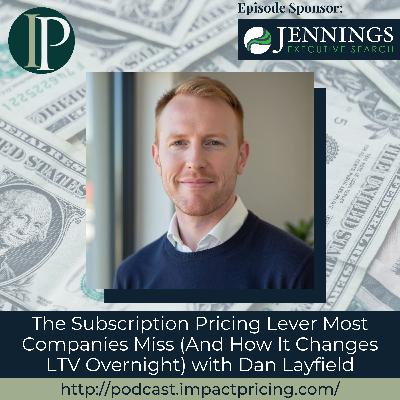
Dan Layfield, founder of the Subscription Index, joins Mark Stiving to unpack the less-visible pricing and monetization levers that drive real growth in subscription businesses. With experience scaling Codecademy from $10M to $50M in revenue and leading product teams at Uber and Diligent, Dan brings a product-led, ROI-first perspective on pricing. This episode culminates in one of the most actionable subscription pricing tactics you'll hear: how to price annual plans based on actual monthly retention, not industry norms. If you work in SaaS, consumer subscriptions, or any recurring-revenue business, this episode offers practical insights you can test immediately. Why You Have to Check Out Today's Podcast: Learn the annual pricing tactic that dramatically increases LTV and cash flow by aligning plan discounts to real retention behavior. Understand why subscription growth is constrained more by monetization systems than acquisition and where hidden revenue leaks live. Discover how product, pricing, and payment mechanics quietly shape retention long after customers click "Subscribe". "If you know your average retention rate within monthly plans, and most of your users are in monthly plans, you price your annual plan to be like one or two months more than your monthly retention rate." – Dan Layfield Topics Covered: 00:45 - How Dan Got Into Pricing. Dan shares how pricing became a key growth lever while scaling Codecademy and why monetization matters more as products mature. 01:10 - Scaling Subscription-Based Businesses. Dan shares lessons from scaling Codecademy's subscription business and why pricing becomes critical as companies grow. 05:12 - Subscription Pricing and Retention Strategies. How pricing decisions influence retention length and why subscription pricing must reflect real user behavior. 09:11 - Retention Challenges in Subscription Businesses. The difference between short-term and long-term retention products and why under-12-month subscriptions require different strategies. 11:32 - Subscription Product Strategies. Time to value versus time to success, and how product design affects lifecycle length and churn. 17:02 - Monetization Strategies in Subscription Businesses. What monetization really includes beyond price, from paywalls to upsells, renewals, and payment recovery systems. 19:45 - Checkout Flow Optimization Strategies. Why small checkout improvements deliver outsized ROI and how minor friction quietly suppresses revenue. 23:22] AI's Impact on Consumer Products. Why AI adoption is slower in consumer subscriptions than B2B SaaS and where future disruption may emerge. 26:30 - Annual Plan Pricing Strategy. Dan explains the monthly-to-annual pricing approach that boosts LTV, improves cash flow, and increases commitment. 29:31 - Key Subscription Product Insights. Final reflections on retention, monetization levers, and where subscription companies should focus first for growth. Key Takeaways: "This is one of the few tides that lifts all boats in subscription products. It makes payment processing easier. You collect cash up front. Those users psychologically commit to the product more." – Dan Layfield "If you're retaining users for four months on average, change your annual plan discount rate to be 50%. So they're paying for six months up front." – Dan Layfield "...if you look at any of the big consumer products that discount more than 10 to 20% annual plans, you can kind of guess their monthly retention rate." – Dan Layfield People & Resources Mentioned: Codecademy – Subscription growth case study Uber Eats – Marketplace product experience Subscription Index – Dan's subscription monetization resource Stripe / App Store Billing – Payment and dunning challenges in subscriptions Connect with Dan Layfield: Website: https://subscriptionindex.com LinkedIn: https://www.linkedin.com/in/layfield/ Connect with Mark Stiving: LinkedIn: https://www.linkedin.com/in/stiving Email: mark@impactpricing.com

This is an Impact Pricing Blog published on October 13, 2025, turned into an audio podcast so you can listen on the go. Read Full Article Here: https://impactpricing.com/blog/shareholder-value-is-an-outcome-not-a-strategy/ If you have any feedback, definitely send it. You can reach us at mark@impactpricing.com. Now, go make an impact. Connect with Mark Stiving: Email: mark@impactpricing.com LinkedIn: https://www.linkedin.com/in/stiving/

Deovrat Kajwadkar is the Director of Strategic Deal Pricing and Monetization at Google Cloud, where he sits at the center of some of the most complex commercial decisions in modern tech. With a background in management consulting at McKinsey and deep experience in cloud and AI monetization, Deovrat brings a rare inside view of how pricing actually works when products are platforms, costs are dynamic, and value is constantly evolving. In this conversation, Deovrat and Mark Stiving unpack why pricing is not just a "number-setting" function but the grade of how well everything else in the business is working. They explore the difference between platforms and solutions, why value-based pricing becomes harder as offerings become more flexible, and how AI is changing both how pricing is done and what pricing even means. Why You Have to Check Out Today's Podcast: Learn why pricing sits at the heart of cloud and AI economics, touching product, strategy, sales, and profitability all at once. Understand how platforms, solutions, and AI fundamentally change value-based pricing, and why cost, competition, and outcomes all matter—at different layers of the stack. Discover why "pulling the dollar lever" is the most expensive move, and what smarter pricing leaders focus on first. "Pulling the dollar lever is easy—but it's also very expensive. I'd rather pull every other lever first." — Deovrat Kajwadkar Topics Covered: 01:40 – Cloud Pricing as a Central Role. Deovrat explains why pricing sits at the center of Google Cloud's commercial decisions—connecting product strategy, growth, profitability, and customer value. 05:09 – Cloud Computing for Enterprises. A clear, non-technical explanation of cloud computing for enterprise customers, from infrastructure and platforms to software and AI—and why pricing each layer is different. 08:48 – Value-Based Pricing Challenges. Mark and Deovrat discuss why value-based pricing is especially difficult for platforms, where customers use the same products in very different ways. 13:04 – Value-Based Pricing Strategies. A practical framework for pricing across the cloud stack: cost- and competition-based pricing at the lower layers, and outcome-driven pricing as offerings move closer to customer solutions. 18:10 – AI's Impact on Pricing Strategies. How AI is changing pricing on multiple fronts—what gets priced, how costs behave, and how quickly products and value propositions evolve. 22:34 – AI in Pricing Strategies. Deovrat breaks down how AI can support pricing decisions, from customer analysis and renewals to analytics and decision support—while stressing the importance of clean data foundations. 24:12 – AI Value Delivery Challenges. Why delivering real AI value is harder than building the technology itself, and how change management and business adoption affect pricing and monetization. 27:30 – Pricing Advice for Business Impact. Deovrat's closing advice: great pricing leaders expand their skill set beyond pricing fundamentals—and pull every lever before resorting to raising prices. Key Takeaways: "Pricing touches almost everything—it's the heart of a company's economics." — Deovrat Kajwadkar "The more commoditized the offering, the more cost and competition matter." — Deovrat Kajwadkar "As you move closer to business outcomes, value-based pricing becomes possible—but harder." — Deovrat Kajwadkar "AI changes pricing, but it doesn't eliminate the fundamentals." — Deovrat Kajwadkar People / Resources Mentioned: Google Cloud – Cloud platform spanning infrastructure, AI models, developer tools, and industry solutions. McKinsey & Company – Deovrat's consulting background, shaping his strategic view of pricing and technology. AI Models & Agentic Workflows – Referenced in the context of pricing analytics, automation, and decision support. Connect with Deovrat Kajwadkar: LinkedIn: https://www.linkedin.com/in/deovrat-kajwadkar Connect with Mark Stiving: LinkedIn: https://www.linkedin.com/in/stiving/ Email: mark@impactpricing.com

This is an Impact Pricing Blog published on October 6, 2025, turned into an audio podcast so you can listen on the go. Read Full Article Here: https://impactpricing.com/blog/pricing-ai-the-compass-spectrum-of-pricing-metrics/ If you have any feedback, definitely send it. You can reach us at mark@impactpricing.com. Now, go make an impact. Connect with Mark Stiving: Email: mark@impactpricing.com LinkedIn: https://www.linkedin.com/in/stiving/

Etinosa Agbonlahor is the CEO of Decision Alpha and former Director of Behavioral Research at Fidelity Investments. A behavioral economist by training, she helps companies understand how customers actually make decisions—and how that should shape pricing. In this episode, Etinosa and Mark Stiving unpack the tension between real value and perceived value, why customers don't react to prices rationally, and how behavioral economics can strengthen pricing strategies. They explore value drivers, ethical nudging, the fear of raising prices, and why most buyers don't remember prices as clearly as business owners think. If you want clearer, psychology-backed ways to price, communicate value, and make better pricing decisions, this episode gives you practical insights you can use right away. Why You Have to Check Out Today's Podcast: Why customers forget your prices—and how that myth makes business owners afraid to raise them. How behavioral economics expands value beyond profit into perception, context, and emotion. How to raise prices ethically using segmentation, glide paths, and clear communication. "Understand your customer. Do the pricing research with customers—not just with quant models. Go talk to customers. It's important." — Etinosa Agbonlahor Topics Covered: 02:08 – Pricing and Behavioral Economics. Mark and Etinosa debate where behavioral economics fits in pricing—Mark sees it as the final touch, while Etinosa argues it shapes value perception from the start. 05:20 – Defining Real vs. Perceived Value. A foundational question: is value measured strictly in outcomes, or also in emotion, context, and comparison? Their contrasting definitions reveal why pricing teams often misread customers. 09:05 – Value Beyond Monetary Price. Etinosa expands value to include convenience, safety, time saved, emotional comfort, and opportunity cost—benefits customers feel but rarely articulate. 10:37 – Value Drivers in Pricing Strategies. Behavioral research uncovers the real outcomes customers care about. Mark connects this to pricing strategy: quantify value drivers to justify stronger pricing. 15:32 – Manipulation in Behavioral Economics. Mark asks whether nudging is manipulation. Etinosa explains that behavioral tools aren't coercive—intent determines whether they help or harm the customer. 18:02 – Ethics of Choice Architecture. Every pricing page is a designed choice. Etinosa contrasts ethical nudges with dark patterns, while Mark questions how businesses balance their goals with customer wellbeing. 22:22 – Behavioral Economics in Business. Real-world examples show how behavioral insights improve retention, financial outcomes, and long-term customer relationships—not just revenue. 24:20 – Pricing Fears and Customer Perception. The Spotlight Effect is a myth: customers don't track your prices as closely as you think. The two discuss how clearer communication and segmentation reduce backlash when raising prices. 28:48 – Understand Your Customer. Etinosa's closing advice: real pricing power comes from customer conversations—not spreadsheets. Behavioral economics begins with understanding actual human behavior. Key Takeaways: "Value is all about perception. Once you step into perception, you're in behavioral economics." — Etinosa Agbonlahor "There is no such thing as a neutral choice. Every pricing page is designed—intentionally or unintentionally." — Etinosa Agbonlahor "People are not rational. Once you accept that as fact, you can design pricing that fits how people actually behave." — Etinosa Agbonlahor "Business owners think customers remember prices more than they actually do." — Etinosa Agbonlahor People / Resources Mentioned: Richard Thaler – Nobel laureate; originator of transaction utility and foundational behavioral economics concepts. Dan Ariely – Author of Predictably Irrational, referenced in discussing irrational decision patterns. Weber-Fechner Law – Psychological principle used to design perceptually smoother price increases. Connect with Etinosa Agbonlahor: LinkedIn: https://www.linkedin.com/in/etinosasere Email: etinosa@decision-alpha.com Connect with Mark Stiving: LinkedIn: https://www.linkedin.com/in/stiving/ Email: mark@impactpricing.com

This is an Impact Pricing Blog published on September 29, 2025, turned into an audio podcast so you can listen on the go. Read Full Article Here: https://impactpricing.com/blog/nobody-wants-to-buy-ai/ If you have any feedback, definitely send it. You can reach us at mark@impactpricing.com. Now, go make an impact. Connect with Mark Stiving: Email: mark@impactpricing.com LinkedIn: https://www.linkedin.com/in/stiving/
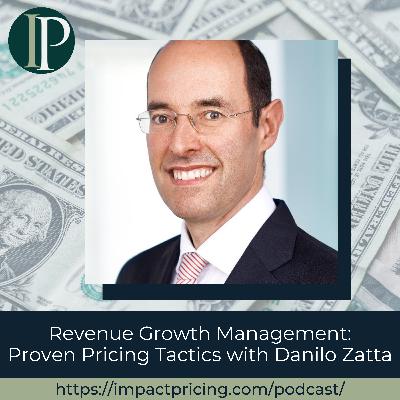
Danilo Zatta is the author of The Pricing Model Revolution, The 10 Rules of Highly Effective Pricing, and the new book Revenue Growth Management. He is recognized as one of LinkedIn's Top 5 Pricing Thought Leaders and brings decades of consulting experience from Accenture, Simon-Kucher, and BCG. His work is anchored in one simple insight: pricing is the "sunny side" of consulting. He shares real examples of companies that increased profit by cutting ineffective promotions and by detecting thousands of spare-part pricing outliers with AI. This episode explores pricing leadership, the CEO's role, the difference between pricing truth and framework preference, and why democratized pricing knowledge makes talent the true competitive advantage. Why You Have to Check Out This Episode: Learn how AI spots hidden pricing outliers across hundreds of thousands of SKUs and turns them into instant profit. Discover why FMCG companies burn cash on promotions and how smart RGM frameworks finally fix it. Understand the real "truth" behind pricing frameworks and why people, not methodology, drive pricing success. "Start the AI pricing journey—not by boiling the ocean—but by finding a use case that works, proves value, and then expand it." – Danilo Zatta Topics Covered: 01:27 - How Dan Got Into Pricing. His shift from cost-cutting to pricing and why he calls it the "sunny side" of consulting. 06:57 - Freedom in Consulting Choices. Comparing Accenture, Simon-Kucher, and BCG—and why team chemistry matters most. 09:11 - Revenue Growth Management. How FMCG brands optimize trade terms, promos, and price architecture for profit. 11:55 - FMCG as B2B. Why FMCG selling to retailers is a pure B2B relationship with limited price control. 17:22 - Implicit Collusion in Airlines. How industries use public price signaling to influence competitor behavior. 19:13 - AI in Spare Parts Pricing. How AI identified major pricing outliers and delivered over €1M in quick wins. 24:42 - Why AI Beats Excel. AI's advantage in scale, complexity, and instant alerts across massive SKU sets. 27:15 - Starting Your AI Pricing Journey. Begin with one use case, prove it works, then expand—no perfect data needed. Key Takeaways: "Pricing used to be specialized knowledge. Today it's democratized—so what differentiates you is the team, not the tools." – Danilo Zatta "If you're the market leader, you must act first. Smaller players can't reduce promotions until you do." – Danilo Zatta "Pricing is never boring because every industry has its own logic, levers, and constraints." – Danilo Zatta Books by Danilo Zatta: The Pricing Model Revolution: https://www.amazon.it/Pricing-revolution-pricing-cambier%C3%A0-comprare/dp/8836010547/ The 10 Rules of Highly Effective Pricing: https://www.amazon.com/Rules-Highly-Effective-Pricing-Management/dp/1394195761 Revenue Growth Management: https://www.amazon.it/Revenue-Management-Manufacturing-Application-Industry/dp/3319807595/ Connect with Danilo Zatta: Website: https://www.danilozatta.com/ LinkedIn: https://www.linkedin.com/in/danilo-zatta Books: https://www.danilozatta.com/books/ Connect with Mark Stiving: LinkedIn: https://www.linkedin.com/in/stiving Email: mark@impactpricing.com

This is an Impact Pricing Blog published on September 22, 2025, turned into an audio podcast so you can listen on the go. Read Full Article Here: https://impactpricing.com/blog/pricing-ai-pricing-metrics/ If you have any feedback, definitely send it. You can reach us at mark@impactpricing.com. Now, go make an impact. Connect with Mark Stiving: Email: mark@impactpricing.com LinkedIn: https://www.linkedin.com/in/stiving/

Comments

Download from Google Play

Download from App Store
 United States