


 Claim Ownership
Impact1 Voices
Subscribed: 0Played: 0
Subscribe

© Impact1 at Stanford Biodesign
Description
Impact1 works to accelerate pediatric and maternal health technology to improve children’s lives from day one. In this podcast, co-hosts Janene Fuerch and Juliana Perl speak with leaders in healthcare innovation from around the globe to share insights on their challenges and successes in delivering new solutions. Impact1 is based at Stanford University’s Mussallem Center for Biodesign.
Disclaimer of Endorsement: All references to specific products, companies, or services are for educational purposes only and do not constitute or imply an endorsement by Stanford University or Biodesign.
Disclaimer of Endorsement: All references to specific products, companies, or services are for educational purposes only and do not constitute or imply an endorsement by Stanford University or Biodesign.
16 Episodes
Reverse

Dr. Josh Bress, President of Global Strategies and Medical Director of NoviGuide, shares the story behind NoviGuide—a clinical decision-support platform designed to help frontline clinicians make evidence-based decisions at the point of care.Josh reflects on how experiences in the Democratic Republic of Congo, Guatemala, and California shaped the platform’s development, and why humility, local context, and learning from clinicians on the ground remain central to how NoviGuide is built and deployed.Co-hosted by Sophia Brodsky and Marisa Borja, and produced by Antje Kirschner.

Content note: This episode discusses infant loss, grief, necrotizing enterocolitis (NEC), and the experiences of families in neonatal intensive care. Please take care whilst listening!In this episode of Impact1 Voices, Jennifer Canvasser shares the deeply personal story behind the NEC Society and how the loss of her son Micah became a driving force for research, prevention, and change. She reflects on grief, trust, the urgent need for better diagnosis and preventative therapies, and why families must remain at the heart of NEC research. Learn more: https://necsociety.orgMusic licensed through Soundstripe.Code: V65WSORJGVTEW5WV, 1OCJ3DJYGVW1DZZ9
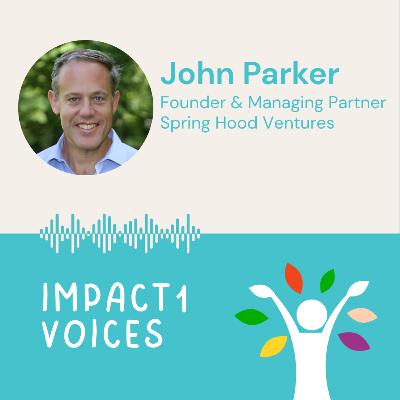
"We do these things because they're hard!" Right after college, John Parker moved to Japan… with no plan, no experience in banking, and no idea what he was doing. Then the market collapsed.Suddenly, he wasn’t learning anymore—he was leading. Turnarounds. Crisis situations. Even stepping in as an interim GM in Australia.That mindset—running toward hard problems—never left.Today, he’s building a new model at the intersection of philanthropy and venture—because the system forces a false choice:Either give money away…Or make money.But what if you could do both?
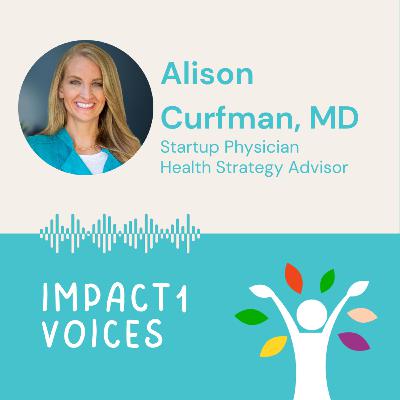
“You know where we need to put funding? Pediatrics.” Dr. Alison Curfman has spent her career proving it. After a defining moment in a rural ER, she moved beyond clinical care to build solutions—from shaping pediatric telehealth policy to founding Startup Physicians and launching a value-based Medicaid model serving tens of thousands of children nationwide. In this episode, Alison shares how physicians can turn problems they see every day into meaningful innovation.
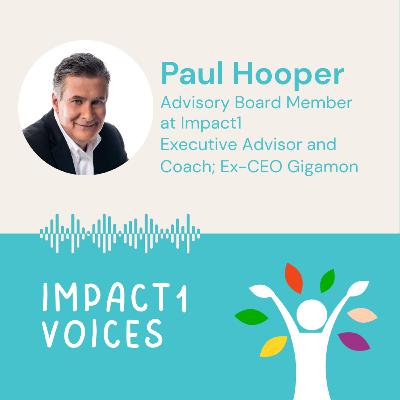
“We should be investing in the children and we're not! Instead, we're investing in [someone like] me from a medical perspective.”We enormously enjoyed catching up with none other than @ Paul Hooper, a longtime supporter of Impact1. Paul's wealth of knowledge, insights, and also humility made him a fantastic guest and we could have chatted forever, but here are few topics that stuck with us:Pediatric innovation is still massively under-capitalized - When capital gets “sucked out” by outsized AI valuations, it leaves less room for health tech—especially pediatric health tech.Miniaturization isn’t just a constraint—it’s a strategic advantage - Innovating for smaller patients can create a “knock-on” value proposition that later scales to adults.AI: hype cycles vs. real clinical value (first wave / second wave) - The “AI on every slide” moment is real—but the second wave is about where AI is actually powerful and additive in medtech.Sign up to present https://biodesign.stanford.edu/programs/impact1.html

Comments

Download from Google Play

Download from App Store
 United States