


 Claim Ownership
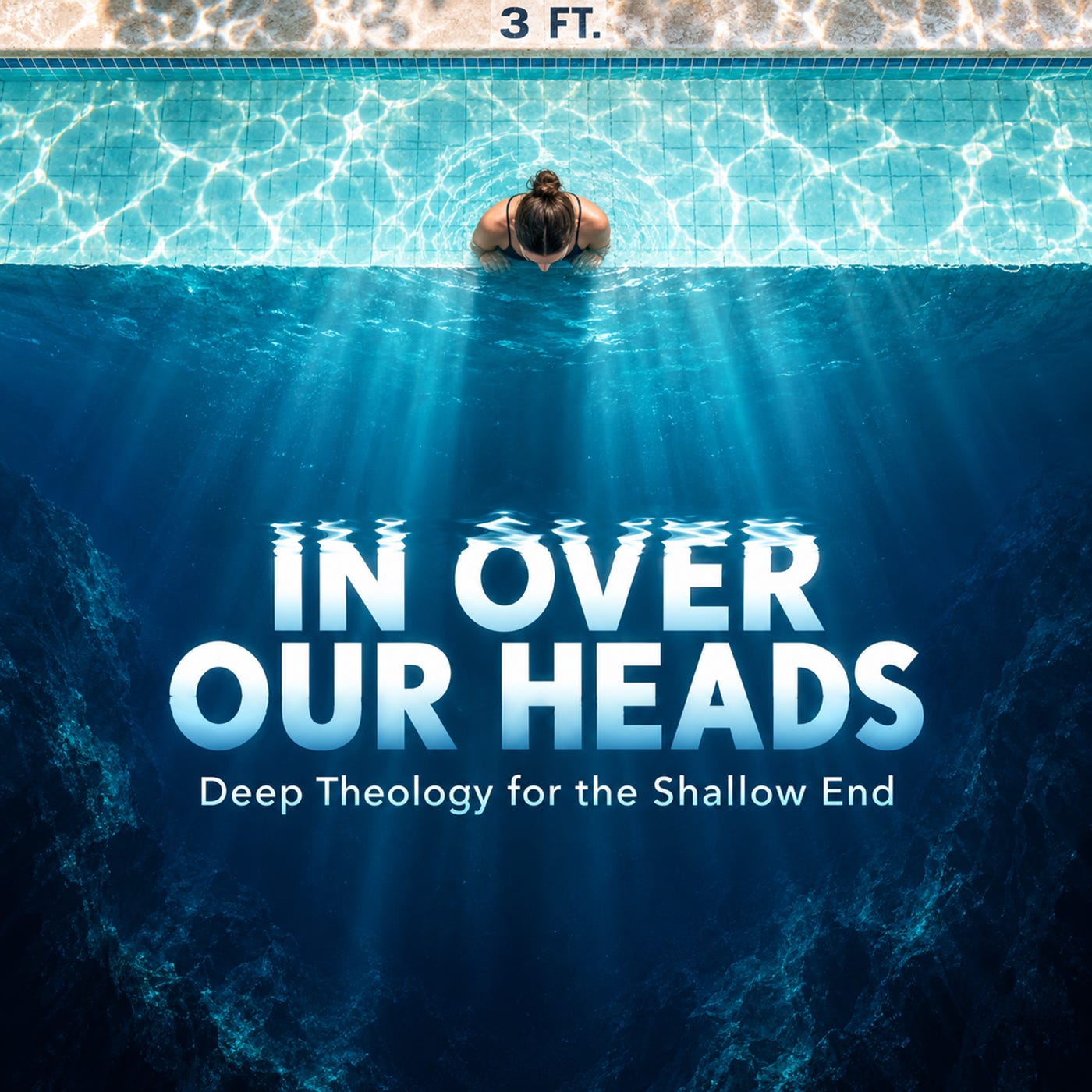
In Over Our Heads
Subscribed: 1Played: 0
Subscribe

© Start2Finish
Description
Deep theology for ordinary Christians, one big question at a time, from Genesis to the early church to Monday morning.
start2finish.substack.com
7 Episodes
Reverse
In Over Our Heads: Deep Theology for the Shallow End · Season 1, Episode 7 · 23:40What makes a human life valuable? The image of God, and how it moved early Christians to rescue abandoned babies and Gregory of Nyssa to denounce slavery.In this episodeA couple finds a torn, filthy painting in an attic, and its worth changes the moment a restorer uncovers the signature. Michael uses that picture to ask what a human being is worth. The answer runs from Genesis 1 through the life of Jesus, into the streets of the Roman Empire, and down to how we talk about the people who annoy us.* Three ways Christians have understood the image of God: a capacity, a relationship, and a royal role* Why Genesis gives a king’s title to every human being, male and female* What happened to the image after the fall (damaged, not erased)* Jesus as the true image of God, and salvation as restoration* Hilarion’s letter, the practice of exposure, and the Christians who refused it* The plague of 250 and the emperor who complained that Christians were too kind* Gregory of Nyssa’s sermon against slavery, and an honest look at where Christians failed* Does God look like us? Do animals matter? Why do I feel worthless?Chapters* 0:00 Cold Open: The painting in the attic* 1:14 Welcome* 2:08 The Question: What does it mean to be made in the image of God?* 3:53 Across the Story: Genesis to Revelation* 11:09 Through the Centuries: Hilarion, the Didache, Dionysius, Julian, Gregory of Nyssa* 17:03 Putting It Together* 20:32 Monday Morning* 22:25 CloseMonday Morning* Run an “image check” before you speak. Before you post, vent, or mock, ask: Am I talking about someone who bears God’s image? The answer is always yes.* See the people you usually overlook. Learn the name of one cashier, custodian, or drive-through worker this week and use it.* Receive your own worth as a gift. Read Psalm 139 slowly, and say “I am fearfully and wonderfully made” out loud.Scripture referencedGenesis 1:26–27 · Genesis 2 · Genesis 5 · Genesis 9:6 · Proverbs 14:31 · Psalm 8 · Psalm 139 · Matthew 22 · Matthew 25 · Colossians 1:15 · Romans 8 · 2 Corinthians 3 · Colossians 3 · James 3 · Proverbs 12:10People and sources mentioned* Hilarion’s letter to Alis (1 BC), found in Egypt* The Didache, an early Christian teaching manual* Justin Martyr (second century)* Dionysius of Alexandria, on the plague of about AD 250* Emperor Julian, on the “Galileans” and the poor* Gregory of Nyssa and his sister Macrina; his sermon on Ecclesiastes 2:7 (about AD 379)* Barton Stone* “Am I not a man and a brother?”Next timeWhat is sin, really? Is it only the bad things we do, or something deeper? And are we born with it? We go back to the fifth century for the debate between Augustine and a British monk named Pelagius.In Over Our Heads is free and supported by listeners. To help, visit start2finish.org/donate. This is a public episode. If you would like to discuss this with other subscribers or get access to bonus episodes, visit start2finish.substack.com
In Over Our Heads: Deep Theology for the Shallow End · Season 1, Episode 6 · 23:15Did God make the world and walk away? Creation, providence, and Irenaeus, the bishop who insisted the physical world is good and God still holds it.In this episodeAt five o’clock on a winter morning, a woman whose husband just lost his job stands at the kitchen window and notices the frost on the glass. She’s asking two of the oldest questions there are: Where did all of this come from? And is anyone still holding it together?* Creation and providence, and the alternatives the Bible rejects* Genesis 1 beside the Babylonian Enuma Elish* “In him all things hold together” (Colossians 1:17), Psalm 104, and the sparrows of Matthew 10* Joseph, Esther, and God working through human evil* Irenaeus, Polycarp, and the apostle John; the Gnostics and God’s “two hands”* Why many Christians today are accidental Gnostics* Providence and the back of a handmade quiltChapters* 0:00 Cold Open* 1:17 Welcome* 2:16 The Question: Who made the world, and is he still running it?* 4:12 Across the Story* 10:48 Through the Centuries: Irenaeus* 16:20 Putting It Together* 19:56 Monday Morning* 22:00 CloseMonday Morning* Receive something as a gift. At one meal this week, slow down and give thanks on purpose.* Trace God’s hand backward. Write down three hard seasons and ask where God provided.* Take care of your corner of creation. Pick your body, home, or work and care for it as God’s property.Scripture referencedGenesis 1:1 · Hebrews 11:3 · John 1 · Colossians 1 · Hebrews 1:3 · Psalm 104 · Matthew 10 · Romans 8:28People and sources mentioned* The Enuma Elish, Marduk, and Tiamat* Joseph, Esther, and Mordecai* Irenaeus of Smyrna and Lyon; Polycarp; Pothinus; Blandina* The Gnostics* Irenaeus’s Against HeresiesNext timeWhat does it mean to be made in the image of God? What makes a human life valuable? With the Christians who rescued abandoned babies in Rome.In Over Our Heads is free and supported by listeners. To help, visit start2finish.org/donate. This is a public episode. If you would like to discuss this with other subscribers or get access to bonus episodes, visit start2finish.substack.com
In Over Our Heads: Deep Theology for the Shallow End · Season 1, Episode 5 · 24:12One God, three persons. How Scripture reveals the Trinity, and how a fight at Nicaea over one Greek word shaped how Christians speak of Jesus.In this episodeA legend says Augustine once met a boy on the beach who was trying to pour the ocean into a hole in the sand. It probably never happened, but anyone who has thought hard about the Trinity knows the feeling. Michael wades into the deepest water in Christian theology.* Three statements at the heart of the Trinity, and the errors that come from dropping any one of them* The Shema, and the Old Testament whispers (Genesis 1, Psalm 110)* The baptism of Jesus, “the Word was God,” Thomas’s confession, and the personhood of the Spirit* Arius’s catchy songs and Gregory of Nyssa’s bakery* Nicaea in 325, Athanasius, and the one-letter difference between homoousios and homoiousios* Barton Stone, Alexander Campbell, and the word Trinity* Why the usual illustrations break downChapters* 0:00 Cold Open* 1:24 Welcome* 2:19 The Question: What do Christians mean by the Trinity?* 4:38 Across the Story* 10:56 Through the Centuries: Arius, Nicaea, Athanasius, and the Restoration* 18:03 Putting It Together* 21:13 Monday Morning* 23:07 CloseMonday Morning* Pray with the shape of the Trinity. Pray to the Father, through the Son, by the Spirit.* Listen to the words at the next baptism. Remember that you were baptized into the name of the Father, Son, and Holy Spirit.* Practice the kind of unity God has. Take one step toward a strained relationship this week.Scripture referencedDeuteronomy 6:4 · Genesis 1 · Psalm 110 · Matthew 22 · Matthew 3 · John 8 · Colossians 2:9 · Acts 5 · Ephesians 4 · John 17 · Ephesians 1 · Ephesians 2:18 · Romans 8People and sources mentioned* Augustine and the legend of the boy on the beach* Theophilus of Antioch and Tertullian* Arius, Alexander, and Constantine* Gregory of Nyssa* Athanasius and Jerome* The councils of Nicaea (325) and Constantinople (381)* Barton W. Stone and Alexander CampbellNext timeCreation and providence. Did God make the world and walk away? With Irenaeus, who stood up to teachers who thought the physical world was a mistake.In Over Our Heads is free and supported by listeners. To help, visit start2finish.org/donate. This is a public episode. If you would like to discuss this with other subscribers or get access to bonus episodes, visit start2finish.substack.com
In Over Our Heads: Deep Theology for the Shallow End · Season 1, Episode 4 · 25:22What is God like? Holy, eternal, unchanging, and “merciful and gracious.” With Augustine, whose restless heart finally found its rest in God.In this episodeClose your eyes and picture God. What did you see? A. W. Tozer said that what comes to mind when you think about God is the most important thing about you. Michael trades in the small picture for the God of Exodus 34, Isaiah 6, and Psalm 139.* The attributes God alone has, and the ones he invites us to share* The burning bush: the fire that never runs out of fuel* Exodus 34:6–7, the “theme song” of the Old Testament, and why Jonah was angry about it* “Holy, holy, holy” in Isaiah 6 and Revelation 4* Augustine’s restless heart, the garden in Milan, and “Late have I loved you”* Why God’s attributes always hold together, and two hard questions: Does God change his mind? Why pray?Chapters* 0:00 Cold Open* 1:17 Welcome* 2:14 The Question: What is God like?* 4:17 Across the Story* 12:58 Through the Centuries: Augustine* 18:54 Putting It Together* 22:09 Monday Morning* 24:04 CloseMonday Morning* Pray Exodus 34 every day this week. Put it on a card by the coffee maker and thank God for one attribute each morning.* Match the attribute to the worry. Take each specific worry to the attribute of God that answers it.* Sing with your mind engaged. Next time you sing “Holy, Holy, Holy,” slow down and let the words land.Scripture referencedActs 17 · Exodus 33:18 · Exodus 34:6–7 · Isaiah 6 · Revelation 4 · Psalm 139 · Isaiah 40 · Romans 11 · Romans 13 · Romans 3 · Jonah 3 · Numbers 23People and sources mentioned* A. W. Tozer* Augustine of Thagaste and Hippo; his mother Monica; Ambrose of Milan* Augustine’s Confessions* Possidius, Augustine’s biographerNext timeThe Trinity. How can God be one, and yet Father, Son, and Holy Spirit? With the Council of Nicaea in 325 and a fight over a single Greek word.In Over Our Heads is free and supported by listeners. To help, visit start2finish.org/donate. This is a public episode. If you would like to discuss this with other subscribers or get access to bonus episodes, visit start2finish.substack.com
In Over Our Heads: Deep Theology for the Shallow End · Season 1, Episode 3 · 24:50Is the Bible really from God? Who chose the books? Inspiration, canon, and authority, from Josiah’s lost scroll to Athanasius’s list of 367.In this episodeA family sits in a lawyer’s office for the reading of their grandfather’s will. Is this really his? Is this all of it? Does it bind us? Michael asks the same three questions about the Bible: inspiration, canon, and authority.* What Bible and testament mean (and what a port city called Byblos has to do with it)* Josiah’s lost scroll, and Jehoiakim’s knife and fire (Jeremiah 36)* “Breathed out by God” (2 Timothy 3:16) and “carried along by the Holy Spirit” (2 Peter 1:21)* Athanasius, exiled five times, and his Easter letter of 367 listing the twenty-seven New Testament books* Marcion’s edited Bible and how the church answered him* Why the church recognized the canon rather than creating itChapters* 0:00 Cold Open* 1:14 Welcome* 2:08 The Question: What is the Bible, and why does it have authority?* 3:57 Across the Story* 10:34 Through the Centuries: Athanasius* 17:41 Putting It Together* 21:40 Monday Morning* 23:40 CloseMonday Morning* Read a whole book in one sitting. Try Philippians straight through. It takes about fifteen minutes.* Let the Bible disagree with you. When a passage rubs you the wrong way, assume you’re the one who needs to change.* Give thanks for the chain. Thank God for the scribes, copyists, and translators like William Tyndale who brought the Bible to you.Scripture referencedHebrews 9 · Exodus 31 · Exodus 24 · Jeremiah 36 · John 10 · John 14 · John 16 · 2 Timothy 3:16 · 2 Peter 1:21 · Acts 27 · 2 Peter 3 · 1 Corinthians 1People and sources mentioned* Josiah, Hilkiah, and Jehoiakim* Athanasius of Alexandria and his thirty-ninth festal letter (367)* Marcion, Irenaeus, and the Didache* The councils of Hippo (393) and Carthage (397)* William TyndaleNext timeWhat is God actually like? Holy, all-knowing, unchanging, with Augustine and his prayer about a restless heart.In Over Our Heads is free and supported by listeners. To help, visit start2finish.org/donate. This is a public episode. If you would like to discuss this with other subscribers or get access to bonus episodes, visit start2finish.substack.com

Comments

Download from Google Play

Download from App Store
 United States