


In the Shift
Subscribed: 157Played: 7,506
Subscribe


© Copyright 2019 All rights reserved.
Description
A podcast for when life and faith go off script. Hosted by Michael Frost.
113 Episodes
Reverse
Episode 113: In the Shift is back for 2026, and so is Shane – and we’re continuing our conversations about non-coercive community and how we build communities of care in a world shaped by capitalist individualism. In this episode we look at how society has changed over time, toward what is often called secularisation. In the secularised West, participation in communal life has become something of a free market choice that we must add to our already full lives. In that sense, participation in faith communities and other communities of care become choices we need to continually make, against the overwhelming tide of energy, demand and resources. But what if the full life we live is not neutral or a given, but is itself shaped by a set of default fundamental commitments built into contemporary capitalist society? Is it possible to ‘convert’ away from this mode of being, toward something more sustainable and life-giving?
Contact In the Shift: feedback@intheshift.com
Support In the Shift: www.patreon.com/intheshift
For more information on the Open Table gathering in Auckland this coming June, visit https://theopentable.nz/
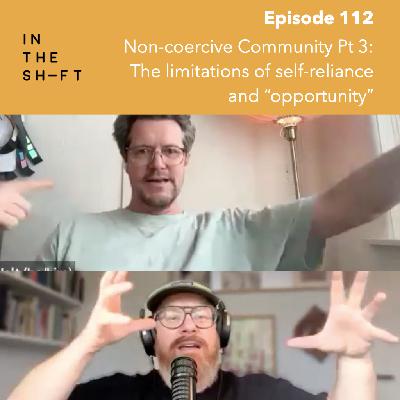
Episode 112: In this episode Shane Meyer-Holt returns for another conversation about the journey of engaging in and building non-coercive communities. We talk about how individualism and capitalism have profoundly shaped so many of us in themes of self-reliance and the importance of opportunity (as well as the freedom to take up those opportunities). These are deeply inbuilt into the psyche of our societal assumptions - and they happen to make regular sustainable commitment to communities of care and mutual obligation an incredibly difficult prospect. If we ultimately believe (and in many respects, understandably so) that we are on our own in keeping our heads above water - then commitment to community can come into conflict with our need for self-reliance. And if we think that we must be free to take every opportunity available to us, then mutual care and genuine healthy obligations to one another may well get in they of those opportunities. In many respects, all modern collectives are struggling with this new reality. Some embrace a model of high-reward, high-punishment community as a mechanism to sustain participation. But what happens if you don't believe in that kind of church or collective dynamic?
We come to this conversation as people involved in leading church communities (Shane, at Fitzroy North Community Church in Melbourne, and Michael, at Edge Kingsland in Auckland).
Contact: feedback@intheshift.com
Support: www.patreon.com/intheshift

Episode 111: In this collab episode between In the Shift and Sunday Sanctuary, I’m joined by Petra Bagust to discuss “why church?” In this conversation we chat through a bunch of reasons why church communities and collectives can be both challenging and nourishing/meaningful. We talk about the place of ritual, song and storytelling in human communities and identity formation, the challenges of individualism, acknowledging both the harm that churches and religious institutions can be complicit in, as well as the possibilities and hopes that remain important.
You’ll find a more edited version of this conversation along with other reflections, practices and more over at the Sunday Sanctuary podcast, so check it out!
Petra is a familiar face in Aotearoa New Zealand, having been on TV and radio over the last 30 years, beginning with cult-favourite TV show, Ice TV. She is a media chaplain with Media Chaplaincy New Zealand, host and broadcaster, hosting two podcasts - Sunday Sanctuary and the award-winning Grey Areas with Petra Bagust.
Sunday Sanctuary is a podcast that brings hopeful spiritual conversations about our shared humanity. It began as a live radio show on Today FM, before becoming a podcast for those curious about Christian spirituality, as well as those who aren't currently part of a church community.
Instagram: @sundaysanctuarynz
Website: sundaysanctuary.nz
Support In the Shift by heading to www.patreon.com/intheshift, and send your reflections, stories, experiences via email: feedback@intheshift.com

Episode 110: We continue our series on non-coercive community - a bunch of conversations in which we are exploring the possibilities and challenges we experience in building sustainable non-coercive collectives and communities. In this conversation, Shane Meyer-Holt discusses his research into capitalism, care and community. We reflect on how so many aspects of our lives have become shaped, defined and understood in capitalist/neoliberal terms. Shane suggests that capitalism is not just an economic theory but has become a social imaginary - in other words, it has come to profoundly and deeply impact how we think about self, identity, relationships, community and care... and what kind of 'productivity' (and use of our energy) really matters and is worth something. Instead of viewing ourselves as interdependent communal beings who rely on each other through mutual obligation, we are shaped to see ourselves as competitive self-interested autonomous individuals trying to get ahead. We explore how freedom is defined within this framework and the overwhelm/stress it can generate, the increase in self blame, and the powerful cultural tides that make regular and sustainable participation in non-coercive communities really challenging.
Shane is a co-leader of Fitzroy North Community Church in Melbourne and Michael is leader of Edge Kingsland, a church in Auckland. Shane's research draws on the work of Bruce Rogers-Vaughan and his book "Caring for Souls in a Neoliberal Age".
Email: feedback@intheshift.com
Support: www.patreon.com/intheshift
Episode 109: Evangelicalism is having a moment.... some are calling it revival - but I think something else is going on here. This is a shorter episode (rather unplanned) on the contemporary Christian worship movement and the way it intersects with the revivalist hopes of Evangelicals/Pentecostals/Charismatics. What we find is that these movements have come to shape many Christian's understanding of what "God's presence" feels like, and of what they believe a "move of God" will look/feel/sound like. And it is these very interpretations, definitions and yearnings that are coming to function as a smokescreen for fascism - both intentionally and unintentionally.
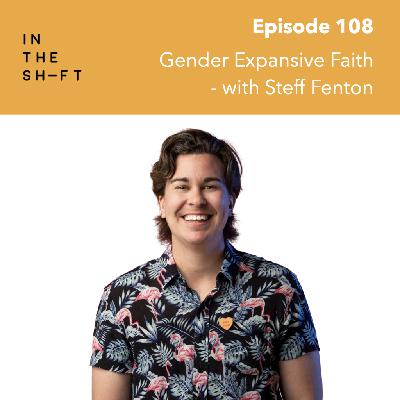
Episode 108: Steff Fenton is author of the new book "Gender Expansive Faith: How Trans Lives are Illuminating the Divine, Transforming Feminism and Ending Christian Patriarchy." In this conversation we talk about Steff's journey of coming to terms with both their sexuality and then gender identity whilst also belonging to the church. We jump into a bunch of stuff including the distinctions between sex and gender, the spectrum and diversity of human experience, and the way in which strict gender binaries can create numerous problems for all humans. We also talk through some fascinating aspects of Jesus' reflection on marriage, eunuch's in the New Testament, the creation story in Genesis, and the gift that trans and non-binary folk can be to people of faith who are looking to find more expansive ways of seeing God and being human.
You can find out more about Steff's work here and you can buy (and review) their new book via Amazon.
To support the work of In the Shift, you can go to https://www.patreon.com/intheshift
Episode 107: This is the first in a series of conversations with Shane Meyer-Holt about the possibilities and challenges in building non-coercive communities and collectives. In particular, we're interested in what church looks like for those of us who feel done with high-control/high-demand forms of religion, who are unable to go back to certainty, who have no desire for the "carrot & stick" based motivations for community life, and who want something much more inclusive.
This is not a "fix-it" series for the church. We get that many in the wider church are actually pretty happy with the way things are and we are not trying to convince them to listen to us. Nor are we building the next idealised model for how we think church should be. This is a series for the people who want something different... and we are going to try and tackle the variety of cross pressures that occur in modern western neoliberal culture when we hope to build non-coercive communities of care and meaning.
In this episode Shane and I talk about the church communities we help to lead. Shane co-leads a church in the inner north of Melbourne, Aus (Fitzroy North Community Church) and I (Michael) lead a church in Auckland, NZ (Edge Kingsland). We talk about why we're still doing this kind of thing... and start to discuss the hopeful things and the profound challenges that arise when trying to build non-coercive community where people are able to be honest, to care about each other and to belong in meaningful ways.
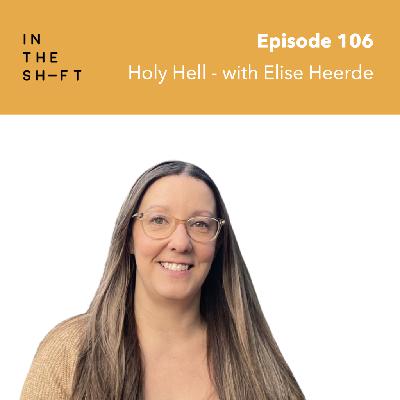
Episode 106: Elise Heerde (she/her) is author of the recently published book "Holy Hell: Saved so hard I needed therapy". In this conversation we talk about Elise's experience of growing up within a high-demand/high-control pentecostal megachurch, her journey toward becoming a leader and staff member, through to the ways in which it all fell apart. Elise has now gone on to work in the space of helping people recover from religious trauma, and so we talk about red flags and warning signs of an unhealthy spirituality, we discuss "sin journals" and spiritual gaslighting, methods of control and manipulation, as well as dive into the kind of work she does to help people work through these experiences and find healing.
Elise is a Certified Coach in Melbourne, Australia, who helps people recover from religious trauma and cultic systems. Her work is grounded in lived experience, professional training, and a passion for creating safe, judgment-free spaces with a splash of sarcasm. You can find out more about her work here. She is also a co-founder of The Religious Trauma Collective (Australia/New Zealand)
You can support the work of In the Shift via Patreon. Get in touch via email: feedback@intheshift.com.
In this episode I also mention fundraising for an album of progressively-inclined worship music by my faith community, Edge Kingsland. You can support that project here.
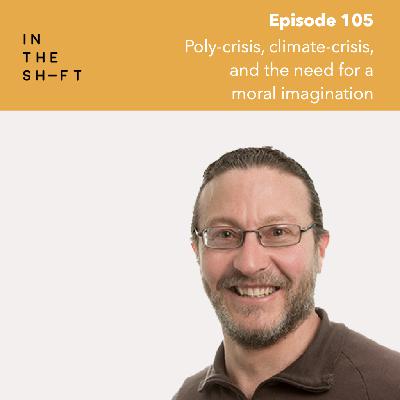
Episode 105: Dr Andrew Shepherd is a Senior Lecturer in Theology and Public Issues at the University of Otago, with a particular interest in climate and ecological issues and the wider polycrisis that relates to the convergence of current economic, political, social, cultural and ecological challenges. In this conversation we talk through these intersecting issues, and how the work of theology and spirituality - in community, over time - could renew a kind of moral imagination that could help us tell and inhabit different stories about what matters.
Andrew also features on the Ngā Here podcast with James Beck, and has been variously involved in the work of the Christian environmental organisation - A Rocha Aotearoa NZ
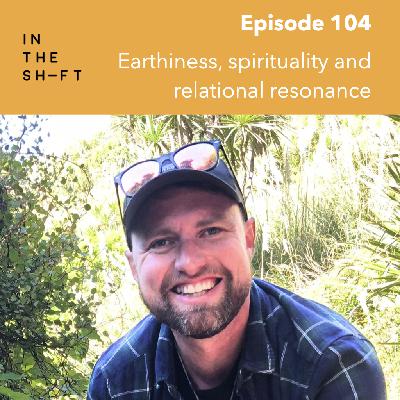
Episode 104: James Beck works with an organisation called A Rocha Aotearoa NZ (https://arocha.org.nz/) which is a Christian environmental conservation organisation. In this conversation we discuss the trajectory of his spirituality and work, especially how and why he made intentional choices to move away from the up-and-coming charismatic preacher kind of life, to become someone who instead is pouring his energy into environmental care, both in his own faith community and also in helping to cultivate this across a diverse range of faith communities in NZ. We talk about the tension between despair and active engagement that can come in this kind of work. We also reflect on how the 'outcomes' of ecological action (e.g. reversing climate change etc) are not the only measure of the importance of caring for our environment; there is something deeply human and deeply spiritual that can resonate in this space.
As a part of his work, James is the director of the Eco Church network in New Zealand (https://www.ecochurch.org.nz/), as well as the host of the podcast Ngā Here – the Many Connections - a podcast that explores the connections between faith, caring for nature, and living in the context of Aotearoa NZ.
Episode 103: Shane has recovered from his table-saw inflicted injury and is back to continue our conversation reflecting on the journey to 100 episodes of the pod - and more specifically, on where our spirituality, theology and meaning-making is heading. We tackle the slightly contentious phrase "reconstruction", what we might or might not find helpful about that idea, and reflect on what is shaping us as we move forward. In that sense, this felt like an energising conversation that was able to explore how we're thinking, feeling, believing and living now as we move beyond the toxic forms of faith we experienced in the past.
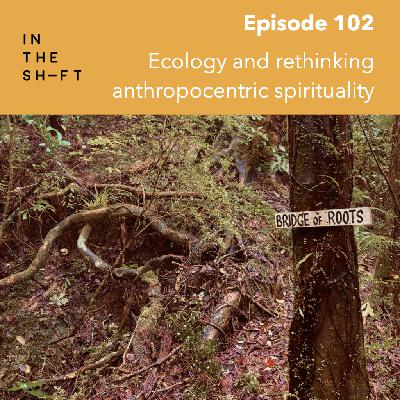
Episode 102: One of the predominant causes of our problematic relationship with the environment is the belief that humans are superior over, distinct from and independent to the rest of nature. We think this way partly due to our religious traditions that have understood humans as being at the centre of what God cares about, at the centre of the story of creation, and that salvation is ultimately all about us and our relationship with God. We're also shaped by our modern assumptions that put us in a dominant relationship with nature, setting us up to see it as something to extract value from, to make profit from, to make progress from, and ultimately to exploit. These stories, however, are not the only way to see things. There are alternative stories we can tell about what it is to be here, to be human, and the ways in which our existence is fundamentally interconnected with all of nature. And this can have a profound impact on our spirituality, our life and our behaviour.
Episode 101: This is the first in a series of 4 episodes exploring the intersection of spirituality and a response to the climate crisis. This reflection explores how Christians have often thought about the 'end of the world' and how this so often shapes behaviours and attitudes toward our ecological systems and how we treat them. Some theological views of the future claim that things will get dark before the end, and Christians will be whisked away to heaven to escape the destruction of this planet. Other views suggest a kind of triumphant domination of the earth. In both cases, caring for creation is not really on the agenda. Even in theologies that suggest God will renew this earth, there remains a belief that God will ultimately act to make it all better one day. But what if God isn't going to disruptively intervene at some time in the future in the way people might imagine? What if divine presence and action - if it is to be anything - is always in collaboration with our own, and what could this mean for how we think about creation care, here and now?
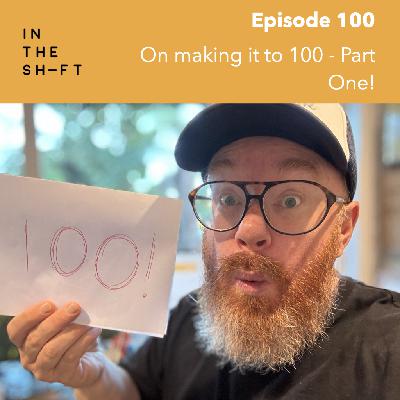
Episode 100: This is it! We've gone and done it. We've made it to episode 100... and this means that we've ascended the mountain of success and significance and will finally get all the credit and recognition we deserve! Actually... it means none of that. But for this episode Shane Meyer-Holt interviews me (Michael) about the journey of the past few years, how I've changed since I started In the Shift - both in belief and approach - and the personal impact of this kind of journey. I hope that this conversation resonates with aspects of your own shifting path, as so many of us navigate the impact of changing faith, the impact on our community, spiritual trauma, a reconfiguring and reimagining of life, meaning and spirituality....and hope (or otherwise) for the future.
Episode 99: In the Shift is back for 2025 - and we kick off this year's pod by looking at what is going on in the world right now. In many respects, the social, political and economic disruption we're experiencing is a natural consequence of the trajectory we've been on for a number of years - and is also connected to particular religious frameworks, beliefs and assumptions. Hyper-individualism, growing inequality, fears and uncertainties, authoritarianism, fascist (or at least fascist-adjacent) rhetoric, scapegoating, conspiracies and on the list goes... so what is going on, what angers are being inflamed, what vulnerabilities are being exploited, and where do we go from here?
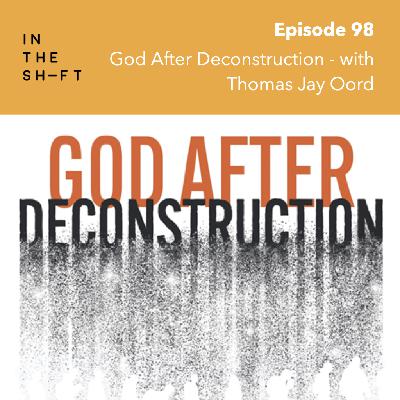
Episode 98: Thomas Jay Oord joins the pod for a great conversation on how we might start to think about God in the wake of deconstruction. We talk about his and Tripp Fuller's 2024 book "God After Deconstruction" and discuss the different intersecting factors that lead to deconstruction and how and why there might still be a place for God on the other side. For those still left with the God-question, with a wondering about ultimate reality, with a sense of something 'more', this conversation explores God and meaning without certainty or in/out binaries. We chat through why we might still believe in God, and perhaps more importantly, what kind of God this might be.
For more of Tom's work, you can head to www.thomasjayoord.com. You can find the book 'God After Deconstruction' by Tom and Tripp here: https://www.amazon.com/dp/195867026X
Contact: feedback@intheshift.com
Support: www.patreon.com/intheshift
Episode 97: This episode explores the language of faithfulness to the way of love (of self, neighbour, other and enemy) along with the subversion of "power over" as being at the core of a certain kind of Christian spirituality. There's a contrast between this and the language of the church creeds - these creeds are statements about belief that have often defined Christian orthodoxy and have been used as boundary markers for Christian identity. But the creeds carry no mention of Jesus' vision of the kingdom of God, his inclusion of the marginalised, his challenge to the powerful nor his claim that the most important aspects of spirituality and humanness are defined by love. If "orthodox Christian belief" doesn't include these things, can it really be used to define what it means to be Christian? Or perhaps we can be free to innovate and re-imagine this for ourselves.
Episode 96: This conversation explores what it might mean to make meaning on the other side of Fundamentalism/Evangelicalism. As we "leave" one world behind (even as we carry many aspects of it with us - both seen and unseen), do we enter the 'real' world or is there no neutral space? What kind of world do we want to build, what values shape our engagement with the fundamental questions of what it is to be here, of the kind of life we might want to live, our relatedness to the divine and so on. What kind of assumptions are made about reality in an age of autonomous individualism and neoliberalism? How do we care for each other and so what could healthier versions of sacrifice and faithfulness look like?
Episode 95: This episode explores what can happen to our identity formation and our sense of being in the world when we live in a world built on the assumption that the apocalypse, the return of Jesus, and the end-of-the-world is likely to happen within our lifetime. What happens to our ability to be confident in ourselves, to think about the future, to make wise decisions, to care for the earth and justice, and to live with a deep sense of grounded-ness? And then there is so much about end-times theology that is adjacent to contemporary conspiracy movements and (somewhat ironically for people who follow the "Prince of Peace") suspicious of efforts for peace and of those who work for it. Layered on top of this, is a fear of hell that drives a kind of existential dread - about God, about our own worth, and that also sees the world as filled with possible temptations that could lead to the slippery slope of damnation. So - just a few things that might need to be unpacked here, because living in this kind of world feels like it might all do something to our identity!

Episode 94: Continuing our conversations around the world-building of our Evangelical/Pentecostal past, in this episode we examine the idea of depravity, sin and brokenness as being at the heart of humanness. What does this belief say about our fundamental identity, and how might that influence our sense of self as well as our relationship to God and others? We also explore the role that testimony plays within this world. Testimonies are often stories that uphold and promote the version of reality that is being built - and when there is only one kind of story arc allowed (i.e. from sin and brokenness to freedom and liberation) this means all sorts of stories and experiences are not given any airtime. It can also make it hard for us to see or acknowledge the ways in which our own life and experiences are not following the script.

Comments

Download from Google Play

Download from App Store
 United States