


 Claim Ownership
Indigenous Rights Radio
Subscribed: 38Played: 1,149
Subscribe

© All rights reserved
Description
Cultural Survival is a global leader in the fight to protect Indigenous lands, languages, and cultures around the world. In partnership with indigenous peoples, we advocate for native communities whose rights, cultures, and dignity are under threat.
2264 Episodes
Reverse
Global news on the topic of Indigenous rights. In this edition, news from the U.S, Canada, Kenya, Nepal, Cambodia Colombia, Brazil, Peru, Paraguay, and more.
Produced by Dev Kumar Sunuwar (Sunuwar).
Music: 'Burn your village to the ground', by The Haluci Nation, used with permission.
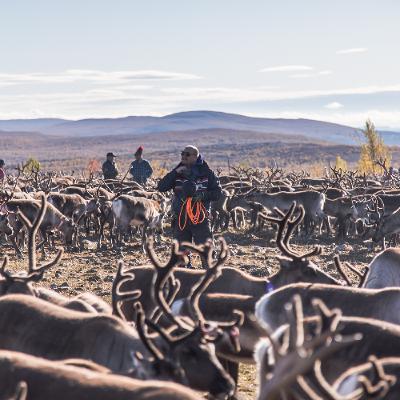
Green colonialism has significantly affected the Indigenous Sámi people of northern Europe by placing large-scale renewable energy and conservation projects on their ancestral lands without full consent. Developments such as wind farms, mining for “green” minerals, hydroelectric dams, and protected areas often disrupt traditional livelihoods like reindeer herding, which depend on intact migration routes and ecosystems. While framed as environmentally sustainable, these projects can continue patterns of land dispossession and marginalization, sidelining Sámi knowledge, rights, and self-determination in the name of climate action.
Journalists Tristen Taylor, Ingrid Gercama and Nathalie Bertrams for their investigation “Green Colonialism: How New Mines in Sweden
Threaten the Saami.
Image: Caption: Lars-Ánte Kuhmunen, a Sámi reindeer herder and joik singer, stands in the
middle of a reindeer corral in the mountains above Rensjön, northern Sweden.
Photo credit: Nathalie Bertrams.
Artist: Lars-Ánte Kuhmunen
Album: Birrasis
Produced by: Georg Buljio
Year: 2005
Used with permission.

Slavery played a significant role in the early history of Paarl, Western Cape, particularly during the 17th and 18th centuries under Dutch and later British colonial rule. Enslaved people—brought mainly from East Africa, Madagascar, India, and Southeast Asia, as well as Indigenous Khoisan people—were forced to work on farms, vineyards, and in households, forming the backbone of the local agricultural economy. Their labour was central to the development of Paarl’s wine and wheat industries. Despite harsh conditions, enslaved communities preserved and blended cultural traditions, languages, and spiritual practices that continue to influence the region today. The legacy of slavery in Paarl remains visible in its social history, cultural expressions, and the lived experiences of descendant communities long after emancipation in 1834. Hybré van Niekerk, a self-taught Historian and Culture tourist guide from Paarl, tells is more.
Produced by Shaldon Ferris (Khoi/San)
Interviewee: Hybré van Niekerk (of Slave/Khoi descent)
Image: Het Gestucht Museum, Paarl.
Music 'Burn your village to the ground', by The Haluci Nation, used with permission.
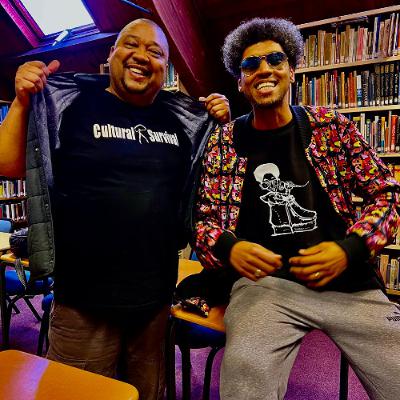
Jitsvinger (real name Quintin Goliath) is a celebrated South African artist from the Cape Flats known for fusing hip hop, poetry, theatre, and storytelling into a distinctive performance style rooted in Afrikaaps—the vernacular Afrikaans dialect of Cape Town. In this radio interview, Jitsvinger tells us about how his heritage influenced his music. We hear how Indigenous Khoi and San languages mixed with Dutch and languages from others who were brought to South Africa as slaves, contributed to the formation of Afrikaans, and how this heritage influences his music.
Produced by Shaldon Ferris (Khoi/San)
Interviewee: Quinton 'Jitsvinger' Goliath
Music 'Breinsuiker' by Jitsvinger met Akwasi, featuring Claire Phillips
Additional Music by Nama Khoi Productions
'Burn your village to the ground', by The Haluci Nation, used with permission.
Muchos sucesos que involucran a los Pueblos Indígenas están pasando alrededor del mundo. ¿Sabes cuáles son?
Como parte del derecho a la información, Cultural Survival presenta este noticiero del mes de diciembre de 2025 con notas relevantes de Norte, Centro y Sur América, África y Asia, el cual puedes escuchar, descargar y compartir de forma gratuita.
Música de introducción:
- “Burn Your Village to the Ground” de The Halluci Nation. Derechos de autor, propiedad de The Halluci Nation. Usada bajo su permiso.
Redacción:
- Rosy Sul González, maya kaqchikel, Cultural Survival, Guatemala.
- Shaldon Ferris, khoisan, Cultural Survival, Sudáfrica.
- Dev Kumar, sunuwar, Cultural Survival, Asia.
Voz:
- Rosy Sul González, maya kaqchikel, Cultural Survival, Guatemala.
- César Gómez, maya poqomam, Cultural Survival, Guatemala.
Edición:
- Rosy Sul González, maya kaqchikel, Cultural Survival, Guatemala.
Imagen:
- Cultural Survival.
Enlaces:
BRASIL: pueblos indígenas logran demarcación de sus tierras durante la COP30
https://www.swissinfo.ch/spa/brasil-anuncia-la-demarcaci%C3%B3n-de-diez-de-tierras-ind%C3%ADgenas-en-medio-de-protestas-en-la-cop/90349525
GUATEMALA: se reúnen juventudes indígenas para avanzar en la actualización del plan regional de salud
https://www.paho.org/es/noticias/1-12-2025-guatemala-reune-juventudes-indigenas-para-avanzar-actualizacion-plan-regional
ECUADOR: Confederación de Nacionalidades Indígenas celebran victoria del no en referéndum
https://www.telesurtv.net/indigenas-ecuador-victoria-no-referendum/
COLOMBIA: celebran jornadas de cine desde el pueblo Wayuu
https://www.facebook.com/share/p/1BreeS9A8o/
https://concip.org/
CAMBOYA: festival de cine exhibe películas Indígenas
https://www.infoans.org/en/sections/news-photos/item/26080-cambodia-namuncura-short-film-festival-for-young-asian-indigenous-people-on-the-theme-anchored-in-hope-with-our-ancestral-territories
NEPAL: un grupo de abogados gana un prestigioso premio global de derechos humanos y empresas
https://www.humanrightsandbusinessaward.org/award-recipient/lahurnip/
KENIA: se inauguró un museo para preservar el patrimonio samburu.
https://www.standardmedia.co.ke/business/rift-valley/article/2001536063/first-museum-of-samburu-culture-unveiled-amid-calls-to-preserve-traditions
ÁFRICA: el pueblo masái une fuerzas para arrendar tierras
https://news.mongabay.com/2025/12/a-maasai-conservancy-uses-private-lands-to-protect-kenyas-wildlife-corridors/
AUSTRALIA: Victoria firma el primer tratado histórico con los pueblos aborígenes
https://www.dw.com/en/australia-first-ever-treaty-signed-with-aboriginal-people/a-74720944
CANADÁ: el Vaticano devuelve artefactos Indígenas
https://www.reuters.com/world/americas/vatican-returns-canada-artefacts-connected-indigenous-people-2025-11-15/
ESTADOS UNIDOS: agricultores Indígenas revitalizan la antigua agricultura en los desiertos
https://news.mongabay.com/2025/11/from-waffle-gardens-to-terraces-indigenous-groups-revive-farming-heritage-in-americas-deserts/
Esta es una producción de Radio de Derechos Indígenas. Nuestros programas son gratuitos para escuchar, descargar y difundir.
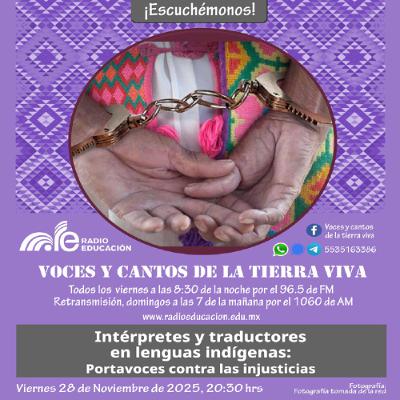
En este programa de “Voces y Cantos de la Tierra Viva”, una producción de la emisora pública mexicana Radio Educación, se aborda una realidad urgente y dolorosa que enfrentan cientos de personas Indígenas monolingües en México: la criminalización y privación de sus derechos fundamentales por no contar con intérpretes y traductores en su lengua materna.
Puedes escuchar, descargar y compartir este programa de forma gratuita.
Música:
- Bajo responsabilidad de la producción.
Entrevistados:
- Norma Cerqueda Fernández, intérprete-traductora de la lengua mazateca.
- Reyna Gómez Ruiz, intérprete-traductora de la lengua tsotsil.
- Violeta Sánchez Sánchez, intérprete-traductora de la lengua náhuatl.
Producción, guión, locución, edición:
- “Voces y Cantos de la Tierra Viva”, Radio Educación, México.
Imagen:
- “Voces y Cantos de la Tierra Viva”, Radio Educación, México.
Enlace:
- Páginas de “Voces y Cantos de la Tierra Viva”:
www.facebook.com/vocesdelatierravivan
e-radio.edu.mx/Voces-y-cantos-de-la-tierra-viva
Esta es una producción de Radio de Derechos Indígenas. Nuestros programas son gratuitos para escuchar, descargar y difundir.
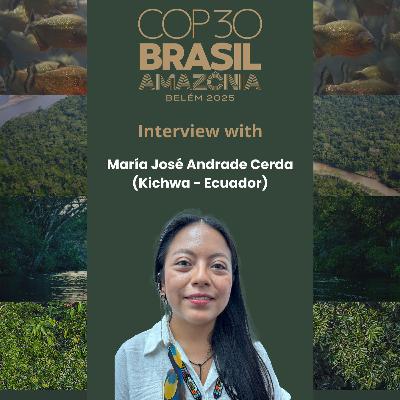
En un episodio más desde la COP 30, escuchemos a María José Andrade Cerda, Activista y Lídereza Indígena Kichwa de Ecuador, ella es representante de Confederación de Nacionalidades Indígenas de la Amazonía Ecuatoriana (CONFENAIE) quien nos informa sobre las demandas de las juventudes indígenas en la COP30.
Música de introducción:
- “Burn Your Village to the Ground” de The Halluci Nation. Derechos de autor, propiedad de The Halluci Nation. Usada bajo su permiso.
Voces:
- Maria José Andrade, kichwa, Colombia.
- Rosario Sul Gonzáles, maya kaqchikel, Cultural Survival, Guatemala.
Entrevista:
- Rosario Sul Gonzáles
Producción, guión y edición:
- Rosario Sul Gonzáles
Imagen:
- Cultural Survival
Esta es una producción de Radio de Derechos Indígenas. Nuestros programas son gratuitos para escuchar, descargar y difundir.

Cultural Survival welcomes the newest member of our Board of Directors, Dr. Lyla June Johnston. Lyla June is an Indigenous musician, author, and community organizer of Diné (Navajo), Tsétsêhéstâhese (Cheyenne), and European lineages. Her multi-genre presentation style has engaged audiences around the globe towards personal, collective, and ecological healing. She blends her academic work in Human Ecology and Indigenous Pedagogy with the traditional worldview she grew up with to inform her music, perspectives, and solutions. Her doctoral research focused on the ways in which pre-colonial Indigenous Nations shaped large regions of Turtle Island to produce abundant food systems for both humans and non-humans. Indigenous Rights Radio Coordinator Shaldon Ferris (Khoi/San) recently spoke with Lyla June about her work and passions.
Music "Anania2" by The Baba Project, used with permission.
"Burn your village to the ground", by The Haluci Nation, used with permission.
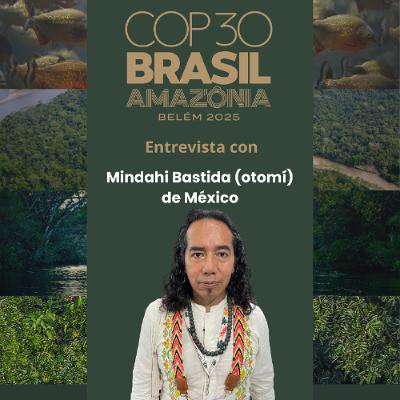
En Belém, Brasil, se llevó a cabo, del 10 al 21 de noviembre de 2025, la Conferencia de las Naciones Unidas sobre el Cambio Climático (COP30). Durante este evento, una de las demandas principales de los Pueblos Indígenas fue que realmente se nos tome en cuenta en los procesos de toma de decisiones. En esta entrevista realizada por integrantes de Cultural Survival, Mindahi Bastida, del pueblo otomí de México, reitera dicha exigencia.
Puedes escuchar, descargar y compartir este programa de forma gratuita.
Música de introducción:
- “Burn Your Village to the Ground” de The Halluci Nation. Derechos de autor, propiedad de The Halluci Nation. Usada bajo su permiso.
Música de fondo:
- “Cantarito” de Juan Lázaro Méndolas. Derechos de autor, propiedad de Juan Lázaro Méndolas. Usada bajo su permiso.
Voces:
- Mindahi Bastida, otomí, México.
- Guadalupe Pastrana, nahua, Cultural Survival, México.
Entrevista:
- Mariana Kiimi, ñuu savi, Cultural Survival, México.
Producción, guión y edición:
- Guadalupe Pastrana, nahua, Cultural Survival, México.
Imagen:
- Cultural Survival.
Enlaces:
- Manifestaciones de los Pueblos Indígenas y la lucha por la participación en la COP30.
https://www.culturalsurvival.org/es/news/en-solidaridad-manifestaciones-de-los-pueblos-indigenas-y-la-lucha-por-la-participacion-en-la#:~:text=Los%20Pueblos%20Ind%C3%ADgenas%20de%20Brasil,el%20futuro%20del%20clima%20global
Esta es una producción de Radio de Derechos Indígenas. Nuestros programas son gratuitos para escuchar, descargar y difundir.

La trigésima edición de la Conferencia de las Naciones Unidas sobre el Cambio Climático, comúnmente conocida como COP30, se llevó a cabo del 10 al 21 de noviembre de 2025 en Belém, Brasil, una ciudad considerada la "puerta de entrada" a la selva amazónica. Durante este evento, integrantes de Cultural Survival entrevistaron a Saúl Vicente Vásquez, zapoteco de Oaxaca, México, quien platica sobre los desafíos que enfrentaron los Pueblos Indígenas.
Puedes escuchar, descargar y compartir este programa de forma gratuita.
Música de introducción:
- “Burn Your Village to the Ground” de The Halluci Nation. Derechos de autor, propiedad de The Halluci Nation. Usada bajo su permiso.
Música de fondo:
- “Cumbión de las aves” de Chancha Vía Circuito. Derechos de autor, propiedad de Chancha Vía Circuito. Usada bajo su permiso.
Voces:
- Saúl Vicente Vásquez, zapoteco, Oaxaca, México.
- Guadalupe Pastrana, nahua, Cultural Survival, México.
Entrevista:
- Mariana Kiimi, ñuu savi, Cultural Survival, México.
Producción, guión y edición:
- Guadalupe Pastrana, nahua, Cultural Survival, México.
Imagen:
- Cultural Survival.
Enlaces:
- Manifestaciones de los Pueblos Indígenas y la lucha por la participación en la COP30.
https://www.culturalsurvival.org/es/news/en-solidaridad-manifestaciones-de-los-pueblos-indigenas-y-la-lucha-por-la-participacion-en-la#:~:text=Los%20Pueblos%20Ind%C3%ADgenas%20de%20Brasil,el%20futuro%20del%20clima%20global
Esta es una producción de Radio de Derechos Indígenas. Nuestros programas son gratuitos para escuchar, descargar y difundir.
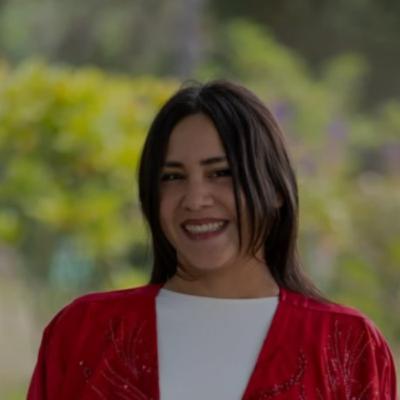
Cultural Survival welcomes Alicia Moncada (Wayuu), who has joined as our new Director of Advocacy and Communications. She brings over 13 years of experience in human rights advocacy, research, and communication, with a focus on Indigenous Peoples' rights, gender justice, and climate justice. Moncada was born in Venezuela, sought refuge in Mexico, and is now based in London, England. Her academic background includes degrees in Law and Women's Rights, with specialized training in International Human Rights Law and International Humanitarian Law.
Produced by Shaldon Ferris (Khoi/San)
Interviewee: Alicia Moncada (Wayyu)
Music: "Burn your village to the ground", by The Haluci Nation, used with permission.
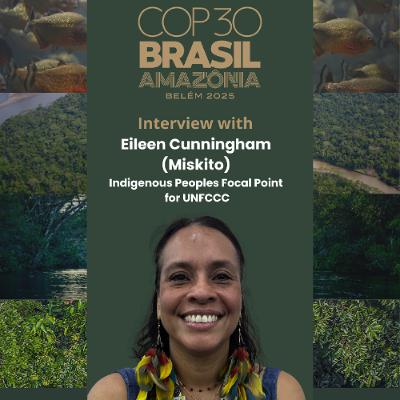
COP30, a major global meeting has this year gathered government representatives from 198 countries, alongside UN bodies, civil society, academia, industry, and a significant delegation of Indigenous Peoples, women, and youth. Notably, this year has the largest-ever participation of Indigenous Peoples in the conference series, with over 3,000 Indigenous delegates registered. Cultural Survival is engaging with Indigenous leaders and their representatives to understand their goals for COP30.
In this interview, we hear from Eileen Cunningham (Miskito).
Produced by Dev Kumar Sunuwar (Sunuwar)
Music:
'Libres y Vivas', by Mare Advertencia, used with permission.
'Burn your village to the ground', by The Haluci Nation, used with permission.
From November 10 to 21, 2025, the UN Climate Change Conference, commonly referred to as COP30, is taking place in Belém, the city called the "gateway" to the Amazon Rainforest.
In this interview, we spoke to Onel Inanadinia Masardule Herrera (Guna).
Produced by Dev Kumar Sunuwar (Sunuwar)
Music:
'Libres y Vivas', by Mare Advertencia, used with permission.
'Burn your village to the ground', by The Haluci Nation, used with permission.
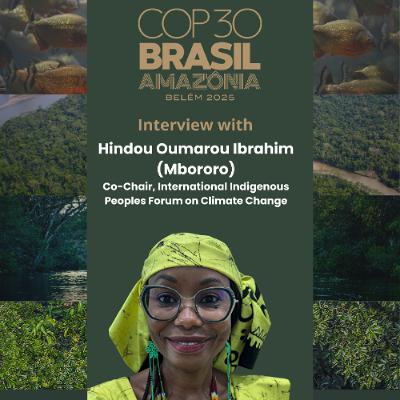
Notably, this years COP gathering features a record participation of Indigenous Peoples, with over 3,000 registered delegates, alongside strong representation from women and youth. Cultural Survival has spoken with Indigenous leaders and their representatives to understand their priorities and demands for COP30.
In this interview, we hear from Hindou Oumarou Ibrahim (Mbororo).
Produced by Dev Kumar Sunuwar (Sunuwar)
Music:
'Libres y Vivas', by Mare Advertencia, used with permission.
'Burn your village to the ground', by The Haluci Nation, used with permission.
This years COP meeting is historic, as it has seen the largest participation of Indigenous peoples in the conference series' history, with more than 3,000 Indigenous delegates officially registered. Cultural Survival has been speaking with Indigenous leaders and their representatives to understand their priorities and demands for COP30.
Produced by Dev Kumar Sunuwar (Sunuwar)
Music:
'Libres y Vivas', by Mare Advertencia, used with permission.
'Burn your village to the ground', by The Haluci Nation, used with permission.
Muchos sucesos que involucran a los Pueblos Indígenas están pasando alrededor del mundo. ¿Sabes cuáles son?
Como parte del derecho a la información, Cultural Survival presenta este noticiero del mes de noviembre de 2025 con notas relevantes de Norte, Centro y Sur América, África y Asia, el cual puedes escuchar, descargar y compartir de forma gratuita.
Música de introducción:
- “Burn Your Village to the Ground” de The Halluci Nation. Derechos de autor, propiedad de The Halluci Nation. Usada bajo su permiso.
Redacción:
- Rosy Sul González, maya kaqchikel, Cultural Survival, Guatemala.
- Shaldon Ferris, khoisan, Cultural Survival, Sudáfrica.
- Dev Kumar, sunuwar, Cultural Survival, Asia.
Voz:
- Rosy Sul González, maya kaqchikel, Cultural Survival, Guatemala.
- César Gómez, maya poqomam, Cultural Survival, Guatemala.
Edición:
- Rosy Sul González, maya kaqchikel, Cultural Survival, Guatemala.
Imagen:
- Cultural Survival.
Links:
Sudáfrica: Las comunidades khoi y san luchan por un mayor reconocimiento.
https://www.youtube.com/watch?v=Q1AbLvSdjwE
Sudáfrica: Ciudad del Cabo logra una victoria legal contra las invasiones de tierras khoi-san en Mitchell’s Plain.
https://iol.co.za/business/2025-11-04-cape-town-secures-legal-victory-against-khoi-san-land-invasions-in-mitchells-plain/
Uganda: Banco mundial registra una solicitud de inspección sobre el proyecto “Inversión en Bosques y Áreas Protegidas para el Desarrollo Climáticamente Inteligente” en Uganda.
https://www.inspectionpanel.org/news/panel-registers-request-inspection-investing-forests-and-protected-areas-climate-smart#:~:text=The%20Request%20claims%20the%20exclusion,Learn%20more.
Noruega: Noruega bloquea un importante parque eólico debido a su impacto en la naturaleza salvaje y la cultura Sami.
https://www.reuters.com/sustainability/boards-policy-regulation/norway-blocks-wind-farm-wilderness-used-by-reindeer-herders-2025-11-04/?fbclid=IwY2xjawN79GpleHRuA2FlbQIxMQBicmlkETFWWlBJaFRJbHN6a3UxbHYxc3J0YwZhcHBfaWQBMAABHr6wL55dNAkrvMwruiVzpchYS-QCHYHXtOp7rYh8NFcJtQS4nT9gwocdAbXV_aem_AtkmIxyWUdxxdFEQomg00Q
Malasia: Las organizaciones de la sociedad civil (OSC) exigen un papel formal en el diálogo sobre derechos humanos entre la ASEAN y la Unión Europea.
https://aippnet.org/indigenous-peoples-call-recognition-asean-eu-csos-forum-conjunction-6th-asean-eu-polcy-dialogue-human-rights/
Filipinas: Los pueblos indígenas contraatacan ante la amenaza de la minería del carbón en el sur de Filipinas.
https://news.mongabay.com/2025/09/philippine-tribes-revive-reforestation-to-defy-coal-mining-expansion/
COLOMBIA: Indígenas y campesinos protestan contra entidades del gobierno.
https://www.infobae.com/colombia/2025/10/16/indigenas-y-campesinos-siguen-protestas-contra-entidades-del-gobierno-petro-ahora-se-tomaron-el-ministerio-del-interior/
PERÚ: Organizaciones indígenas y de derechos humanos rechazan eliminación de la Comisión de Pueblos.
https://www.actualidadambiental.pe/organizaciones-indigenas-y-de-derechos-humanos-rechazan-eliminacion-de-la-comision-de-pueblos/
HONDURAS: Comunidades denuncian ataque armado dentro de territorio Garífuna.
https://www.facebook.com/ForoDeMujeresPorLaVida/photos/denunciamos-que-la-noche-de-ayer-11-de-octubre-de-2025-la-comunidad-de-triunfo-d/1264079079092167/
Global News on the topic of Indigenous rights. In this edition, news from the U.S, South Africa, Canada, Thailand, Nepal, Philippines, Mexico, Honduras, Colombia, Brazil, Peru, Paraguay, and more.
Produced by Dev Kumar Sunuwar (Sunuwar)
Music:
'Burn your village to the ground', by The Haluci Nation, used with permission.
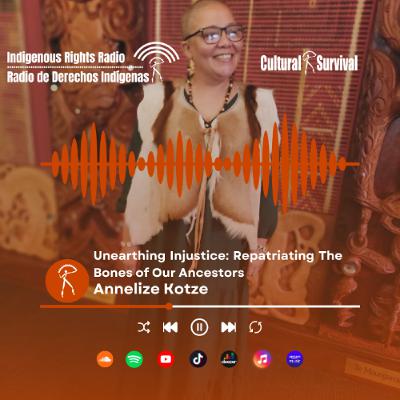
Ancestral remains of six Khoi and San individuals, exhumed between 1868 and 1924 and held at the Hunterian Museum in Glasgow, Scotland, have been returned to South Africa. The remains were formally repatriated in October 2025, marking a significant event for national healing and the restoration of dignity for the affected communities. The remains, which include those from the Northern and Western Cape, have been returned to the Iziko Museums in Cape Town and will be reburied in the Northern Cape at a later date.
For this year's commemoration of the international day for the elimination of violence against women, we consider the violence of removing ones bones from its grave, and what this means for indigenous peoples.
In this interview we hear from Annelize Kotze, from Iziko Museum, in Cape Town.
Produced by Shaldon Ferris (Khoi/San)
Interviewee: Annelize Kotze
Image: Annelize Kotze
Music "Pista" , used with permission
Music "Burn your village to the ground" by The Haluci Nation, used with permission.
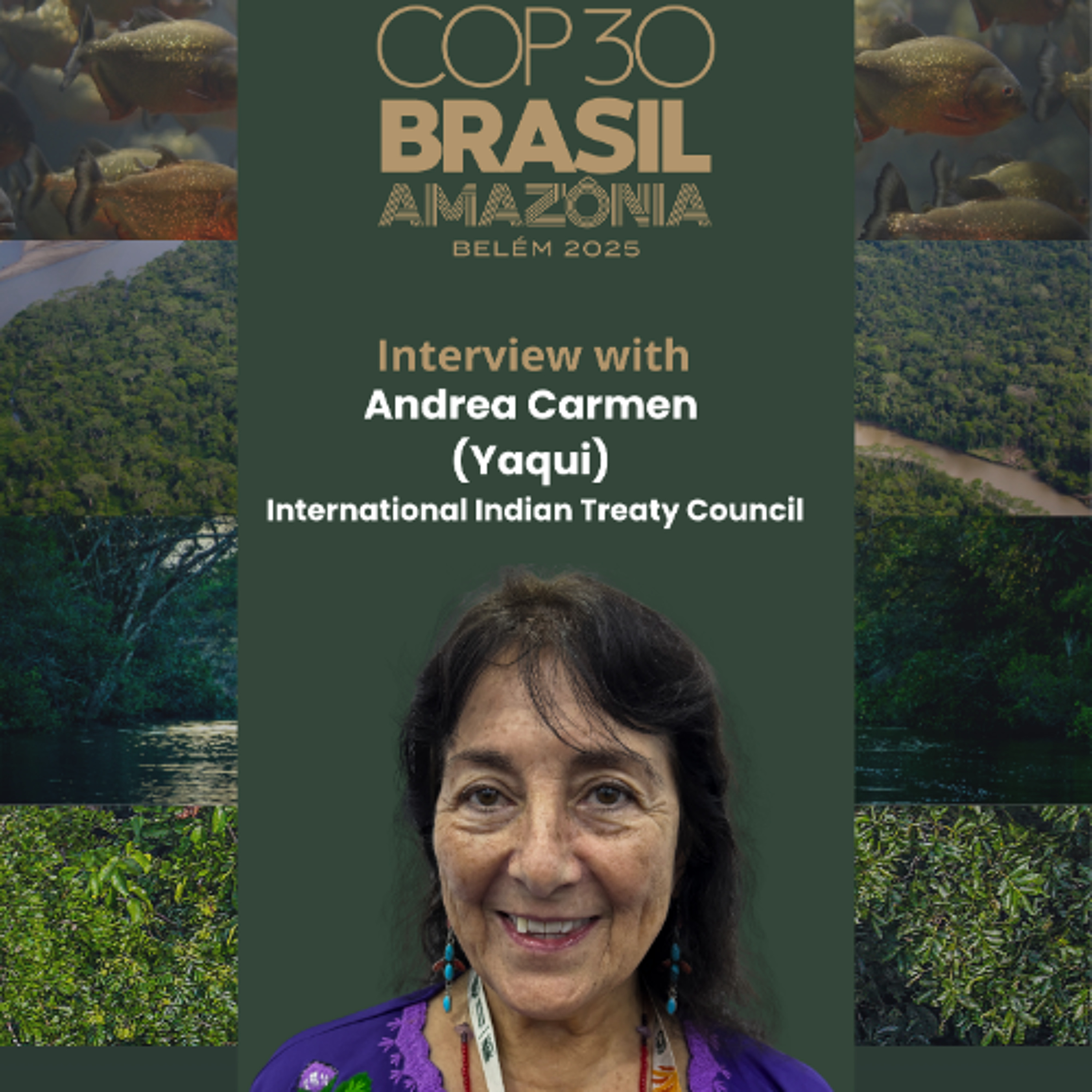
From November 10 to 21, 2025, the UN Climate Change Conference, commonly referred to as COP30, is taking place in Belém, the city called the "gateway" to the Amazon Rainforest. This major global meeting has gathered government representatives from 198 countries, alongside UN bodies, civil society, academia, industry, and a significant delegation of Indigenous Peoples, women, and youth. Notably, this year has the largest-ever participation of Indigenous Peoples in the conference series, with over 3,000 Indigenous delegates registered. Cultural Survival is engaging with Indigenous leaders and their representatives to understand their goals for COP30.
In this interview, we hear from Andrea Carmen (Yaqui), from the International Indian Treaty Council.
Produced by Dev Kumar Sunuwar (Sunuwar)
Music:
'Libres y Vivas', by Mare Advertencia, used with permission.
'Burn your village to the ground', by The Haluci Nation, used with permission.
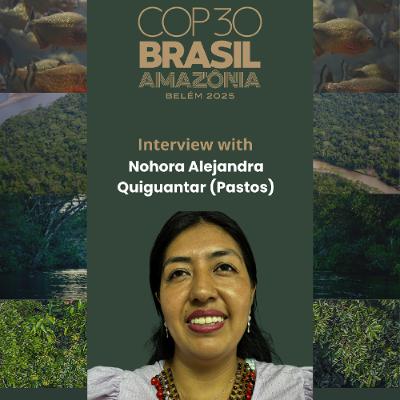
The 2025 UN Climate Change Conference, commonly referred to as COP30, is taking place in Belém, Brazil, known as the "gateway" to the Amazon Rainforest, from November 10 to 21, 2025. This major global meeting has gathered government representatives from the 198 signatory countries, along with delegates from UN bodies, civil society, academia, and industry. Notably, it features a record participation of Indigenous Peoples, with over 3,000 registered delegates, alongside strong representation from women and youth. Cultural Survival has spoken with Indigenous leaders and their representatives to understand their priorities and demands for COP30.
Produced by Dev Kumar Sunuwar (Sunuwar)
Music:
'Libres y Vivas', by Mare Advertencia, used with permission.
'Burn your village to the ground', by The Haluci Nation, used with permission.

Comments

Download from Google Play

Download from App Store
 United States