


 Claim Ownership
Inevitable
Subscribed: 353Played: 28,562
Subscribe

© Override Ventures
Description
Weekly conversations with people powering the world and keeping it running, to learn what comes next. Hosted by Cody Simms. Produced by Override Ventures.
613 Episodes
Reverse

Arushi Sharma Frank is the founder of Luminary Strategies, where she helps startups navigate and reshape the rules governing how new technologies connect to the power grid and get paid. Previously at Tesla, she helped open the Texas grid to large-scale battery storage and created the framework that allows residential batteries to participate in the grid as virtual power plants. Today, her work is helping companies like Base Power, Agentic Infrastructure, and Emerald AI unlock new opportunities in energy storage, grid flexibility, and data center infrastructure.In this episode of Inevitable, Frank explains why understanding the power grid requires looking beyond physical infrastructure to the markets, rules, and financial systems that determine how electricity moves and gets valued. She walks through how she helped change ERCOT's rules to accommodate Tesla's Megapack batteries and aggregate residential batteries into grid-scale resources.Finally, Frank discusses why Texas could become a blueprint for the rest of the country, how the recent election could reshape the future of grid policy, and why the next generation of energy startups needs experienced operators and rulemakers to help create markets where their technologies can succeed.Episode recorded on October 21, 2026 (Published on November 19, 2026).In this episode, we cover: (0:00) Arushi’s path from natural gas and power markets to Tesla and Luminary Strategies(4:02) Why the power grid is a rulebook and financial marketplace(6:40) How batteries are changing the economics of the power grid(10:28) How Arushi unlocked the Texas market for Tesla Megapacks(17:12) How residential batteries aggregate into virtual power plants(20:57) Metering vs. telemetry, and how grid operators verify energy flows(24:00) How Texas’s speed-to-power rules (PCLR) let data centers connect faster(30:39) What happens when the grid asks a data center to cut back(34:35) Telemetry offsetting and making flexible data center power bankable(38:45) New revenue models for large and distributed batteries(44:54) Why Texas could be a blueprint for grid flexibility nationwide(50:10) How Luminary helps startups create new markets(54:34) Post-election update: AI mistrust, the next phase of Texas grid reform, and what data center developers should do now
Enjoyed this episode? Please leave us a review! Share feedback or suggest future topics and guests at [email protected]. Connect with Override:Cody Simms on LinkedInVisit ovr.vcSubscribe to the Override Newsletter*Editing and post-production work for this episode was provided by The Podcast Consultant

In this live episode of Inevitable from Climate Week NYC, Cody Simms explores the history and future of the electric grid with Ben Eidelson of Stepchange.Eidelson traces the evolution of the grid from J.P. Morgan and Pearl Street through the AC/DC debate, the rise of utilities, and Samuel Insull’s development of a scalable utility business model. The conversation then connects that history to today’s grid challenges, including transmission constraints, rapidly growing data center loads, batteries, renewable energy, and the need to modernize the infrastructure connecting increasingly digital and DC-based resources to the grid.Episode recorded on September 22, 2026 (Published on October 16, 2026).In this episode, we cover: (0:00) An overview of Stepchange(3:23) J.P. Morgan and the origins of the U.S. electric grid(5:55) The AC vs. DC battle and the rise of the modern transmission system(10:46) Samuel Insull and the utility business model(13:55) How the grid scaled through consolidation, interconnection, and wartime demand(19:07) Why transmission is central to connecting resources and load(20:53) Three ways to create more capacity from the existing grid(23:14) Data centers and the return of large, concentrated loads(25:35) The history of batteries and their role in the future grid(30:44) Why transformers need to evolve for a more digital, DC-based grid(33:12) Electricity markets, data centers, and new generation(35:33) The changing economics of coal, gas, wind, solar, and batteries
Enjoyed this episode? Please leave us a review! Share feedback or suggest future topics and guests at [email protected]. Connect with Override:Cody Simms on LinkedInVisit ovr.vcSubscribe to the Override Newsletter*Editing and post-production work for this episode was provided by The Podcast Consultant
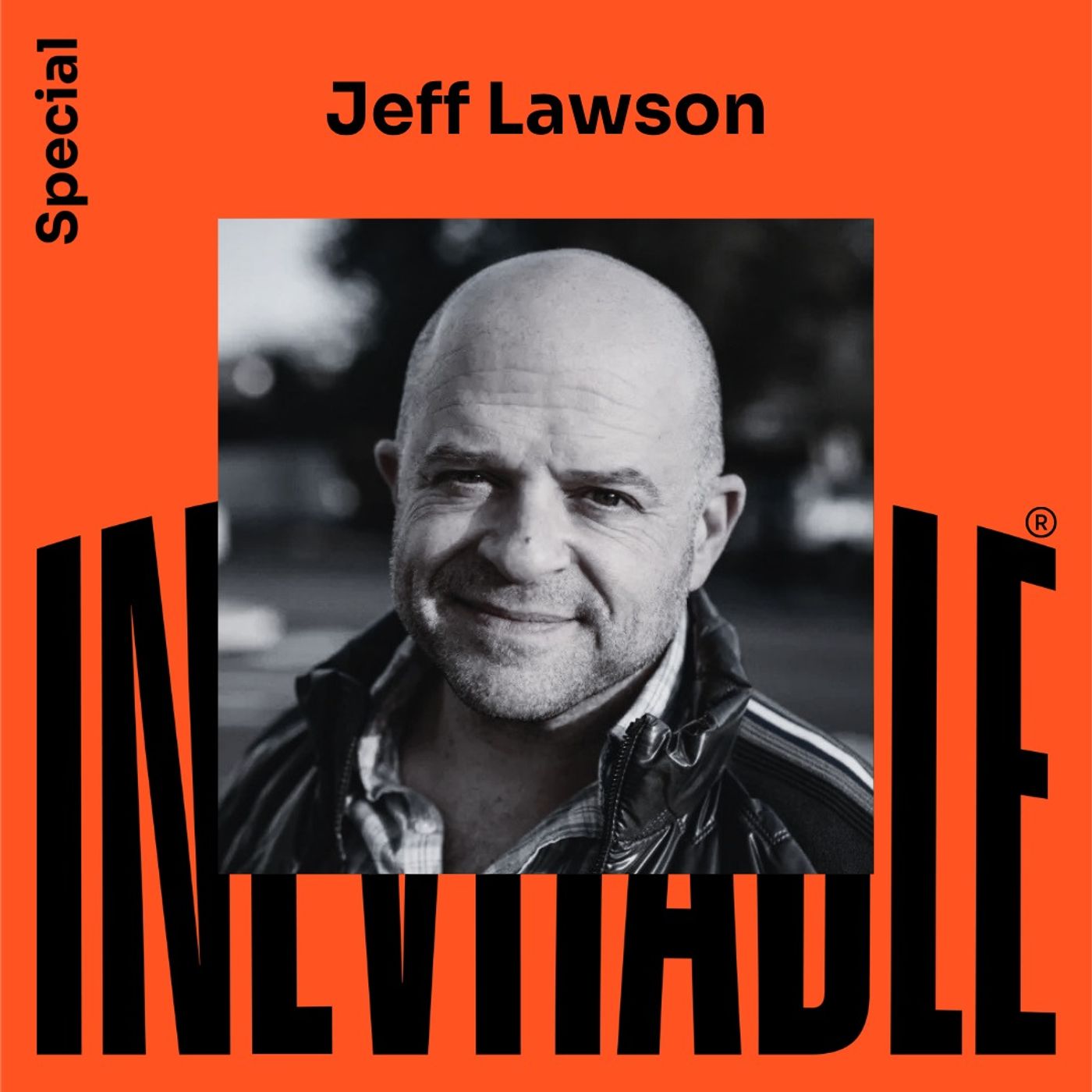
Jeff Lawson is the co-founder and CEO of Inertia, a fusion energy company working to commercialize inertial confinement fusion using advanced lasers and mass-manufactured fusion fuel targets. Lawson previously co-founded and led Twilio, scaling the company from an idea into a public company, and is now applying his product and company-building experience to one of energy’s most technically challenging problems.In this live episode of Inevitable from Climate Week NYC, Lawson explains why he believes the breakthrough at Lawrence Livermore National Laboratory demonstrated that the fundamental physics of fusion can work, while the remaining challenge is largely one of commercialization, manufacturing, and scale.The conversation explores how Inertia is approaching the laser and fusion-target supply chains, why Lawson believes factory economics can transform the cost of fusion, and how lessons from software, semiconductors, SpaceX, and consumer technology are influencing the company’s approach to experimentation and manufacturing.Special thanks to J.P. Morgan for hosting the live taping of this episode in their new space on Park Ave. Episode recorded on September 22, 2026 (Published on October 14, 2026).In this episode, we cover: (0:00) An overview of Inertia(2:28) Applying product thinking to fusion energy(4:41) Building a culture of experimentation and learning(7:05) Why “blow it up already” became an Inertia value(9:11) How Jeff Lawson got into fusion(11:20) What Inertia is building(12:36) The basics of inertial confinement fusion(14:14) Why the Lawrence Livermore laser isn't economical for commercial power(14:47) Modernizing fusion lasers with semiconductor technology(17:10) Scaling the laser diode supply chain(19:41) The challenge of manufacturing fusion targets(20:58) Applying mass manufacturing to fusion targets(23:33) Designing a fusion power plant for utility buyers(25:24) Fusion, AI data centers, and the timeline to new power(26:47) Fusion as an energy source for industry and global markets(28:09) What fusion could look like in 2050(29:32) Why factory economics could shape the future of energy
Enjoyed this episode? Please leave us a review! Share feedback or suggest future topics and guests at [email protected]. Connect with Override:Cody Simms on LinkedInVisit ovr.vcSubscribe to the Override Newsletter*Editing and post-production work for this episode was provided by The Podcast Consultant

Charlie Nitschelm is the co-founder and CEO of Uplift, a company building affordable, rapidly deployable temporary housing. Uplift’s first product is a 90-square-foot, off-grid home designed for one to two people that can be transported fully assembled, placed with a standard forklift, and self-level without a foundation or skilled labor for deployment.In this episode of Inevitable, Nitschelm explains how his experience at SpaceX and Starlink, followed by an intensive period of studying homelessness, poverty, and other social challenges, led him to think about housing as a problem that could benefit from a fundamentally different architecture. The conversation explores how Uplift is designed to work immediately after deployment, including its approach to power, water, sanitation, connectivity, and remote monitoring. Nitschelm also discusses the company's manufacturing ambitions and its potential applications in workforce housing, disaster response, global shipping, ADUs, and affordable housing developments.Episode recorded on September 15, 2026 (Published on September 29, 2026)In this episode, we cover: (0:00) An overview of Uplift(1:38) Charlie’s path from SpaceX and Starlink to Uplift(3:57) Learning about homelessness, poverty, and other social challenges(8:22) Why housing needs a fundamentally different architecture(12:00) Why eliminating skilled labor is central to Uplift’s design(16:49) Forklift deployment and off-grid utilities(23:33) Starlink, solar power, and building a connected fleet(25:03) Applying car manufacturing principles to housing(28:07) Workforce housing and infrastructure projects(32:16) Why disaster housing can take months to deploy(34:12) Global shipping, ADUs, and affordable housing applications(37:04) “Speed to sleeping” and the economics of temporary housing(39:58) Uplift’s manufacturing ramp and the path to HUD approval
Enjoyed this episode? Please leave us a review! Share feedback or suggest future topics and guests at [email protected]. Connect with Override:Cody Simms on LinkedInVisit ovr.vcSubscribe to the Override Newsletter*Editing and post-production work for this episode was provided by The Podcast Consultant

Michael Thomas is the founder and CEO of Cleanview, a data and research platform tracking more than 10,000 clean energy projects and thousands of data center projects across the country. Back for his third appearance on Inevitable, Thomas has spent the past year investigating the explosive growth of AI infrastructure and the increasingly extreme measures companies are taking to get power online.In this episode of Inevitable, Thomas explains how the AI boom has transformed the data center market and why companies are increasingly building their own power generation rather than waiting years for grid interconnection. He breaks down the rise of off-grid and “behind-the-meter” data centers, including xAI’s Colossus, Meta’s rapid-deployment data centers, and Amazon’s massive natural gas project in Texas.The conversation also explores the economics driving the race to power, the environmental and political backlash against data centers, and whether building gas generation today will accelerate or undermine the transition to cleaner energy. Thomas shares what his research reveals about electricity prices, water use, local pollution, and the growing public distrust of Big Tech.Finally, Thomas discusses the tension between AI growth, U.S. competitiveness, and climate goals—and why he sees providing objective information about these projects as one of the most important roles he can play.Episode recorded on September 2, 2026 (Published on September 16, 2026)
Enjoyed this episode? Please leave us a review! Share feedback or suggest future topics and guests at [email protected]. Connect with Override:Cody Simms on LinkedInVisit ovr.vcSubscribe to the Override Newsletter*Editing and post-production work for this episode was provided by The Podcast Consultant

Comments

Download from Google Play

Download from App Store
 United States