


 Claim Ownership
Infinitely Precious
Subscribed: 0Played: 0
Subscribe
© 2026 James Henry
Description
Everyone is infinitely precious and unconditionally loved for the gift they already are. Through affirmation and practice, each of us can begin to live from a place of recognizing our own preciousness and its extension in to everyone and everything else.
103 Episodes
Reverse
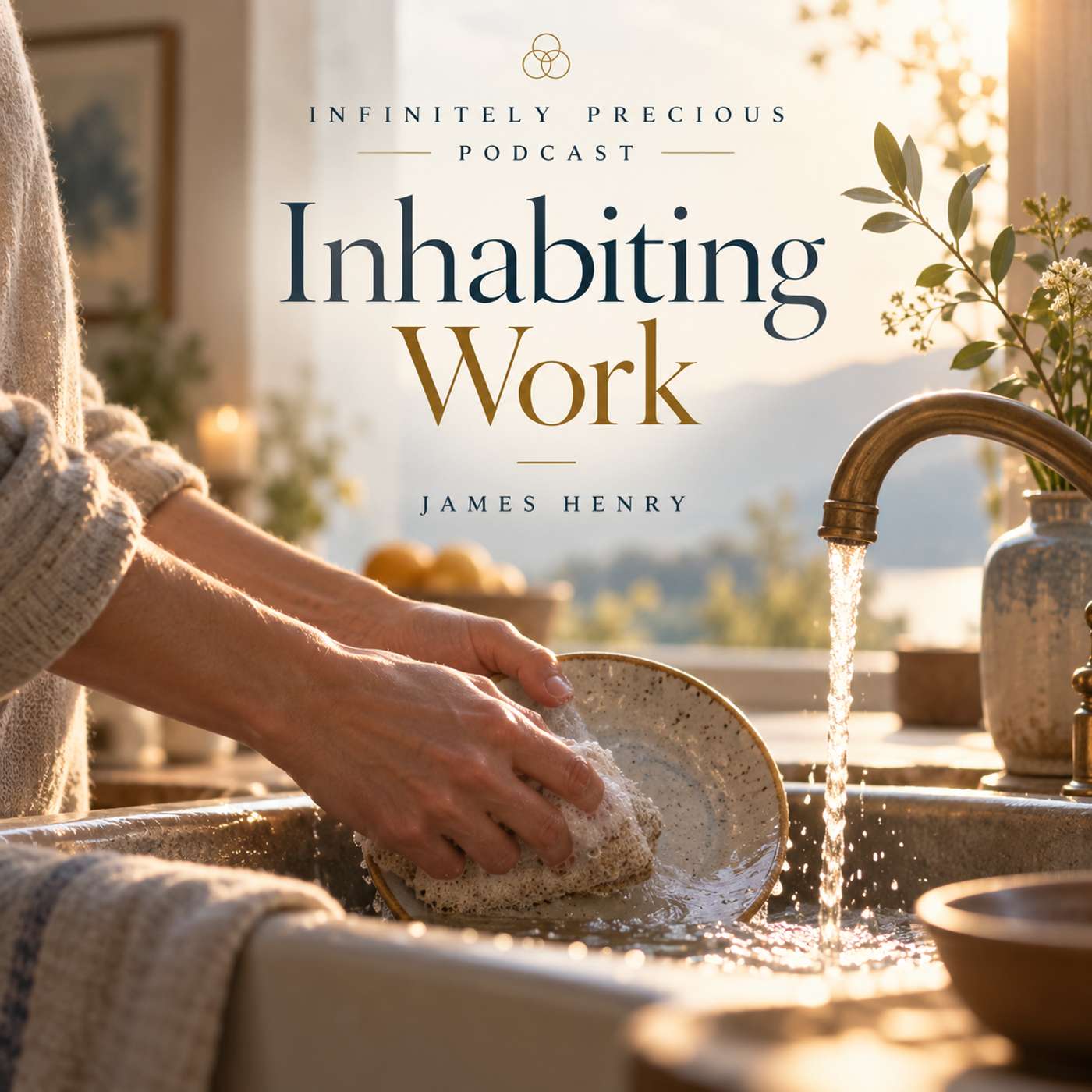
What if the work you do, paid or unpaid, is an expression of your inner life rather than a measure of your worth? In this episode of the Infinitely Precious podcast, James Henry turns the Inhabiting series outward. After episodes on inhabiting the body, pain, grief, and your own preciousness, he asks how we inhabit the places where we meet the world.James widens the meaning of work beyond a paycheck or career. Washing dishes, vacuuming, walking to your job, talking with a neighbor, and answering the phone are all ways we engage the world. The episode looks at the trap of tying self-worth to performance, using examples like a podcast episode that suddenly draws 300 listens or a sermon that doesn't land. It also names the opposite danger, rushing through tasks as a means to the next thing and never being fully present.James offers simple, doable practices for mindful, present work. He describes washing a dish by hand, sweeping a floor, or taking a call without carrying yesterday's irritation into it, all without self-judgment. He also tells an honest story about re-recording this very episode because he wasn't present the first time. If you struggle with burnout, people-pleasing, perfectionism, or the pressure to be productive, this reflection offers a gentler way of working. You can bring your whole self to what you do and still be infinitely precious and unconditionally loved for the gift you already are.In This EpisodeWhy the Infinitely Precious podcast's "Inhabiting" series now turns from the inner life outwardRedefining work beyond your job: dishes, vacuuming, walking, driving, and talking with neighborsWork as an expression of your inner self, not a measure of your worthHow one episode's download spike (and its later drop) can tempt us to equate results with valueWhy a bad sermon or an imperfect lesson doesn't make you worthlessThe danger of complacency and treating tasks as hurdles to get to the next thingHow to practice being present while washing dishes, vacuuming, or sweepingCarrying irritation into a phone call, and how to keep it from coloring your conversationsWhy James re-recorded this episode, and how to learn from not showing up without self-criticismA simple invitation to inhabit the small tasks of your dayThe closing reminder that whether you inhabit your work fully or not, you are always infinitely precious and unconditionally loved
★ Support this podcast ★

What does it mean to inhabit relationship? In this episode of the Infinitely Precious podcast, host James Henry continues the "Inhabiting" series, following inhabiting preciousness, inhabiting pain and struggle, and inhabiting grief. He explores how we are born into relationship, with the planet, the air we breathe, our ancestors, and the universe itself, and how spiritual practice can help us notice and honor connections we usually overlook.James reflects on how easily we slip into transactional relationships ("I will love you if you love me") and invites listeners to treat relationships as gifts worth inhabiting rather than exchanges to get something from. He considers what it looks like to stay present in challenging relationships, including people who irritate us or push our buttons, without rushing to change, ignore, or retaliate. He also reflects on broken and irreconcilable relationships, and on the unhealthy ways technology can shape our connections.From a favorite pine tree outside his window to the oxygen exchange between us and the plants, and from the stardust in our bodies to the 8 billion people who share this planet, this episode offers a contemplative, non-dogmatic reflection on interconnectedness, mindfulness, and spiritual growth. If you're seeking a grounded, compassionate way to think about connection, belonging, and how to be present in the relationships you already have, this episode is for you. And remember: you are infinitely precious and unconditionally loved for the gift you already are.In This EpisodeWhat "inhabiting" means in this series: learning to be where we are, right now, rather than trying to be somewhere elseHow this episode arose out of the previous week's reflection on inhabiting griefWhy we've been in relationship since before birth: the womb, our ancestors, our genetics, the earth, and the universeRelationship with the air we breathe, the vibrations in our voices, and the words we speakThe relationship between podcast host and listener, connected across distance by spiritHow relationships become transactional ("I will do this if you do that") and why relationships are more than transactionsEven a brief exchange at a store counter is a form of relationshipThe spiritual chair, the pine tree outside the window, and relationship with the objects and nature around usWhat it looks like to inhabit a challenging relationship without trying to change it, ignore it, or retaliateRelationship with all of humanity: how do we honor 8 billion neighbors?Honoring the planet, the sunshine, and the rain as relationshipsBroken relationships are still relationships, and holding the hope of healing without forcing itRelationship with technology and how to recognize when a relationship is unhealthyPhotosynthesis, oxygen, and carbon dioxide: our relationship with our "plant sisters and brothers"The stardust in our bodies and the miracle of being connected to it allA practice: sit quietly and ponder the relationships you rarely notice
★ Support this podcast ★
What if grief isn't something to get over, but something to inhabit? In this episode of the Infinitely Precious podcast, host James Henry continues his "inhabiting" series with a tender, honest exploration of grief — what it means, why we feel it, and why rushing past it robs us of something sacred.Drawing on his own experience of losing his father eighteen months ago, James shares how grief doesn't disappear with time so much as it changes shape — showing up in a passing thought, a wish to share good news, a quiet sense of something missing. He reflects on the risk inherent in loving anyone or anything, and why that risk is always worth taking, even knowing it may end in loss.This episode offers gentle permission to feel grief fully rather than push through it — to let it speak the truth that someone or something mattered. Rather than treating grief as a problem to solve, James invites listeners to see it as an honoring of love itself: proof that connection was real, and that presence, not resolution, is often the most faithful response.Whether you're navigating fresh loss or grief that resurfaces unexpectedly years later, this conversation offers companionship for the journey — and a reminder that you are infinitely precious and unconditionally loved for the gift you already are.Topics covered:Why grief goes deeper than pain and struggleLiving with grief that resurfaces unexpectedly, even years laterThe connection between risk, love, and lossHow to sit with grief instead of rushing through itHonoring a relationship by allowing yourself to feel its absenceWhen grief may need outside support
★ Support this podcast ★

What if the fastest way through pain isn't around it, but into it?In this milestone hundredth episode, James continues the Inhabiting Series — following reflections on inhabiting the belief that we are infinitely precious and inhabiting our bodies — by turning to something harder: inhabiting pain and struggle. James names his own instinct, shaped by an Enneagram Seven's pull toward distraction and escape, to anesthetize or outrun discomfort the moment it arrives.Rather than offering a quick fix, James distinguishes between pain that signals real danger (the kind that sends us to the ER or to a trusted friend, therapist, or coach) and the quieter, heavier pain of disappointment, disillusionment, or grief absorbed from a hurting world. He draws on the wisdom of the desert mothers and fathers — who taught that the struggle we run from in one place will meet us again in the next — to make the case that sitting with pain, naming it, and asking what it has to teach us is itself a spiritual practice.This is a tender, honest episode about resilience discovered rather than assumed, and about the difference between rushing toward healing and actually arriving there.In This EpisodeWhy James moved from the Ripening Series into the Inhabiting Series, and what "inhabiting pain" means as the third installmentThe instinct to anesthetize or run from pain — and why it doesn't ultimately workDistinguishing pain that signals danger from pain that signals disillusionment or griefWisdom from the desert mothers and fathers on carrying struggle from place to placeWhen to sit with pain versus when to seek help from a friend, therapist, or coachFinding resilience and strength on the far side of staying present to struggle
★ Support this podcast ★
What if your body isn't just carrying you through your days, but actually speaking to you — and you've just been too busy to listen?In this episode, James continues the Inhabiting Series (following last week's reflection on inhabiting your life as a gift) by turning attention to the most immediate way we experience the world: our bodies. Recording at the end of a long day, James models the practice in real time — naming the tiredness in his shoulders, the strain in his eyes, the small signals most of us learn to override.This is an invitation to stop treating the body as background noise. Tightness in the fists or forehead during conflict, heaviness on a humid day, the ache of legs that have walked farther than they wanted to — James suggests these aren't interruptions to spiritual life, but part of it. He explores the tension between pushing through and listening, and offers simple, doable practices: feeling your feet before you get out of bed, noticing the water on your hands while washing them, wiggling your toes at your desk.For anyone drawn to contemplative spirituality, this episode reframes embodiment itself as a sacred practice — one more way we sense the divine moving through ordinary, physical life.In This EpisodeWhy James began the Inhabiting Series and how it builds on the Ripening SeriesThe difference between being in your body and truly inhabiting itRecognizing physical signals of stress, fatigue, and emotion (shoulders, fists, forehead, gut)The cultural pressure to "push through" — and when listening matters moreSimple daily practices: feeling your feet, noticing water, wiggling your toesWhy embodiment is a doorway to spiritual presence, not separate from it
★ Support this podcast ★

Comments

Download from Google Play

Download from App Store
 United States