


 Claim Ownership
InsTech - insurance & innovation with Matthew Grant & Robin Merttens
Subscribed: 123Played: 6,210
Subscribe

© Copyright 2022. All rights reserved. 377913
Description
A weekly interview hosted by Matthew Grant peeking behind the curtain of what‘s going on with some of the most well know companies - and some the newest - from in and around insurance, technology, data and investment.
382 Episodes
Reverse

In this episode, Brian Owens is joined by Dana Foley (Head of Catastrophe Research at Chaucer), Joss Matthewman (Chief Revenue Officer at Reask) and Olivia Sloan (Head of Catastrophe Products at Fathom) to explore the growing influence of specialist model vendors in catastrophe risk modelling and why they’re anything but “niche”.
With decades of combined experience across underwriting, model development and scientific research, the panel discusses how climate change, regulatory pressure and the need for portfolio-specific insight are pushing insurers to reconsider single-platform dependency. They explore how new vendors are filling gaps left by traditional models offering science-led, transparent and highly customisable solutions tailored to specific business needs.
Drawing on their respective roles across the risk ecosystem, the panellists explain why the return to multi-modelling is gaining momentum and how platforms like Oasis are helping democratise access to emerging tools.
In this conversation, the panel explores:
Why “niche” models are proving critical in underserved perils, regions and use cases
The evolution from black-box outputs to transparent, collaborative frameworks
How science-first models enable faster innovation and user-driven risk views
What’s enabling and blocking wider adoption of multi-modelling approaches
How Fathom and Reask are using AI and machine learning to improve model fidelity
Why regulatory scrutiny and climate change demand a more agile modelling approach
The role of open platforms like Oasis in supporting innovation and vendor access
What insurers need to consider when building a tailored, future-ready modelling strategy
Sign up to the InsTech newsletter for a fresh view on the world every Wednesday morning.

Introduction
In this episode, Robin Merttens is joined by Jack Miller, CEO and Co-founder of nettle, to explore how generative AI is being applied to one of insurance’s most complex and resource-constrained challenges: risk engineering. Jack shares how his work at McKinsey, leading AI transformations for insurers, exposed him to the inefficiencies in assessing commercial property risks and how that inspired Nettle’s founding.
From mass retirements of risk engineers to the reality that most properties are never physically assessed, Jack outlines why the status quo is unsustainable and how AI can help underwriters make faster, more informed decisions without sacrificing depth or judgement. He explains how nettle is already working with insurers like Allianz to roll out configurable, production-ready tools that reduce manual burden, unlock previously inaccessible insights and integrate directly into existing underwriting platforms.
In this conversation, Jack shares:
Why risk engineering is facing a capacity crunch and how that affects underwriting quality
The surprising statistic that sparked nettle’s creation: 97.5% of properties are never visited
How generative AI can enhance, not replace, expert judgement in high-value underwriting
Why depth, not breadth, is the key to building meaningful AI solutions in insurance
Lessons from building a product insurers can implement in weeks not years
The importance of involving underwriters in AI adoption from day one
What most insurers get wrong about pilots, procurement and “proper” GenAI strategies
How nettle’s partnership with Allianz helped shape a scalable, enterprise-ready product
Why commercial P&C is the perfect proving ground for next-generation InsurTech
If you like what you’re hearing, please leave us a review on whichever platform you use or contact Jack Miller or Robin Merttens on LinkedIn.
Sign up to the InsTech newsletter for a fresh view on the world every Wednesday morning.

In this episode, Richard Gunn, President & CRO at hyperexponential, joins host Matthew Grant to share the inside story of hyperexponential's expansion journey from the UK to the US, and how the company is reshaping pricing and underwriting in the insurance sector.
Richard reflects on seven years at hyperexponential, starting as the first non-engineering hire to now leading a fast-growing US team in New York. He explains how hyperexponential has evolved from a pricing platform into a broader decision infrastructure provider, with tools spanning triage, portfolio intelligence and AI-powered underwriting support.
In this conversation, Richard shares:
Why hx's "pro-code" platform sits between build vs buy, offering flexibility without compromising enterprise-grade credibility
How the team landed major US clients before even setting up a US office
The strategic lessons behind building trust with US insurers, from culture to communication
The practical impact of generative AI and "vibe coding" in hx's product development and internal operations
Why hx believes AI isn't about replacing roles but redrawing their boundaries to boost effectiveness
What it's like to move across the Atlantic with a young family while scaling a tech business
How New York's transient tech culture supports rapid networking and hiring
His predictions on shifting insurer priorities from growth to profitability
Resources & Mentions:
AI Daily Brief (podcast recommendation)
Book: Papillon by Henri Charrière
Previous guests: Amrit (hyperexponential Co-founder & CEO), Marcus Ryu (Co-founder and Chairman at Guidewire and Partner at Battery Ventures)
If you like what you’re hearing, please leave us a review on whichever platform you use or contact Richard Gunn or Matthew Grant on LinkedIn.
Sign up to the InsTech newsletter for a fresh view on the world every Wednesday morning.

In this episode, Robin Merttens is joined by Tim Hardcastle, CEO and Co-founder of INSTANDA, to reflect on what it takes to turn a contrarian vision into a global insurtech platform and what the next decade of innovation might look like.
Tim left a senior role at Hiscox to build a no-code platform for insurers at a time when most said it couldn’t be done. Ten years on, INSTANDA powers operations around the world and is gearing up for its next big leap. This conversation revisits the early sparks of that journey, including a memorable chat at the Royal Exchange, and dives into the personal and professional lessons Tim has gathered along the way.
In this conversation, Tim shares:
Why the earliest versions of INSTANDA were built despite zero market demand
How a falling out with a boss became the unexpected catalyst for entrepreneurship
The reality of scaling a tech company in insurance including a motorbike sale to make payroll
Why belief, timing and architecture were crucial to gaining traction
How humility shaped both leadership style and product design
What it means to lead through survival, scale and reinvention
His view on legacy, moonshot AI and the importance of letting go
What’s fuelling his passion ten years in and where the next decade might lead
This one is part retrospective, part roadmap and full of insight for anyone thinking long-term about change in insurance.
Sign up to the InsTech newsletter for a fresh view on the world every Wednesday morning.
Continuing Professional Development
This InsTech Podcast Episode is accredited by the Chartered Insurance Institute (CII). By listening, you can claim up to 0.5 hours towards your CPD scheme.
By the end of this podcast, you should be able to meet the following Learning Objectives:
Describe the early challenges of launching a no-code insurance platform in a sceptical market.
Explain how belief, architecture and timing contributed to INSTANDA’s success and scalability.
Define the role of humility in effective insurtech leadership and product design.
If your organisation is a member of InsTech and you would like to receive a quarterly summary of the CPD hours you have earned, visit the Episode 382 page of the InsTech website or email cpd@instech.co to let us know you have listened to this podcast.
To help us measure the impact of the learning, we would be grateful if you would take a minute to complete a quick feedback survey.

In this episode, Robin Merttens sits down with Haris Khan and Arved Pohlabeln, co-founders of Novee, to unpack what’s broken in specialty underwriting — and how AI is finally in a position to fix it.
Having met as consultants at Deloitte, Haris and Arved kept encountering the same themes: overworked underwriters, inconsistent submissions, and transformation efforts that rarely made a real difference. That frustration turned into action. Today, they’re building Novee — an AI assistant designed specifically for underwriters, combining insight generation with targeted automation.
In this conversation, Haris and Arved share:
Why underwriting processes remain complex, fragmented and hard to standardise
What makes specialty submissions so variable — and why every case feels like an edge case
How Novee delivers value in two ways: by surfacing better risk insights and automating manual tasks
Why underwriters are embracing AI tools now — not resisting them
What it takes to get live in weeks, not months, with meaningful value
The real-world impact of extracting information from unstructured submissions
How they raised £1.6 million in seed funding and what they’re doing with it
Why verticalised AI is outperforming generic solutions in insurance
What it means to redesign underwriting interaction patterns — and why inbox to insight is the future
The case for using AI before you fix your data, not after
Sign up to the InsTech newsletter for a fresh view on the world every Wednesday morning.
Continuing Professional Development
This InsTech Podcast Episode is accredited by the Chartered Insurance Institute (CII). By listening, you can claim up to 0.5 hours towards your CPD scheme.
By the end of this podcast, you should be able to meet the following Learning Objectives:
Describe the real-world challenges underwriters face when working with inconsistent, unstructured submissions.
Define the concept of verticalised AI in the context of specialty underwriting and how it differs from generic AI solutions.
List the specific ways Novee supports underwriters through both insight delivery and task automation.
If your organisation is a member of InsTech and you would like to receive a quarterly summary of the CPD hours you have earned, visit the Episode 381 page of the InsTech website or email cpd@instech.co to let us know you have listened to this podcast.
To help us measure the impact of the learning, we would be grateful if you would take a minute to complete a quick feedback survey.

In this episode, Matthew Grant sits down with Jonathan Rake, CEO of Risk Data Solutions at Swiss Re, to explore how a major reinsurer is building data and analytics as core capabilities beyond traditional risk‑transfer. Jonathan explains why the shift matters, how analytics are being embedded in real‑time workflows, and what insurers and corporates should focus on as risk becomes more interconnected and dynamic.
In this conversation, Jonathan shares:
Why Swiss Re launched Risk Data Solutions and how it leverages internal analytics for client value
How “certainty of insight” and real‑time decision‑making are redefining insurance workflows
The differing risk‑analysis needs of large corporates versus insurers, and what each must prioritise
How Swiss Re approaches partnerships: enabling versus enriching, and why you cannot go it alone
The acquisition of Fathom (UK) and how model‑blending is raising the accuracy bar in catastrophe modelling
His approach to leadership, maintaining balance outside work and keeping pace with change
A bold prediction for 2026 — and the book he recommends to anyone interested in adventure, risk and innovation 'A Voyage for Madmen' by Peter Nichols
If you like what you’re hearing, please leave us a review on whichever platform you use or contact Jonathan Rake or Matthew Grant on LinkedIn.
Sign up to the InsTech newsletter for a fresh view on the world every Wednesday morning.
Continuing Professional Development
This InsTech Podcast Episode is accredited by the Chartered Insurance Institute (CII). By listening, you can claim up to 0.5 hours towards your CPD scheme.
By the end of this podcast, you should be able to meet the following Learning Objectives:
Specify the tools and workflows that allow insurers to consume insights directly within underwriting platforms.
Measure the business case for embedding analytics in risk workflows versus maintaining separate data functions.
Produce a clearer understanding of how large insurers are operationalising resilience through data, modelling and partnerships.
If your organisation is a member of InsTech and you would like to receive a quarterly summary of the CPD hours you have earned, visit the Episode 380 page of the InsTech website or email cpd@instech.co to let us know you have listened to this podcast.
To help us measure the impact of the learning, we would be grateful if you would take a minute to complete a quick feedback survey.

Catastrophe models have come a long way - but are decision-makers keeping up?
In this panel from InsTech’s The future of catastrophe risk: where science meets reality, Alice Kaye (Inigo), Caroline McMullan (Verisk) and host Dickie Whitaker (Oasis LMF) confront the challenges of turning sophisticated risk models into clear, actionable decisions.
Together, they explore why uncertainty is often more valuable than the average, how human biases still cloud our understanding of extreme events, and what’s needed to close the communication gap between modellers, underwriters and boards. This conversation gets real about the behavioural, structural and cultural shifts the insurance industry must make to better navigate risk in an increasingly volatile world.
What you'll learn in this episode:
Why point estimates often mislead decision-makers - and how scenarios can bring data to life
The role of behavioural bias in catastrophe risk assessment (think hindsight, anchoring and mean reversion)
How leading insurers like Inigo are integrating model outputs into daily underwriting and board-level strategy
The importance of early-career training to build confidence in managing uncertainty
How the interface between climate science, data science and vulnerability modelling is evolving
Why pre-competitive collaboration with academia is critical for the industry's future
If you like what you’re hearing, please leave us a review on whichever platform you use or contact Matthew Grant on LinkedIn.
Sign up to the InsTech newsletter for a fresh view on the world every Wednesday morning.
Continuing Professional Development
This InsTech Podcast Episode is accredited by the Chartered Insurance Institute (CII). By listening, you can claim up to 0.5 hours towards your CPD scheme.
By the end of this podcast, you should be able to meet the following Learning Objectives:
Identify gaps in skills and training that hinder effective risk modelling and decision-making.
Produce more informed underwriting decisions by integrating multiple views of risk.
Summarise best practices for bridging the gap between research, modelling and commercial application.
If your organisation is a member of InsTech and you would like to receive a quarterly summary of the CPD hours you have earned, visit the Episode 379 page of the InsTech website or email cpd@instech.co to let us know you have listened to this podcast.
To help us measure the impact of the learning, we would be grateful if you would take a minute to complete a quick feedback survey.
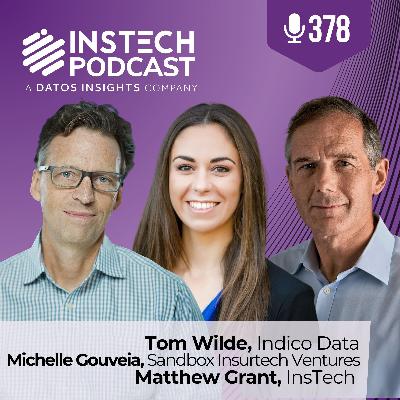
In this special episode of the podcast, originally hosted by Indico Data’s Unstructured Unlocked, Matthew Grant, CEO of InsTech, joins Tom Wilde and Michelle Gouveia to discuss how insurers are harnessing third-party data and AI to make more informed, efficient underwriting decisions.
With over 25 years in catastrophe modelling and analytics, Matthew shares his view on where the real innovation is happening and where insurers are still facing friction. From the rising value of external data sources to the operational impact of generative AI, the conversation is packed with insights that go beyond the buzzwords.
InsTech is sharing this episode to highlight the practical challenges and opportunities facing carriers and reinsurers as they modernise their approach to risk.
What you’ll learn
Why many insurers still struggle to access the most basic risk data
What third-party data needs to prove before it’s trusted in underwriting
How AI is changing both the speed and depth of catastrophe modelling
When it makes sense for carriers to build proprietary models—and when it doesn’t
What reinsurers have taught the market about effective model use
The quiet power of improving underwriting efficiency, not just accuracy
How better data and analytics can help insurers write more risk with more confidence
If you like what you’re hearing, please leave us a review on whichever platform you use or contact Matthew Grant on LinkedIn.
Discover more episodes of Tom Wilde's and Michelle Gouveia's podcast at Indico Data's Unstructured Unlocked.
Sign up to the InsTech newsletter for a fresh view on the world every Wednesday morning.
Continuing Professional Development
This InsTech Podcast Episode is accredited by the Chartered Insurance Institute (CII). By listening, you can claim up to 0.5 hours towards your CPD scheme.
By the end of this podcast, you should be able to meet the following Learning Objectives:
Measure the practical value of generative AI in improving underwriting efficiency and catastrophe modelling accuracy.
Specify the thresholds third-party data must meet—cost and confidence—before it can support underwriting decisions.
Explain how insurers are approaching the build vs buy decision when it comes to proprietary AI models.
If your organisation is a member of InsTech and you would like to receive a quarterly summary of the CPD hours you have earned, visit the Episode 378 page of the InsTech website or email cpd@instech.co to let us know you have listened to this podcast.
To help us measure the impact of the learning, we would be grateful if you would take a minute to complete a quick feedback survey.

What are we still missing in catastrophe modelling and how can we close the gap?
As part of InsTech’s The Future of Catastrophe Risk: Where Science Meets Reality event, this expert panel explored the limitations of current catastrophe models and how the insurance industry can evolve its approach to risk.
Hosted by Ludovico Nicotina (Inigo), with insights from Sandra Hansen (Guy Carpenter) and Paul Wilson (Twelve Securis), the discussion focused on where models fall short, how emerging risks are challenging traditional assumptions and what it will take to build more resilient, climate-aware modelling frameworks.
In this conversation, the panel explores:
What current models overlook — from unmodelled sub-perils to social and infrastructure vulnerabilities
How inter-annual clustering and systemic effects drive outsized losses
The tension between increasing model flexibility and responsible use of adaptation features
Whether vendors are providing enough transparency to support custom views of risk
How the industry can better incorporate future climate states into today’s modelling tools
The case for cross-sector collaboration and more open sharing of internal risk perspectives
If you like what you’re hearing, please leave us a review on whichever platform you use or contact Matthew Grant on LinkedIn.
Sign up to the InsTech newsletter for a fresh view on the world every Wednesday morning.
Continuing Professional Development
This InsTech Podcast Episode is accredited by the Chartered Insurance Institute (CII). By listening, you can claim up to 0.5 hours towards your CPD scheme.
By the end of this podcast, you should be able to meet the following Learning Objectives:
Identify best practices for using adaptation and resilience features within CAT models responsibly.
Produce informed strategies for interpreting and adjusting model outputs to reflect internal views of risk.
Summarise the practical steps insurers and risk managers can take to bridge the gap between science and real-world application.
If your organisation is a member of InsTech and you would like to receive a quarterly summary of the CPD hours you have earned, visit the Episode 377 page of the InsTech website or email cpd@instech.co to let us know you have listened to this podcast.
To help us measure the impact of the learning, we would be grateful if you would take a minute to complete a quick feedback survey.

In this episode, Robin Merttens is joined by Julian Schoemig, CEO and Co-founder of Diesta, to explore why payments and settlements remain one of the insurance industry’s biggest unsolved problems, and what it will take to fix them.
From his early days selling boxing machines to Munich pubs to underwriting aviation at Munich Re, Julian’s career has been shaped by a single truth: business doesn’t count until the cash is in the bank. That mindset now underpins Diesta, a company building the financial plumbing to help insurers, brokers and MGAs move money with greater clarity, speed and control.
In this conversation, Julian shares:
Why insurance payment flows are so complex — and how that creates systemic risk
What makes insurance different from other industries that rely on intermediated transactions
The scale of the problem: seven times more money moves than is written in premium
How Diesta connects policy systems, banks and documents to create a single source of truth
Why traditional reconciliation tools fall short for insurance finance teams
The real-world impact of unallocated cash, overpayments and delayed settlements
What he's learned from building a product in a “boring but broken” space
Why now is the right time for vertical, API-first infrastructure in insurance
The case for making payments a first-class metric in performance and incentives
Sign up to the InsTech newsletter for a fresh view on the world every Wednesday morning.
Continuing Professional Development
This InsTech Podcast Episode is accredited by the Chartered Insurance Institute (CII). By listening, you can claim up to 0.5 hours towards your CPD scheme.
By the end of this podcast, you should be able to meet the following Learning Objectives:
Specify the technological and structural reasons why insurance payment flows are more complex than in other industries.
Explain how Diesta’s payment operations layer integrates with existing systems to streamline cash flow.
Define the concept of a financial subledger in the context of intermediated insurance.
If your organisation is a member of InsTech and you would like to receive a quarterly summary of the CPD hours you have earned, visit the Episode 376 page of the InsTech website or email cpd@instech.co to let us know you have listened to this podcast.
To help us measure the impact of the learning, we would be grateful if you would take a minute to complete a quick feedback survey.

What would happen if the next hurricane wasn’t just stronger but completely off the scale? Are we prepared for a Category 6 event, and would it even show up in our models?
In this panel discussion from InsTech’s July evening event The future of catastrophe risk: where science meets reality, supported by Inigo, Ruth Petrie leads a conversation on how insurers are responding to more extreme, uncertain and fast-changing catastrophe risks.
Featuring:
Emma Watkins, Catastrophe Risk Leader
Chris Weller, Head of Exposure Management, Inigo
Tom Philp, CEO, Maximum Information
Together, they challenge the assumptions behind traditional catastrophe modelling, explore the limits of the Saffir-Simpson scale and ask whether imagination, not just data, will define the future of risk management.
In this conversation, the panel explores:
Whether the industry should move beyond Cat 5 and how we define “extreme” risk
Why flood, surge and rainfall are often more damaging than wind alone
How climate change is altering where and how storms form — and what we can predict
What insurers can (and can’t) do in the face of rapid intensification
Why demand surge, rebuild costs and politics are now central to loss estimation
What kind of event would truly “shake” the insurance market — and why
This is essential listening for exposure managers, underwriters, brokers and risk leaders looking to challenge conventional thinking and prepare for what’s next.
If you like what you’re hearing, please leave us a review on whichever platform you use or contact Matthew Grant on LinkedIn.
Sign up to the InsTech newsletter for a fresh view on the world every Wednesday morning.
Continuing Professional Development
This InsTech Podcast Episode is accredited by the Chartered Insurance Institute (CII). By listening, you can claim up to 0.5 hours towards your CPD scheme.
By the end of this podcast, you should be able to meet the following Learning Objectives:
Identify where insurers remain unprepared for rapid intensification and other emerging storm behaviours.
Produce a more complete view of catastrophe exposure by integrating hazard, vulnerability and socio-economic factors.
Summarise the panel’s recommendations for improving risk communication, preparedness and resilience across the industry.
If your organisation is a member of InsTech and you would like to receive a quarterly summary of the CPD hours you have earned, visit the Episode 375 page of the InsTech website or email cpd@instech.co to let us know you have listened to this podcast.
To help us measure the impact of the learning, we would be grateful if you would take a minute to complete a quick feedback survey.

In this episode, Matthew Grant sits down with Matthew Eagle, Head of Global Model Solutions and Advisory at Guy Carpenter, to explore how one of the industry's most respected voices sees the future of modelling, capital management and advisory in reinsurance.
With three decades of experience, Matthew reflects on what’s changed — and what hasn’t — in how reinsurers view risk. From the early days of catastrophe models to today’s generative AI agents and open modelling platforms, he shares how his team is helping insurers manage volatility, optimise capital and drive profitable growth.
In this episode, Matthew shares:
Why flood, wildfire and severe convective storm are the perils to watch — and model — more closely
How generative AI is already reshaping pricing, underwriting and actuarial workflows
What insurers need to know about build vs buy when it comes to new analytics tools
How Guy Carpenter is scaling open-source tech through Oasis and data standardisation
What skills are now essential for new analysts entering the industry
How AI agents are being used to replicate complex actuarial decisions in seconds
Why “good enough” modelling still matters, and where precision can be a false economy
The link between terrorism modelling and gaming engines — and what it signals for future innovation
If you like what you’re hearing, please leave us a review on whichever platform you use or contact Richard Hartley or Matthew Grant on LinkedIn.
Sign up to the InsTech newsletter for a fresh view on the world every Wednesday morning.
Continuing Professional Development
This InsTech Podcast Episode is accredited by the Chartered Insurance Institute (CII). By listening, you can claim up to 0.5 hours towards your CPD scheme.
By the end of this podcast, you should be able to meet the following Learning Objectives:
Define the evolving skill sets required for analysts working in catastrophe risk and capital modelling.
Identify the trade-offs in choosing between ‘build’ and ‘buy’ approaches when adopting new analytical technologies.
Produce a framework for helping clients achieve profitable growth, manage volatility and optimise capital.
If your organisation is a member of InsTech and you would like to receive a quarterly summary of the CPD hours you have earned, visit the Episode 374 page of the InsTech website or email cpd@instech.co to let us know you have listened to this podcast.
To help us measure the impact of the learning, we would be grateful if you would take a minute to complete a quick feedback survey.

In this episode, Matthew is joined once again by Richard Hartley to reflect on a major milestone in Cytora’s journey: its acquisition by US-based Applied Systems.
But as Richard makes clear, this isn’t the end of the road. It’s a platform for scale. Listeners will hear how Cytora evolved from tackling political risk to transforming how risk flows through commercial insurance. Richard shares practical lessons from scaling into the US, explains why they rebuilt their platform around large language models and outlines why being agnostic to input but opinionated on risk output is a game changer.
They also explore the cultural and technical alignment with Applied, the value of blending insurance expertise with external product thinking and what it really takes to make hard pivots, including knowing when to throw away what you’ve built.
In this episode, Richard shares:
Why Cytora rebuilt its platform around large language models — and what they threw away to make it work
How “decision-ready risk” became a guiding principle for digitising insurance workflows
What it really takes to expand into the US and earn client credibility market by market
Why the idea of industry-wide standardisation is flawed — and how to work around it
How to lead through uncertainty, scale a team and make tough product decisions
Why insurance needs both deep domain knowledge and external perspective to innovate
The underrated role of resilience in entrepreneurship — and what ballet and rugby taught him about pushing through
If you like what you’re hearing, please leave us a review on whichever platform you use or contact Richard Hartley or Matthew Grant on LinkedIn.
Sign up to the InsTech newsletter for a fresh view on the world every Wednesday morning.
Continuing Professional Development
This InsTech Podcast Episode is accredited by the Chartered Insurance Institute (CII). By listening, you can claim up to 0.5 hours towards your CPD scheme.
By the end of this podcast, you should be able to meet the following Learning Objectives:
Describe how unstructured data enters the insurance value chain and the implications for underwriting workflows.
Define the concept of “decision-ready risk” and its role in modernising commercial insurance operations.
List the key factors that enabled Cytora’s successful expansion into the US market.
If your organisation is a member of InsTech and you would like to receive a quarterly summary of the CPD hours you have earned, visit the Episode 373 page of the InsTech website or email cpd@instech.co to let us know you have listened to this podcast.
To help us measure the impact of the learning, we would be grateful if you would take a minute to complete a quick feedback survey.

Jonathan Spry, CEO and co-founder of Envelop Risk, joins Robin Merttens for a deep dive into how data science, AI and portfolio-level modelling are transforming cyber reinsurance. As one of the earliest voices in the industry championing machine learning and systemic risk analysis, Jonathan shares what he's learned over nine years of building Envelop into a leading hybrid underwriter operating across London and Bermuda.
In his own words, this episode is about building smarter ways to understand, underwrite and capitalise on emerging risk — with cyber as just the starting point.
What you'll learn:
Why Jonathan and his team focused on cyber risk and portfolio-level underwriting from day one
The rationale behind favouring systemic insights over individual vulnerabilities
How causal inference provides a leap forward in predicting tail events
Why AI liability is already creating new market opportunities
The need for creative, multi-source data strategies beyond traditional claims
Why Envelop steers clear of SaaS and keeps underwriters embedded in the modelling process
How algorithmic underwriting fits into the next chapter of insurance innovation
Candid thoughts on the AI hype cycle — and what matters more than the buzz
Jonathan also talks through Envelop's shift from MGA to reinsurer, how to think long-term in a volatile market and what kind of partnerships are needed to unlock new forms of risk.
Book recommendation from Jonathan: The Book of Why by Judea Pearl and Dana Mackenzie.
If you like what you’re hearing, please leave us a review on whichever platform you use or contact Robin Merttens on LinkedIn. You can also contact Jonathan Spry on LinkedIn to start a conversation!
Sign up to the InsTech newsletter for a fresh view on the world every Wednesday morning.
Continuing Professional Development
This InsTech Podcast Episode is accredited by the Chartered Insurance Institute (CII). By listening, you can claim up to 0.5 hours towards your CPD scheme.
By the end of this podcast, you should be able to meet the following Learning Objectives:
Identify the structural and economic drivers pushing insurers toward algorithmic and portfolio underwriting.
Produce a strategy for aligning capital, analytics and data science in cyber reinsurance underwriting.
Summarise how Envelop Risk evolved from an MGA to a hybrid reinsurer and the rationale behind its capital partnerships.
If your organisation is a member of InsTech and you would like to receive a quarterly summary of the CPD hours you have earned, visit the Episode 372 page of the InsTech website or email cpd@instech.co to let us know you have listened to this podcast.
To help us measure the impact of the learning, we would be grateful if you would take a minute to complete a quick feedback survey.

What happens when a major US insurance tech player sets its sights on Europe? This week, Robin Merttens speaks with Chris Quirk, VP and General Manager at Insurity, to unpack the drivers behind the company’s international expansion and what it signals for the wider market.
Chris brings a unique cross-market perspective, working with carriers, MGAs and brokers on both sides of the Atlantic. He shares how Insurity is navigating the challenges of scaling legacy systems into modern, cloud-native platforms and why interoperability and open ecosystems are now critical in a post-consolidation world.
Key themes include:
Why the US market is looking to London and Europe for growth
The role of private equity and M&A in shaping cross-border expansion
Common pitfalls when exporting US tech to the UK and how to avoid them
How Insurity is balancing tried-and-tested functionality with modern scalability
The growing importance of structured data in preparing for agentic AI
Strategic partnerships with Viper, Coherent and OIP InsurTech
What a truly “distributed” insurance ecosystem could look like in the near future
Chris also offers insight into where Insurity is investing over the next 12 months and why the industry may be underestimating just how much technology has matured.
If you like what you’re hearing, please leave us a review on whichever platform you use or contact Robin Merttens on LinkedIn. You can also contact Christopher Quirk on LinkedIn to start a conversation!
Sign up to the InsTech newsletter for a fresh view on the world every Wednesday morning.
Continuing Professional Development
This InsTech Podcast Episode is accredited by the Chartered Insurance Institute (CII). By listening, you can claim up to 0.5 hours towards your CPD scheme.
By the end of this podcast, you should be able to meet the following Learning Objectives:
Explain the role of structured data and cloud-native systems in enabling AI adoption in insurance workflows.
Define the concept of an “open ecosystem” in insurance technology and its advantages over closed platform models.
Identify key industry partnerships that support seamless data exchange and workflow integration across markets.
If your organisation is a member of InsTech and you would like to receive a quarterly summary of the CPD hours you have earned, visit the Episode 371 page of the InsTech website or email cpd@instech.co to let us know you have listened to this podcast.
To help us measure the impact of the learning, we would be grateful if you would take a minute to complete a quick feedback survey.
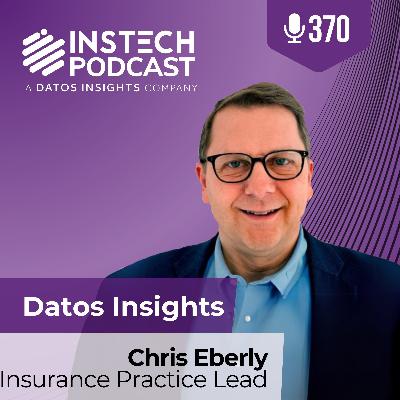
In this special edition of the InsTech podcast, Robin introduces listeners to new colleague Chris Eberly, Insurance Practice Lead at Datos Insights, following Datos’ recent acquisition of InsTech. Chris brings more than 30 years of carrier experience and a unique practitioner’s perspective on the forces shaping insurance today.
Together they explore what this new chapter means for InsTech members, the wider insurance ecosystem, and why Datos’ blend of advisory, research and community makes a timely fit. Along the way, Chris shares why operational efficiency is top of the agenda, how underinsurance is being tackled, and why AI is no longer just hype but a genuine driver of transformation.
This conversation is part industry briefing, part fireside chat. Listeners will come away with a clearer view of the challenges and opportunities ahead — from regulatory pressure to CIO priorities — and hear how InsTech and Datos plan to deliver value together.
Robin also uncovers Chris’s surprising background outside insurance, including his lifelong passion for the carillon (a rare bell-tower instrument) and what raising six children and seventeen grandchildren has taught him about navigating complexity.
Key themes discussed include:
What Datos Insights does and how it complements InsTech’s mission
Why carriers are focusing on risk operations and decision speed
The scale of underinsurance and how data and property insights can help
What’s really happening with AI adoption inside carriers
The evolving role and pressure of the CIO
Why combining advisory, research and community is so powerful
Chris’s personal story: carillons, family and a passion for making insurance better
If you like what you’re hearing, please leave us a review on whichever platform you use or contact Robin Merttens on LinkedIn. You can also contact Chris Eberly on LinkedIn to start a conversation!
Sign up to the InsTech newsletter for a fresh view on the world every Wednesday morning.
Continuing Professional Development
This InsTech Podcast Episode is accredited by the Chartered Insurance Institute (CII). By listening, you can claim up to 0.5 hours towards your CPD scheme.
By the end of this podcast, you should be able to meet the following Learning Objectives:
Measure the significance of operational efficiency (“risk ops”) in improving underwriting performance and decision speed.
Specify the ways AI is being applied pragmatically in insurance operations, beyond the hype.
Explain why CIOs face increasing pressure to balance legacy systems with rapid technology adoption.
If your organisation is a member of InsTech and you would like to receive a quarterly summary of the CPD hours you have earned, visit the Episode 370 page of the InsTech website or email cpd@instech.co to let us know you have listened to this podcast.
To help us measure the impact of the learning, we would be grateful if you would take a minute to complete a quick feedback survey.

What will the specialty insurance market look like a decade from now? Will we still be talking about legacy systems and manual processes, or will the model itself have changed?
In this panel discussion from InsTech’s Outpace. Outprice. Outperform event, Robin Merttens leads a conversation with four senior experts on the future of the market and the forces that could reshape it.
Featuring:
Paul Carroll, Editor-in-Chief, Insurance Thought Leadership
Toby Kovacs, Account Director, Google Cloud
Andy Yeoman, CEO and Co-founder, Concirrus
Tracie Thompson, Global Head of Strategic Clients, Cytora
Together, they examine how emerging technologies, shifting client expectations and economic realities are pushing the market to rethink long-held assumptions about distribution, underwriting and talent.
In this conversation, the panel explores:
Whether brokers, underwriters and annual renewals will still have a role
How capital and distribution are bypassing traditional intermediaries
Why outsourcing is being redefined in the age of AI
The impact of legacy behaviours, not just legacy systems
How new models of work and regulation are influencing transformation
Whether the protection gap is closing — or widening
If you like what you’re hearing, please leave us a review on whichever platform you use or contact Robin Merttens on LinkedIn.
Sign up to the InsTech newsletter for a fresh view on the world every Wednesday morning.
Continuing Professional Development
This InsTech Podcast Episode is accredited by the Chartered Insurance Institute (CII). By listening, you can claim up to 0.5 hours towards your CPD scheme.
By the end of this podcast, you should be able to meet the following Learning Objectives:
Describe how AI and automation are reshaping the boundaries of outsourcing in specialty insurance.
List the key areas of the insurance value chain likely to undergo transformation in the next 10 years.
Measure the potential impact of continuous underwriting and data-driven models on policy efficiency and pricing accuracy.
If your organisation is a member of InsTech and you would like to receive a quarterly summary of the CPD hours you have earned, visit the Episode 369 page of the InsTech website or email cpd@instech.co to let us know you have listened to this podcast.
To help us measure the impact of the learning, we would be grateful if you would take a minute to complete a quick feedback survey.

In this milestone edition of Partners Chat, Robin and Matthew sit down for their first episode since InsTech's transition to new ownership. With nearly 11 years of leadership behind them, they reflect candidly on founding and growing the business, navigating a sales process and what lies ahead under Datos Insights.
Listeners will get rare insights into what it actually takes to sell a company: what they learned, what caught them off guard and how it’s changed their understanding of fundraising and Private Equity partnerships. This episode offers honest takeaways for any founders or leaders thinking ahead to their own exit.
Robin and Matthew also tackle one of the most polarising trends in insurance tech today: Agentic AI. Is it a game-changer or just another label? They unpack how it's being adopted (quietly or loudly) across insurers, and why some businesses are embracing it at full throttle while others remain unconvinced.
They also share what they’ve seen in the climate and catastrophe modelling space, where collaboration, innovation and data openness continue to drive real value and how this might foreshadow the future of AI in insurance.
Key themes discussed include:
Life after founding: reflections on stepping back and what comes next
Lessons from selling a company and choosing the right buyer
Demystifying Private Equity: stereotypes vs reality
The bifurcation of AI adoption in insurance
The rise of Agentic AI and the risk of “AI washing”
How the climate modelling community sets a precedent for AI maturity
Why demos are finally worth seeing again and how events are evolving
If you like what you’re hearing, please leave us a review on whichever platform you use or contact Robin Merttens or Matthew Grant on LinkedIn.
Sign up to the InsTech newsletter for a fresh view on the world every Wednesday morning.
Continuing Professional Development
This InsTech Podcast Episode is accredited by the Chartered Insurance Institute (CII). By listening, you can claim up to 0.5 hours towards your CPD scheme.
By the end of this podcast, you should be able to meet the following Learning Objectives:
Measure the potential impact of agentic AI adoption on underwriting efficiency and competitive advantage.
Explain the strategic benefits of new ownership for expanding into US markets and enhancing research and advisory capabilities.
Define “AI washing” and how it parallels other historical tech hype cycles in insurance.
If your organisation is a member of InsTech and you would like to receive a quarterly summary of the CPD hours you have earned, visit the Episode 365 page of the InsTech website or email cpd@instech.co to let us know you have listened to this podcast.
To help us measure the impact of the learning, we would be grateful if you would take a minute to complete a quick feedback survey.

If you want a masterclass in how to build a business, sell it well and stay hungry for the next idea, listen to Bob Frady.
In this episode, Matthew Grant catches up with Bob, CEO and Co-founder of PropertyLens and former CEO and founder of Hazard Hub, to hear what he’s learned across three startups, why he’s building again post-exit and how he’s turning deep domain expertise into tools that actually help people.
From fire hydrants to flood risk, Bob has spent years translating messy, hyperlocal data into decisions insurers and now homebuyers can use. But this conversation goes far beyond data: it's about strategy, equity, product‑market fit and the value of knowing when to walk away from the wrong deal.
In this episode Bob shares:
Why Hazard Hub’s founding thesis was wrong, and what he got right instead
How PropertyLens is helping US homebuyers make more informed decisions before they buy
What UK listeners may not realise about US property disclosures, and why risk is so often hidden
How Bob and his co-founder rebuilt their data stack from scratch and landed early B2B traction
Why he still believes in the London Market and how UK insurers are often faster adopters
What it really takes to scale a direct-to-consumer model in property intelligence
Why bootstrapping helped him retain value at exit and how other founders can avoid over-dilution
The four startup lessons he shares with anyone thinking of launching their own venture
This one’s for founders, data practitioners and anyone who enjoys a candid, experience-rich look at what it takes to build a business that lasts.
If you like what you’re hearing, please leave us a review on whichever platform you use or contact Bob Frady or Matthew Grant on LinkedIn.
Sign up to the InsTech newsletter for a fresh view on the world every Wednesday morning.
Continuing Professional Development
This InsTech Podcast Episode is accredited by the Chartered Insurance Institute (CII). By listening, you can claim up to 0.5 hours towards your CPD scheme.
By the end of this podcast, you should be able to meet the following Learning Objectives:
Define the challenges of scaling a startup with limited capital and how bootstrapping influences long-term outcomes.
List the key differences between US and UK property risk disclosure practices.
Explain why Hazard Hub’s original thesis did not hold and how that insight shaped the foundation of PropertyLens.
If your organisation is a member of InsTech and you would like to receive a quarterly summary of the CPD hours you have earned, visit the Episode 367 page of the InsTech website or email cpd@instech.co to let us know you have listened to this podcast.
To help us measure the impact of the learning, we would be grateful if you would take a minute to complete a quick feedback survey.

Insurers have had fair warning: the hard market is softening, and those still relying on legacy tech may soon feel the chill. So what does it take to stay competitive as conditions turn?
In this episode, Robin Merttens is joined once again by Dani Katz, Co-founder and Director of Optalitix, for a sharp analysis of what’s changed since their last conversation and why now really is the time to fix the roof.
Dani brings a clear message: the winners in this market cycle will be those with disciplined pricing, strong data infrastructure and the ability to move fast. And while AI is starting to play a role, it's the fundamentals (clean data, integrated platforms, empowered underwriters) that remain essential.
In this conversation, Dani shares insights on:
Why too many firms delayed digital upgrades during the boom
The signs of market softening and what that means for pricing teams
What “minimum viable tech” looks like in 2025
How underwriters can be brought on the journey, not left behind
The difference between automating and augmenting decisions
Why data pipelines matter more than AI hype
How Optalitix is responding to demand from both UK and global insurers
They also touch on industry psychology: the lingering suspicion of new tech, the cultural lag behind modern tooling and why many firms still struggle to turn innovation into impact.
If you like what you’re hearing, please leave us a review on whichever platform you use or contact Robin Merttens on LinkedIn. You can also contact Dani Katz on LinkedIn to start a conversation!
Sign up to the InsTech newsletter for a fresh view on the world every Wednesday morning.
Continuing Professional Development
This InsTech Podcast Episode is accredited by the Chartered Insurance Institute (CII). By listening, you can claim up to 0.5 hours towards your CPD scheme.
By the end of this podcast, you should be able to meet the following Learning Objectives:
Define the role of AI in underwriting workflows, distinguishing between automation and augmentation.
Identify common cultural and structural barriers to technology adoption across insurance organisations.
Summarise how insurers can use data-first strategies to gain a competitive edge during market transitions.
If your organisation is a member of InsTech and you would like to receive a quarterly summary of the CPD hours you have earned, visit the Episode 366 page of the InsTech website or email cpd@instech.co to let us know you have listened to this podcast.
To help us measure the impact of the learning, we would be grateful if you would take a minute to complete a quick feedback survey.

Comments

Download from Google Play

Download from App Store
 United States