


 Claim Ownership
Inside Matters
Subscribed: 15Played: 245
Subscribe

© Copyright 2022 All rights reserved.
Description
The gut health show – conversations with the most forward-thinking minds in health, fitness, science, nutrition and business. In-depth discussions about how our gut microbiome impacts our health, well-being, mood and more.
Inside Matters was conceived by microbiome expert Dr James McIlroy as a platform to raise awareness of the importance of the gut microbiome. Our aim is to inspire and educate listeners around the world about the importance of gut health, equipping them with the knowledge they need to transform their lives for the better.
Produced by the Podcast Studio Glasgow.
55 Episodes
Reverse
Can Your Microbiome Rewrite Your Immune System's Food Allergies?
Food allergies can be devastating. For families managing severe reactions, every meal carries risk, and even one mistake can have fatal consequences. But what if we could change the underlying biology rather than just manage avoidance?
Dr James McIlroy explores a fascinating new study showing that faecal microbiota transplantation might help the gut relearn that foods like peanuts aren't a threat. The research points to an elegant mechanism: donor bacteria reshape bile acid metabolism, which then restores regulatory immune cells that suppress allergic responses.
This episode reveals why the small intestine is critical to immune tolerance, how microbial metabolites influence what your immune system does and doesn't attack, and why owning a dog in early life might actually matter for allergy development. We're early in the evidence, but the signal is compelling.
00:00 Food Allergy Nightmare
00:43 The Real Risk Numbers
01:52 Beyond Avoidance
02:57 Why Small Bowel Matters
04:52 FMT Peanut Trial Setup
05:54 Results and Caveats
07:12 Bile Acids and Tregs
09:56 Mouse Proof of Mechanism
11:41 Dogs and Early Exposure
13:17 What Comes Next

Professor Alexandra Johnstone joins Dr James McIlroy to explore what makes us hungry, what helps us feel full, and why healthier choices are rarely a matter of willpower alone.
A conversation on chrononutrition, protein, food inequality, GLP-1 medicines and the future of public health.
The big idea: Our bodies, habits and surroundings all influence how we eat. Better health therefore needs more than individual resolve: it needs practical advice, supportive environments and policies that make nourishing food easier to choose.
Breakfast, body clocks and the timing of food
Is breakfast really the most important meal of the day? Professor Johnstone’s answer is an emphatic yes—but not because breakfast has any magical property. Her research focuses on chrononutrition: the relationship between what we eat, when we eat it and the body’s roughly 24-hour circadian rhythms.
The timing of the largest meal may not dramatically alter how much energy the body burns, but it can change how eating feels. A larger breakfast appears to help people feel fuller and may make a calorie-reduced diet easier to follow. The body also tends to be more sensitive to insulin earlier in the day.
There is no universal clock-time definition of breakfast. A useful way to think about it is the first meal within two or three hours of waking.
Fasting is a tool, not a loophole
Intermittent fasting and time-restricted eating can be useful for some people, but they are behavioural strategies rather than shortcuts around energy balance. Professor Johnstone favours including the morning meal and offers the practical reminder: eat breakfast like a king and dine like a pauper.
What does a healthy breakfast look like?
From traditional cooked breakfasts to fortified cereals, the conversation explores nutritious options while highlighting the difference between everyday foods and occasional treats.
Hunger and appetite are not the same thing
A clear and helpful distinction between true hunger and appetite, and why reducing eating behaviour to willpower alone is so misleading.
Why protein is filling
Protein is the most satiating nutrient. The episode dives into the science of satiety, the importance of whole-food sources, and why solid protein tends to be more filling than liquid forms.
Fibre does a different—but equally important—job
While protein excels at satiety, fibre is essential for gut health. The trade-offs and benefits of both are explored.
The obesity paradox and fixing the food environment
Obesity is strongly patterned by inequality. The discussion covers food insecurity, the obesogenic environment, retail promotions, and the need for policy changes that make healthier choices easier.
Ultra-processed food: a debate that needs more evidence
A nuanced look at ultra-processed foods, their role in the diet, and what the current science can – and cannot yet – tell us.
GLP-1 medicines: powerful treatment, unanswered questions
The benefits, limitations, and challenges of GLP-1 medications, including muscle preservation, long-term use, and access/inequality concerns.
Alcohol, Mediterranean patterns and the value of connection
The role of social connection, shared meals, and balanced enjoyment of food and drink.
A practical takeaway: build patterns, not perfection
Realistic, compassionate advice for building sustainable eating habits without shame or moral judgment.
What comes next
Professor Johnstone shares her vision for the future of nutrition science, including better guidance for shift workers, updated protein recommendations, and improved food systems.
About the Conversation In this episode of Inside Matters, host Dr James McIlroy speaks with Professor Alexandra Johnstone, Chair of Nutrition at the University of Aberdeen.
Timestamps:
00:00 Meet Professor Alex Johnson
01:53 Breakfast and Chrononutrition
05:13 Fasting and Eating Windows
07:59 What Makes a Healthy Breakfast
10:42 Hunger vs Appetite Explained
15:49 Protein and Satiety Science
18:20 Obesity Paradox and Poverty
19:53 Fixing the Food Environment
23:11 Gut Brain Axis and Weight Defense
27:06 Obesogenic Retail and Policy Changes
31:16 Alcohol Mediterranean Diet and Blue Zones
38:05 Why Protein Fills You Up
38:52 Protein Satiety Mechanisms
39:32 Amino Acids vs Whole Protein
40:48 Liquid Meal Replacements
43:49 Ultra Processed Food Debate
50:41 Scotland Diet Reality Check
52:37 Red Meat and Cancer Risk
53:47 GLP-1 Weight Loss Challenges
55:07 Microdosing and Inequality
01:04:19 Muscle Loss and Nutrition
01:05:50 Fibre Deep Dive
01:08:21 Sweeteners and Microbiome
01:10:44 Future Vision and Wrap Up

For years, the spotlight in microbiome research has been firmly on the gut. We’ve learned that diversity there is generally a good thing—linked to resilience, health, and better outcomes.
But what if one of the most important microbiomes in the body follows completely different rules?
In a recent conversation, Dr James McIlroy sat down with Professor David MacIntyre, Director of the Robinson Research Institute, to explore a rapidly emerging field: the female reproductive tract microbiome.
What they uncovered challenges many assumptions—and could transform how we think about pregnancy, birth, and early life health.
00:00 Show Returns
01:34 Why Reproductive Microbiome
05:15 Low Diversity Health
09:24 Lactobacillus Protection
12:06 Human Uniqueness
14:17 Population Differences
16:31 Oral Probiotics Myth
19:25 Vaginal Biotherapeutics Trial
22:11 Host Immune Response
27:03 Dysbiosis Triggers
30:42 Microbiome and Preterm Birth
33:06 Labor Inflammation Pathways
38:10 Pregnancy Microbiome Shifts
39:11 Screening and Group B Strep
40:57 Microbiome Screening Potential
42:06 Global Data Predictive Signatures
43:23 Limits of Current Risk Tools
45:30 Point of Care Profiling Vision
46:50 Swab Mass Spec Barcoding
48:27 Composition Versus Host Response
49:58 Metabolic Dark Matter
52:13 Beyond Bacteria, Viruses, and Fungi
55:48 Vaginal Probiotic Trials
57:39 Phase Two Trial Endpoints
01:01:28 Vaginal Microbiome Transplants
01:05:46 Birth Seeding After C Section
01:10:57 Do Vaginal Strains Persist
01:14:05 Ten-Year Personalised Medicine
01:17:45 Wrap Up And Where To Find
A Different Kind of Microbiome
When we talk about the gut microbiome, diversity is often considered a hallmark of health.
The reproductive tract? It’s the opposite.
In healthy women, this environment is typically:
Low in diversity
Dominated by one key group of bacteria: Lactobacillus
This might sound counterintuitive—but it’s by design.
Why low diversity works here
Certain Lactobacillus species—particularly Lactobacillus crispatus—play a protective role by:
Producing lactic acid, keeping the environment acidic (around pH 4)
Preventing harmful microbes from growing
Blocking pathogens from attaching to tissue
Producing antimicrobial compounds
In short, they create a stable, protective ecosystem.
When this balance is disrupted and diversity increases, it’s often linked to:
Infection
Inflammation
Poor reproductive outcomes
A Unique Human Feature
One of the most surprising insights?
Humans are the only species known to have a Lactobacillus-dominated reproductive microbiome.
Even our closest primate relatives don’t share this feature.
That suggests this system evolved relatively recently—and likely offers a meaningful biological advantage, particularly in pregnancy and childbirth.
The Link to Preterm Birth
Preterm birth—defined as delivery before 37 weeks—affects around 1 in 10 pregnancies globally and remains a major medical challenge.
The microbiome appears to play a key role, particularly in early preterm births.
What’s happening biologically?
In a healthy pregnancy, labour is triggered by controlled, sterile inflammation
This process helps:
Break the membranes (waters)
Open the cervix
Initiate contractions
But if inflammation starts too early, it can trigger premature labour.
Where the microbiome fits in
A Lactobacillus-dominant microbiome helps:
Keep inflammation low
Maintain a strong mucosal barrier
Reduce infection risk
When this balance is lost:
The environment becomes less acidic
Inflammatory molecules increase
The barrier weakens
Risk of infection—and preterm labour—rises
Once inflammation starts, it’s very difficult to switch off.
That’s why prevention is so important.
What Disrupts the Balance?
Several factors can shift the microbiome away from its protective state:
Antibiotics (even when used for unrelated infections)
Sexual transmission of bacteria
Hormonal changes
Menstruation
Hygiene practices like douching
Even small changes in pH or environment can allow harmful bacteria to gain a foothold.
Can We Predict Risk Earlier?
One of the most exciting areas of research is using the microbiome as a predictive tool.
Scientists are working towards:
Identifying microbial “signatures” linked to higher risk
Measuring both:
Which microbes are present
How the body is responding to them
New technologies can now analyse a simple swab and generate a metabolic “barcode” in minutes—potentially enabling rapid screening.
The long-term vision?
Routine testing that identifies at-risk pregnancies early—before symptoms appear.
Can We Change the Microbiome?
If we can measure it, can we fix it?
1. Oral probiotics: limited impact
Despite widespread marketing, there’s little evidence that oral probiotics reliably reach or colonise the reproductive tract.
They may have indirect benefits—but they’re not an efficient delivery method.
2. Targeted vaginal probiotics
More promising is direct delivery of beneficial bacteria.
A recent clinical trial explored a vaginally delivered strain of Lactobacillus crispatus:
Safe and well tolerated in pregnancy
Successfully colonised the microbiome
Showed early signs of reducing preterm birth risk
A larger, definitive trial is now underway in the UK.
3. Microbiome transplantation
Inspired by faecal transplants, researchers are exploring vaginal microbiome transplants.
Early studies show potential—but challenges remain:
Regulation
Standardisation
Safety at scale
For now, this remains experimental.
The First Microbial Gift: Birth
The microbiome’s role doesn’t stop at pregnancy.
During vaginal birth, babies are exposed to their mother’s microbes—an important early “seeding” event.
Babies born via caesarean section:
Have different early microbiomes
May face higher risks of certain conditions (e.g. allergies)
There’s growing interest in “vaginal seeding” for C-section babies—but:
Evidence is still emerging
Safety concerns remain
It’s not yet standard practice
A Shift Towards Personalised Pregnancy Care
Looking ahead, this field is moving towards a precision medicine approach.
Instead of treating all pregnancies the same, we may soon:
Assess individual microbiome profiles
Measure immune responses
Identify personalised risk
Apply targeted interventions early—or even before conception
The goal?
Not just preventing complications—but optimising pregnancy from the start.
Why This Matters
This isn’t just about microbes—it’s about long-term health.
By improving the maternal microbiome, we may:
Reduce preterm birth
Improve newborn outcomes
Influence lifelong health trajectories
As Professor MacIntyre puts it, we’re on the cusp of a major shift—from reacting to problems to preventing them before they begin.

Dr Debra Silberg joins Inside Matters for a deep, wide-ranging conversation on gut health, drug development, and the future of microbiome therapeutics.
Dr Silberg is the Chief Scientific Officer at Beyond Celiac, a former global clinical leader at Shire/Takeda and AstraZeneca, and one of the most respected figures in GI medicine and microbiome science.
In this episode, we explore:
• How she moved from basic science to medicine to pharma leadership
• Why the GI field needed so much research — and how it transformed
• The real science behind ulcers, H. pylori, and the Barry Marshall story
• What she teaches in her popular “Understanding Your Gut” course
• Prebiotics vs probiotics — what actually matters
• The truth about gluten, celiac disease, gluten sensitivity and rising incidence
• The microbiome’s role in inflammation, autoimmune disease, mental health & IBS
• Whether microbiome drug development is finally turning a corner
• Why the gut–brain axis may be the most exciting frontier in medicine
Dr Silberg also shares insights from her work with Finch Therapeutics, her role at Beyond Celiac, and her experience advising the team at Biotics.
If you’re interested in gut science, the microbiome, diet, or how modern medicines are built from the ground up, you’ll get a huge amount from this conversation.
Be well, trust your gut — and thanks for listening.
00:00 Introduction to Dr Debra Silberg
00:54 Dr Silberg's Career Journey
02:26 Insights on Gut Health and Microbiome
04:05 Understanding GI Diseases and Treatments
07:41 The Role of Diet in Gut Health
15:59 Celiac Disease and Gluten Sensitivity
25:04 Exploring the Microbiome
27:43 Exploring Therapeutic Approaches to the Microbiota
31:36 Challenges in Microbiome Drug Development
34:22 The Gut-Brain Connection and Mental Health
39:13 Transitioning from Academia to Pharma
41:45 Insights into Drug Development and Success Stories
44:55 The Long Journey of Drug Development
52:01 The Role of AI in FDA Reviews
55:04 Quick Fire Round: Future of Microbiome Research
You must not rely on the information in this video as an alternative to medical advice from your doctor or other professional healthcare provider. If you have any specific questions about any medical matter you should consult your doctor or other professional healthcare provider. If you think you may be suffering from any medical condition you should seek immediate medical attention. You should never delay seeking medical advice, disregard medical advice, or discontinue medical treatment because of the information in this video.
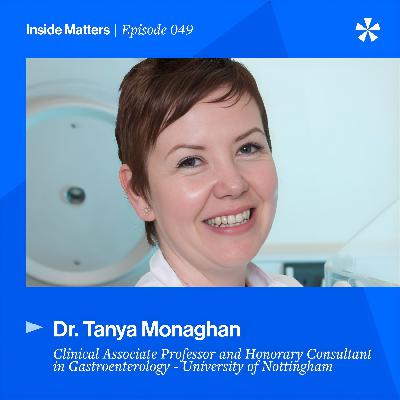
In this episode, Dr James McIlroy chats with Dr Tanya Mongan, clinical associate professor and gastroenterology consultant at the University of Nottingham. Dr Mongan specialises in gut health, particularly the gut–brain connection and faecal microbiota transplantation (FMT).
She talks us through the current state of FMT, why it works so well, and how it’s becoming an increasingly important treatment for conditions like inflammatory bowel disease. We also explore her cutting-edge research into microRNA-based medicines—a new field examining tiny molecules that can help protect the gut and may one day be used to treat conditions linked to an unhealthy microbiome, including cystic fibrosis and neurodegenerative diseases.
This episode breaks down the complexities of the microbiome in an easy-to-understand way, covering everything from the limits of current testing to the promise of personalised gut treatments. Dr Mongan also shares insights into exciting new tools such as organ-on-chip models, nano-delivery systems for microRNAs, and even zebrafish models used in gut research.
If you want to understand where gut science is heading, what’s real and what’s hype, and how future therapies may become more precise and personalised, this is a must-listen.
Chapter Markers
00:00 Introduction to Dr Tanya Mongan and gut health
01:51 Has the microbiome “bubble” burst?
03:45 The big challenges in microbiome science
06:13 What the future of microbiome testing could look like
12:45 Understanding faecal microbiota transplantation (FMT)
19:22 How FMT works and what current research shows
26:29 Why the microbiome is so complex
34:57 MicroRNAs: a new frontier in gut health
37:41 Where microRNAs come from
38:18 How microRNAs help protect the gut
39:00 Why delivering microRNAs is difficult
39:19 Nano-formulation: new ways to deliver microRNAs
40:37 The advantages of organ-on-chip models
42:02 Personalised “gut avatars”
43:58 Zebrafish and other models used in gut research
49:27 Clinical applications and future directions
53:17 Microbiome therapy and FMT in clinical practice
56:57 The future of microbiome research and treatment
01:01:23 Diet, supplements, and the microbiome
01:04:34 Weight-loss drugs and how they affect the microbiome
01:07:52 Fascinating facts about the microbiome
01:09:24 Final thoughts and wrap-up

Comments

Download from Google Play

Download from App Store
 United States