


 Claim Ownership
Intelligent Design the Future
Subscribed: 1,187Played: 122,774
Subscribe

© Discovery Institute
Description
The ID The Future (IDTF) podcast carries on Discovery Institute's mission of exploring the issues central to evolution and intelligent design. IDTF is a short podcast providing you with the most current news and views on evolution and ID. IDTF delivers brief interviews with key scientists and scholars developing the theory of ID, as well as insightful commentary from Discovery Institute senior fellows and staff on the scientific, educational and legal aspects of the debate. Episode notes and archives available at idthefuture.com.
768 Episodes
Reverse

Why has Darwin’s theory of evolution succeeded so dramatically? The official story, of course, is that it provides a sweeping and complete explanation of the development of life on Earth, with the claim that it’s rock solid because it’s grounded in an abundance of evidence. But when we take a closer look at that official story, we see that it actually resembles more of a myth, a legendary origin story that has been championed and propped up successfully for over 160 years. On this ID The Future, host Andrew McDiarmid treats you to a reading from False Messiah, a book by Neil Thomas recently published by Discovery Institute Press. The book provides valuable insight around the mythology of Darwinism as well as the mythical figure of Charles Darwin himself.
To help us understand why Darwinism has persisted for so long, it’s helpful to take a closer look at the forces that moved it forward and upheld it, lest we be tempted to think it has succeed purely on the strength of its scientific arguments.
Source

Why is the cosmos intellectually accessible to us? On this classic ID The Future from vault, host Andrew McDiarmid continues his conversation with Dr. Melissa Cain Travis about her book Thinking God’s Thoughts: Johannes Kepler and the Miracle of Cosmic Comprehensibility.
In Part 2, Travis illuminates Kepler's university years to show us how his study of mathematics and astronomy complemented his interest in theology. We learn about obstacles he overcame during his education and how an unexpected appointment to assist imperial mathematician Tycho Brahe jump-started his career as an astronomer and gave him the tools he needed to develop and advance his revolutionary ideas. Travis unpacks Kepler's major works, from Mysterium Cosmographicum to his magnum opus Harmonices Mundi. She also tracks for us the progression of Kepler's ideas to show us how he became a key figure in the transition from ancient astronomy to a true celestial physics.
This is Part 2 of a 3-part discussion.
Source
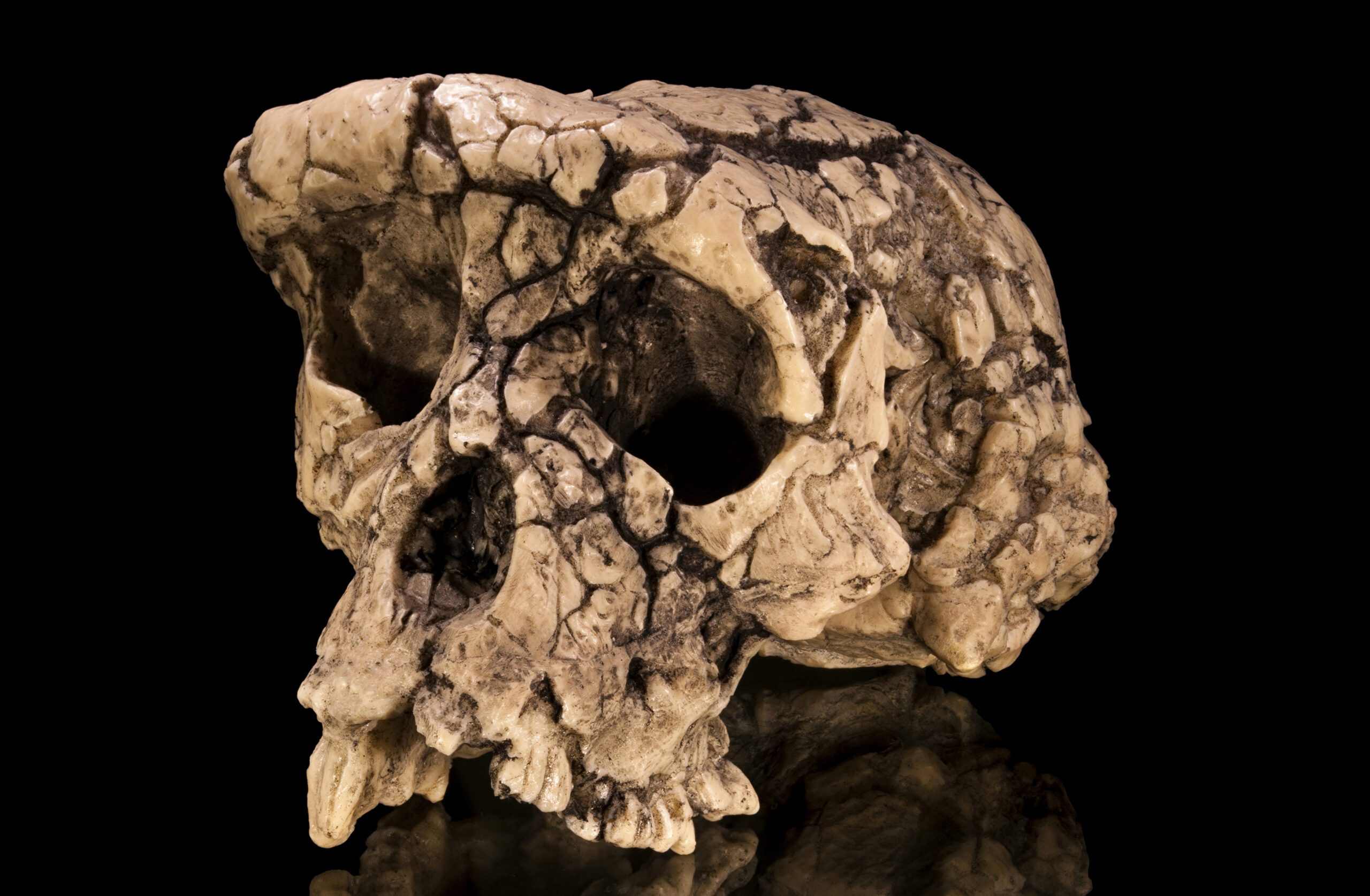
How do you separate the facts from the narrative? That can be challenging these days, and the realm of science is no exception. On this ID The Future, enjoy the second half of a conversation with Dr. Casey Luskin that originally aired on the Come Let Us Reason Together Podcast hosted by Lenny Esposito. Casey discusses the growing controversy surrounding Sahelanthropus tchadensis, a fossil often described as one of the earliest human ancestors. But what began as a celebrated evolutionary discovery has now sparked open disagreement among evolutionary scientists themselves.
In this concluding segment, Casey will discuss the telling researcher-to-specimen imbalance in the field of paleoanthropology, the nuance between error and deception in human origins narratives, and the broader implications of the controversy around the Sahelanthropus fossil. This is Part 2 of a two-part conversation.
Source
Science is a very human enterprise, and very human problems can color scientific research as well as the narratives cast around findings and results. On this ID The Future, we’re bringing you the first half of a conversation with Dr. Casey Luskin that originally aired on the Come Let Us Reason Together Podcast hosted by Lenny Esposito. Casey discusses the growing controversy surrounding Sahelanthropus tchadensis, a fossil often described as one of the earliest human ancestors. But what began as a celebrated evolutionary discovery has now sparked open disagreement among evolutionary scientists themselves. In this segment, Casey reviews the history of paleoanthropology, what the field is trying to prove about human origins, and how language, bias, politics, prestige, and funding pressure all play a part in how discoveries are framed and evidence is weighed. This is Part 1 of a two-part conversation.
Source

ID The Future listeners now get to enjoy a new episode each month (as well as a bingecast archive episode) from our sister podcast Mind Matters News, a production of the Discovery Institute’s Walter Bradley Center for Natural and Artificial Intelligence. The Mind Matters News podcast brings you interviews and insight from computer scientists, engineers, inventors, neurosurgeons, and other experts who bring sanity to the conversation about natural and artificial intelligence, going beyond the hype to explore the undercurrents of these important ideas. And although the Mind Matters News podcast will not often explicitly discuss intelligent design, it regularly explores the nature of intelligence, the origin of information, and the things that make us uniquely human, concepts that are central to the theory of intelligent design.
Is consciousness the exclusive domain of human beings? Proponents of a view known as integrative information theory argue that AI will eventually achieve that same level of consciousness as systems build up and integrate more knowledge in the future. On this archive episode, Mind Matters guest host Pat Flynn welcomes Dr. Selmer Bringsjord to discuss some of the flaws in this theory as well as a possible alternative.
Source
In this episode of ID the Future, host Eric Anderson concludes his conversation with medical engineer and scientist Rob Stadler about the divide between high-confidence and low-confidence science. In this segment, Stadler explains how to apply a set of rigorous criteria to the claims of Neo-Darwinism to better evaluate its explanatory power. He argues that many cornerstone proofs for evolution, such as homology and the fossil record, actually represent low confidence science. Rather than providing direct, repeatable evidence of a causal event, these claims often rely on circular reasoning and unproven assumptions that extrapolate far beyond the actual data available. This is Part 2 of a two-part conversation.
Source

In today's ID The Future, guest host Eric Anderson welcomes medical engineer and scientist Rob Stadler to begin a two-part discussion about the critical need for a new approach to evaluating the strength of evidence in science. Drawing from 30 years of experience in a field where lives depend on rigorous regulatory standards, Stadler explains how he developed six criteria to distinguish between high-confidence and low-confidence scientific claims. These criteria evaluate both the quality of the experiment and the quality of the scientist. This is Part 1 of a two-part discussion.
Source
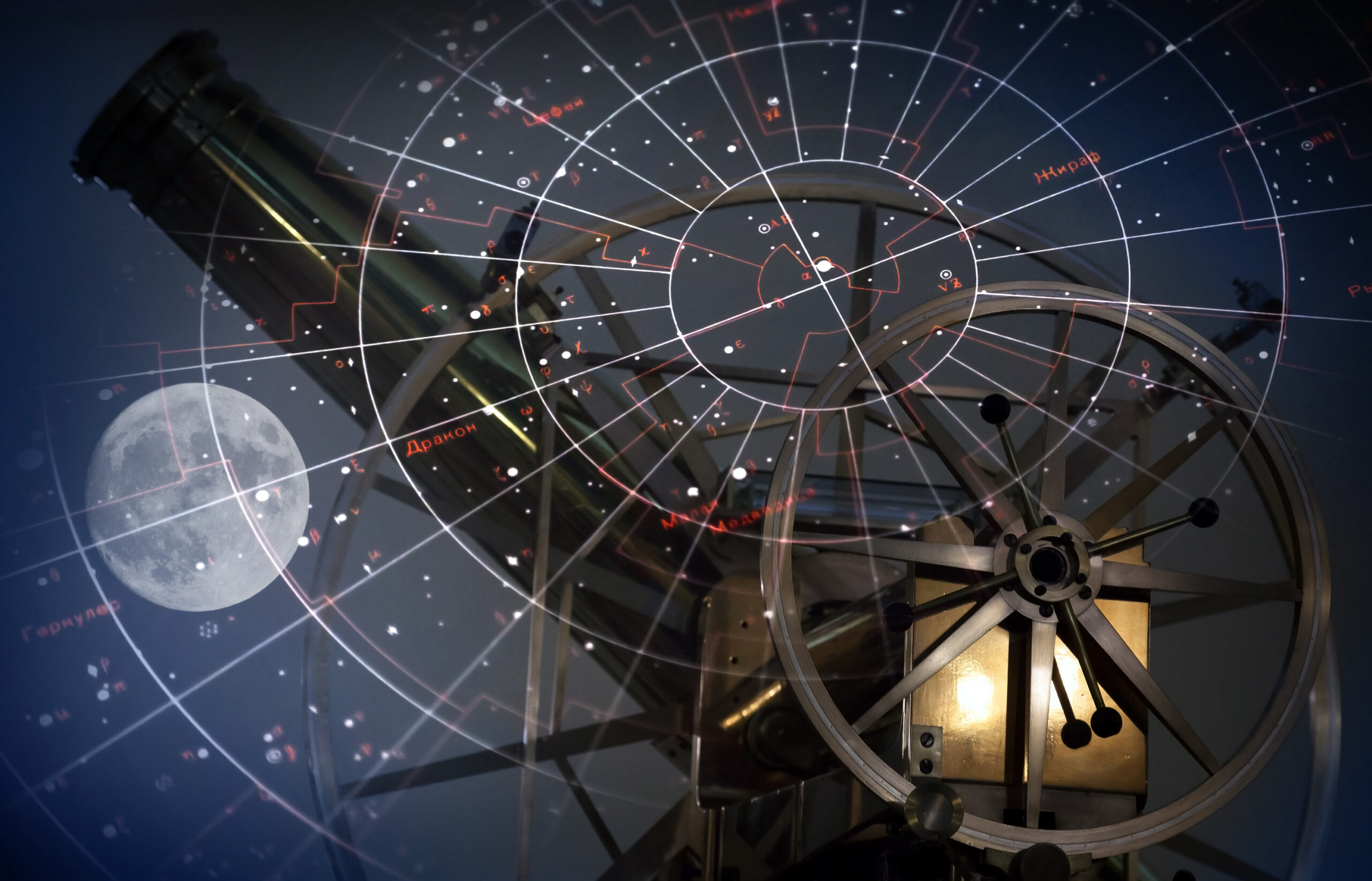
On this classic ID The Future out of the vault, host Andrew McDiarmid kicks off a three-episode discussion with Dr. Melissa Cain Travis about her recent book Thinking God's Thoughts: Johannes Kepler and the Miracle of Cosmic Comprehensibility. A fellow at Discovery Institute's Center for Science and Culture, Dr. Travis serves as Affiliate Faculty at Colorado Christian University's Lee Strobel Center for Evangelism and Applied Apologetics, where she teaches courses in the history and philosophy of science.
In Part 1, learn why Kepler was instrumental in transforming classical astronomy into a true celestial physics. Like others before him, Kepler perceived a remarkable resonance between the rational order of the material world, mathematics, and the human mind. In response, he developed a three-part cosmic harmony of archetype, copy, and image to explain this unity. Travis unpacks his tripartite harmony for us.
This is Part 1 of a 3-part discussion.
Source

 1
1The relationship between Christianity and science is much older and richer than you might think. What can we learn about today’s scientific debates by studying that history? On this ID The Future, host Andrew McDiarmid concludes a two-part conversation with software engineer and intelligent design researcher Winston Ewert about his new book The Heavens, The Waters, and the Partridge, an exploration of the interaction between Christianity and science before modern science.
This half of the conversation dives into the rich history of how early Christian thinkers engaged with the scientific consensus of their time. By exploring historical case studies such as the supposed immutability of the heavens and the ancient belief that matter is eternally conserved, Ewert shows us how early Christian thinkers often pushed back against prevailing Greek philosophies to uphold biblical doctrines like creatio ex nihilo. The examples highlight that the dialogue between faith and science is a centuries-old tradition centered on understanding order, purpose, and the inherent limits of scientific inquiry.
This is Part 2 of a two-part conversation.
Source

What can we learn about science and faith from those who lived before the rise of modern science? On this ID The Future, host Andrew McDiarmid welcomes software engineer and intelligent design researcher Winston Ewert to the podcast to discuss his new book The Heavens, The Waters, and the Partridge, a closer look at the interaction between Christianity and science in the thousand years before modern science.
Why pay attention to ancient scientific debates and specifically how early Christian thinkers responded to them? What could possibly be gained from going that far back? As Ewert points out, quite a lot. Tune in to learn more!
Source
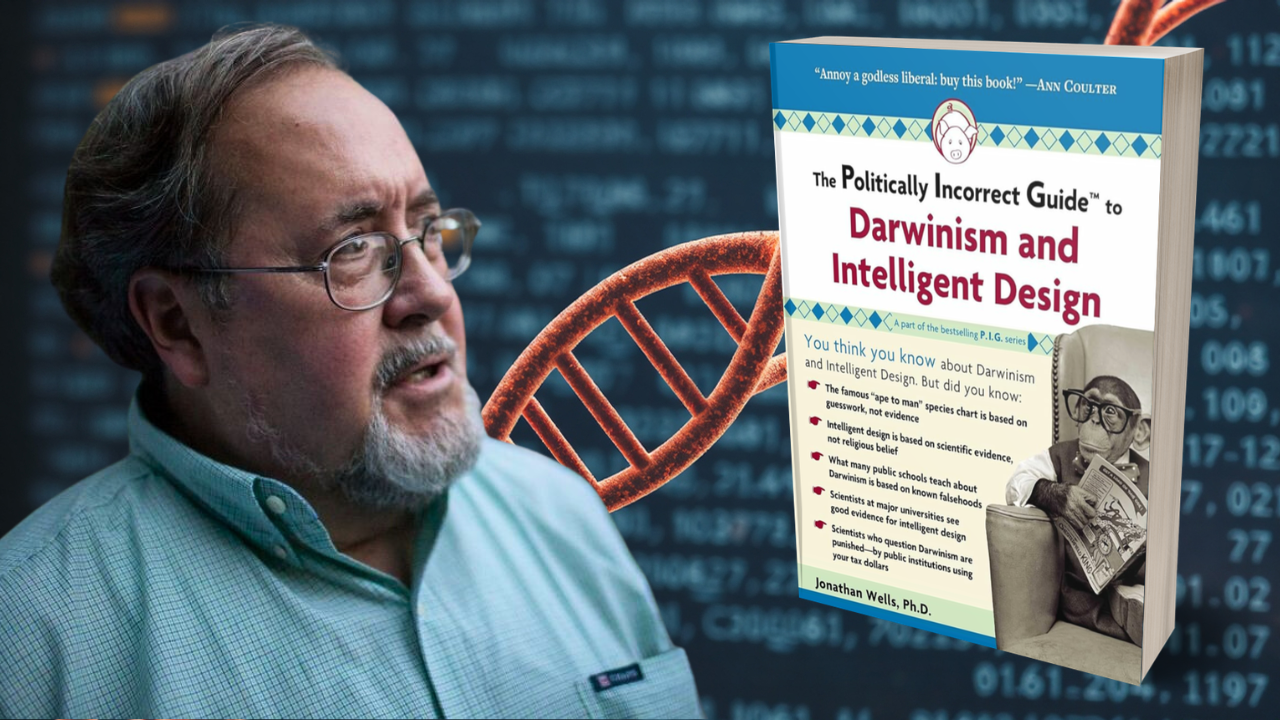
Perhaps no one in the intelligent design research community of recent decades was more qualified to tackle the debate over Darwinism and design than Dr. Jonathan Wells. We lost Dr. Wells in 2024, but his work lives on in his groundbreaking books, articles, interviews, and even a full-length online course. Today's ID The Future out of the vault takes us all the way back to the summer of 2006 when Discovery Institute's Director of Communications Rob Crowther interviewed Dr. Wells about his new book of the time, The Politically Incorrect Guide to Darwinism and Intelligent Design.
Senior Italian geneticist Giuseppe Sermonti has called Darwinism the “'politically correct' of science,” — that is, something that is held not because it is true but rather because of peer-pressure. Thus, Dr. Wells’s book “The Politically Incorrect Guide to Darwinism and Intelligent Design” is aptly named because it ignores this peer-pressure to expose the weaknesses in the evidence for Darwinism with both humorous anecdotes and illuminating explanations of the most common sources of confusion.
Source

Now, ID The Future listeners will get to enjoy a new episode each month (as well as a bingecast archive episode) from our sister podcast Mind Matters News, a production of the Discovery Institute’s Walter Bradley Center for Natural and Artificial Intelligence. The Mind Matters News podcast brings you interviews and insight from computer scientists, engineers, inventors, neurosurgeons, and other experts who bring sanity to the conversation about natural and artificial intelligence, going beyond the hype to explore the undercurrents of these important ideas. And although the Mind Matters News podcast will not often explicitly discuss intelligent design, it regularly explores the nature of intelligence, the origin of information, and the things that make us uniquely human, concepts that are central to the theory of intelligent design.
On this episode, host Robert J. Marks sits down with Dr. Giorgios Mappouras for a deep dive into the philosophical and technical boundaries that define the gap between human minds and silicon machines. The pair look at why the classic Turing Test is no longer a sufficient measure of machine intelligence in the age of large language models. While modern AI can convincingly imitate human conversation, Mappouras argues that true intelligence requires the ability to do more than just mimic data; it must reach what he calls a General Intelligence Threshold. In this episode, they explore Giorgio's proposal for a Turing Test 2.0, a more rigorous framework that evaluates whether an AI can actually extract new, applicable knowledge—what Mappouras calls "functional information"—from the raw data it is given.
Source
On this episode of ID the Future, host Andrew McDiarmid sits down with freelance science reporter David Coppedge to explore the fascinating and emerging field of interoception. Unlike our five external senses or proprioception (the awareness of our limbs in space), interoception involves the constant internal communication between our organs and the brain. While much of this signaling happens unconsciously, it's vital in maintaining homeostasis, that dynamic equilibrium that allows our bodies to function under varying conditions.
In this discussion, Coppedge delves into the intricate mechanics behind this internal dialogue, highlighting the role of Piezo proteins—receptors that translate physical pressure into electrical signals via calcium ions. As an example of interoception in action, Coppedge explains how the gut functions effectively as a "second brain," utilizing a massive network of neurons to decide between "attack mode" against pathogens and "repair mode" for healing. By viewing the body as a system of systems, says Coppedge, rather than a collection of isolated organs, researchers are able to uncover new details of the stunning layers of engineering in the human body.
Source
On a classic episode of ID the Future out of the vault, host and evolutionary biologist Jonathan McLatchie sits down with software R&D engineer Jonathan Bartlett to discuss Bartlett’s work on the question of when genetic mutations are random versus directed. Bartlett explains that the issue isn’t an all-or-nothing affair. Often a given biological system dramatically limits the search space of possible mutations in useful ways, and then within that much more limited set of possible mutations, random processes are at play. He gives the example of antibody mutations. He argues that many biological systems show considerable evidence of having been beneficially designed for directed mutations. Why, then, are many mutations deleterious? He also has an answer for that. Tune Read More ›
Source

How did the giraffe get its long neck? It sounds like the beginning of a children’s bedtime story, and it certainly has been that. But it’s also a matter of serious scientific debate, and the debate continues today. On this installment of ID The Future, host Andrew McDiarmid concludes his two-part discussion correcting claims of giraffe evolution with retired geneticist Dr. Wolf-Ekkehard Lönnig.
In Part 2, Dr. Lönnig challenges the prevailing narrative that the fossil Samotherium major serves as a transitional "missing link" in giraffe evolution. Lönnig argues that this evolutionary interpretation is contradicted by the facts. Instead, he identifies Samotherium as a "mosaic form," an organism possessing a combination of fully developed and basic traits that do not unequivocally connect it to the modern long-necked giraffe.
This is Part 2 of a two-part conversation.
Source

We’ve all admired the long, majestic neck of the giraffe, and the question remains: how did the giraffe get its long neck? Is it a product of an evolutionary process? Or was a process of foresight and purpose involved? Helping us unpack this today is retired geneticist Dr. Wolf-Ekkehard Lönnig, who challenges the traditional narrative of giraffe evolution, noting a sharp disconnect between Darwinian predictions and the actual fossil record. While neo-Darwinism, by default, expects a gradual, step-by-step progression of slight variations leading to the modern giraffe, the geological evidence tells a different story. Learn how the twin problems of stasis in the fossil record and silos in the development of giraffes pose major problems for the standard just-so story of giraffes.
Source

Starting this month, ID The Future listeners will get to enjoy a new episode each month (as well as a bingecast archive episode) from our sister podcast Mind Matters News, a production of the Discovery Institute’s Walter Bradley Center for Natural and Artificial Intelligence. The Mind Matters News podcast brings you interviews and insight from computer scientists, engineers, inventors, neurosurgeons, and other experts who bring sanity to the conversation about natural and artificial intelligence, going beyond the hype to explore the undercurrents of these important ideas. And although the Mind Matters News podcast will not often explicitly discuss intelligent design, it regularly explores the nature of intelligence, the origin of information, and the things that make us uniquely human, concepts that are central to the theory of intelligent design.
On this archive "bingecast" episode, hosts Robert J. Marks and Angus Menuge welcome Dr. Mihretu Guta to discuss his contribution to the book Minding the Brain. Dr. Guta discusses the nature of consciousness and the challenges in understanding it from a philosophical perspective. He argues that consciousness is a unique property that is deeply subjective and personal, making it difficult to study scientifically. Guta contrasts first-order and second-order approaches to understanding consciousness, emphasizing the need to go beyond just the empirical observation of mental phenomena and examine the underlying metaphysical and ontological questions. The discussion covers a number of relevant topics, highlighting the profound and puzzling nature of consciousness and the importance of philosophical inquiry in grappling with this fundamental aspect of human experience.
Source
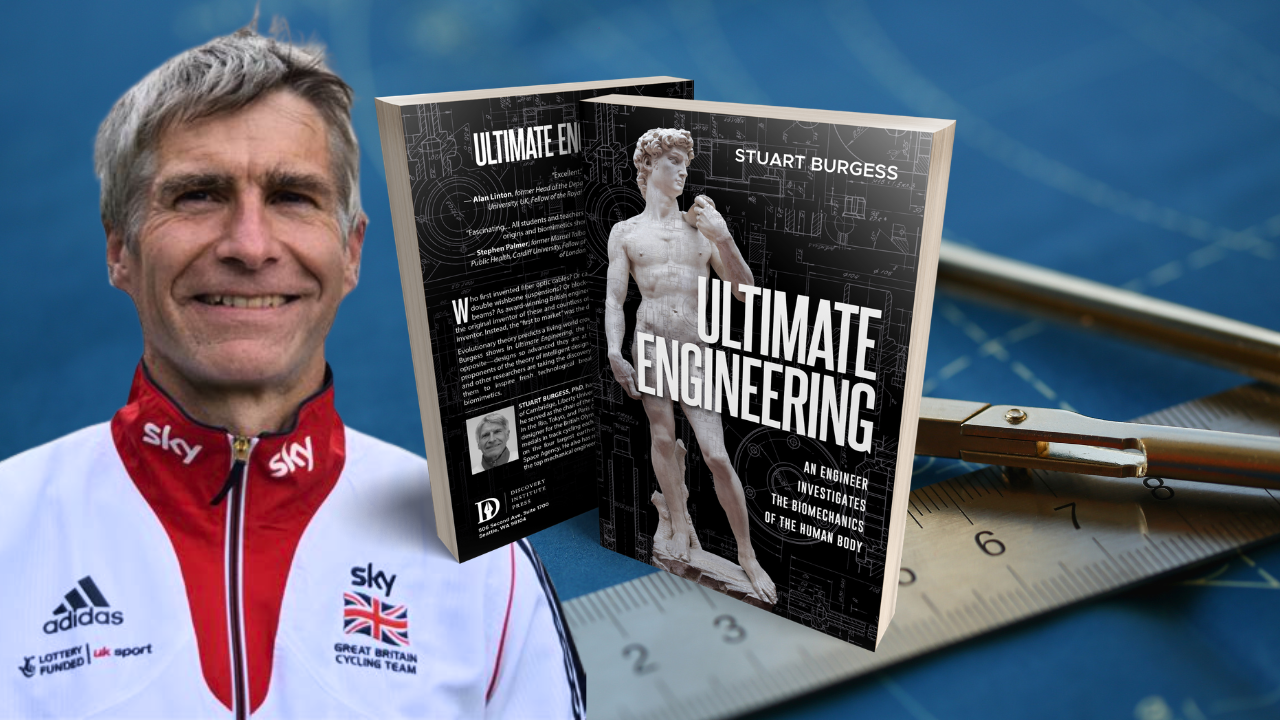
A good way to evaluate scientific theories of origins is to ask what we’d expect to find if the given hypothesis were true and compare that to what we actually observe. Under a Darwinian explanation of life, we’d expect to see designs cobbled together by a blind, undirected process, substandard designs that work but that, in the words of one scientist, wouldn’t win any prizes at an engineering competition. But when we compare that expectation with the scientific evidence, they don’t match up at all. On today's ID The Future, award-winning British engineer and designer Stuart Burgess reads excerpts from his new book Ultimate Engineering. He’s going to share just enough with you today to whet your appetite for reading his book, which is chock full of evidence that humans and other organisms contain countless examples of not just so-so, not just good or very good, but optimal engineering in the design of systems and structures that keep living things alive.
Source

Is life the result of purposeful design or unintended evolutionary accidents? It’s an ongoing debate that’s about to be impacted by new scientific evidence that suggests living things are full of optimal engineering. On this ID The Future, host Andrew McDiarmid concludes his conversation with award-winning British engineer and designer Stuart Burgess about his new book Ultimate Engineering. In it Burgess gathers together compelling examples of advanced structures and systems in the human body and other vertebrates that go far beyond what humans have produced and point to intelligent design, not the cobbled-together results of a blind, purposeless process. In Part 2, Burgess compares his professional work on European Space Agency satellites to the far more sophisticated systems found in biology. This is Part 2 of a two-part conversation. Look for Part 1 in a separate conversation.
Source

This classic ID the Future out of the archive brings in protein scientist Douglas Axe to discuss his contribution to the book, The Comprehensive Guide to Science and Faith. Axe and host Casey Luskin discuss Axe’s thinking on the design intuition, the evidence that it’s triggered almost universally in small children when they observe things like dragonflies or fresh-baked cookies, and why he’s convinced that this intuition is a rational one rooted in our true sense of what sorts of things require know-how for their creation.
Source


Download from Google Play

Download from App Store
 United States
Thank you Jesus for being my hope, my Light and my Life.
Ah, a podcast about bat shit crazy Creationism. Nobody is fooled. We know what ID is.
If everything is trending towards entropy, then: [1] should we be experiencing 'global cooling'? [2] what would be powering the heat engine of hell? I can see the outer darkness aspect, as a function of entropy.
I love this podcast. If you look at all evidence objectively you must think ID possible.
lies .
This is by far my most listened to podcast, and even started at the beginning once I made it all the way through. I'm glad there's always new fresh content. And it's always very cutting edge and important. I'm slightly baffled that there isn't more buzz surrounding their work. Give it a listen and spread the word! Good ideas this way!
I appreciate most of this, but he attributed personhood and will to the singularity without giving a reason. By faith I can understand the Singularity as God, but I would have appreciated a reasoned argument for this.
You do not make a case for anything. Tell me how this is better explained by design than unguided evolution.