


 Claim Ownership
Intermission
Subscribed: 874Played: 1,279
Subscribe

© 2026 Kenrise Media Private Limited
Description
Every great Indian enterprise has a story worth telling in full.
With Intermission, The Ken's flagship long-form podcast, hosts Rohin Dharmakumar and Seetharaman G do exactly that—tracing the origins, turning points, and defining strategies of the companies that shaped modern India.
With Intermission, The Ken's flagship long-form podcast, hosts Rohin Dharmakumar and Seetharaman G do exactly that—tracing the origins, turning points, and defining strategies of the companies that shaped modern India.
10 Episodes
Reverse
 1
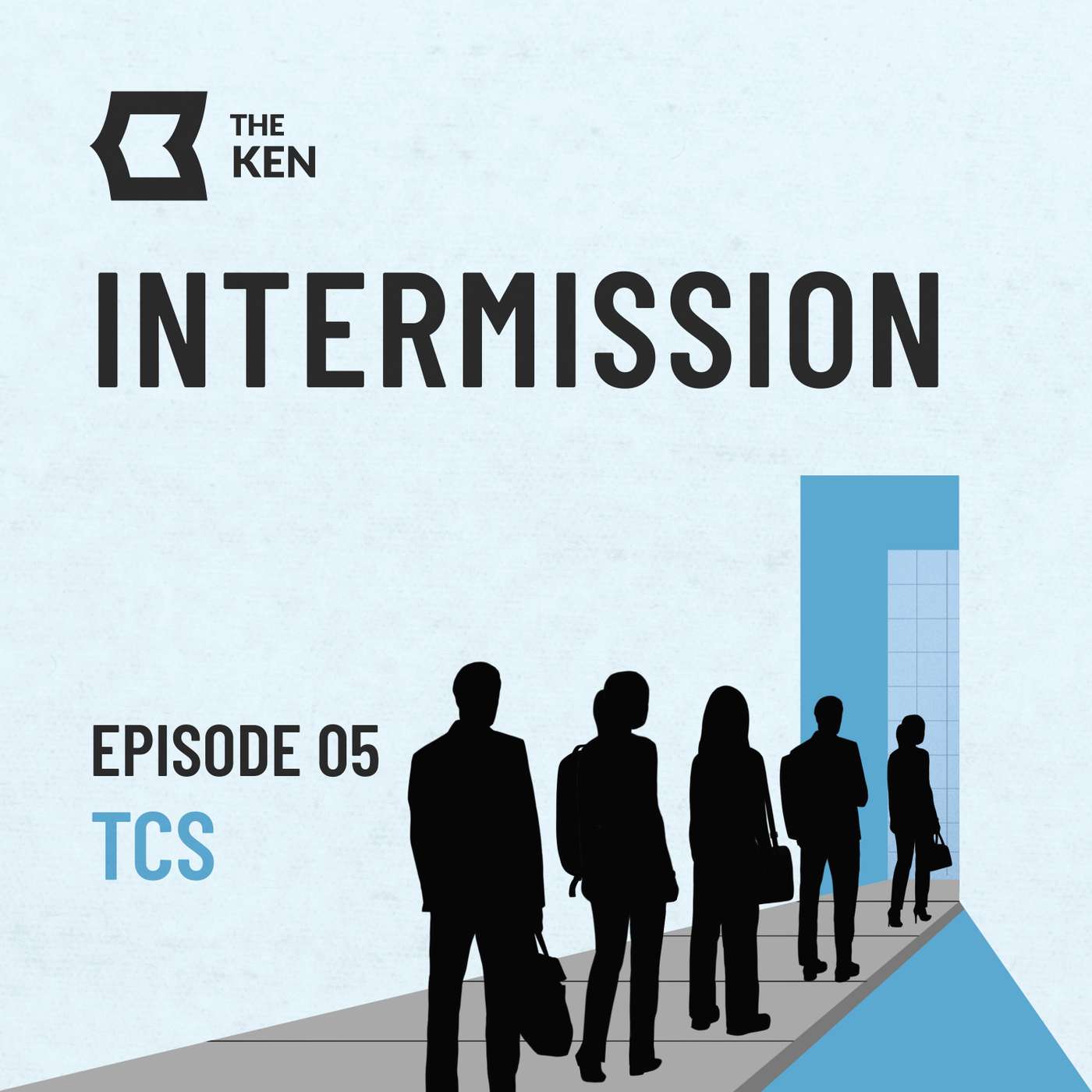
On 12 August 2026, N Chandrasekaran, the TCS intern who became the first non-Parsi chairman of Tata Sons, said he was done. He wouldn't seek another term.Five weeks later, the board brought him back. On 17 September, it voted to reappoint him for five more years, starting in February 2027.Noel Tata's Tata Trusts, the majority shareholder, calls the vote illegal. Tata Sons says it followed the rules. Shareholders still have to approve it at an AGM due by 31 December, and this could end up in court.That chair matters because of the company that produced him.From 2000 to 2026, TCS supplied close to 80% of Tata Sons' dividend and buyback income, roughly Rs 2.7 lakh crore. That money has paid for almost every big Tata bet you can name, from Air India to semiconductors.TCS was never meant to be this. It began in 1962 as an in-house unit to centralise the group's data processing, and Tata companies refused to hand over the work. To survive, it had to navigate the License Raj, when computers were taxed like toasters, and a 1978 attempt by its own parent to fold it into a joint venture with Burroughs. Along the way, it stumbled into the model that built India's IT industry: build in India, deliver to the world.Its tools helped build institutions like the National Stock Exchange. It worked through hundreds of millions of lines of Y2K code. And it turned small-town graduates into a global professional class.Now AI, a $100,000 H-1B fee, and the rise of GCCs are threatening the pyramid TCS was built on.This is the story of two small communities, the Tamil Brahmins and the Parsis, and the company that built India’s IT export industry and bankrolled the Tatas. Now it has to save itself.Tune in!---------We also have an interactive companion page to explore the history of TCS with reading lists, infographics and source notes: https://the-ken.com/intermission/the-accidental-crown-jewel-tcs/----------Credits: Hosts: Rohin Dharmakumar, Seetharaman GDirector: Vijay SubramaniamVideo Producer: Vishnu S Sound Design and Technical Producer: Rajiv CNLead Researcher: Raghav BatraArt Direction: Kavipriya OGData Visualisation: Anuj DebnathProduction Agency: Nesara FilmsCreative Direction: Sunayana KashyapDoP: Subash KPAnimation: Karthik NVideo Editing Team: Sunil S Bharadwaj, PrajwalColourist: Akhil RajGraphic Design and Styleframes: Anusha SarahOn-Set Production: Veeresh and teamProduction Coordination: Chaitanya and Kevin RajAudio: Murthy and teamSpot Edit: GirishSet Design: Saanvi Joshi, ThejaswiniPromotions: Pranav Pate, Adhavan RKWriter (Microsite): Brady NgEditor: Sumit ChakrabortyProduct Design (Microsite): Praveen Gopal Krishnan, Ritika Sanikere, Sushmita Vavilala, Karan Kumar'Intermission' Title Track by Sameer Rahat----------About Intermission: Intermission dives into the histories of iconic Indian companies. It was produced with vital support and assistance from Zerodha, our sponsor for season 1. Disclosure: Zerodha’s perennial fund, Rainmatter Capital, is an investor in The Ken.About The Ken: The Ken is India’s first subscriber-only business journalism platform reporting on business, technology, and startups in India. Visit https://the-ken.com and explore our stories, newsletters, podcasts and more.Instagram: https://www.instagram.com/theken_web/LinkedIn: https://www.linkedin.com/company/the-ken/Twitter: http://x.com/thekenweb/
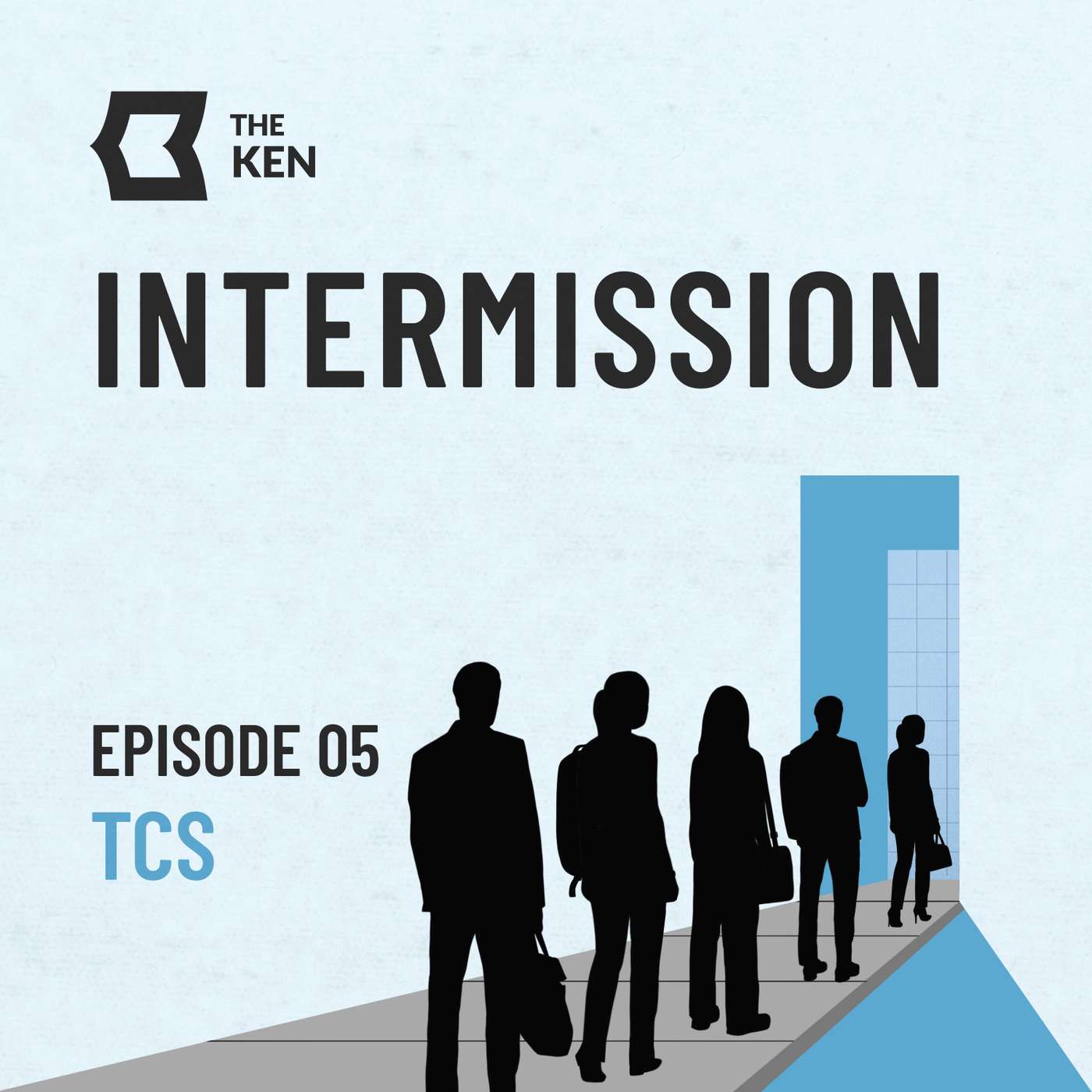
Ask most Indians which IT company their parents wanted them to join, and they'll say Infosys or Wipro. Yet it was TCS that quietly became India's biggest software company, and the engine behind the entire Tata empire.The story goes all the way back to 1968, to a data-processing unit inside Tata Sons that the group's own companies didn't want to work with. It follows TCS as it stumbled into inventing India's IT outsourcing industry, helped carry the world through Y2K, and came to fund almost every big Tata bet, while the boardroom above it fought over who should run the show.The question at its heart: can a company that sold human intelligence to the world survive the age of artificial intelligence?Episode 5 of Intermission on TCS goes live on Thursday, 1 October.
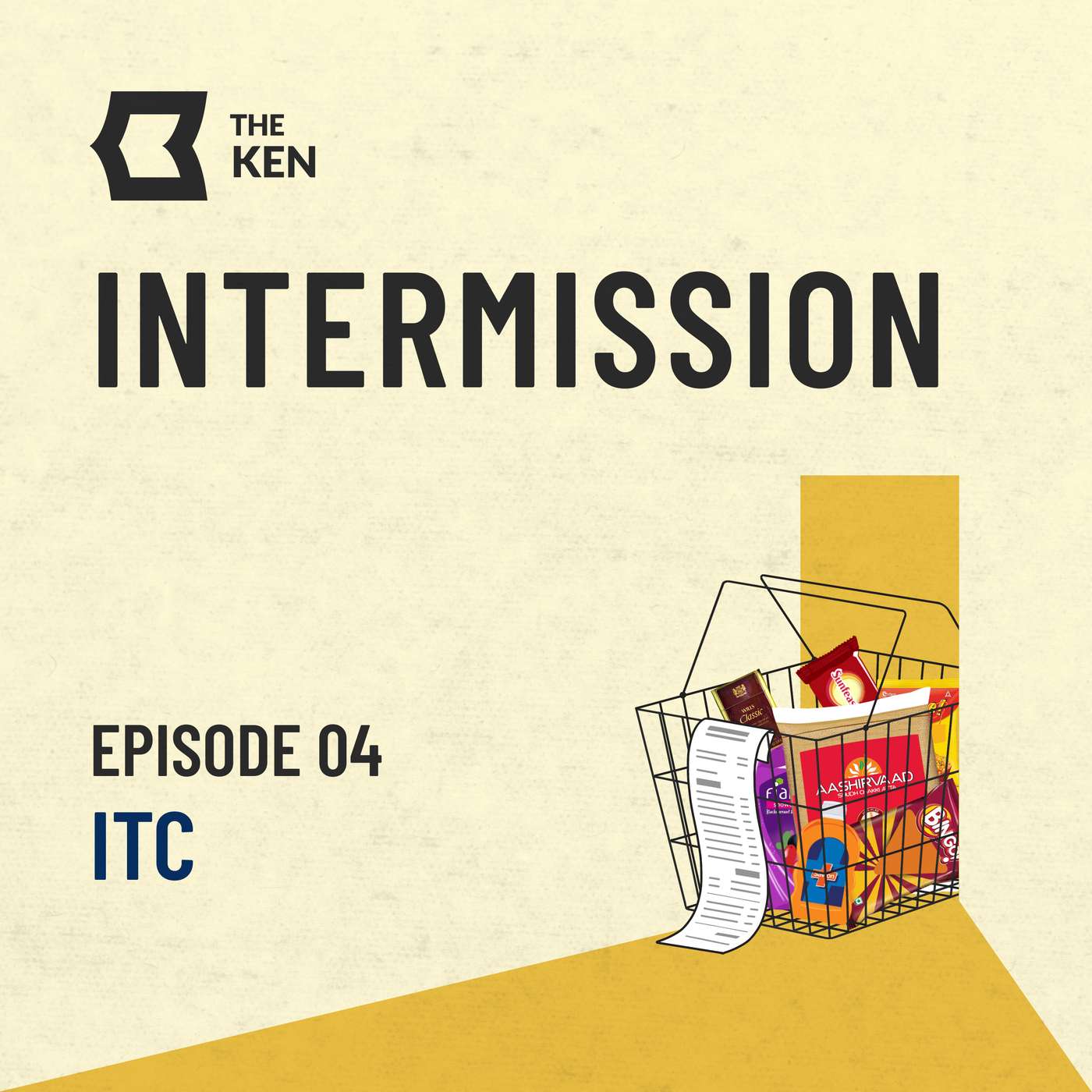
ITC is the great paradox of Indian business: a tobacco company that spent decades trying to become something other than a tobacco company, and pulled it off. Getting there meant surviving a tax demand five times its net worth, the arrest of two former chairmen, and a long, bruising war with BAT for control of the company. It meant winning at atta when even Hindustan Unilever couldn't, rewiring how India's farmers sell their crops, and building it all without a founder or a family at the helm.Today ITC turns over roughly ₹80,000 crore, owns a ₹9,000 crore brand in Aashirvaad alone, and counts the Indian government as its single largest shareholder. Among them, LIC, which insures the lives of the very smokers keeping ITC's profits alight.This is the story of how a colonial cigarette company became one of India's most valuable — and most unlikely — conglomerates. Tune in!---------We also have an interactive companion page to explore the history of ITC with reading lists, infographics and source notes: https://the-ken.com/intermission/the-fmcg-company-in-a-cigarette-pack-itc/----------Credits: Hosts: Rohin Dharmakumar, Seetharaman GPodcast Producer: Vidhatri Rao Director: Vijay SubramaniamVideo Producer: Vishnu SSound Design and Technical Producer: Rajiv CNLead Researcher: Raghav BatraArt Direction: Kavipriya OGData Visualisation: Anuj DebnathProduction Agency: Nesara FilmsCreative Direction: Sunayana KashyapDoP: Subash KPAnimation: Karthik NVideo Editing Team: Spandan Joshi, PrajwalColourist: Akhil RajGraphic Design and Styleframes: Anusha SarahOn-Set Production: Veeresh and teamProduction Coordination: Kevin RajAudio: Murthy and teamSpot Edit: GirishSet Design: Saanvi Joshi, ThejaswiniPromotions: Pranav Pate, Adhavan RKWriter (Microsite): Brady NgEditor: Sumit ChakrabortyProduct Design (Microsite): Praveen Gopal Krishnan, Ritika Sanikere, Sushmita Vavilala, Karan Kumar'Intermission' Title Track by Sameer Rahat----------About Intermission: Intermission dives into the histories of iconic Indian companies. It was produced with vital support and assistance from Zerodha, our sponsor for season 1. Disclosure: Zerodha’s perennial fund, Rainmatter Capital, is an investor in The Ken.About The Ken: The Ken is India’s first subscriber-only business journalism platform reporting on business, technology, and startups in India. Visit https://the-ken.com and explore our stories, newsletters, podcasts and more. Follow The Ken on socials: Instagram: https://www.instagram.com/theken_web/LinkedIn: https://www.linkedin.com/company/the-ken/Twitter: http://x.com/thekenweb/
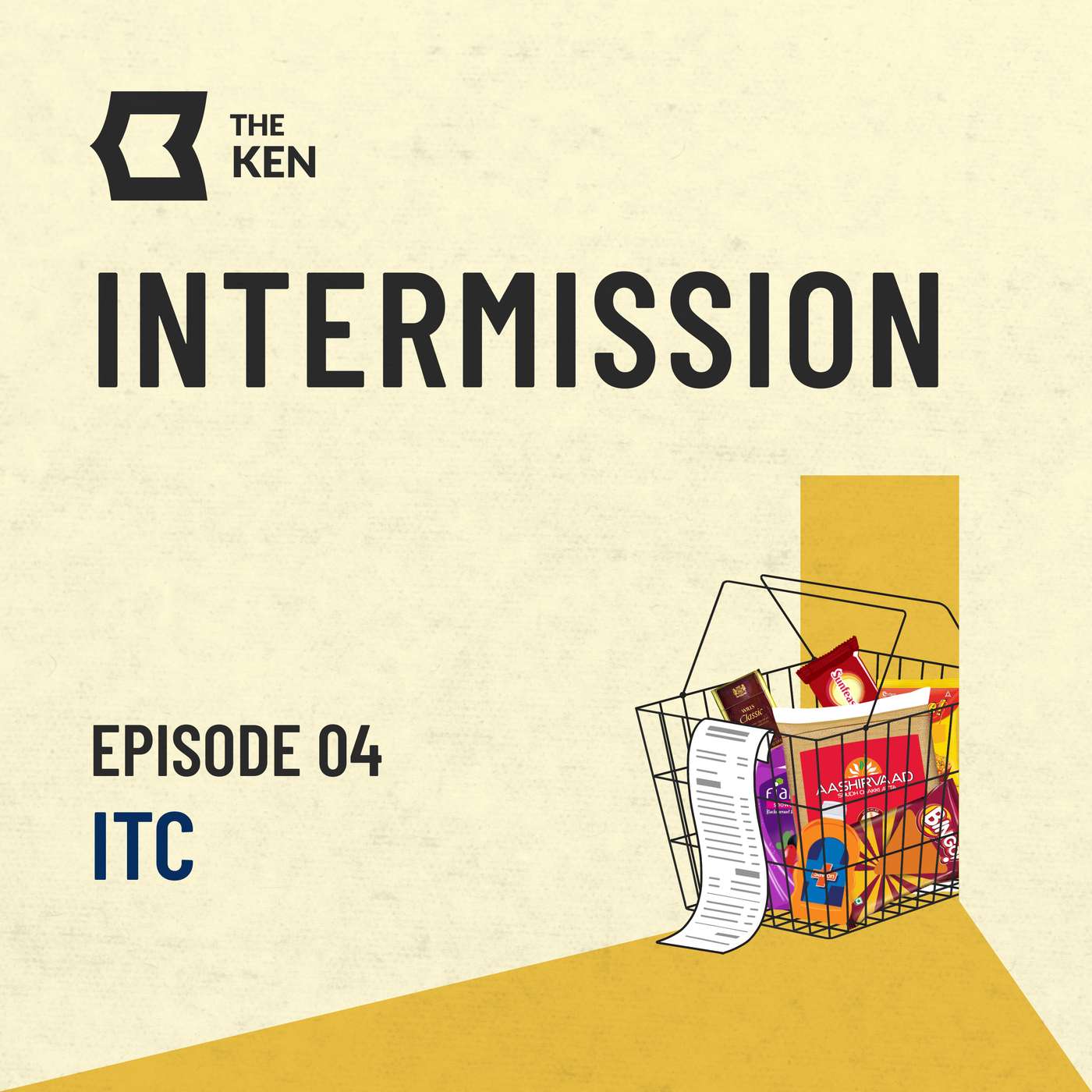
Ask two generations of Indians what ITC is, and you'll get two completely different answers. That gap might be one of the most remarkable reinventions in Indian business.The story goes all the way back to 1910 — to a British tobacco company that taught India how to smoke — and follows ITC's journey into food, paper, hotels and agri, all without a founding family, and with more boardroom drama than most thrillers.The question at its heart: how does a company build a future beyond tobacco?Episode 4 of Intermission on ITC goes live on Monday, 17 August.

Stream a video, send a message, call a loved one. For nearly 474 million Indians, that connection runs through Bharti Airtel.Over three decades, the company has made it through price wars, near-bankruptcy, a botched overseas acquisition, and two incursions from Reliance. Each time, it weathered the crisis and came back stronger. Investors who held on through every crisis have been rewarded with returns that match the best businesses in India. But the forces that shaped Airtel — regulation, technology, and competition — have never stopped moving. Jio is back, this time with a $110 billion bet on AI and data centres. The hyperscalers are customers today and competitors tomorrow. And the telecom industry is shifting from minutes to bytes to tokens. At the centre of it all is Sunil Bharti Mittal, a founder who operates with the intensity of someone still trying to prove himself, even after building a company worth more than $100 billion. He turns 70 in 2027. He wants to raise his family's stake in Airtel from 40% to 51% — a Rs 1 lakh crore buyback he believes can be funded through dividends and share repurchases over three to four years. The question that now hangs over Airtel is what happens to it when Mittal is no longer at its core.Airtel has survived every version of telecom so far. But it hasn't fully solved its three-body problem yet.Where does it go from here?We also have an interactive webpage to explore the history of Airtel Finance with reading lists, infographics and source notes: https://the-ken.com/intermission/the-unkillable-network-bharti-airtel/ You can also watch the episode on Youtube: https://www.youtube.com/watch?v=O_dONpkY7-UCorrectionsIn the interest of accuracy, this section documents any factual errors made during the episode, along with the correct information.Light speed — Rohin said light travels at 200,000 km/s. The correct figure is roughly 300,000 km/s.Gopal Vittal's age — Rohin said Gopal Vittal was in his 30s when he became CEO of Airtel. He was actually in his 40s. Seetha corrects this at 4:14:30.----------Chapters: 00:00 — Introduction4:09— Chapter 1: Ludhiana — India's industrial Manchester16:00 — Chapter 2: Delhi — School of power & hard knocks41:07 — Chapter 3: Policy pivot and partnership model1:09:27 — Chapter 4: The Reliance juggernaut's first attack1:31:05 — Chapter 5: Akhil Gupta, the 2000s, and the art of financial judo1:54:42 — Chapter 6: The Singaporean pillar2:03:31 — Chapter 7: Gopal Vittal, the flawless executor from HUL2:29:36 — Chapter 8: The Africa no-yes-no-yes story2:45:02 — Chapter 9: The Airtel culture2:59:47 — Chapter 10: The zero rating debacle3:11:27 — Chapter 11: The three-body problem and the 2G scam3:21:58 — Chapter 12: The Reliance juggernaut is now "Jio"3:52:04 — Chapter 13: Airtel after/without Sunil Mittal----------Credits: Hosts: Rohin Dharmakumar, Seetharaman GPodcast Producer: Vidhatri Rao Director: Vijay SubramaniamVideo Producer: Vishnu SSound Design and Technical Producer: Rajiv CNLead Researcher: Raghav BatraArt Direction: Kavipriya OGData Visualisation: Anuj DebnathProduction Agency: Nesara FilmsCreative Direction: Sunayana KashyapDoP: Subash KPAnimation: Karthik NVideo Editing team: Sarthak Pujar, Jayesh SahuColourist: Akhil RajGraphic Design and Styleframes: Anusha SarahOn-Set Production: Veeresh and teamAudio: Murthy and teamSpot Edit: GirishSet Design: Saanvi Joshi, ThejaswiniPromotions: Pranav Pate, Adhavan RKWriter & Editor (Microsite): Brady NgProduct Design (Microsite): Praveen Gopal Krishnan, Ritika Sanikere, Sushmita Vavilala, Karan Kumar'Intermission' Title Track by Sameer Rahat----------About Intermission: Intermission dives into the histories of iconic Indian companies. It was produced with vital support and assistance from Zerodha, our sponsor for season 1. Disclosure: Zerodha’s perennial fund, Rainmatter Capital, is an investor in The Ken.About The Ken: The Ken is India’s first subscriber-only business journalism platform reporting on business, technology, and startups in India. Visit https://the-ken.com and explore our stories, newsletters, podcasts and more. Follow The Ken on socials: Instagram: / theken_web LinkedIn: / the-ken Twitter: https://x.com/thekenweb/

Comments

Download from Google Play

Download from App Store
 United States