


 Claim Ownership
Intuitive Style
Subscribed: 10Played: 95
Subscribe

© Maureen McLennon
Description
Intuitive Style explores strategies for shopping and dressing intuitively. Each week, a guest shares their approach to getting dressed—to show there’s no one right way, just the one that works for you.
maureenwelton.substack.com
maureenwelton.substack.com
29 Episodes
Reverse
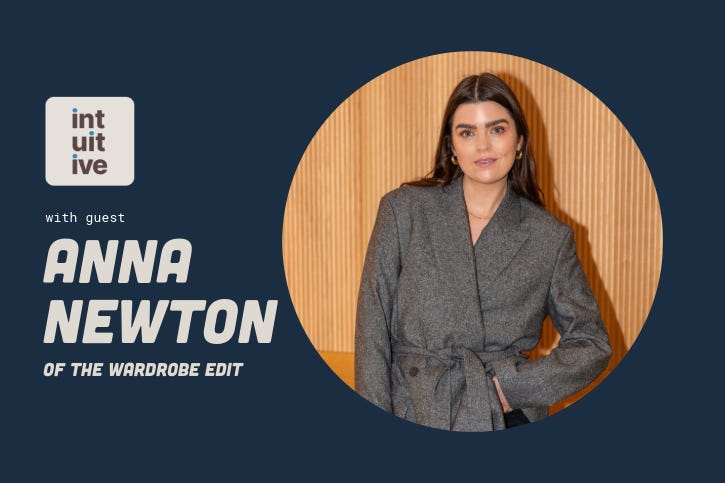
I am so delighted to share this week’s episode with the iconic Anna Newton of the Wardrobe Edit. Anna is THE blueprint for a writing & sharing about style online, and I truly enjoyed chatting with her. Recording this episode was the highlight of my month. I truly hope you enjoy as much as I did.TranscriptMaureen: You’re listening to Intuitive Style, where we believe that everyone has style. I’m Maureen Welton. In conversation with fantastic guests, we explore how to tap into our style intuition so that we can dress authentically and live fully. Today’s guest is Anna Newton, OG content creator, published author, YouTuber, and the creative mind behind The Wardrobe Edit on Substack. Anna, welcome to the show!Anna: Oh my gosh, thank you so much for having me. We were just saying I haven’t recorded a podcast for the longest time, and I don’t think I’ve ever done one on fashion. Maureen: Today is the day to get it started. There are some amazing shows about fashion, so I hope to see you on some more of them if you want to.So I did want to just say before we get into it that I’ve been following you long enough that I wore the Giorgio Armani Luminous Silk on my wedding day, per your recommendation.Anna: And did you love it?Maureen: Yeah, I had been wearing it for a while, and I actually got my makeup professionally done. My makeup artist tried to color match me and she was like, “This Giorgio Armani that you have is a better color match and better than what I was making custom.” And I was like, okay!Anna: Okay. It’s the best. I wore it on my wedding day too. That foundation is such an OG. It’s been in my makeup collection for years. They’ve reformulated it. I don’t know if it’s a worldwide thing, but in the EU they’re bringing out some really strict regulations around certain ingredients, so we’re getting a lot of foundation reformulations, which is kind of exciting. Aside from this, I’d say foundation is my second most exciting pursuit in life. Maureen: Just wanted you to know that your recommendations are solid.Anna: I love that.Maureen: One of the recent series that you’ve been doing that I’ve loved is where you’re working with different personal stylists. Can you share a little backstory on the series and how it’s been?Anna: Oh my gosh, that has been so fun. So last January, I did a kind of “shop your wardrobe” series. A lot of people do a no-buy in January, and I was like, how can I create content that sits with that and is still fun and exciting and encouraging people to wear what we already have and just have a month of experimenting in a way? Last year I did do a session with Allison Bornstein. I’ve done a few sessions with her over the years and just loved every single one. I think it’s quite a scary thing to work with a stylist. It feels quite vulnerable. It’s quite personal, having a meeting with someone you’ve never met before and going into your wardrobe. So I’ve really enjoyed doing those over the years to show people that it’s not a scary thing. It’s not something you have to do when you’re in complete dire straits with your wardrobe. I think that’s a common misconception, that you only work with a stylist because you’re out of ideas and feeling in a really bad place with your style. It can definitely help with that, but even if you’re in a good place with your style, it’s still valuable. Personally for me, a lot of my friends in my real life are busy, they have kids. Maybe they care about what they wear, but it’s not something they’re writing an online newsletter about. It’s been really fun to work with stylists in almost having a super stylish friend give you great ideas, come up with new ways to wear old pieces, give you little styling tips and tricks. I thought for this year I would build on that. I already had a session booked in with Allison Bornstein and I was like, how about booking with Reva Luft? What about Anna Baldwin? What about Kelly Klein? What about Angie Uh? It just kind of snowballed from there, and before I knew it my whole January calendar was full with stylist appointments with these people who I’ve mostly connected with on Substack. I enjoy their content from a reader’s perspective, so it felt really special to be able to work with them on that series. I’m a fangirl of these people, and I got to work with them and showcase their talent. Ultimately I came away with well over 150 new outfit ideas. It’s crazy. My phone is just full of outfits that I can wear. I got to share that with my readers and show them that having a styling session is a really fun thing you can do. You’re supporting independent women who have created their own stylist businesses, and there were so many ideas. Every single one was different. I didn’t go into each one with a specific spin in my head of who would help me with what, but it was really fun that I have the same wardrobe and each person brought a bit of their own personality and ideas to the table. It was really fun in the hour sessions that we had. By the end of it, I was always writing them before I went to bed. Because of the time difference, I was normally doing them at like 5 p.m., eating my dinner, and then desperate to sit on my laptop and write the post. The post was in me and I needed to get it out. It was really fun to find the different angles with different people and how they all brought something completely unique to the table.Maureen: Yeah, it’s been such a fun series. I’ve been lucky enough to work with both Allison and Angie myself, and I’ve had different stylists on the podcast. I couldn’t agree more as far as the value you can get from working with a stylist, especially in a short-term way where it’s a one-off session and you’re just styling in your closet together. I think it’s so helpful to get out of your own head of what you might do and try out things you might not have tried before. Your series is obviously great because you put in so many photos, which is so helpful because we get to see how everything comes together. I know I was inspired by how you were styling a flannel shirt. I lived in Seattle, so it has a very specific meaning to it. Seeing you wear a flannel shirt in a totally different way, I was like, okay, you can give new life and new stories to garments. I thought that was particularly fun.Anna: The flannel shirt was an interesting one because I think every single stylist gravitated toward it and used it in an outfit somewhere.Maureen: Really?Anna: Yeah, I’m pretty sure in every single session we ended up using it, but everyone used it in a slightly different way. Kelly did this trick where we tied it around the waist. Allison did a trick of wearing it open and using it as a sandwich layer between a white shirt or white T-shirt and a leather jacket. In every single one it was funny to see the same pieces styled in different ways. It’s almost like my true personal style is an amalgamation of all of those looks that everybody made. You could almost take pictures from each of the sessions and know which person did which. I think that’s fascinating when you’ve all got the same base material.Maureen: I’m curious, have you felt different getting dressed since doing the series?Anna: I’ve just written a post on this. It’s going to be out next week because I was like, I should hope so. Five hours with some of the best in the business, and we overran quite often, so it was more than five hours in a huge way. I think it’s actually shifted more than I thought it would. I thought I’d just do these sessions and then have a roundup post at the end and be like, here are the 10 tricks that I’ve employed since. But it isn’t so much the styling tricks that I learned, although there are definitely things I’ve put into practice. It’s been a bigger shift in terms of what I have in my wardrobe and how precious I feel about it. That’s maybe not the right way to say it, but in my session with Reva Luft she said, “Your wardrobe is precious real estate. If things are in there, they deserve their place.” I ended up doing this massive wardrobe cull out of nowhere. One day after one of the sessions, I was like, right, I’m not wearing this. I’ve got this because I feel like I need to fulfill this category rather than actually using it and wearing it. It’s taking up space. So I got rid of almost 20% of my wardrobe. It sounds very extreme, but there were a lot of things that needed trimming out. It’s left me with fewer things, but things that are all fitting together more easily. It’s tricky to explain. I had this post in me that I was desperately trying to get out because I needed to put it into words. It’s been a different shift to what I thought would happen.Maureen: When you say that you culled 20%, I hear clarity in your voice. Were there specific pieces that you knew you wanted to cull? Or did you feel friction with those specific items during the sessions? How did that go?Anna: Yeah, I think they fell into a few categories. There was a category of things that just didn’t fit. I was like, but they’re vintage Levi’s and we love vintage Levi’s. And then I thought, if I’m saving them for days where I’m really feeling myself, that is not happening. I’ve got so many jeans, but I do love what I actually wear. Again, it’s taking up space and creating that decision fatigue around too many options. I’d rather just have the options that I like and that fit. Then there were things that I kept coming back to as problem pieces. I had a pair of burgundy cords, and in every single styling session I’d always be like, how do I style this? Then I was like, oh my gosh, it’s taking up a lot of space and a lot of time. I’m using time in these sessions to try to find answers to these burgundy cords, which when I checked my index stats, I think I had worn maybe three times in the last two years. I just thought, this is so silly. It’s obviously not a piece that’s working for me. There’s friction there. Take it out of the equation. In the past, I’ve been quite hasty
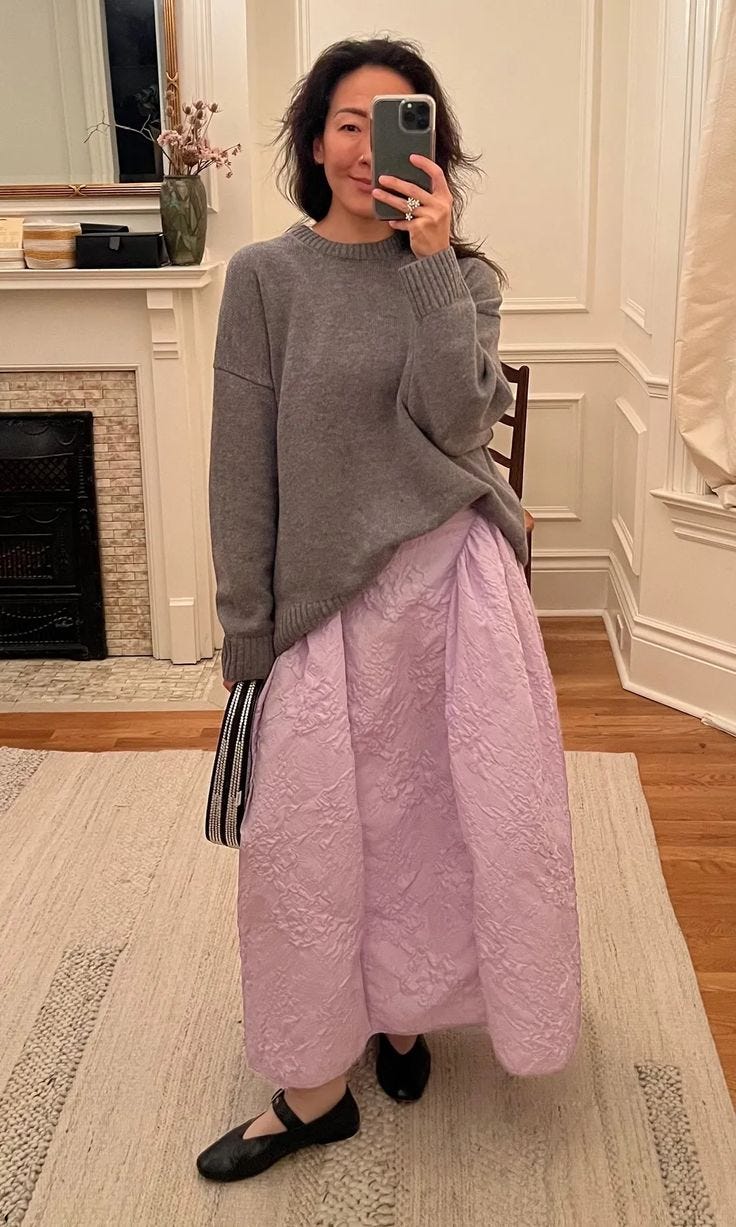
This week, I’m delighted to share this interview with stylist extraordinaire, Irene Kim (김애린)! You’ve probably pinned an image of her to your Pinterest board and definitely read one of her incredible posts here on Substack. Enjoy this wide-ranging and personal conversation. We chat about everything from shopping pragmatically, to Korean body culture, to how Irene coaches her clients.Enjoy!TranscriptMaureen: You’re listening to Intuitive Style, where we believe that everyone has style. I’m Maureen Welton. In conversation with fantastic guests, we explore how to tap into our style intuition so that we can dress authentically and live fully. Today’s guest is personal stylist, Canadian in Paris, and extremely generous cool girl, Irene Kim (김애린). Irene is an OG in the fashion Substack world with iconic reads starting back in 2023, such as the five questions she asks herself when shopping. Since then, she’s continued to share glimpses into her real life, including how she styles herself for events ranging from glamorous photo shoots at the Musée Rodin to school drop-off. Though through it all, she manages to stay real and aspirational. Irene, welcome to the show.Irene: Thanks so much for having me, Maureen. So lovely to be here and meet you.Maureen: Likewise. So looking through your archive, it’s very clear to me that you are an extremely creative dresser, fearlessly turning lace napkins into a miniskirt or hocking a brooch and a shoelace into a bolo tie, and even layering windbreakers under blazers, which is recent. I love that one. Trying imaginative combinations can be really daunting. Personally, I can feel fear looking silly or too crafty. How do you know when some creative combination that you have matches your taste level?Irene: Oh, that is such a tough question. Because the answer is really, it just feels right. You know, I’ll just know when that’s too much or that’s too slim or that’s too baggy or that’s too much color or the eye’s moving too many places. So if I had to really break it down—and I think I have done that in a Substack—what’s going through is like just the checklist. It’s like an automatic checklist going down. Yeah, that proportion doesn’t work there, or that’s a little too slim there, or like that’s too much nylon and not enough natural fabric. You know what I mean? It just keeps going and going. So it’s sort of, after all this time, has come a bit automatic to me what level is okay. And I actually want to say, because I’m not saying that what I find okay to me is okay—it should be okay for everyone—because there’s people out there whose style I admire that I’m just like, if I put that on, I would be like, this is way, way too much. But it’s so clearly their baseline and they’re so clearly rocking it that I’m like, all power to them. Obviously, their checkpoints are different than mine, right?Maureen: I think one of the things I heard in what you said or your answer is that it’s become automatic, but that doesn’t mean that it was always automatic—this idea of knowing what was your level of comfort or how far to go. Does that feel correct?Irene: Oh, gosh. Would that feel correct? Because I’m trying to bring myself back to when I was like in my teens and I did so much experimenting then. And no, I still think I had it then. I just have different materials now, you know? I think a lot of experimentation was at that time, and even now, is born out of creative drive, yes, but also necessity, right? Because I don’t know what’s going on with kids these days, but when I was younger, like, if I got a shirt from Gap, like that was like Christmas, you know? Like there was nothing fancy about what we were buying. So it was a lot of, you know, I went thrifting and I just put stuff together in all these different ways. And I’ve already lost track of your original question. Has it always been there or has it evolved? I guess it’s refined itself over time. It’s just different than when I was younger, I guess. Because I loved my outfits then too.Maureen: That makes sense because you were still getting dressed back then, presumably. So if we have a calibration of good enough to leave the house, you know what I mean? Irene: Yeah.Maureen: The thesis of this podcast is that we make better style decisions when we listen to our intuition. So what role does intuition play in your life or your personal style?Irene: Right. So I just feel like when I get dressed and I try to look like the people that I admire for their clear appearance, their clear aesthetic, their very clear look, I just never feel right. It just never feels right to me. And ultimately, I go back to kind of the basics that I always love to wear no matter what. And sometimes, you know, I look at some of my everyday outfits because I feel like your everyday outfits are kind of like—that’s the core. Like, you know, that’s who you are in a way. Sometimes I think, oh, you know what? What if I made my everyday outfits a little bit more directional and made it more like this designer or that designer? But that’s just not me. Like every time there is a little… I kind of lean back a little bit into prep, androgyny. That’s always going to have some sort of base in how I dress. So I just can’t move away from that. And there’s no point in trying. I’m always going to go back that way.Maureen: That’s amazing. And I totally get that. I think what I heard from that is we can’t force ourselves to have a personal style that’s different from what we want to wear on our bodies. We can have aesthetic preferences that we like in theory, but we can’t force those to actually work for our everyday life or what we choose to wear. Is that kind of right?Irene: Yeah, no, that’s exactly right and far more articulate than I said it. No, no, nothing like that. No, I mean, I get it. I’m trying to force myself to be this, like, you know—and I don’t mean it to sound so strong—but I was really intrigued by Simone Rocha and super inspired by sheer volume. There are definitely ways that I can still incorporate it, but I had this vision this summer of just totally transforming my style in this totally new direction and wearing more black. And then I go into stores and I try on a black bag with my outfit that I like the rest of, and I’m like, oh, it’s still not me, is it? So I get that, you know?Maureen: The thing is, though, the beauty about clothes is that you can wear that, right? Like per day, a week, whatever.Irene: It reminds me of actually when I started getting a bit more traction on social media and I was thinking like, oh, maybe I should start publishing things that are a bit more polished and produced because mine isn’t at all. And I just thought, you know, how long am I able to keep that up? And I realized I could keep that up for like a week tops. I could do like one polished, produced post and then I’d call it a day because it’s just not me, you know? And so for me to have to put in that mental effort, truly, to dress in a way that’s not comfortable to me day in and day out—apart from your occasional event or your fun dress-up thing—it’s just not going to happen.Maureen: Great analogy. I get it. As a fellow writer, the polished stuff is hard to achieve. One of your early posts about questions to ask yourself when considering making a new purchase, you ask, does the garment take you places in your imagination? So my question to you is, can you think of any garments that you’ve bought that take you somewhere in your imagination?Irene: Oh, I have so many. So many. However, do I wear those every day? No. But I have a lot, yeah, for sure. Just like you were talking about the Simone Rocha piece. Yeah. I love getting dressed. But if I’m going to buy it, I mean, that’s the part of the five questions I ask myself when shopping. There is a love component, of course, to everything. But then, of course, there’s the need component. And then there’s can I actually afford it? There’s like practicalities of actually shopping. So yeah, my whole closet isn’t filled with that. But certainly there’s some there.Maureen: Yeah. What about your purple skirt that’s kind of like—is it sheer? It’s like a lilac—Irene: Oh, the Cecilie Bahnsen skirt? Sure, yeah.Maureen: Yeah. Is it like a piece—I think it’s beautiful—that piece feels like one that would take me somewhere in my imagination. Does it do the same for you?Irene: Oh, absolutely. I mean, you were mentioning Simone—like Simone and Cecilie are very similar in terms of aesthetic, and I love that ethereal vibe. And even though this is how I rock out in the world every day, I can absolutely throw that on with this sweater and it’ll still work, right? And so that’s ways that I can bring that kind of beauty into my life. And there are, again, other people who are able to do that every day. I just can’t. Not practical for my lifestyle.Maureen: So when I think about that skirt, like I’m transported to like a woodland meadow with like dappled sunlight traveling through the treetops. Where does it take you?Irene: So basically my friend who is a photographer, she has photographed me for various things—family things, other things—and she knows like my favorite scene is like carelessly just running through golden fields. That is like freedom to me. I don’t know what it is. It’s just warm. It could even be fall. It could even be misty. But just bouncing through grass, just wide open—that’s like when I think of happiness, that’s what I think of.Maureen: Wow. You know, I can see that skirt doing well in a field.Irene: Right? I’m sure they’ve had plenty of Cecilie photo shoots in fields like that, like really moody fields.Maureen: Incredible. Maybe with some muck boots.Irene: Exactly, exactly.Maureen: We started to talk a little bit about how you decide what to buy and where, with cost and love and need, et cetera. Can you think of any recent purchases that you made, or even broader than that, a little bit more how you decide what not to buy or where?Irene: So I
This week, I’m delighted to share this interview with Evonne Sturm! She’s a fashion-industry veteran who really caught my eye through her beautiful weaving of industry knowledge with her personal narrative. We chat all about how working in fashion has taught her about clothing, how she finds her signature eyewear, and more! Make sure to subscribe so you’re notified when upcoming episodes with Irene Kim (김애린), and Anna Newton drop! Can’t wait. Maureen: You’re listening to Intuitive Style, where we believe that everyone has style. I’m Maureen Welton. In conversation with fantastic guests, we explore how to tap into our style intuition so that we can dress authentically and live fully. Today’s guest is Evonne Sturm, fashion industry veteran. And her Substack, Musings of a Merchandiser, is a fun glimpse into the fashion machine, where she integrates personal narrative into deep dives on industry trends, both consumer-led and brand-led. Evonne, welcome to the show.Evonne: Thanks for having me, Maureen. I’m really excited to be here.Maureen: I’m excited to talk. You know, whenever I have a guest that’s in industry—that’s not my experience whatsoever—I really like to start out talking about how working in fashion has impacted your personal style and the way you dress. Understanding, of course, that you don’t necessarily have a frame of reference for what it might be like otherwise. But I’m curious if you can think of any memorable moments where working in fashion really impacted your taste or the way that you were dressing.Evonne: Sure, it’s actually a great question to start. So I would say working in fashion inevitably changes just how you see clothing in general. You really start to notice construction before color, fabrication before fit. And over time, I’ve really kind of stopped chasing trends and started just really chasing a feeling. I know silhouettes that make me feel really pulled together and which ones make me feel like I’m playing dress up.I would say probably the most memorable moment happened pretty early in my career back at Macy’s—not to age myself, but over 15 years ago—when I got a first real look kind of behind the curtain. How every decision from fabric quality to button to style to hem finish really came with a cost implication and a trade-off. It’s incredibly mind-blowing when you realize how much goes into the make of a single garment. And then once you’ve seen that, you cannot unsee it, especially as a merchandiser. I think about it literally 24 hours a day, whether I’m at work or whether I’m shopping personally.Maureen: Yeah. So, I mean, as a recovering perfectionist, I see so much detail in every purchase that I make. You know, I was just looking at some shirts and I was like, some of these buttons are white on navy. And then the plum version has plum-colored buttons and I much prefer that. Like, how do you handle that level of detail that you must see when you’re shopping? Does it ever get in the way or do you feel like it’s an asset?Evonne: It’s both an asset and it always gets in the way. Yeah, like I said, it’s just inevitable. I’m a curious person by nature too, and I just can never turn it off. And sometimes I have to realize, okay, you came out not for work, you came out for yourself. So once I’m able to switch that mindset off—and it almost rarely happens—sometimes it comes back full force when I look at the price tag on the garment. Like, really? And then I look at where the garment’s made. I’m like, really? It just kind of constantly snowballs.Maureen: I want to know a little bit more about what you mean. So when you see the price tag, does that raise your standards, lower your standards?Evonne: That’s a really interesting question. It honestly just kind of depends on the overall brand itself and your perceived value of it, and then kind of how it feels when you’re touching it, when you’re putting it on your body. So it really depends.It’s a funny thing I think about, especially when I shop luxury items, because knowing how much the markup is on those things will blow your mind. But then you’ve got to take into consideration the craftsmanship and where it’s made. If you’re looking at a luxury handbag, the type of leather—all of those details come into play constantly.Maureen: Yeah, yeah. What about working at—have you ever worked in office? Does the experience of dressing for a fashion office culture change how you might dress?Evonne: Yes and no. I mean, I’ve been going into an office since the dawn of time, since the start of my career. And it definitely has fluctuated—how much I’m in office versus where we’ve all netted out after COVID. But early on in my career, the office etiquette or style has definitely evolved. Back when I worked at Macy’s, we were not allowed to wear denim—only on Fridays.So, you know, you constantly had to be polished and presentable and never relaxed or in kind of almost like your weekend apparel. But since then, I mean, even just thinking about that over time, it seems wild that you were not allowed to wear jeans to the office other than Fridays. Now I think I wear jeans probably constantly. But there’s a way to dress them up and evolve them. So whether you’re putting them with a nice pair of heels or a nice pair of loafers, or you’re completely disregarding the jean in general and wearing a nice pair of pleated trousers—fashion has definitely evolved in the workplace. And I think there are so many brands now that take a new spin on it versus wearing the mundane, tried-and-true suit.Maureen: Yeah, I totally forgot that when I first started working it was the same—like no jeans, or if you could wear jeans they had to be black. It was like a whole thing. And now it’s not even remotely on my mind. That’s so funny. Cool.Evonne: Yeah. And even as I think—MACs at Bloomingdale’s back in the day, and I don’t know if this is still the case—but you always had to wear black on a market appointment if you were going anywhere. They almost had a set signature uniform. I’d be curious if any Bloomingdale’s people are out there in the universe—I’d love to know if the dress code has evolved or not.Maureen: Yeah. Like a Sephora employee.Evonne: Totally. Totally. Totally.Maureen: One of the fun things about your newsletter in particular is the way you weave your personal narrative in with your industry expertise. For example, you had a really nice piece about eyewear—which of course you’re wearing a fabulous pair today—which you have a personal connection to beyond the trends. So I’d love to hear more about your personal connection to eyewear and how this became your signature.Evonne: Totally. I have worn glasses since the third grade, so they’ve been part of me for a very, very, very long time. And my eyesight, believe it or not, has only gotten worse over time, which has, I think, really deepened my love for eyewear dramatically. It’s the one accessory that I truly need. And maybe that’s why I care about it so much.It wasn’t until after college, when I started working and spending most of my day at a computer, that I thought about eyewear differently. It’s not just a necessity, but it’s really, as you said, a form of self-expression. Over time, my glasses definitely evolved into what I call my visual signature. I think of them the same way somebody would think of their favorite lipstick or their favorite jacket. They really anchor my look and they frame not only how I see the world—both literally and figuratively.Evonne: I would say probably the biggest influence when it comes to eyewear is my deep, deep, deep love for Iris Apfel and her oversized signature frames. As they say, the bigger the frame, the closer to God, maybe. But with my small features, I really love the playfulness of an exaggerated shape.Evonne: There was a place in New York that I would go to on the regular for my glasses. It’s where these are from—it’s from a brand called SEE Eyewear. I would come in every year or two because I needed a new prescription since my eyes got worse. The manager noticed that. We began to have a rapport, and I’d come in and he’d tell his sales associates, “Do not give her anything that isn’t oversized. She will just not touch it.” So they always knew to put aside the big, big frames for me because that’s always what I ended up buying. And I really think that because I’m short in size, the oversized frames not only amplify my voice, but they also help amplify my personality on a whole other level.Maureen: That’s really cool. I love that perspective on it because there are so many different ways that we can think about our body and proportion. Sometimes there can be this idea that you want to match your proportions. But I love the idea of playing with—well, one, there’s no right or wrong answer, right? It’s all about personal preference. But I love the intentionality of “big because I’m small.” I think that’s really fun. And yeah, Iris is such an icon. What a legend. R.I.P.And then when you are picking—so you know you want a bigger pair—how do you know when a pair is the right one for you?Evonne: I don’t know. There’s just something that clicks. I can’t describe it. It’s like when you put on a pair of jeans and you’re like, oh man, everything about them fits me like a glove. It’s the same thing with eyewear.I think in the past I used to gravitate toward bold color and maybe a little bit of a pattern. And I’ve tried to veer away from that more recently. I’ve really tried to play up my hair color and accentuate my eye color. I used to have a pair of really dark blue frames and I loved them, but they were such a contrast to my pale skin that it was actually too much. The over-exaggerated frame against my pale skin was not a good combo. So now I find myself gravitating toward rich browns and tortoiseshell because I think it helps frame my face even better with the coloring of my skin tone and my eyes.Maureen: Yeah. No, I love that. I think that’s really fun. And also, you know,
After an unexpected few month break due to debilitating health issues, I’m delighted to be back with a fantastic episode featuring Anika Krueger! I’m biased, but especially excited to share this episode as Anika is not only a great writer, but actually a listener of this very podcast—as such, very qualified to weigh in on the concept of “intuitive dressing”. We also discuss her great series Style Notes, what’s on her do-not-buy list, and more. Enjoy!Maureen: You’re listening to Intuitive Style, where we believe that everyone has style.I’m Maureen McLennon Welton. In conversation with fantastic guests, we explore how to tap into our style intuition so that we can dress authentically and live fully.Today’s guest is Anika Krueger, writer of NO WARDROBE. Anika is an uber-stylish corporate girly by day, personal stylist by night. We love her style analyses and the way that she makes high street look high end.Anika, welcome to the show.Anika: Hi, Maureen. Thank you so much for having me. So glad to get to talk to you.Maureen: You’ve such an early supporter of the concept of intuitive style and of the podcast, and just in general the idea of intuitive dressing. I would just love to hear from you—what is your definition of what it means to dress intuitively? What does this concept mean to you and how does it show up in your life?Anika: I think it’s so funny because I feel like from the outside my personal style doesn’t appear intuitive at all. It’s really minimal. I dress with a really limited color palette and very few details. My style is defined by clean lines, neutral tones, and really simple silhouettes.I feel like most people associate intuitive style with really playful, experimental, expressive looks, but that’s so not me. And I feel like the same applies to my home and my lifestyle. Everything is really minimalist—my apartment is really simple, really uncluttered, and filled only with things that make sense to me.Also with my interior decorating, I use really neutral colors. So both my wardrobe and my environment are always really edited and very curated—almost the opposite of intuitive.But I’ve realized that my intuition actually guides me toward this simplicity. It took me years to accept that my true style is that simple—and maybe kind of boring in a way—but my intuition expresses itself through calm and clarity. I like order. I like harmony. My brain and emotions feel best in simplicity.I recently had this epiphany that, for me, intuitive style actually means choosing what supports my nervous system. Does that sound weird? I need to wear clothes that feel like me and match my emotions that day. Dressing intuitively simply means aligning how I feel with how I present myself.So yeah, to sum everything up, it’s choosing what supports the version of myself I want to be and what supports my nervous system.Maureen: Well, we can end the podcast right there. No, I mean, that’s so incredible. And I agree with you on every point about the misconceptions—what we think intuitive style might look like versus what it actually feels like.Intuitive style isn’t an aesthetic; it’s a preference. It’s a way of choosing. You were talking about your nervous system and how clothing supports it. Can you walk through an example—maybe a time when you tried something more colorful or wild and felt it didn’t align, versus something you really enjoy wearing? What’s the difference in feeling for you?Anika: Off the top of my head, I don’t necessarily remember a specific example because every time before I leave the house I actually check whether something supports my nervous system or not. But I do remember this massive teddy fur coat I got probably two years ago. I felt so visible—so seen—on the street, and I couldn’t handle that at the time. That’s probably a good example.Maureen: Yeah, that’s a great example. I can think of that too—sometimes something just feels loud, and it’s not the kind of attention you want.Anika: Exactly.Maureen: You mentioned that before you leave the house every day, you do a nervous system check. I need more information. What is this?Anika: I mean, I do lay out my clothes before I leave the house because I leave really early in the morning for work. But mostly, I just look in the mirror and check: what’s on the agenda today? How do I feel today? And most importantly, how do I want to feel today?Then I do a little check—does my outfit represent that? Let’s say I’m wearing a leather jacket, but I don’t feel very strong that day, or I chose something that makes me feel more visible than I want to be. Then I’ll just change it or make little tweaks.Maureen: So the idea is choosing something that represents how you’re feeling on that day versus just in general—or maybe both?Anika: Yeah, yeah, both probably. I also—and I think I’ve talked about this on Substack before—I always feel like I want to have a cohesive look throughout my personal style. So that’s actually referring to what you said about emotions in general or representation in general.Maureen: Yeah. Yeah. What do you think it is about that idea of being cohesive that resonates with you? I know I do, and so many other people do. What is it about that that feels good to you?Anika: I think my Style Notes on Substack actually give away that I’m quite analytical. And also, I think that reflects my more perfectionist side. I feel like that’s probably the reason.Maureen: Yeah, yeah, that’s super fair. Let’s talk about that.So, okay, I think another misconception that I’ve experienced with intuitive style is that it’s somehow the opposite of being analytical. I think for me—and from what I’ve heard from you—they’re actually very intertwined.With your Style Notes, if I can summarize, you analyze a really cool person and their style, and you see what it is about that which works or resonates with you. So I’d love to hear your take on how being analytical relates to being intuitive. Do you think they’re opposites? Do you think they fit together? How does that work?Anika: Yeah, I actually think they do fit together, and they intertwine. I feel like on a subconscious level, I would always be analytical. But then this intuitive or emotional side that we’ve talked about also plays a role in that.I think I always have style formulas and patterns in the back of my head—even things I’ve probably already discussed on my podcast or in my style notes. And then my intuitive style actually plays with that.So they kind of intertwine—my more perfectionist or analytical side and my intuitive side. In the end, I think it’s a sum of both of those that makes me get dressed.Maureen: Yeah. Can I share how I see they relate and see what you think?Anika: Okay.Maureen: To me, it’s like if you think about a trained interior designer or a trained artist—yes, you can absolutely be completely self-taught and create something totally new. And also, a lot of artists learn techniques by studying people they look up to or artworks they’re inspired by.When you think about someone who’s learned how to sculpt marble, for example, that’s not something you just pick up one day and nail on the first try. Someone probably had to teach you techniques.So I see it as a study—it’s a study in something we’re clearly passionate about, which is getting dressed. I don’t think there’s anything wrong with studying what other people are doing in order to interpret it for ourselves. I think it’s just a deeper way of engaging with the topic.Maureen: And I think it’s—I don’t think that mimicking or taking pieces from what someone else is wearing is ever going to look or feel exactly the same on us anyway, because we are unique individuals. Our personality and all of that really impacts how it feels. So I see it as a way of engaging deeper in a topic that we care about. How do you feel about that?Anika: I love that idea. I mean, actually, when you mentioned the trained interior designer example, I immediately thought of a trained dancer. A trained dancer also trains—they have routines, they have training sessions—but in a way they have to bring emotion into it once they start dancing and moving.So of course there’s choreography once they’re on stage, but there’s so much intuition in the way they dance and move. And yeah, I love that you’re also a supporter of the idea that you can copy other people but still remain true to yourself or true to your intuitive style in the end.Maureen: Yeah. Well, I think we should touch on perfectionism then, because to me, being analytical isn’t the same thing as being a perfectionist. They’re related, but not the same. I’m curious about your thoughts on this.To me, perfectionism is where you take analytics too far and you’re like, “Oh, if it’s not exact, it’s not worth trying.” How do you think about analytics?Sorry, I should have asked you first—I got excited.Anika: No, no, that’s okay. I feel like I’ve never thought about it that way. They were always intertwined for me. This analytical side always had almost a bad association or connotation for me.But actually, analyzing something can support your idea of something, or just serve as research. And I like that you separate those two or differentiate between the two ideas. Perfectionism per se is not something bad, and being analytical is also not something bad. But I like that you actually separate them.Maureen: Yeah. I mean, I think I can give an example. I love your Style Notes series, right? And it encouraged me to write my own version—I couldn’t help it. I saw yours and I was like, “I have to do one like this.” I was so excited by it.That emotional response made me want to do this highly analytical thing. They’re very intertwined. And then the difference I see is this: if I analyze someone’s style and recreate it, my version will look different—spoiler alert, it always will.If I then automatically say, “Different is bad. I failed. This wasn’t worth trying,” that’s where it tips into perfectionism. That’s where it becomes, “I s
![Episode 24. Rambling in [Intuitive] Style, with Traci Landy](https://substackcdn.com/feed/podcast/2669400/post/177614968/9bbc5a3f73fab5e46b0a064fb5bff6b4.jpg "Episode 24. Rambling in [Intuitive] Style, with Traci Landy")
Head’s up—there won’t be an episode next week but don’t worry, we have amazing episodes coming up, including with Anika Krueger, Lindsay Sword and more folks you won’t want to miss!Today’s guest is Traci Landy of Rambling in Style. Traci shares her experience as a college athlete, discovering her creative-side as an adult, and what she’s trying to say with her clothing. Enjoy!Episode TranscriptThis transcript has been edited for clarity.WelcomeMaureen: You’re listening to Intuitive Style, where we believe that everyone has style. I’m Maureen McLennon Welton. In conversation with fantastic guests, we explore how to tap into our style intuition so that we can dress authentically and live fully.Today’s guest is Traci, writer of Rambling in Style on Substack. Traci launched into the scene in the spring and has been lighting up our feeds ever since. And in addition to writing about style, she’s a full-time school teacher and parent. I love her extremely relatable angle as a fellow self-taught personal style enthusiast. I think this is really important kind of representation. Traci, welcome to the show.Traci: Thank you so much for having me. I’m so excited to be here. I’m excited to chat with you.Maureen: One thing I appreciate about your writing is your flexibility and the way that you allow yourself to kind of go where the vibe takes you. So for example, your post about palate cleansers, which aside from being a great lesson in slowing down, also touched on rule breaking. Specifically, you had planned out a handful of outfits and ended up dressing very differently. So what is that decision-making process like, planning outfits and staying flexible?Traci: It’s so funny because all my friends and family would describe me as like the least flexible person in the universe. To say, that this is a skill that I’ve had to really try to build over time is the truth. Our family was going to Aruba and I have been loving using Indyx to digitize my wardrobe and I’ll probably talk about it a lot here and there. I was digitizing my wardrobe, planning a collection of what I was going to wear each day. One of the things when we go away, we have this unspoken family rule that it’s carry-on only. Like we don’t check bags. We refuse to do it. We went to Disney World for like eight days and we did not check a bag. So I’m trying to get everything neatly in my luggage and I plan it down to the T, and I got to Aruba and it’s funny, like you mentioned vibes, the vibes just didn’t feel good. They felt off for what I packed. Old Tracy would have probably went into a panic, right? Of like, but I planned this and I have to take pictures and what about my content and what about my next blog post? And this new Traci 2.0 that I’m really growing into since kind of my Substack launched in the spring has really been kind of like, okay, pause. You don’t really want to get dressed right now. You don’t really want to put on these really cute outfits that you planned. You instead want to focus on just being present with your family. You don’t want to be running around holding your camera, taking pictures. Like it just wasn’t what I wanted to do on the trip. And there was this part of me that felt so guilty, right? Like I was like, I packed these outfits, I have to shoot them, people need to see them, that’s what the people want, and I had to take a minute and say, like, but what do I want? Like right now I want time with my family and right now I want to wear what just feels… I don’t really want to put a heel on or, you know, a pair of shorts that might just feel a little tight right now because I’m having fun with my family and we’re trying all the things. And I think it’s just building that skill of just giving myself permission to say, you can change course, right? Like you don’t have to go into something and say, I’m 100% doing this because it’s what everyone else wants. It was in that moment saying, well, what do I want right now? I want to be comfortable. I don’t wanna wear all these things that I planned out and I wanna enjoy being present with my family. And that’s kind of where that post came from. Like it wasn’t supposed to be that. It was supposed to be everything else. And giving myself grace to say, you can change course and allowing myself, I love to make rules for myself, right? Like I have to wear this or I have to have this done by this day or whatever it is. And a lot of the rules I make for myself, nobody else is making them for me. So in this new 2.0 phase, it’s been a lot of saying like, okay, you can pivot and you can pivot and be okay, right? You don’t have to have this breakdown or this shaming that you didn’t do what you planned. You can just pivot and try something different. When it comes to getting dressed, a lot of what I do is I pivot and I can make those adjustments. But the big thing for me has been like not following that up with shame, right? Of like, you did a bad job or you didn’t do what you said you were going to do. It’s okay to let the world down to take care of yourself. And I think that was that moment. So on this podcast, I try to talk about body awareness. And I think that’s a big part of telling our bodies that, or making sure that our bodies and our minds are in the right roles.Maureen: So I’m just curious, you had mentioned that in the past you would have panicked. This time, how do you make that transition to not panicking when the situation is the same? Do you lead with your mind? Do you lead with your body? Traci: Yeah. I think it’s a lot of leading with my mind because I think that is my worst enemy. And I write about this all the time about like, you know, being a super type B person and sometimes like being a little bit of a hot mess and having to juggle that. And sometimes that can be really stressful, but yeah, I think a lot of it is like conditioning my mind to say like, it’s okay. Like you can make those changes, you can be flexible, you can wear what feels good to you and nobody’s watching. Nobody really, nobody really cares what you’re wearing sometimes. And, you know, I think that’s just like an inner dialogue that I learned with a lot of help to have with myself.Maureen: And in those moments, do you try on the outfit that you were originally thinking and then take it off? Or is it more like you see the outfit in your head and you’re like, I don’t even want to put it on? How does that feel?Traci: So it’s like, I’ll get out of the shower, I’ll get myself ready. And then I’ll look at my phone and I’ll look at the outfit that I planned and I’m just like, no. Yeah. Okay. No, it’s just not today. You know, we’re going to get tacos. I don’t need to wear this gorgeous little look to go get taco meat spilled all over me. It’s just, no, I’m a big vibes person. And when I feel it, I kind of just try to trust my gut and what it’s telling me to do.“No, it’s just not today. We’re going to get tacos. I don’t need to wear this gorgeous little look to go get taco meat spilled all over me…I’m a big vibes person. And when I feel it, I kind of just try to trust my gut and what it’s telling me to do.” - Traci LandyMaureen: Yeah. Thank God for our gut. I’d love to talk about how you decide what to buy and where and what not to buy or wear.Traci: I think I feel like my style evolution has really changed this a lot in my life. One of the things that really attracts me to a piece is colors. And it’s funny, because I’m not a very colorful dresser, but one thing that I really obsess over is the combinations of colors. I always say I’m a huge copycat. I love to see things and put my own twist on it or admire it and appreciate it and try to replicate it in my own way. I never sell myself as an expert or a stylist. I literally am like, I’m a civilian. I’m a mom. I’m just trying to look good. And I’m like, I’m the guinea pig. I’m taking what everyone’s talking about and seeing how I can work it in real life. A lot of what I do is I’ll find color combinations that I really like. And then I’ll focus on a piece or something. And I usually like to then go to Pinterest. Right. And I’ll look and see, like, how can I work this green sweater? And I’ll just search, you know, green sweater outfits. And I’m just kind of looking through them and I’ll sift through them. And any time I find that color that matches this combination that I start to like, then I just start saving it. Right. And then after a while, when I start to see for me, a big thing is like, is it versatile? Like, can I really use this piece? Because if it’s really just this one-trick pony, it’s not worth it for me to invest. Right. I don’t have endless dollars. Like I’m a school teacher, you know, like I’m a mom. And for me, it’s a real careful consideration that most of my friends and family think is absolutely insane. But I like to really just kind of luxuriate in the colors and see if they can work. And I think that’s part of why I love graphics and design so much. I think another thing has really been like for me, as far as buying is finding brands that I really like. And unfortunately, sometimes brands that I like are out of my price range. And I have to be okay with saying like, I can’t afford that, right? Like, I could look secondhand, I could wait, I can hope for a sale, but I think it’s coming to terms with like, where can I get what I’m looking for that’s a good quality, that’s in a range that I feel okay spending. Because there’s nothing that feels worse than overspending for something that doesn’t get its use for me. So with that, I’ve found some brands that I really gravitate to. Like, I’m waiting for J. Crew to call me, like, please. But no, I think I love to, you know, I feel like they really align with my style. I found over the years, for example, Madewell really aligns well with my style. But not only do they align with my style, they align with my budget and how much I’m willing to spend and how much I can spend. I’m also just a really big mood-bas

Comments

Download from Google Play

Download from App Store
 United States