


 Claim Ownership
KLR Marketing Podcast
Subscribed: 23Played: 778
Subscribe

© This podcast is copyright
Description
Interviews with experts in Agriculture from around the world.
56 Episodes
Reverse

Turning Market and Seasonal Uncertainty Into Opportunity In Canada with Grahame Rees and Mel Kiel from KLR Marketing What happens if cattle prices fall? Should you sell your calves or background them? How do you prepare for a dry season or the cost of a Canadian winter? In this episode, Grahame Rees and Mel Kiel join Canadian livestock producers to explore how KLR Marketing principles help turn uncertainty into clearer, more confident decisions. Drawing on Bud Williams' sell-buy principles and their own practical experience, Grahame and Mel explain how balancing Grass, Money and Livestock can uncover opportunities in rising, steady and falling markets. The focus is on making decisions with the information you have today: your available feed, your costs and the price relationship between the animals you own and those you could replace them with. In this episode Balancing Grass, Money and Livestock: Recognising when your inventories are getting out of balance and taking action before your options narrow. Matching livestock to available feed: How Mel changes animal classes to suit pasture quality, seasonal conditions and the time available. Accounting for Canadian winter feeding: Including stored and purchased feed in your feed inventory and Cost of Carry. Understanding your true costs: Bringing overheads and direct costs into each livestock decision, including a grazing rate that accounts for the cost of using your own land. Looking beyond the sale price: Why the relationship between selling and replacement prices matters more than either price in isolation. Finding opportunity in a falling market: Grahame shares an Australian example where lower replacement prices helped maintain trading margins during a market correction. Applying KLR to cow-calf operations: Assessing whether to sell weaned calves or carry them forward, and using the tools to evaluate cull animals and breeding decisions. Building cash reserves: Preparing your business for market corrections and seasonal challenges. Putting learning into practice: How the KLR tools, 6-Week Sprint and Mastermind support graduates after the school. The five KLR principles Balance Grass, Money and Livestock. Every day we sell and replace. Know the price relationship between what you have to sell and what you can replace it with today. Sell the overpriced; keep or buy the underpriced. Know and understand yourself. "Overpriced" and "underpriced" are specific to your business. Your feed, costs and available time determine whether an opportunity works for you. A key takeaway You cannot control the weather or market direction, but you can use today's information to make better decisions. As Mel explains, KLR is a decision-making process. It helps put integrity around your numbers so you can assess your options with greater confidence. Upcoming KLR Marketing Schools in Canada Grahame and Mel discuss plans to bring the 2½-day KLR Marketing School to: Olds, Alberta ~ 26 - 28 January, 2027 Brandon, Manitoba ~ 2 - 4 February, 2027 The school covers trading and breeding enterprises through practical calculations, discussion, role-playing and the interactive trading game, "Who Ate My Grass?" Interested in attending? Contact the Canadian event organisers for school information and registration enquiries. Listen in and discover how a clearer understanding of your Grass, Money and Livestock can help you recognise opportunities when conditions change.

How Mel Kiel Uses KLR Marketing Principles to Build a Profitable Livestock Business In this episode, Grahame Rees is joined by livestock producer and KLR trainer Mel Kiel to explore how she has applied KLR Marketing principles in her own business for more than 20 years. Operating a 400-acre livestock trading enterprise near Yeoval in Central West NSW, Mel explains how she balances grass, money and livestock to generate cashflow, protect her landscape and make confident decisions—without trying to predict the market. In this episode, you'll discover: How an unsuccessful agistment venture led Mel to KLR Marketing. The five principles underpinning the KLR Marketing approach. Why grass is king—and livestock are the tool used to turn it into money. How Mel monitors soil moisture, budgets grass and keeps her country "rain ready." Why matching the right type and level of livestock to the available grass matters. How the Cost of Carry ensures livestock cover overheads and direct costs. Why KLR focuses on today's replacement margin rather than predicting future markets. How breeders can use trading livestock as a relief valve during dry periods. Why selling early can protect ground cover and create future opportunities. How simple, purposeful technology can reduce risk and improve production. The value of completing a regular "Cold Audit" of your grass, money and livestock. How keeping the business simple and making timely decisions can create greater freedom. Mel's story demonstrates that KLR is not a silver bullet. It is a practical and continuing way of thinking that helps livestock producers make objective decisions, keep cash moving and build businesses that work for them.

Develop Mental Resilience – The AGRROW Process with Mark Dorrity In this powerful and deeply moving episode of the KLR Marketing Podcast, Grahame Rees sits down with longtime friend Mark Dorrity to unpack one of the most important skills in life and business: mental resilience. Mark's story is extraordinary. At just 28 years old, Mark was a highly successful wool buyer and accomplished athlete when his life changed forever. After collapsing from severe heat stroke during a fun run in 1988, Mark endured catastrophic health complications including kidney failure, severe brain injury, and the amputation of his left leg. Doctors believed he would spend the rest of his life bedridden. But Mark had other ideas. Through an incredible rebuild process, Mark developed what he now calls the AGRROW Process — a practical framework for building resilience, navigating adversity, and regaining control when life throws the unexpected at you. This conversation is filled with lessons for agriculture, business, and life. In This Episode We Cover: Mark's remarkable story of survival and recovery after catastrophic injury Why resilience is not a feeling — it's a way of thinking How to stop letting emotion drive decision-making The importance of accepting reality before moving forward Why goals create clarity during difficult times How responsibility shifts your mindset from victim to action Why resources and mentors matter more than trying to do everything alone How opportunities appear when you build capability Why "What's Next?" is one of the most powerful questions you can ask The AGRROW Process Mark's mental resilience framework is built around six key steps: A — Accept Acceptance doesn't mean liking your situation. It means facing reality honestly. Mark explains that until you fully accept where you are, it's impossible to move forward effectively. For farmers, this could mean accepting: Current seasonal conditions Market realities Financial pressures Family or succession challenges Acceptance gives you your starting point. G — Goals Once reality is clear, define where you want to go. Goals create direction and clarity. Mark's early goals were simple but powerful: Walk Talk Live independently These goals gave him something to move toward, even when progress felt impossible. R — Responsibility This is where ownership begins. Mark stresses that no one else can do the work for you. Support matters—but responsibility must stay with you. This means asking: What can I control? What action can I take today? Where do I need to improve? R — Resources No one rebuilds alone. Mark leaned heavily on: Doctors Physiotherapists Occupational therapists Mentors Speech coaches Supportive friends Resources can also include: Education Tools Coaches Networks Systems The key is being willing to seek help. O — Opportunities As you grow capability, new opportunities begin to appear. Opportunities often come disguised as: Challenges Difficult decisions Safe risks Uncomfortable growth moments Mark's opportunities included: Returning to work Driving again Learning public speaking Writing his memoir Helping others build resilience W — What's Next? Growth never ends. Resilience is not a one-time achievement. It's a continual process of resetting, adapting, and moving forward. The question becomes: What's next? Key Takeaways 1. Resilience is a learned skill You can develop it. It isn't something you either have or don't have. 2. Don't let emotions drive decisions Emotions matter—but decisions need clarity. This strongly aligns with KLR's principles around managing: Grass Money Livestock Facts first. Decisions second. 3. Do a "Cold Audit" Mark repeatedly refers to the importance of a cold audit. Assess the facts without emotion. Ask: What is my current reality? What do I actually have? What is within my control? This is exactly how great decision-makers operate. 4. Progress is never linear Growth includes setbacks. Recovery includes failure. The key is continuing to adjust and move forward. 5. Safe risks create growth Mark shares the importance of taking "safe risks." Growth often requires stepping into discomfort while managing downside risk. Memorable Quotes "Resilience is not a feeling. It's a way of thinking." "You can't control everything, but you can control what you do." "Acceptance gives you your starting line." "Don't let emotion drive your decision making." "You could be right, you could be wrong—but I'll back myself." "You can always start again." Final Thoughts Mark's story is a remarkable reminder that adversity doesn't define us—our response does. Whether you're facing drought, market volatility, family pressure, or personal setbacks, the AGRROW process offers a practical framework to rebuild with clarity and purpose. At KLR, we often talk about making better decisions by focusing on what we can control. This conversation with Mark takes that principle to a deeper level. When life gets difficult, start with a cold audit, clarify your goals, and ask yourself: What's next? Listen in for a powerful conversation on resilience, recovery, and rebuilding.

Managing Through Dry Times: What Angus Whyte Learned From 10 Years of Drought In this powerful KLR Marketing podcast, Grahame Rees sits down with western NSW producer Angus Whyte to unpack one of the toughest challenges livestock producers face — managing through prolonged dry times. Operating west of Pooncarie near the Darling River, Angus and his family have endured nearly a decade of dry conditions, beginning in 2016 and only receiving a genuine seasonal break in early 2026. Yet throughout that time, Angus continued to make decisions, trade livestock, manage grass carefully, maintain cashflow and protect both his landscape and his family. The Worst Decision Is No Decision One of the biggest themes throughout the discussion was mindset. Angus explained that during drought, producers often feel powerless against Mother Nature. But he believes making decisions — even imperfect ones — gives you a sense of control. His philosophy was simple: The best decision is the right decision The next best decision is the wrong decision The worst decision is no decision Because when no decision is made, producers often drift into blame, frustration and paralysis. Instead, Angus believes decisions should constantly be reviewed and adjusted as conditions change. Staying Connected to Grass, Livestock, Money and People Throughout the conversation, Angus continually returned to the importance of "connectedness." He challenged producers to ask themselves: Do you truly understand your grass? Do you know the quality, quantity and species composition? Are your livestock healthy and suited to your environment? Are you connected with your finances, bank and cashflow? Are you staying connected with your family and team? For Angus, drought management isn't just about livestock numbers — it's about balancing grass, money, livestock and people together. Protecting Family and Mental Health A standout message from Angus was the danger of "overselling your time." He spoke openly about producers working around the clock feeding stock while sacrificing family relationships, mental health and quality of life. He warned that surviving drought financially means very little if families are burned out or no longer want to remain on the land. Instead, Angus encouraged producers to: involve the whole family in decision-making create opportunities for children to understand the business take breaks away from the property protect mental clarity so better decisions can be made Drought Is About Flexibility Over the past 10 years, Angus and his family have: significantly destocked when required retained only core breeding animals traded livestock opportunistically used crop stubbles strategically adjusted enterprises based on rainfall and opportunity focused on maintaining cashflow rather than chasing scale Rather than "restocking" after rain, Angus described it as simply "trading stock" based on opportunity. After receiving significant rainfall in early 2026, the business quickly pivoted: agistment cattle arrived within days trading lambs and cattle were purchased rotational grazing resumed immediately grazing pressure was carefully managed to stimulate recovery It highlighted the flexibility that comes from remaining mentally prepared and financially positioned to act. Don't Let Outside Noise Run Your Business Another key lesson was learning to disconnect from outside opinions. Angus spoke about how community pressure and pub conversations can easily creep into producers' thinking during drought. Comments about destocking, restocking or "what everyone else is doing" often influence decision-making more than producers realise. Instead, Angus reinforced: "You've got to make good decisions for your business, your family, your livestock and your land — not anyone else's." The Power of Networks Both Angus and Grahame highlighted the importance of strong networks during difficult seasons. Whether through: KLR Marketing Resource Consulting Service (RCS) industry relationships leadership groups online communities agistment partnerships Having people to discuss ideas with helps remove isolation and improves decision-making confidence. A Practical Example of KLR Principles This conversation perfectly demonstrated the KLR Marketing principles in action: balancing Grass, Money and Livestock understanding price relationships knowing cost of carry identifying opportunities making objective decisions remaining flexible understanding yourself and your mindset Rather than trying to predict the future, Angus focused on working with what was in front of him — one decision at a time. Final Thoughts Managing through dry times is never easy. But this discussion with Angus Whyte shows that drought management is about far more than feeding stock or waiting for rain. It's about: mindset communication flexibility leadership connectedness decision-making And perhaps most importantly: continuing to make decisions — even when conditions are uncertain.
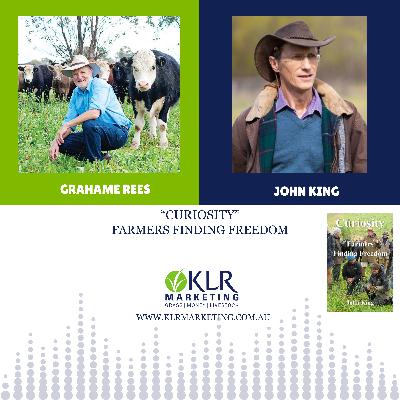
Curiosity, Contradictions & Robust Farm Businesses A conversation with John King (New Zealand) hosted by Grahame Rees (KLR Marketing) Episode Summary What actually makes a farm business robust — not just productive, but resilient across seasons, markets, and generations? In this wide-ranging webinar conversation, New Zealand educator and author John King joins Grahame Rees to share insights from over 100 real farm case studies featured in his Curiosity books. Drawing on decades of experience across sheep, beef, and dairy systems, John explores why many farming "truths" don't hold up under close observation — and how curiosity, not compliance, is often the real driver of profitability. From debt reduction and grazing simplicity to genetics, marketing, leverage, and low-input systems, this episode challenges conventional thinking and highlights what innovative producers are doing differently to create freedom, flexibility, and long-term viability. 🔑 Key Themes & Takeaways Curiosity beats compliance – the most successful farmers ask better questions rather than follow industry rules blindly Robustness over maximisation – why resilient systems outperform high-input, high-stress models Contradictions & paradoxes in farming – slower growth, less fertiliser, or fewer cows can sometimes mean more profit Debt as a strategic lever – reducing debt increases flexibility and optionality Low-input success stories – farms thriving without fertiliser, chemicals, or complex systems Genetics & behaviour matter – selecting animals for structure, temperament, and longevity, not just numbers Marketing beyond the farm gate – why some producers are capturing more value by selling differently Technology vs fundamentals – when tools help… and when they distract from observation Land use pressure & forestry – the unintended consequences of policy on rural communities A simple truth – many animal health problems disappear when grass inventory and nutrition are managed well 🧠 Notable Quotes "Most problems in farming don't originate at ground level — they're six foot above it." "If you focus too hard on production, reproduction usually goes backwards." "There aren't many investments that beat reducing debt — it creates real robustness." "If you get the fundamentals right, you don't need half the technology people are selling." 📚 Referenced Resources Curiosity: Farmers Discovering What Works – John King Curiosity: Farmers Finding Freedom – John King Holistic Management & observational grazing principles Case studies across NZ sheep, beef, and dairy systems 🎧 Who This Episode Is For Sheep & cattle producers Dairy farmers questioning high-input systems Regenerative and holistic practitioners Farming families thinking about succession Anyone wanting less stress, more clarity, and better decisions 👉 Next Steps If this conversation resonated, explore how KLR Marketing principles help producers apply clarity around grass, money, and livestock — and turn insight into confident action

Comments

Download from Google Play

Download from App Store
 United States