


 Claim Ownership
Know More Know Less
Subscribed: 1Played: 50
Subscribe

© 2022
Description
Join me in my attempt to be less certain, more curious & humble as I interview authors, scientists, academics, and entrepreneurs to help me learn more about the world and existing beliefs.
The more I learn, the more I realize I know nothing.
-Aristotle
The more I learn, the more I realize I know nothing.
-Aristotle
88 Episodes
Reverse
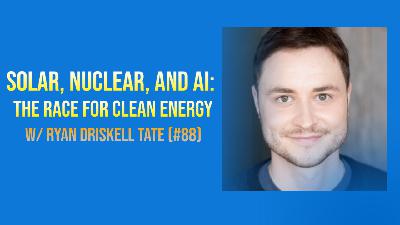
The energy transition isn't coming—it's already here. But how fast is it actually moving? And what's slowing it down? In this episode, I sit down with Ryan Driskell Tate, a historian and energy analyst who serves as Associate Director at Global Energy Monitor. We dig into the numbers: 40% of global electricity now comes from renewables and nuclear. Solar has grown from less than 1% in 2000 to nearly 9% today. Investment in clean energy is now double what's going into fossil fuels. But it's not all good news. 740 million people still lack electricity access. AI and data centers are creating massive new demand. And legacy industries—coal, oil, gas—aren't disappearing overnight. **Topics covered:** - Current state of the global energy transition - Why solar is scaling faster than any energy source in history - The role of batteries and storage in making renewables "24-hour fuel" - Nuclear energy: small modular reactors, public perception, and geopolitical ties - AI and data centers: friend or foe to the clean energy transition? - The real bottlenecks: financing, permitting, and supply chains - Pakistan's DIY solar boom and what it means for emerging markets - Why the status quo is now the most expensive option - The importance of open data in energy planning **Key stats mentioned:** - Renewables and nuclear now generate ~40% of global electricity (2024 record) - 740 million people still lack electricity access, mostly in Sub-Saharan Africa - Double the investment is now going into renewables vs. fossil fuels - 15 years ago: 150 proposed coal plants in the US → today: fewer than 5 in all of OECD - Solar went from less than 1% (2000) to ~9% of global electricity today - 70 GW of nuclear under construction—highest in 30 years **Resources:** - Global Energy Monitor: https://globalenergymonitor.org - IEA (International Energy Agency): https://www.iea.org - Ember (global electricity data): https://ember-climate.org - RMI (Rocky Mountain Institute): https://rmi.org 🎧 Know More Know Less — Listen on: Listen & Subscribe: 🍎 Apple Podcasts: https://podcasts.apple.com/gb/podcast/know-more-know-less/id1652659219 🎧 Spotify: https://open.spotify.com/show/2fxCXp5AlfajmcTgvSWSGl 📺 YouTube: https://www.youtube.com/channel/UCN4wkMATGEXMTU4Xrw-YZTA
In this episode, I speak with Dr. Daniel Cox — Professor of Counseling Psychology at the University of British Columbia and host of the Psychotherapy and Applied Psychology podcast — about the real mechanics behind helpful conversations. What actually makes talking helpful? And how can we build better conversations in everyday life, not just therapy? We talk about: •what good therapy actually does (and doesn't do) •why the relationship is more important than the treatment method •how to tell when you've outgrown your therapist •how to listen without solving •why interrupting isn't always a bad thing •how to help a friend who says "I'm fine" but clearly isn't •what most suicide risk assessments get wrong•how conversation reveals clarity — not just catharsis Whether you're someone who's been in therapy, thinking about starting, or just trying to be a better friend or partner — this conversation will shift how you think about the way we talk to each other. ⸻ 🔗 Resources from Daniel Cox: •YouTube: https://www.youtube.com/@PsychotherapyAppliedPsychology •Podcast: https://psychotherapyandappliedpsychology.buzzsprout.com ⸻ 🎧 Know More Know Less — Listen on: •Apple Podcasts: https://podcasts.apple.com/gb/podcast/know-more-know-less/id1652659219 •Spotify: https://open.spotify.com/show/2fxCXp5AlfajmcTgvSWSGl?si=87be920940534299 •YouTube (Full episodes + clips): https://youtu.be/ntWpH97LXog
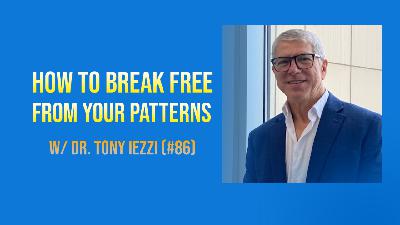
In this episode, I talk with Dr. Tony Iezzi, clinical psychologist, professor, and co-author of Re-Enactments. We discuss how to break free of the invisible patterns that shape our lives. With over 35 years of trauma treatment experience, Dr. Iezzi helps us understand how seemingly small triggers (like being ignored or corrected) can activate deep-rooted emotional reactions tied to our earliest relationships. We get into: •what reenactments are, and how to spot them in real time •why our reactions often have more to do with history than the moment •how trauma can linger as themes like "incompetence," "worthlessness," or "lack of control" •why talk therapy alone often isn't enough •how to reparent yourself and reshape your inner voice •how couples can start talking differently to break old cycles We also talk about perfectionism, addiction, immigrant households, the myth of 10-step healing, and why learning to respond — not just react — is the true path to change. ⸻ 🔗 Resources from Dr. Iezzi: •Website: https://www.tonyiezzi.com •Book: Re-Enactments — available via his site ⸻ 🎧 Know More Know Less — Listen on: •Apple Podcasts: https://podcasts.apple.com/gb/podcast/know-more-know-less/id1652659219 •Spotify: https://open.spotify.com/show/2fxCXp5AlfajmcTgvSWSGl?si=87be920940534299 •YouTube (Full episodes & clips): https://youtu.be/ntWpH97LXog
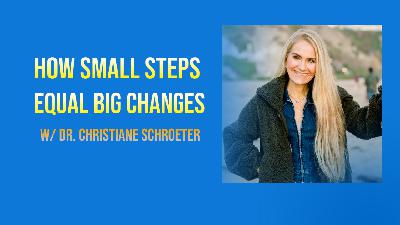
In this episode, I talk with Dr. Christiane Schroeter — award-winning professor, TEDx speaker, and wellness coach — about how to create real momentum without burning out. Christiane's background in health economics, branding, and behavioral science gives her a rare perspective on what makes goals actually stick. We get into: •how to recognize early signs of burnout before it crashes your life •how to use "petite practices" to build habits without overwhelm •why negative self-talk might be your biggest barrier •how to think about selling (especially if you hate selling) •branding tips that resonate with real people, not just algorithms We also talk about self-compassion, pivots, and how even 5-minutes-a-day can change the entire arc of your life. 🔗 Resources from Christiane: •Website: https://drchristiane.com •Discover Your Superpower Quiz: https://drchristiane.com/quiz •Books: → Discover Your Superpower → How to Master Your Goals •Podcast: Happy Healthy Hustle — https://drchristiane.com/podcast 🎧 Know More Know Less — Listen on: •Apple Podcasts: https://podcasts.apple.com/gb/podcast/know-more-know-less/id1652659219 •Spotify: https://open.spotify.com/show/2fxCXp5AlfajmcTgvSWSGl?si=87be920940534299 •Full episodes and clips: https://youtu.be/ntWpH97LXog
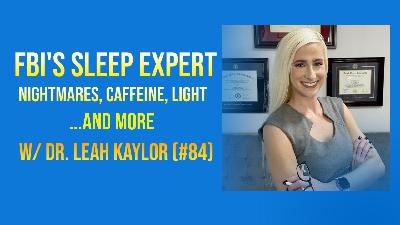
In this episode, I talk with Dr. Leah Kaylor, the FBI's in-house expert on sleep and trauma. She's a licensed clinical psychologist with a background in EMDR, brainspotting, psychopharmacology, and nightmare treatment — and she's helped everyone from military veterans to elite law enforcement agents finally get real rest. We cover: • Why nightmares are actually treatable, and how to do it • Why total darkness isn't extreme — it's essential • What chronic sleep debt does to the body and brain • How trauma, shift work, and stress can rewire your sleep cycles • A better way to use (or stop using) melatonin, magnesium, and Benadryl • Why hot chocolate can be stronger than you think We also break down why your caffeine habits might be wrecking your sleep without you realizing it, and how even tiny changes — like sealing light gaps or shifting your wake-up routine — can stack into real sleep resuilts. Leah's new book, The Sleep Advantage, comes out October 1, 2025 — and trust me, it's going to be a major tool for anyone who wants to sleep deeper, recover better, and live more clearly. ⸻ 🔗 Resources: • Dr. Leah Kaylor: https://www.drlea.com • YouTube: https://www.youtube.com/@DrLeaKaylor • TikTok: https://www.tiktok.com/@drleakaylor • The Sleep Advantage (coming Oct 1, 2025) KNOW MORE KNOW LESS PODCAST: For other platforms: Listen here: Apple: https://podcasts.apple.com/gb/podcast/know-more-know-less/id1652659219 Spotify: https://open.spotify.com/show/2fxCXp5AlfajmcTgvSWSGl?si=87be920940534299 For full episodes and clips: https://youtu.be/cjaD7jT7obw
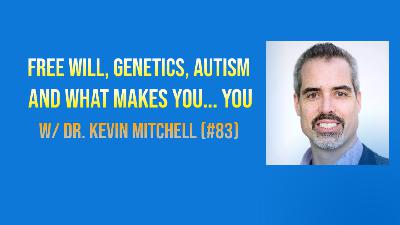
I've been fascinated by the concept of free wall for decades now. The ongoing debate if we have control over our own lives, or if we are simply giant walking meat sacks being taken from place to place, goal to goal, by our DNA, our biology, and our environment. Today, I talk with Professor Kevin Mitchell, a geneticist and developmental neurobiologist at Trinity College Dublin. Kevin's research sits right at the crossroads of biology, psychology, and philosophy — and if you've ever wondered whether you're in charge of your own life or just acting out a pre-written script of DNA and experience, this conversation is for you. We get into: What your genes really do (and don't) control The truth behind personality traits like introversion, impulsivity, and neuroticism Whether autism is increasing — or if the definition is just expanding Why blaming your bad behavior on your biology is a dead end The surprisingly hopeful science behind free will Why even your phone might be chipping away at your agency Kevin's also the author of Innate and Free Agents, two books that explore the science of who we are and how we act in the world. I've rarely come across someone who makes complex neuroscience and genetics this clear — or this empowering. If you've ever felt stuck or wondered whether change is really possible, this episode will challenge how you think about personality, decision-making, and what it means to live with intention. 🔗 Resources: Kevin's blog: http://www.wiringthebrain.com Kevin's books: Innate – https://www.goodreads.com/en/book/show/38902055 Free Agents – https://www.goodreads.com/book/show/60387495-free-agents Kevin on BlueSky: https://bsky.app/profile/wiringthebrain.bsky.social Personal website: https://kjmitchell.com KNOW MORE KNOW LESS PODCAST: For other platforms: Listen here: Apple: https://podcasts.apple.com/gb/podcast/know-more-know-less/id1652659219 Spotify: https://open.spotify.com/show/2fxCXp5AlfajmcTgvSWSGl?si=87be920940534299 For full episodes and clips: https://www.youtube.com/channel/UCN4wkMATGEXMTU4Xrw-YZTA
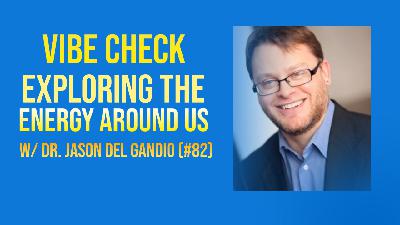
In this episode, I sit down with Dr. Jason Del Gandio, a professor, philosopher, and the creator of 20 Minute Vibe. For more than 30 years, Jason has studied what he calls "the vibe"—that felt but often unexplained energy we pick up from people, places, art, music, even ourselves. His doctoral work was the first academic study of "bodily emanation," and today we unpack what that actually means in real life. We talk about why the word vibe shows up everywhere (and how it got there), what gives a space or person "a vibe," and why developing your sensitivity to this stuff can make your relationships deeper, your self-awareness sharper, and your bullshit radar stronger. We also get into: • How vibe differs from emotion, and why that matters • Whether dogs and babies are better vibe detectors than we are • Why "good vibes only" is a myth—and what to do with the uncomfortable ones • What makes someone's vibe feel authentic (and why it's magnetic) • How checking in with vibe might help you leave a job, a house, or a relationship that no longer fits • What it means to design a life that feels good—not just looks good I didn't expect to take this word seriously when we started talking, but by the end… well, let's just say Jason Trojan Horse'd the hell out of me. If you've ever felt something in your gut and didn't know how to name it—this conversation might give you the language you were missing. ⸻ 🔗 Resources: • 20minutevibe.com – Jason's essays, videos & courses • Jason on Instagram https://www.instagram.com/20minutevibe • Jason on YouTube https://www.youtube.com/@UCRMXu7GY2gPCHPgx2r-b-gQ KNOW MORE KNOW LESS PODCAST: For other platforms: Listen here: Apple: https://podcasts.apple.com/gb/podcast/know-more-know-less/id1652659219 Spotify: https://open.spotify.com/show/2fxCXp5AlfajmcTgvSWSGl?si=87be920940534299 For full episodes and clips: https://youtu.be/NYdvMkz3dO0
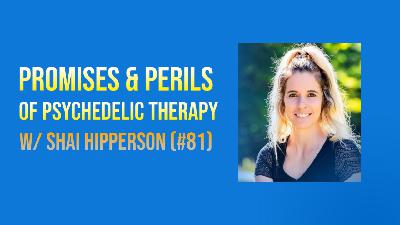
In this episode, I sit down with Shai Hipperson, a clinical psychologist and principal psychedelic-assisted therapist at the Conscious Mind Centre in Queensland, Australia. Shai is on the front lines of Australia's groundbreaking move to legalize MDMA and psilocybin for treatment-resistant mental health conditions—and she brings a wealth of knowledge, caution, and clarity to the conversation. We dive into how psychedelic therapy is practiced, what "integration" really means, and the very real risks of underground sessions that aren't supported by clinical safety protocols. We also talk about ketamine use, dosing regulations, and why Australia's strict screening process has, so far, resulted in zero adverse reactions. I also open up about my own experiences—both positive and difficult—with MDMA and psilocybin, including how one MDMA session helped me mourn the loss of my grandparents and reshaped how I understand love. We explore why these treatments can be so profound—and why they should never be taken lightly. Some themes we cover: What it means to safely "let go" during a session—and why that's not easy for everyone Why men are often emotionally closed off, and how MDMA might help Microdosing, SSRIs, and the painfully slow evolution of mental health treatment What you need to know before stepping into a psychedelic retreat (especially if it's underground) What makes integration just as important as the journey itself If you're curious, skeptical, or cautiously hopeful about psychedelic therapy, this conversation doesn't promise miracles—but it does offer insight, honesty, and some hard-won perspective. 🔗 Resources mentioned: Mind Medicine Australia – Legal Retreat Directory How to Change Your Mind by Michael Pollan: Book | Netflix Series Imperial College London: Psilocybin vs SSRIs Study KNOW MORE KNOW LESS PODCAST: For other platforms: Listen here: Apple: https://podcasts.apple.com/gb/podcast/know-more-know-less/id1652659219 Spotify: https://open.spotify.com/show/2fxCXp5AlfajmcTgvSWSGl?si=87be920940534299 For full episodes and clips: https://www.youtube.com/channel/UCN4wkMATGEXMTU4Xrw-YZTA
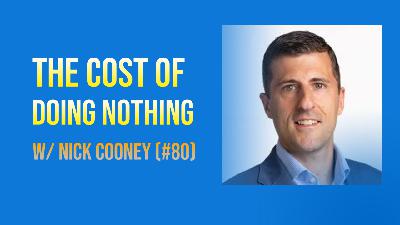
Lately, it's starting to feel like more people I meet are starting to sign up for team hopeless. There's a climate crisis, a few wars waging, and the most powerful and influential country on earth is openly accepting bribes, pardoning white collar criminals and using the White House lawn as a used car sales lot. And oh yeah, we still have to pay our mortgages, feed ourselves, and figure out what that weird rash is. You're right, it's aaa lot. But what I have in common with my guest Nick Cooney author of the book, "What We Don't Do: Inaction in the Face of Suffering and the Drive to Do More" reframes modern ethics around the true cost of doing nothing. Because the worst thing we can all do in the face of mounting issues... is nothing. Nick Cooney is the Founder of Lever VC, a venture fund backing the next wave of sustainability innovators—from plant-based foods and fermentation-derived proteins to disease-detection software and precision animal genetics. He's also a seasoned nonprofit leader: founder of The Humane League, co-founder of the Good Food Institute, and today Board Chair of the Lever Foundation, a charity accelerating sustainable food supply chains across Asia. Nick is someone focused on doing what he can to make tomorrow a better place. But today, we'll explore why small choices can add up to massive change, how to do good without burning out, and what it means to shift from bystander to changemaker. KNOW MORE KNOW LESS PODCAST: For other platforms: Listen here: Apple: https://podcasts.apple.com/gb/podcast/know-more-know-less/id1652659219 Spotify: https://open.spotify.com/show/2fxCXp5AlfajmcTgvSWSGl?si=87be920940534299 For full episodes and clips: https://youtu.be/D_dk0ifPOWs
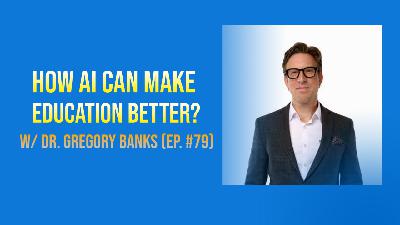
Lately, AI seems to be everywhere: on my phone, in many conversations with friends, on TV, and in what feels like every sci-fi film. Whether you are up to speed or not, you won't be able to escape it sooner or later. If it eventually becomes our Terminator or our best friend and lover, only time will tell. For now, I'm seeking bright spots and inspiring individuals who are working hard to ensure we all benefit. Dr. Gregory Banks is an educator, researcher, entrepreneur, and thought leader in education technology. With a PhD in Chemistry and a strong focus on how teacher beliefs shape classroom practice, Greg combines insightful classroom experiences with rigorous academic research. His Substack, Aligned: AI in Education, along with his newly released book, aims to bridge the gap between EdTech creators and the classroom. This was a fascinating and enjoyable conversation, and it's always encouraging to see people like Dr. Banks actively fighting for a better future. Greg's Substack: https://gregorybanksphd.substack.com/p/coming-soon?utm_medium=web New Book: Aligned: A Love Letter to Developers on What We Need from AI to Improve Education https://www.amazon.com/-/es/Aligned-Letter-Developers-Improve-Education/dp/1956543635 KNOW MORE KNOW LESS PODCAST: For other platforms: Listen here: Apple: https://podcasts.apple.com/gb/podcast/know-more-know-less/id1652659219 Spotify: https://open.spotify.com/show/2fxCXp5AlfajmcTgvSWSGl?si=87be920940534299 For full episodes and clips: https://www.youtube.com/channel/UCN4wkMATGEXMTU4Xrw-YZTAr.
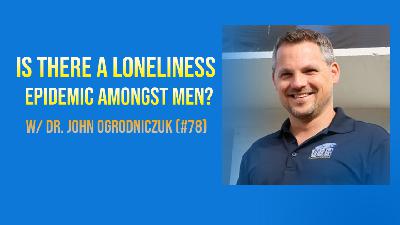
In 2024, the Attorney General of the United States declared loneliness an epidemic, something grave and important enough to the health of Americans to be elevated to national concern. But this isn't only an American problem, for years, we've been hearing about loneliness among men and how disconnected they've become from their friends and loved ones. I've seen and experienced this myself at different times through the years and believe nothing is as important for human flourishing as real connection. Enter Dr. John Ogrodniczuk. To learn more about the loneliness crisis in men I wanted to speak with someone on the front lines, researching and fighting this epidemic head-on. Dr. Ogrodniczuk is the Founder of HeadsUpGuys.org – which is a website focused on men's mental health, suicide prevention and finding a therapist. He is also a Professor of Psychiatry at University of British Columbia and Director of the UBC Psychotherapy Program In his role as Director, he oversees the operations of North America's 2nd largest medically based psychotherapy training program. His research has been supported by various provincial and national funding bodies, and has led to more than 250 scientific publications. Today, we dove into this mental health and loneliness crisis, why it seems to hit men harder, and what all of us can do to help ourselves and those we love. KNOW MORE KNOW LESS PODCAST: For other platforms: Listen here: Apple: https://podcasts.apple.com/gb/podcast/know-more-know-less/id1652659219 Spotify: https://open.spotify.com/show/2fxCXp5AlfajmcTgvSWSGl?si=87be920940534299 For full episodes and clips: https://www.youtube.com/channel/UCN4wkMATGEXMTU4Xrw-YZTA
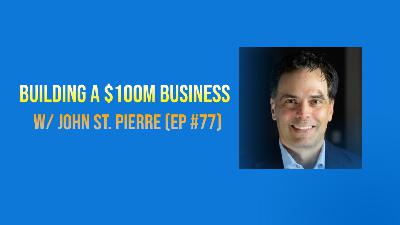
Building any business is an exercise in perseverance, problem-solving, and a healthy amount of self-reflection, and John St. Pierre has been through it all Today we're diving into John's journey and his book, "The $100M Journey: Your Guide To Growing The Business Of Your Dreams Without Going Off The Cliff!" John has co-founded and led two companies he built and scaled to over $50M+ in global revenues. One of which he lost dramatically, being fired from the company he co-founded after 15 years. Like all great entrepreneurs, he rolled the bruises and lessons from that experience into his next company, growing it to $100M+. John is now empowering others on their business journeys via his books, the Entrepreneurs United podcast as well as an investor, speaker, and mentor to many founders around the world This was a fun chat and I was taking notes the entire way through the edit process. KNOW MORE KNOW LESS PODCAST: For other platforms: Listen here: Apple: https://podcasts.apple.com/gb/podcast/know-more-know-less/id1652659219 Spotify: https://open.spotify.com/show/2fxCXp5AlfajmcTgvSWSGl?si=87be920940534299 For full episodes and clips: https://www.youtube.com/channel/UCN4wkMATGEXMTU4Xrw-YZTA
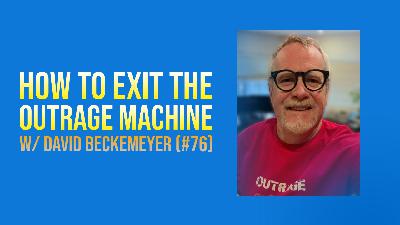
This episode was recorded before the US election when outrage was riding high from everyone everywhere. I don't know if it's calmed from then or if I've just disassociated so far from reality since Nov 5th that I've successfully self-lobotomized. Hard to say. In any case, I loved this chat with David Beckemeyer because at times, we share the outrage and the rest of the time, he helps to talk me down from my own. For anyone that is experience media outrage in any form on any topic, I think this chat might be of assistance. David Beckemeyer is a tech innovator, former founding CTO of EarthLink, and a passionate advocate for understanding the impact of technology on society. With over 25 years in the tech industry, David has seen firsthand how rapid advancements shape our culture and influence our connections. Now, as the host of the *Outrage Overload* podcast, David explores the intersection of technology, media, and outrage culture, diving into the effects of polarization and the forces driving it. He brings a thoughtful, nuanced perspective to discussions on bridging divides and fostering healthier, more informed communities in today's digital world. Today we attempt to dismantle our outrage together…. KNOW MORE KNOW LESS PODCAST: For other platforms: Listen here: Apple: https://podcasts.apple.com/gb/podcast/know-more-know-less/id1652659219 Spotify: https://open.spotify.com/show/2fxCXp5AlfajmcTgvSWSGl?si=87be920940534299 For full episodes and clips: https://www.youtube.com/channel/UCN4wkMATGEXMTU4Xrw-YZTA
I have been interviewing a lot of experts and entrepreneurs on the topic of boys and men recently. It has been inspiring and instructive to see people coming together to support the mental health of boys and men, creating safe spaces for self-exploration and community. But sometimes, we all need space to disconnect from the demands of life and loved ones to reconnect with ourselves and re-evaluate what we need and how to break free from any potential limitations holding back our personal and professional lives. Enter Eli Libby Eli is the co-founder of Peak Fulfillment Men's Coaching and hosts of the Biz Bros podcast. Eli experienced firsthand the overwhelming stress and lack of clarity that come with entrepreneurial life. He discovered the profound benefits of solo retreats, to disconnect from daily his chaos and reconnect with his true self. Inspired by his own transformation and those of his co-founder, Kyle, they now guide other men through immersive solo retreats, helping them achieve balance, self-awareness, and renewed purpose. KNOW MORE KNOW LESS PODCAST: For other platforms: Listen here: Apple: https://podcasts.apple.com/gb/podcast/know-more-know-less/id1652659219 Spotify: https://open.spotify.com/show/2fxCXp5AlfajmcTgvSWSGl?si=87be920940534299 For full episodes and clips: https://www.youtube.com/channel/UCN4wkMATGEXMTU4Xrw-YZTA
I recently watched the film, It Ends With Us, based on the wildly popular novel by Colleen Hoover. Despite the controversy over the film's romcom adjacent marketing campaign the story is about intimate partner violence (IPV) and the evolution of an abusive relationship. While I enjoyed the film, it made me curious about the true statistics of abusive relationships, what the scientific literature says about those impacted most and if there are specific personality types who are more or less prone to entering such relationships. I was also curious how often men are affected by IPV and where they might go to seek help. Enter Dr. Don Dutton. Don has a Ph.D. in Psychology from the University of Toronto and is currently a Professor Emeritus of Psychology at the University of British Columbia. He spent fifteen years providing therapy for court-mandated men convicted of wife assault and developed a psychological model for perpetrators of intimate abuse. He has published over 100 papers and five books, including The Domestic Assault of Women (1995), The Batterer: A Psychological Profile(1995) and The Abusive Personality (2002). Dutton has frequently served as an expert witness in criminal and civil trials involving domestic abuse and family violence, including his work for the prosecution in the O.J. Simpson trial (1995). If you'd like to reach out to Don, you can find his email and contact form on the website below: Website: htttp://www.drdondutton.com KNOW MORE KNOW LESS PODCAST: For other platforms: Listen here: Apple: https://podcasts.apple.com/gb/podcast/know-more-know-less/id1652659219 Spotify: https://open.spotify.com/show/2fxCXp5AlfajmcTgvSWSGl?si=87be920940534299 For full episodes and clips: https://youtu.be/0BTHHY4SvNE
I recently talked to a friend about the hit show, White Lotus. Season 2 was particularly juicy and we focused on if one of the couples could ever repair their relationship after a potential betrayal. That convo went in so many directions I decided to speak with an expert about betrayal and forgiveness. Enter Dr. Bruce Chalmer, a psychologist who has been working with couples for over thirty years. Through his teaching, consulting, and books, his ideas have helped thousands of couples and their therapists. Together with his wife Judy, Dr. Chalmer hosts the podcast "Couples Therapy in Seven Words." He is the author of three books: Betrayal and Forgiveness: How to Navigate the Turmoil and Learn to Trust Again It is Not About Communication. Why everything you know about couples therapy is wrong Reigniting the Spark: Why Stable Couples Lose Intimacy, and How to Get It Back In today's episode, we discuss: --Understanding a partner's reluctance to go to therapy is crucial. --Success in therapy is not solely defined by couples staying together. --Most relationship problems are rooted in deeper emotional issues, not just communication. --Forgiveness is an internal process that can lead to emotional healing. --Trust must be rebuilt by both partners after betrayal. --Therapy can be likened to improv, requiring adaptability and openness. --Acceptance of reality is essential for personal growth and healing. --Forgiving oneself is the first step in the forgiveness process. --Recognizing that both partners are doing their best can foster understanding. KNOW MORE KNOW LESS PODCAST: For other platforms: Listen here: Apple: https://podcasts.apple.com/gb/podcast/know-more-know-less/id1652659219 Spotify: https://open.spotify.com/show/2fxCXp5AlfajmcTgvSWSGl?si=87be920940534299 For full episodes and clips: https://www.youtube.com/channel/UCN4wkMATGEXMTU4Xrw-YZTA
Living inside as many different cities and cultures as I have, I think I've seen every relationship permutation there is. And what I've learned is that there is no right or wrong when it comes to love. There's only what's right and wrong for each couple, and usually even that changes over time. Confusing? You bet! So I've decided to speak to someone who lives outside of society's black and white monogamy culture and found a lifestyle that works best for her and her husband. Lauren Hayes is relationship coach specializing in supporting ethically non-monogamous (ENM) couples, including swingers and the ENM-curious. She is trained in both life and relationship coaching, she helps couples navigate and engage the swinging and non-monogamous community in the healthiest of ways. Lauren believes that non-monogamous relationships share the same foundations of any healthy relationship, however, they need to operate at a higher level of health to accommodate the additional complexities. Her approach aims to help couples build their ideal relationship, regardless of how many others it includes. She also brings personal experience to her coaching having been married for 19+ years and ENM (swingers) for the last 5+ years. Lauren offers coaching and practical advice grounded in her own life as well as professional training - she goes by Swinging Lifestyle Coach and her website is SwingingLifestyleCoach.com. Takeaways Non-monogamous relationships require a higher level of communication. Self-awareness is essential for navigating non-monogamy. Ethical non-monogamy is not better or worse than monogamy; it's an option. Many misconceptions exist about non-monogamous relationships. Commitment should be to the relationship, not just the person. Emotional sovereignty is crucial for healthy relationships. Couples can benefit from regular check-ins about their relationship satisfaction. Exploring non-monogamy can enhance intimacy and connection. Accountability in relationships can lead to personal growth. Creating your own life is key to happiness. KNOW MORE KNOW LESS PODCAST: For other platforms: Listen here: Apple: https://podcasts.apple.com/gb/podcast/know-more-know-less/id1652659219 Spotify: https://open.spotify.com/show/2fxCXp5AlfajmcTgvSWSGl?si=87be920940534299 For full episodes and clips: https://www.youtube.com/channel/UCN4wkMATGEXMTU4Xrw-YZTA
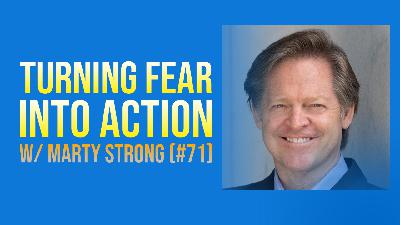
As most men growing up watching bombastic American action films, I've always been fascinated by the Navy SEALs program. Not just for the missions and sacrifice, but also for their level of mental resilience. Marty Strong is no different. Having spent over 20 years in military service, both participating in and overseeing SEALs missions he has a perspective on life that has lead him to many different life paths after leaving the Navy. On today's episode we discussed his path, tales of SEAL training and mission reconnaissance, and how mental toughness helps in all aspects of life Marty is a Retired Navy SEAL officer, former UBS portfolio manager, and he is currently CEO of a middle market healthcare company. Marty serves on the boards of BEST Robotics, Inc., Metal Raptor, LLC, and is the President of BEST MindLab, a new for-profit entity owned by BEST Robotics, Inc. As if that wasn't enough to do, he is also a motivational speaker, and the author of nine published novels and three published business books. His latest book: Be Different: How Navy SEALs and Entrepreneurs Bend, Break, or Ignore the Rules to Get Results! The book is currently available for pre-order and comes out in early December 2024. You can find Marty here: https://martystrongbenimble.com/ KNOW MORE KNOW LESS PODCAST: For other platforms: Listen here: Apple: https://podcasts.apple.com/gb/podcast/know-more-know-less/id1652659219 Spotify: https://open.spotify.com/show/2fxCXp5AlfajmcTgvSWSGl?si=87be920940534299 For full episodes and clips: https://www.youtube.com/channel/UCN4wkMATGEXMTU4Xrw-YZTA
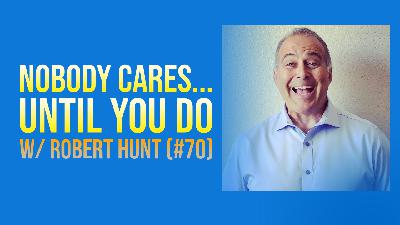
'Happiness can be found, even in the darkest of times, if one only remembers to turn on the light.' - Albus Percival Wulfric Brian Dumbledore There's an important lesson I learned years ago that I haven't spoken about much on this show. It's the incredible support I've found whenever I tried to achieve anything. It didn't matter if it was a new sport, creative endeavours or entrepreneurship. There will always be unsupportive, peanut gallery, talk behind your back clowns at any stage in life, but in my experience there were always friends, family and strangers to lift me up and help me on my journey. Every. Single. Time. But it would've been impossible for me to find those people without starting the journey by myself, first. Tragically, that's always the hardest part. Enter Robert Hunt. Robert has become "The Accountability Guy" and he is the co-author of the book "Nobody Cares...until you do." He is a business owner in the Dallas/Fort Worth Texas area and helps leaders remove the things that keep them from being their best. Robert is an Executive Coach who has been running CEO Groups in the Dallas area since 2013 and he brings that experience and wisdom to help people reach their goals. Today we are going to be diving deep into the waters of accountability and hopefully at the end of this conversation, me and all of you listening will be a little less likely to BS ourselves and can get out of our own way to get closer to our dreams and be the people we want to be in the world. KNOW MORE KNOW LESS PODCAST For other platforms: 🍎 Listen on Apple https://podcasts.apple.com/gb/podcast/know-more-know-less/id1652659219 🔊 Listen on Spotify: https://open.spotify.com/show/2fxCXp5AlfajmcTgvSWSGl?si=87be920940534299 📺 Full Episodes and clips: https://youtu.be/wsVdZUJ_Cq8
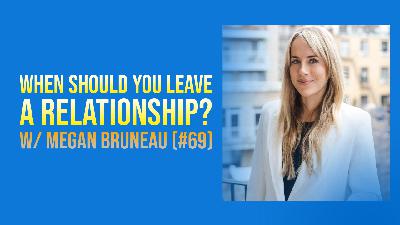
Across continents and age-ranges, it seems more and more people I know are either breaking up, getting divorced or strongly considering those options. The conversations I've had on this issue all had a foundation on how devastating and complicated it is to pull the trigger to make this decision. It seemed even with more extreme issue at play, the emotional equations are still complex. Thoughts like, "Maybe this is a phase", "What about our kids?", "I've never lived alone...", "Maybe this is just what marriage is!", "Do I deserve better than this?", and the most painful thought hurdle, "But I still really love them" My heart breaks for anyone going through such an era of their lives, and all I know is that I don't have the answers. Enter Megan Bruneau. Megan and I had an amazing chat that went all over the place trying to dissect this topic, from our personal experiences, to Megan's approach in her therapy practice and how others suffering in moments of their relationship might be able to think about the issue more clearly. Megan has been called the "Millennials' therapist" by none other than Deepak Chopra and her no-nonsense, relatable approach has racked up over 30 million views. She has nearly 2 decades of providing crisis support, therapy and coaching and she's been featured on Good Morning America and The T.D. Jakes Show. Megan's expertise is backed by her personal journey through mental health challenges and heartbreaks and she aims to change the way all of us relate to our inner and outer worlds. You can find Megan @ https://meganbruneau.com/ if you'd like to continue the conversation with her. Thanks, as always, for listening/watching! KNOW MORE KNOW LESS PODCAST: For other platforms: Listen here: Apple: https://podcasts.apple.com/gb/podcast/know-more-know-less/id1652659219 Spotify: https://open.spotify.com/show/2fxCXp5AlfajmcTgvSWSGl?si=87be920940534299 For full episodes and clips: https://youtu.be/xrftFHTdgms

Comments

Download from Google Play

Download from App Store
 United States