


 Claim Ownership
LYNES Presents: Built to Divide
Subscribed: 0Played: 0
Subscribe

© Copyright 2025 LYNES // Gābl Media
Description
Built to Divide is a cinematic audio documentary that unearths how America’s homes became the front lines of inequality. From land giveaways to red lines, gated communities to algorithmic rent hikes—each episode reveals the forces that shaped not only where we live, but who gets to belong. Guided by host Dimitrius Lynch Jr., an award-winning architect with a storyteller’s eye for systems and design, this series traces how policy, psychology, and profit converged to build division into the very architecture of everyday life. Through vivid historical narratives, archival sound, and modern parallels, Built to Divide exposes how the dream of homeownership became both symbol and weapon—binding generations to debt, geography, and identity. Across twelve episodes, listeners journey from the dawn of land speculation to today’s algorithmic landlords, uncovering how the built environment reflects our deepest social divides—and what it will take to design something better.
4 Episodes
Reverse
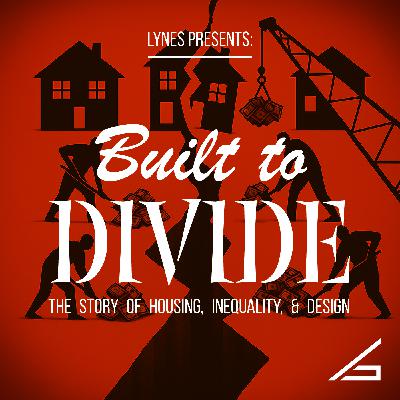
Built to Divide is a cinematic audio documentary that unearths how America’s homes became the front lines of inequality. From land giveaways to red lines, gated communities to algorithmic rent hikes—each episode reveals the forces that shaped not only where we live, but who gets to belong.Guided by host Dimitrius Lynch Jr., an award-winning architect with a storyteller’s eye for systems and design, this series traces how policy, psychology, and profit converged to build division into the very architecture of everyday life. Through vivid historical narratives, archival sound, and modern parallels, Built to Divide exposes how the dream of homeownership became both symbol and weapon—binding generations to debt, geography, and identity.Across twelve episodes, listeners journey from the dawn of land speculation to today’s algorithmic landlords, uncovering how the built environment reflects our deepest social divides—and what it will take to design something better.
Why does housing in America feel so unattainable—and why does it seem designed that way? In this sweeping opening chapter of Built to Divide, host Dimitrius Lynch traces the origins of today’s housing affordability crisis back more than 100,000 years, revealing how our primal instincts around territory, ownership, and status have been shaped—and exploited—over millennia.From the campfire rituals of early humans to feudal Europe’s enclosures, from the rise of divine kingship to the first mortgage systems, and from the U.S. labor movement to the FHA’s propaganda-style push for suburban homeownership, this episode exposes how housing evolved from a shared human necessity to a powerful engine of inequality.Lynch weaves anthropology, architecture, public health data, urban history, and political economy into a gripping narrative that shows how today’s housing insecurity, record-high rents, soaring home prices, and widening inequality were not an accident. They were engineered—over centuries—through policies, incentives, and cultural stories built to divide us.Listeners will learn how the built environment reflects our deepest psychological wiring, how financialization transformed shelter into a commodity, how zoning and mortgages reshaped American life, and why housing policy is inseparable from health, safety, democracy, and collective well-being.This cinematic episode sets the foundation for the entire series, revealing a simple but radical truth: the world we live in was designed—and can be redesigned.Episode Extras - Photos, videos, sources and links to additional content found during research. Episode Credits:Production in collaboration with Gābl MediaWritten & Executive Produced by Dimitrius LynchAudio Engineering and Sound Design by Jeff Alvarez
At the dawn of the 20th century, American finance looked modern—telegraphs, syndicates, Wall Street empires—but it had no brakes. In this episode of Built to Divide, host Dimitrius Lynch follows the chain reaction from the Panic of 1907 to the creation of the Federal Reserve, revealing how crises, central banking, and policy choices concentrated power at the top and quietly reshaped who gets to own a home in America.We move from J.P. Morgan locking bankers in his library to stabilize markets, to the secret Jekyll Island meeting that birthed the blueprint for the Fed, to a global financial order built on austerity, gold, and central banks. Lynch unpacks how this shift—from robber barons to central bankers—centralized control over money and credit, setting the stage for a financial system that could either stabilize the economy or supercharge inequality.In parallel, the episode traces a second, brutal story: the clash between slave labor and wage labor, the Civil War, broken promises like Special Field Orders No. 15, Reconstruction, the 13th and 14th Amendments, and the massive land giveaways of the Homestead and Railway Acts that seeded a two-track wealth system. That system was later hardened by Black Codes, Jim Crow, and the rise of the National Association of Realtors, whose restrictive covenants and ethics codes turned racism and class exclusion into standard practice.As Lynch connects the Roaring Twenties, the Great Depression, Hoover’s homeownership gospel, and New Deal housing programs—HOLC, FHA, Fannie Mae—listeners see how federal support for mortgages expanded opportunity for some while redlining, racial covenants, and “good neighborhood” ideology locked others out. Housing was transformed into a mass wealth engine built on division.This episode is a deep dive into how central banking, war finance, slavery, segregation, real estate professionalization, and federal housing policy fused into a system where housing isn’t just shelter or asset—it’s a sorting mechanism. If you want to understand why today’s housing market feels rigged, this chapter shows how the rig was built.Episode Extras - Photos, videos, sources and links to additional content found during research. Episode Credits:Production in collaboration with Gābl MediaWritten & Executive Produced by Dimitrius LynchAudio Engineering and Sound Design by Jeff Alvarez
What happens when the machinery of war is turned loose on the home front? In this episode of Built to Divide, host Dimitrius Lynch traces how the end of World War II, the GI Bill, and federal housing policy combined to build the largest middle-class expansion in U.S. history—while quietly deepening racial and economic division.Beginning with the surrender in Tokyo Bay and the massive demobilization of Operation Magic Carpet, Lynch follows millions of returning veterans back to a country racing to answer a simple question: Where will they all live? The answer reshaped the nation. FHA and VA loans, the rise of Fannie Mae, and the secondary mortgage market drove homeownership from 43% to nearly 62% by 1960, cementing the single-family house as the centerpiece of the American Dream.But this “great reset” came with a price. Lynch unpacks how zoning laws, redlining, racial covenants, and underwriting standards drew hard lines around who could belong in postwar suburbia. He contrasts the inclusive vision of Case Study Houses and Eichler Homes with the mass-produced segregation of Levittown, where black families were explicitly barred and violence met the first to cross the color line.From John Dean’s warning about homeownership “booby traps” to the weaponization of media by business elites like Henry Regnery, this episode reveals how corporate interests used patriotism, racial fear, and Cold War anxiety to roll back New Deal gains and reframe government as the enemy. Along the way, Lynch explores how Fannie Mae’s privatization, the birth of American Express credit cards, and the cultural glorification of the nuclear family turned housing into a speculative asset, a consumption engine, and a source of isolation.We end in Roseto, Pennsylvania, where a community’s disappearing social bonds literally changed its heart attack rates—proof that how we house ourselves shapes how we live, connect, and survive.If you want to understand how postwar housing policy, suburbanization, zoning, media, and finance fused into a system that still determines who gets stability and who gets left behind, this episode shows how the board was reset—and who it was reset for.Episode Extras - Photos, videos, sources and links to additional content found during research. Episode Credits:Production in collaboration with Gābl MediaWritten & Executive Produced by Dimitrius LynchAudio Engineering and Sound Design by Jeff Alvarez
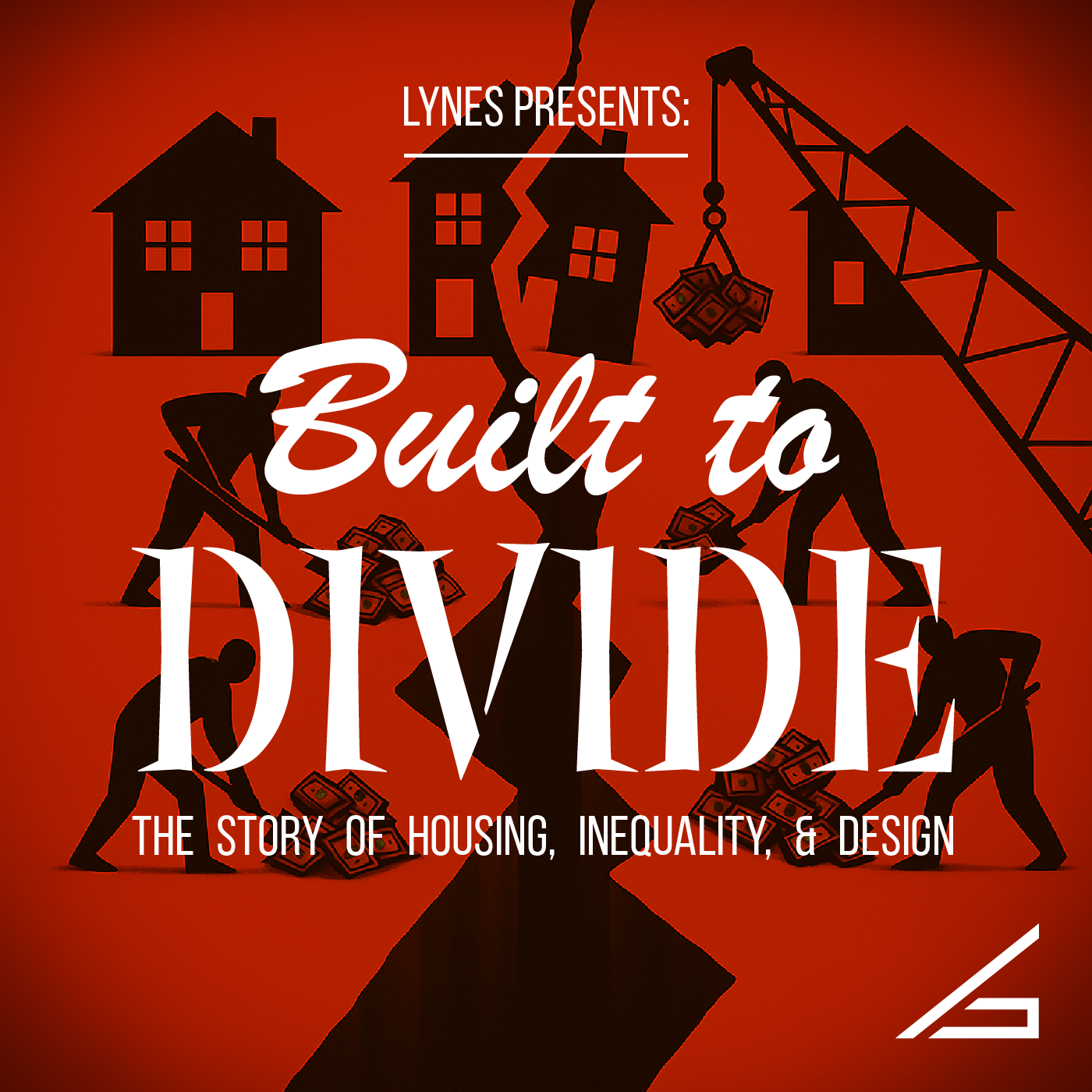
In the summer heat of Birmingham, children faced police dogs and fire hoses. On a bus in Montgomery, a 15-year-old refused to stand. From Claudette Colvin to Rosa Parks, from Greensboro counters to the March on Washington—the Civil Rights Movement shook America awake. Yet, even as laws changed, maps and mortgages quietly redrew the lines of belonging.In this episode of Built to Divide, Dimitrius Lynch tracks what happened after the marches. The Civil Rights Act outlawed discrimination, but zoning boards found new tools to enforce it. Highways tore through Black neighborhoods in San Francisco and Detroit. Urban renewal became “Negro removal.” Birmingham forced the country to look. Kennedy named it a moral crisis. Johnson created HUD, appointing Robert C. Weaver, the first Black cabinet secretary. Then came the pivot—Section 235, 236, vouchers, block grants, Pruitt-Igoe, Moses vs. Jacobs, Nixon’s New Federalism, and a shift from building homes to subsidizing rent.This is the story of how a movement won rights—but lost ground in planning rooms, mortgage offices, and zoning maps. How public housing gave way to vouchers. How the market replaced the public builder. And how America traded homes as social infrastructure for housing as financial asset.If you want to understand why affordability collapsed, why public housing withered, why vouchers fall short, and how modern inequality took shape—Episode 4 shows the pivot point.Episode Extras - Photos, videos, sources and links to additional content found during research. Episode Credits:Production in collaboration with Gābl MediaWritten & Executive Produced by Dimitrius LynchAudio Engineering and Sound Design by Jeff Alvarez
Comments

Download from Google Play

Download from App Store
 United States