


 Claim Ownership
Law Enforcement Talk: True Crime and Trauma Stories
Subscribed: 1,105Played: 32,512
Subscribe

© 2025 John Jay Wiley
Description
True Crime with a twist. By and from those that have been there. Crime stories from those that investigated crimes and caught criminals. Also victims of crimes tell about their experience. Plus trauma stories, by those that have been through it. Often crime based, but not always, people talk about the trauma, how it impacted them and how they built their lives after. Law Enforcement Talk: True Crime and Trauma Stories Radio Show and
It is a True Crime Show, a Law Enforcement Officer Show and a Human Interest show all in one. Get a glimpse of life behind the badge, investigations of true crimes, violence they encounter and experience. Law enforcement officers, first responders, military veterans, victims of crime and their families tell their stories of the trauma they experienced mostly regarding True Crime incidents. They also talk about how they built their new lives they wanted afterwards. While many people think the show is about Law Enforcement Training, or Law Enforcement specific topis, it is not, think of True Crime Podcasts with a twist.
The Law Enforcement Talk Show goes to radio first. Therefore it is required that I use a clock for the length of segments. You've probably seen on television news interviews that they have a hard break. It's the same with radio. The stations have to be able to program in their commercials, news, weather, traffic reports etc. These are called avails, they are NOT Optional. Every guest knows about and is informed of the length of the segments and that I will interrupt them if needed to go to the break. The interviews are recorded and the guests know that the segments must be in a certain length and it is required and they get to tell their stories to millions of people for free.
The bi-weekly podcast version of the syndicated Law Enforcement Talk Radio Show, with numerous affiliate US Radio Stations, broadcasting once a week to millions of people.
The show host, John "Jay" Wiley, is a radio DJ and Retired Baltimore Police Sergeant. The show started as a podcast, before being recruited by terrestrial AM-FM radio stations and has been in continuous operation since March of 2017. You can reach him at [email protected].
Background song Hurricane used by permission from the band Dark Horse Flyer, get more information about them and their music on their website.
You can follow us and connect on social media, if you are in the Clubhouse Drop In Audio App make sure you follow our club LET Radio and Podcast. You can also find and follow the host of the show John J Wiley on the Clubhouse Drop In Audio Chat program.
Be sure to check out our website.
Like and follow our facebook page. Our Twitter account. Also on Instagram.
It is a True Crime Show, a Law Enforcement Officer Show and a Human Interest show all in one. Get a glimpse of life behind the badge, investigations of true crimes, violence they encounter and experience. Law enforcement officers, first responders, military veterans, victims of crime and their families tell their stories of the trauma they experienced mostly regarding True Crime incidents. They also talk about how they built their new lives they wanted afterwards. While many people think the show is about Law Enforcement Training, or Law Enforcement specific topis, it is not, think of True Crime Podcasts with a twist.
The Law Enforcement Talk Show goes to radio first. Therefore it is required that I use a clock for the length of segments. You've probably seen on television news interviews that they have a hard break. It's the same with radio. The stations have to be able to program in their commercials, news, weather, traffic reports etc. These are called avails, they are NOT Optional. Every guest knows about and is informed of the length of the segments and that I will interrupt them if needed to go to the break. The interviews are recorded and the guests know that the segments must be in a certain length and it is required and they get to tell their stories to millions of people for free.
The bi-weekly podcast version of the syndicated Law Enforcement Talk Radio Show, with numerous affiliate US Radio Stations, broadcasting once a week to millions of people.
The show host, John "Jay" Wiley, is a radio DJ and Retired Baltimore Police Sergeant. The show started as a podcast, before being recruited by terrestrial AM-FM radio stations and has been in continuous operation since March of 2017. You can reach him at [email protected].
Background song Hurricane used by permission from the band Dark Horse Flyer, get more information about them and their music on their website.
You can follow us and connect on social media, if you are in the Clubhouse Drop In Audio App make sure you follow our club LET Radio and Podcast. You can also find and follow the host of the show John J Wiley on the Clubhouse Drop In Audio Chat program.
Be sure to check out our website.
Like and follow our facebook page. Our Twitter account. Also on Instagram.
749 Episodes
Reverse

Actor on a Fatal Helicopter Crash: How His Life Changed. He escaped the doomed aircraft moments before takeoff. What happened next triggered years of depression and inspired the question that rebuilt his life. The Law Enforcement Talk Radio Show and Podcast social media like their Facebook , Instagram , LinkedIn , Medium and other social media platforms.
Kurek Ashley was living the life many aspiring performers only dream about. The Podcast is available for free on the Law Enforcement Talk Radio Show and Podcast website, also on Apple Podcasts, Spotify, YouTube, iHeartradio and most major podcast platforms. #LawEnforcementTalk #Free #Podcast #Radio
The retired actor now living in Australia was working in the Philippines on Delta Force 2: The Colombian Connection, an action movie starring Chuck Norris. He was surrounded by friends, building a Hollywood career and looking toward a promising future. Supporting articles about this and much more from Law Enforcement Talk Radio Show and Podcast in platforms like Medium , Blogspot and Linkedin.
Then, on May 16, 1989, everything changed.
Ashley had recently stepped out of a helicopter being used during filming. The aircraft took off without him to perform a low-level aerial maneuver, but it never completed the mission.
The helicopter suddenly veered, plunged into a ravine and burst into flames.
Four people died in the immediate aftermath. A fifth member of the production later died from his injuries.
Ashley escaped the aircraft without a physical injury, but he could not escape what happened next.
His close friend, key grip Mike Graham, died in his arms while being transported to the hospital. The Law Enforcement Talk Radio Show and Podcast, is available on Apple, Spotify, YouTube, and other major podcast platforms. The interview is also featured across Facebook and Instagram.
For Ashley, surviving was only the beginning.
A Hollywood Movie Set Became the Scene of a Tragedy
The fatal helicopter crash happened near Tagaytay in the Philippines during production of the Chuck Norris film. Actor on a Fatal Helicopter Crash: How His Life Changed.
The aircraft was carrying eight people when it went down near a large unfinished mansion. The helicopter fell approximately 40 feet into a ravine before erupting in flames.
The crash initially claimed four lives: key grip Mike Graham, gaffer Don Marshall, cinematographer Gadi Danzig and Filipino pilot Jojo Imperial. Actor and stunt performer Geoff Brewer later died from his injuries, bringing the final death toll to five. Contemporary reports confirmed the four initial deaths, while the film’s production history records Brewer’s later death.
Three other people aboard the helicopter survived with serious injuries. Chuck Norris was not on the aircraft.
Ashley had been on the helicopter shortly before it departed.
That one decision, to step out before takeoff, separated him from the friends and colleagues who were carried into the ravine. The episode is available across major platforms including their website, Apple Podcasts, Spotify, YouTube, with highlights shared across their Facebook, Instagram, and LinkedIn profiles.
It was the type of moment that can divide a life into two distinct parts: everything before the crash and everything after it.
He Survived Without Physical Injuries, but the Trauma Followed Him
Ashley walked away physically unharmed, but the emotional and psychological consequences were devastating.
The former Hollywood actor struggled with severe depression for approximately two years. He had witnessed the sudden deaths of people he knew and loved. One of his closest friends had died in his arms.
The questions that follow a traumatic survival can be relentless.
Why did he get out of the helicopter?
Why did he survive when others did not?
What was he supposed to do with the life he had been given?
Those questions could not be answered by another movie role or another achievement. The success he had once pursued no longer held the same meaning. Actor on a Fatal Helicopter Crash: How His Life Changed. The Podcast is available for free on the Law Enforcement Talk Radio Show and Podcast website, also on Apple Podcasts, Spotify, YouTube, iHeartradio and most major podcast platforms.
The crash had taken five lives. It had also shattered Ashley’s understanding of his own life and forced him to search for a new purpose.
From Actor to Author and Speaker
Ashley eventually experienced what he describes as a personal transformation rooted in love.
Instead of allowing the tragedy to define the rest of his life, he began rebuilding from the inside. His pain became part of a larger mission: helping other people change the thoughts, emotions and decisions shaping their lives.
The Actor On A Fatal Helicopter Crash, How His Life Changed story eventually became inseparable from Ashley’s work as an author and speaker.
He went on to write the book "How Would Love Respond?", presenting a spiritual toolkit for directing the thought patterns that influence success, failure, relationships and personal fulfillment.
At the center of the book is one powerful question:
“How would love respond?”
For Ashley, those four words are more than the title of a book. They represent a way to interrupt fear, anger and despair before making a decision. The Law Enforcement Talk Radio Show and Podcast continues bringing listeners real conversations from the front lines of crime, policing, trauma, survival, and healing.
The question asks people to pause and consider whether their next response will be driven by pain, or by the person they want to become.
The Question That Changed His Decisions
Ashley’s transformation did not erase the helicopter crash or bring back the friends who died.
It changed what he did with the pain.
His message is that people may not control every tragedy that enters their lives, but they can work to control what that tragedy creates within them. Actor on a Fatal Helicopter Crash: How His Life Changed. Supporting articles about this and much more from Law Enforcement Talk Radio Show and Podcast in platforms like Medium, Blogspot and Linkedin.
That belief became the foundation of his work as a speaker and personal-development leader. He has shared his message with audiences around the world, encouraging people to examine how their thoughts produce the emotions and actions shaping their lives.
His mission grew from one of the darkest days imaginable.
It is a reminder that survival alone is not always the end of a traumatic event. Survivors may carry guilt, grief, depression and unanswered questions long after their visible injuries have healed, or even when there were no visible injuries at all.
A Career That Included Recognizable Hollywood Films
Before devoting his life to writing, speaking and personal transformation, Ashley worked as an actor in Hollywood productions.
His credits included appearances connected with titles such as Airheads, Maniac Cop 2 and Delta Force 2: The Colombian Connection, along with other movie and television projects.
Yet his most important role may have begun after he stepped away from Hollywood.
The survivor became an author.
The actor became a speaker.
The man overwhelmed by depression began helping other people confront their own pain and reclaim their lives.
Kurek Ashley Tells His Story on the Podcast
Kurek Ashley is the guest on this compelling episode of the nationally syndicated Law Enforcement Talk Radio Show and Podcast. Actor on a Fatal Helicopter Crash: How His Life Changed. Listen to this powerful episode of the Law Enforcement Talk Radio Show and Podcast as Kurek Ashley discusses the fatal crash, nearly dying afterwards and finding the higher purpose that ultimately changed his life.
He discusses the day a movie set became the scene of a fatal helicopter crash, the death of his friend, the depression that followed and the transformation that gave his survival a new meaning.
This is not simply a story about an actor or a Hollywood accident.
It is a story about trauma, survivor’s guilt, purpose and the decision to build a new life after the old one has been destroyed.
Ashley also explains the message behind his Book, How Would Love Respond?, and how one question can change the direction of a decision, and possibly an entire life.
From Tragedy to a Mission Built on Love
Five people ultimately died because of the helicopter crash connected to Delta Force 2.
Ashley survived because he had exited the aircraft shortly before its final flight.
The physical escape took only moments.
The emotional escape took years.
His journey from Hollywood actor to bestselling author and international Speaker shows that surviving tragedy and healing from it are not the same thing.
Healing required Ashley to confront his depression, reconsider the meaning of his life and transform unbearable loss into a mission focused on helping others.
The interview is available through the show’s website and across major platforms, including Apple, Spotify and YouTube. Follow and share the episode on Facebook and Instagram to help bring greater awareness to PTSD, and the long road from trauma to recovery.
You can also follow the show on Facebook, Instagram, and YouTube for more true stories involving police officers, survivors, crime victims, veterans, and first responders.
The question at the center of his work remains simple:
“How would love respond?”
The answer changed Kurek Ashley’s life.
His story may change the way others respond to their own pain.
Listen to the Free Interview
Listen to this powerful Podcast interview with Kurek Ashley on the Law Enforcement Talk Radio Show and Podcast. The free interview was aired on numerous major Radio Stations and is available on the show’s website and podcast platforms, including Apple and Spotify. Actor on a Fatal Helicopter Crash: How His Life Changed.
Follow the show on Facebook, Instagram, YouTube and other Social Media platforms for more real stories about trauma, survival and tran
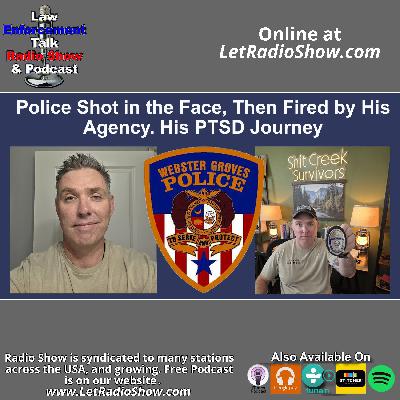
Police Shot in the Face, Then Fired by His Agency: His PTSD Journey From Trauma to Purpose. A single bullet changed Cameron McKay’s life forever. On March 12, 2015, the police officer was standing on a protest line during the Ferguson, Missouri, protests when a .40-caliber full-metal-jacket bullet struck him in the face. Supporting articles about this and much more from Law Enforcement Talk Radio Show and Podcast in platforms like Medium , Blogspot and Linkedin.
It entered through his right cheek, traveled toward the back of his head, deflected off the inside of his skull and entered his neck. The bullet finally stopped between his carotid artery and jugular vein. The Law Enforcement Talk Radio Show and Podcast social media like their Facebook , Instagram , LinkedIn , Medium and other social media platforms.
McKay survived, but the shooting was only the beginning of his fight. The Podcast is available for free on the Law Enforcement Talk Radio Show and Podcast website, also on Apple Podcasts, Spotify, YouTube, iHeartradio and most major podcast platforms. #LawEnforcementTalk #Free #Podcast #Radio
“I was trapped in time and stuck in the moment when I was shot,” McKay recalled. “Part of me couldn’t believe I was still alive. I didn’t think anyone could survive being shot in the head.”
Five Years Into His Police Career, Everything Changed
McKay had served in law enforcement for approximately five years when he was critically wounded. At the time, he was an officer with the Webster Groves Police Department in Missouri.
The man convicted of shooting McKay and another police officer during the 2015 protest was ultimately sentenced to 25 years in prison.
A criminal conviction, however, could not repair the physical and psychological damage McKay experienced.
After the shooting, his mental, physical, emotional and spiritual health fell into turmoil. Flashbacks repeatedly pulled him back to the protest line. Constant anxiety drained him during the day, while terrifying dreams followed him into the night. Police Shot in the Face, Then Fired by His Agency: His PTSD Journey From Trauma to Purpose.
“I felt like I was reliving the shooting again and again,” he said. “During the day, anxiety consumed me. At night, I dreamed about dying in horrible ways.”
The Hidden Battle With PTSD
For nine months, McKay attended psychological therapy twice a week. He took his prescribed medications, hoping they would stabilize his mood and allow him to sleep without disturbing nightmares.
He was also self-medicating with alcohol in an effort to escape the pain, even if the relief lasted only temporarily.
His experience reveals a difficult truth about post-traumatic stress: surviving the original incident does not necessarily mean the danger feels over.
For McKay, the gunshot wound was visible. The PTSD was not.
“I was trying everything I knew to quiet what was happening inside me,” he explained. “I wanted relief from the place where my mind had become trapped.” The Law Enforcement Talk Radio Show and Podcast, is available on Apple, Spotify, YouTube, and other major podcast platforms. The interview is also featured across Facebook and Instagram.
Shot in the Face, Then Fired by His Agency
Eleven months after the shooting, McKay’s law-enforcement career came to an abrupt end.
According to McKay, the Webster Groves Police Department fired him because he had not recovered enough to return to duty at 100 percent. Police Shot in the Face, Then Fired by His Agency: His PTSD Journey From Trauma to Purpose.
He had survived being shot in the face while serving as a police officer. Now, while still attempting to recover from that traumatic injury, he also faced the loss of his badge, career and professional identity.
“Police work wasn’t simply what I did, it was part of who I was,” McKay said. “Losing that career while I was still fighting to recover created another kind of trauma.”
His story, Police Shot in the Face, Then He Was Fired by Agency: His PTSD Journey, raises serious questions about how injured officers are supported after the headlines disappear. The episode is available across major platforms including their website, Apple Podcasts, Spotify, YouTube, with highlights shared across their Facebook, Instagram, and LinkedIn profiles.
What happens when an officer survives the attack but cannot meet an agency’s timeline for recovery? Who helps that officer rebuild when the uniform, career and sense of purpose are suddenly gone?
Eight Seizures in Three Hours
The crisis intensified on the first anniversary of the shooting.
McKay’s wife found him having a seizure in bed. He had never experienced a seizure before that night, but he reportedly suffered approximately eight seizures within three hours. Police Shot in the Face, Then Fired by His Agency: His PTSD Journey From Trauma to Purpose.
Each time he regained awareness, he resisted going to the hospital.
“I was ready to die,” he acknowledged.
A police officer at the scene helped him recognize that refusing medical treatment was placing an enormous emotional burden on his wife. That intervention persuaded McKay to cooperate with emergency medical personnel. The Podcast is available for free on the Law Enforcement Talk Radio Show and Podcast website, also on Apple Podcasts, Spotify, YouTube, iHeartradio and most major podcast platforms.
He was transported to a St. Louis hospital while continuing to experience seizures. His blood pressure was dangerously high, placing him at risk of suffering a stroke.
Doctors placed him in a medically induced coma and conducted a CT scan. The examination revealed posterior reversible encephalopathy syndrome, commonly known as PRES, a serious neurological condition associated with swelling and increased pressure affecting the brain. Police Shot in the Face, Then Fired by His Agency: His PTSD Journey From Trauma to Purpose.
The medical emergency brought him dangerously close to death, but something happened during his hospitalization that became a turning point.
The Moment That Started His Recovery
McKay describes an experience in the hospital that transformed the direction of his life. It helped him recognize that surviving the shooting had given him an opportunity to do more than remain trapped by what happened. The Law Enforcement Talk Radio Show and Podcast continues bringing listeners real conversations from the front lines of crime, policing, trauma, survival, and healing.
It marked the beginning of his journey from pain toward recovery, meaning and purpose.
“I eventually realized that I could not change what happened to me,” he said. “But I could decide what I was going to do with it.”
Recovery did not erase the shooting, PTSD or loss of his police career. Instead, McKay learned how to incorporate those experiences into a new life, one focused on helping other people confront their own trauma.
Turning Pain Into Purpose
Today, Cameron McKay is a PTSD recovery coach with a master’s degree in Management and Leadership. He uses his education and personal experience to help others understand trauma, mental health and the difficult process of rebuilding after life-changing events. Police Shot in the Face, Then Fired by His Agency: His PTSD Journey From Trauma to Purpose. Supporting articles about this and much more from Law Enforcement Talk Radio Show and Podcast in platforms like Medium, Blogspot and Linkedin.
He is also the host of the SH!T CREEK SURVIVORS Podcast, a show devoted to people who have found themselves facing overwhelming circumstances without an obvious way out.
The Podcast features real stories of resilience, near-death experiences, emotional survival and personal transformation. Its mission is serious, but it also makes room for support, honesty and laughter.
“We have all experienced times when we felt stuck without a paddle,” McKay said. “The goal is to share those stories, support one another and recognize that, even when life feels like a complete mess, there is still a way through.”
His guests discuss the moments that tested them, the choices that helped them survive and the lessons they discovered along the way.
A Story of Survival, PTSD and Hope
Cameron McKay’s story did not end when he was shot in the face. It did not end when his police agency fired him or when PTSD, alcohol and a life-threatening medical emergency nearly overwhelmed him.
Those moments became chapters in a much larger story.
His journey demonstrates that recovery does not mean forgetting the trauma or pretending it never happened. Recovery can mean confronting the pain, accepting help and gradually transforming survival into strength. Police Shot in the Face, Then Fired by His Agency: His PTSD Journey From Trauma to Purpose.
“The shooting will always be part of my story,” McKay said. “But it no longer gets to control how the story ends.”
Listen to this powerful episode of the Law Enforcement Talk Radio Show and Podcast as Cameron McKay discusses being shot during the Ferguson protests, losing his police career, battling PTSD, nearly dying and finding the higher purpose that ultimately changed his life.
The interview is available through the show’s website and across major platforms, including Apple, Spotify and YouTube. Follow and share the episode on Facebook and Instagram to help bring greater awareness to PTSD, injured police officers and the long road from trauma to recovery.
You can also follow the show on Facebook, Instagram, and YouTube for more true stories involving police officers, survivors, crime victims, veterans, and first responders.
Be sure to follow us on X , Instagram , Facebook, Pinterest, Linkedin and other social media platforms for the latest episodes and news.
Listeners can find the show across Apple, Spotify, YouTube, Facebook, Instagram, and other podcast and social media platforms.
Learn and get access to money saving tips and how to increase your net worth at www.LetSavings.com
For a community of like minded individuals from all over

Military Combat and Mental Health: Building the Life He Wants. After 20 years in the United States Army and multiple combat tours, retired Sergeant First Class William Alfred Stephens Jr. understands that some battles continue long after a service member returns home. The Podcast is available for free on the Law Enforcement Talk Radio Show and Podcast website, also on Apple Podcasts, Spotify, YouTube, iHeartradio and most major podcast platforms. #LawEnforcementTalk #Free #Podcast #Radio
Stephens served in artillery during wartime and experienced the relentless pressure, danger, and emotional toll of military combat. During one deployment to Iraq, he was relieved of duty following an incident in a combat zone, an experience that became part of a much larger struggle involving trauma, anger, identity, and mental health. Supporting articles about this and much more from Law Enforcement Talk Radio Show and Podcast in platforms like Medium , Blogspot and Linkedin.
Today, Stephens is an award-winning Author, speaker, mentor, and advocate who refuses to let his most difficult experiences define the rest of his life. The Law Enforcement Talk Radio Show and Podcast social media like their Facebook , Instagram , LinkedIn , Medium and other social media platforms.
He is our guest on the Law Enforcement Talk Radio Show and Podcast, where he speaks openly about Military Combat and Mental Health, his experiences in Iraq, and the ongoing process of Building the Life He Wants.
The Battles That Followed Him Home
Stephens spent two decades serving in the Army before retiring as a Sergeant First Class on October 31, 2008. His years of service included multiple combat tours and time as an artilleryman, operating in an environment where danger, destruction, and death were constant realities. Military Combat and Mental Health: Building the Life He Wants. The Law Enforcement Talk Radio Show and Podcast, is available on Apple, Spotify, YouTube, and other major podcast platforms. The interview is also featured across Facebook and Instagram.
The military trained him to fight and survive in combat. Returning home and adjusting to civilian life required a different kind of strength.
Stephens discusses how his experiences affected his mental health, relationships, emotions, and sense of purpose. He also explains how being relieved of duty in Iraq affected him personally and professionally.
His story is not simply about what happened in a combat zone. It is about what happened afterward, and how he began rebuilding his life.
Turning Pain Into Purpose
Writing became one of the tools Stephens used to confront his past, examine his emotions, and give meaning to experiences that were often difficult to explain.
He eventually transformed those struggles into books designed to help others feel less alone. His work explores PTSD, anger, loss, resilience, healing, and the difficult journey toward self-understanding.
Stephens describes himself as more than an author. He is a visionary and creator who builds stories from his own mind, body, and soul. His mission is to transform real-life struggles into powerful messages that encourage readers to fight, heal, and rise. The episode is available across major platforms including their website, Apple Podcasts, Spotify, YouTube, with highlights shared across their Facebook, Instagram, and LinkedIn profiles.
His growing collection of work includes:
The Mirror
A deeply personal collection of therapeutic poetry created for “the broken and the brave.” The book reflects the emotions of people who may struggle to express their pain aloud. Military Combat and Mental Health: Building the Life He Wants.
The Broken Mirror
An award-winning memoir that confronts PTSD, loss, anger, and resilience. The Book reportedly became an Amazon bestseller in mental health and anger-management categories.
No Filter
Released on October 31, 2025, No Filter follows Stephens’ journey from a skateboard-loving child to a military veteran, entrepreneur, and author. Written without apology or regret, the book received the Literary Titan Book Award and a Readers’ Favorite award.
Reflections Series: Legacy Edition
The Reflections Series brings three of his prominent works together in one companion collection. It connects the different stages of his life and offers readers a broader look at his experiences, struggles, growth, and evolving purpose. The Podcast is available for free on the Law Enforcement Talk Radio Show and Podcast website, also on Apple Podcasts, Spotify, YouTube, iHeartradio and most major podcast platforms.
Becoming the Voice of the Voiceless
Stephens also created Story Tyme with StevO, a platform he describes as “the Voice of the Voiceless.”
Through writing, speaking, mentoring, and storytelling, he creates a space where mental health, courage, and honesty come together. His goal is to educate, empower, and entertain while reminding people that their stories deserve to be heard. Military Combat and Mental Health: Building the Life He Wants.
“Authors are the unheard voices of the voiceless,” Stephens says.
He also uses the powerful phrase, “Mental health is a life sentence without parole,” to express how these struggles can require lifelong attention. For Stephens, healing does not mean pretending that the past never happened. It means learning how to live, grow, and build a meaningful future despite it.
Building the Life He Wants
One of the most important parts of Stephens’ story is how he achieved, and continues to maintain, the life he has worked to create.
His recovery was not a single breakthrough or easy transformation. It has been an ongoing process requiring honesty, discipline, creative expression, and a willingness to confront painful memories. The Law Enforcement Talk Radio Show and Podcast continues bringing listeners real conversations from the front lines of crime, policing, trauma, survival, and healing.
Stephens now uses the lessons from his military service, combat experiences, and mental health struggles to help others recognize that their lives can still be rewritten.
His message is especially important for veterans, first responders, trauma survivors, and anyone who feels trapped by the worst moments of their past.
A person can carry scars without surrendering the future.
A painful chapter does not have to become the entire story.
Hear William Stephens Tell His Story
William Alfred Stephens Jr. joins the Law Enforcement Talk Radio Show and Podcast for a candid conversation about his 20-year Army career, multiple combat tours, the incident that led to him being relieved of duty in Iraq, and the mental health challenges that followed. Military Combat and Mental Health: Building the Life He Wants. Supporting articles about this and much more from Law Enforcement Talk Radio Show and Podcast in platforms like Medium, Blogspot and Linkedin.
Most importantly, he reveals what helped him move forward and how he continues Building the Life He Wants.
Listen to the Free Podcast on our website and on major platforms, including Apple, Spotify, and iHeartRadio.
Follow the Law Enforcement Talk Radio Show on Facebook, Instagram, and YouTube for more true stories about military service, trauma, survival, recovery, and second chances.
William Stephens’ journey proves that even when the mirror appears broken, the reflection can still reveal strength, purpose, and the possibility of a new life.
To learn more about him and his books, visit his website.
You can also follow the show on Facebook, Instagram, and YouTube for more true stories involving police officers, survivors, crime victims, veterans, and first responders.
Be sure to check out our website .
Be sure to follow us on X , Instagram , Facebook, Pinterest, Linkedin and other social media platforms for the latest episodes and news.
Listeners can find the show across Apple, Spotify, YouTube, Facebook, Instagram, and other podcast and social media platforms.
Learn and get access to money saving tips and how to increase your net worth at www.LetSavings.com
For a community of like minded individuals from all over the planet that want to improve their lives, relationships and business. Learn what they need, and develop the life that they’ve always wanted.
We host weekly rooms on the Clubhouse Drop In Social Audio App. The App and Your Confident Life rooms are free of charge. You can get more information about Clubhouse and Your Confident Life for free here.
Download the Free Ebook about ways and tips to improve your health. You can get the ebook for free at www.LetHealthy.com
Listen to the Law Enforcement Talk Radio Show and Podcast on their website, Facebook, Instagram, YouTube, Apple Podcasts, Spotify, iHeartRadio, and most major podcast platforms.
Get the Free Clubhouse App, it is Drop In Social Audio. Think of it as your own talk radio show on your phone, and best of all it is free. Be sure to look for me and follow me, that’s John J Wiley or @letradioshow you can do all that here.
The Law Enforcement Talk Radio Show and Podcast social media like their Facebook , Instagram , LinkedIn , Medium and other social media platforms.
You can contact John J. “Jay” Wiley by email at [email protected] , or learn more about him on their website .
Find a wide variety of great podcasts online at The Podcast Zone Facebook Page , look for the one with the bright green logo.
Listen to the free Podcast on the Law Enforcement Talk Radio Show website and through major platforms, including Apple Podcasts and Spotify.
Listen to the Show, share the episode, and follow the latest Radio, Podcast, and News content from the Law Enforcement Talk Radio Show and Podcast.
Military Combat and Mental Health: Building the Life He Wants.
Attributions
His website
Bookshop.org
Facebook
Facebook Group Hosted by Simplecast, an AdsWizz company. See pcm.adswizz.com for information about our collection and use of personal data for advertising.
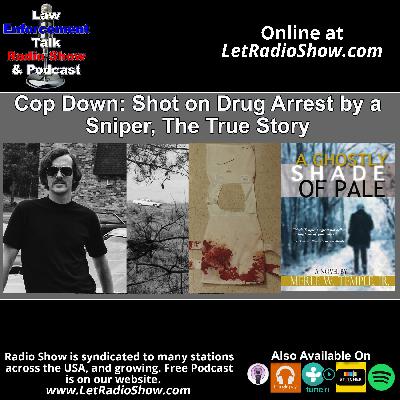
Cop Down, Shot on Drug Arrest by a Sniper, The True Story. A planned drug arrest in Mississippi suddenly erupted into a deadly ambush. Gunfire rained down from a sniper positioned on a hill. One police officer was struck three times and barely survived. An armed drug dealer was also shot. For Merle Temple and his fellow narcotics officers, it became a brutal reminder of the risk and danger they faced during America’s first war on drugs. Supporting articles about this and much more from Law Enforcement Talk Radio Show and Podcast in platforms like Medium , Blogspot and Linkedin.
It was the late 1970s, a time before the bulletproof vest became standard equipment in police work. The Law Enforcement Talk Radio Show and Podcast social media like their Facebook , Instagram , LinkedIn , Medium and other social media platforms.
Temple, a former captain with the Mississippi Bureau of Narcotics, shares his remarkable story on the Law Enforcement Talk Radio Show and Podcast. His experiences later inspired multiple novels filled with crime, corruption, faith, betrayal, and survival. The Podcast is available for free on the Law Enforcement Talk Radio Show and Podcast website, also on Apple Podcasts, Spotify, YouTube, iHeartradio and most major podcast platforms. #LawEnforcementTalk #Free #Podcast #Radio
A Drug Arrest Turned Into a Sniper Ambush
Temple and his team were preparing for a buy-bust operation targeting suspected drug dealers. They knew the arrest would be dangerous, but they had no idea that the suspects had allegedly positioned a sniper above them.
Just before leaving for the operation, Temple experienced an overwhelming feeling that he needed to turn around.
“God scared me to death,” Temple said. “He commanded me to go back and get the bulletproof vests.”
Temple initially resisted the warning. Body armor was not commonly worn by police officers in 1976, and his unit had only two vests available. Still, he returned and retrieved them.
That decision may have saved lives.
“They let it get away from them,” Temple recalled about the attempted arrest. “The drug dealers had a sniper with a rifle up on a hill, and he rained fire down on us. It was a terrible day.”
The scene exploded into chaos.
A police officer was shot three times and came close to death. A suspect was also struck by gunfire. The heavy protective vests Temple had gone back to retrieve suddenly became critically important. Cop Down, Shot on Drug Arrest by a Sniper, The True Story. The Law Enforcement Talk Radio Show and Podcast, is available on Apple, Spotify, YouTube, and other major podcast platforms. The interview is also featured across Facebook and Instagram.
It was a real-life Cop Down, Shot on Drug Arrest by a Sniper story, one that revealed the extraordinary dangers faced by early narcotics officers.
Before Bulletproof Vests Became Standard Police Equipment
Modern officers routinely recognize the importance of body armor, but police equipment was much different during the 1970s. Temple’s unit had only two protective vests, and wearing one was far from commonplace.
Narcotics agents frequently worked alone, without the tactical teams, communications technology, surveillance equipment, and immediate backup available to many officers today.
“In those days, the unit was small,” Temple said. “There really wasn’t any backup, you were on your own.”
That isolation increased the risk of every undercover meeting, drug purchase, vehicle stop, and arrest. Agents could find themselves surrounded by armed suspects miles away from help.
Temple repeatedly faced that reality during his career.
From FBI Fingerprint Technician to Undercover Drug Agent
Before entering narcotics enforcement, Temple worked as a fingerprint technician for the FBI. He later served as a deputy sheriff and became one of Mississippi’s earliest designated narcotics officers.
Temple attended Ole Miss and finished school around the time President Richard Nixon was launching the national “war on drugs.” He joined the newly formed Mississippi Bureau of Narcotics and spent much of his career working undercover.
“It was exciting,” he said. “I didn’t know what I was getting into.”
Temple eventually became an area commander and captain with the agency. His assignments placed him inside a violent criminal world where exposure could mean kidnapping, torture, or death.
A 1989 profile in The Augusta Chronicle reported that Temple had been held hostage by two suspects while working undercover. It also described his survival of a sniper ambush carried out by cocaine dealers. Cop Down, Shot on Drug Arrest by a Sniper, The True Story. The episode is available across major platforms including their website, Apple Podcasts, Spotify, YouTube, with highlights shared across their Facebook, Instagram, and LinkedIn profiles.
His life often seemed more unbelievable than anything an author could invent.
A Gun to His Head and a Shotgun Against His Stomach
One of Temple’s most terrifying undercover encounters occurred near Tylertown, Mississippi.
While posing as part of the drug world, he allowed two suspected dealers to get into his vehicle. They directed him into a remote area and eventually took him to a small shack built on stilts.
There, his cover, and his life, were placed in immediate danger.
One man reportedly pressed a pistol against Temple’s head. The other held a shotgun against his stomach.
“Images of my life really did flash past my mind,” Temple said.
He knew he could be killed at any moment. There was no nearby team waiting to rescue him and no guarantee that anyone would find him if he disappeared.
Temple later acknowledged that youth sometimes made him feel invulnerable.
He took chances and made mistakes that, by his own admission, he should not have survived.
Drug Dealers Allegedly Planned Where to Bury Him
The threats against Temple did not end with undercover operations.
According to Temple, drug dealers once discussed where they would bury his body after hired killers were supposed to murder him. His career exposed him to criminals who were willing to do far more than threaten an officer to protect their operations. Cop Down, Shot on Drug Arrest by a Sniper, The True Story. The Podcast is available for free on the Law Enforcement Talk Radio Show and Podcast website, also on Apple Podcasts, Spotify, YouTube, iHeartradio and most major podcast platforms.
Yet Temple continued his work.
“Work was a crusade in those days,” he said.
That crusade eventually collided with another powerful force: politics.
Temple said corrupt political figures attempted to weaken the narcotics agency and install their own person inside the organization. The controversy was leaked to the Clarion-Ledger and became headline news.
He also claimed that witness tampering occurred and that political figures were searching for a way to frame him.
“It was politics that caused me to leave,” Temple said. “There were some corrupt politicians who wanted to clip our wings.”
When Truth Became the Foundation for Fiction
After leaving law enforcement, Temple transformed his experiences into the Michael Parker book series.
Although the novels are presented as fiction, they draw heavily from Temple’s career as a deputy sheriff, undercover agent, narcotics captain, corporate manager, political campaign chairman, and Christian ministry founder.
Merle Temple is the author of:
Deputy: Once Upon a Time in Mississippi
Blood on the Ground
A Ghostly Shade of Pale
A Rented World
The Redeemed: A Leap of Faith
Resurrection: Home Before Dark
The stories explore violent crime, political corruption, moral conflict, redemption, and the intersection of government, business, and organized criminal activity.
Some of Temple’s real experiences were reportedly so shocking that a district attorney told him audiences would consider them too unbelievable for a movie. Temple’s response was simple: they actually happened. Cop Down, Shot on Drug Arrest by a Sniper, The True Story. The Law Enforcement Talk Radio Show and Podcast continues bringing listeners real conversations from the front lines of crime, policing, trauma, survival, and healing.
His life gives new meaning to the expression, “Truth is stranger than fiction.”
“A Ghostly Shade of Pale” and the Michael Parker Series
Among Temple’s most recognized works is the book A Ghostly Shade of Pale. According to Temple’s biography, it became the all-time bestselling novel at the Barnes & Noble store in Tupelo, Mississippi.
His books have been used in middle school, high school, and college classrooms. They have also reached readers in church libraries, shelters, and prisons across numerous states.
Temple signed books for members of the casts of Criminal Minds and Major Crimes in Hollywood. His work was also optioned for a proposed television series based on his extraordinary life.
His story extends far beyond undercover police work.
Temple founded a highly successful Christian ministry inside the Federal Bureau of Prisons. He served as Mississippi’s state criminal justice chairman for Ronald Reagan and later became Georgia chairman of the Reagan Legacy Project.
The Officer, Author, and Survivor Behind the Story
Merle Temple’s journey is filled with moments that sound as though they were created for a crime thriller: undercover drug buys, hostage situations, assassination plots, sniper fire, political corruption, and unexpected acts of faith.
But behind those stories was a real officer confronting real danger.
The sniper ambush remains one of the most powerful chapters of his life. His last-minute decision to retrieve two bulletproof vests demonstrated how one choice can separate survival from tragedy. Cop Down, Shot on Drug Arrest by a Sniper, The True Story. Supporting articles about this and much more from Law Enforcement Talk Radio Show and Podcast in platforms like Medium, Blogspot and Linkedin.
The officer struck three times survived, but the attack exposed the enormous risk Temple and his team faced wh

Her Health Challenges And Trauma Led To Unexpected Success. At 36 years old, Judy B-Armstrong expected to continue building her career as a registered nurse. She had invested years in caring for others, developing her medical knowledge, and creating a future for her family. The Podcast is available for free on the Law Enforcement Talk Radio Show and Podcast website, also on Apple Podcasts, Spotify, YouTube, iHeartradio and most major podcast platforms. #LawEnforcementTalk #Free #Podcast #Radio
Then her health began to fail. Supporting articles about this and much more from Law Enforcement Talk Radio Show and Podcast in platforms like Medium , Blogspot and Linkedin.
The symptoms were severe, her physical limitations became overwhelming, and she eventually received a life-changing diagnosis: lupus. The chronic autoimmune disease forced Judy to leave nursing and brought her professional life to an unexpected stop. The Law Enforcement Talk Radio Show and Podcast social media like their Facebook , Instagram , LinkedIn , Medium and other social media platforms.
But her story did not end there.
Judy’s years of illness, uncertainty, and personal trauma eventually led her toward remarkable and unexpected success. She went from being unable to work to becoming the CEO of an ambulatory surgery center. She later built a career in real estate and discovered a new calling as an inspirational Christian speaker.
Judy B-Armstrong is the guest on the Law Enforcement Talk Radio Show and Podcast. During the interview, she talks about her health challenges, the emotional impact of losing her nursing career, and the faith that helped her rebuild her life.
Her powerful message is clear: “Never give up, because God is still writing your story.”
A Lupus Diagnosis Changed Everything
Judy was working as a registered nurse when her health began to deteriorate. At first, she did not have a clear explanation for what was happening to her body. Her Health Challenges And Trauma Led To Unexpected Success. The Law Enforcement Talk Radio Show and Podcast, is available on Apple, Spotify, YouTube, and other major podcast platforms. The interview is also featured across Facebook and Instagram.
As her symptoms intensified, it became increasingly difficult for her to perform the physically demanding work required in nursing. Eventually, doctors diagnosed her with lupus.
Lupus is a chronic autoimmune disease in which the immune system attacks healthy tissue. Its symptoms can include extreme fatigue, joint pain, inflammation, and damage to different parts of the body. The severity of the condition varies, but for Judy, the physical limitations became impossible to ignore.
She could no longer continue working as a nurse.
Losing a career can affect far more than a person’s income. It can also disrupt their identity, confidence, independence, and sense of purpose. Judy had spent years helping patients, but she suddenly found herself facing an illness that she could not simply treat or work through.
“The lupus diagnosis ended my nursing career, but it did not end my ability to make a difference,” Judy explains.
At the time, however, she could not see where the journey would eventually lead.
Forced Into an Unexpected Season of Life
Judy became a stay-at-home mother and remained out of the workforce for nearly a decade.
What began as a medical necessity turned into a long season of waiting. Her body had imposed limits that she had never planned for, and there was no guarantee that she would ever be able to return to a professional career.
Those years required patience, resilience, and faith.
Rather than completely disconnecting from her profession, Judy continued following developments in nursing and healthcare. She stayed informed about the latest nursing News and maintained an interest in the industry that had once defined her career. Her Health Challenges And Trauma Led To Unexpected Success. The episode is available across major platforms including their website, Apple Podcasts, Spotify, YouTube, with highlights shared across their Facebook, Instagram, and LinkedIn profiles.
She also began consuming books, recordings, and presentations from some of the leading motivational speakers of that era. Their lessons about perseverance, attitude, purpose, and personal growth helped her protect her mindset during an extremely difficult period.
Long before Judy stepped onto a stage as a motivational speaker, she was learning how words could give people hope.
“Sometimes the waiting season is not wasted time,” she says. “It may be the season when God is preparing you for something you cannot see yet.”
Her body had slowed her down, but her mind remained active. She continued learning, listening, and believing that her life still had meaning.
From Unemployment to CEO
After nearly 10 years away from the workforce, Judy received an opportunity that few people could have predicted.
She was hired as the CEO of an ambulatory outpatient surgery center.
The transition was extraordinary. Judy went from being unable to work because of lupus to assuming responsibility for leading a healthcare organization.
Her nursing experience gave her an understanding of patient care and the medical profession. Her years of studying motivational leaders helped strengthen her communication and leadership abilities. Her personal experience with illness also gave her a perspective that could not be learned from a textbook. Her Health Challenges And Trauma Led To Unexpected Success. The Podcast is available for free on the Law Enforcement Talk Radio Show and Podcast website, also on Apple Podcasts, Spotify, YouTube, iHeartradio and most major podcast platforms.
She understood healthcare from both sides, as a nurse and as a patient.
“Every experience had taught me something,” Judy says. “Even the painful chapters were preparing me for the next opportunity.”
Her return to healthcare did not look anything like the future she had originally imagined. She did not go back to bedside nursing. Instead, she returned as an executive responsible for helping guide an entire surgical center.
It was an unexpected form of success born from a season that once appeared to hold little promise.
Finding Success and Starting Again
Judy built a successful career as the CEO of the ambulatory surgery center, but she eventually felt called toward another change.
She left healthcare administration and entered real estate sales.
Once again, Judy had to rebuild. Real estate required different skills, including marketing, networking, sales, negotiation, and the ability to create trust with clients. Her experience as a nurse and executive helped her communicate effectively, while her personal story enabled her to connect with people facing major life transitions.
Today, Judy is a Realtor based in San Luis Obispo County, California. She understands that buying or selling a home is rarely just a financial transaction. It can represent a new beginning, a difficult ending, or an important turning point in someone’s life. Her Health Challenges And Trauma Led To Unexpected Success. The Law Enforcement Talk Radio Show and Podcast continues bringing listeners real conversations from the front lines of crime, policing, trauma, survival, and healing.
Her journey from nursing to healthcare leadership and then real estate demonstrates that a career does not have to follow a straight line to be meaningful.
“Starting over does not mean that everything before it was a failure,” Judy says. “It means you are carrying those lessons into a new chapter.”
Turning Trials Into Testimonies
Judy’s experiences eventually led her to motivational and inspirational speaking.
As a Christian speaker, she now shares a story marked by illness, heartbreak, resilience, humor, grace, and faith. She speaks at retreats, church conferences, congregations, banquets, networking events, community gatherings, and special-interest groups.
Her message centers on trusting God through life’s storms and refusing to believe that difficult circumstances represent the end of the story.
“God’s faithfulness can turn trials into testimonies,” Judy says. “What feels like an ending may actually become the beginning of something you never expected.”
Judy does not speak about resilience as an abstract concept. She has experienced the fear of failing health, the grief of losing a career, the frustration of physical limitations, and the uncertainty of spending years outside the workforce. Her Health Challenges And Trauma Led To Unexpected Success. Supporting articles about this and much more from Law Enforcement Talk Radio Show and Podcast in platforms like Medium , Blogspot and Linkedin.
She also understands what it means to return, rebuild, and take another risk.
Her presentations combine faith, authenticity, transparency, and humor. She encourages audiences to trust God during periods of waiting, believe in His timing, and move forward with renewed strength.
The Trauma of Losing a Career
A forced career change can create a form of grief that others may not recognize.
For Judy, nursing was more than a job. It represented her education, service, professional identity, and ability to care for people. Lupus took that career away before she was ready to leave it.
The resulting trauma could have convinced her that her most productive years were behind her. Instead, it eventually became part of the story she now uses to encourage others.
Judy’s experience offers important lessons for anyone facing chronic illness, an unexpected career change, or a prolonged period of uncertainty:
A medical diagnosis may change a person’s plans without eliminating their purpose.
Time away from work can still be used for learning and personal growth.
Skills developed in one career can create opportunities in another.
Starting again is not a sign of failure.
Success may arrive in a form completely different from the one originally imagined.
Her journey shows that limitations can redirect a life without

Comments

Download from Google Play

Download from App Store
 United States