


Le Podcast on Emerging Leadership
Subscribed: 5Played: 110
Subscribe

© Alexis Monville
Description
Leadership isn’t just about titles—it’s about how we show up, connect, and create impact together. In this podcast, Alexis Monville explores how leadership can emerge in any team or organization. Through conversations with thinkers, doers, and change-makers, you’ll discover stories, insights, and practical practices that help people take responsibility, collaborate with purpose, and deliver meaningful results. Join us to learn how leadership can truly emerge—and how you can make it happen where you are.
54 Episodes
Reverse
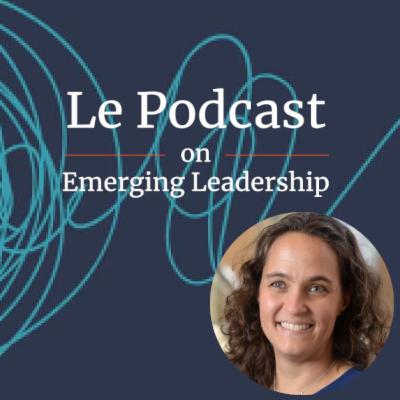
In the latest episode of Le Podcast on Emerging Leadership, Teresa Torres, renowned product discovery coach and author of the influential book Continuous Discovery Habits, joined me for an insightful discussion about embedding customer discovery into daily product routines.Teresa’s journey to continuous discovery was driven by the realization that product teams often lack an ongoing, sustainable approach to understanding their customers.Find the transcript and the references in the companion blog post: https://blog-alexis.monville.com/en/2025/06/29/embracing-continuous-discovery-a-conversation-with-teresa-torres/
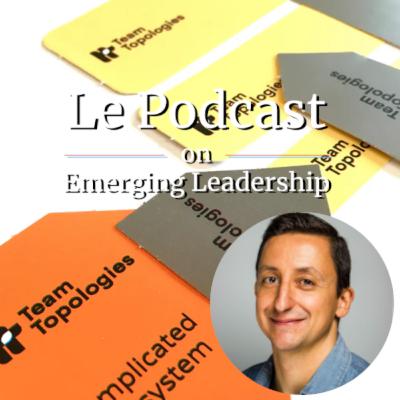
In this episode of Le Podcast on Emerging Leadership, I had the privilege to speak with Manuel Pais, co-author of the influential book Team Topologies. We examined how modern organizations can refine their structures to optimize both value delivery and employee satisfaction.Find the key findings, the references, and the transcript of the episode in the companion blog post: https://blog-alexis.monville.com/en/2025/06/02/unlocking-flow-and-effectiveness-a-conversation-with-manuel-pais-co-author-of-team-topologies/

In the latest episode of Le Podcast on Emerging Leadership, I welcome back Gojko Adzic, renowned software development expert and author of Lizard Optimization. Gojko dives into an engaging discussion about his book, offering practical ways to identify hidden opportunities by paying close attention to unexpected user behavior—what he calls "lizard optimization."Find the key learnings, the transcript and more in the companion blog post: https://blog-alexis.monville.com/en/2024/10/29/optimizing-for-the-unexpected-insights-from-gojko-adzic-on-lizard-optimization/

We’re thrilled to have Héloïse Rozès and Nikolai Fomm, co-founders of Corma, on the latest episode of Le Podcast on Emerging Leadership!Héloïse and Nikolai share their journey as first-time founders, tackling everything from adaptive communication, setting a people-first culture, to the power of prioritization in a startup environment. Here’s a sneak peek of what you’ll learn:Navigating communication with diverse stakeholdersLeading with empathy and example 🌍Creating a focused and value-driven cultureInsights on managing the "human" side of scaling technology 🚀Whether you’re an emerging leader or curious about startup life, this episode is packed with actionable advice!Find the transcript and the references in the companion blog post: https://blog-alexis.monville.com/en/2024/10/13/leadership-as-first-time-founders-with-heloise-rozes-and-nikolai-fomm/

Sebastian Cao joins Le Podcast on Emerging Leadership to share insights from his recent Stanford course on user experience, blending technology with human insight. Having worked with giants like Red Hat and Tesla, Sebastian reveals a refreshing approach to AI – one where human intuition and empathy drive meaningful UX.🎙 In This Episode, Learn About:Empowering human judgment alongside AI's predictive power 🤝Building trust through transparent, user-friendly tech 🔍Augmentation over automation: How empathy bridges the gap 🛠️Why open-source solutions are key to ethical AI ⚙️If you’re interested in tech, UX, or leadership, this episode is a must-listen! 🎧Find the transcript and more in the companion blog posthttps://blog-alexis.monville.com/en/2024/10/07/the-future-of-user-experience-with-sebastian-cao/

In this episode of Le Podcast on Emerging Leadership, Russ Laraway discusses his intentional approach to everything. He details his career journey through roles in tech, authorship, and more, emphasizing his intentionality in balancing personal and professional life. Russ also shares insights from his book 'When They Win, You Win,' stressing that managerial skills haven't improved in 30 years despite plentiful resources due to overwhelming advice, lack of cohesive systems, and unmeasured effectiveness. He elaborates on his developed model for impactful leadership that centers on direction, coaching, and career development through structured conversations. Moreover, Russ reflects on his life choices to prioritize family over career, underscoring the importance of intentional and disciplined prioritization in leadership and personal life.Find the references and the transcript in the companion blog post: https://blog-alexis.monville.com/en/2024/07/27/redefining-leadership-a-conversation-with-russ-laraway/

In the latest episode of Le Podcast on Emerging Leadership, we dive deep into the world of agile leadership with Jeffrey Fredrick, Vice President of Engineering at Ion Analytics and co-author of the book "Agile Conversations." Jeffrey shares his rich experience in the tech industry, shedding light on how agile conversations can revolutionize team dynamics and foster innovation.Find the summary, the transcripts and the references in the companion blog post: https://blog-alexis.monville.com/en/2024/06/30/exploring-agile-conversations-with-jeffrey-fredrick/

In the latest episode of Le Podcast on Emerging Leadership, I had the privilege of speaking with Maria Bracho, the Chief Technology Officer for LATAM at Red Hat. With over 20 years of experience directing strategy and delivering innovative solutions across multiple industries, Maria shares her invaluable insights on leadership, open source, and building high-performing teams.Find the transcript and the references in the companion blog post!

In this episode of "Le Podcast on Emerging Leadership," we explore the intricate balance of leadership and technology with Tamar Bercovici, VP of Engineering at Box. Tamar shares her journey from a software engineer to a leadership role, where she focuses on building robust teams and innovative technologies at Box. She delves into her transition into management, her passion for tech and leadership, and the challenges of leading through significant change. Discover how Tamar steers her team towards continuous innovation, handling the complexities of large-scale infrastructure and navigating leadership in the tech industry.Find the transcript and more in the companion blog post:https://blog-alexis.monville.com/en/2024/05/03/engineering-leadership-at-scale-navigating-complexity-and-change-with-tamar-bercovici/

Join us in exploring the art of tech leadership with Bruce Wang of Netflix on "Le Podcast on Emerging Leadership." Uncover Bruce's strategies for fostering a trusting team, pursuing excellence, and ensuring customer satisfaction. Learn about his transition from hands-on development to impactful leadership, and how he navigates the challenges of building and growing engineering teams. This episode is a must-listen for anyone interested in the dynamics of tech leadership and team development.Find the transcript and the references in the companion blog post: https://blog-alexis.monville.com/en/2024/03/30/building-and-sustaining-excellence-with-bruce-wang-netflix/

In this episode of "Le Podcast on Emerging Leadership," I sit down with Tim Beattie and Bella Bardswell, the innovative minds behind Stellafai, to discuss the intricacies of leadership, collaboration, and the transformative power of setting and achieving measurable outcomes. Tim and Bella share their unique journeys, the challenges they've faced, and the lessons they've learned in fostering a culture of continuous improvement and inclusivity. They delve into how Stellafai leverages AI to enhance team collaboration and offer practical advice for new leaders. This conversation is a must-listen for anyone looking to elevate their leadership skills and organizational impact. Tune in to uncover the secrets to creating a thriving, outcome-focused team.Find the transcript and the references in the companion blog post: https://blog-alexis.monville.com/en/2024/02/06/leading-with-outcomes-insights-from-stellafais-co-founders/

 1
1Join us as Michael Galloway, a tech industry luminary with a rich history at Yahoo, Netflix, and now HashiCorp, delves into the intricacies of cloud infrastructure. Discover his unique journey, the evolution of technology leadership, and how understanding the core of tech is key to solving complex challenges.Find the transcript and the references in the companion blog post: https://blog-alexis.monville.com/en/2024/01/24/navigating-the-evolution-of-cloud-infrastructure-insights-from-michael-galloway/

In this captivating episode of Le Podcast on Emerging Leadership, we delve into the harmonious blend of music and leadership with the talented Noah Max. Noah, a creative artist, composer, and conductor, shares his unique perspective on leading in the classical music world. He discusses the challenges and joys of composing, the importance of connecting people with the arts, and the parallels between conducting an orchestra and leading a team.Join us as we explore the mysterious and magical world of music leadership, and discover how Noah's insights can inspire leaders in any field. Tune in now! 🎧You can find the transcript and references in the companion blog post!https://blog-alexis.monville.com/en/2023/12/16/the-conductors-magic-wand-transforming-leadership-with-noah-max/#Leadership #Music #Podcast #NoahMax #EmergingLeadership

Dive into the world of AI and leadership with Ioanna Mantzouridou, Co-founder & CEO of Dextego, on our latest episode of Le Podcast on Emerging Leadership. Discover Ioanna's journey from HR to the forefront of AI coaching, her unique approach to talent development, and her vision for democratizing access to soft skills training. Tune in for an enlightening conversation about reshaping leadership in the age of AI. Find the transcript and more in the companion post.#LeadershipDevelopment #AI #EmergingLeaders #Podcast

As we navigate the dynamic world of leadership, it's crucial to uncover the human essence behind the title. This week on Le Podcast on Emerging Leadership, I had the pleasure of delving into this subject with Ali Schultz, co-founder of Reboot.io. Celebrating a decade of transformative coaching and organizational development, Ali brings a wealth of insight to our understanding of what it truly means to lead.In a candid exchange, Ali takes us through Reboot.io's genesis, revealing the belief that better humans forge better leaders. This philosophy underpins their approach, transcending technical skills to embrace the individual's personal journey toward self-improvement. It's not just about leadership; it's about personal evolution.The conversation delves into the challenges of establishing a brand distinct from its founders, the unique approach to coaching that values diversity in style and experience, and the importance of creating a culture where every member can thrive. As Reboot.io stands on the cusp of its 10th anniversary, Ali reflects on milestones like their pioneering CEO bootcamps and the launch of an influential podcast.What resonates deeply is the discussion on emerging leadership. Ali underscores the symbiotic relationship between personal growth and professional skill enhancement.Listen to the full episode to explore the depths of leadership, not just as a skill but as a journey of becoming.Find the transcript and more in the companion blog post.

Lisette Sutherland is an expert in remote collaboration, not just remote work. With a rich international background, Lisette brings a unique blend of experiences to the table. She's lived in Germany, the United States, and now calls the Netherlands home. Lisette is also the host of the Collaboration Superpowers podcast, where she explores the nuances of remote work with experts from around the globe.🎙️ Why Listen?Beyond Remote Work: Discover why Lisette focuses on remote collaboration, not just remote work.Global Mindset: Learn how Lisette's international background shapes her approach to remote work and cultural nuances in communication.Human-Centric Challenges: Understand why the real challenges in remote work today are more about navigating personalities and conflicts than technology.Team Dynamics: Hear real-life examples of how differing work rhythms and personalities can disrupt a team's flow.Innovative Work Models: Get insights into how companies like WordPress have eliminated email and how a German company successfully runs hybrid PI planning sessions across three time zones.Practical Tips: From creating personal user manuals to team agreements, learn actionable strategies to make remote work effective.👉 Find the transcript and the references in the companion blog post!

In this enlightening episode, Anne Caron, a renowned People Strategy consultant with a decade of experience at Google, shares invaluable insights on sculpting scalable organizations, particularly for startups.Anne breaks down:The growth trajectory of startups into five pivotal stages, drawing insightful parallels with child development.The true essence of company culture, emphasizing the four foundational pillars: purpose, mission, vision, and values. Discover how the actions of founders play a significant role in shaping this culture.The art of performance management, highlighting the importance of lean systems that foster empowerment, autonomy, and initiative.Drawing from her book, "From Zero to 1,000: The Organizational Playbook for Startups", Anne provides a roadmap for startups to navigate their growth journey effectively. Tune in for a deep dive into the world of startups, culture, and performance.Find the transcript and the references in the companion blog post:https://blog-alexis.monville.com/en/2023/08/23/from-zero-to-1000-insights-from-anne-caron/

In this episode of Le Podcast on Emerging Leadership, we speak with Radhika Dutt, the author of 'Radical Product Thinking: The New Mindset for Innovating Smarter.' Radhika shares her unique approach to shaping culture for innovation, based on her Radical Product Thinking framework. We delve into the importance of a shared sense of purpose, autonomy, and psychological safety in teams, and explore a model for understanding and improving organizational culture. Listen in for Radhika's insightful take on creating an environment where employees can do their best work, leading to more successful products and a better world.Find the transcript and the references in the companion blog posts: https://blog-alexis.monville.com/en/2023/06/12/radical-product-thinking-a-conversation-with-radhika-dutt/

In this episode, host Alexis Monville interviews Daniel Riek, who works on special projects and strategy with the CTO at Red Hat, on the future of open source on the cloud. Daniel explains that open source needs to expand beyond just code in a repository and include operationalizing the code as a service. He also discusses the importance of decentralization in countering the effect of centralization and the need for open source project leaders to understand the synergy between their business goals and open source principles. The episode provides valuable insights for emerging leaders in the tech industry and beyond.Find the transcript and the references in the companion blog post: https://blog-alexis.monville.com/en/2023/06/05/how-the-cloud-threatens-open-source-and-what-we-can-do-about-it-a-conversation-with-daniel-riek/

Over the last years, people have moved from innovating in secret labs to innovating in the open, and open-source became the way to define industry standards. Today, I am pleased to have Joseph Jacks on the podcast to explore the open-source world. Joseph is the founder and General Partner of OSS Capital a fund that exclusively focuses on early-stage commercial open source companies.In the episode, we discussed:Why open source as a focus for investment,Why invest in projects and not teams,Commercial open source companies are more capital efficient,More and more people contributing to open source, extrinsic and intrinsic motivations,The one leader's trait that really matters,And so much more!Find the transcript in the companion blog post!

Comments

Download from Google Play

Download from App Store
 United States