


 Claim Ownership
Leadership Tips
Subscribed: 10Played: 24
Subscribe

© Copyright Rick Upchuch
Description
These leadership tips are short insights into how to lead more effectively in every part of your life. By sharing them with you I hope to give you a shortcut around acquiring experience the hard way. Time-proven and relevant, if you pay attention you will learn something.
129 Episodes
Reverse

Have you ever been told something you wanted to do was impossible?Maybe someone told you that you weren’t qualified. Maybe they told you that you didn’t have the education, the money, the connections, or the experience. Or perhaps the message was even more personal: you’re just not good enough.Most of us have heard those words in one form or another.The question is not whether barriers will appear in our lives. They will. The real question is this: what do we do when we encounter them?

For many people, this future feels unsettling. There is fear, anxiety, and even grief wrapped up in the conversation. Some see artificial intelligence as a threat to their jobs. Others see it as a threat to their very way of life. And to be honest, that fear is understandable. Change has a way of exposing our deepest uncertainties.There is no question that artificial intelligence is changing our world. What’s easy to miss is just how deeply it has already shaped our daily lives. In fact, AI has influenced us far more than most of us realize—and we often take it completely for granted.You can contact me at rlupchurch@gmail.com

In this episode I’m going to do something different. I brought together several sources and loaded them in to Google Notebook LM. In case you haven’t heard of NotebookLM before let me take a minute to explain. Notebook LM is an artificial intelligence, but instead of being build on the internet or millions of texts, it only uses the resources you add to each notebook. I found this an incredible tool. Not only can upload a variety of different document types, but it will generate all kinds of material from those documents, including a video, a mindmap, flash cards, infographic, slide deck, and more. One of the features I really like is the podcast generation. So I’ve asked it prepare a podcast from the materials I uploaded on the topic AI, Accountability, and Human Integrity. Let me know what you think.This episode includes AI-generated content.

This eposide describes what happens behind the curtain when you ask AI a question. LLMs provide the foundation for pattern matching which makes it seem like AI is thinking. Thinking that is true would be a mistake.

I’m just finishing up the second course in a four-course graduate certificate in artificial intelligence. This class is called Generative AI for Productivity, and our textbook is Co-Intelligence by Ethan Mollick.It’s been a fascinating course. I’ve learned things that genuinely help me understand how AI works and how it can be used—wisely—in the workplace. Early in his book, Mollick outlines four key principles about artificial intelligence. I thought it would be helpful to share those with you, because they offer a clear, grounded perspective on what AI can—and can’t—do for us.

This is one off the basic principles of life. Everything rises and falls on Leadership. That starts with a hard look at ourselves.
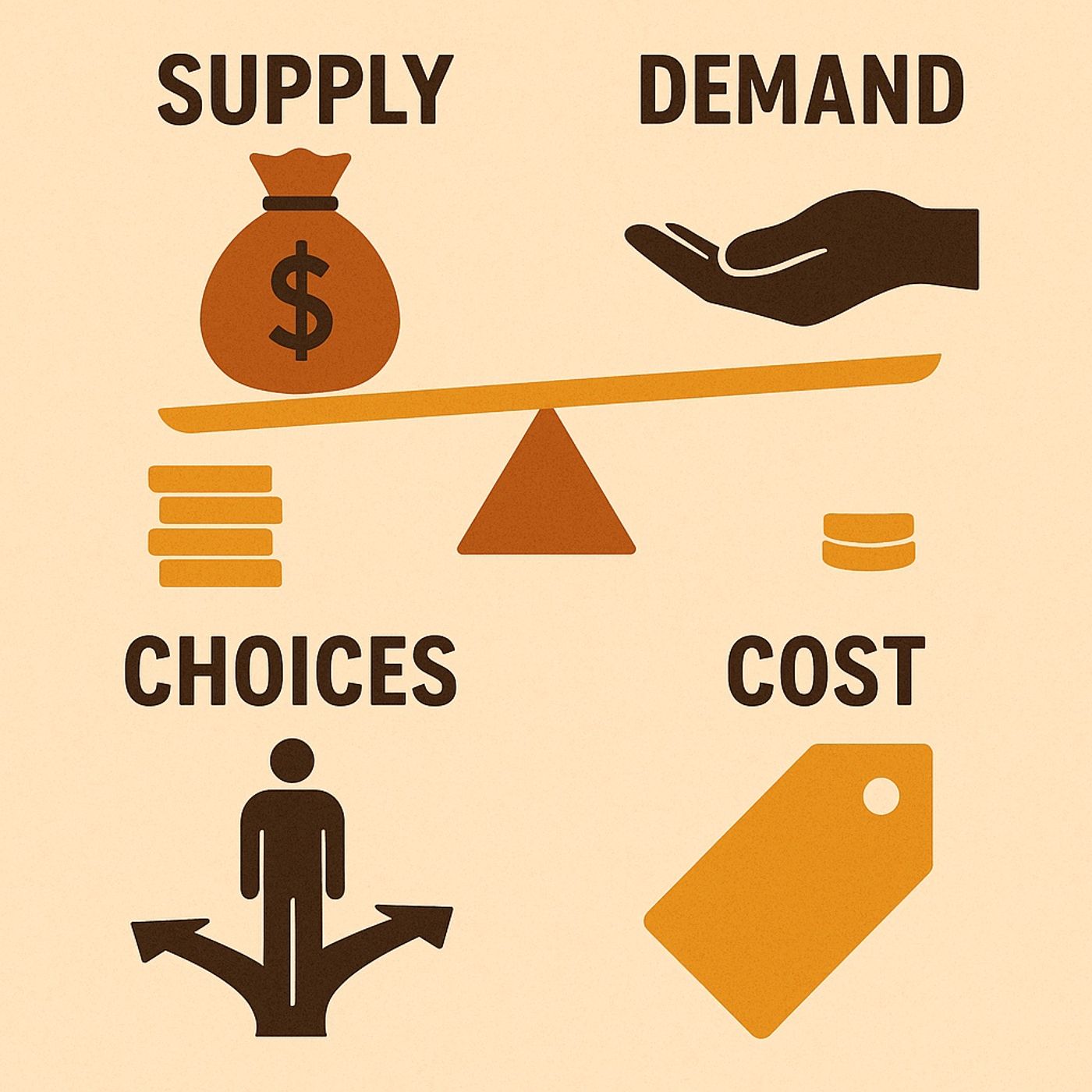
Pretty much everything in life comes with a price. That’s a truth best learned early, and it’s one that will serve you well as you navigate the challenges of leadership and life. Proverbs 21:25 reminds us of this reality: “Despite their desires, the lazy will come to ruin, for their hands refuse to work.” This verse speaks to a fundamental principle of life: if you don’t work, you don’t earn. Without wages, you can’t buy food, pay rent, or meet your basic needs. It’s a simple equation, but one that underscores a much larger truth about how the world operates.
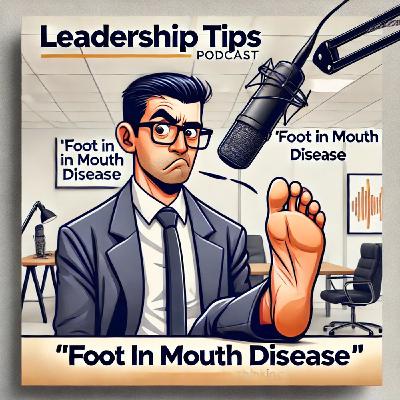
The book of James in the Bible, chapter 3:1-12 talks about the control of the tongue. James writes, “”We all stumble in many ways. If anyone is never at fault in what he says, he is a perfect man, able to keep his whole body in check.”(v.2) and “no man can tame the tongue. It is a restless evil, full of deadly poison.”(v8) There are many other references in the Bible regarding the difficulty in controlling what we say. This is such a common issue that our society has clichés that highlight the problem, like, “think before you speak,” or “foot-in-mouth disease,” or “stop running your mouth before you swallow your head.” The fact of the matter is that the one who can discipline their speech will be considered wise. James also writes in 1:19, “…be quick to listen, slow to speak and slow to become angry.” Great advice, because taking some time to think, BEFORE speaking can solve many of the problems unleashed by undisciplined people. Your sharp tongue is not a blessing to anyone, including yourself. Follow the sage advice by Mrs. Whitaker: Before you speak, ask yourself three questions: Is it true? Is it necessary? Is it kind? If your words don’t pass these tests, it’s better to hold them back.”

The emergence of generative AI represents both a profound challenge and a unique opportunity for higher education. As we navigate this rapidly changing landscape, it is essential for institutions to adopt a proactive approach that prioritizes understanding and integrating generative AI into their educational frameworks, administratively and academically.
As a student, you have the opportunity to harness GenAI to unlock new levels of creativity and productivity in your education. By learning how to use this tool effectively—from crafting thoughtful prompts to iterating on responses—you can gain a significant advantage in your academic journey. Remember that GenAI is most powerful when used as a supplement to your own critical thinking and effort, not as a replacement. When approached with integrity and intentionality, GenAI can be a transformative resource, helping you grow as a learner and equipping you with skills that extend beyond the classroom.
I want to encourage you to “find the balance” in your life. The next time you are out walking, balance on a curb, walk down a line in the tile, or sidewalk and think about the reality that life is a balance. But you can find your balance as you do these three things: First, don’t let the bad things that happen define you and cause you to lose your balance, Second, don’t be a victim, remember that God loves you and has sufficient strength and courage for you to face your challenges, and Third, you can persevere. You don’t have to buy into the phrase “Nobody likes me, everybody hates me, I think I’ll go eat worms” Instead, stand back up and try again. It is through failure that our greatest successes become reality.

In this episode of "Leadership Tips", we explore the fascinating difference between leadership styles and leadership types. Leadership styles are flexible approaches that great leaders adapt to fit the situation or the individuals they’re leading, while leadership types, as described by Bob Whitsel in Preparing for Change, are more inherent and tied to who you are at your core. We break down the four leadership types—Strategic, Tactical, Process, and Operational—highlighting how understanding your type helps you find fulfillment and make a greater impact. Tune in to learn how the best leaders balance adapting their style while staying true to their natural leadership type, and why leadership is truly a team sport!

Welcome back to another episode of Leadership Tips, where we delve into the principles that shape effective leadership and personal growth. Today, we’re exploring a topic that resonates deeply with me: Expediency, Exigency, and Ethics. This discussion is not just theoretical; it's a critical examination of the excuses we often make that prevent us from living up to our full potential and adhering to our core values.As we embark on this journey, I want you to consider the three 'E' words we’ll focus on today: Expediency, Exigency, and Ethics. Each of these words carries weight and importance, shaping our decisions and actions in both personal and professional realms.

Welcome back to our Leadership Tips podcast! Today, we're diving into a universal truth that many of us can relate to: the intricate and often chaotic dynamics of family life. It might feel like your family members are part of some grand conspiracy to drive you crazy. Parents nag, siblings snipe, and children whine, creating a perfect storm of irritation. But here's the silver lining: amidst the chaos, there are moments of support, love, and encouragement. So, let's explore how we can navigate these familial waters with grace, self-control, and emotional intelligence.To better gain self-awareness and understand your personal triggers I suggest you check out a copy of my book: My EQ Journal

I have a friend whose mantra is, “stay in your box.” By that he means to focus on your own area and don’t be sidetracked into other areas which are not your responsibility. Staying in your box can have its positives—like enhanced focus, the ability to excel in specific areas, and even the avoidance of conflict. These aspects can help you hone your skills, build expertise, and maintain a sense of stability in your work life. From that perspective, this is solid advice. The more you focus on your own work, the more likely you are to be able to complete your tasks with excellence.This episode will explain why staying in your box is NOT the best tactic for your life or your career.

Welcome back to the Leadership Tips podcast! I’m thrilled to have you with us today as we dive into a topic that’s incredibly relevant for anyone looking to enhance their interpersonal skills and navigate relationships effectively. Today, I’m exploring the concept of triangles in relationships, particularly in the context of conflict resolution. This is a crucial area to understand, especially for leaders who often find themselves mediating disputes or managing team dynamics.

I once heard a speaker say something that really got me thinking: “Men are fueled by honor and respect, while women are fueled by love.” This idea has stuck with me, especially as I’ve noticed how true it can be in everyday life—whether at home, in the workplace, or even at social gatherings. The way we treat the men and women in our lives can have a huge impact on how they feel and act. When we show respect to men and love to women, we’re not just making their day better; we’re also encouraging them to be the best versions of themselves.

This is the final part to the series on Change and Influence in Leadership based on the book Switch by Dan and Chip Heath. I've tried something entirely new in this episode. I took the material from the previous parts of the series and some additional information and fed it to Google Notebook LM. That gave me a dialogue between two AI characters which summarized the content in an interesting way, even using new illustrations. I hope you enjoy.
Welcome back to the Leadership Tips Podcast! In this episode, we're diving into the final part of our series on change and influence, inspired by the book *Switch* by Dan and Chip Heath. Today’s focus is on "Shaping the Path," the crucial environment in which change happens. We'll explore how simple adjustments, building habits, and leveraging social influence can make the right behaviors easier and lasting change more achievable. Whether you’re leading a team or working on personal growth, these strategies will empower you to make change stick. Let's get started!
Welcome back to the Leadership Tips podcast! In this third episode of our series on change and influence, we delve into the emotional aspect of motivation, aptly represented by the "Elephant" in Dan and Chip Heath's book "Switch." The Elephant symbolizes our instinctive and emotional side, which plays a pivotal role in both professional leadership and personal growth. Today, we’ll explore three essential strategies for motivating this emotional side: Finding the Feeling, Shrinking the Change, and Growing Your People.By tapping into emotions, breaking down overwhelming tasks, and fostering a growth mindset, we can effectively drive change and inspire ourselves and others. Join us as we unpack these concepts and prepare for our final episode, where we will discuss how to Shape the Path for successful change. Keep listening, and let's continue our journey of growth and leadership together!

Comments

Download from Google Play

Download from App Store
 United States