


 Claim Ownership
Learn Polish with Erni School
Subscribed: 23Played: 288
Subscribe

© Copyright 2023 All rights reserved.
Description
🎙️ Learn Polish with our Erni School of Polish Podcast.
Master Conversational Polish for everyday.
Are you eager to learn Polish language?
Welcome to the ”Learn Polish with Erni School” podcast, your start to master conversational Polish.
Enhance your speaking and listening skills.
Whether you’re a complete beginner or looking to refine your language abilities, our podcast is tailor-made to cater to your learning journey.
🗣️ Why Choose Our Podcast?
Our podcast is designed with one primary goal in mind: to help you become a confident and skilled speaker of Polish.
In each episode we invite you to start our Polish conversations that mirror real-life situations.
🕖 Live Lessons and Speaking Group
Join us every Monday at 7 PM for an interactive live lesson, where our Polish tutors guide you through the beauty of Polish language.
But the learning doesn’t stop there! After the lesson, you’re invited to participate in our speaking group.
Put your newfound skills to the test in a supportive environment, connecting with other students of Polish.
🌐 What to Expect
🎧 Engaging Conversations: Dive into authentic dialogues that simulate real-life scenarios.
🗣️ Pronunciation Perfected: Our expert instructors break down pronunciation challenges, ensuring you sound like a native speaker of Polish.
📚 Practical Polish Vocabulary. Learn phrases that are immediately applicable in everyday conversations.
🧑🤝🧑 Community Support: Connect with a community of fellow learners, practice speaking, and gain confidence together.
Whether you’re planning a trip to Poland, connecting with Polish-speaking friends and family our podcast will help you gain more confidence in speaking Polish.
🔗 Tune In and Connect
Subscribe to ”Learn Polish with Erni School” on your favorite podcast platform and start exciting journey to fluency.
Remember, fluency starts with a single conversation.
Let’s start yours every Monday at 7 PM during our live lessons. Join our speaking group and surround yourself with a great community.
Master Conversational Polish for everyday.
Are you eager to learn Polish language?
Welcome to the ”Learn Polish with Erni School” podcast, your start to master conversational Polish.
Enhance your speaking and listening skills.
Whether you’re a complete beginner or looking to refine your language abilities, our podcast is tailor-made to cater to your learning journey.
🗣️ Why Choose Our Podcast?
Our podcast is designed with one primary goal in mind: to help you become a confident and skilled speaker of Polish.
In each episode we invite you to start our Polish conversations that mirror real-life situations.
🕖 Live Lessons and Speaking Group
Join us every Monday at 7 PM for an interactive live lesson, where our Polish tutors guide you through the beauty of Polish language.
But the learning doesn’t stop there! After the lesson, you’re invited to participate in our speaking group.
Put your newfound skills to the test in a supportive environment, connecting with other students of Polish.
🌐 What to Expect
🎧 Engaging Conversations: Dive into authentic dialogues that simulate real-life scenarios.
🗣️ Pronunciation Perfected: Our expert instructors break down pronunciation challenges, ensuring you sound like a native speaker of Polish.
📚 Practical Polish Vocabulary. Learn phrases that are immediately applicable in everyday conversations.
🧑🤝🧑 Community Support: Connect with a community of fellow learners, practice speaking, and gain confidence together.
Whether you’re planning a trip to Poland, connecting with Polish-speaking friends and family our podcast will help you gain more confidence in speaking Polish.
🔗 Tune In and Connect
Subscribe to ”Learn Polish with Erni School” on your favorite podcast platform and start exciting journey to fluency.
Remember, fluency starts with a single conversation.
Let’s start yours every Monday at 7 PM during our live lessons. Join our speaking group and surround yourself with a great community.
88 Episodes
Reverse
Translation https://www.learn-polish.pl/online-lessons/start-speaking-polish-fast-easy-sentences-for-each-month
VIP Polish course https://app.learn-polish.pl/
In this episode, we talk about the months of the year in Polish through a fun and easy topic — birthdays!
You’ll learn simple Polish sentences like:
W styczniu mój brat ma urodziny.
In January my brother has a birthday.
W marcu moja mama ma urodziny.
In March my mom has a birthday.
W sierpniu mój przyjaciel ma urodziny.
In August my friend has a birthday.
It’s the perfect way to learn the months in Polish while talking about real life — and keeping it super beginner-friendly.
📚 Ready to learn more?
Join our Basic Polish Course starting January 5th!
📍 Study online or come visit our small school in Lębork, near Gdańsk.
Our classes are friendly, simple, and made for total beginners.
🎉 Speak your first full Polish sentences in just one week!
🎓 Limited spots available — don’t wait!
Dziękujemy! Do zobaczenia w styczniu!
Thank you! See you in January!
💬 Examples:
January (Styczeń): Jadę do Zakopanego z żoną.
February (Luty): Odwiedzam Richarda w Irlandii.
March (Marzec): Pracuję w ogrodzie.
April (Kwiecień): Jadę na ślub do Zimbabwe.
May to August: Jadę na plażę do Łeby.
September (Wrzesień): Uczę się polskiego w Lęborku.
October (Październik): Odwiedzam Petrę w Niemczech.
November (Listopad): Pracuję.
December (Grudzień): Nic nie robię.
🎓 Come learn Polish with us!
We’re a small school in the north of Poland.
We offer weekend courses and VIP online classes – only 119 polish zl per month!
You can also study in person for 1 week or 2 weeks.
Our next beginner class starts January 5.
Join us – online or in Poland!
Learn Polish https://www.learn-polish.pl/
Thank you so much! Dziękujemy!
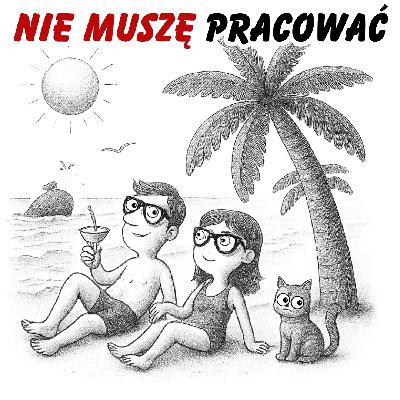
Next Polish Course for beginners 5th Jan 2026 https://www.learn-polish.pl
✅ Examples from the lesson:
Muszę pracować.
I must work.
Muszę gotować.
I must cook.
Muszę kupić jedzenie.
I must buy food.
Muszę kupić majonez.
I must buy mayonnaise.
Muszę odpocząć.
I must rest.
Muszę odpocząć od komputera.
I must take a break from the computer.
Muszę odpocząć od pracy.
I must take a break from work.
📣 Learn Polish with us!
Want to keep learning Polish in real conversations and fun lessons?
🧭 Our next in-person course starts 5th January 2026
📍 In our school located in the north of Poland
🚆 Only 4 hours by train from Warsaw,
🚄 And just 1 hour from Gdańsk and Sopot
You'll learn fast, speak every day, and enjoy learning in a friendly, immersive environment.
🔔 Reserve your spot now and join us in January!
Or Join VIP Polish online course https://app.learn-polish.pl/
Let’s learn Polish together — the fun and simple way!
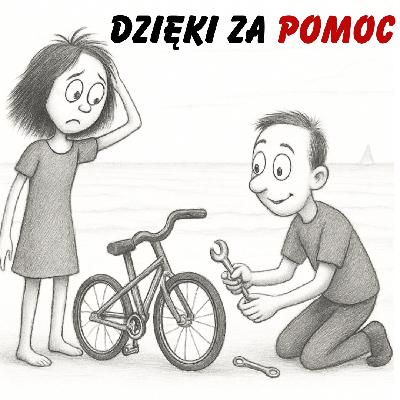
Learn Polish in Poland https://www.learn-polish.pl/
Join VIP Polish course https://app.learn-polish.pl/home
In this episode, we focus on one of the most important topics for beginners in Polish: how to say “thank you” in real-life situations.
You will hear simple English explanations combined with basic Polish examples that you can use immediately. We practice everyday situations such as thanking someone for lunch, coffee, help, or a kind gesture. The episode is designed especially for A0–A1 learners and is perfect for listening slowly, repeating, and building confidence.
This podcast helps you understand not only the words, but also how Polish people actually express gratitude in daily life.
Main Takeaways
The two most common ways to say thank you in Polish are
Dziękuję and Dzięki
To say thank you for something, use the pattern:
Dziękuję za / Dzięki za …
Common everyday examples:
Dziękuję za obiad – thank you for lunch
Dziękuję za kawę – thank you for the coffee
Dziękuję za pomoc – thank you for the help
The most natural response to “thank you” is:
Nie ma za co – you’re welcome
In Polish, short and simple thank-you phrases sound the most natural
Gratitude in Polish culture is expressed with simple words, tone, and context, not long speeches
We start our Total Beginner Polish Course on January 5th.
You can join us online or come to our school in Poland.
If you come here, you’ll experience a small, typical Polish town — real life, real conversations, and real Polish every day. There are not many tourists, so you hear and use Polish naturally with local people.
We are located about one hour from Gdańsk and around five hours by train from Warsaw.
Join us, learn Polish in real life, and see you soon.
Thank you for joining my VIP live lesson
You can watch it again here https://app.learn-polish.pl/videos/FtB3kPWmmvlK5aMjGWQx
Flashcards https://app.learn-polish.pl/flashcards/FtB3kPWmmvlK5aMjGWQx
Today Tuesday at 7 pm we have a Basic version of the lesson

More practice https://www.learn-polish.pl/online-lessons/where-is-the-toilet-in-polish
🇵🇱 Lesson: Numbers, Distances, and Prices in Polish
🎯 Lesson Goals
Learn numbers from 100 to 500 in Polish
Talk about distances between cities
Ask about prices and describe things as cheap or expensive
🧮 Part 1: Numbers (100–500)
Number
Polish
100
sto
200
dwieście
300
trzysta
400
czterysta
500
pięćset
🔹 Practice:
sto złotych = 100 zł
dwieście kilometrów = 200 km
📍 Part 2: Talking About Distance
Vocabulary:
blisko – close
niedaleko – not far
daleko – far
bardzo daleko – very far
Example Sentences:
Lublin jest blisko. (Lublin is close.)
Kraków jest niedaleko. (Kraków is not far.)
Zakopane jest daleko. (Zakopane is far.)
Gdańsk jest bardzo daleko. (Gdańsk is very far.)
🧭 Try it:
Harare jest bardzo daleko.
Bulawayo jest bardzo blisko.
💰 Part 3: Asking About Price
Vocabulary:
ile kosztuje? – how much does it cost?
drogo – expensive
bardzo drogo – very expensive
Examples:
Hotel kosztuje sto złotych. (The hotel costs 100 zł.)
Kawa kosztuje sto złotych. To bardzo drogo. (Coffee costs 100 zł. That's very expensive.)
Hotel w Krakowie kosztuje czterysta złotych. (Hotel in Kraków costs 400 zł.)
🧾 Try it:
Ile kosztuje hotel w Harare? (How much is the hotel in Harare?)
→ trzysta złotych
Czy to drogo? (Is it expensive?)
→ Tak, bardzo drogo.
🔁 Review
Polish Word
English Meaning
sto
100
dwieście
200
trzysta
300
czterysta
400
pięćset
500
blisko
close
daleko
far
bardzo daleko
very far
ile kosztuje
how much does it cost
drogo
expensive
bardzo drogo
very expensive
✅ Practice Dialogue
A: Ile kosztuje hotel w Warszawie?
B: Hotel kosztuje dwieście złotych.
A: To drogo?
B: Nie, to niedrogo.
VIP Polish course https://app.learn-polish.pl/
7 day free trial https://app.learn-polish.pl
Learn Polish in Poland or online
Want to speak Polish fluently and naturally?
Come and learn Polish in Poland – the best way to experience the language and culture!
🇵🇱 Join our immersive courses
💬 Practice with native speakers
🌍 Discover real Polish family life up close
Learn Polish www.learn-polish.pl
🟠 1. Introduction – The Autumn Topic
No dobra, dzisiaj rozmawiamy o jesieni...
Alright, today we’re talking about autumn.
The session opens with casual conversation practice about autumn (jesień) — a warm-up for students before moving to the speaking exam section. The teacher greets students (like Ania and Queen) and starts by asking basic questions:
Czy lubisz jesień? — Do you like autumn?
Kto lubi jesień? — Who likes autumn?
Students share opinions, using simple Polish sentences such as Lubię jesień or Jesień jest fajna. The teacher encourages everyone to speak naturally, even mixing some English to make it easier for A2 learners.
🟠 2. Talking About Food and Comfort
Zrobiłem fasolkę po bretońsku. Znasz? Bardzo dobre danie.
I made “fasolka po bretońsku.” Do you know it? A very good dish.
A natural transition happens — from weather and mood to food, a common conversational topic.
Learners practice vocabulary about Polish dishes, especially fasolka po bretońsku (beans with bacon and sausage).
Key phrases:
Lubię fasolkę po bretońsku. — I like Breton-style beans.
Z boczkiem, kiełbasą i sosem. — With bacon, sausage, and sauce.
This helps learners express likes and preferences, a skill tested in oral exams.
🟠 3. The Weather and Feelings
Zimno, chłodno, przyjemnie, komfortowo.
Cold, chilly, pleasant, comfortable.
Learners describe the weather and temperature, using adjectives to express how they feel:
Jest zimno. — It’s cold.
Jest przyjemnie. — It’s pleasant.
Dla mnie jest chłodno, ale lubię to. — It’s chilly for me, but I like it.
They discuss what kind of weather helps them work or think better, linking emotions with temperature — a typical oral exam theme about “how weather affects you.”
🟠 4. Communication Problems and Humor
Komunikacja to jest duży problem.
Communication is a big problem.
Ania mentions a tough day at work and communication issues. The teacher humorously reacts — Ania, zwolnij ich od razu! (“Fire them immediately!”) — showing a conversational, real-life tone.
The group laughs and stays in Polish conversation mode, which builds comfort for spontaneous speaking — exactly what oral exams test: reacting naturally.
🟠 5. Ghosts, Thermostats, and Everyday Life Vocabulary
Kto bawił się termostatem? Może duch?
Who played with the thermostat? Maybe a ghost?
A funny everyday situation unfolds about someone changing the thermostat temperature at home. Learners joke about who’s guilty — dzieci? mąż? duch? — children, husband, or ghost.
This part mixes domestic vocabulary (termostat, ogrzewanie, temperatura) with humor and cultural comments. It keeps students speaking freely, building fluency without pressure.
🟠 6. Beliefs, Seasons, and Colors
Wierzysz w duchy? Lubię kolory jesieni.
Do you believe in ghosts? I like autumn colors.
The discussion moves into beliefs and preferences, touching on ghosts, good and bad spirits, and the beauty of autumn — czerwony, pomarańczowy, zielony.
Students describe what they like about different seasons — a classic oral exam question:
Lubię jesień, bo lubię kolory.
Lubię wiosnę, bo wszystko jest zielone.
🟠 7. Pumpkin and Cooking Practice
Lubię zupę dyniową z imbirem i mlekiem kokosowym.
I like pumpkin soup with ginger and coconut milk.
The topic shifts to cooking vocabulary and describing recipes — a strong B1 skill but practiced here at A2 level.
They talk about ingredients (czosnek, cebula, przyprawy) and food preferences (lubię, nie lubię).
Also, Queen mentions ekologiczna dynia (organic pumpkin) — useful modern vocabulary for oral exams about lifestyle and food.
🟠 8. Prices and Shopping Practice
Co można kupić w Biedronce za 20 złotych?
What can you buy in Biedronka for 20 zlotys?
Students practice numbers and prices — perfect exam content.
They discuss train tickets (bilet do Warszawy, do Gdańska) and shopping examples (chleb, marchewka, masło).
Key grammar:
Ile kosztuje...? — How much does it cost?
Za 20 złotych można kupić... — For 20 zlotys you can buy...
These are core oral exam patterns for Polish learners.
🟠 9. Stress, Relaxation, and Daily Routines
Marchewka jest dobra na stres. A co jeszcze jest dobre na stres?
Carrot is good for stress. What else is good for stress?
The conversation turns psychological and personal.
Students discuss how they deal with stress:
Zakupy są dobre na stres. — Shopping helps with stress.
Lubię jeździć pociągiem. — I like traveling by train.
To mnie uspokaja. — It calms me down.
The teacher mentions his father was a railway worker (kolejarz), adding a personal touch — again, strong oral practice material.
🟠 10. Cold Weather Habits and Cleaning
Co robisz, gdy jest zimno?
What do you do when it’s cold?
Learners discuss routines and habits in winter, introducing verbs like sprzątać, gotować, pracować.
Ania says cleaning helps when it’s cold; the teacher jokes he prefers dusić mięso (“to stew meat”) instead of cleaning.
This gives practice for the reflexive structure co robisz, gdy... — important for speaking fluency.
🟠 11. Home Temperature and Comfort
Jaka jest idealna temperatura w domu?
What’s the ideal temperature at home?
They discuss ideal indoor temperatures — 18 stopni, 21 stopni, 25 stopni — and household heating types (gaz, centralne ogrzewanie, piec).
Queen prefers warmth; Ania is fine with 18°C.
The teacher praises correct answers humorously:
Ania dostaje piątkę! — “Ania gets a five!”
🟠 12. Cold Showers and Health
Czy lubisz zimne prysznice? Zimna woda zdrowia doda.
Do you like cold showers? Cold water adds health.
The class discusses health habits — cold showers, coffee, and sleep temperature.
Students learn simple Polish proverbs and health phrases:
Zimne prysznice są zdrowe. — Cold showers are healthy.
Zimny prysznic jest jak kawa. — A cold shower is like coffee.
🟠 13. Coffee and Heating Systems
Pijesz kawę czarną czy z mlekiem?
Do you drink black coffee or with milk?
Final part — relaxed conversation about coffee preferences and home heating.
It keeps the students talking in full sentences — a final warm-up before the speaking exam practice.
🟠 14. Conclusion – Speaking Practice and Exam Reminder
Dzisiaj zrobimy sobie egzamin z mówienia.
Today we’ll do a speaking exam.
The session closes with motivation and humor:
The teacher thanks Ania and Queen, praises their performance, and reminds them about the upcoming speaking practice — a mock oral exam focused on spontaneous Polish speech, describing situations, and reacting naturally.
He ends with friendly advice:
Pamiętajcie o cebuli. — Remember the onion.
Nie smażcie za dużo. — Don’t fry too much.
I pamiętajcie o zimnych prysznicach. — And remember cold showers.
Learn Polish wiith us 🔵 https://www.learn-polish.pl/
Everyday topics – weather, food, shopping, stress, habits.
Functional questions – Czy lubisz...? Ile kosztuje...? Co robisz, gdy...?
Emotional expression – likes, dislikes, comfort, frustration.
Vocabulary – autumn, food, temperatures, home, work.
Grammar in context – personal pronouns, verbs in 1st/2nd person, quantity.
Cultural references – Polish dishes, humor, daily life.
Exam readiness – practice speaking naturally, not perfectly; react, improvise, and engage.

Flashcards: https://app.learn-polish.pl/flashcards/lvd76I78jX3LNNxlj9hm
7 day free trial https://app.learn-polish.pl
🎧 Podcast: VIP Polish Class with Martyna – Talking Money, Prices & Negotiations
Episode Title: Ile chcesz za...? | Talking Money Like a Pro in Polish 🇵🇱💰
In this VIP Wednesday episode with Martyna, we dive into one of the most practical (and fun!) topics in everyday Polish: money, prices, and negotiation.
You’ll learn how to:
Ask “How much do you want for...?” in a natural way
Respond with prices using real-life objects like books, bikes, and strawberries 🍓
Say useful phrases like “Nie mam gotówki” (“I don’t have cash”) or “To się opłaca” (“It’s worth it!”)
Negotiate like a native with “Możemy się jakoś dogadać?”
Talk about paying rent, asking for a raise, and even splitting bills in relationships
We also talk about how emotions come into money talk – including reactions like “Chyba żartujesz!” (“You must be joking!”) and “Nie ma mowy!” (“No way!”)
🎙️ Whether you're living in Poland, shopping at a market, or just love everyday expressions – this episode is packed with real Polish, real emotion, and real-life scenarios.
🔜 Next week, we’ll explore family vocabulary – including the legendary teściowa (mother-in-law). Got a joke about her? Bring it to class! 😄
📥 Don’t forget to check out the bonus flashcards and the recorded lesson!
Learn Polish in Poland https://www.learn-polish.pl

Learn Polish in Poland https://www.learn-polish.pl
VIP Polish online course https://app.learn-polish.pl/
In this lesson, you will learn basic Polish sentences using very common verbs:
"mam" (I have), "jestem" (I am), "lubię" (I like), "mieszkam" (I live).
You will hear and repeat sentences like:
✅ I have an iPhone – Mam iPhone.
✅ I am in Warsaw – Jestem w Warszawie.
✅ Where are you from? – Skąd jesteś?
✅ I live in Warsaw – Mieszkam w Warszawie.
You'll also practice a short, friendly conversation including:
– Asking about someone's city
– Talking about kefir (a traditional Polish milk drink!)
– Making simple plans like going for coffee
This is perfect for total beginners. Just listen, repeat, and learn the basics step by step.
Let’s learn Polish together! 🇵🇱✨

🧠 Main Takeaway:
You’ll learn how to:
Ask "How much does it cost?"
Talk about weather
Describe old vs. new objects
Practice numbers 1–10
Discuss Polish soups 😋
☀️ 1. What’s the weather like? – Jaka jest pogoda?
Use these phrases to ask and answer:
Jaka jest pogoda? – What's the weather like?
Jest ciepło. – It’s warm.
Świeci słońce. – The sun is shining.
Pada deszcz. – It’s raining.
Jest bardzo fajnie. – It's very nice.
💸 2. Prices – Ile to kosztuje?
Practice prices using złoty (PLN):
Ile kosztuje piwo? – How much is a beer?
Kosztuje jeden złoty. – It costs one złoty.
Dwa złote, trzy złote, cztery złote...
🧮 Numbers:
1 – jeden
2 – dwa
3 – trzy
4 – cztery
5 – pięć
6 – sześć
7 – siedem
8 – osiem
9 – dziewięć
10 – dziesięć
🚲 3. Old or New? – Stary czy nowy?
Stary rower – old bike
Nowy telefon – new phone
Stara komórka – old mobile
To jest tanio. – That's cheap.
To jest drogo. – That’s expensive.
🍲 4. Polish Soups – Zupy
Some famous soups:
Żurek – sour rye soup
Krupnik – barley soup
Pomidorowa – tomato soup
Ogórkowa – cucumber soup
Fasolowa – bean soup
Chłodnik – cold summer soup
🗣️ Join Us – Speak Polish with Confidence!
✅ Start your Polish journey in a fun, relaxed way.
📆 Every Tuesday at 7 PM – live lesson + speaking practice on Zoom.
🥣 Come for the zupy, stay for the language!
Learn Polish in Poland or online https://www.learn-polish.pl
Learn Polish in Poland www.learn-polish.pl
VIP members see live lessons, mini lessons, flashcards https://app.learn-polish.pl/videos/s2HAKmsVEZY8feMYTh9S
In this lesson we focus on two simple but powerful Polish phrases: „umiem” (I can / I know how to) and „nie umiem” (I can’t / I don’t know how to). These are essential for daily conversations.
👉 Examples:
Umiem gotować. – I can cook.
Nie umiem tańczyć. – I can’t dance.
Umiem mówić po polsku! – I can speak Polish!
We’ll break them down step by step, with easy examples you can start using right away.
📍 If you want to go further, join us at our small language school in the north of Poland – about 5 hours by train from Warsaw and 7 hours from Kraków. Learn Polish in an authentic, personal way, surrounded by local culture.
✨ Start speaking Polish with confidence – we’ll help you get there.
🇵🇱 Learn Polish Through Real Conversations
Learn Polish 🇵🇱 https://www.learn-polish.pl
Welcome to another interactive Polish language lesson with Asia from the Ernie School of Polish!
In this episode, we chat with Balaji about everyday topics that help you learn and practice real-life Polish. You'll hear natural conversation that includes:
✅ How to talk about the weather and being sick in Polish
✅ Useful phrases with "chcę" (I want) and "wolę" (I prefer)
✅ Talking about food: fruits, meat, sushi, and even Polish countryside classics like lard sandwiches
✅ Comparing life in the city vs. countryside – vocabulary and opinions
✅ Simple Polish questions to use in daily conversations
✅ Funny and friendly examples from daily life and culture
🧠 Ideal for beginner and intermediate learners who want to hear natural spoken Polish and expand their vocabulary through everyday situations!
🗓️ Join us every Wednesday at 7 p.m. (Polish time) for live Polish classes.
💬 Courses also available in person in Lębork – one, two, or three-week options.
👉 Click the link to join our courses and follow us for more Polish lessons.
📌 Subscribe and don’t forget to like the video if you want more content like this!

Notes https://www.learn-polish.pl/online-lessons/verb-to-go-to-drive-in-polish
7 day free trial https://app.learn-polish.pl
“Jadę do pracy! Talking About Where You’re Going in Polish”
In this lesson, we learn how to use the Polish verb "jadę" – meaning I’m going or I’m driving. Whether you’re going to work, to the theatre, or even to Zambia, you’ll learn how to build simple and useful sentences to describe everyday movement.
We also explore the difference between “jadę” (going by vehicle) and “idę” (going on foot), and practice answering the question:
“Gdzie jedziesz?” – Where are you going?
Along the way, we talk about how far places are using “blisko” (close) and “daleko” (far), and share examples like:
➡️ Jadę do centrum.
➡️ Jadę rowerem do pracy.
➡️ Warszawa jest daleko.
You’ll also hear some real-life stress and laughter – because yes, learning Polish is a journey, and sometimes we get a little nervous, but that’s okay!
By the end of the episode, you’ll be able to say where you're going, how you're getting there, and how far it is — all in Polish!

Learn Polish online https://app.learn-polish.pl/
Learn Polish in Poland https://www.learn-polish.pl/
✅ Lesson Title Suggestion
"Ogólnie rzecz biorąc & W sumie – How to Say 'Basically' in Polish"
Learn how to use „ogólnie rzecz biorąc” and „w sumie” like a native speaker. Two powerful phrases for everyday conversations – from weather complaints to coffee compliments. Simple, real, and fun Polish practice.
Ogólnie rzecz biorąc, wszystko jest w porządku.
🟢 Generally speaking, everything is fine.
W sumie nie jest źle.
🟡 Basically, it’s not bad.
Ogólnie rzecz biorąc, lubię jak pada deszcz. 🌧️
In general, I like it when it rains.
W sumie to nie lubię mokrych butów. 👟💦
All in all, I don’t like wet shoes.
Ogólnie rzecz biorąc, kawa jest bardzo dobra. ☕🔥
Generally speaking, the coffee is very good.
W sumie trochę za mocna. 😅
Basically, it’s a bit too strong.
Ogólnie rzecz biorąc, jestem spokojna. 🧘♀️
In general, I’m calm.
W sumie będzie dobrze. 🤞
It will be fine in the end.
Ogólnie rzecz biorąc, mój angielski jest średni. 🇬🇧📉
Generally, my English is average.
W sumie mogę zamówić kawę na wakacjach. ☕✈️
Basically, I can order coffee on vacation.
Ogólnie rzecz biorąc, nie lubię rosołu. 🍲🙈
To be honest, I don’t like chicken soup.
W sumie pomidory wyglądają super. 🍅😄
All in all, the tomatoes look great.
Text: https://www.learn-polish.pl/online-lessons/polish-exam-prep-how-to-write-an-invitation-a1-b1
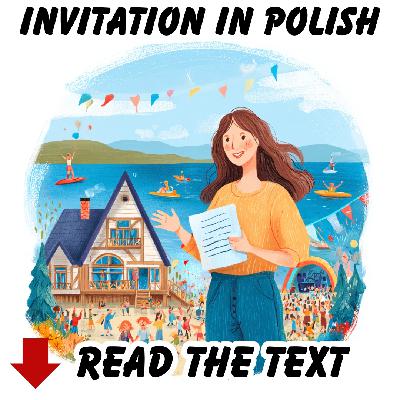
In this episode, we’re diving into something every Polish learner will face sooner or later: how to write an invitation for the official Polish language exam — whether you're at A1, A2, B1, or B2 level.
We’ll walk you through how the task looks on the exam, how to structure your message, and what kind of language is expected at each level. It’s perfect for anyone preparing for the Państwowy egzamin certyfikatowy z języka polskiego jako obcego.
👀 Read the examples carefully — and if you want, write your own version and send it to us!
✍️ What’s the hardest part of writing for you?
💬 Do you feel confident, or is it still challenging?
📅 Are you planning to take the exam soon? When would you like to pass it?
We’ve got learners from all over the world getting ready to take their Polish to the next level, and we hope this episode helps you feel a little more ready too. You’ve got this!

Translation https://www.learn-polish.pl/online-lessons/traveling-in-polish

7 day free trial https://app.learn-polish.pl/
Lesson notes https://www.learn-polish.pl/online-lessons/may-19th-2025
“Learning Polish Through Bzdury (Nonsense!)”
Episode Description:
In this episode, we're diving headfirst into bzdury — that wonderful Polish word for nonsense, silly talk, or things that just aren’t true. I’ll be saying a lot of bzdury today. Why? Because it’s fun. And because you can actually learn Polish this way!
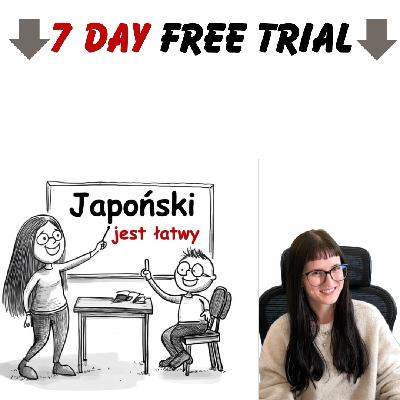
I start with the sentence: Japoński jest łatwy – “Japanese is easy.” Is that prawda (true) or fałsz (false)? Well... I think that’s bzdura — nonsense. Japanese isn’t easy. Japoński jest trudny. Polish is easy! (Or is that bzdura too?)
Throughout the episode, I play with phrases like Lecę do Japonii – “I’m flying to Japan.” Am I really? Or is that just another silly statement? Listen and find out.
You’ll hear questions like:
Czy to prawda, czy to bzdura? – “Is it true, or is it nonsense?”
And statements like:
Nie mówię po japońsku – “I don’t speak Japanese.”
Opowiadam bzdury – “I’m talking nonsense.”
Zajmuję się bzdurami – “I’m busy with unimportant things.”
We also talk about how people sometimes say bzdury when they’re tired, stressed, or joking — and how even innocent things like “Piwo jest zdrowe” (“Beer is healthy”) might be... well... total bzdura.
You don’t need to be serious all the time to learn Polish. You can play with words, ask questions, and have fun with false statements — all while practicing useful vocabulary and phrases.
So, join us, have a laugh, and ask yourself:
Czy to jest prawda, czy to bzdura?
Learn Polish in Poland https://www.learn-polish.pl
Flashcards for VIP members https://app.learn-polish.pl/flashcards/6JPjq3rrB3MeE9KltUby
Mini lesson for VIP members https://app.learn-polish.pl/mini-lessons/6JPjq3rrB3MeE9KltUby
Polish Verbs for Real Life – Speak with Confidence!
In this short introduction to our VIP Polish course, we explore some of the most useful and common Polish verbs for beginners. If you're just starting your Polish journey, this lesson will help you build confidence using verbs in everyday situations.
We cover verbs like:
pracować – to work ("Ja pracuję w Krakowie" – I work in Kraków)
jeść – to eat ("Lubię jeść warzywa" – I like to eat vegetables)
pić – to drink ("Ja piję kawę" – I drink coffee)
spać – to sleep ("Ja śpię 8 godzin" – I sleep 8 hours)
czytać – to read
gotować – to cook
biegać – to run
mieszkać – to live
mówić – to speak (languages too!)
tańczyć – to dance
kupować – to buy
sprzątać – to clean
uczyć się – to learn/study
Each verb is introduced with easy examples in the first person ("I do"), second person ("you do"), and third person ("he/she does"), so you can immediately start practicing real conversations.
Whether you want to say where you live, what you like to eat, or which languages you speak – this is the place to begin.
Learn Polish online
Are you ready to start speaking Polish with confidence?
Join our VIP Polish course – available online or at our school.
💬 Monday: Advanced Class at 7 PM with Agnieszka
💬 Tuesday: Beginner Class at 7 PM with Adam
💬 Wednesday: A2 Level Conversation Practice
Our friendly teachers and practical lessons will help you speak real Polish from day one.
Sign up today and become part of our growing language community.
See you in class!
Do widzenia. Pa pa.
Learn Polish www.learn-polish.pl
Flashcards: https://app.learn-polish.pl/flashcards/4iW1rmpoC4Gh6165C2rX
VIP members https://app.learn-polish.pl/videos/4iW1rmpoC4Gh6165C2rX
7 day free trial https://app.learn-polish.pl
Learn Polish in Poland https://www.learn-polish.pl
In this lighthearted and practical episode, we're diving deep into the world of everyday Polish through silly examples, truth checks, and common conversational phrases. Whether you're a beginner or brushing up on your skills, you'll enjoy the repetition, humor, and rhythm that help you absorb real Polish in context.
We follow a casual story involving Holger, who wants to buy a house in Poland, and explore how to say what’s true (prawda) and what’s nonsense (bzdura) – a great way to practice grammar, verbs, and sentence patterns naturally.
🎧 This episode is packed with:
Real-life vocabulary
Simple questions and answers
Funny examples that make learning stick
🗣️ Example Phrases You'll Learn (with Translations):
Holger chce kupić dom w Polsce.
Holger wants to buy a house in Poland.
Chcecie mieszkać w Polsce?
Do you (plural) want to live in Poland?
Uczycie się polskiego, żeby tu mieszkać?
Are you learning Polish in order to live here?
Polska to ładny kraj.
Poland is a beautiful country.
Japoński jest łatwy. – Bzdura!
Japanese is easy. – Nonsense!
Chiński jest trudny. – Prawda.
Chinese is difficult. – True.
Mówię po polsku.
I speak Polish.
Nie mówię po chińsku.
I don’t speak Chinese.
Lecę do Japonii. – Prawda.
I’m flying to Japan. – True.
Lecę do USA. – Bzdura!
I’m flying to the USA. – Nonsense!
Piwo jest zdrowe? – Bzdury!
Beer is healthy? – Nonsense!
Owoce są zdrowe. – Prawda.
Fruit is healthy. – True.
Fast food jest zdrowy. – Bzdura.
Fast food is healthy. – Nonsense.
🧠 What You’ll Practice in This Episode:
Present tense verb conjugation (mówię, mówisz, mówią)
Forming questions (Prawda czy bzdura?)
Using negation with nie
Speaking about languages and nationalities
Making realistic vs. silly statements for better memorization
🎧 Whether you're on your commute, walking your dog, or relaxing with a coffee – join us for a fun, interactive session that’ll boost your Polish skills with laughter and repetition.
Learn Polish with us https://www.learn-polish.pl

Comments

Download from Google Play

Download from App Store
 United States