


Learning English with Human Beans
Subscribed: 28Played: 166
Subscribe

© Georges
Description
Welcome to "Learning English with Human Beans," where language learning meets social sciences! Dive into fascinating human behavior topics while naturally improving your English skills. We explore current research from psychology, sociology, anthropology... unpacking key vocabulary and expressions along the way. Each episode combines engaging social science concepts with practical language learning, helping you communicate with confidence about complex human topics. Grow your English skills through the lens of what makes us human!
52 Episodes
Reverse
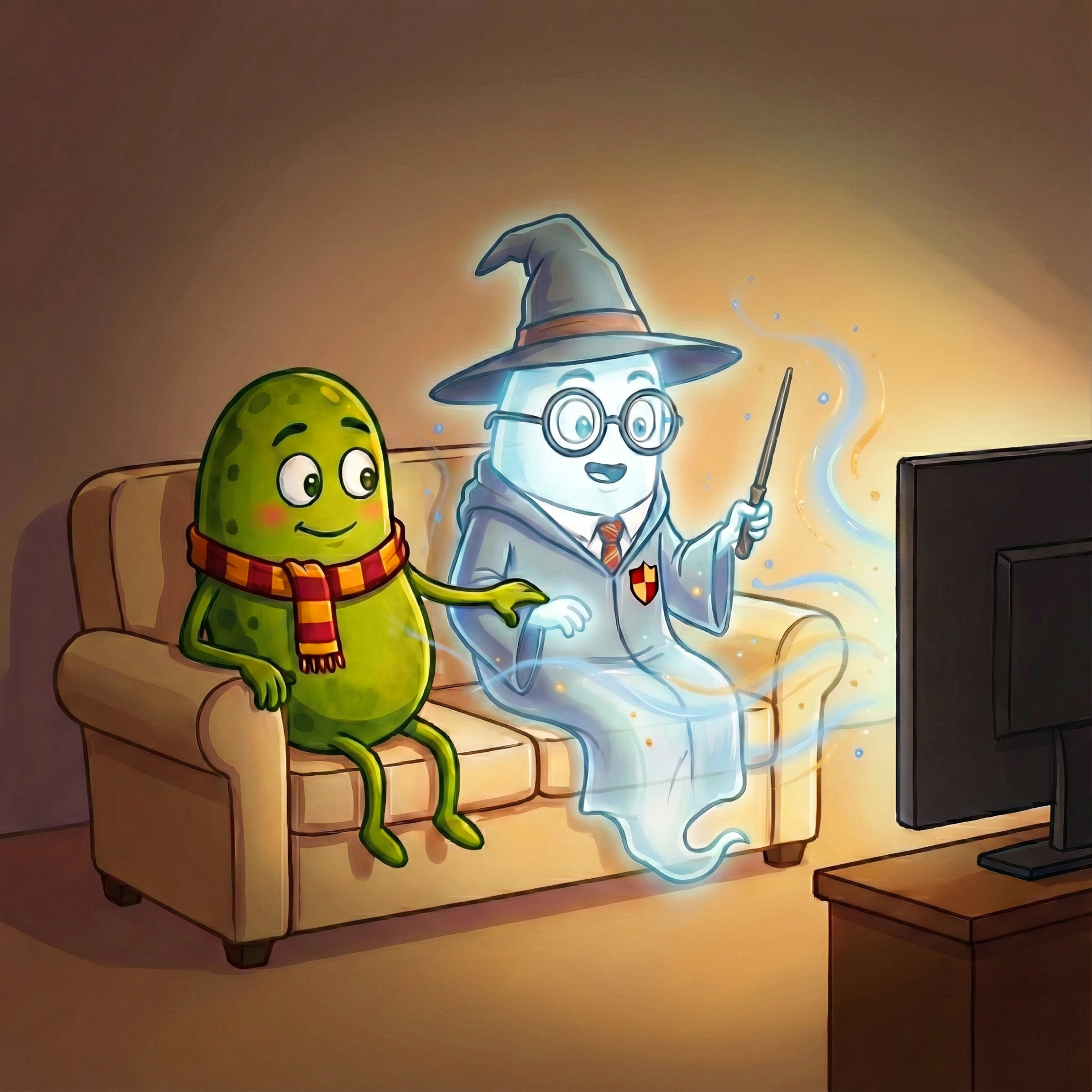
Why does the finale of Friends feel like a real-life breakup? Why do we feel a deep void when characters who don't know we exist disappear from our screens?In this episode, Alice and Marc decode the mechanics of Parasocial Relationships. Far from the cliché of the lonely geek, discover why your brain is evolutionarily wired to bond with fictional people through concepts like Social Snacking and the Benjamin Franklin Effect.From the "Gym of Empathy" theory to the Pratfall Effect (why we love clumsy heroes), learn how fiction acts as a safe "social simulator" that can actually upgrade your real-world emotional intelligence.
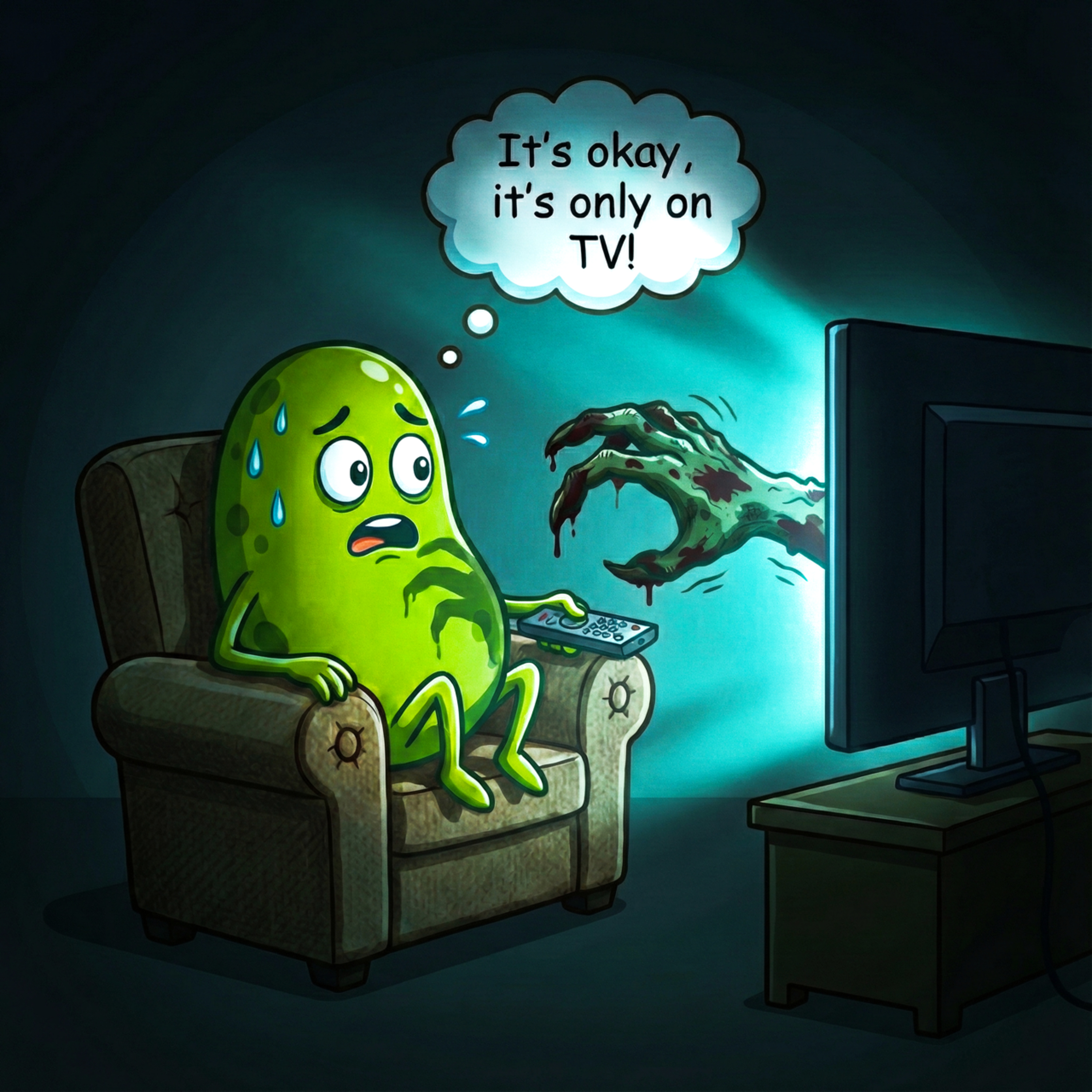
You know it’s just a movie. You know the characters are just pixels. So why are you sobbing on your couch like you’ve lost a best friend?In this episode, Alice and Marc decode the Paradox of Fiction. Discover why your "Rational Brain" (Belief) knows it's fake, while your "Primal Brain" (Alief) reacts as if it were life-or-death.From the "Low Road" of the amygdala to the theory of Make-Believe, learn how storytellers hack your biology to trigger Quasi-Emotions and why crying over a fictional death isn't a weakness—it's the ultimate workout for your empathy.

Is the "Three-Act Structure" universal, or just a Western obsession?For the grand finale of the trilogy, we travel East to explore the Kishōtenketsu—the narrative structure that powers everything from Totoro to Parasite.While the Western brain demands Conflict and linear causality (the "Chekhov’s Gun"), the Eastern brain embraces Contrast and harmony. Marc and Alice decode why Westerners often find Asian movies "confusing" or "without an ending," and how learning to accept a story without a villain can actually rewire your brain’s predictive software.
Are you the type of person who reads the last page of a book first?In this second installment, we investigate the Paradox of Suspense. If the brain loves surprise, why do we rewatch movies we know by heart? Alice and Marc explore how Processing Fluency and Dramatic Irony turn a known story into a comforting "safety belt" for the brain.We also dive into Neurodiversity: discover why the Intolerance of Uncertainty makes spoilers therapeutic for anxious minds , and how the autistic brain’s hyper-focus on detail can shatter the illusion of a plot twist before it even happens.
Why do we pay to be lied to?In this first episode of our trilogy on the neuroscience of storytelling, Alice and Marc crack open the black box of the Bayesian Brain. Discover how your mind is actually a "prediction machine" that hallucinates your reality, and why a good plot twist triggers a massive dopamine hit by generating a Prediction Error.From The Sixth Sense to Fight Club, learn how directors hack your attention and why, the second the twist is revealed, your memory rewrites itself to make you believe you "knew it all along" (Hindsight Bias). It’s not just entertainment; it’s a survival simulation.

Imagine looking in the mirror and knowing—with absolute mathematical certainty—that you no longer exist.In this episode, Alice and Marc explore the chilling world of Cotard’s Delusion (Walking Corpse Syndrome). Far from being "crazy," discover why these patients are actually too rational: when the brain loses its emotional connection to the body (Emotional Anosognosia), the only logical conclusion is death.From the tragic story of Mademoiselle X to the reversal of Descartes' "Cogito," learn why pure logic leads to the grave and why feeling pain is the ultimate proof of life.
Have you ever stood on a cliff edge and felt a sudden urge to jump? Or held a newborn and visualized dropping them?In this episode, Alice and Marc tackle the terrifying phenomenon of Intrusive Thoughts and the Call of the Void. Far from being a sign of madness, discover why these dark flashes are actually "Misinterpreted Safety Signals" generated by a hyper-vigilant brain.From the High Place Phenomenon to the critical difference between Ego-Dystonic (unwanted) and Ego-Syntonic thoughts, learn why your horror is the ultimate proof of your sanity and why the "vertigo of freedom" scares us all.
Why do you suddenly want to delete your browser history and join a monastery the second the "fun" is over?In this episode, Alice and Marc decode the neurochemistry behind Post-Nut Clarity. Discover why the sudden crash of Dopamine and the rise of Prolactin turn your brain from a risk-taker into a risk-averse judge.From the Japanese concept of Kenjataimu ("Sage Time") to the evolutionary humor of the Coolidge Effect , learn why your Behavioral Immune System makes you feel "dirty" and why you should never make life-changing decisions in the 20 minutes following an orgasm.
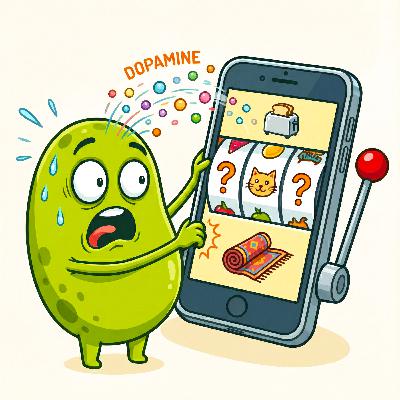
Do you control your thumb, or is an algorithm holding the steering wheel?In this episode, Alice and Marc dive into the terrifying mechanics of the Attention Economy. From the "slot machine" effect of Intermittent Reinforcement to the zombie-like state of Dark Flow, discover how Silicon Valley hacks your dopamine to keep you scrolling.Learn why you can’t stop watching useless videos at 2 AM and how to reclaim your agency by reintroducing Frictioninto your digital life.
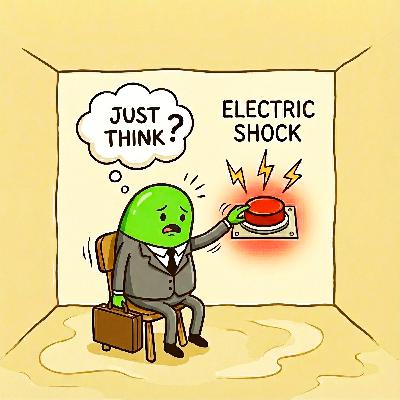
Why does a simple 6-minute wait at a bus stop feel like torture without your phone?In this episode, Alice and Marc explore the "Crisis of Emptiness." From Blaise Pascal’s philosophy to the neuroscience of the Default Mode Network, discover why your brain desperately needs you to be bored to function properly.Find out why reading a phone book can actually boost your creativity and how to overcome the "Intolerance to Boredom Paradox" to turn those empty moments into a laboratory for your mind.
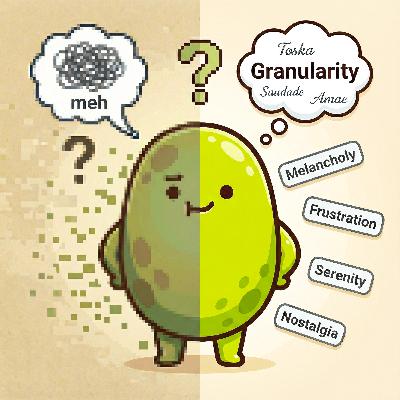
Does your morning “meh” hide a much more specific emotion?In this episode, Alice and Marc explore Emotional Granularity and discover why the precision of your vocabulary acts as a real biological brake on your amygdala (the center of fear).From Wittgenstein's philosophy (“The limits of my language are the limits of my world”) to untranslatable emotions such as the Russian Toska or the Portuguese Saudade, learn why “to name is to tame” (Name it to tame it) and how enriching your inner dictionary can transform your reality.
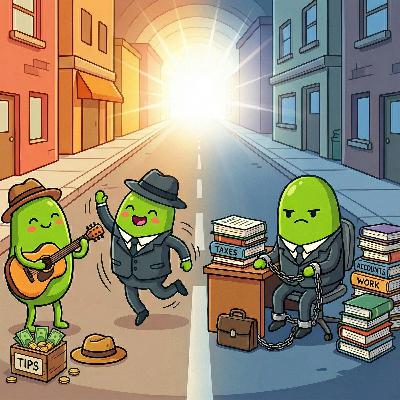
What if the apocalypse wasn't the end of the Earth, but simply the end of your world?Alice and Marc revisit the film The Life of Chuck from a new angle: the neuroscience of consciousness. Drawing on the theory of Controlled Hallucination, they decipher why the death of a single man is comparable to “a burning library” and how your brain populates your reality with the “ghosts” of the people you encounter.A dizzying reflection on our finitude, proving that in the face of the inevitable extinction of our inner universe, the only sensible response... is to dance.
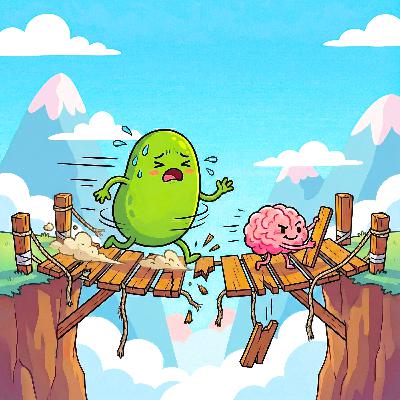
Why can a simple political debate trigger real physical pain in your stomach?In this episode, Alice and Marc dive into the neuroscience of bad faith. Discover why your rational brain is often just a “shady lawyer” serving your emotions (the Elephant) and how the fear of being wrong activates the same neural areas as an actual physical injury.Understand the trap of Error Blindness (why being wrong feels exactly like being right) and learn how to switch from Soldier mode to Scout mode (Scout Mindset) to finally lay down your arms.
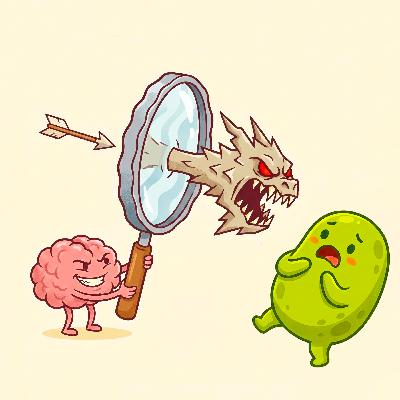
Can you feel excruciating pain without having a single scratch?In this episode, Alice (and her sore little toe) and Marc delve into the mechanics of suffering. From the Buddhist parable of the “Two Arrows” to the incredible true story of the worker pierced by a nail, discover why pain is a construct of the brain.
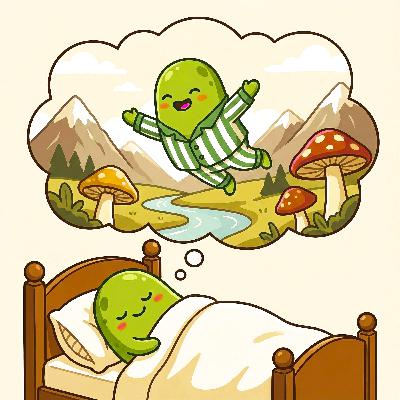
Look at your hands. Are you absolutely sure you're not dreaming?In this episode, Alice and Marc explore the most fascinating flaw in our brains: lucid dreaming. Find out why it's physically impossible to run fast in a dream and how scientists have achieved the unthinkable: communicating in real time with people who are asleep.Between neuroscience and philosophical vertigo, get ready to question the very nature of your reality. Being awake may just be a controlled hallucination...
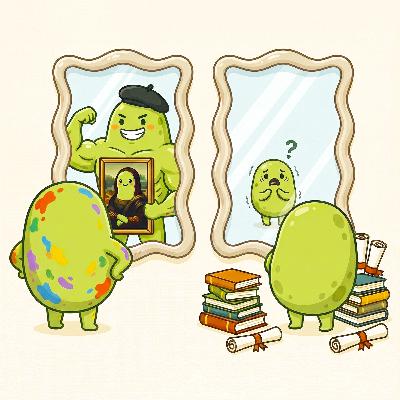
Why does Uncle Gerard, who has only read one article, think he understands geopolitics better than an expert? And why do the most brilliant people live in constant fear of being “exposed”?In this episode, Alice and Marc explore the two sides of the same metacognitive coin: the arrogance of ignorance (the Dunning-Kruger effect) and the paralysis of expertise (impostor syndrome). Find out why 80% of people think they are better drivers than average and how to transform your paralyzing doubt into “confident humility.”An essential guide to understanding why doubt is not a weakness, but the price we pay for intelligence.
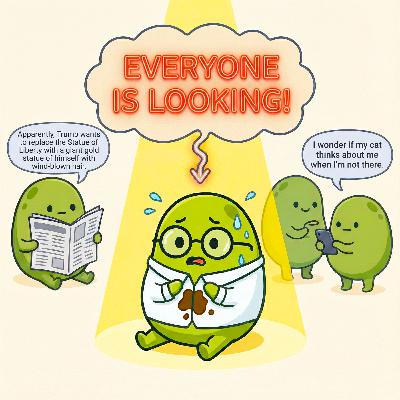
Ever felt like a tiny coffee stain on your shirt was a neon sign screaming for attention?In this episode, Alice and Marc dive into the Spotlight Effect to explain why our brains trick us into believing we are the center of the universe. From the famous "Barry Manilow T-shirt" experiment to the Illusion of Transparency, discover why you are statistically "invisible" to the people around you.Stop worrying about judgment and learn why being a background extra in other people’s lives is actually your ultimate freedom.
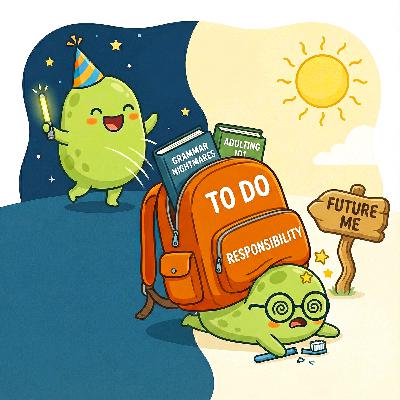
Why is it so difficult to go to bed early, even when we know full well that we'll regret it the next morning?In this episode, Alice and Marc debunk the myth of laziness. Find out why your brain neurologically treats your “future self” as a complete stranger (literally as if it were Matt Damon) and how “Revenge Procrastination” becomes an act of emotional rebellion.Forget iron discipline: learn why procrastination is an empathy bug and how to reconcile yourself with the stranger you will become tomorrow.
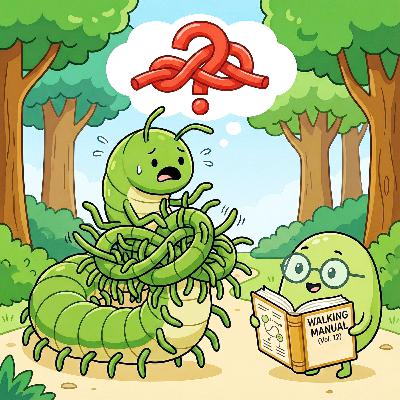
Why does a champion miss an easy shot under pressure? Why does a centipede stumble when asked how it walks? In this episode, Alice and Marc delve into the paradox of expertise: that critical moment when conscious analysis, an essential tool for learning, suddenly becomes the enemy of performance. From the neuroscience of jazz improvisation to the tragedy of focal dystonia, discover the biological duel between your internal “Editor” and your “Creator.”Learn how to avoid the trap of overthinking and master the subtle art of not thinking in order to unleash your genius.

What if meditation wasn’t what you think it is? Forget the cliché of the monk sitting in silence trying to think about "nothing."In this episode of Learning English with Human Beans, Alice and Marc (a cognitive psychology researcher) lift the hood of the human mind to watch the engine running.Discover metacognition, a mental "superpower" that allows you to switch from being an actor trapped in your own movie to becoming a free, benevolent spectator. Learn why your brain loves "autopilot," how to turn down the volume on your internal radio, and how to finally regain control... paradoxically, by stopping the struggle to control everything.


Download from Google Play

Download from App Store
 United States
How can I have access to the transcript?