


 Claim Ownership
Learning with Rishad
Subscribed: 1Played: 3
Subscribe

© Rishad Usmani 2022
Description
I’m an artist, physician, angel investor and entrepreneur. On this podcast I talk with investors and founders in the healthcare space.
45 Episodes
Reverse
In this eye-opening episode, I sit down with Hugh Barragan, a technologist and CTO based out of Boston, Dr. Chris Page, an anesthesiologist and pain medicine physician, and Dr. Akash Soraya, an emergency medicine physician and angel investor, to tackle one of the most pressing questions in medicine today: has technology made healthcare better or worse? We dive deep into the promise and peril of AI, examining whether electronic medical records have been a net positive despite their frustrations, and what the future holds when AI can diagnose faster and more accurately than any physician. The conversation gets real as we discuss whether AI will replace doctors, who takes accountability when algorithms make mistakes, and whether patients will even care if they are talking to a human or a machine. Key Highlights 🏥 Technology's Mixed Impact: While EMRs have made information more accessible and eliminated handwriting issues, they have also created overwhelming data overload and shifted optimization toward billing rather than patient care. 💰 The Cost Paradox: Healthcare costs have skyrocketed since the introduction of EMRs, yet life expectancy has remained flat at roughly 80 years for 15 years - suggesting technology has not fundamentally improved population health outcomes. 🤖 AI Will Replace Physicians: Dr. Akash boldly predicts that AI will eventually outperform emergency physicians at diagnosis and hopes it happens soon, while acknowledging the massive workforce displacement this would cause across 15-20% of the U.S. economy. ⚖️ The Accountability Problem: Hugh emphasizes that computers cannot be held accountable for decisions, creating a fundamental challenge as AI becomes capable of autonomous clinical decision-making - someone must remain responsible when things go wrong. 🩺 Trust and Human Connection: Dr. Chris argues that patients will continue wanting human care for a long time, as the rapport and comfort provided by a real physician cannot easily be replicated - though AI may eventually convince people otherwise. 📊 The Revenue Cycle Machine: Only 20% of healthcare costs are actual human labor - the rest is driven by increasingly sophisticated billing optimization, which AI will likely accelerate rather than reduce, making healthcare even more expensive. 🛡️ Malpractice Insurance for AI: The panel predicts that by 2028-2029, insurance companies will begin underwriting malpractice coverage for fully autonomous AI clinicians, though the actuarial curves and liability frameworks remain completely undefined. 🥊 The Coming AI War: Hugh predicts a shadow AI war in healthcare where patient AIs fight billing AIs, insurer AIs battle provider AIs, and costs spiral as a
The Truth About Entrepreneurship Nobody Talks AboutIn this episode, Dr. Rishad Usmani sits down with Preston Alexander, co-founder of Forward Slash Health, a consultancy helping clinicians reclaim autonomy in medicine. From building furniture and rock climbing in Colorado to launching a medical device startup during the pandemic, Preston’s unconventional path shows how curiosity, grit, and timing can shape a career in healthcare entrepreneurship.He opens up about his early days as a psychology and philosophy student, his accidental entrance into healthcare, and how witnessing the corporatization of medicine inspired his mission to empower doctors to lead the business side of care. Preston and Dr. Usmani discuss the broken incentives driving U.S. healthcare, why AI might make us forget how to think, and how to balance friction and optionality when building impactful products.With candor and humor, Preston explores the lessons behind his successes and failures — from cold-calling hospitals during COVID to building a startup that helps physicians regain ownership of their work and their purpose.Key Highlights:💡 From Climbing Walls to Boardrooms: How Preston went from rock climbing and furniture making to leading healthcare startups. 📘 Learning by Doing: Why he faked being an “MBA candidate,” accidentally earned the degree, and discovered his love for business strategy. 🏥 Inside the Medical Machine: How working in medical devices revealed the tension between innovation, regulation, and corporate growth. 🚀 Starting Up in a Pandemic: The story of launching a surgical device company in February 2020 — and cold-calling hospitals through lockdowns. 🧠 Taking Back Healthcare: How Forward Slash Health helps physicians rebuild independence and rethink the business of medicine. 🤖 AI and the Death of Thinking: Why Preston is both fascinated and frustrated by artificial intelligence and fears it may make humanity less thoughtful. 🎓 Education and Creativity: Why he believes traditional schooling traps curiosity and how parents can rethink education for the next generation. ⚙️ Friction vs. Optionality: The philosophy behind designing products, systems, and companies that are both user-friendly and purpose-driven.Resources & Next Steps:🌐 Visit forwardslashhealth.com to learn more about their mission. 📲 Connect with Preston Alexander on LinkedIn. 🎧 Explore more episodes of Learning with Rishad for deep conversations at the intersection of medicine, AI, and human behavior.
Inside the Mind of the “Guinea Pig Generation” and the Future of AI in HealthcareIn this episode, Dr. Rishad sits down with Dr. Adam Carewe, a physician-turned-healthtech innovator who believes we are the “guinea pig generation” in modern medicine. From his beginnings as a college basketball player and math enthusiast to becoming Chief Medical Information Officer at Kaiser Permanente, Adam shares his journey into the world of healthcare technology and startups.Together, they explore the intersection of medicine, technology, and uncertainty — discussing the limits of what doctors know, the rise of AI-assisted diagnostics, and the ethical challenges of over-testing in modern healthcare. Adam also reflects on his leap from a secure medical leadership position into the startup world, and why he believes the future of medicine lies in automating the routine to preserve the human.With humility and candor, Adam opens up about mental vs. physical health, longevity hype, and what he’d tell his younger self about taking risks and following instinct. Key Highlights:🧬 The Guinea Pig Generation: Why today’s patients and physicians live in an era where data grows faster than understanding. 📊 From Equations to Empathy: How Adam’s background in math and exercise science shaped his systems-thinking approach to patient care. 🤖 The AI Physician Debate: When AI might safely assist or even replace parts of clinical decision-making. 🧠 Mind and Body as One: Why the separation between mental and physical health is outdated and counterproductive. ⚕️ Too Many Tests, Too Little Meaning: How modern diagnostics often outpace interpretation, creating anxiety and unnecessary procedures. 🚀 Taking the Leap: Why Adam left a high-level role at Kaiser Permanente to join a startup, and what he’d tell his younger self about courage and timing. Resources & Next Steps:📲 Follow Dr. Adam Carewe on LinkedIn for insights on clinical innovation and healthcare tech. 🎧 Explore more episodes of Learning with Rishad for deep conversations at the intersection of medicine, AI, and human behavior. 🧠 Read about AI in clinical decision-making in publications like NEJM Catalyst or PubMed. 💡 Learn more about General Medicine, the startup Adam joined after leaving Kaiser Permanente. Episode Breakdown:00:00 We Are the Guinea Pig Generation00:51 Adam’s Early Journey05:20 When Tech Meets Medicine08:41 Will AI Replace Doctors?10:46 ChatGPT & Health Data15:05 Mind vs. Body19:17 The Longevity Paradox24:15 Too Much Testing, Too Little Clarity29:19 Whole-Body MRI & Overdiagnosis34:33 Tracking Everything38:05 Fixing the System40:36 Final Reflection
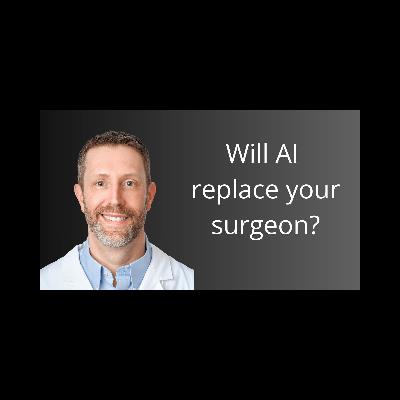
In this episode, I sat down with Ben, an orthopedic surgeon who is making a significant career change after 17 years. He's moving away from his clinical practice to a leadership role at Commons Clinic, a company focused on value-based care. In our conversation, we explored his motivations for this major pivot, the frustrations of the traditional healthcare system, and his vision for a future that seamlessly blends technology with human-centric care. Ben opened up about the "death by a thousand cuts" that he believes leads to physician burnout, highlighting issues like the tedious nature of EMRs and the complexities of regulations. He explained how his personal journey into entrepreneurship gave him a renewed sense of purpose, shifting his focus from treating one patient at a time to impacting healthcare on a broader scale. Our discussion also delved into the roles of AI and robotics in orthopedics, the challenges of implementing value-based care without "cherry-picking" patients, and the critical importance of shared decision-making in the patient-physician relationship. This episode is for anyone curious about the future of healthcare, the reality of physician burnout, and the exciting intersection of technology and medicine. Timestamps 00:07:48 - Ben's personal journey from being a surgeon to a leader in healthcare innovation. 00:11:27 - Ben shares what he'll miss most about being a surgeon and what he's happy to leave behind. 00:13:53 - We discuss if the entrepreneurial spirit is something you're born with or if it can be learned. 00:15:41 - Ben's thoughts on the future of arthritis treatments, beyond what's currently available. 00:18:50 - We talk about why so many doctors are burning out and how Ben managed to avoid it. 00:27:50 - The growing disconnect between doctors on the front lines and hospital administration. 00:30:00 - Ben reveals a major belief he's changed his mind on over the last few years. 00:41:18 - We explore the role of robotics and AI in the field of orthopedic surgery. 00:46:35 - Ben gives his take on a hot topic: Will AI replace doctors? 00:58:02 - We get into the complicated issue of patient liability in a "consumerized" healthcare system.
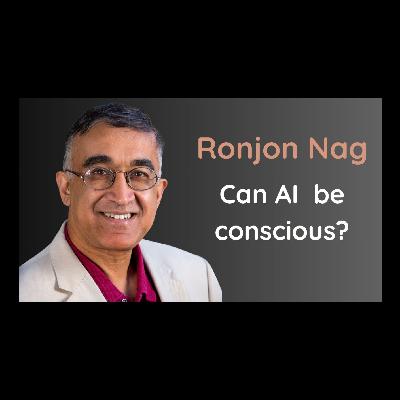
Join Rishad Usmani in a profound conversation with engineer and investor Ronjon Nag as they explore the very fabric of our existence in an age of rapidly advancing AI. This episode ventures far beyond typical tech talk, diving deep into philosophical questions about what constitutes reality, the elusive nature of consciousness (both human and artificial), the future of work in an era of abundance, and the persistent human drive for tribalism.Ronjon Nag, with his pragmatic engineering perspective, offers fascinating insights into how AI is not just changing technology, but reshaping our understanding of ourselves and the world around us. From the potential for an "aging vaccine" to the unsettling implications of a world where digital truth is easily manipulated, this episode will challenge your perceptions and spark new ways of thinking about humanity's trajectory.In this episode, you will learn:How engineers define reality: Beyond subjective perception, exploring the physical world and mental projections.The elusive nature of consciousness: A deep dive into different theories, from autonomous processes to quantum forces, and whether AI can ever truly achieve it.The "Artificial Consciousness Test": What it would take for a machine to truly feel and understand human concepts.The future of work in an AI-powered world: Will AI usher in an era of abundance where humans no longer need to work? The "lump of labor" theory vs. insatiable human desires.Human tribalism in a globalized world: Why do we cling to groups, and how might companies become the new "tribes" in a shifting power dynamic?The changing nature of truth: How AI's ability to create deepfakes and fake information threatens digital reality and elevates the importance of trusted curators and physical interaction.Moonshot thinking in longevity science: Ronjon's groundbreaking work on an mRNA "aging vaccine" and pan-cancer solutions.Guest Bio: Ronjon Nag is an accomplished engineer, inventor, and investor, with a deep expertise in AI, longevity sciences, and venture capital. His pragmatic approach to complex problems offers a unique lens through which to view the future of technology and its impact on humanity.
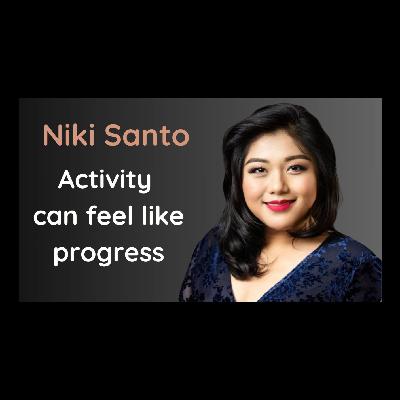
In this insightful episode, Rishad Usmani sits down with Niki Santo, co-founder and CEO of Swaza, a Silicon Valley biotechnology startup. Niki shares her compelling personal journey, marked by profound loss and a head injury in 2020, which led her to redefine her life's purpose and pivot into biotech entrepreneurship.Niki Santo: https://www.linkedin.com/in/nikivsanto/ Swaza: https://www.swaza.life/ Rishad Usmani: https://www.linkedin.com/in/rishadusmani/ HealthTech Investors: https://www.healthtechinvestors.com/ LearningwithRishad: https://www.learningwithrishad.com/
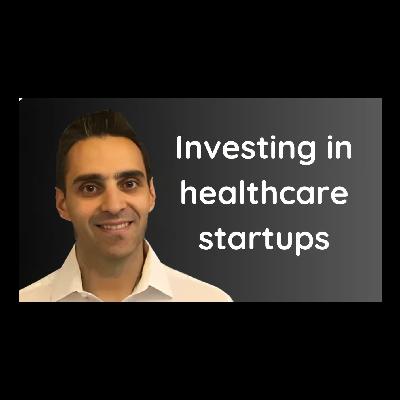
Episode Summary: In this episode, we sit down with Tanasi, a physician who has successfully transitioned into the world of venture capital, currently serving as a Venture Partner for Genesis Ventures, focusing on health tech, and as Chair of the board for Halo Health, Canada's physician angel group. We explore his unique journey, the fascinating differences between the Canadian and Greek venture ecosystems, and the crucial mindset shift required to move from the risk-averse world of medicine to the high-upside landscape of startup investing. Tanasi shares invaluable insights on identifying promising teams, the future of AI in healthcare, the evolving field of longevity medicine, and practical advice for physicians looking to enter the startup space.
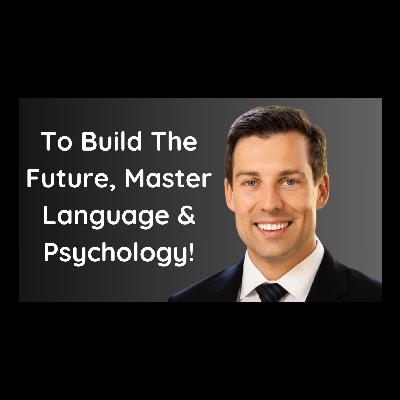
Today, I'm joined by Artem Trotsyuk, an AI Fellow at Stanford, for a deep dive into the evolving landscape of artificial intelligence, especially within healthcare. Our conversation explores the fascinating intersection of technology, entrepreneurship, and personal development, highlighting Artem's unique journey from aspiring doctor to a leader in AI ethics and innovation.We discuss how AI learns and adapts, drawing parallels to human "nature vs. nurture," and delve into the critical ethical considerations surrounding AI deployment in healthcare, from mitigating bias to ensuring patient safety. Artem also shares invaluable insights on the entrepreneurial path, particularly for academics transitioning into deep tech, emphasizing the often-underestimated importance of commercialization alongside groundbreaking technical solutions.
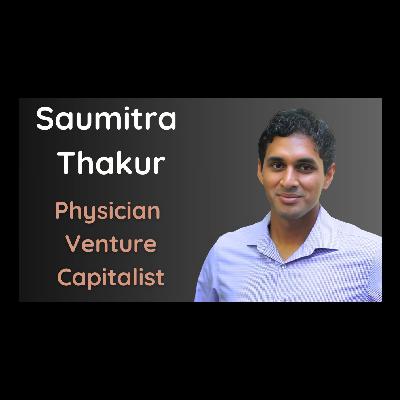
In this episode, I sit down with Sumitra, who offers a compelling dual perspective as a practicing physician and a venture capitalist at MedMountain Ventures. We explore his distinctive background, from his early fascination with neuroscience to his experiences in medical school and a notable period involved in political initiatives during his MBA studies. Sumitra provides candid insights into his criteria for evaluating founders, his views on the utility of psychological assessments in venture capital, and how his background in political dynamics informs his investment strategy within the complex healthcare sector. We also discuss the potential ramifications of artificial intelligence on both healthcare delivery and venture capital, the significance of empirical data in assessing opportunities, and Sumitra's personal reflections on ambition, resilience following burnout, and the value of focused, in-depth work. I conclude by sharing valuable advice from Sumitra for physicians considering entrepreneurship or investment roles.MedMountain Ventures (mmv.vc)Power and Progress: Our Thousand-Year Struggle Over Technology and Prosperity by Daron Acemoglu and Simon JohnsonMedPic (sales qualification framework)
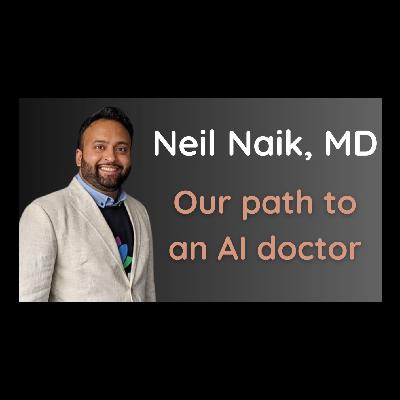
In this episode, I, Rishad, have a fascinating and in-depth conversation with my friend and fellow innovator, Dr. Neil. We dive into the complex world of AI in healthcare, exploring everything from our personal quests for contentment in this digital age to the very real possibilities and ethical questions surrounding AI-powered diagnosis and prescription. Neil shares his firsthand experiences integrating AI tools into his busy family practice, his candid thoughts on the evolving role of physicians, and crucial advice for those daring to build the future of medicine within the regulatory landscape of AI.
In this episode, we sit down with Josh Lee, Co-founder and CEO of SeamlessMD, a leading platform helping hospitals guide patients through episodes of care. Josh shares his unique journey from medical school to founding a successful healthtech company selling into the complex hospital market. He pulls back the curtain on the realities of healthcare entrepreneurship, from securing those challenging first customers to building a high-performing team and navigating product strategy for scale. If you're interested in healthtech, B2B sales in healthcare, or the founder's path, this episode is packed with valuable insights. Joshua Liu: / joshuapliu SeamlessMD: https://www.seamless.md/ (0:00:16)
In this episode, I interview Ed about his diverse career path. Ed shares insights from his childhood as the son of immigrants in San Francisco, his journey through medicine from primary care to developing health technology, and his recent focus on lifestyle medicine. We discuss how early career experiences, like the introduction of EHRs, shaped his interests, the reasons physicians seek non-clinical roles, and his approach to balancing career ambitions with family and personal well-being. Ed also offers his perspective on the evidence behind lifestyle medicine, the potential of GLP-1 drugs, and the evolving role of physicians in the age of AI.
In this episode I discuss the Canadian venture ecosytem with Meryeme Lahmami, principle at Pender Ventures 00:00 introduction 02:10 First startup, radio frequency for vitals 09:00 Path to venture capital 14:30 Diligence process 18:30 Founder vs market 21:33 Impact of US tariffs 27:12 Is entrepreneurship innate? 30:40 Founder red flags 36:20 Intuition vs structure in investing 43:50 How should we increase early stage healthcare funding in Canada? Meryeme Lahmami: https://www.linkedin.com/in/meryeme-lahmami/ Pender Ventures: https://www.penderventures.com/ Rishad Usmani: https://www.linkedin.com/in/rishadusmani/ HealthTech Investors: https://www.healthtechinvestors.com/
In this episode I share my vipassana experience and my thoughts on reality.
Transcript
0:00 Introduction and childhood 2:34 Pursuing a bachelors in arts 5:46 From arts to business and AI 12:30 Thoughts on “Hire slow, fire fast” 14:25 How to avoid bad hires 20:30 Thoughts on remote work 24:55 If you could change one thing about Canadian healthcare, what would you change? 27:10 With infinite funds, what would you build in healthcare? 30:28 How do we deal with AI errors and drift? 34:45 Should AI be explainable? 37:45 Why aren’t hospitals innovative?
Chris is a urologist, senior partner and Linivan advisory group. He completed his bachelors and M.D. at Queens University and his MBA at Wilfred Laurier. He previously ran clinical trials, has been a practicing urologist for 17 years and routinely advises medical startups. LinkedIn: https://www.linkedin.com/in/chris-borth-md-mba-219a8383/ Rishad Usmani: https://www.linkedin.com/in/rishadusmani/
It was a pleasure speaking with Neil, we talk about: 1. Introduction 2. AI chatbots for Healthcare 3. The liability problem with AI and medicine 4. The reimbursement problem with AI and medicine 5. Should we require explainability for AI clinical adoption 6. Can AI be conscious and should it have rights? 7. Should human creations be valued more than AI creations? 8. Future of physicians and AI in healthcare Neil Naik: / neil-naik Rishad Usmani: / rishadusmani
It was a pleasure speaking with Dr. Sohaib Siddiqui, he was very forthcoming with sharing several great insights from his experiences as an entrepreneur and investor. We talk about - His journey to running a family office fund - What he looks for in GPs - What he looks for in founders - Upcoming tailwinds in healthcare investing - Charm vs aptitude in predicting founder success - Can outsiders innovate in healthcare - His contrarian opinion in healthcare Sohaib Siddiqui: https://www.linkedin.com/in/dr-sohaib-siddiqui-49284180/ Kettlebeck Ventures: https://www.kettlebeckventures.com/ Rishad Usmani: https://www.linkedin.com/in/rishadusmani/ HealthTech Investors: https://www.healthtechinvestors.com/
Spencer is the Vice Chair of Medicine and the Lead Informatics Physician at the University of North Carolina at Chapel Hill. I and very thankful to him for sharing his insights and thoughts on healthcare with me. We talk about: - The future of electronic health records - Opportunities for AI in healthcare - How to fix physician burnout - His thoughts on purpose - Explainability in AI - Value based care Spencer Dorn : https://www.linkedin.com/in/spencerdorn/ Rishad Usmani: https://www.linkedin.com/in/rishadusm... HealthTech Investors: https://www.healthtechinvestors.com/

Comments

Download from Google Play

Download from App Store
 United States