


 Left Standing
Left StandingSubscribed: 19Played: 625
Subscribe

© Cara Kovacs
Description
A space for healers, witches, goddesses, and radicals who do meaningful work in a system that makes it more difficult than it needs to be. This is where you come to remember your why and reclaim your story.
carakovacs.substack.com
carakovacs.substack.com
16 Episodes
Reverse
This week’s episode is a conversation with Xenia Marie Ross Viray, who is the creator of the platform and iterations of Myths of Creation, an interdisciplinary artist who—quite literally—gets paid to be herself.Not in a “personal brand” way.In a devotional to creativity, consciousness, and resonance kind of way.We talk about what it actually looks like to build a body of work—and a business—without contorting yourself for the algorithm.Inside the episode:* Why your “content” might actually be your laboratory, not your marketing* The difference between authenticity and unmasking (and why one of them is much scarier)* How trying to “perform for the algorithm” quietly erodes the very thing that makes people choose you* What it means to create from resonance instead of strategy—and then translate it into something people can understand* The trap of constant visibility, especially nowWe also go deeper than business.Into the emotional, political, and psychological reality of being online right now:* The dissonance of building a business on social media while being harmed by it* What it means to be a sensitive, creative person in a time of constant crisis and information overload* How algorithms fracture reality—and why it’s getting harder to actually talk to each other* The grief of losing intergenerational understanding (and the question: where are our elders?)And then—because we can’t not—we go cosmic.We talk about:* Creativity as a portal for new consciousness* Art, music, and even the Olympics as evidence that joy and expression can shift collective energy* The idea that we’re not just resisting broken systems—we’re being asked to create entirely new onesOne of the most grounding threads throughout the conversation:You don’t have to do it all the same way.Some people are here to resist.Some are here to rebel.Some are here to create.Most of us are doing all three—just in different proportions, at different times.And none of those roles are more valuable than the others.If you’ve been feeling:* burnt out by social media* confused about what to share (or whether to share at all)* caught between wanting to grow your business and wanting to opt out of the noise* or quietly craving a more human, more magical way of moving through your workthis episode will meet you there.Not with a formula.But with a reorientation back to yourself.PS. At the end of this episode I got a push notification that reminded me it was recorded on my grandfather’s birthday. When you get to the end, you’ll be glad I mentioned that. This is a public episode. If you'd like to discuss this with other subscribers or get access to bonus episodes, visit carakovacs.substack.com/subscribe
This week on the podcast, I’m breaking down the most profitable month I’ve had: $108,500 in sales.But this isn’t a “here are my secrets to making money while you sleep” episode. Because sure, the money came in over the course of a month, but it is because of the systems, community and IP I have spent years building.This is a conversation about what it actually looks like to build a profitable business when you’re a feminist, a service provider, and someone with complicated feelings about capitalism.Inside the episode, I talk about:* Why getting money into the hands of marginalized people is an important part of our political work* The strange reality of being good at capitalism while actively critiquing it* The long, messy path from not qualifying for an apartment lease to being approved for an $800k mortgage* What most people get wrong about “six-figure months” in the coaching industry* The less glamorous truth behind this launch—including personally reaching out to 400 people and still getting ignored by most of themI also share the real throughline behind my results: not viral content, not hacks, not a brand-new offer.Just relentless iteration, deep attention to what clients actually need, and a business model built around making people feel seen at every stage—from first contact to long-term client relationships.If you’ve ever wondered:* whether making money while critiquing the systems that force you to work without protecting your basic rights can coexist* why your offers aren’t converting even when the work is good* what ethical selling actually looks like in practicethis episode pulls back the curtain.Not on a fantasy version of entrepreneurship—but on the slow, strategic work that actually builds a sustainable business.Listen to the episode and join my email list to get first access to the next time I launch.Grab a sneak peek into my business model here. This is a public episode. If you'd like to discuss this with other subscribers or get access to bonus episodes, visit carakovacs.substack.com/subscribe
This week on Left Standing, I’m joined by Taylor Tieman, founder of Legalmiga — and one of the few internet-savvy attorneys actually translating legalese into language you can understand. (She also loves astrology! Big plus!)If you’re a creator, coach, course seller, influencer, or small business owner… this episode is basically your gentle (but firm) legal wake-up call.Taylor breaks down:* Why securing the Instagram handle is not the same thing as protecting your brand* What most entrepreneurs forget to check before naming a podcast, course, or program* How trademark issues usually only come up after someone gets a scary letter* Why legal documents are written to be confusing — and who that benefits* The checklist every online business should have (even though no two businesses are the same)We also get into the reality creators don’t talk about publicly:* Speech clauses in brand contracts that can legally restrict what you say online* The financial consequences of breaching a sponsorship agreement* Why some creators stay silent during political moments (and why it’s not always cowardice)* The real tension between personal values and contractual obligationsTaylor also shares her perspective as a lawyer navigating a time when the legal system feels slow, reactive, and often outpaced by harm — including her thoughts on corporate PR language (including statements from companies like Home Depot) and the mishandling of sensitive document releases related to the Epstein Files.If you’ve ever thought:* “I formed an LLC, so I’m good, right?”* “I’ll deal with trademarks later.”* “That clause probably won’t apply to me.”This episode is your sign to listen first and Google later.Because sometimes the most radical thing you can do as a business owner… is read the fine print. This is a public episode. If you'd like to discuss this with other subscribers or get access to bonus episodes, visit carakovacs.substack.com/subscribe
* “No one signed up.”* “My audience doesn’t engage.”* “People can’t afford to work with me.”* “The algorithm hates me.”You’re spiraling about whether your content is cringe, too political, too woo, too much.In this episode, I make a bold (and admittedly spicy) claim:It’s not your people or the algorithm, babe. It’s you.Not in a shamey way.In a liberating way.The real problem with most marketingMost people aren’t thinking about their clients when they post.They’re thinking about:* their ex’s mom’s opinion of their content* that girl from high school who may see you calling yourself a coach and judge* former coworkers who could be lurking* their MAGA auntBasically, people who would never hire you anywayIf you’re contorting your message to avoid being judged by people who aren’t your clients, you’re not doing marketing—you’re doing reputation management for an imaginary audience.And that is a terrible business strategy.The relief no one talks aboutHere’s the exhale:Your marketing isn’t about you.Yes, people will misinterpret you.Yes, parasocial weirdness will happen.Yes, someone will project something untrue onto you.They’d do that anyway.So tell me again why you want a business on the internet if you’re unwilling to be seen by the people you’re actually trying to help?Being a business owner ≠ just doing the workIf your dream is to open your laptop and have clients magically appear so you can stay in your zone of genius all day, there are jobs for that. Truly.But owning a business means:* helping people find you* giving them a reason to trust you* showing up even when it’s uncomfortable* understanding that being “in service” also requires visibilityYou don’t get to skip the part where you’re the one steering the ship.The bottom lineYou get to be scared.You get to be uncomfortable.You get to be annoyed, frustrated, and triggered.But if you want impact, untapped income, and actual autonomy?It’s not the algorithm.It’s not your audience.It’s not “them.”It’s you.And if you want it—I believe in you.🎧 Listen to the full episode for the unfiltered version, the metaphors, and the tough love that makes this all land. This is a public episode. If you'd like to discuss this with other subscribers or get access to bonus episodes, visit carakovacs.substack.com/subscribe
If you’ve ever thought:“I care deeply about what’s happening in the world, but I’m terrified of saying the wrong thing and nuking my business”—this episode is for you.This episode is not a call for everyone to start posting infographics between launch emails. It’s a reckoning with a harder question:What does it actually mean to operate from your values under capitalism—and what happens when you don’t?First: let’s talk about scroll rage (s/o @hottranslifecoach for coining this term)You know how road rage works? You’re behind someone driving ten under the speed limit, you’re swearing, spiraling, projecting. Then you pass them and it’s a 92-year-old woman gripping the steering wheel for dear life. And you feel terrible.Social media is that—but no one ever passes the car.People don’t know you. They don’t know your context, your history, your lived experience, or what unprocessed trauma is showing up in a tiny bit of screen that can’t possibly hold nuance. They just see a fragment and unload their nervous system onto it.This is the water we’re all swimming in when we talk about “showing up consistently” online. Whether that’s political, as a business owner, or to hopefully make your ex feel bad when you post a thirst trap. Scroll Rage is the offloading a troll has into that space that makes you feel like the 92-year old driver—like you’re hanging on for dear life.An obvious reminder: Everything is political.Being a woman is political.Being white is political.Being chronically ill is political.Providing healthcare is political.Providing therapy is political.Running a business under capitalism is political.The question isn’t whether your business is political.It’s whether you’re conscious about how.In this episode we discuss what it means to front your politics in business.Plus I give you some tea about how this played out for big companies who had a lot more money to throw around, and therefore a lot more to lose (and gain) by sharing their politics online.The point is not to make a case for performative ally ship (quite the contrary, as most of the research showed that if a brand seemed to be performing it negatively impacted sales) but more to explore how activism impacts capitalism…ya know, just for funnies.What the research actually showsA University of Arizona study on corporate sociopolitical activism analyzed hundreds of activism events across 150+ U.S. firms and found:* When a company’s political stance aligned with its stakeholders, stock value increased (~0.7%)* When it misaligned, stock value dropped (~2.45%)* Sales followed the same pattern: alignment = growth, mismatch = declineTranslation:People don’t punish values. They punish incoherence. But honestly—by a really nominal amount…Another 2025 study in the Journal of Business Research confirmed that:* Consumers are not a monolith* Political ideology shapes brand loyalty* Activism polarizes—but not randomlyYou don’t lose “everyone.” You lose people who were never actually aligned with you in the first place.So… should you be political in your business?Here’s the actual answer:* If your politics are integrated into why and how you work → yes, probably.* If your politics would actively prevent people from accessing essential care or services → maybe not front loaded in your marketing, but still privately of course.* If you’re posting to look “on the right side” without education or action → absolutely not.* If your value is privacy and you do your activism offline → that is still a value.Being political doesn’t mean being loud.It means being in integrity with yourself.A note on education and responsibilityHaving a take means doing the work.Paying educators. Reading. Learning. Being wrong and repairing.Not outsourcing your conscience to Instagram slides.Creators and educators I deeply respect who are POC and more qualified to teach you about social justice than I am:* Adrienne Maree Brown* Patrisse Cullors* Susanna Barkataki* Jenan Matari* Rachel Cargle* Blair ImaniThere is no excuse for being uninformed. There is grace for being in process.Final spicy truthStaying “neutral” in public while privately benefiting from systems of harm is still a political choice.People saying that their value is “protecting their nervous system” are not anyone I would hire to help me heal via way of spiritual bypassing.Resources Cited:Academic Sources (Politics & Consumer Behavior):* NBER Working Paper — The Musk Partisan Effect on Tesla Sales (2025). https://doi.org/10.3386/w34413* University of Arizona — The Price of Taking a Stance… https://news.arizona.edu/story/price-taking-stance-how-corporate-sociopolitical-activism-impacts-bottom-line* Journal of Marketing — Corporate Sociopolitical Activism and Firm Value https://doi.org/10.1177/0022242920937000* Journal of Marketing Research — Should Your Brand Pick a Side? https://doi.org/10.1177/0022243720947682News & Reported Impact:* Bud Light Boycott Effects Endure — Forbes. https://www.forbes.com/sites/aliciapark/2024/07/18/bud-light-boycott-effects-endure-brand-drops-to-third/* Bud Light boycott impact summary — Wikipedia. https://en.wikipedia.org/wiki/Bud_Light_boycott* Did Starbucks Lose $12B from Boycotts? — Snopes. https://www.snopes.com/news/2023/12/07/starbucks-12-billion-loss-due-to-israel/* Ben & Jerry’s co-founder resigns — Reuters. https://www.reuters.com/business/ben-jerrys-co-founder-resigns-citing-loss-independence-under-unilever-2025-09-17/ This is a public episode. If you'd like to discuss this with other subscribers or get access to bonus episodes, visit carakovacs.substack.com/subscribe
Here’s a story a lot of values-driven business owners are telling themselves right now:I don’t have the capacity.I’m overwhelmed.I’ll do it when things calm down.And listen — that story makes sense. We’re living in late-stage capitalism during a genuinely destabilizing moment in history. Of course you’re exhausted. Of course your nervous system is fried. Of course everything feels harder than it used to.But here’s the uncomfortable truth I unpack in this episode: that story is also keeping a lot you stuck.Not because it’s wrong — but because it’s incomplete.👉 Before you read any further, if you want the practical version of this conversation (not just the philosophical one), come to Burn It Down and Build It Better on Feb 2–3. It’s free, it’s live, and it’s where I teach the systems that actually support sustainable, ethical growth in 2026.Systems Aren’t the Opposite of Care — They’re What Make Care PossibleOne of the biggest myths I see in feminist, healing-centered spaces is that systems are somehow antithetical to artistry, intuition, or care.They’re not.They’re just the boring part.And entrepreneurship does require doing boring, annoying, sometimes frustrating things — the same way having a body requires stretching, or having good dental hygiene requires flossing, or having a long-term relationship requires staying when it would be easier to bail.You either decide you’re willing to do things you don’t love in service of what you do love — or you outsource your power to circumstance and call it “capacity”.“I’m Not a Tech Person” Is Not a Personality TraitIn the episode, I talk about how often “I’m not a tech person” or “systems just aren’t my thing” is less about truth and more about gendered conditioning.Caretaking, healing, emotional labor? Feminized.Infrastructure, logistics, systems? Masculinized.And opting out of the latter doesn’t make you more values-aligned — it often just keeps you dependent, underpaid, exhausted, without leads, and resentful.Learning the practicalities of business is a self loving choice.It doesn’t mean you have to be a content creator or coder…but it means you understand what you need to know to grow.You Don’t Need Infinite Capacity — You Need DirectionI’m not telling you to work yourself into the ground. That’s not trauma-informed, and your nervous system matters here.I am saying that waiting for a mythical future where you suddenly have more time, more energy, and fewer responsibilities is a losing strategy.What actually changes things is making a non-perfect choice that moves you closer to the long-term solution you want:* Investing before it feels fully comfortable* Asking for support instead of white-knuckling it* Building systems once so you’re not reinventing the wheel every monthMost people burn more energy avoiding action than taking one strategic step.2026 Is About Real Connection, Not TricksAI isn’t killing service-based businesses. If anything, it’s raising the bar on how we show up—in a way I think is ultimately good for the consumer.People are more discerning. More skeptical. More tired of vague promises and generic “value.”Which means:* You have to know why your work is different* You have to communicate like a real human* You have to market like you actually give a shit about the person on the other sideIf you don’t know what makes your work different, it’s not a marketing problem — it’s a clarity problem.And that’s fixable.If This Episode Hit, Here’s Your Next StepThis episode is about stopping the self-abandonment disguised as burnout — and choosing to build something that actually supports you and the people you serve.If that resonates, join me in class. This is a public episode. If you'd like to discuss this with other subscribers or get access to bonus episodes, visit carakovacs.substack.com/subscribe
I’ve spent a truly embarrassing amount of money on bad marketing support.Agencies. Contractors. “Experts.” People who promised to scale my work, optimize my ads, automate my infrastructure, and generally turn my business into a smooth, passive-income machine.What happened instead was I flushed over $20k down the toilet on IP that didn’t even feel like me.Not because marketing doesn’t work — it does.But because most marketing agencies are built on outdated strategies, soulless aesthetics, and zero understanding of the people they’re supposedly helping.And frankly? A lot of them are wildly out of touch with the current market and the politics of the people they serve. (Not all of them—I should say I have worked with some great people…I just had the sneaking suspicion I could do it better if I built the team myself…)So today’s episode of Left Standing is a conversation I’ve been wanting to have publicly for a long time.This Episode Is About Marketing — Plus You Can Hire Me and My Faves To Do It For YouIn this episode, I sit down with three women who have been in my world for years — not just as collaborators, but as friends. They also built my website, my ad campaigns, and did the same for half my clients.We are joining forces. And you can hire us here.Together, we talk honestly about what it’s actually like to market an online service business right now — in a landscape shaped by algorithm chaos, AI saturation, burnout, capitalism, and constantly shifting attention.Some Things We Say Out Loud (That Most People Won’t)We talk about:* Why so many people are lighting money on fire hiring agencies too early* Why “one-stop shop” marketing agencies don’t get radicals the way we do* How DIY tools and AI have made marketing faster but often way worse* Why Ads Manager keeps changing and who that actually benefits* Why solopreneurs are being asked to do the work of full marketing teams (and how unsustainable that is)* Why authenticity isn’t a brand trait — it’s a survival strategy* And why most marketing advice completely ignores capacity, disability, grief, and real human limitsWhy We Built Something NewThis conversation also marks the launch of something we’ve been building quietly behind the scenes:Waxing Moon Media 🌒A boutique marketing agency for online service providers who:* Don’t want to sell their soul to scale* Want ads that actually convert without manipulation* Want design that builds trust instead of screaming “2021 Canva template”* Want copy that reflects their values, politics, and humanity* Want strategy that’s grounded in this market — not three algorithm updates agoWe built this because we were tired of watching smart, ethical people get burned by bad advice, bloated retainers, and agencies that didn’t understand them at all.🎧 Listen to the episode here and share it with your online business owner friends.🌑 Learn more about Waxing Moon Media: https://waxingmoonmedia.comAs always: take what resonates, leave the rest, and trust that you’re allowed to build something that actually works for you.— Cara 🖤 This is a public episode. If you'd like to discuss this with other subscribers or get access to bonus episodes, visit carakovacs.substack.com/subscribe
Let’s get something straight right out of the gate:2026 is not a “soft launch”.It’s a fuck around and find out year.And my favorite astro bestie Torrence Tremayne gives a very specific and direct break down of everything you need to know.After half a decade of grief, dissociation, therapy-speak, spiritual bypassing, and late-stage capitalism catastrophes, the astrology of 2026 signals something potent:🔥 MovementTorrence—mystic linguist, archetypal astrologer, and longtime co-conspirator in naming the patterns beneath the chaos—and I connected to talk about what’s actually coming. Not in platitudes. Not in horoscope fluff. But in the kind of language that acknowledges power, systems, and the fact that the world most of us grew up in feels both present in our cultural nostalgia but functionally dead in our lived experience.What we explore:From Water 💧 & Earth 🌍 to Air 🌬️ & Fire 🔥For over a decade, we’ve been swimming in water and earth dominance:* Neptune in Pisces (since 2011)* Saturn in Pisces (since 2023)* Uranus in Taurus (for the last 8 years)* Pluto in Capricorn (from 2008-2024)Translation?Collective themes of:* Emotional processing, an increase in themes around mental health (both for better ie. more of us in therapy and worse ie. Jonah Hill, social media removing all nuance from mental health, bypassing, MAHA, Me Too etc)* Material survival and corporate greed (monopolization from corporations, exploitation of the earth’s resources, fast fashion, environmental collapse)This era taught us how to feel more deeply. How to name what has hurt for generations.But it also trapped many people in delusions, dissociating and mindlessly participating in the very things that are killing the planet.2026 changes the elemental game entirely.We move decisively into air and fire:* Neptune enters Aries* Saturn enters Aries* Uranus moves into Gemini* Lunar Nodes shift into Aquarius/Leo* Pluto continues its long march through AquariusAir and fire don’t feel their way forward.They move.Air spreads information. (Both the facts and the misinformation…)Fire ignites action. (Both of righteous justice and impulsive anger)This is not a gentle transition. It’s volatile by design.Neptune in Aries: The End of the Dream, The Start of the FightNeptune rules illusion, fantasy, culture, collective myth-making.Aries rules action, conflict, youth, revolt.When Neptune moves into Aries, the dream becomes militant.We already saw a preview in summer 2025:* Youth-led uprisings across the globe* Masked Gen Z protesters overthrowing governments* State power responding with militarization* The illusion of “normal” cracking under pressureWhen Neptune briefly retreated back into Pisces (Sept of 2025 until the end of this month), the collective retreated too.Cue:* Aggressive nostalgia* 90s reboots* Y2K aesthetics* “Can we just go back?” energyNot that things have been peaceful, but there was a palpable energetic shift.Neptune in Aries returns in 2026 and says:You don’t get to go back.Pluto in Aquarius: Power Loses Its MaskPluto doesn’t whisper.It exposes.The last time Pluto moved through Aquarius, we saw:* Revolutions (both the American and French)* Monarchies collapsing* Power structures rewritten, though still rooted in colonialism, patriarchy and white supremacy This era is not subtle. And it’s not just political—it’s technological, cultural, and social.What was once dismissed as fringe is now showing up in court documents, leaked emails, and Congressional records.And 2026?The truth will become unavoidable by people on all sides of the aisle.Uranus in Gemini: Information CorruptionUranus rules disruption.Gemini rules communication, tech, networks.This isn’t abstract. It’s already happening:* An increase in hacking* The collective realization that all of our information is being monitored closely, without our consent* AI-generated scams that mimic real institutions* A boom of tech stocks that may collapse under its own weightUranus in Gemini doesn’t mean “cool new apps.”It means reality itself becomes harder to authenticate.The AI Bubble: 2026 Is the Dot-Com MomentLet’s say the quiet part out loud.The U.S. economy is currently over-leveraged on AI speculation.This mirrors the dot-com boom almost perfectly:* Untested technology* Inflated promises* Massive capital concentration* Little to no regulation* Cultural pressure to “get in early”Astrologically, this checks out.When Uranus (tech) destabilizes Gemini (markets, communication) and Pluto (power) exposes Aquarius (systems), bubbles pop.Not because the technology disappears—but because the fantasy collapses.The Titanic moment always happens after peak confidence.2025 Was the Fuck Around Year.2026 Is the Find Out Year.2025 closed chapters.2026 opens consequences.The coping strategies that kept people afloat—denial, nostalgia, spiritual bypassing, hyper-consumerism—stop working.And here’s the part that actually gives me hope:🔥 People stop taking it lying down.🔥 Information turns into action.🔥 The exploited begin to speak—and be believed.This doesn’t mean justice is neat or fast.But it does mean the cover stories fail.So What Do You Do With This?Well, listen to the episode, obviously.You also:* Strengthen discernment* Diversify power (financial, relational, informational)* Stay flexible* Stop outsourcing authority* Check where you get your information from (again and again)You could also book a reading…🔥 This is a public episode. If you'd like to discuss this with other subscribers or get access to bonus episodes, visit carakovacs.substack.com/subscribe
There’s something rare about a conversation that reminds you not just what’s possible in business, but what should be possible. On the latest episode of Left Standing, Susanna Barkataki — founder of Ignite Institute and Yoke Yoga, bestselling author, TEDx speaker, and social justice educator — shares how she’s built a business that balances abundance with integrity.“I do think how you define success and constantly reevaluating what that success looks like… you can have a super values-aligned business practice and be successful,” Susanna says. “My goal initially was just to replace my teaching salary… But then the possibilities for abundance surprised me, and the question became: What do I do with that abundance?”For Susanna, success isn’t a number on a spreadsheet — it’s a moral and spiritual question. She’s committed to changing the face of yoga. “If people of color, queer folks, trans folks, different abilities aren’t seeing themselves as yoga teachers… it’s hard to imagine it. So I make programs that make that possible.”We also discuss practical frameworks for building a business with heart: listen to the market, anchor your offerings, and don’t discount yourself. And when it comes to scaling ethically? Teamwork is essential. Susanna shares the importance of investing in people: “My best investments are in my team. Having a tech VA, social media manager… I could not have gone as far as I’ve gone without the right people.”Susanna’s approach is a masterclass in aligning purpose with profit — proving that you can build a thriving business while staying true to your values.Listen to the full episode of Left Standing to hear Susanna’s story, her insights on defining success on your own terms, and her advice for anyone trying to create impact without compromise.About Susanna Berkataki: Susanna Berkataki is the founder of Ignite and Yoke Yoga, bestselling author of Ignite Your Yoga and Embrace Yoga’s Roots, a TEDx speaker, and an advocate for social justice through yoga. Her work integrates spirituality, psychology, and community-based healing, helping people and organizations thrive ethically and sustainably. This is a public episode. If you'd like to discuss this with other subscribers or get access to bonus episodes, visit carakovacs.substack.com/subscribe
On this episode of Left Standing we explore the topic of life coaching as a cult.If you follow me on Instagram, you know this is one of my favorite things to talk about/poke fun at. For example…I love critiquing the coaching industry, partially because I think it is necessary (we need people to educate from within our space) and partially because as a woo-loving, astrology-obsessed millennial in Los Angeles, one of my insecurities is that people think I am like these folks. So, I attempt to make it abundantly clear I am not by being the vocal example of a coach who knows there’s some sketchy shit in our industry…and that this is not that.So many of my clients feel cringe about calling themselves coaches…and I think that is the fault of the co-opting of this word for bad faith business practices that give our business a bad rep…not because there is anything bad about coaching.In this episode I attempt to distinguish between trauma-informed, ethical coaching and some weird ass shit people have commodified under the moniker of “coach”.I would LOVE to hear your thoughts…because this is a controversial topic and deeply personal to the lived experience of those of us who have been swindled (hello!).Also, the word “cult” doesn’t have a well-defined scope. It is sort of subjective what a cult is…see this episode’s cited resources for more information on this.Which is why I would love to have an open dialogue with folks! Tag me in your thoughts!If you want non-cult, trauma-informed, ethical coaching tools, you can sign up for free emails and get an ethical sales guide here.Cited Resources:BBC — Life Coaching Industry BoomA data-driven look at the rapid growth, lack of regulation, and financial stakes of the coaching industry.https://www.bbc.com/worklife/article/20230418-life-coach-self-help-industry-growthNew York Times — “They Spent Their Life Savings on Life Coaching”An investigation into predatory sales tactics, high-pressure upsells, and financial exploitation in popular coaching programs.https://www.nytimes.com/2024/06/02/business/life-coach-debt-savings.htmlThe Guardian — Lighthouse Coaching Group ShutdownReporting on the closure of Lighthouse after allegations of isolation, coercion, and financial pressure on members.https://www.theguardian.com/uk-news/2024/mar/11/lighthouse-global-life-coaching-group-ordered-to-close-cultU.S. Department of Justice — Nxivm Conviction SummaryOfficial documentation of the criminal case against the founder of Nxivm, originally marketed as an executive success coaching program.https://www.justice.gov/usao-edny/pr/leader-nxivm-sex-cult-sentenced-120-years-imprisonmentInc. Magazine — “The Cult Language Coursing Through Business”An analysis of cult-adjacent messaging, aspirational manipulation, and the rise of unregulated coaching culture.https://www.inc.com/sam-blum/the-cult-like-language-thats-coursing-through-business.htmlBritannica — Definitions & Characteristics of CultsA scholarly overview of what constitutes a cult and the key behaviors associated with high-control groups.https://www.britannica.com/topic/cult This is a public episode. If you'd like to discuss this with other subscribers or get access to bonus episodes, visit carakovacs.substack.com/subscribe
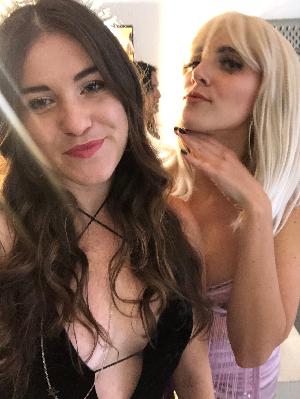
Kate Belew and I met in July of 2018 on Governors Island in New York City. We were both members of The Poetry Brothel-an immersive art, esoteric, and burlesque production that still exists internationally today. Kate, a poet in the show, and me the card reader for the brothel’s monthly productions.I was just starting my business and Kate was doing social media consulting for a witchy shop we both frequented in lower Manhattan. All these years later I wanted to celebrate the launch of Kate’s second book Word Witch with an episode where we get into our favorite ritual magick! As Kate’s first business coach when she decided to go out on her own all this years ago—Kate was int he very first round of my mastermind—it is so exciting to get to watch the iterations of her work. From co-conspirators as “poetry whores” in the brothel to badass business owners and friends, our journey is one I cherish!I hope you love this episode! Guest episodes are always my favorite (because I don’t have to research anything and I just get to talk to cool people!)Follow Kate on Substack and InstagramBuy Word WitchAs a reminder, guest and feminist exploratory episodes are free of charge. To get mini-lessons (and to support a small, women-owned business!) consider becoming a paid subscriber (some archived episodes with Kate are also available with your subscription!) This is a public episode. If you'd like to discuss this with other subscribers or get access to bonus episodes, visit carakovacs.substack.com/subscribe
In a world of wild contradictions multiple truths I hold as a feminist business owner who hates, but wants to thrive in spite of late-stage capitalism include:* It is insane that we have to work to make money to live in a culture that doesn’t even afford many people basic needs AND there is no one more deserving of being paid for their labor than feminist care workers.* I have resented having to work in my business during personal tragedy, but have had no choice because of capitalism AND I am deeply grateful/privileged to make a high salary doing meaningful work with people I respect and admire.* It feels bizarre to have to advertise on platforms that support authoritarianism and the destruction of the environment AND I know so many of my friends, collaborators, peers and mentors exclusively thanks to social media…* People are facing extreme economic hardship due to unfair and unsustainable rising costs AND I am unapologetically having my second highest year in business, with my eye on funding my mother’s retirement even in a broken economic system.* The online services industry has changed dramatically as people require more trust building to invest than ever before AND I think this is a good thing—even though it makes selling harder—because we should have to earn people’s trust in an industry that has abused it.In our first mini-business episode, I share about these contradictions and how to make money anyway. Both because we need to AND because we get to do the work we love as we do it. It is a mind fuck and having conflicting feelings about that makes sense.A regulated nervous system is your most important tool for making decisions in this moment from the headspace of a CEO—which is what you are at work, not your inner child, anxious self saboteur, or procrastinating perfectionist. On November 18 for $33 I am teaching a workshop called Regulate to Rise which will both regulate your nervous system and give you my favorite tools I use both with clients and for myself to come to the work from CEO headspace while protecting and honoring all of our parts in times such as these. 1/2 the proceeds will be donated.Additionally, when you subscribe to this space you get access to all archived episodes and once-a-month mini business lessons like this one. Please note this is the only mini business lesson that will be free. To continue to access this kind of content, please consider becoming a paying subscriber and supporting a small woman-owned business. This is a public episode. If you'd like to discuss this with other subscribers or get access to bonus episodes, visit carakovacs.substack.com/subscribe
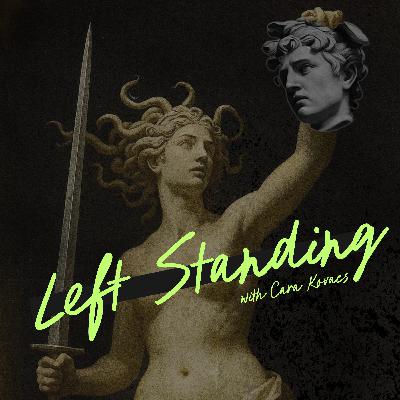
Lily Allen’s viral new album, West End Girl, digs deep. It catalogs the unraveling of her marriage and the deeper pain that lives between the lines of her lyrical prose. This isn’t tabloid fodder—it’s what Pitchfork called her most “brutally candid” work, a rare space where a woman can hold an abuser, a system, and her own art in the same frame.While Allen insists the record is “fictionalized,” it’s unmistakably laced with real life—even with the unavoidable layer of my own parasocial projection. The title track name-drops the couple’s designer—“Found ourselves a good mortgage / Billy Cotton got sorted”—a pointed nod to their now-infamous Architectural Digest home tour, which, in hindsight, aged about as gracefully as Harbour’s opening “bit,” greeting the camera crew like a mistress at the door. (Iconic, for all the wrong reasons…and very worth the watch. Psst. All relevant links are down at the bottom!)With almost no pre-launch marketing, the album shot up the charts, hailed by Variety, The New Yorker, and countless fans as her best work yet. (Personally, I’ve been devoted since her early-2000s protest anthem “Fuck You,” written about George W. Bush.) Still, West End Girl took over my social feed overnight. Yours too, maybe? This is because it touches something deeper than celebrity gossip or divorce voyeurism.Those of us who have spent years minimizing our needs, over-explaining our emotions in an attempt to have them recognized, or trying to contort ourselves into palatable versions of dominant cultural scripts feel a shock of recognition in every song. Allen articulates the quiet grief of being gas-lit into gratitude for crumbs.West End Girl isn’t just about Lily Allen and David Harbour—it’s about the way patriarchy teaches women to negotiate with our own erasure to serve the agenda of systems of oppression. She’s writing from the same ache that so many of us have been metabolizing privately for generations: the manipulation, the gaslighting, the subtle minimizations that we stomach under the guise of love in an attempt to find it/have it/keep it.And that’s exactly what the cultural moment is naming out loud. As Vogue recently asked in its viral essay, “Is It Embarrassing to Have Boyfriends Now?”, there’s a growing recognition that heterosexual love has long demanded women trade dignity for proximity. Asa Serasin even coined a word for this in 2019—heterofatalism, or the idea that heterosexual relationships are doomed to fail, because women are too often expected to shrink our brilliance, temper our boundaries, and laugh off harm to keep men comfortable.Enter Left Standing: The PodcastI actually recorded the first episode of my new podcast, Left Standing, before West End Girl dropped—but they’re part of the same conversation, and I knew I had to discuss them as such.The show is about the reclamation of our narratives: the language, myths, and cultural scripts that have been rewritten and manipulated to serve the false ideals of systems of oppression. In episode one we will trace the etymology of words like gossip (originally meaning “god-sib,” a woman who stands by you in difficult times), and hysteria (from hystera, the womb). We will also discuss the way in which patriarchy rewrites myth, starting with my favorite goddess, the true, often-erased story of Medusa—a survivor punished for being violated.The first episode unpacks these histories and the lineage of tone-policing that still shapes how we hear women like Lily Allen: as “dramatic,” “unladylike,” or “sharing too much.” In it, I quote Melissa' Febos’ book Body Work: The Radical Power of Personal Narrative. She writes:Listen to me: It is not gauche to write about trauma. It is subversive. The stigma of victimhood is a timeworn tool of oppressive powers to gaslight the people they subjugate into believing that by naming their disempowerment they are being dramatic, whining, attention-grabbing, or else beating a dead horse. By convincing us to police our own and one another’s stories, they have enlisted us in the project of our own continued disempowerment.Because when survivors tell the truth, someone will call it embarrassing, dramatic, attention-grabbing, unnecessary, not lady-like, or a lie.And every time we tell it anyway, we reclaims our power—and gives others permission to do the same.As this is our first episode, your shares, comments, likes and subscribes mean OH SO much to me!Details and resources below!Thank you Jacquline Burtney for designing this! If you want to know why we went in this direction—listen to the episode for the feminist story of the iconic Medusa!Housekeeping Notes:* What happened to Business Witch? Well…a random woman who said she owned the trademark for “The Business Witch” demanded I rebrand. In lieu of litigating over the matter, I did. And I like this title way better…what about you? That being said, our old episodes have been archived and are available on this platform for paid subscribers only. Additionally, I’ll be releasing a mini business lesson in the form of a podcast once per month. To access this content, you also must be a paid subscriber. As a thank you for subscribing, if you join at the annual level you’ll get access to my upcoming nervous system regulation class, Regulate To Rise happening on November 18. If you subscribe as “A Real Witch” you’ll be entered to win free birth chart readings with me 2x a year PLUS all other paid subscriber benefits. This community space is subscriber-supported. To get access to archived content and exclusive business lessons, upgrade your subscription.* What does this mean for Business Witch: The Course? It will henceforth be known as The Feminist Business Framework. It relaunches in early 2026 and will be getting a make over! I’ll be updating all course material, adding a module on Launching, and generally making the entire thing even better. When you Subscribe to this space, not only will you get access to old and archived episodes, you’ll get first access to the re-launch and the ability to apply the cost of your Substack subscription to your course enrollment fee. Join the waitlist here.Resources mentioned in this episode:Melissa Febos’ Body Work: The Radical Power of Personal NarrativeThe Feminist Origins of Gossip by Ashley D’ArcyThe History of Hysteria by Ada McVeanDemetra George’s Mysteries of the Dark MoonVogue Is Having A Boyfriend Embarrassing NowLily Allen’s AD Home TourLily Allen’s West End GirlNew York Magazine: The Trouble With Wanting MenGo deeper with me…I have a few spots left for birth chart readings for the year. If you want to see where Medusa, or other such goddesses live in your chart, grab a spot before they sell out!I’ll be running a special on intensives for coaching for Black Friday—there are limited spots…if you want to grab one before they go live, message me.I am so curious if you have a personal goddess of resonance…let me know if a story has spoken to/through you!What is your favorite track on West End Girl? Comment and let me know! This is a public episode. If you'd like to discuss this with other subscribers or get access to bonus episodes, visit carakovacs.substack.com/subscribe
In a potent dose of pragmatic hope, Cara sits down with visionary author Natasha Hakimi Zapata to alchemize our collective political grief. Natasha reveals how a better world isn't a fantasy—it’s already being practiced in countries that have solved many of the crises plaguing the US, from universal healthcare to paid parental leave. This conversation is a powerful reminder that our darkest moments can be portals to radical, life-affirming transformation.Connect with Natasha: WebsiteInstagramBookBusiness Witch The Course: This episode is brought to you by Business Witch The CourseAdditional Resources: Learn about working with me and subscribe for business tips. Apply to be a 1:1 client. Follow me on Instagram! This is a public episode. If you'd like to discuss this with other subscribers or get access to bonus episodes, visit carakovacs.substack.com/subscribe
Amanda Litman is the force behind Run for Something, an organization recruiting the next generation of political leaders. A veteran of presidential campaigns and author of When We're in Charge, she provides a playbook for young people to break the cycle of "bad boomer leadership" and reshape our world.This episode is a masterclass in dismantling the "gerontocracy," mobilizing with intentional strategy, and giving ourselves permission to dream of a future that serves us all. Connect with Amanda: WebsiteInstagramBusiness Witch The Course: This episode is brought to you by Business Witch The CourseAdditional Resources: Learn about working with me and subscribe for business tips. Apply to be a 1:1 client. Follow me on Instagram! This is a public episode. If you'd like to discuss this with other subscribers or get access to bonus episodes, visit carakovacs.substack.com/subscribe
Meet Dr. Willie Parker, OB/GYN, Christian, reproductive justice advocate, and author of Life's Work: A Moral Argument for Choice. In this episode, Dr. Parker shares his powerful journey of reconciling faith and medicine, offering a deeply compassionate perspective on providing abortion care, especially for marginalized women in the South.Cara and Dr. Parker tackle the complexities of choice post-Roe, discussing the intersection of faith and science, the political and racial dynamics of the abortion debate, and the call to find clarity and courage in the fight for reproductive justice.Connect with Dr. Willie ParkerWebsiteBookBusiness Witch The Course: This episode is brought to you by Business Witch The CourseAdditional Resources:- Learn about working with me and subscribe for business tips.- Apply to be a 1:1 client.- Follow me on Instagram! This is a public episode. If you'd like to discuss this with other subscribers or get access to bonus episodes, visit carakovacs.substack.com/subscribe
Comments


Download from Google Play

Download from App Store
 United States