


Light Forest
Subscribed: 0Played: 12
Subscribe


© Dev Lewis
Description
The Light Forest podcast is a journey of exploration to bring more Light into how we live and regenerate our planet away from 'Dark Forest' systems of extraction and fear.
In Season 0 join me for conversations with change makers from around the world, as we explore philosophies, technology, spirituality, and history that can help us get to the root of our global problems.
Together we learn how to play our part in the regeneration of our planet, starting with our own minds, to create a Light Forest world.
In Season 0 join me for conversations with change makers from around the world, as we explore philosophies, technology, spirituality, and history that can help us get to the root of our global problems.
Together we learn how to play our part in the regeneration of our planet, starting with our own minds, to create a Light Forest world.
24 Episodes
Reverse
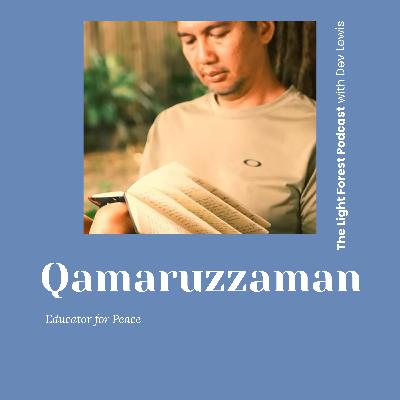
We talk about finding peace and peace building, as individuals and as a planet. What does peace really mean? What are the conditions that it may arise?In this episode we go on a long walk and a yarn about Peace from many dimensions: inner, social, and global, and the role of education in fostering it. Q has been an educator, a ‘physics geek’, and guitarist for many decades specialising in educating for peace. He works with schools and organizations across Asia and globally, including communities navigating violence and trauma, helping learners explore fundamental questions of identity, planetary well-being, and what it means to be human in the 21st century.In this conversation he opens up on his own journey, growing up as a Malay Singaporean, moving to Canada for High School and experiencing the power of education to bridge worlds, helping young Burmese navigate violence in their upbringing, and navigating a mental breakdown in his 40s, all which contributed to a deeper knowing of how we may create conditions for peace it to arise in our world. We recorded this together at Light Forest Studios in Chiang Mai. Thank you for listening! Projects and Resources Mentioned- CASEL (Collaborative for Academic, Social, and Emotional Learning)- Organization focused on social and emotional learning frameworks- **United World Colleges (UWC) - International network of schools promoting peace through education- UNESCO - United Nations Educational, Scientific and Cultural Organization Books and Frameworks Referenced- Integral Theory by Ken Wilber- Johan Galtung’s peace theory- Myth of Normal by Gabor Mate
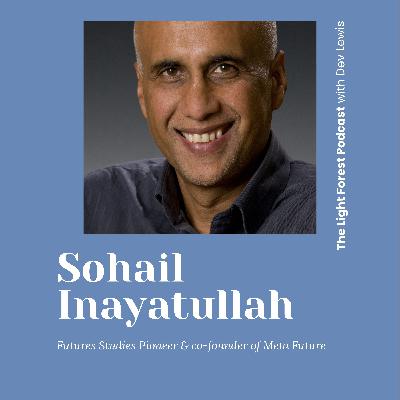
What if we understood the future as an open space, co-created by us in this moment. A reality that we actively shape, but driven by myths and metaphors we unconsciously hold about ourselves and the world. To live your authentic future, to help guide policy change, uncover the existing story and metaphor, and find a new one. From Dark Forest to Light Forest. We are joined by Sohail Inayatullah, a futures studies pioneer who has spent decades helping students, world leaders, and organizations navigate complexity and actively transform their futures, integrating Eastern and Western approaches.Sohail is co-founder of metafutures, educational think tank which explores futures-oriented issues, co-founder of the Asia-Pacific Futures Network, is the inaugural UNESCO Chair in Futures Studies, and holds several roles with universities around the globe, including Tamkang University (Taiwan). 00:00:00 Introduction to Future Studies00:03:15 The Six Pillars Framework00:10:45 Causal Layered Analysis (CLA)00:18:30 Personal CLA and Metaphors00:25:00 Spirituality and Future Studies00:32:00 Health and Microvita00:40:00 Concluding Thoughts on Future Studies
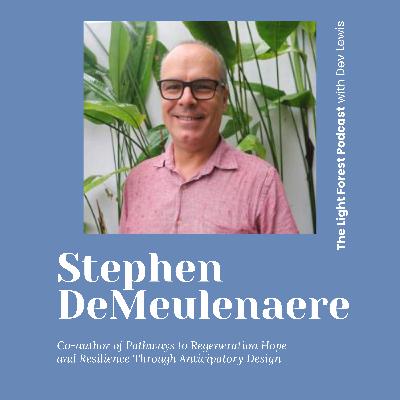
We’ve been told a story that human society evolved from primitive barter to superior modern money. That linear story flattens thousands of years of value exchanged through reciprocity, mutual aid, and gift economies. Systems that nourished people and ecological relationships.Modern (fiat) money and its associated systems have a valuable role to play but it has become a de-stabalising force in our culture, one that is at the root of all our planetary challenges today. Redesigning money is a core pathway away from GDP growth to a more regenerative, Light Forest World. Today, we’re joined by Stephen DeMeulenaere, who has spent over 35 years helping communities design financial tools that strengthen local economies, support small businesses, and build resilience in times of crisis. Stephen lives in Bali and is the co-author (with Scott Morris) of a recent book Pathways to Regeneration: Hope and Resilience Through Anticipatory Design His life’s focus has been on using local currencies, digital payments, and regenerative economic models to help communities thrive—whether in rural villages, urban neighborhoods, or entire regions. He has worked with community currencies, emergency currencies, and credit unions during the Asian Monetary Crisis in Japan, Hong Kong, Thailand, Indonesia, and East Timor after their independence. He led Indonesia’s first non-profit stablecoin and continues to bridge the worlds of community currencies and blockchain technology, collaborating with commons-centric communities to ground crypto in real-world regeneration.chain technology, collaborating with commons-centric communities, to ground crypto in real world regeneration. In this walk through the forest, Stephen takes us down many paths:The history of money, economy, and anthropology to explain how our current system is on the verge of collapse. A range of approaches from his book, drawing on leading thinkers, such as Kate Raworth and John Fullerton, and EF Schumacher, to redesign currency and economies.His first-hand experience working with communities in Thailand and Indonesia designing community currencies in the late 90sA sharp assessment of the potential of blockchain to enable decentralised forms of currencies, and the practical challenges working with crypto space and the technology and rooting them in local communities.Chapters02:16 Introduction to Stephen DeMeulenaere04:39 The Problematic Design of Economic Systems08:49 Extractive Economies and GDP Critique14:37 Anticipatory Design Framework19:10 Understanding Currency and Community Currencies33:49 Practical Applications of Community Currencies36:41 Designing Local Economies: Lessons from Indonesia39:34 The Role of Credit Unions in Community Economies40:40 Rethinking Money: From Barter to Relationships44:09 Crisis as a Catalyst for Monetary Innovation45:00 Community Resilience in Times of Crisis47:32 Exploring Forms of Capital in Local Communities49:29 Blockchain and Community Currencies: A New Frontier52:38 Bridging Community Currencies and Blockchain01:04:31 The Future of Community Currencies and Blockchain Integration01:07:56 Building Trust in Governance01:11:13 The Role of Blockchain in Community Governance01:15:24 Local Communities and Collaborative Economies01:20:03 Future Pathways and Financial Crises01:30:32 Taking Action and Building ResilienceVisit https://lightforestworld.substack.com/for book references & connect with Stephen.
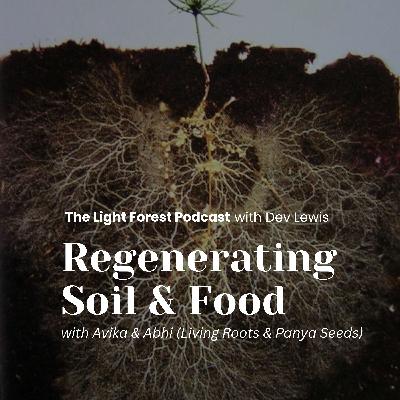
60+ years of industrial farming has left us with degraded soil, farmers on the brink of ruin, nutritionally hollow food, and a disconnection from how our food arrives to our homes.Here lie the roots of the health crises we experience today.In this conversation we get a root-level understanding of this picture from Avika & Abhi, co-founders of Living Roots, on a mission to help regenerate the soil and food production in Thailand.Avika Nerula and Abhi Agarwal are co-founders of Living Roots, an agricultural technology company building climate-resilient futures through biological innovation. Based in Thailand, they’re working with farmers across Southeast Asia to revolutionize food production by prioritizing soil health, farmer profitability, and improving crop yields.Before becoming farmers and entrepreneurs, Avika and Abhi were software engineers working in New York. They left their tech jobs, moved back to Thailand where they grew up, and started a farm, Sunshine Permaculture.Today they open up on their journey.Chapters04:54 The State of Soil in Thailand09:41 The Impact of Chemical Fertilizers14:56 The Nutritional Deficiency Crisis19:40 The Disconnect Between Farmers and Consumers24:51 The Role of Living Roots in Regenerative Agriculture29:30 Innovations in Soil Health and Farmer Profitability34:27 The Future of Food Systems and Consumer Choices01:03:09 Building Trust in Agriculture01:06:07 Navigating Business Challenges in Regenerative Farming01:09:12 The Shift Towards Regenerative Practices01:16:40 Personal Journeys and Life Perspectives01:21:02 The Reality of Farming and Its Challenges01:27:57 Community and Connection in Agriculture01:36:14 Envisioning a Regenerative Future01:40:09 Practical Steps for Consumers01:43:40 Resources for Understanding Regenerative Agriculture01:48:03 Understanding Crop Burning and Its ImplicationsResources:Dirt: The Erosion of Civilizations by David MontgomeryBraiding Sweetgrass by Robin Wall KimmererFor the Love of Soil by Nicole Masters Will Harris - White Oak Pastures Farm (regenerative agriculture authors)Connect with Avika & AbhiSpend a night at their Farm stay Panya Seeds - buy heirloom Seeds & organic compost for your gardenLiving RootsAbhi LinkedInAvika LinkedIn
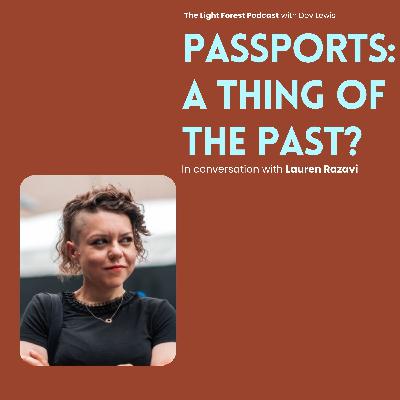
Your passport determines where you can live, work, and travel—based purely on where you were born. The document is only 100 years old, and someone’s actually redesigning it from the root up. Lauren Razavi is working with tech companies and Web3, UN, and governments worldwide to build alternatives to the passport, and in this conversation, she reveals how it’s happening.Lauren is the Executive Director of Plumia, a global network rethinking migration, citizenship, and borders for the 21st century.Lauren is also the author of a book called Global Natives about the digital nomad subculture and the rise of borderless work, and she writes the Substack newsletter Borderless. She is an investor in new media platforms, and has her finger on the pulse of one of the most fast-growing cultures changing our relationship with work and place.Why you should listenLearn about Lauren’s Plumia vision for the future of mobility and identity and how she’s actually building a re-designed passport from the ground up.Put you finger on the pulse of the future trends of digital nomadism, travel, digital culture, and how you can actively engage with these movements.Hear Lauren's experience bridge building between cutting edge tech & nomad movements and national governments, trying to create something fundamentally new. Chapters00:45 Passport Discrimination06:42 Experiencing Inequality as a Digital Nomad11:26 Bridging Old and New Systems17:40 Communicating Across Cultures25:03 Engaging with Ascending Nations29:14 Building a New Digital Nomad Identity29:14 The Genesis of Plumia35:21 Plumia’s Ongoing Initiatives41:08 Rethinking Citizenship and Identity46:13 The Future of Governance and Community EngagementConnect with LaurenBorderless SubstackLauren’s websitePlumiaGlobal Natives
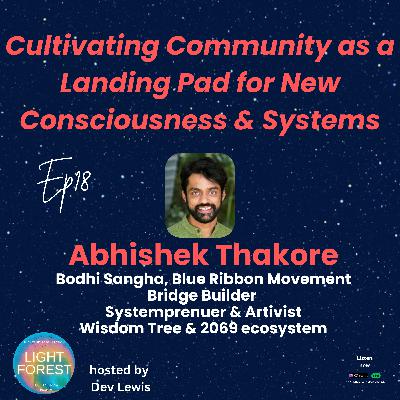
The meta-crises is a concept that is growing in usage around the worldIt is developed in the western context with a Global North audience in mind, although in sync with Asian & indigenous wisdom traditions. The ingredients are coherent. But for an Asian audience it can seem dry, bland, and not very relatable. Like it’s missing a burst of flavour that animates your being. So it was really refreshing and uplifting to sit down with Abhishek to learn what an Indic perspective and response to the Metacrises looks like based on 20+ years of lived experience of movement building in India. Abhishek Thakore is the co-author of the soon to be released report "Bodhi Sangha: An Indian Response to the Meta Crisis" - a collection of 15 voices offering indigenous wisdom for our times. With over 20 years of facilitation experience across 50+ organizations globally, Abhishek is founder of the Blue Ribbon Movement and co-founder of WisdomTree and the Bodhisangha ecosystem - one of India's most innovative mycelium-like networks. His own work is inspired and informed by elders such as Vinoba Bhave, and which spans initiatives across levels—from hyperlocal to global—and approaches, including policy, programs, and practice.Understanding the Meta Crisis Through Indic EyesThe Indic mind sees our current crises — financial, Climate, social, health, etc. — as manifestations of inner spiritual decline. Therefore the root of the response must also begin here. Seeing our present moment within the context of cycles (yug). This opens us up to ancestral wisdom, and codified messages passed on to us from religious texts and wisdom traditions. Amidst the confusion and chaos of our time, rather than try to answer the question “what do I want”, we learn to find the Yugdharma, the calling of our times."The Indic mind at its surface level is able to hold paradoxes, deal with ambiguity, deal with chaos and so on. And I think the deeper layers of that mind are that the collective mind has had a long time to evolve."Abhishek has helped build a sophisticated set of social technologies for movement building, social change rooted in relationships, and working with our egos. Relational fields: the emergent power of high-frequency relationships between groups of people that can become space for a new consciousness to land and for new ideas that will be intuited through a web of relationships. The ‘inner’-net: The power of relationships within community gatherings as a practise to better see our own egos at play and tune our inner-nets, and bring our spirituality from the temple into the muck of everyday life. Forest-like Fundraising: An approach to fundraising relying on diverse sources of revenue going beyond the donor-recipient model that he’s honed from his experience with Blue Ribbon Movement and Bodhisangha ecosystem.Chapters00:00 Grounding and Intention Setting01:55 Exploring the Meta-Crisis06:47 The Indic Response to Crisis12:24 The Indic Mind and Its Paradoxes17:40 Cycles of Time and the Kali Yuga23:21 Finding Hope in Crisis26:51 Theory of Change and Relational Fields28:09 The Ego Function and Its Impact29:30 Relationships as a Testing Ground31:18 Creating a Landing Pad for Consciousness32:51 The Theory of Change through Relational Fields35:28 Building Generosity in Ecosystems41:09 Resourcing Ecology vs. Traditional Fundraising45:09 The Power of Artivist Ashrams47:37 Rediscovering Indic Roots and Personal Journey54:56 The Journey of Self-Discovery58:20 From Self to Society: A Shift in Perspective01:01:07 Honing the Instrument of Change01:03:46 The State of India: Youth and Challenges01:09:56 Building Alliances for Change01:12:59 Community as a Catalyst for TransformationConnect with AbhishekBodhi Sangha LinkedInBlue Ribbon Movement
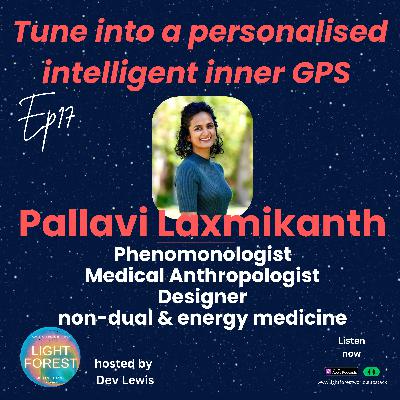
Over the course of Season 0 we've heard about intuition and the intuitive mind, inner wisdom, sixth sense, inner voice, and authentic selves. Many words, all pointing in a similar direction. This is a big part of what I mean by Light in Light Forest. We yearn for it. But we don't always know what it really is, and how to form a stable connection to it. Today we're going to take a long walk deep in this direction through a new word: Guidance.Joining us to take us on this journey is Pallavi Laxmikanth. Pallavi works as a researcher, designer, and educator, roles she carries in the outer world as an academic and former startup leader, as well as in the inner worlds of truth and spirit. Her spiritual curiosity about who and what we are, how we function, and how we must live has taken her through formal training in biotechnology, medical anthropology and cybernetics, as well as through spiritual commitment via inquiry-based non-duality practices, Vedic astrology, yoga and energy medicine. We will journey with her as she intersects and intertwines these worlds, offering perspectives on how to bring spirit and spirituality into everyday life, health, work and more. Pallavi's deepest desire is to help us remember who we truly are, and she does this by choosing to access and embody the part of us that has never forgotten. The ways in which her research and teaching serve this purpose are continually evolving as she engages in conversation with that part called guidance, which we shall learn about today.ChaptersWhat is Guidance (3:36)The difference between Guidance and Intuition (10:58)Building a Relationship with Guidance (18:58)Self-Inquiry & Belief Systems (27:53)Distinguishing between Ego & Guidance (41:34)Working Smarter, Not Harder (51:15)Healing from Chronic Disease (1:04:15)Guidance-based healthcare (1:16:01)Guidance vs AI (1:32:10)Book mentionedThe Course in MiraclesWebsiteIG @inner.educator
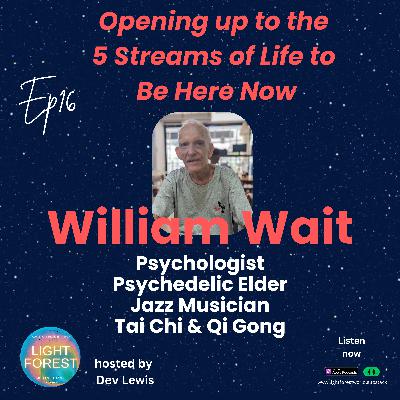
How do we pretend not to be whole people? How can we learn to embrace the full spectrum of our emotions, intellect, and intuition, to be fully embodied in the present moment? In this episode, we journey deep into the Light Forest with William Wait, a musician, psychologist, and psychedelic elder, who shares many stories, insight, and techniques from his long life that started in California in 1941, and now in Bangkok. Introducing William Wait and his journey…from the segregated 1950s playing trumpet in blues black bars in California and experiencing a moment of oneness on stageto dropping acid with 18,000 people and psychedelics pioneers like Timothy Leary during the “Summer of Love” in 1967 San Francisco, decades as a psychologist, and practitioner of Taiqi and Qigong, and meditation, spending time with Osho in Pune in the 1980s and 33+ years living in Thailand. As a therapist, he developed his own approach which he calls Life Streams, integrating Eastern and Western techniques and philosophies, to help people do the inner work and experience wholeness of life that is our true nature. William experienced a stroke earlier this year and in his words can feel death is imminent and is in his final chapter. He wants to share and pass on his knowledge and experience. and i’m super grateful to have the chance to bring this conversation to the podcast. Chapters00:00 - Introduction and Welcome 05:38 - The Four Life Streams: A Framework for Wholeness08:15 - Stream One: Embodiment and Sensation vs mindfulness 10:36 - Stream Two: Emotionality and the Full Spectrum of Feelings 14:11 - Programming from Conception: Birth Trauma to Social Conditioning 17:00 - Stream Three: Mind as Tool vs Identity 18:34 - Stream Four: Intuition and Expanded Awareness 19:00 - Mind vs intuition23:20 - Growing Up in 1950s California: Music as Gateway 26:46 - Stream 5: environment29:07 - working with emotions35:07 - pretending to not be whole41:15 - The Mystical Experience: Merging with Music and Unity Consciousness49:45 - Summer of Love 1967: Psychedelics 55:42 - The Shadow of the Psychedelic Movement 59:30 - From Musician to Psychologist: Spirituality and Eastern Practices: Transcendal Meditation, Tai Chi, and Buddhism 61:30 - AI and Technology: 69:30 - remixing wisdom for the modern mind77:11 - Living in Bangkok: Choosing Life Over Monastic 82:45 - Death84:15 - Marriage and the Yoga of Relationship 98:30 - Thailand as Teacher103:45 - Facing Death: Life in the Final Chapter ReferencesThe Psychedelic Experience: A Manual Based on The Tibetan Book of the Dead by Timothy Leary, Ralph Metzner and Richard AlpertDoors of Perception by Aldous Huxley - About his mescaline experienceGestalt Therapy - The therapeutic approach William used extensivelyStanislaw Grof - Psychedelic researcher and birth trauma workRam Dass - "Be Here Now" The Power of Now (by Eckhart Tolle)Brave New World (by Aldous Huxley1984 (by George Orwell)The Trauma of Birth by Otto Rank - A book from the 1930s by a psychoanalyst about birth traumaThe Tao Te ChingConnect with WilliamYou can email William at wmwait@yahoo.com. He is available to do 1 on 1 sessions, couple’s work, or speak to other podcasters that might like to have a conversation with him. I highly recommend you take the opportunity while you can !
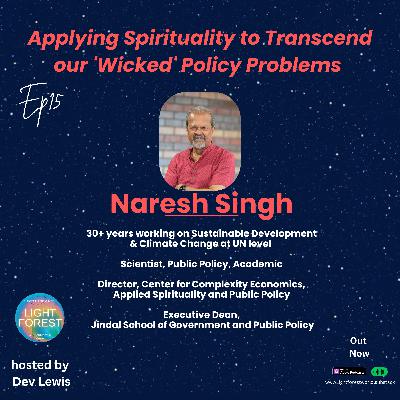
Why despite decades of climate summits and sustainable goals, and our smartest minds working on solutions, our Climate reality worsens? Yes, we can blame our leaders and corporations, but, why do we also struggle make changes in how we consume?Where does the roots of our climate crises lie?In this episode, we go on a long walk in the Light Forest with Dr. Naresh Singh, who shares a master-class like diagnosis and perspective that gets to the root of the ‘Wicked’ policy problems like Climate Change. Introducing Dr. Naresh SinghNaresh has spent many decades in the belly of the beast, working with Shell Oil Corporation, the UNDP, the federal government of Canada, walking the halls with decision makers at all levels of governance. He has been working on Sustainable Development and Climate Change since 1992, involved in the creation of Millenium Development Goals and Sustainable Development Goals, all the way to the Paris 2015 Carbon Zero commitments. Today, Naresh is holds several roles as professor and executive dean at the Jindal School of Government and Public Policy in India, director of the Center for Complexity Economics, Applied Spirituality and Public Policy, co-director of the Center for Legal Empowerment of the Poor.He is now dedicated to renewing our institutions by bringing more wisdom, bringing the intuitive mind, by translating the spiritual traditions of mystical Christianity, Sufism, Buddhism, Vedanta Advaita, Daoism, Confucism through an approach he calls “applied spirituality”. He is working with educators and with policy leaders and bridging worlds that have been severed for many centuries. Chapters00:00 - Introduction 01:50 - "wicked policy problems" 07:32 - Climate change as the perfect example of wicked problem15:14 - Are our solutions actually designed for the problems we face?20:23 - A root cause analysis: from greenhouse gases to consciousness27:55 - Why our institutions are not fit for purpose39:00 - Spiritual poverty at the root48:15 - Naresh’s life journey from scientist to academic to policy maker to conscious policy pioneer1:05:00 - ‘Applied spirituality’ and wisdom in policy making; intuitive vs. rational mind1:10:30 - Building community and networks for emergence1:15:07 - Meeting people where they are: advice for frustrated academics and practitionersBooks Mentioned:Applied Spirituality by Swami AgniveshApplied Spirituality and Sustainable Development Policy edited by Naresh Singh (Emerald Publishing, 2024)Handbook on Global Philosophies for AI Ethics edited by Naresh Singh (Routledge, August 2025)The Politics of Being by Thomas Le GrandConnect with Dr. Naresh SinghSpirituality Science and Policy NetworkJindal University
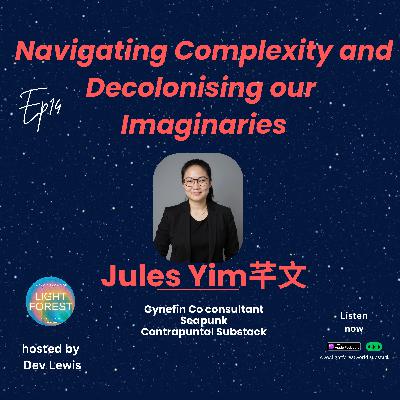
In this episode I hosted Jules Yim 芊文 at Light Forest HQ in Chiang Mai.Jules is a senior consultant with the Cynefin Co (formerly Cognitive Edge),where she has spent the past 15+ years advising MNCs and SMEs around the world using bespoke complexity frameworks. She is also the voice behind Contrapuntal Substack where she distills her interests in policy, complexity, linguistics, narrative research, anthropology, philosophy and cognitive science in bite size posts. So its natural Jules also took on a role as consultant for Light Forest and offering her own imaginaries and the practical ways we might transition from a dark forest world to a Light forest world, holding idealism and realism at the same time. Learning to hold multiple truths is an approach that has served Jules well, and she opens up on her own life journey growing up in Singapore, and the various inflection points she experienced influenced by the SARS 2003 and 2008 Financial crises.Jules feels humanity is at an important inflection point today with trust in the global institutions, financial systems, and narratives of progress crumbling, occurring within the wider context of an ecological collapse. Jules pulls on these deeply “entangled” threads, and helps unravel them for us in the first half of our conversation.An inflection point is also an opportunity for a radical shift and we spend a significant period of time going into the need for fresh imaginaries which she calls the meta layer for decolonising our imaginaries. We learn about Seapunk, an emerging imaginary & movement based on solar punk visions and inspired by southeast Asia’s open, common seas. One that Jules is seeding along with other Light Forest friends. Jules’ Chinese diaspora background and years of curious exploration comes through our conversation, particularly on how we might navigate this inflection point, moving to a more decentralised world, allowing for new systems of exchanging value and communities to emerge.I first met Jules at the Asia-Pacific Futures Conference in Bangkok through a mutual friend, Sam Chua, and we’ve since participated in a couple of workshops. I’m struck by Jules’ sharp intellect, and comfort holding multiple epistemologies and social groups. Our conversation was a breeze and the first at the new Light Forest HQ in Chiang Mai. Shownotes“Anthro Complexity”, Breakdown of Trust, and inflection points (04:00)Jules’ personal inflection points during the 2003 SARS pandemic & 2008 Financial crises that led her to embrace complexity (12:15)The traumatic history of East Asia and its impact on modern society (19:10)decolonizing our imaginaries and Seapunk as a fresh imaginary for Southeast Asia (23:50)Global tropes about East Asian and Chinese culture that hold back our imaginaries (42:18)Daoism as complexity thinking (1 hour 08)A Light Forest World based on healing intergenerational trauma, alternate systems of exchanging value & Agape love (1 hour 21)Jules’ personal reading and media habits & Engaging with the SeaPunk movement (1 hour 30)Follow JulesContrapuntal SubstackSeaPunk StudiosLinkedInInstagram
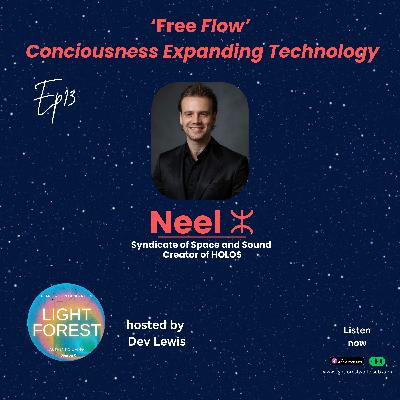
In this episode of Light Forest I speak to Neel ⵣ. An artist and technologist, exploring the possibility of technology as a medium for expanding consciousness and interacting with our inner worlds.Neel shares stories from his journey as an artist experimenting with spatial sound installations called ‘HOLOS', a technological framework in which every contributing individual integrates into a larger system of awareness, as part of Space Sound Syndicate. Experiencing sound through his own installations experienced profound insights, touching parts of himself that never knew existed, a transformed relationship with his body, and eventually a renewed sense of identity and self. This led him on a series of journeys that led to where he is now: embarking on a fresh journey as an entrepreneur with the vision of building what he calls “free flow” technology. The way Neel sees it, we are in a shift from a 'past material-centred worldview' into a a new reality with consciousness at its centre. He is interested in Technology for the new paradigm, one that allows us to navigate our inner worlds, responds to frequency, and mirrors your own consciousness. Imagine if we lived in a world where technology, rather than making us feel more dense, manipulating us through our own desires and fears, but opening us up to ourselves and each other, helping us to feel more expansive and connected.This conversation was challenging for me as my own mind was trying to play podcast host, looking to grasp and understand, to bring into some coherent form that Neel has personally experienced and lived.Our own conceptions of technology are so limited by our present paradigm. They say the Pyramids were a form of technology that allowed the ancient Egyptians to communicate across many realms. I hope this conversation stimulates and provokes, of what could be possible in the coming Light Forest paradigm.⟡ The origin of the name “Yaz” and experimenting with identity through sound (05:00)⟡ Sound as memory, architecture, and multidimensional perception (12:30)⟡ Creating immersive, spatial audio installations that evoke altered states (15:50)⟡ Technology as a medium for self-awareness (21:30)⟡ Cyclical history and reawakening the spiritual in technological times (29:10)⟡ Daoist and Confucian design principles: flowing with nature through technology (32:40)⟡ The concept of “free-flowing technologies” and adaptive environments (34:30)⟡ Imagining holographic architectures that dissolve identity (39:15)⟡ A new economy rooted in inner transformation, not material extraction (42:30)⟡ Sound, spirit, and the future of collective empathy (46:30)Follow Neel ⵣSyndicate of Space and Sound: HOLOSXFollow Light Forest
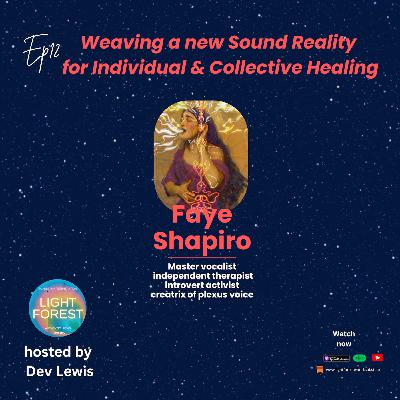
Faye Shapiro is a master vocalist, independent therapist, and introvert activist. She is the creatrix of Plexus Voice—a psycho-somatic technology for self-discovery and expressive empowerment, designed to weave a new sound reality for personal and collective healing.In this conversation, we explore sound as a lens for understanding and experiencing life. Faye draws from a deep well of spiritual, biological, and metaphysical traditions to offer a masterclass on sound, healing, and embodied presence.Faye shares powerful insights from her own journey and therapeutic practice, which is informed by Vipassana, Jungian psychology, Amazonian shamanism, and NARM® (NeuroAffective Relational Model) trauma healing, among others. At the heart of her work is a call to reconnect with the vibration of our own bodies—as an antidote to the fear, anxiety, and cultural disconnection of modern life.She also offers practical tools and somatic perspectives—which she uses in her workshops and private sessions—that help us feel the touch of sound through our senses and reconnect with our inner voice.Beyond her healing work, Faye is a multidisciplinary artist. Her music can be found on all major platforms, including this hauntingly beautiful track sampled in the intro:👉 “Even” on YouTubeOriginally from Israel, Faye brings a trauma-informed and energetic perspective to the the state of Israel’s genocidal policies, offering a vision of healing, redemption for the people of Israel. Moving from a Dark Forest present to a Light Forest World. TIMESTAMPSWeaving a Sound Reality: Faye's Perspective – 05:46The Vibrational Body: Sound Beyond Auditory Experience – 09:05Disconnection from the Body: Cultural Influences – 11:56Reconnecting Through Sound: Faye's Methodology – 14:47Exploring Identity: Voices Within – 17:55The Journey of Authenticity: Finding Inner Voice – 21:02The Power of Sound in Creation – 23:46Listening to the Self: The Art of Voice – 26:51Embracing Vulnerability: Opening the Mouth – 29:52The Dance of Sound and Silence – 32:56The Artist's Journey: Curiosity and Creation – 46:31The Journey of Expression and Sovereignty – 48:13Understanding the Voice: Resistance and Allowance – 51:56The Global Trend of Sound Healing and Potential Red Flags – 56:45Insights on the Israeli-Palestinian Conflict – 01:01:20The Interplay of Feminine and Masculine in Conflict Resolution – 01:07:12The Path from Dark Forest to Light Forest – 01:12:40🎧 Links to Faye’s WorkPlexus Sound SubstackWebsiteYouTubeInstagram: @fayefeyaInstagram: @plexus_voice🔗 Connect with Light Forest📬 Newsletter & Reflections: lightforestworld.substack.com📷 Instagram: @lightforestworld
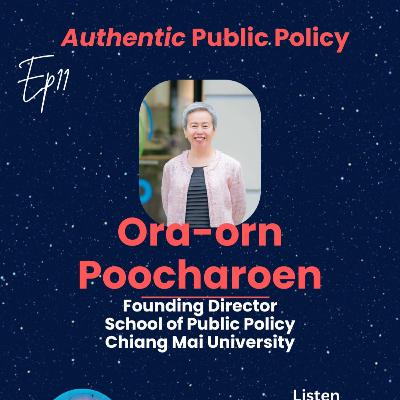
What if policymaking wasn’t just about data, efficiency, and institutional logic—but also about presence, inner clarity, and connection with nature?Dr. Ora-orn Poocharoen is a pioneering Thai academic and the founding Director of the School of Public Policy at Chiang Mai University. She brings a deeply grounded, embodied, and fresh approach to how public institutions do policy. From bringing in grounding into workshops with the Thai military, to leading a national task force on the PM 2.5 air pollution crisis, Ora is actively bringing more Light into the regeneration of our planet.In this conversation, Ora shares how her personal awakening—realizing the cost of disconnecting from her emotions—led to radical shifts in her life. She now blends spirituality and self-inquiry into spaces as unlikely as military and climate policy.Ora is bringing to life a vision for a new paradigm: authentic public policy—one that sees not just systems, but souls📌 Themes & TimestampsUnpacking Authentic Public Policy (06:39)Ora's Understanding of Authenticity (13:39)Ora’s Awakening to Authenticity (16:50)Authentic Policy Workshops with the Thai Military (29:28)What happens when you ask army generals to connect with the earth? Ora shares powerful stories from her workshops with the Thai armed forces.Bridging Spirituality and Ecology in Climate Action (41:29)From “soul cities” to forest-based policy design, Ora discusses how spirituality is showing up in her work with Thailand’s Climate Change Department.Smart Sustainable Governance (43:46)A paradigm of policy: beyond efficiency and effectiveness, towards systems infused with spirit, justice, and wellbeing.PM 2.5 Challenge in Chiang Mai (50:03)Ora talks about leading Thailand’s air pollution response and the complexity of building consensus between scientists, farmers, foresters, and citizens.Closing Reflections on Living Authentically in Times of Change (54:55)🔗 Connect with Ora-orn PoocharoenSchool of Public Policy, Chiang Mai UniversityOra-orn on LinkedIn🎧 Connect with Light ForestWebsite: lightforestworld.substack.comTwitter: Light Forest & @devlewis18Instagram: @lightforestworld & @daiyisi🎶 The music for this episode was produced by me using Bandlab and original soundscapes. The short Light Forest animation at the start of the video is made by Ian Pinto.

IIn this episode of Light Forest we explore the nation of Myanmar through Burmese Buddhism and learn about how Buddhist values are bringing light into the resistance movement against the Junta. Taking us on this journey we have Joah McGee:a trainer, podcaster, and humanitarian advocate with a deep connection to Myanmar as a longtime practitioner and researcher of Burmese Buddhism.You may recognise his voice as host of the Insight Myanmar podcast where he shines a light on the intersections of Buddhism with social change and activism. He is founder of Better Burma, a humanitarian organisation providing aid and support to the people of Myanmar since the armed and open conflict between resistance groups and the Junta. Joah shares deep insights into the historical and contemporary role of Buddhism in Burmese society, its relationship with governance, and how the people of Myanmar are navigating political turmoil, exile, and re-imagining their future.We get into some of the deep contradictions that run through Buddhism in Burma & policy making: How a country that sought to center around Vipassana and meditation became one of the most violent places? We learn the ways Buddhist practices such as Vipassanā and mettā, and other principles are helping leaders in resistance groups, forming a “non-violent” movement as a path to peace and reconciliation.Joah has spoken to hundreds of people through his podcast, including influential monks, activists, and more, and we get to hear some stories that he's picked up from his guests. You may have heard that an earthquake has ripped through Myanmar on March 27. Joah’s organization Better Burma is coordinating crucial relief efforts to those affected. I encourage you to support his campaign if you have the means and share with your networks. Donate hereTopics Covered:The Historical Role of Buddhism in Myanmar (00:6:21)Joah's path into Myanmar and Buddhism (00:11:35)How present day Burmese Buddhism deviated from its path (15:10)Voices of Exile & Non-Violent Resistance: The role of Buddhist philosophy in sustaining hope and resilience. (00:20:15)Reimagining the Future of Myanmar with Buddhist principles (00:31:00)Joah's personal practises to keep balance and bring compassion into his work (00:43:12)Connect & Support:Joah’s Podcast: https://insightmyanmar.org/podcastsJoah’s Organization: https://www.betterburma.org/episode with Ashin Kovida https://insightmyanmar.org/complete-shows/2023/10/26/episode-204-ashin-kovida Follow Light Forest Twitter: Light Forest & @devlewis18Instagram: @lightforestworld & @daiyisi🎶 The music for this episode was produced by me using Bandlab and original recordings
We live in polarised times. Institutions are breaking and paradigms are being challenged. Life can feel like one big ‘Manthan’ (churn). How do we find our balance and come through this churn of ideas and values? In this episode, we journey with Rajni Bakshi, a Mumbai-based author, journalist, and activist who has spent three decades chronicling the struggles for more humane and ecologically sound ways of life. She is the author of: • Bazaars, Conversations and Freedom • Trusteeship: Business and Economics for Well-Being • The Dispute Over Swami Vivekananda's Legacy Rajni shares insight from Gandhi’s values and concept of Trusteeship, and Vivekananda’s vision, to offer pathways to see the higher nature in ourselves and others as well as evolve our planetary systems away from violence & dominion. A middle path that transcends the trap of polarized discourse. A process that is fundamentally rooted in each one of us finding that feeling of inner contentment and joy. Rajni is also the founder and curator of Ahimsa Conversations, a platform for reflections on the possibility of nonviolence and the nature of violence. In this conversation we talk aboutGandhi’s vision of Trusteeship (6:45) Gandhi’s view on the human condition (14:40) Wealth as a commons (25:10) Swami Vivekananda & India's Lost Confidence(41:30) Reimagining Nonviolence & Power – Can we shift our understanding of power beyond domination? (50:40) Activism without anger (61:31) 📚 References & Mentions in the Conversation Books & Thinkers: • David Korten – When Corporations Rule the World • Carl Polanyi – The Great Transformation • Frederick Hayek – The Road to Serfdom • Tim Berners-Lee – The original vision of the World Wide Web • Eric S. Raymond – The Cathedral and the Bazaar 🔗 Connect with Rajni Bakshi: • Ahimsa Conversations: YouTube Channel • Books: Trusteeship: Business and Economics for Well-Being 🎧 Connect with Light Forest: • Twitter: Light Forest & @devlewis18 • Instagram: @lightforestworld & @daiyisi 🎶 The music for this episode was produced by me using Bandlab and original recordings with my handpan
The declining health of our planet is a decline in your own health. I cannot be healthy unless you are healthy. This is Planetary health. Dr. Geordan Shannon is a medical doctor, founder, and global health specialist.She brings a critical approach to understanding and acting on global challenges including social inequity, globalization, health systems, and environmental crises.Her current work sits at the intersection of Web3, planetary health, and public goods for health.She is the co-founder and director at United Health Futures, co-founder of Unexia & Planet.health.Geordan is a rare human being with feet grounded in the soil, working in remote rural areas of Indigenous Australia, post-Tsunami Sri Lanka, the Peruvian Amazon, and rural Kenya. She also walks the hallways of UN partners, national governments, and other key international bodies.Her expertise and lived experience are so diverse and deep at the same time—this might be one of our more concept-rich conversations yet.In this conversation we explore: Planetary Health as a concept: How health is not just about individuals but about relationships—with communities, ecosystems, and the planet itself. (00:07:55) Geordan's journey into Planetary Health (14:00) Translocalism: A New Model for Global Action: Why decentralized, place-based action is more effective than top-down global solutions. (00:20:47) The Role of Care & Care Chains in Planetary Health: How care extends beyond human labor to include our relationships with each other, our bodies, and the environment. (00:31:30) Two Loops Model of System Change: How old systems collapse while new systems emerge—and the different roles we play in this transition. (00:47:23) Web3 & Decentralized Technologies for Health & Regeneration: How Web3 offers new governance and funding models for planetary health. (00:56:00) The Hunger for Change: Why institutions are ripe for transformation and how grassroots movements are leading the way. (01:044:20) Projects Referenced United Health Futures – A policy consulting and research organization focused on global health and equity. Unexia – A Web3 financing platform exploring decentralized funding for health and public goods. Planet Health Network – A global translocal network bringing together planetary health practitioners and Indigenous knowledge holders. Stemmer – A project Geordan co-founded that creates decision-support tools for health systems. Global Health Disrupted – A previous initiative using arts and creativity to inspire new health narratives. Network Nations – A movement exploring decentralized governance models, aligned with translocalism and bioregionalism. Casa Río – A watershed-based social and arts organization in South America focused on river conservation. OASS (Eco-Village Network) – Exploring how to integrate Web3 tools with eco-village models. Connect with Geordan Shannon• Website: https://www.geordanshannon.com/• Medium: Connect with Light Forest:• Website: www.lightforest.world• Twitter: Light Forest & @devlewis18• Instagram: @lightforestworld & @daiyisi🎶 The music for this episode was produced by me using Bandlab and original recording titled 'Equanimity with my handpan.
This is the 2nd part of my conversation with Gregory Pettys. You can check back to episode 6 to tune in to Part 1 on Seed and Living in Right Relation.
In this part of the conversation with Gregory Pettys, we yarn on:
• Eco Villages as Spaces of Initiation: The role of ecovillages in helping people reconnect with land, community, and ancestral wisdom. (00:05:47)
• The Necessity of Soil Interaction: Why direct, daily interaction with soil is fundamental to right relation and human well-being. (00:08:56)
• Mutual Indebtedness & the Gift Economy: The concept of mutual indebtedness and how gift economies sustain resilient communities. (00:18:39)
• Cross-Pollination & Global Networks: How eco villages around the world are learning from each other, creating a web of shared wisdom. (00:21:15)
• Rethinking Currency & Financial Sustainability: How alternative economic models within eco villages challenge mainstream financial anxieties. (00:32:35)
• The Story Behind Naming His Substack Hiraeth: Post Activism in the Anthropocene: Gregory shares the meaning behind the name Hiraeth and its connection to longing, grief, and ancestral roots and the concept of 'Post-Activism' from Bayo Akomolafe’s ideas on moving beyond traditional activism and embracing new ways of being. (00:47:06)
• Parenting, Ancestral Continuity & the Role of Future Generations: How Gregory’s perspective on having children shifted through his journey with land and seeds. (00:42:18)
Recommendations:
• Authors and Teachers:
◦ Bayo Akomolafe: Philosopher and thinker on post-activism and decoloniality.
◦ Martín Prechtel: Teacher and writer on indigenous wisdom, grief, and storytelling.
◦ Masanobu Fukuoka: Pioneer of natural farming (One Straw Revolution).
• Notable Communities & Projects:
◦ Tamara (Portugal): An eco village exploring radical love and intimacy.
◦ Plum Village: A mindfulness practice center founded by Thích Nhất Hạnh.
◦ Auroville (India): A long-standing experimental township focused on sustainable living
Connect with Gregory Pettys:
• Substack: https://gregorypettys.substack.com/
• Pun Pun Center for Self-Reliance: www.punpunthailand.org/index8caa.html?page_id=1593
Connect with Light Forest:
• Website: www.lightforest.world
• Twitter: Light Forest & @devlewis18
• Instagram: @lightforestworld & @daiyisi🎶 The music for this episode was produced by me using Bandlab and original recordings of a Hapi drum
Our planet is sick.
Where do the roots of this sickness lie?
We have to start with Seed. The source of life starts with a seed.
Seeds hold within them nutrition, genetic history, ancient memory. Today we live in a world where 95% of our seed diversity has been systemically killed off by industrial farming over the past few decades.
Do we know what this means for our bodies and minds?
Most of us, city creatures of modernity, live lives severed from the land. We are disconnected, dismembered selves grasping for meaning & belonging. We’ve forgotten what it means to be in right relationship with our planet.
When was the last time your feet touched the earth? When was the last time you asked for permission before you plucked a flower?
According to Gregory Pettys, who we journey with today, all our ailments in one way or another are related to our severed relationship with food and the soil that grows our food.
It goes far, far deeper than just nutrition and bodily health. It goes right into the seed of the human story and our understanding of ourselves.
In this conversation with Gregory Pettys, we explore:
• Morning Rituals and Mythical Alignment: Gregory shares his daily practice of greeting the sun and how it shapes his purpose and mindset. (00:08:34)
• The Sacredness of Seeds: Gregory discusses the critical loss of 95% of seed varieties, the importance of heirloom seeds, and their role in preserving memory, nutrition, and culture. (00:11:39)
• Modernity and Forgetfulness: Reflections on how modernity disrupted relationships with land, culture, and ancestors, and why grief is a necessary step toward regeneration. (00:17:39)
• Living in Right Relation: A deep dive into the meaning of reciprocity with Earth and understanding what it means to “love what your lover loves” as a metaphor for ecological and social harmony. (00:38:33)
• Indigenous Wisdom and Mythology: How intact cultures maintain ecological balance through storytelling, rituals, and practices of reverence. (00:44:55)
• Technology, Reciprocity, and Grief: The implications of technology’s extractive nature and the need to honor what has been taken. (00:53:33)
• Initiation and Sacred Grief: The role of initiation in building a culture of reciprocity and intergenerational wisdom, and how grief can act as a catalyst for maturity. (00:58:11)
Recommendations from Gregory:
• Authors and Teachers:
◦ Martine Prechtel: teachings on myth, grief, and the sacred.
◦ Joanna Macy: deep ecology and transformative work.
◦ Gary Snyder: Poet and essayist focusing on nature and culture.
◦ Wade Davis: Anthropologist and author exploring indigenous cultures and ecological sustainability.
• Books & Stories:
◦ The Lorax by Dr. Seuss: A tale about environmental destruction and corporate greed.
Connect with Gregory Pettys:
• Substack: https://gregorypettys.substack.com/
• Pun Pun Center for Self-Reliance: www.punpunthailand.org/index8caa.html?page_id=1593
Connect with Light Forest:
• Website: www.lightforest.world
• Twitter: Light Forest & @devlewis18
• Instagram: @lightforestworld & @daiyisi🎶 The music for this episode was produced by me using Bandlab and original recordings of a Hapi drum.
Light Forest Podcast: Episode with Cat Lau
It’s been a longer interlude than expected, but I’m excited to hop back on the podcast bike!
In this episode of the Light Forest Podcast, we journey with Cat Lau, a healer and heritage journalist from Bangkok, Thailand.
I first met Cat in Chiang Mai during a Light Forest workshop I hosted as part of one of the Pop-Up Cities. Cat participated in the SEA Punk Playshop, where she shared a trailer for her new documentary project, Wisdom Trails—a journey to unveil the spiritual wisdom of Thailand.
Chances are, if you’ve been to Thailand, you’ve visited a temple or enjoyed a massage. Yet, beneath these experiences lies a deeper wisdom that many of us miss.
In this conversation we touch on the following themes:
Cat’s journey of growing up in Bangkok with a shaman grandfather and her path to connecting with her energetic gifts. (6:08)
The five components of Thai traditional healing. (20:12)
Bridging the modern medicine world with traditional healing perspective and methods (32:03)
Stories from Cat’s adventures across Thailand, meeting elders and custodians of ancient wisdom (27:48)
Energetic shifts taking place and the importance of cultivating intuition in a changing world. (39:32)
Reflections on her experience at Devcon in Bangkok and and the integration of sacred wisdom with modern science (46:29)
The power of living with authenticity and trusting intuition in the face of challenges. (55:45)
Connect with Cat Lau
• Website: www.catlauhealing.com/aboutme• YouTube: Cat Lau Healing• Wisdom Trails (Trailer): Watch Here
Connect with Light Forest
• Website: www.lightforest.world• Twitter: @LightForest & @devlewis18• Instagram: @lightforestworld & @daiyisi
🎶 The music for this podcast was created by me using a combination of BandLab and an original recording of a Hapi drum (a type of tongue drum) played by yours truly.
In part 2 of this conversation with Michel Bauwens, founder and director of the P2P Foundation, we cover:
Historical perspective on how belief systems and worldviews interplay with civilisation-level system transitions.
Crypto as a social elite in the creation of new open infrastructure and institutions.
a Cosmolocal view on how crypto can play a role in the pulsation of the commons.
[43:00] Michel's personal journey: a difficult childhood growing up in Belgium, becoming a revolutionary Marxist in early adulthood, living in Osho's Rajneeshpuram, inspired to create as an entrepreneur & documentary film maker, going through major life crises and being twice-born, setting up P2P Foundation and interest in civilisation history.
Connect with Michel Bauwens:
Substack: 4th Generation Civilization
X (formerly Twitter): @mbauwens
P2P Foundation: P2P Foundation Wiki
Connect with Light Forest:
Website: www.lightforest.world
Twitter: Light Forest & @devlewis18
Instagram: @lightforestworld & @daiyisi
🥁The music for the podcast is produced by me using a combination of Bandlab and original recording of a Hapi drum (a type of tongue drum) played be me.

Comments

Download from Google Play

Download from App Store
 United States