


 Claim Ownership
Living Code
Subscribed: 0Played: 0
Subscribe

© 2026 Visible
Description
Welcome to Living Code, a podcast where we explore the tensions between social, personal, artificial, and natural intelligence. In each episode we bring together deep thinkers at the frontier of AI, human potential, organizational transformation, and global regeneration to explore how to navigate today’s increasingly complex world.
4 Episodes
Reverse
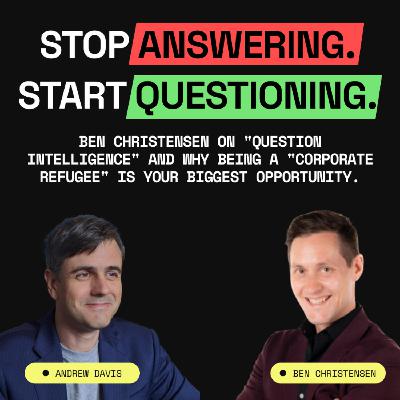
What happens to the "intellectual class" when thinking becomes a commodity?
We’ve spent the last century hiring for brawn, then for brains. Now, as AI commodifies cognitive labor, the "eggheads" among us are facing a humbling reality: our ability to process, calculate, and speak is no longer our competitive advantage.
Today on Living Code, I sit down with Ben Christensen, Head of Partnerships at AI 2030 and a builder at the intersection of technology and human flourishing. We dive into the "Roaring 2020s" and what it means to be a "corporate refugee" in an era of algorithmic disruption.
We discuss:
Question Intelligence: Why the most vital skill of our time is shifting from having the answer to designing the query.The AI Bloodbath: Navigating the survival anxiety that hits even the most privileged tech workers.Cultural STIs: The risk (and necessity) of opening yourself up to being permanently altered by the people—and machines—you interact with.
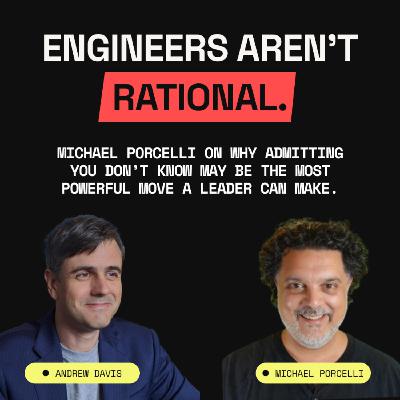
The leap from complicated to complex is where most technical leadership breaks.
In code, you can debug.
You can rewind, edit, and restart.
But in a room full of brilliant people who can’t stand each other, those rules don’t apply.
I recently sat down with Michael Porcelli, founder of Meta Relating, to discuss why "systems thinking" usually fails when it meets "human feeling."
The Big Shifts:
The "I Don’t Know" Power Move: Why admitting ignorance is actually the fastest way to build technical trust.The Third Body: Treating a relationship not as two people, but as a living system with its own history and logic.The "Opposite" Heuristic: Why solving a relational knot often requires doing the exact opposite of your first intuition.
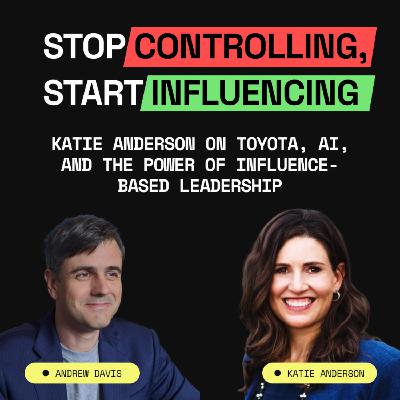
Most companies copy Toyota’s tools. Almost none of them copy the mindset.
In my latest conversation with Katie Anderson (author of Learning to Lead, Leading to Learn), we explored why the "secret" to Toyota isn't a process—it's an attitude toward learning.
We covered:
The Daruma Concept: Why a weighted Japanese doll is the perfect metaphor for leadership (Fall down seven times, get up eight).
The "Plan-Do" Trap: Why we get stuck in a loop of execution and skip the "Study-Adjust" phase where the actual growth happens.
Control vs. Influence: You can’t command an empowered culture into existence. You have to build the conditions for people to choose it.
Katie also shared how she’s using AI to accelerate her thinking for her upcoming book, posing a vital question: Are we using these tools to elevate humans, or diminish them?
This was a deep dive into what it actually means to lead with humility.
AI Builders Hackathon: Exploring the Impact of AI on Society
In this thought-provoking episode, we join the hosts of the AI Builders Hackathon and Meetup in Amsterdam to reflect on the event's experiences and themes. This 40-hour hackathon emphasized AI's potential to augment natural intelligence, human connection, happiness, and intelligence. Through deep discussions, participants explored the integration of natural and artificial intelligence, the societal impact of AI, and the importance of ethics and epistemic autonomy in technology development. The episode delves into the philosophical implications, societal challenges, and the need for responsible AI development to avoid dystopian outcomes, drawing parallels with historical technological shifts and current social media dynamics.
00:00 Introduction to the AI Builders Hackathon
00:47 Reflections on the Hackathon Experience
01:47 The Theme: Augmenting Natural Intelligence with AI
02:55 Concerns About AI and Its Impact
04:46 Philosophical Insights and Ethical Considerations
07:09 Epistemic Autonomy and Decision Making
09:59 Social Media, Polarization, and AI's Role
12:27 The Importance of Thoughtful AI Development
27:29 Living Code and Bridging Knowledge
29:44 Conclusion and Future Directions
Comments

Download from Google Play

Download from App Store
 United States