


 Claim Ownership
MASKulinity Podcast
Subscribed: 37Played: 651
Subscribe

Description
Brooklyn- and Oakland-based duo Samantha Nzessi and Remoy Philip invite you into their sometimes loud but necessary banter on masculinity. Hear Samantha and Remoy discuss topics like what masculinity means to our society, whether masculinity has actually been good to men, or even how the latest movie, TV and sports trends are helping or hurting the gender, and everyone else by extension. Also listen as a variety of guests—experts in the fields of gender studies, activists, or even everyday guys—stop by the pod to chat about subjects like ‘woke feminism’ or the men's rights movement. Listen week to week as Samantha, Remoy, et. al., invite (cis/trans/hetero/gay) men to take off the MASK that is masculinity, and do so from distinct yet connected perspectives. Let’s get into it.
97 Episodes
Reverse

Headship? Wives submitting to husbands? Yep, we're talking about Christian MASKulinity this week with the help of theologian and author Dr. James Spencer. The hosts start out by reflecting on how much Christianity has impacted not only their own lives but American life as a whole.What has our society retained as a nation founded by Chiristian men? So much of American culture is based on Christianity, and even folks who aren’t Christian in practice deem themselves culturally Christian. The hosts start by setting the stage for the wide-reaching impact of this conversation.In fairness, it’s not just American life. Samantha and Remoy have a moment about who the oldest Christians are, and they remember one of the first ways Christianity was leveraged to perpetuate a distinct group’s interest…They start dissecting their own Christian experiences… What exactly did these two former Christians learn about gender and masculinity in church? Samantha and Remoy share the views their respective churches had and how it shaped their idea of gender in that context.Remoy puts on his preacher boy hat to recall some of the key principles he remembers about Christianity. And more importantly, what did he teach about manhood and masculinity when he was behind the pulpit?Samantha shares why this episode is important to her as a former Christian and the suspicions her upbringing brought up for her. James addresses her concerns about some biblical intentions.It turns out there are a lot of key differences between Samantha and Remoy’s past Christian learnings and experiences and James’s biblical conclusion of what it means to be a Christian man…Men are expected to be the final decision maker on everything, and people will often turn to the Bible to prove that point. But what if that’s not what God intended? James gives us a theologian’s perspective on what God likely intended.Where exactly in the Bible does it say that men should be in charge? When it comes to marital relationships, a very specific verse tends to come up to justify male leadership, but there seems to be some context missing. Samantha gives us the verse, and James fills in the blanks.The idea of headship comes up consistently when folks cite the Bible as the basis for men’s blanket leadership.It’s not just the biological essentialist claim that men are better leaders in the home because they’re men; it’s supposedly also because God said so. But does the Bible actually back that up? James lets us know.James breaks down how men’s leadership should mirror that of Jesus Christ over the church.And what does that look like in relationships? It’s vastly different from the “do as I say” leadership that some men feel they are owed and entitled to, including Christian ones.James helps us understand what that means for husbands and we hear echoes of shedding the mask that is MASKulinity for the sake of a deeper faith.Like in our Anti-Anti-Porn Episode, we’re seeing how Christianity gets co-opted to further a human-made patriarchal agenda rather than the spiritual life Christians are called on to develop according to James.Christian men don’t have to be married to have integrity with their faith.James gives us insight into what different Christian masculinities can look like, through the story of one of Jesus’s most prolific and significant apostles. We discover that how it looks is far less important that where it comes from…Remoy gives some seldom-talked-about background on how Christianity emerged back in the day like only a former preacher boy would…Samantha ends by bringing up a topic that’s been in the news so much, it’s taken over the image of mainstream Christianity…perhaps (actually definitely) for the worse: Christian nationalism.James provides some important, should-not-be-forgotten-lest-we-want-to-repeat-history context about the merger between church and state and the implications on society…He cites the Barmen Declaration as an example of Christians fighting extremism during Nazi times.There are parallels between nazism and Christian nationalism in the US which James does not equate, but we kinda do!Samantha examines a few tenets from a popular Christian nationalist group.How close do these tenets mirror God’s biblical message? The hosts discuss…Referenced on this episode:Inclusivity & Gender in Christianity - Two religious leaders lend their thoughts to the gender debate in Christianity todayMyths of Male HeadshipDr. James Spencer’s podcast, Thinking Christian (Samantha mistakenly mentioned Christian First, which is the name of the framework he teaches courses in)The Proud Boys’ 12 tenetsCOMPANION PIECES:What Does Christian Masculinity Really Look Like?, by our guest Dr. James SpencerDiscipled Men: Rethinking Masculinity Through the Lens of Christ from Thinking Christian, our guest’s podcastNotes on Christian MASKulinity - our new Substack pieceThe Anti-Anti-Porn Episode about Christian men and pornRe-Thinking Masculinity: A Blog nn Christian Nationalism

How have we gone this long without talking about it? That’s right… We’re talking about porn this week, but it may not be what you think. Remoy enlists the help of Dr. Kelsy Burke to understand how the term “porn addiction” came to be, and exactly what the folks who came up with this term had in store.It’s hard to believe that Remoy starts this conversation at Christianity, but he does. He sets the tone for the conversation by getting the tea on the hosts’ humble Christian beginnings.Remoy shares how porn and Christianity intersect and the warnings men receive in church.Dr. Kelsy Burke explains how the notion of “porn addiction” and men’s Christianity intersect…and somehow work well together.Why would using the term “porn addiction” be co-opted by Christian men? Kelsy lets us know about that too…Lots of things popped off in the 80s! That includes Christian sex scandals. Listen to Kelsy break down how conservatives of that era bring MASKulinity and the “porn addiction” rhetoric together to control the narrative.What about women? Can they be “addicted” to porn?Soooo, is porn bad or naw??Samantha shares the oxymoron that pops up between cishet men and women.Kelsy goes on to describe how conservatism and conversations around sex in Christian circles lead to upholding the system we all know and (don’t) love.We know at least some of you have heard of No Fap November. Christian men are using this strategy as a show of masculine strength. Guess where this theory/strategy came from…This anti-porn rhetoric and scapegoating is everywhere, including government… Referenced on this episode:Interested in learning more about all that Dr. Burke’s uncovered? Read more in their book: The Pornography Wars: The Past, Present, and Future of America’s Obscene ObsessionYou can also catch some of the highlights from Dr. Burke’s book over in their 2020 article over at Slate: Sinning Like a ManCOMPANION PIECES:We talked about substance use disorders (addiction at the time) and MASKulinity a long time ago:Figure It Out: The Connection between Masculinity and AddictionAddiction: Men Are Twice as Likely, with Justin Lioi and other New YorkersExploring Commonalities in Addiction, a Mini Field Study
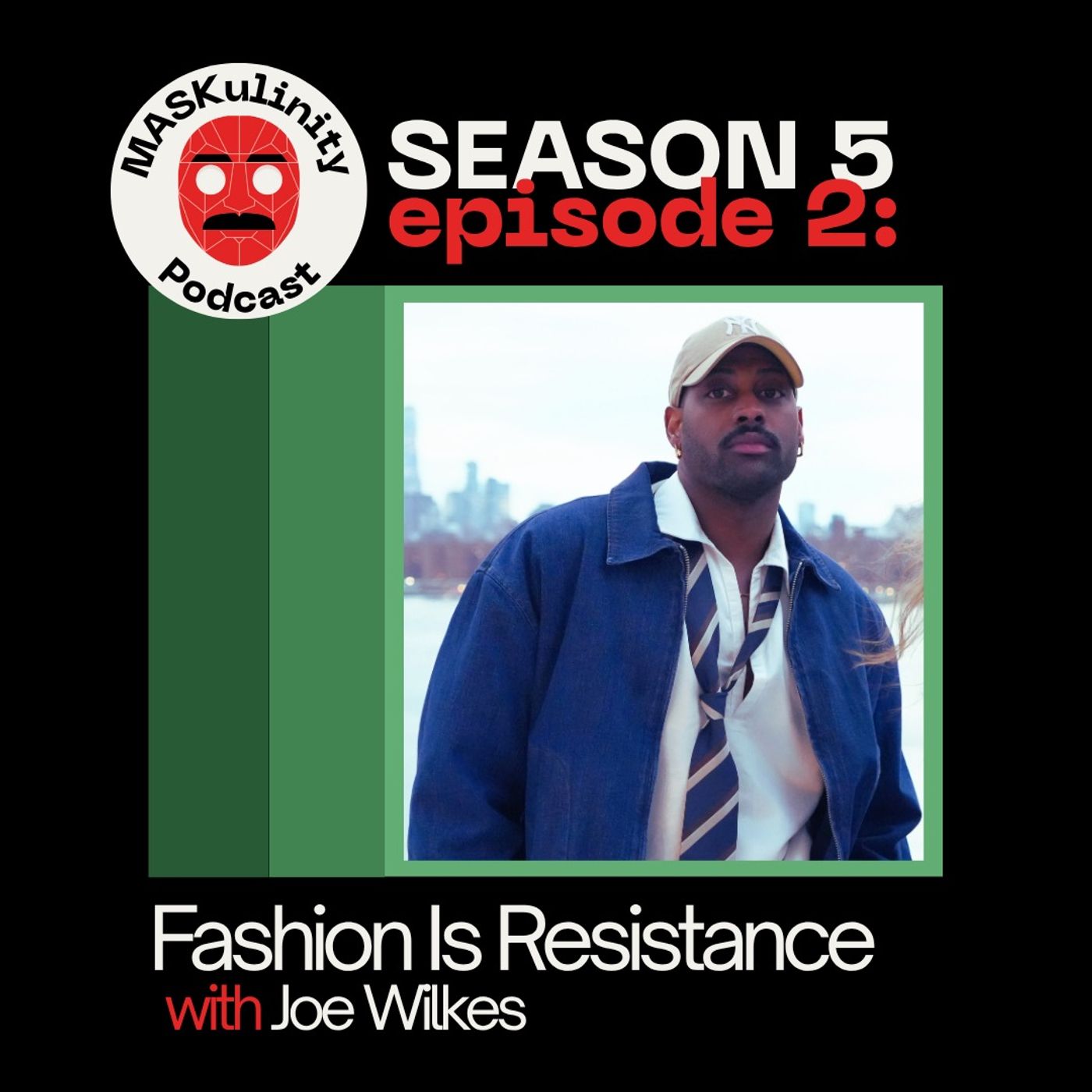
We’re back with our first original episode of the season! Our guest, Joe Wilkes, culture and policy writer and editor and fashion stylist, takes the mic with us to talk Black Dandyism. Many of us didn’t know this term prior to this year’s MET exhibition and gala theme, Superfine: Tailoring Black Style Our guest gave us some important notes on the role fashion can play for men in resisting the expectations of MASKulinity..What is Black dandyism? Joe Wilkes gives us a definition and takes us through its origins.You may be surprised to find out where it started… But eventually people made it their own.Having a sense of style for Black men in the 19th and early 20th century was new and hard for some to accept.Extravagance or lack thereof causes people to classify men’s masculinity, especially, BIPOC men’s masculinity—why is that…? Joe’s answer evokes the racial hierarchy of masculinity.The universal suit men wear today wasn’t always the masculine standard... Samantha takes Remoy through where the “dandy” term comes from and the impact it had on menswear.In Europe, aristocratic styles thrived on excess and extravagance, but something we take for granted today was previously reserved for the aristocratic and royal classes.A middle-class man who had an in with the who’s who of Regency London altered the course of menswear for centuries to come. Dandyism becomes a dress code that equalizes classes.Men’s style evolved with the advent of a new age.Understated and tailored styles became the standard for fashion, at least for quite some time. Men of different races embraced dandyism differently. Why is that?How is fashion resistance exactly? Joe helps us understand why fashion was so important to Black men’s identity and dignity.At a certain point, the desire for authenticity and liberation starts to trump survival, a reflection of the times in the ‘60s and ‘70s.But then, to avoid being deemed feminine or being subject to homophobia, men toned their look down. Joe explains how a specific event brought that on.Joe shares a little of his own history, having to alter his look based on the community he was around.But perhaps there is a group of men who are allowed to wear whatever they want with way less criticism…Take a guess which group that is…If cishet men have unspoken requirements to meet what masculinity is supposed to look and dress like, does that mean queer men get more leeway? Joe shares some insights…Fashion is resistance but it’s not just that. Joe ends on a positive note we all need to keep in mind..Some questions we’re still wondering about:How has your own fashion sense evolved? Do you dress to be authentic or to blend in as best as possible? Can the way men dress dictate how masculine they are? Does the way certain men present themselves put manhood and/or masculinity at risk for some people?What do we say to the Brummel-thinking folks who think masculinity requires men to dress with “understated elegance”?Let us know in the comments below!Referenced on this episode:Exploring Dandyism and Black Expression: A Roundtable Discussion; led by our guest Joe WilkesMET’s exhibition Superfine: Tailoring Black StyleMonica L. Miller’s book Slave to Fashion, the inspiration for the MET themeBeau Brummell's Revolution: The Rise of the Modern Men's Suit in the 19th CenturyThe Zoot Suit Riots and Wartime Los AngelesCOMPANION PIECES:History of the Black dandy; more history of Black DandyismDandyism around the worldThe Evolution of Black Masculinity Through Fashion (TW, expletive used)
This season of MASKulinity is all about Relationships and Resistance, and we're starting with resistance.What does resistance look like as performance art—more specifically, theater?Your favorite literati doy, Remoy George Philip thee First's, latest production, Performing the Revolution, explores this question in a four-part series.We're dropping the first episode in our feed to set the tone for the season. This series is a powerful reminder that community and perseverance are requirements for social change, and that joy and play can be part of resistance. Samantha first interviews journalist and documentarian Ida Hardin, coproducer on the podcast, to get some between-the-lines questions answered. Themes of resilience, grief, and liberation echo through this first episode set in New Delhi.*****Performing the Revolution, "in India"Meet Jana Natya Manch, a.k.a. JANAM, one of India's storied street theatre companies. We follow their journey from one of their most crucial, catalyzing and tragic moments in the 1980's, all the way through to the work they make today. Then where can you listen to Performing the Revolution:Spotify: https://open.spotify.com/show/4klSwQSuzly63HdKfGt1ceApple: https://podcasts.apple.com/us/podcast/performing-the-revolution/id1765455380Everywhere: https://pod.link/1765455380Referenced on this episode:Some background on Jana Natya Manch (JANAM Theatre)Safdar Hashmi’s leadership at JANAM Performing the Revolution in ConversationCOMPANION PIECES:Performing the Revolution team member Beto O’Byrne stopped by to talk wrestling as escapist for men in The Wrestling Episode Robert and Mabel Williams understood that sometimes resistance is violent. Kellie Carter Jackson told us their story in The Resistance EpisodeOrganizations resisting MASKulinityA short message from Moloyashree Hashmi
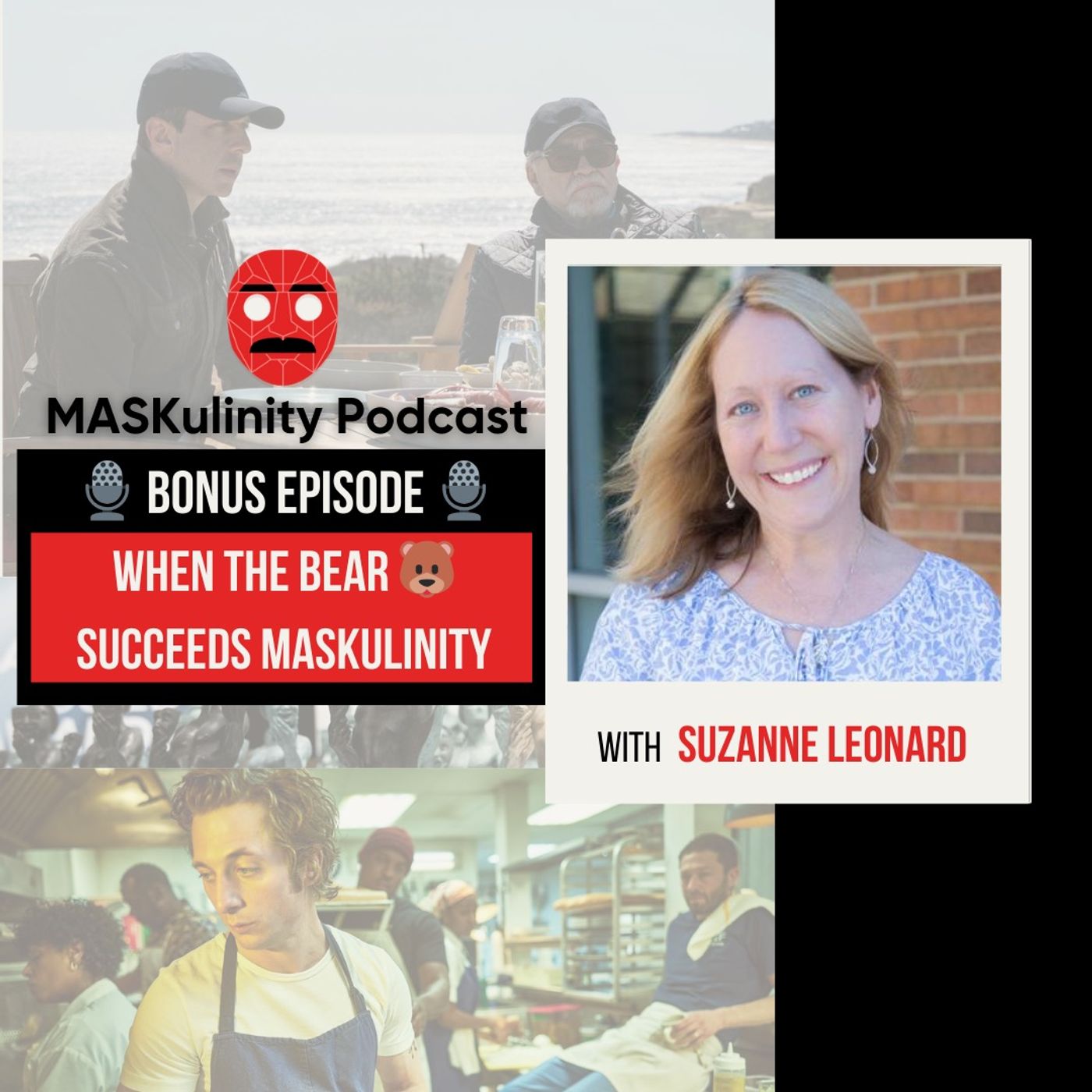
Just to clarify, we’re not talking about a bear succeeding at being chosen over a man in the woods. We mean the show! The Bear continues to be a favorite at TV award shows, and this year is no different. Naturally, your hosts talked about it. But first, they took a look at the show that rivalled it last year with just as many Enny wins. Succession. Your favorite hosts are joined by Professor of Race, Gender and Sexuality at Simmons University, Suzanne Leonard.The crew takes a moment to acknowledge the SAG nominees. We love when deserving people get their flowers.With The Bear being nominated, the crew decides to talk MASKulinity in the show, but first, they talk about a previous winner that reminds us all a bit too much of real life: Succession.Samantha takes us through some interesting facts about the family that Succession is based on.Suzanne lets us know what attracts her about the show. Are you a bit voyeuristic like her and Samantha are when it comes to this show? What is it about miserable rich people that draws our attention?With a quick synopsis of Succession, Samantha breaks down the similarities between the Fox News Murdochs and their fictional counterparts..A power struggle between a father and his children for the head seat of the company, something that provides a particular comment on fatherhood, power, and MASKulinity in our current social and political moment.Why are we talking about this show? Suzanne and Samantha apprise Remoy of why it’s helpful for us to dissect this type of patriarchal leadership.Suzanne makes an important note on mourning traditional media, which feels like it might be dying out, but is it?So much political, economic, and social power is concentrated in families with Murdochs, Trumps, and Maxwells, it’s worth examining the BTS of these powerful families through this show.Exactly how powerful are these nepotistic families? The crew runs down the list of the Murdochs’ empire and their impactful media (and legal) history and MASKulinity.SPOILER ALERT: Samantha presents some scenes from Succession for Remoy to react to. Suzanne weighs in.The fatherhood that Logan Roy displays can be mapped onto Trump’s leadership of both his family and the US as a country: we sustain his legacy.Wielding real power and setting the tone for men’s MASKulinity both in their families and in our larger society are staples of the all-powerful patriarchs.Suzanne highlights the ruthlessness of the powerful masculinity in the fatherhood displayed and how damaging it is to people around the folks who perform that masculinity. It is reflected in all these clips.Remoy makes a poignant point about America’s need for a father figure running the country.The crew continues on to discuss crowd favorite, The Bear. Remoy points out that if Shrinking is the best way to deal with MASKulinity’s woes, and Succession is the most toxic, The Bear falls somewhere in the middle.Remoy provides a great synopsis of the show, highlighting how differently it deals with masculinity compared to Succession.We examine the relationships stemming from Carmy’s newfound leadership.Carmy and Syd’s relationship represents a great mixed-gender leadership collaboration for this show.Richie’s evolution as a person as well as the rest of the cast’s reflected the power of a connected leadership.The Bear deals with mental health in an immensely different way from Succession. Carmy relies on those around him to get better while Kendall schemes while wielding power as his father does.The Bear chronicles changing dynamics in a workplace as does Succession. The three draw out the differences and few similarities between masculinities in the two shows.Suzanne highlights how class creates a different landscape than the opulent SuccessionIn our deep dive, Suzanne shares some great nuggets in her research on gender in powerful structures.We dive into questions about how family structures impacted our recent election of an all-powerful patriarch.We get into how women hold up these power structures. Suzanne’s research has looked at how women’s own power is garnered through all-powerful couples.Suzanne makes points on whiteness and how racial hierarchies impact this all-powerful dynamic.OK, now we’re really outta here! See you soonish! 👋🏾👋🏿Referenced on this episode:The Murdochs’ own family power struggleHBO’s Succession and our reckoning with male monsters - referenced article by BBC’s Hugh MontgomeryWhen we talked about Shrinking, the nominated show that got mental health rightWhen we talked about some very different TV DadsHow American Politics REALLY Sees Men & MASKulinity - our episode dissecting the PEW reportHow Americans See Men and Masculinity - Pew Research Center report that continues to be relevantPerhaps it’d be helpful to see how men maintain social connections; we talked about it COMPANION PIECES:On The Bear and MASKulinity
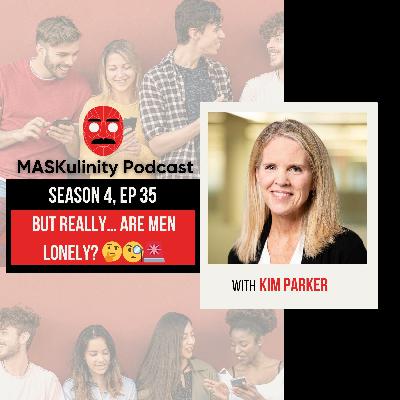
In this final episode of the season, Samantha and Remoy tackle a question that’s been at the heart of so many conversations lately: Are men truly lonely? It’s a topic that hits home for so many of us, especially as we think about how gender norms shape not just our actions but our deepest connections.Luckily, The Pew Research Center has been hard at work exploring these very questions. Their latest report, Men, Women, and Social Connections, sheds light on the gendered trends shaping relationships in America today. Samantha had the chance to sit down with Kim Parker, one of the report's lead researchers, to dig into the findings. And in this episode, she brings all those insights back to Remoy. Samantha starts by asking Remoy a big question: How optimistic is he about life these days? Turns out, his answer puts him in the minority. Pew found that 58% of Americans lean optimistic, while 42% do not.Kim Parker shares the backstory behind this paper and how it fits into Pew’s larger research initiative on gender and masculinity. It’s all part of a broader effort to understand how Americans are thinking and feeling about these issues in real time.The big question: Are men lonelier than women? Samantha reveals the surprising (albeit nuanced) findings to Remoy, and the two dive into why this narrative about men and loneliness has taken hold.Pew’s research uncovered fascinating details about men’s and women’s social networks. On the surface, they don’t look that different. But dig deeper, and you find differences in how men and women use and interact with the people around them.Remoy gets candid about his own experiences, admitting that even with a great support system, reaching out for help as a man still feels like a major challenge.Samantha asks Kim about the connection between this report and Pew’s earlier findings in How Americans See Men and Masculinity. Why do Americans say they want men to be more caring and vulnerable, yet men still struggle to seek support?The loneliness conversation takes an unexpected turn when Samantha reveals which group of people Pew identified as being lonelier than most. Spoiler: It involves the internet—and the way technology has become an inseparable part of their everyday lives.Samantha and Kim unpack how tech dependence can create unique barriers to connection, making it especially hard for this group to break out of loneliness.Finally, Samantha and Remoy reflect on the importance of self-care and taking a step back when needed. With everything happening in the world, it’s a reminder we all need.Important Note: MASKulinity is taking a few months off to rest, recharge, and come back stronger than ever. We’re so grateful to all of you who’ve joined us on this journey. Stay tuned for more powerful, curious stories about how masculinity shapes our world—and how we can reshape it together. See you soon! 👋Referenced on this episode:Here’s that surprising new report–Men, Women and Social ConnectionsHow American Politics REALLY Sees Men & MASKulinity - Our earlier episode analyzing Pew Research Center’s latest report on men and masculinity with report author and Senior Associate Director of Research at PEW Research Center, Juliana Horowitz and Next Gen Men’s Equity Leaders’ Trevor MayohHow Americans See Men and Masculinity - Pew Research Center reportA long time ago, we talked with Yuval Moses about what happens when men are victims of violent crimeBeyond the Binary: Expanding Gender Identity Representation in Data CollectionCOMPANION PIECES:Pew Research Center ‘s study on Americans’ news sourcesMANY young people are getting their news from TikTokMale loneliness is often a topic of conversation
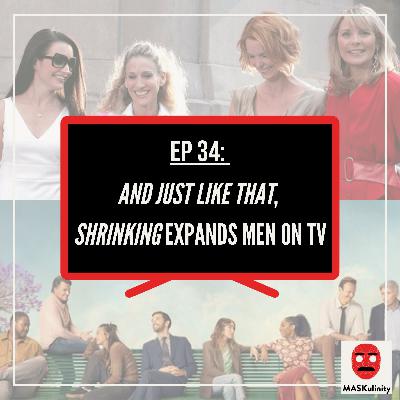
We’re at the start of award season, so it’s a perfect time to continue exploring MASKulinity on TV. This week, Samantha and Remoy walk each other through popular shows they’ve watched and ask, How are men and masculinity represented in these shows? Are they challenging the norm of MASKulinity or reinforcing it?Samantha starts off with a nod to Golden Globe-nominated Nobody Wants This for its evolved masculinity moments. Adam Brody has been in his nurturing masculinity bag since the early 2000s and we’re here for it!She then winds our TVs back to the late ‘90s for a look at a breakthrough TV show at the time: Sex and The City.Remoy questions focusing on men while talking about a show that centers women. At any other time, Samantha would agree, butcher contends that it is helpful to see how women can perpetuate patriarchy.What are men like in a TV show that entirely focuses on the dating and sex lives of attractive women? Samantha reflects back on the different love interests in the show and how their viability as a partner was measured.Carrie’s main love interests, Mr. Big and Aidan, embodied two different sides of the coin that is traditional masculinity. Neither challenge patriarchal norms, still, it’s worth asking: Why would an emotionally unavailable tycoon be a better suited partner than a nurturing provider? Short answer: patriarchal tropes. Long answer: Nice guys finish last in the patriarchy, and SATC is no different.Remoy acknowledges his own past as a Mr. Big type, proving that emotional unavailability doesn't have to be lifelong!Remoy didn’t regret missing the show, but he couldn’t help but wonder, Do these stereotypical dating situations on TV inform our real dating lives or is it the other way around?Patriarchy didn’t just impact dating in SATC. Casual homophobia, racism, and transphobia were peppered throughout the show.The two call out that SATC touted itself as a feminist show, but only explored well-to-do, slim white women’s dating and sex lives. Everyone else does feel othered including men, who are one-dimensional and just meant to be chosen.Samantha admits why she continued to watch the show despite all these tropes. She reflects on her younger self’s patriarchal leanings.There were good things about SATC. While missing clear opportunities to be inclusive and well-rounded in their depictions of dating life in New York City,Where the characters in the MASK On, MASK Off game from our “TV Dads” episode grappled with masculinity, SATC sticks to traditional expectations of masculinity by condensing male characters into three types. [13:00] Do you agree? Let us know!Samantha ends her story with a quick note on the SATC reboot, And Just Like That.People have been vocal about how the show is forcibly inclusive.Samantha shares some examples and opines on how evolved the reboot is compared to the old show.What your verdict? Has this franchise evolved? Holler at us! @ maskulinitypodRemoy takes the mic and picks up where he left off with his new favorite show, Shrinking.In Shrinking, men, and characters in general, are imparted with nuance and humanity that was clearly missing from SATC’s supporting characters.Remoy maintains his fave was snubbed at the Golden Globes and attempts to foster appreciation in Samantha for his new show.He shares a few clips from the show and lets Samantha ask clarifying questions about the show.Cue in intergenerational friendships, community problem-solving, open communication with teenage children, and healthy grey-area relationships between men and women.Shrinking does what And Just Like That attempted to do but in a realistic and relatable manner.Changing neighborhood dynamics leads folks to call out racist behavior, rather than yearning for the past.Remoy breaks down how characters deal with grief and changing dynamics in their lives.Samantha immediately takes to Derek and Remoy gives her the lowdown.In this ensemble cast, there are various folks support each other.The relationship between father and daughter is quite moving.Remoy gives praise to the writing of the show gracefully weaving themesReferenced on this episode:Our episode on TV DadsThe paper that informed Samantha’s gamifying of TV dads? That’s–Laughing at Men: Masculinities in Contemporary SitcomsOur other TV episode: The Fresh Prince and 📺 EpisodeCOMPANION PIECES:Shrinking isn’t the only show demonstrating healthy masculinityToxic Masculinity and Big vs. Aidan: How ‘Sex and the City’s’ love triangle has aged
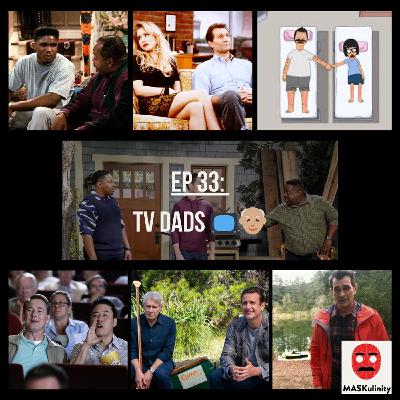
Going off an earlier episode where Samantha tested Remoy’s musical knowledge, this week Samantha checks in on what Remoy knows about TV. Through round after round, our two co hosts explore how TV dads and masculinity have evolved over the decades.Samantha kicks things off with a clip of Al Bundy and his daughter Kelly. Does Remoy remember anything about this dysfunctional yet iconic duo? And what does our laughter about their relationship on Married With Children tell us about fatherhood three decades ago?Bonus Episode: Remoy has to know. Was Samantha’s own relationship with her father’s anything like Al and Kelly’s?You can’t not talk 90’s TV Dads and not think TGIF: Samantha highlights a heartfelt moment between Carl and Eddie Winslow, one of the few Black father-son relationships on 90s TV.They break down how Family Matters portrayed manhood and why this mattered for representation at the time.Samantha skips forward a decade or two to show Remoy the ultimate suburban survivalist: Modern Family’s Phil Dunphy has a near-death epiphany on a camping trip. Remoy reflects on how Phil represents a new era of goofy yet emotionally vulnerable TV dads.You can’t not talk TV and not talk animation. But it isn’t Bart and Homer for Samantha. It’s Bob Belcher from Bob’s Burgers who in a tender and hilariously awkward clip bonds with his daughter Tina during a “hairy” situation.Samantha wants to know. Are there any African daughters out there who their father shared in the pain of getting their legs waxed in solidarity? If so, email us at maskulinitypodcast@gmail.comAnother Black father and duo + Schmitt. No it’s not New Girl. It’s The Neighborhood on CBS.TV laugh tracks aside, Samantha and Remoy take a moment to appreciate a really tender and evolved, but not perfect, moment in modern TV.Samantha shows Remoy a lesser seen moment on TV: An immigrant father-son moment from the crowd favorite Fresh off the Boat.A sweet moment portrayed on the screen for an Asian dad. But would huckster chef Eddie Huang, whose life story the show was modeled off of, approve? Would Remoy?What do you think after hearing the clip? Hit us at our inboxes and let us know maskulinitypodcast@gmail.com.Remoy is sold and wants to play. He shares with Samantha a moment from a new comedy he’s been loving. Any guesses to what that series is?Let’s just say Harrison Ford playing a therapist and being vulnerable on screen with Jason Segel and many more is a win for both Samantha and Remoy as they appreciate where TV has come over 30 years. Referenced on this episode:The paper that informed Samantha’s gamifying of TV dads? That’s–Laughing at Men: Masculinities in Contemporary SitcomsOur guide to navigate being Home ALONE for the HolidaysOur new classic episode: The Fresh Prince and 📺 EpisodeThe original Samantha gaming gem 💎: UnMASKing Masculinity: Music Trivia Edition 🎶Even though Fresh of the Boat isn’t directly referenced in this previous episode, our conversation with Dr. William Liu covers a lot of relevant subject matter. Listen to The Racial Hierarchy of MASKulinity, with Dr. Liu - Part 1 ENCOREWere you ever rocked by the entrance of Stefan Urquelle on Family Matters. Remoy was. And he chronicled it in a classic episode for the Spotify original podcast–Not past ItYes, Remoy once wrote TV criticism on Tumblr–basically his televised version of letterboxd had an apt title: Because TV Raised UsCOMPANION PIECES:The guide to Samantha’s game? Yep it boils down once again to that now seminal report from Pew Research center: How Americans See Men and Masculinity
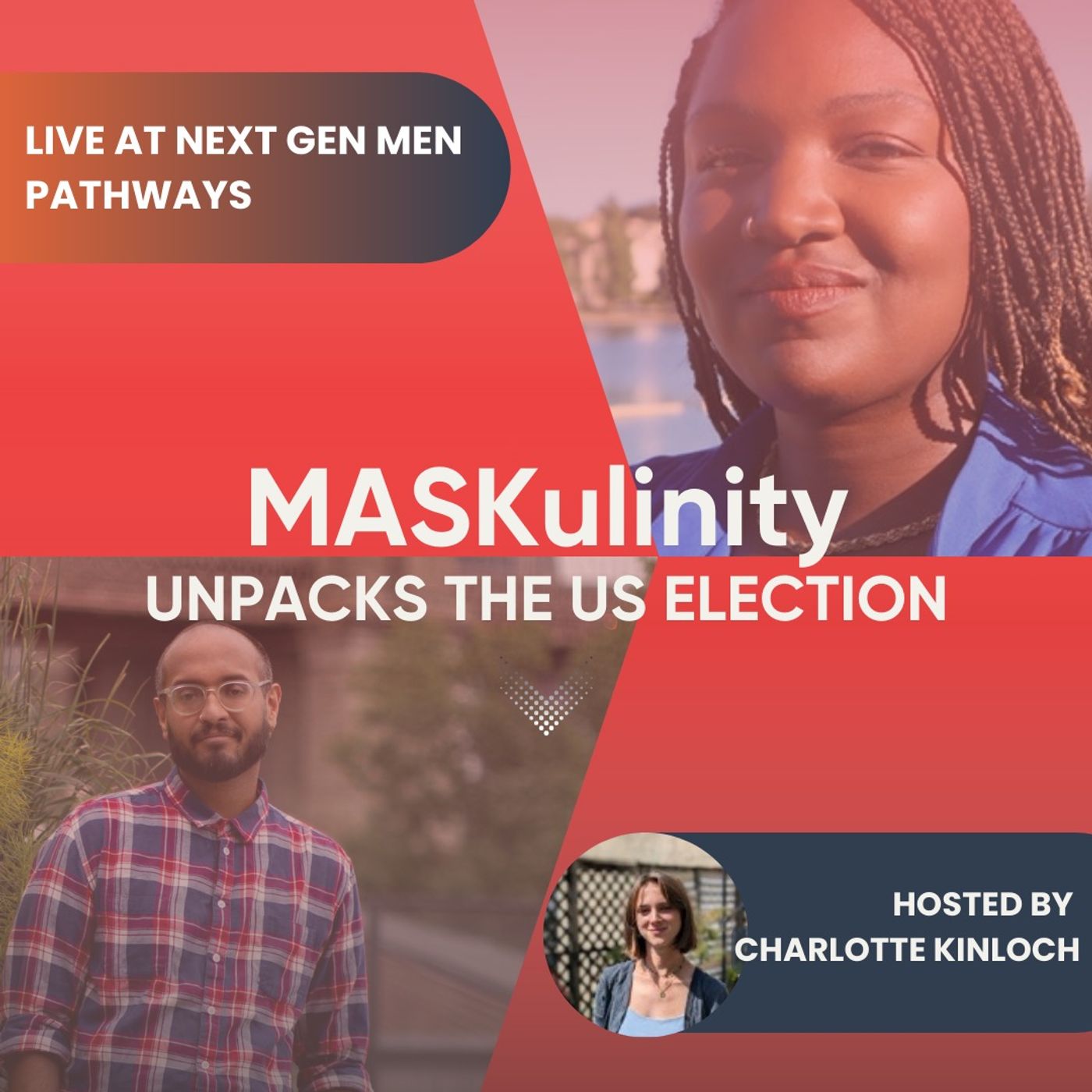
This week, we’re excited to bring a conversation from NGM Pathways’ live community event to our feed. The good folks at our presenting organization, Next Gen Men, hosted Samantha and Remoy for a Q&A session about the US election. We stop just short of the audience Q&A to maintain privacy of the participants. Tune in!Remoy and Samantha start out with a shout-out to self-care. It’s been a month since the election and some tough conversations with loved ones may have happened/may be coming up—it’s important to take a moment for ourselves.Therapy is still the greatest thing ever. Remoy shouts out his own therapist and Samantha is excited to return this week.Male loneliness continues to be high—Samantha calls back the mental health conversation they had with resident counselor Justin Lioi this time last year.Next Gen Men’s new community manager, Charlotte Kinloch, starts out with land acknowledgments. We remember that we are on stolen land both in the US and in Canada, as we start the conversation. Charlotte leads us into unpacking the election…Was this election gendered? It certainly didn’t have to be but it was. A white male convicted felon being allowed to run and being measured against the most qualified presidential candidate in recent times certainly feels gendered. Well, it feels supremacist.Samantha and Remoy point out that many other factors were certainly implicated in Americans’ decision to vote Trump, but gender cannot be ignored.What was surprising about the PEW findings from the pre-election episode?Right before the election, Juliana Horowitz from PEW Research Center came on the pod and shared Americans’ feelings on men and masculinity. Men’s progress and character traits in men were among the most surprising, particularly given the narratives promoted by the manosphere.As Horowitz shared during that episode, which Samantha brought up again now, not blaming women for men’s lack of progress doesn’t mean that women’s progress is appreciated. This points to a patriarchal perspective prevailing among Americans.Samantha sidebars about why men have made less progress than women in the past few decades. PEW Research Center had a study on that as well…Remoy places us within a larger international context. Trump wasn’t the only one elected as a result of populist efforts.Faith in education has dropped drastically, and education is viewed as the establishment.How was Trump able to paint himself as a man of the people even though he is a billionaire who rubs elbows with other billionaires? Remoy gives his take.If, as we discovered during our conversation with PEW Center’s Senior Associate Director of Research, Juliana Horowitz, Americans value women’s leadership and “feminine” traits being valuable to leadership, how did Donald Trump emerge as elected leader for this country yet again?Remoy reflects back on his conservative background before he became liberal and how much masculinity is entrenched in American culture history.Samantha points out that messaging around patriarchal leadership is heavily funded by nontraditional sources and funneled to nontraditional information and news sources. A win for the anti-establishment strategy.The manosphere and its spaces also provide something that men have trouble getting elsewhere.Remoy highlights the need for regulation on social media with a clear solution.How have evolving gender roles impacted the American public?PEW’s research found that Americans don’t blame men’s lack of progress on women’s continued progress, but men are still behind.Remoy brings up the biggest point of all, which is the economy. Many folks who vote conservative cite the economy as their main reason for doing so. This election was no different. This has impacted men in a real way, challenging the notion that they are providers. And some of their women spouses voted to ensure that their male partners could get better financially.Samantha highlights the ways in which the economy has already been impacted by Trump’s win, but only a few have seen the wins.Talk to us! Did we cover all the points about the election? What would you have added? Our lines are open for any and all communications about masculinity, maskulinitypodcast@gmail.com; @maskulinitypod on Twitter and Instagram.Thanks for listeningCOMPANION PIECES:Making Sense of the Election - Our post election episode examining money in politics and how Americans get their news and informationHow American Politics REALLY Sees Men & MASKulinity - Our episode analyzing PEW Research Center’s latest report on men and masculinity with report author and Senior Associate Director of Research at PEW Research Center, Juliana Horowitz and Next Gen Men’s Equity Leaders’ Trevor MayohDon’t underestimate the Rogansphere. His mammoth ecosystem is Fox News for young peoplePew Research Center ‘s study on Americans’ news sourcesMANY young people are getting their news from TikTokReferenced on this episode:How Americans See Men and Masculinity - PEW Research Center reportMen Think It's Harder for Them at Work Than 20 Years AgoFewer young men are in college, especially at 4-year schools
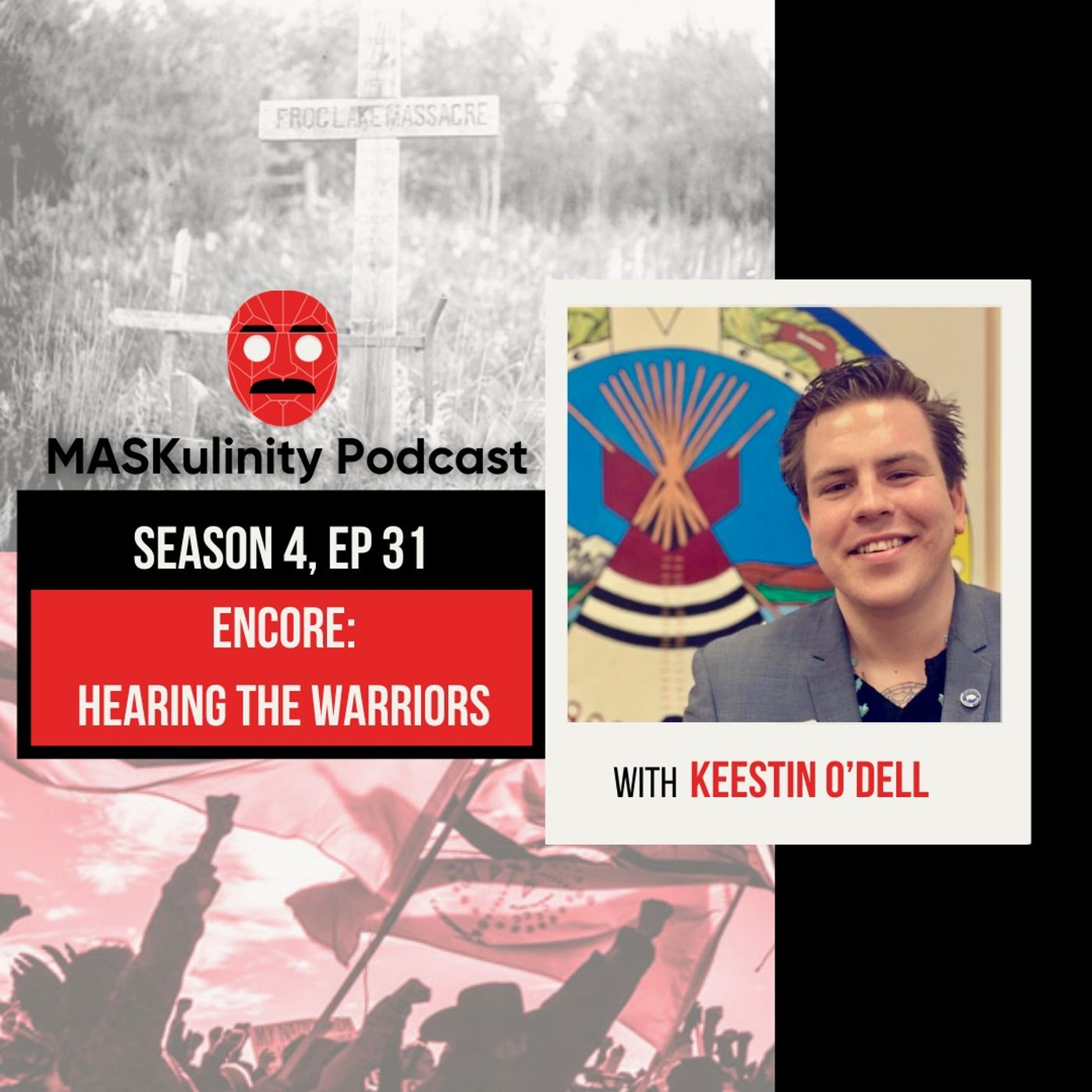
This time last year, Keestin O’Dell of Frog Lake First Nations joined the pod to have a thoughtful conversation about resistance, warrior masculinity, and the importance of questioning dominant narratives about indigenous communities. It’s time to have this conversation again, so we’re bringing it back to keep real history out there. Here’s how it went down:We switch it up this week! Remoy has some stories to fill Samantha in on. They talk language traditions, how colonial/settler/imperialist institutions use language to marginalize indigenous communities, and how that translates to altering narratives about a painful past.Remoy talks us through about how the co-woman led Indian of All Tribes organization took over Alcatraz for a year-and-a-half and gets real about the astronomical impact of the genocide of indigenous peoples.He shares more female native activist voices like Shinanova who use social media voices to pass on their message of resistance.Keestin shares key history about Frog Lake First Nations and its legacy in Alberta, Canada—specifically the Frog Lake Massacre. If you listen hard enough, you can hear how history is finding a way to repeat itself now.He lets us in on how his and other indigenous communities have had to fight postcolonial legacy to reclaim their history and identity, including redefining the notion of “warrior” and what it means to provide.Keestin inspires us to break through our illusions of language and masculinity. He shares the evolution of his own experience with masculinity, how a community of men was pivotal, and how that impacts the work he does today. COMPANION PIECES:The history behind The National Day of Mourning and how indigenous Americans continue to fight the lie of Thanksgiving. Keestin’s TED talk on perceptions of indigenous manhoodThe indigenous occupation of AlcatrazReferenced on this episode:54th Annual National Day of Mourning Demonstration in PlymouthDr. LaNada War JackRichard OakesIndian of All Tribes (IAT)ShinaNova
This week, Remoy and Samantha debrief the election. After having hope following the PEW findings from the last episode, they try to understand how the election turned out the way it did.The obvious has to be put out there: Kamala Harris’s loss has strong racist and sexist undertones.Given most Trump voters cited the economy as the reason why, Samantha talks through Joe Biden’s approach as well.Many factors contributed to the state of the economy, including—ahem—COVID, the effects of which we’re still feeling now.What’s going on with inflation? Samantha gives us high-level notes on COVID-19 led to the worst inflation we’ve seen.Trump voters may not have known all this, because news sources have changed substantially in recent years.Remoy takes us through the new news landscape.YouTube and Facebook are heavy on Americans’ news rotation, many more Americans than you might think get their news from these sources.Not to mention the manosphere speaking directly to men as guests like Donald Trump give them clout while connecting to their fanbase.How can so many Americans fall for these things? Education has been meddled with in so many states.Samantha gives a crash course on the billionaire Koch brothers and their education goals.She delves into the allies that have helped them get there and how they use government and money to undermine public education.Did you know they are longtime associates of Betsy DeVos and her family? Samantha gets into their collaboration instituting the voucher system in states around the country.The Koch have a particular vision for the world they want to see and meddling with American education is their pathway.Trump has now started naming his cabinet, and back in 2016, many of his potential cabinet picks were from the Kochs’ network of donors.Remoy reminds us how men’s education has plateaued in the US, and how this helps disinform them.The notion of school choice has been a conservative strategy to destabilize public education, reallocating funds to give parents accounts.They end on a note of hope.Join Samantha and Remoy at the Next Gen Men Pathways event. They’ll be answering questions about MASKulinity and the election for Next Gen Men’s new initiative and reflecting on what’s to come. Sign up for FREE, and join them on November 21!Thanks for listening!Referenced on this episode:Pew Research Center ‘s study on Americans’ news sourcesMANY young people are getting their news from TikTokHow Democrats are falling short on connecting with menOur podbro’s thoughts on Democrats connecting with menHow the manosphere won the election COMPANION PIECES:How American Politics REALLY Sees Men & MASKulinityRadicalization and TSwiftMake America Great Again, How the dominant was left behind with Dr. Michael KimmelInside the new strain of conservatives, not MAGA or QanonGaslit Nation’s Reading Guide to stay informed

As the 2024 election heats up, it’s easy to assume that hyper-masculine, even toxic masculinity, messaging is resonating across America. But a new Pew Research report tells a different story. After digging in with report creator Juliana Horowitz and Next Gen Men’s Trevor Mayoh, Samantha uncovers some surprising truths. Here’s where Samantha reveals the real story behind Americans’ views on masculinity. Remoy was surprised, to say the least…First Juliana opens up to how the “How Americans See Men and Masculinity” report came out of a more general curiosity, but as the election shifted into a more gendered race, the importance of the research became increasingly clear.Using the report as a jump off, Samantha runs a few questions by Remoy:First: Samantha asked Remoy what he thought when he heard of the association between the American public and the terms: caring, open about their emotions, soft-spoken, or affectionate?Second: She asked him how Americans felt about men pursuing non “traditional” norms: staying home to raise the kids, women paying for the date, men taking a woman’s last name in marriage?Third: How do Americans feel about actions that depict Toxic Masculinity?Fourth: Do Americans feel like there’s a backlash against men who are manly or masculine?The answers? They’re not so cut and dry as you may think with a lot more parity across the aisle. Why?Juliana suggests that generally speaking there’s much more nuance to Americans’ beliefs and thinking. Especially in contrast to the loud political noise we constantly see and hear.Trevor makes a point that it’s the sport of American politics, the tribalism of how it’s waged, that unfortunately may disregard a lot of that nuance.Trevor shares what he’s experienced with men in his work as a diversity, inclusion and violence prevention consultant. How he encounters a lot of men who are hurting in a variety of ways: work anxieties, stress, expectations to meet the highest standards of what it means to be husband or father. And in the midst of all that, how the larger culture hasn’t given men the tools to ask for help to process all these intense expectations.Then he goes on to unpack how that can be exacerbated in highly masculine spaces– how men could actually possess a lot of that nuance Juliana shared in her report –but there’s a pack mentality in those intense social environments that doesn't allow men to easily share their discouragements.Remoy wonders if all of this is what can create a culture of “Aggrieved Entitlement.”Does Remoy know what that really is? Nope. Luckily Samantha helps guide the way, defining what that experience is along with how mens’ perceptions of women’s ascent plays a role in building that entitled foundation.Juliana brings some light to it all by giving a better view of what Americans perceive of the progress women have made in the last 20 years and how that may be affecting the aforementioned entitlement.Trevor reveals how that entitlement, yes, has become a tool for American players like Trump, but is also a larger global culture. How it’s more of a larger populist appeal that exploits men's insecurities amidst deeply entrenched gender norms.Trevor leaves Samantha and Remoy with one last take away about how maybe the greatest misunderstanding of all these political games, is that if anything, it may provide community, friendship, or just a person to share a laugh with. A rare commodity for men especially as they age.Samantha and Remoy really take this information in to gather a better understanding of how vulnerable men may be and how if this is the most vulnerable area for predation, how sad the American political environment may be.Samantha then breaks off on her own to ask Juliana more questions about the importance of the “How Americans See Men and Masculinity” report. Along the way pursuing a deeper understanding with Trevor at how to better wade through all these layers of these findings amidst the visible political situation in America.Finally, Samantha and Remoy discuss how to hold all this nuance alongside knowing we’re in a fractured American political system; especially when facing the obligation to participate when the cracks are so apparent. Together they land on multiple ideas that empower each other to have faith and still fight back as part of their own civic duty. Referenced on this episode:Want to dive into the actual report from the Pew Research Center? Read “How Americans See Men and Masculinity” in all its surprising, well dissected glory.Who’s Trevor Mayoh? Learn more about his role as an Equity Leader with Next Gen Men.Okay but really… What is “Aggrieved Entitlement”? The Conversation shows a recent example of what that looks like in Canada.Who’s Samantha’s favorite Boston Celtic, Jaylen Brown? And why? Read more about how he came to open up about his mental health challenges as a male pro-athlete, especially overcoming an upbringing surrounded by what he calls “over-masculinity”.Justin Baldoni makes it his mission to model a public, vulnerable, honest conversation of what patriarchy really does to men.Companion pieces:It's Time to Loosen the Grip on Reproductive Freedom with Heidi SieckMake America Great Again, How the dominant was left behind with Dr. Michael Kimmel
This week, we’re joined by multihyphenate artist Stephanie Graham to delve into Pick Me culture. Remoy has no idea what that means, so Samantha walks him through what Pick Me culture is, the nuances in the ways women interact with each other when talking about relationships with men, and what that means for MASKulinity.Have you ever done anything out of character to be picked or chosen? This question is at the crux of this episode, and Remoy shares his own personal experience, which mostly includes success without shame.Along the way, Samantha breaks down what a simp is, which according to Urban Dictionary, is the male version of being a Pick Me. The crew walks through how each term started out as a way to call folks out for bending their self-respect for desired love interests who don’t care for them but evolved into insults toward people doing anything nice or pleasing to the object of their affection.Samantha traces back the origins of “woman who’s not like other women” to the “cool girl,” a compliment given to women who never required too much from their man and just went with the flow, drank beer, watched sports, while being hot and keeping a size 2.Remoy gives all the reasons why his partner is a cool girl, and they’re just because she’s a cool person who does cool stuff. But the “cool girl” is a trope of a woman suppressing parts of herself so that she can appeal to a man by not taking up too much space. Remoy gives a great example from popular culture.Samantha shared her own “cool girl” attempt as a 12-year-old girl trying to impress a boy.Stephanie vulnerably shares seeking sneaker-swag validation from men, albeit platonically.Is Samantha’s story an example of Pick Me behavior - What do you think?At the crux of the Pick Me is her superiority to other women for her ability to be appealing to men, whereas the cool girl suppresses her needs and aligns her interests with her man for appeal. They overlap.Samantha provides examples and Remoy picks up on the suggested requirement to be demure to be a real woman, and Stephanie picks up on the chastisement of women who aren’t putting domesticity at the top of their priority list.They get into Stephanie’s work exploring gender through art. Stephanie shares her experience photographing men for her Love You Bro series, celebrating friendships between Black men. The responses to her project had her questioning whether she was a Pick Me.Remoy makes an important point about how patriarchy drives up these insecurities and conflicts among women.Samantha points out the rewards that women get when participating in Pick Me/Cool Girl culture.Men enjoy being appealed to, and men’s interests being viewed as superior to women’s automatically legitimizes Cool Girls.It gets complicated. Folks calling out Pick Me behavior may just be performing a different type of sexism. Calling out women for their behavior and what they prefer is sometimes also folded into the Pick Me trope, when it’s really sexism.Samantha calls out that the onus of dismantling patriarchy falls on men. Remoy and Stephanie cosign.Remoy makes an important statement about how men can step in and stand for what’s right.Stephanie shares small ways that men can intervene using their values rather than telling women what to do.In our Five Questions segment, Stephanie shares what Pick Me culture can look like in her art and in real life.Stephanie illustrates the ways that Pick Me culture is rewarded in our culture.Girls get the prize: the guy.Women compete and win the prize, but it can backfire when they want to put their own needs first later in the relationship.They get into the trad wife trend. Is this another example of Pick Me culture. Sort of. The trad wife trend has been blazing online but it’s a performance of gender. Women peddling the trad wife are businesswomen selling a lifestyle that they’re not actually living for profit.Stephanie lets us in on her project #NEWGLOBALMATRIARCHY. The performance and installation project explores friendships between women through the lens of goddesses. Why is there a supposed hierarchy between women in their friendships? There isn’t and this project explores that. It contradicts the trope of Pick Me culture pitting women against each other for an ultimate prize.Stephanie’s photography project Love You Bro explores male friendships. The closeness between men is seldom expressed, instead painting a picture of men as inherently violent.She gets into the discomfort folks have seeing men being affectionate with one another.Samantha wonders what the reception was from both the participants and the audience.Stephanie shares the concerns men had doing the project, and the eventual glee and satisfaction of the participants.The hot seat is flipped this week! Remoy answers Stephanie’s question to the host. What was the turning point for Remoy that got him to question patriarchy?Remoy shares his upbringing seeing women’s leadership. He witnessed abuse growing up, which led to insensitivity toward women on his part.Remoy’s turning point shows that it’s possible for men to transform and be more thoughtful about patriarchy and its harms.Referenced on this episode:Gone Girl: book monologue and movie monologueExamples of Pick Me cultureLove You Bro#NEWGLOBALMATRIARCHYCOMPANION PIECES:The Marriage Episode 👰🏿♀️💒💍, with Dr. LaToya CouncilThe Matriarchy Episode, with Izzy ChanRadicalization and TSwift, with Jeff Perera and Jonathon Reed
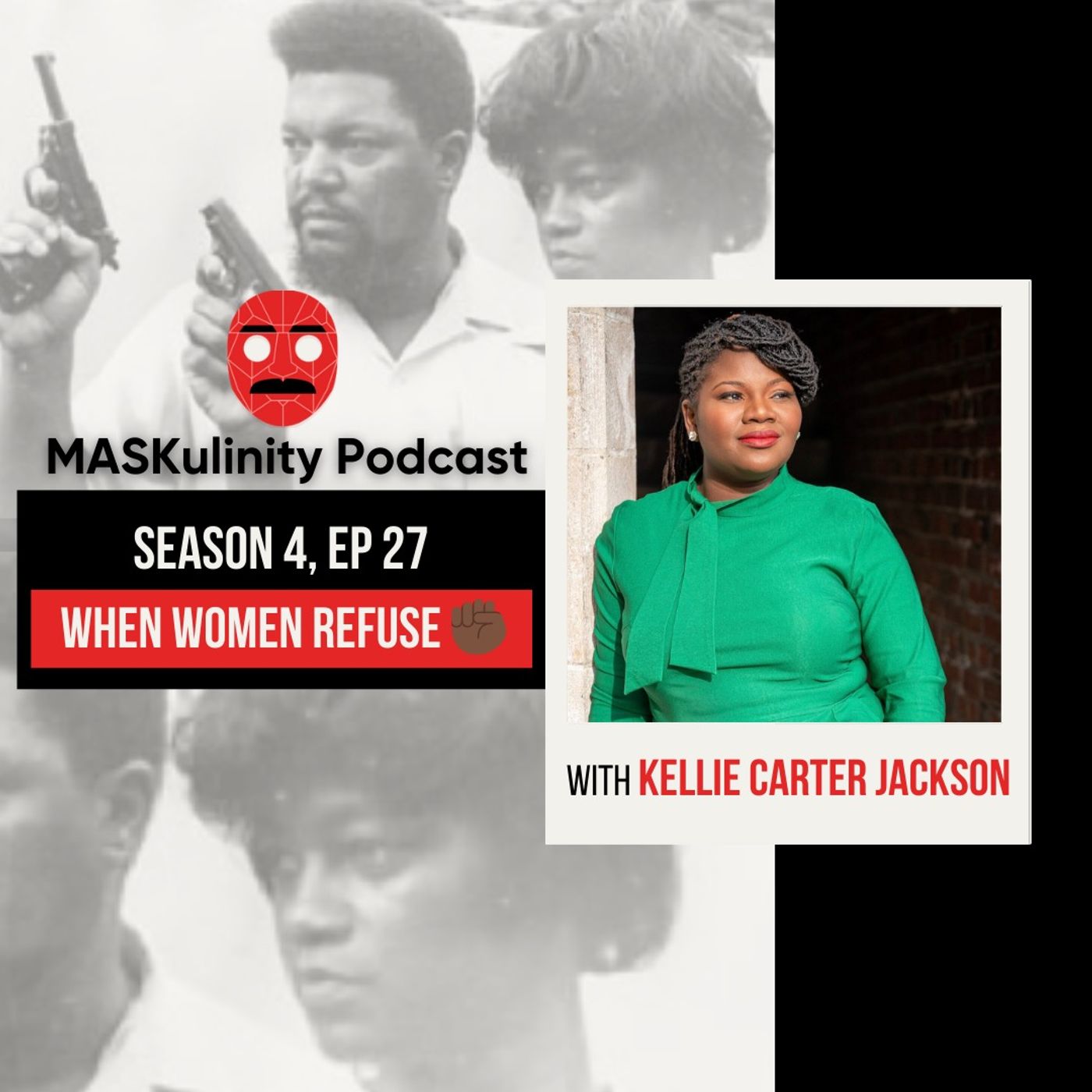
This week, we’re having a herstory moment! Professor and Chair of the Africana Studies Department at Wellesley College Dr. Kellie Carter Jackson joins the show this week to talk Black abolitionists and resistance. We get to know civil rights leader Mabel Williams, spouse and partner of Robert F. Williams, and how she and her husband mobilized Black folks to take up arms and defend themselves in the face of extreme racism in the sixties. We start off with a moment for the cover of Professor Carter Jackson’s latest book We Refuse. It features Soldier of Love, not Sade’s chart topper, but the beautiful and poignant painting by Brooklyn-based artist Taha Clayton.Disclaimer: While we’re happy that gun violence has overall decreased in the United States, it continues to be troubling. We’re conscious of how intense gun debates can get and want to stress that this conversation explores how communities took up arms in self-defense against lethal racism. We are not advocating for general gun violence.Remoy introduces Mabel and Robert Williams via their infamous black and white Bonnie and Clyde photo.The Kissing Case in Monroe, NC is a turning point for the Williamses.Mabel knew how the presence of guns was enough to deter potential violence. And she was right. Violence severely deescalated.Carter Jackson stresses the importance of Mabel and Robert’s partnership because Robert tends to get all the credit for these efforts.Racism is not the only thing folks were fighting. Violent sexism must also be challenged and that calls for women’s leadership.In our Five Questions segment, Professor Kellie Carter Jackson distills women’s anger and how they can use it as a driving force. Our guest shares how anger is a big driving force for a lot of her work.Carter Jackson breaks down how she arrived at the title of her forthcoming book, We Refuse.bell hooks has a famous quote about Black men and white women being one stage away from the ultimate social power: white men’s power.We close out with a great note on how to get to liberation. Dr. Carter Jackson stresses how binaries and individualism pigeon-hole us away from collective freedom. She envisions how to move past that.Thanks for listening!Referenced on this episode:Audre Lorde's speech about women's anger being usefulbell hooks’s quote about Black men and white women each being one degree away from the highest rank of social power from her book Feminist Theory: From Margin to CenterDr. Martin Luther King, Jr. was a pacifist in the street but a gun owner behind closed doors.Dr. Carter Jackson’s books, We Refuse and the award-winning Force and Freedom: Black Abolitionists and the Politics of Violence cover a wide history of Black resistance and women’s rolesF*** Your Slave Laws - RGP1-produced Not Past It episode featuring Dr. Carter JacksonCOMPANION PIECES:The Marriage Episode 👰🏿♀️💒💍, with Dr. LaToya Council
It’s been a great summer! But now it’s fall and your tween and teen sons, nephews, brothers, and cousins are back in school. Teen anxiety is on the rise with pre-teen boys feeling that stress. But there is recourse! Multihyphenate mental health advocate Kyle Mitchell joins us this week and shares his wisdom and experience with helping teenagers manage social anxiety. Remoy shares his experience with tween social anxiety after changing schools Kyle had a very similar experience and reflects back on dealing with anxiety as a tween. Turns out this experience is common among teen boys. They wanted to but had a hard time making friends and spent their time trying to avoid being noticed and judged.Remoy puts on his science teacher cap and lets us in on where this anxiety comes from.He walks us through the brain functions and glands that cause our physical and mental development.Our bodies develop faster than our mind, and we have to play catch-up to manage it all… How does that impact boys trying to survive new social situations?The prefrontal cortex is responsible for a lot of our mental processes, and yet, most of us know so little about it. Even if their body is physically mature, hormonal teenagers will not have a fully developed brain for another ten years. It all seems so unfair…Hormones help us manage stress but are also responsible for puberty, a highly stressful time in our lives.Kyle reminds us that anxiety is useful! The goal isn’t to get rid of it but to manage it.Teenagers develop strategies for survival in social situations that could make them feel alone.Kyle shares some truths and tips about how to manage that, particularly for boys, who by that time, have already learned to repress emotional expression.He stresses the importance of boys developing a friend group that they can confide in and be vulnerable with.Dealing with self-esteem and confidence issues is universal even if it doesn’t feel like it and knowing that can help boys overcome the fear of sharing themselves more openly.How to teach boys to be vulnerable? Kyle reframes what strength actually can look like: sharing is more than caring; it’s actually a show of strength.How have you dealt with social anxiety over the years? What would you tell your teenage self about dealing with self-doubt and lack of confidence? We’ll say it again: sharing is caring! Share your stories and takeaways and we’ll share them with our online community!In our deep dive, Kyle shares his own story dealing with anxiety and how this led him to the work he does helping teens and tweens deal with theirs.He walks us through the strategies he used to help him manage anxiety as a young man. Self-love was the missing piece for Kyle and is for a lot of boys. He shares his feelings of self-hate and what led him to a turning point.Kyle is a father now and sees how his own kids deal with self-love and acceptance.Kyle shares his three-step process for dealing with social anxiety (37:39)Exposure therapy opened a whole new world for Kyle and got him thirsting for stretching his comfort zone.Rewards systems are hugely helpful. BoysWhile self-love is the name of the game, that term can be a turnoff to boys because it’s associated with femininity.Kyle exposes how using the right language to draw boys into their healing. What was the turning point for Kyle, where he realized that anxiety wasn’t running his life anymore?Kyle shares how working uncomfortability into his life and his family’s life has changed everything. He loves looking back on his journey going from being an anxious kid to being a public speaker helping kids with anxiety. Kyle shares why his work is so important and the gratification seeing people move past their fears brings him.Kyle plans to visit schools with The DUDE Project this fall to help more kids deal with anxiety. Samantha had a moment of gratitude.Like we said above, teen anxiety is on the rise in the US. Please share this conversation with anyone who might benefit from it and check out mental health resources on our website. Thanks for listening!
This week, we’re talking about marriage! Sociology Professor LaToya Council joins the pod this week to help us navigate Black couple’s marital waters.. and Samantha hangs in there as Remoy walks us through the complicated history of wedding traditions before her upcoming I Dos.Remoy takes us back to the first wedding ever, which took place in China. Find out what a man had to do to win the hand of the king’s daughter.At this wedding, the bride didn’t wear white. Remoy puts us on game about the painting that started it all. LaToya and Samantha react to the infamous painting of women being auctioned off at a marriage market. 😬Edwin Long’s choice to paint the brides’ dresses white was his own and didn’t reflect the era he lived in. Remoy questions which women were considered pure and LaToya explains how the purity conversation excluding Black women impacts Black marriages…Remoy puts the history of marriage in context socially. Marriage was thought of as a wealthy-white-man activity – they were the only ones who could afford it! Black marriage in the US did evolve from those traditions with the extra weight of racism flaring up in relationships.LaToya gives us a rundown of what Black women experience in public as a result.The impact of racism on Black marriages is very real.LaToya shares some of her findings interviewing Black couples in her research.Black men also rely on their partner emotionally dealing with racism in their public life. Home is an important structure for maintaining themselves in a racist society.Social networks and community are critical beacons of support for Black couples navigating racism.LaToya also makes a nod to the economic benefits of marriage for Black not just practically, but socially.In our Five Questions segment, Samantha wants some answers on marriage and LaToya delivers.LaToya’s paper reports back on her conversations with 20 Black men about egalitarianism and marriage and she and Samantha get into it all.Black marriages are more egalitarian than ever before, and many Black men resist white supremacy and its gendered capitalism by seeking a partner with equal or higher income. But it seems egalitarian spirit stops at income. Why?What is this notion of “moral backbone” LaToya writes about? It does include emotional support, but somehow is still patriarchal. Our guest asserts that Black men’s notion of masculinity is entrenched in protectorship and providership and spells out what it can look like. Solutionism, anyone?What would it look like for Black men to embrace egalitarianism practically and emotionally?Black men retaining that protectionist MASK is helpful in dealing with a racist society, but how to shed that at home? LaToya argues that Black men are uniquely positioned to embrace egalitarianism, but power, and specifically, gender power plays a huge part in why egalitarianism has only reached so far in Black marriages.What could it look like for Black men to fully embrace egalitarianism while still feeling valued? LaToya gives her recommendations on how to get there.Let us know what you thought of this episode! We’re taking a break in August! So you’ll have time to catch up on and relisten to all MASKulinity episodes. We’ll be back in mid-September to continue unmasking masculinity, but in the meantime, make sure to sign up for our biweekly newsletter to continue getting those MASKulinity updates and recaps. Have a great month!Referenced in this episode:Black Marriage Through the Prism of Gender, Race, and Class by Kecia JohnsonThe Fresh Prince and 📺 Episode with Soraya GiaccardiCOMPANION PIECES:The Racial Hierarchy of MASKulinity, with Dr. Liu - Part 2 ENCOREThe Racial Hierarchy of MASKulinity, with Dr. Liu - Part 1 ENCORELet’s Talk MASKulinity, Bruh with Jeremy HerteMen as Victims of Violent Crime with Yuval Moses
This week, we’re joined by media scholar and psychologist Soraya Giaccardi. She shares her work analyzing gender depictions in TV and helps Remoy and Samantha psychoanalyze their relationship to a TV classic and one of their faves, “The Fresh Prince of Bel Air.”But first, Remoy walks us through some surprising facts about boys’ TV shows. Who are the leading characters in boys’ TV shows? Remoy shares some stats from Soraya’s seminal report (check it out; it’s linked below) about how genders are represented in leading roles. Turns out that there is surprising parity among the binary genders in leading character representation.Girls being in leading roles is not as big a deterrent in boys’ TV shows as we might collectively think… More on that later.Women and girls are way more represented than they used to be, but how much are current gender depictions on boys’ TV shows challenging MASKulinity? The hosts discuss, with some valuable insights from our media scholar guest. LGBTQIA+ characters are still seldom the leading roles in boys’ TV. Soraya hypothesizes why that might be… One factor that remains consistent is that boys remain perpetrators of violence on screen… and the victims of it. There’s still so much work to do when it comes to men’s and boys’ representations on screen. While boys are disproportionately harmed on screen, we don’t always see them processing that violence emotionally…Remoy draws key points from Soraya’s report on how these depictions, or lack thereof, impact us boys in their real life.How exactly are boys’ relationships with their close ones depicted on the small screen compared to their fellow femme characters? This all informs how they interpret gender.Soraya stresses the importance of deconstructing these stereotypes as boys intake them during formative years.Despite making so much headway in balancing the binary genders, boys continue to primarily show just one emotion on screen… You guessed it: anger.We watch TV a lot more than we used to as a society. It’s available virtually at any time, on any nearby screen.How has that impacted the way we process TV shows? Soraya breaks down the connections between our viewership and our socialization in romantic and platonic relationships.Remoy and Samantha take a walk down memory lane, reflecting on one of their favorite TV shows, The Fresh Prince of Bel Air. Samantha shares how the show shaped her views of femininity and romantic relationships. Sue the woo! Track.Remoy looks back on a pivotal scene between Uncle Phil and Will. You’ll recognize it when you hear it.Soraya’s analysis highlights a critical knowledge on what supportive parenting can look like for boys as modeled by this touching scene.What show shaped your views of gender and romantic relationships? Let us know in the comments!In our Five Questions segment, the hosts go expectedly deeper.What does TV’s impact look like in our lives?How does it manifest and what can we do about it? Soraya drops some key research findings about the way we relate to characters on screen. TV depictions aren’t just impacting us unwittingly; characters and storylines on the small screen also allow us to access liberation in some ways… Soraya shares her own experience with TV as a youngster and how it can bridge us to worlds unknown, which for many of us, can be a connection to communities we long for. The surprising stats about women being more present on TV bring up an interesting point: if girls are just as likely to draw a boys’ audience, why do we think that otherwise? Soraya cautions us about our own perceptions and how knowing the facts can shatter them. She stresses how controlling the narrative keeps us in the patriarchal loop of our own perceptions. Statistical facts humble us with the truth and can boys, men, masc folks, and all of us, really, closer to the truth.Soraya shares about this dream job marrying psychology and communications. We’re glad she chose this route!Referenced in this episode:ENCORE: It *Was* Time to Loosen the Grip on Reproductive Freedom - Heidi Sieck schooled us on how controlling narratives led to the reversal of Roe vs. Wade..MASKulinity is making some people a lot of money - we talked about how women-led movies are of much better quality and get much better ratings than they get credit for…“If He Can See It, Will He Be It? Representations of Masculinity in Boys’ Television”, the report Soraya wrote at the Geena Davis Institute in partnership with Equimundo and the Kering FoundationCultivation theory - read about TV impacts us over timeMedia Use and Men’s Risk Behaviors: Examining the Role of Masculinity Ideology - cowritten by our illustrious scholar guest, Soraya GiaccardiCOMPANION PIECES:Trivia Night! Movie Time? Romance and Loneliness Edition - we talked about depictions of thoughtful fatherhood on screenRadicalization and TSwift - we talked with Jeff Perera about how men relate to women’s jokesRomance MASKulinity: Getting the Girl… - we talked with Imran Siddiquee about what romance in movies teaches men and boys about masculinity
It’s the Fourth of July in the US, and we’re thinking about the military. Today and on Veterans’ Day, we’ll say “Thank you for your service,” but do we really know all that goes into that service and how it impacts the people that serve? This week, we’re joined by military masculinity expert Dr. Ray Hinojosa from the University of Central Florida to uncover how gender informs how people are recruited into the military, why people choose to serve, and how it’s changed over time.Remoy starts out with a confession… Was it as unexpected for you as it was for Samantha? Who knew he had THIS facet…How would you describe someone in the military? Remoy poses this question and leads us into the seldom-talked-about ways that folks used to recruit soldiers into service back in the day.In the days of Napoleon, his rival, the Duke of Wellington, had choice words about his own soldiers, and Dr. Hinojosa shares context that gives us insight into the predatory recruiting strategies of that time and why those methods were used.(Despite Samantha’s excitement about beurre blanc and butter in general, we do realize that Napoleon lost to the Duke of Wellington 😅)Dr. Ray Hinojosa puts us on game about the different reasons people suit up and serve.While duty and altruism are very likely reasons for people to join the military, the economic draft stands out as an opportunity to draw folks into military service.Recruiters play on traditional notions of masculinity like protection and duty to draw folks in, which may be predatory in its own way…Remoy walks us through some more military history, this time in Samantha’s birthland, with D-Day.Recruiting practices had somewhat shifted then, and men that had barely made it into adulthood ended up making up the majority of the armed forces.Dr. Hinojosa gets candid about the other reasons people join the military. Perception is everything.Marketing has played a huge part in military recruiting, with video-game-like ads and messaging playing to manhood.Our guest breaks down how the realities of military service are stripped from recruitment messagingRemoy shares his own proxy experiences with the military. An acquaintance returns after their first year and he reflects on the person they became, impacting his own perspective about what he thought about service.In our deep dive, Dr. Hinojosa shares how we can support servicemen after their time in the military.“First and foremost, we have to remember that men are human beings, and they’re human beings with a full range of emotional expression. Even if they don’t always know how to express it well, those feelings are still there, right? Anger, fear, shame, concern, anxiety and all of the things that come with having big emotions.”Remembering that everyone experiences deployment differently is key. It’s Important to hear folks for their own experience—sage advice for all walks of life.Having a trauma-informed perspective helps to dispel barriers to understanding especially since many young men have a hard time sharing details of their time in the service with folks who have not experienced it themselves.Why do some men not know they need care? Our literati host ponders and our expert weighs in.MASKulinity, essentially. And Dr. Hinojosa breaks down exactly what that looks like.Social connection has been proven to help people live longer, but experiences in the military can lead to loneliness, so what do we do? Hear what Dr. Hinojosa advises.This theory of “self as object,” what does it mean exactly? Dr. Hinojosa breaks down this concept first presented in his dissertation about how we use our bodies as an object to project the type of person we want to be perceived as. The military is no exception.Despite its many questionable aspects and tactics, the military has given us many benefits that we don’t always think about. Listen to find out what everyday items we have the military to thank for, for example, washing machines!But also, it provides a certain status in society that people respect and have more empathy for…We finish this episode with Dr. Hinojosa providing tips for supporting veterans through their trauma. It’s a good one.Are you a service member? Did we miss anything? Let us know!Referenced in this episode:Dr. Ray Hinojosa’s dissertation “Recruiting' the Self The Military and the Making of Masculinities”MCU and the military have a relationshipThe ad Remoy shared with Dr. Hinojosa and SamanthaCOMPANION PIECES:Ignoring it won’t make it go away! How doing the work leads to men’s freedom, with resident therapist Justin LioiMen as Victims of Violent Crime, with Yuval Moses, a therapist from the Crime Victims Treatment CenterThe Army is having trouble recruiting men
We’re going back in time! Remoy shows his energetic facets as we dive into a past episode throwback on Transitioning into Immigrant MASKulinity with multihyphenate artist, D'Lo.Samantha and Remoy play back clips from this insightful 2018 episode. They remember their old selves trying to make sense of this conversation just a year into the show and compare it to now, as their older (hopefully wiser!) selves.The hosts share what it meant to have D’Lo stop on the pod as immigrant folks themselves.D’Lo shared his experience growing up and questioning his gender identity in a Sri Lankan family, living in one of the most racist counties in California as the setting. While his family was accepting of his looking like a little boy and having nothing but boys as friends, he had to take on the MASK of girlhood in his larger community.He describes the first transition he made to fit into society’s expectations, and it may not be what you think.Remoy and Samantha reflect on their own immigrant-kid experiences and how that impacted their understanding of gender.Samantha shares her gratitude for folks like D’Lo who made sure their voices were heard and created a more nuanced picture of what gender could be in immigrant communities.D’Lo challenged the notion that traits must be associated with either femininity or masculinity exclusively. He never felt that way himself and most people don’t actually live that way either.Samantha looks back on what she’s learned about the gender spectrum over the yearsWhat informed D’Lo’s notions of gender growing up? He opens up aboutRemoy shares his own experiences with MASKulinity as a young South Asian man growing up in a mostly white community. He expresses his gratitude for the multitude of perspectives out there now that have expanded our understanding of gender, in particular for people of color, more specifically for that immigrant family fighting for the “American Dream”D’Lo reflects on his new understanding of strength. His perceptions of his parents drastically shifted once his understanding of gendered pressures grew and he started challenging them himself.Remoy shares how empowering it is to hear this shift in perspective.Samantha shares her discovery of anger and how that escaped her as a woman in 2018.D’Lo has embraced all his multitudes and shares how being an artist allowed him to express them all.Remoy as a multihyphenate himself embraced his own wholeness rather than falling to the pressures of achievement.Shout-out to the folks out there fighting to make POC trans voices heard!Let us know how your own views about gender have changed over the years!!Referenced in this episode:D’Lo on how he came out three timesMore about D’LoNot Past It - Remoy’s history-focused podcastCOMPANION PIECES:Transitioning into Immigrant MASKulinityRelationships: Behind the MASK of StoicismThe Racial Hierarchy of MASKulinity, with Dr. Liu - Part 1 ENCOREMy Body, My Transition, My Identity — How A Colombian Trans Activist

Calling all wrestling fans! This week, we are joined by playwright, Chicano history and theater professor, and self-professed smark Beto O’Byrne to talk MASKulinity in wrestling. Not your Olympics wrestling—it’s WWE, baby!Is wrestling fake? How dare you ask that?! Beto sets the record straight.Wrestling is simultaneously sport and theater. This scripted performance produces an over-the-top MASKulinity for its audience of mostly men to thoroughly enjoy. What are the implications for MASKulinity? We discuss.Beto walks us through what that has looked like in the ring over time.Beto and Remoy share their mutual love of wrestling as youngsters and nerd out on their favorite moves.Moonsault anyone? What’s a hangman? Get your Google out—lots of terms in this one.Beto walks us through wrestling history and its connections to theater performances.Many sports often have that flavor of homoerotism in many ways, and wrestling is no different.How did wrestling evolve from its carnival roots to the WWE we know and love?Wrestlers meld their in-ring persona with their real-world persona.Colorful characters Stone Cold Steve Austins and The Rocks bled into American pop culture with their larger-than-life personas informing MASKulinity in their own ways.Listen for the best quote on professional wrestling you’ve ever heard in your life from Vince McMahon’s unauthorized biography.Beto highlights the different “characters” in wrestling storytelling:You’ve got your heel, your monster heel, your babyface—all different facets of MASKulinity in the ring.We’ve gotta know! Which archetype do you love?Samantha gets to guess who The Man is, and if your wrestling knowledge is as limited as hers, you may be surprised to find out who it is…Women wrestle too, but it wasn’t always that way…Models used to be recruited to get in the ring?! How did we go from hyperfemininity in this MASKuline world to Chyna and Jade Cargill?Beto gives us a portrait of the evolution of women wrestlers in the McMahon machine.In our UnMASKed Interview segment, we get a snapshot of luchador culture and performance and its impact on American wrestling.We reflect on the ways that wrestling lets men watch other men be close…something they’re way less allowed to do in real life.Is it cathartic?Beto reflects on his Southern culture around MASKulinity and the vicarious experience that the WWE offers.We go further in the theatricality of the WWE and what that looks like when performing for tens of thousands of people.Referenced in this episode:Beto O’Byrne guest references Ringmaster: Vince McMahon and the Unmaking of America by Abraham Josephine ReismanMasculinity, explained by WWESamantha reacted to this videoFor deeper dives on wrestling and its history, check out wrestling observer Dave Metzler or former wrestling manager turned podcaster Jim CornetteSamantha developed a new crush in this episodeCOMPANION PIECES:When we talked with with Kirstin Cronn-Mills about women’s sports in Don't Let Them Play ⚽️⚾ Lest the MASK Fall AwayWomen’s impact in wrestingThe impact of lucha culture

Comments

Download from Google Play

Download from App Store
 United States