



 Claim Ownership
Machine Learning Tech Brief By HackerNoon
Subscribed: 19Played: 402
Subscribe

© 2026 HackerNoon
Description
Learn the latest machine learning updates in the tech world.
934 Episodes
Reverse
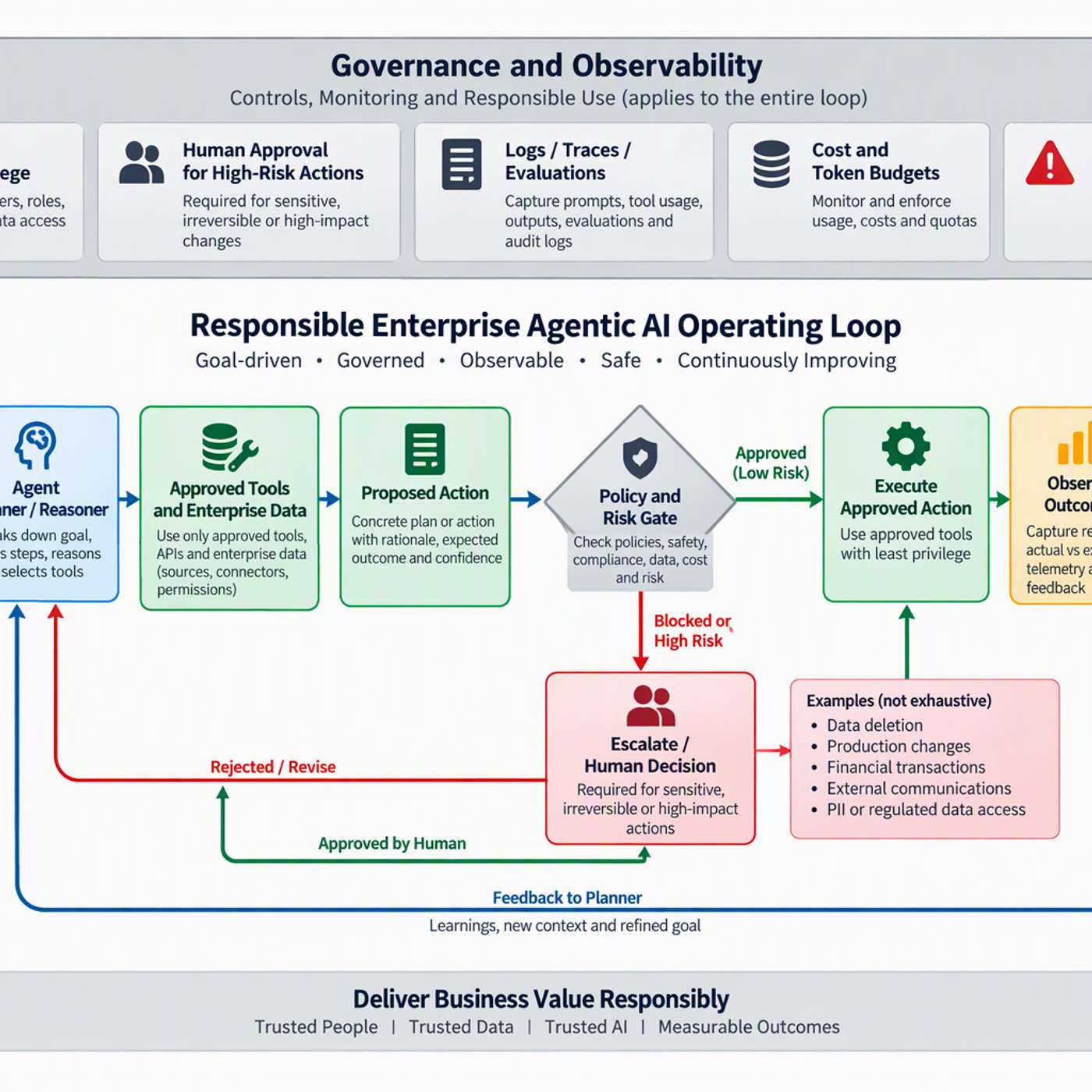
This story was originally published on HackerNoon at: https://hackernoon.com/stop-asking-what-ai-agents-can-do-ask-what-they-should-be-allowed-to-do.
Explore how enterprises can deploy AI agents responsibly through bounded autonomy, least-privilege security, observability, and human oversight.
Check more stories related to machine-learning at: https://hackernoon.com/c/machine-learning.
You can also check exclusive content about #ai-agents, #enterprise-ai, #ai-agent-governance, #bounded-autonomy, #ai-agent-security, #ai-agent-architecture, #enterprise-agentic-ai, #ai-risk-management, and more.
This story was written by: @shuvdeep. Learn more about this writer by checking @shuvdeep's about page,
and for more stories, please visit hackernoon.com.
As AI systems evolve from generating information to executing actions, enterprises face new challenges around security, governance, and accountability. The author outlines a framework for deploying production agents with bounded autonomy, least-privilege access, human oversight, observability, and measurable business outcomes.

This story was originally published on HackerNoon at: https://hackernoon.com/claude-fable-52-why-anthropics-most-expensive-model-can-end-up-the-cheapest.
Claude Fable 5.2 explained by Alexander Volchek, host of ToTheMoon: how it differs from Opus 5.5, why Max mode can do worse than Medium, and when it pays off.
Check more stories related to machine-learning at: https://hackernoon.com/c/machine-learning.
You can also check exclusive content about #ai, #claude, #claude-fable-5.2, #anthropic, #chatgpt, #artificial-intelligence, #ai-model-comparison, #ai-agent-performance, and more.
This story was written by: @alexandervolchek. Learn more about this writer by checking @alexandervolchek's about page,
and for more stories, please visit hackernoon.com.
Claude Fable 5.2 explained by Alexander Volchek, host of ToTheMoon: how it differs from Opus 5.5, why Max mode can do worse than Medium, and when it pays off.

This story was originally published on HackerNoon at: https://hackernoon.com/7-prompting-habits-to-change-when-you-switch-to-claude-opus-55.
In its Opus 5.5 tests, Anthropic found that removing instructions like “think hard” and “think carefully” made replies start sooner.
Check more stories related to machine-learning at: https://hackernoon.com/c/machine-learning.
You can also check exclusive content about #claude, #claude-ai, #claude-opus-5.5, #claude-opus-5.5-prompts, #claude-prompting-tips, #claude-for-knowledge-work, #claude-report-generation, #claude-connectors, and more.
This story was written by: @proflead. Learn more about this writer by checking @proflead's about page,
and for more stories, please visit hackernoon.com.
In its Opus 5.5 tests, Anthropic found that removing instructions like “think hard” and “think carefully” made replies start sooner, with no clear drop in quality.

This story was originally published on HackerNoon at: https://hackernoon.com/agents-are-not-the-answer-engineering-is.
I thought the problem was the model. It was the config. How to engineer rules, skills, hooks and subagents around a coding agent, and test them like software.
Check more stories related to machine-learning at: https://hackernoon.com/c/machine-learning.
You can also check exclusive content about #ai-agents, #rules, #ai-skills, #hooks, #subagents, #claude-code, #ai, #claude-code-rules, and more.
This story was written by: @renanb. Learn more about this writer by checking @renanb's about page,
and for more stories, please visit hackernoon.com.
The text describes how to build and maintain a coding agent, a language model that runs in a loop, by engineering the context around it. The agent's behavior is defined by a set of files, including permanent instructions, rules, skills, subagents, hooks, permissions, and memory, which can be treated as software with its own architecture, defects, and testing requirements.

This story was originally published on HackerNoon at: https://hackernoon.com/the-confessional-with-no-one-inside.
What the first chatbot’s recovered source code reveals about why we trust machines
Check more stories related to machine-learning at: https://hackernoon.com/c/machine-learning.
You can also check exclusive content about #ai-chatbot, #eliza-chatbot, #history-of-ai, #ai-ethics, #psychoanalytic-therapy, #psychology, #book-reviews, #hackernoon-top-story, and more.
This story was written by: @jeremyrayjewell. Learn more about this writer by checking @jeremyrayjewell's about page,
and for more stories, please visit hackernoon.com.
The recovered source code of the first chatbot, ELIZA, reveals that its authority over users was not solely based on its programming, but also on the listener's perception of the machine as a human-like conversational partner. The book "Inventing ELIZA" examines the code and its impact on users, highlighting the complex dynamics of human-machine interaction.

Comments

Download from Google Play

Download from App Store
 United States