


 Claim Ownership
Mainline
Subscribed: 0Played: 0
Subscribe

© Copyright 2020 All rights reserved.
Description
Put away the trash talk! The mainline protestant church is full of strength and hope. I am full of optimism about the mainline church's future, despite the premature obituaries currently being written.
I'm your host, Rev. Steven D. Martin, a pastor, communicator, filmmaker, and provocateur. I have a love/hate relationship with the church, even as I've given my life to it. I suspect I'm not alone.
On this podcast, I'll talk with a cast of characters that include friends old and new who are passionate about finding ways through the wilderness the mainline church finds itself in. You'll get inspiration, resources, ideas, and the assurance that you're not alone. Join me each week for a conversation with the most interesting and innovative Christian leaders in the world today.
(Formerly the "Online Ministry Mastermind" podcast)
I'm your host, Rev. Steven D. Martin, a pastor, communicator, filmmaker, and provocateur. I have a love/hate relationship with the church, even as I've given my life to it. I suspect I'm not alone.
On this podcast, I'll talk with a cast of characters that include friends old and new who are passionate about finding ways through the wilderness the mainline church finds itself in. You'll get inspiration, resources, ideas, and the assurance that you're not alone. Join me each week for a conversation with the most interesting and innovative Christian leaders in the world today.
(Formerly the "Online Ministry Mastermind" podcast)
81 Episodes
Reverse
Cláudio Carvalhaes, a brilliant earth thinker, theologian, liturgist, performer and artist, joins Neal Christie for a conversation about his latest book, "How Do We Become Green People and Earth Communities?"
Buy Claudio's book here: https://tinyurl.com/5ffxp4np
Claudio's website is here: https://www.claudiocarvalhaes.com/
Don't miss this enlightening conversation between two great minds (Claudio and Neal, I mean!) about the church, the future, and the way worship can bring us into harmony with creation.
My guest is Rev. Allison Mark, senior pastor of Faith United Methodist Church in Torrence, CA. Allison details her experiences in leadership, her struggles, and candidly shares her thoughts about the future of the denomination.
In his recent Religion News Service article, Jacob Lupfer writes about the divisions in the United Methodist Church, "In any ecclesial conflict there are non-combatants who don’t really understand what all the fighting is about. But in this case particularly, the muddling Methodist middle that has historically tempered the impulses of extremists is indifferent to the impending schism. Most laity and many clergy are not nearly so invested in moving the Methodist divorce along as those at the extremes."
Jacob and I talk about his article and the distinct possibility that the impending split in the UMC may not unfold as many predict.
This week Curtis Ramsey-Lucas published a provocative article in The Christian Citizen asking important questions about Facebook's outreach to faith leaders. He begins:
This summer, Elizabeth Dias, who covers faith and politics for the New York Times, wrote an article titled “Facebook’s Next Target: The Religious Experience.” Published July 25, it chronicled Facebook’s efforts to partner with a wide range of faith communities from individual congregations to large denominations.
I don't know about you, but I have a relationship with Facebook that I call, "problematic." What will it mean if Facebook becomes directly involved in the lives of faith communities?
In this podcast, I interview Curtis and get the background on this article, his questions surrounding the issue, and a pointed discussion on the future of social media.
In the Gospel of Mark, Jesus is quoted as saying, "...For the Son of Man came not to be served but to serve, and to give his life a ransom for many." Interestingly, the Gospel of Luke tells the same story but omits this "ransom" business, indicating that from the very earliest days, what's known as the "ransom theory" of atonement was controversial. It turns out that this idea, touted as "biblical" by its modern-day adherents, has a troubled history and an even more troublesome set of implications for the Church today.
I don't usually post sermons here (but hey, why not?), but I felt this one was too important to not shout from the rooftops. Rev. Mark Flynn, lead pastor of First United Methodist Church in my hometown of Oak Ridge, Tennessee, preaches a sermon that's part exegesis, part church history lecture, and 100% courage and conviction. If you haven't thought much about ideas that give form to history, I urge you to listen to this remarkable sermon to the very end.
Yes, my name is Steve Martin. I've been a fan of the comedian by the same name since I was thirteen, and I suddenly became popular in school because I shared his name. It's been a long, funny ride.
But it gets better. Recently I ran into another Steve Martin on social media, and the connection we have does not end at our names. Be sure to catch this episode, cuz it's a doozy.
This podcast began when I stumbled across a simple Facebook post in a group. The majority of the conversation regarding online ministry has been on how to restore sanctuary worship while maintaining some of the advances achieved during the time our sanctuaries were closed. This post was written by the pastor of a church that made a completely different type of decision.
REPLAY: While U.S. churches expend tremendous energy in today’s culture wars—the role of women, rights of LGBTQ persons, the place of immigrants, the primacy of health care—the churches’ own real estate may be eating them alive.
My guest today is Rick Reinhard, whose career has included roles in city planning, government, and national church work. Rick is an expert in church real estate, and his analysis of our current situation is both alarming and hopeful. Prepare to have your mind opened, and if you can slide this podcast under the door of your bishop, that might be a good idea.
The word, "pivot," has perhaps been overused lately, but it has special meaning over the past year, especially for organizations that had few alternatives to in-person gatherings. It's one thing to have church online, or to have in-person worship without singing, but what would you do if you were managing a 100+ voice chorale and orchestra?
My guest is Jim Kelly, President and CEO of the National Philharmonic at Strathmore, one of the leading arts organizations in the metropolitan Washington, DC area. NatPhil is coming back in 2021 with a hybrid model, and I know you will glean practical insights from Jim about how he, the board, and the staff made the decisions that chart the path forward.
We clergy speak of the most significant event in history: the life, death, and resurrection of Christ. Why is it so hard to "put ourselves out there" when we carry such an incredible message? Most of us are allergic to anything that feels like self-promotion. But in this world of social media, streaming worship, and voices that carry less-than-helpful messages, is self-promotion now a requirement of the work we do?
My guest is Cheri Honeycutt, a speaker, facilitator, and coach who has struggled between the calling she has and the need to let others know about it. She shares candidly about her ups and downs and the ways she gets fights "imposter syndrome" in order to bring about positive change in the world around her.
I met Rev. Tim Schenck on an all-expense-paid trip to Jordan a few years ago. Yeah, ministry has its perks every once in a while. Among the amazing bloggers and influencers I met on that trip, Tim came across to me as someone who had successfully incorporated a smart sense of humor into his vocation, integrating faith and humor in (mostly) reverent ways. Tim is the rector at the Episcopal Church of St. John the Evangelist in Hingham, Massachusetts.
Tim dishes on ministry during a pandemic, social media, and of course his signature program, "Lent Madness." You will not want to miss this uplifting episode.
Just a few years ago, religious liberty was an obscure topic; now it's all over the headlines. What is religious freedom? Does it allow us to freely practice our faith, or does it mean we are free to discriminate based on our faith?
My guest today is Brian Kaylor, Executive Director of Word and Way, a Baptist organization keeping its eye on religious liberty, Christian nationalism, and other headline-grabbing topics. We'll dive deep into the complexities of religion in public life, as well as tell interesting travel stories, in this episode.
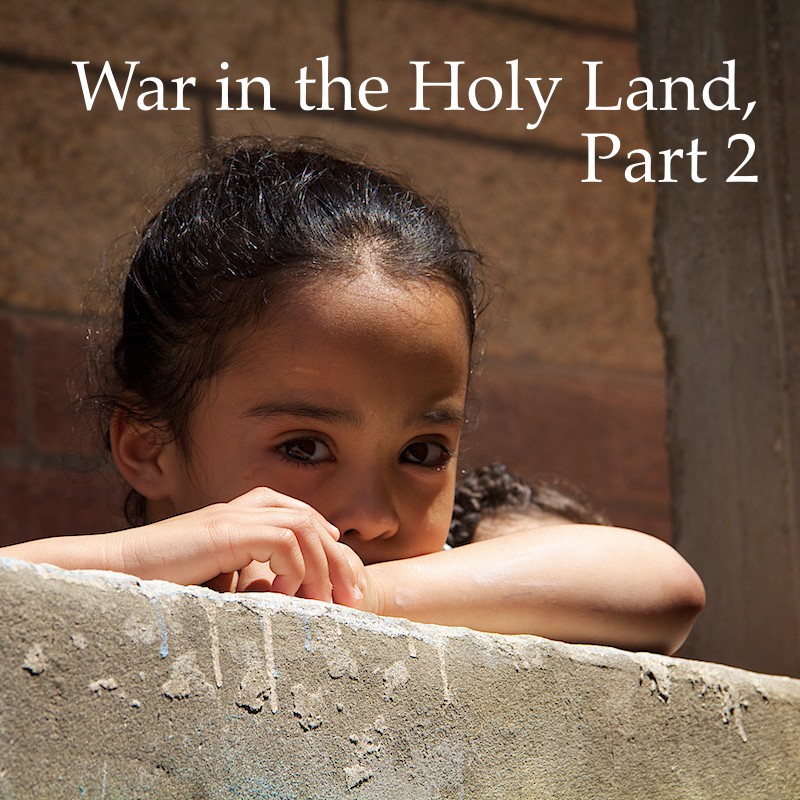
Today's podcast is part 2 of a special series about the breakout of violence between Israel and Palestinians that has occurred in recent weeks. Peter Makari, the Executive for the Middle East & Europe at Global Ministries of the Christian Church (Disciples of Christ) and United Church of Christ, is the ecumenical community's go-to guy on Middle East policy. I'm blessed to be joined by him in a deep conversation about the current crisis and what churches can do to help bring about a lasting peace in the region.
Read Peter's article on the United Church of Christ website for perspective. Prepare to be enlightened. See also these statements by organizations in the Middle East to hear their voices.
My eyes were opened during a cab ride from Jerusalem to Bethlehem in 2010. The news media depicts conflict in the Holy Land as a monolithic battle between good and evil, civilization and terrorism. The reality will surprise you.
This is the first in a three-part series (or perhaps more!) in which we will hear from experts about what is actually happening in the lives of people in the Holy Land, how churches can be part of the solution, and how this conflict is not what you think it is.
Rev. Peter Miano is my guest today along with Rev. Neal Christie, who will help me with this interview. This podcast is United Methodist-friendly, but is a valuable resource to all who seek to better love God and neighbor.
2020 stands as a year of invitation. Yes, crisis was a major part of it, but as a fiery crucible, 2020 showed us what precious metal was hidden inside the ore. 2020 showed us that ministry can be transformed, and 2021 gives us the opportunity to courageously move forward in that transformation.
Instead of going it alone, many of us have found that a coach can move us from being stuck to being powerfully effective. Rev. Annette Flynn is my guest today; join us to hear how an unconventional path in her ministry career ignited her passion, and how you can find yours.
The publishing world can be confusing and shrouded in mystery. For one, I always believed that with the arrival of the internet, the Kindle, and the demise of Borders bookstores, that it was not a good time to write a book. Apparently, I'm wrong, and happy to be told so.
Today's guest is David R. Morris, a consultant with his finger on the pulse of the Christian publishing industry. You can find him at @DavidRMorris (Twitter) and at https://www.hyponymous.com/
When you set out to create an online course that deals with one of today's most difficult topics, it's good to have experts on your side. Soon, the Lakelands Institute will be launching a course that will help churches learn how to be antiracist, and it begins with understanding the words we use to do this important work. Today, Neal Christie and I talk with Brian McLaren about his book, "Faith After Doubt," the ways our brains are wired toward bias, and how we can be freed to love more fully.
Adam Mosley is a long-time friend who has been winning at the podcasting game! He is the host of "The Ocean" podcast, and he's going to talk to us about how he uses his podcast as a way to utilize a voice that he did not necessarily have when standing in a pulpit.
Join me and Rev. Stephanie Kendell, Executive Minister and COO at Park Avenue Christian Church in New York City, for a conversation that took place at the annual meeting of Associated Church Press, the Religion Communicators Congress, and the Canadian Christian Communicators Association that took place online last week. Stephanie has a podcast called "the Two on One Project" in which she and a co-host talk pop culture through a theological lens. We have different approaches to what we do, and I'll let you be the one who decides who has the better approach.
(I think she does!)
The rise of conspiracy theories such as QAnon are alarming, but people of faith who have learned from history will recognize commonalities between QAnon and other apocalyptic movements across the centuries.
Church historian Bill Leonard joins me for this fascinating and relevant conversation. If you're struggling with QAnon adherents in your churches, or if you are one yourself, you will not want to miss this fascinating podcast.

Comments

Download from Google Play

Download from App Store
 United States