


 Claim Ownership
Major Pain
Subscribed: 15Played: 649
Subscribe

© Major Pain Podcast
Description
The Major Pain podcast is a collection of interviews from people living with chronic illness and disability. Our goal is to spread awareness, empathy and community around experiences often lived through in isolation. Through sharing these stories important themes have become increasingly apparent, including the dangers of medical gaslighting, the importance of self-advocacy and the fact that none of us are in this alone. You can share your thoughts, your story, or inquire about appearing on the show at [email protected].
209 Episodes
Reverse

How do you go beyond enduring pain and turn it instead into a transformative artistic experience? Casey and Elicia are the powerhouse behind Sensory Dimensions, a creative collaborative that recontextualizes experiences of chronic pain and disability through music, movement, projection, and tactile art. Their work asks what happens when pain is pushed beyond the silent tragedy of the clinical setting and given new ways to be seen, heard, and felt.
Both Casey and Elicia came to the project through deeply personal experiences with chronic pain. Elicia has trained as a violinist for more than 20 years. At 17, ankylosing spondylitis forced her to reconsider her artistic future. Years of pain, unsuccessful physical therapy, and medical dismissal eventually led to a diagnosis that brought both relief and fear. Casey’s path through dance was repeatedly disrupted by severe muscle spasms, undiagnosed injuries, and other overlapping symptoms that did not fit neatly into a single diagnosis. Eventually, they were diagnosed with fibromyalgia and hypermobility. Trying to remain in the world of performance while navigating disability pushed them both to explore other avenues to art, including choreography, production, and accessibility work.
In this episode, Jesse speaks with Casey and Elicia about how their connection to someone with a similar experience changed their approach to their work and bodies. Since collaborating on their masters’ thesis, they have built immersive, inclusive performances, and interactive programs like Paint Your Pain. On stage, they turn pain into sensations that everyone can experience, regardless of disability or predilection. Accessibility is embedded from the beginning: for instance, if an audience member cannot see an element, they may be able to hear or touch it instead.
Through performances like “My Body’s Wake,” Elicia and Casey embrace the unpredictability of disability. They incorporate improvisation that enables them to create a resonant performance every time, even as what their bodies are capable of shifts day to day. For both artists, that shift has changed their definition of chronic pain. Something once private, inconvenient, or shameful has become visible, tangible, and even beautiful. Rather than being the end of the creative process, pain becomes part of the material itself and a catalyst for entirely new ways to create.
Learn more about Sensory Dimensions and their mission to recontextualize chronic pain and disability through art: https://sensorydimensions.godaddysites.com/
Follow Sensory Dimensions on Instagram: https://www.instagram.com/sensorydimensions/
https://www.youtube.com/watch?v=DSdRrvyA9G0
Watch the episode on YouTube or Spotify, listen here on our website or on your favorite podcast platform.
PODCAST LINKSWEBSITE: https://majorpainpodcast.comEMAIL: [email protected]: https://majorpainpodcast.com/subscribeSPOTIFY: https://open.spotify.com/show/5NDoD07WJmICdfdRKq0TyNAPPLE PODCASTS: https://podcasts.apple.com/us/podcast/major-pain/id1562947550?mt=2&ls=1
SOCIAL MEDIAINSTAGRAM: https://www.instagram.com/majorpainpodcastTIKTOK: https://www.tiktok.com/@majorpainpodcastYOUTUBE: https://www.youtube.com/@MajorPainPodcastFACEBOOK: https://www.facebook.com/majorpainpodcast
AFFILIATE LINKSRARE PATIENT VOICE: https://rarepatientvoice.com/MajorPainPodcastAMAZON SHOP: https://www.amazon.com/shop/majorpainpodcastNEURAHEALTH: https://www.neurahealth.co/majorpain

When your body is a medical stomping ground, how do you transform it back into a vessel deserving of joy and pleasure? For Melissa—a Seattle-based mental health counsellor—this question arises from a lifelong exploration filled with relapses, flare-ups, malnutrition, and self-discovery. With compassion and confidence, she shares the story of her rare major pain: neuronal dysplasia.
At just two days old, Melissa underwent her first surgery. Faced with the news that, if their daughter survived, she would likely be deaf, blind, and mute, her parents spent years traveling in search of answers. In elementary school, Melissa’s disease was finally officially diagnosed: neuronal dysplasia is a rare condition impacting the nerves that control intestinal function. After countless surgeries for true and pseudo-bowel obstructions, Melissa has no large intestine and only a partial small intestine. Years of malnutrition and dehydration from her body’s inability to absorb nutrients means that today Melissa receives total parenteral nutrition (TPN) through an IV directly into her bloodstream.
Anyone who has had to abstain from food for any length of time knows what hunger feels like. Because Melissa’s stomach is always empty, she feels these same cues and pangs, but decades of careful experimentation have taught her that eating anything orally results in painful and debilitating symptoms or even surgery. As such, she seeks out alternatives to the pleasurable sensations most people derive from food. From scented candles to cozy clothes and bodywork practices, Melissa provides her body with other affirmations of its innate need for physical pleasure.
The rifts wrought from decades of internalized ableism drove Melissa to hide her disease and work herself too hard to “make up” for her perceived deficits. Ultimately, this resulted in another diagnosis: severe autonomic nervous system dysfunction. She shares what she went through during what she considers the hardest part of her experience and how she worked—and is working still—to shift the mindset that led her there and rejoin all parts of herself into one full, proud human worthy of love, and success, and pleasure.
Shed light on the disconnection of chronic illness and how we begin to heal:
Finding gratitude and joy in the face of an unpredictable and debilitating disease;
The evolution of eating when your body can’t use what you feed it;
The emotional and mental strain of constantly partitioning your “healthy” and “unhealthy” parts;
The importance of intentionality in recovery and rediscovery.
Learn more about the Seattle-based Center for Chronic Illness: https://www.thecenterforchronicillness.org/
https://www.youtube.com/watch?v=YMxXRttl3s8
Watch the episode on YouTube or Spotify, listen here on our website or on your favorite podcast platform.
PODCAST LINKSWEBSITE: https://majorpainpodcast.comEMAIL: [email protected]: https://majorpainpodcast.com/subscribeSPOTIFY: https://open.spotify.com/show/5NDoD07WJmICdfdRKq0TyNAPPLE PODCASTS: https://podcasts.apple.com/us/podcast/major-pain/id1562947550?mt=2&ls=1
SOCIAL MEDIAINSTAGRAM: https://www.instagram.com/majorpainpodcastTIKTOK: https://www.tiktok.com/@majorpainpodcastYOUTUBE: https://www.youtube.com/@MajorPainPodcastFACEBOOK: https://www.facebook.com/majorpainpodcast
AFFILIATE LINKSRARE PATIENT VOICE: https://rarepatientvoice.com/MajorPainPodcastAMAZON SHOP: https://www.amazon.com/shop/majorpainpodcastNEURAHEALTH: https://www.neurahealth.co/majorpain

What does “body positivity” mean to you? To Kelvin Davis, it began as a gap in the market. Women’s clothing advertising was leaning, more and more, into diversity in their models, while menswear seemed content to maintain the status quo of ultra-ripped or ultra-thin. Kelvin launched his body-positive menswear blog, Notoriously Dapper, to address this lack in the fashion industry. Since then, he has published two books and modeled for big names, including Lululemon and Gap. When his Type II Diabetes diagnosis came in 2021, Kelvin had a new crossroads to face: the intersection between loving his body and initiating positive changes for the sake of his health.
In this episode of Major Pain, Jesse and Kelvin discuss the mechanisms and symptoms of this challenging disease and the medication and lifestyle change approaches that can improve its outcomes. Since enrolling in a diabetes education course, Kelvin has a strong grasp of what his symptoms—like high A1C levels and nerve pain in his hands and feet—mean for his well-being and longevity. Today, he manages his condition with movement and nutrition habits, but the process wasn’t easy. Particularly in Black communities, where access to health care, food, and education is all too often scarce, recognizing and acting on the healthier choices can be daunting and expensive.
With a heartfelt combination of tough love and empathy, Kelvin discusses the importance of “choosing hard now and easy later” rather than “easy now and hard later,” and how this tradeoff plays into his new book, “Be a Good Man, Not a Nice Guy.” Body positivity must go beyond just accepting and showcasing larger bodies. Kelvin calls for taking accountability for your shortcomings and ownership in the pursuit of long-term health. For the sake of the future—his own and that of his two young daughters—he’s living that journey every day.
Learn more about Kelvin and Notoriously Dapper: https://notoriouslydapper.com/
Buy Kelvin’s book, Be a Good Man, Not a Nice Guy: https://bookshop.org/p/books/be-a-good-man-not-a-nice-guy-a-guide-to-true-masculinity-kelvin-davis/923e9e4fd6fcc492
https://www.youtube.com/watch?v=0roefciyJ6Q
Watch the episode on YouTube or Spotify, listen here on our website or on your favorite podcast platform.
PODCAST LINKSWEBSITE: https://majorpainpodcast.comEMAIL: [email protected]: https://majorpainpodcast.com/subscribeSPOTIFY: https://open.spotify.com/show/5NDoD07WJmICdfdRKq0TyNAPPLE PODCASTS: https://podcasts.apple.com/us/podcast/major-pain/id1562947550?mt=2&ls=1
SOCIAL MEDIAINSTAGRAM: https://www.instagram.com/majorpainpodcastTIKTOK: https://www.tiktok.com/@majorpainpodcastYOUTUBE: https://www.youtube.com/@MajorPainPodcastFACEBOOK: https://www.facebook.com/majorpainpodcast
AFFILIATE LINKSRARE PATIENT VOICE: https://rarepatientvoice.com/MajorPainPodcastAMAZON SHOP: https://www.amazon.com/shop/majorpainpodcastNEURAHEALTH: https://www.neurahealth.co/majorpain

How do you live with the ever-looming uncertainty of being a gene carrier for a fatal disease? Amyotrophic lateral sclerosis—better known as ALS or Lou Gehrig’s disease—was long believed not to be genetic. Today, however, research shows that 10-15% of cases are linked to the mutation of various genes. The journey of potential future illness is one Mindy Uhrlaub has navigated since 2018, when she learned that she carries the C9OF72 genetic mutation.
Since losing her grandfather and then her mother to ALS, Mindy has navigated the precariousness of questioning every symptom she develops, the hard knowledge that her children could also be carriers, and the decisions that come with any life-changing diagnosis: how will this knowledge impact my approach to the present and the future? In Mindy’s case, it has led her to advocacy and authorship. She is a founder of the End the Legacy community for carriers of ALS and FTD (frontotemporal degeneration) and the author of the Amazon bestseller, “Last Nerve: A Memoir of Illness and the Endurance of Family.”
Everyone with chronic illness or the genetic potential to develop it must select a unique path. Mindy has chosen to immerse herself in the promise the future holds. She takes every preventative step available to her, including avoiding chemical exposure and inflammatory foods and taking an ALS drug prophylactically. Through End the Legacy, she and other community members pursue policy change and education through webinars and summits. She participates in numerous studies and shares the struggle of facing down the inevitable emotional triggers. For Mindy, this approach is not about fearlessness but about devoting her time, and her heart, to the life-affirming aspects of her unpredictable situation.
Learn more about End the Legacy, a non-profit org for genetic carriers of ALS and FTD: https://www.endthelegacy.org/
Buy “Last Nerve: A Memoir of Illness and the Endurance of Family”: https://www.mindyuhrlaub.com/last-nerve
https://youtu.be/l9w6YdTifVc
Watch the episode on YouTube or Spotify, listen here on our website or on your favorite podcast platform.
PODCAST LINKSWEBSITE: https://majorpainpodcast.comEMAIL: [email protected]: https://majorpainpodcast.com/subscribeSPOTIFY: https://open.spotify.com/show/5NDoD07WJmICdfdRKq0TyNAPPLE PODCASTS: https://podcasts.apple.com/us/podcast/major-pain/id1562947550?mt=2&ls=1
SOCIAL MEDIAINSTAGRAM: https://www.instagram.com/majorpainpodcastTIKTOK: https://www.tiktok.com/@majorpainpodcastYOUTUBE: https://www.youtube.com/@MajorPainPodcastFACEBOOK: https://www.facebook.com/majorpainpodcast
AFFILIATE LINKSRARE PATIENT VOICE: https://rarepatientvoice.com/MajorPainPodcastAMAZON SHOP: https://www.amazon.com/shop/majorpainpodcastNEURAHEALTH: https://www.neurahealth.co/majorpain
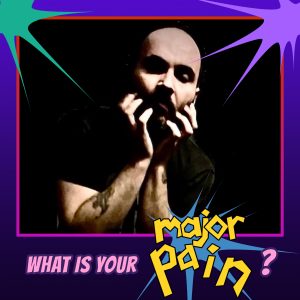
Pointing to Edward’s first symptom of Relapse–Remitting MS is tricky. From anxiety in his 20s, to poor sleep and numb hands, to back pain and difficulty walking, the road to diagnosis has been rocky. When he finally received confirmation—in the form of a terrifying MRI showing countless lesions on his brain and spine—Edward was a new father in his early 30s. Coming to terms with a lifelong condition that presents differently for everyone was a process that has slowly shifted his outlook on both his past and his future.
In this episode, we speak with Edward about what his journey through symptoms and diagnosis looked like, and reflect on how facing down a debilitating illness can change your outlook on life if you let it. A musician from a young age, today Edward is exploring live performance with his solo project, Green Plastic Whistle, and facing an aversion to fame that derailed some previous opportunities. As he puts it, being told you have an unpredictable disease, that has the potential to impact anything from bladder function to your ability to see, really puts fear into perspective.
With cautious optimism and a balanced take on the pros and cons of the medical system, Edward and Jesse delve into how you envision your future when you don’t know what your health will hold. They explore the promising remyelination medications that have the MS community abuzz and what it’s like to start a family in the midst of disease progression. Edward’s experience with Multiple Sclerosis has given him a new perspective on how we prioritize our lives and what’s possible when you begin to face the future without fear.
Learn more about Edward’s solo project, Green Plastic Whistle: https://www.instagram.com/greenplasticwhistle/
Listen to Green Plastic Whistle on Spotify: https://open.spotify.com/user/0b6gv1y0qrwlp4bp3ztmusnsa?si=d557f3eb1a0947c2
https://www.youtube.com/watch?v=hV_reArTc7g
Watch the episode on YouTube or Spotify, listen here on our website or on your favorite podcast platform.
PODCAST LINKSWEBSITE: https://majorpainpodcast.comEMAIL: [email protected]: https://majorpainpodcast.com/subscribeSPOTIFY: https://open.spotify.com/show/5NDoD07WJmICdfdRKq0TyNAPPLE PODCASTS: https://podcasts.apple.com/us/podcast/major-pain/id1562947550?mt=2&ls=1
SOCIAL MEDIAINSTAGRAM: https://www.instagram.com/majorpainpodcastTIKTOK: https://www.tiktok.com/@majorpainpodcastYOUTUBE: https://www.youtube.com/@MajorPainPodcastFACEBOOK: https://www.facebook.com/majorpainpodcast
AFFILIATE LINKSRARE PATIENT VOICE: https://rarepatientvoice.com/MajorPainPodcastAMAZON SHOP: https://www.amazon.com/shop/majorpainpodcastNEURAHEALTH: https://www.neurahealth.co/majorpain

Comments

Download from Google Play

Download from App Store
 United States