DiscoverMaker Division
Maker Division
Claim Ownership

Maker Division

Author: Ben Burns & Stephanie Owens

Subscribed: 0Played: 0
Share

Description

Maker Division is a podcast for designers, illustrators, photographers, filmmakers, and makers building businesses they love — without burning out, selling out, or pretending we have it figured out.

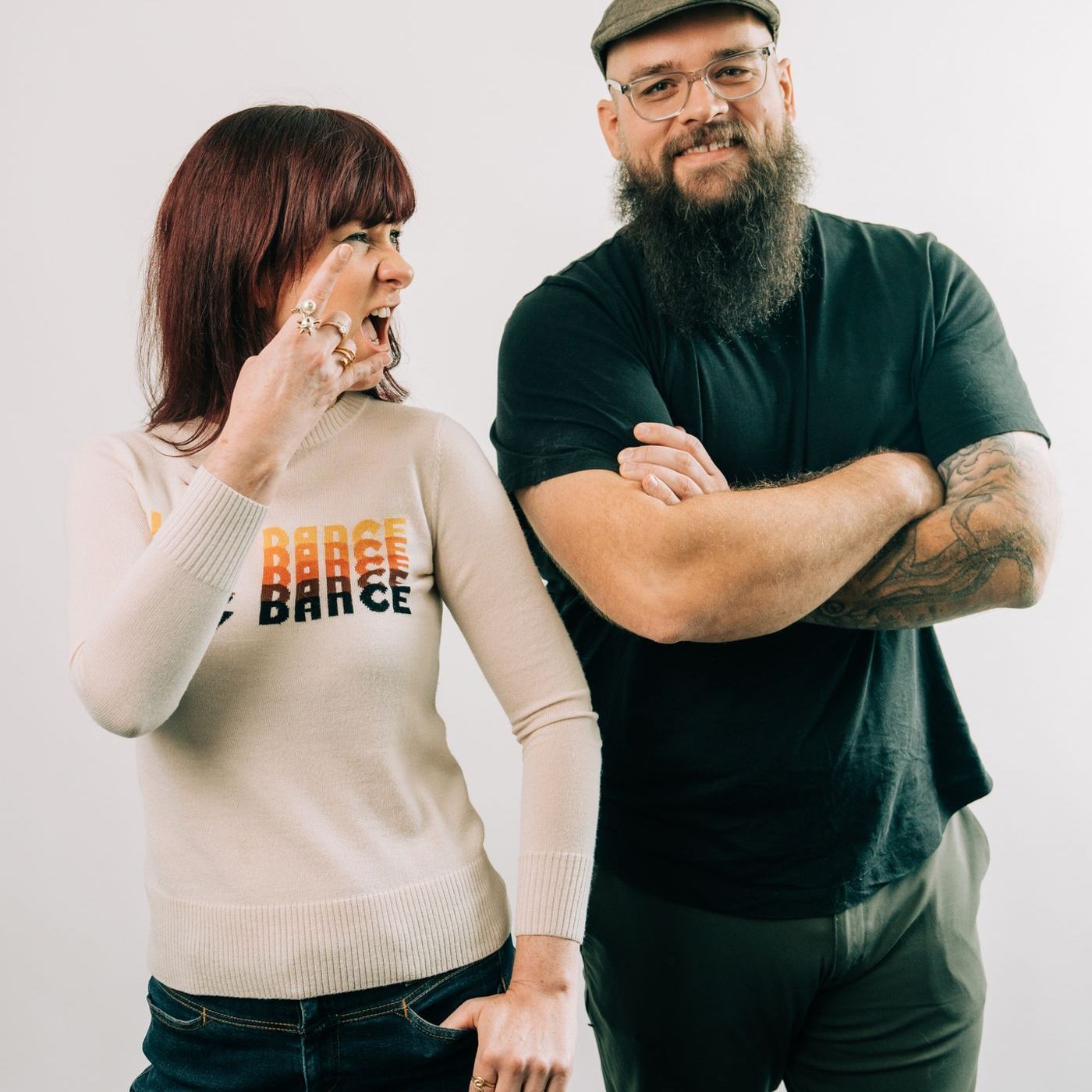
Hosted by Ben Burns and Stephanie Owens, two creatives who've spent the last decade-plus in the trenches: freelancing for scraps, growing studios from zero, leading creative teams, and learning the hard lessons that nobody talks about at design conferences.

Each episode brings honest conversations about pricing, positioning, portfolios, lead generation, client work, hiring, and the messy middle of running a creative business. Sometimes we go deep on tactics. Sometimes we get into mindset. Always, we keep it real.

No hype. No gurus. No "take massive action today." Just real frameworks, hard-earned lessons, and straight talk from people who've actually built the kind of businesses you're trying to build.

New episodes weekly. Welcome to the Division.
14 Episodes
Reverse
Do you actually need a team to scale your creative studio—and what changes when you stop doing everything yourself?In this episode, Steph and Ben use their agree and disagree cards to challenge some of the most common assumptions about hiring, delegation, leadership, and creative control.Should you save six months of payroll before hiring? Is work completed by someone else at 80% better than doing it yourself at 100%? Does building a team inevitably turn you into a manager? And do clients deserve to know exactly who created the work?Drawing from very different experiences, Steph and Ben discuss the realities of working with contractors, hiring employees, leading creative teams, protecting profitability, and deciding whether scaling through people fits the studio you actually want to build.Learn how to Scale Your Team:https://makerdivision.com/scaleIn this episode:• How much financial runway you need before hiring• Why delegating imperfect work may be better for the business• Whether hiring turns creatives into full-time managers• Contractors versus employees—and which to hire first• The responsibility that comes with someone else’s livelihood• Why team members may care as much as the business owner• The importance of documenting your creative process• Why your first hire might be a “mini-me”• Hiring specialists outside your own discipline• How portfolios communicate both skill and taste• Whether clients need to know who performed the work• Scaling without losing creative control• When staying small is a genuine preference—not fear• Hiring for taste versus training for skill• Closing the gap between your taste and your abilities There isn’t one correct way to scale a creative business. You can build a large team, remain small and collaborative, work entirely with contractors, or find other ways to grow through products and income streams. The real question is: how do you want to spend your working day?Explore Maker Division:https://www.makerdivision.com/CHAPTERS00:00 Agree or disagree: scaling a creative team01:40 Do you need six months of payroll saved?06:22 The 80% rule12:09 Does hiring buy you a management job?18:32 Contractors versus employees23:00 The responsibility of someone else’s paycheck27:07 “Nobody will care as much as you do”30:43 The responsibility of being a good leader32:43 Documenting your process before hiring35:28 Do the job yourself before delegating it36:51 Why client communication should remain with you37:55 Who should you hire first?41:55 Hiring outside your creative discipline45:26 What portfolios reveal—and conceal48:22 Do clients deserve to know who did the work?50:51 Creative direction and quality control51:18 Is avoiding a team really fear?53:26 The healthy fear of leadership57:06 Build around your ideal working day58:23 Hire for taste or train for skill?1:03:26 Different studios need different people1:06:21 Close the gap between taste and skill1:07:37 Final thoughts on scaling Do you want to build a team—or would you rather keep your studio small? Tell us why in the comments.#CreativeBusiness #ScalingATeam #CreativeStudio
Which lead-generation strategies actually help creatives find clients—and which ones waste time, money, or energy?In Part 2 of their lead-generation ranking, Steph and Ben blindly score another round of strategies from one to five. This time, they tackle cold email outreach, public speaking, physical mailers, YouTube, Instagram, online communities, RFPs, paid advertising, and more.They also reveal the only strategy they both ranked a five: the Power 150, Steph’s system for developing and nurturing a value network. Because finding clients isn’t only about meeting more people—it’s about staying meaningfully connected to the people you already know.Along the way, Steph and Ben share real examples of creatives landing five-figure retainers, publishing deals, branding projects, and other opportunities. They also explain why the effectiveness of any strategy depends on your craft, personality, strengths, budget, and the clients you want to reach.In this episode:• How physical mail can help your work stand out • Why public speaking creates a captive audience • How to make a cold email feel warm • Which creative services are best suited to cold outreach • Why cold emailing is difficult for brand designers • The Power 150 and the value of staying top of mind • How your existing relationships can create new opportunities • The benefits—and risks—of inviting local prospects to lunch • Why YouTube requires more than a talking-head video • When responding to RFPs may be worthwhile • Using online groups to generate leads without pitching • Instagram versus YouTube for building relationships • Why Steph and Ben strongly discourage paid ads for most creative service providers • Which strategies they plan to use for their own new studio There is no single perfect lead-generation strategy for every creative. The goal is to understand which methods fit your work, identify your natural advantages, and consistently take action instead of waiting for clients to appear.Explore Maker Division and learn how to build a lead-generation system for your creative business: https://www.makerdivision.com/CHAPTERS00:00 Ranking more ways to generate leads 01:49 Snail-mail outreach 12:43 Public speaking 20:42 Cold email outreach 25:11 Which creative services benefit from cold email? 28:54 Why cold outreach is difficult for branding 31:49 The Power 150 35:53 Start with the people who already know you 40:01 Inviting local prospects to lunch 47:32 YouTube 56:03 RFPs and requests for proposals 1:02:43 Press and podcast appearances 1:04:30 Online groups and communities 1:06:40 Instagram 1:09:22 Paid advertising 1:11:55 Which strategies will Steph and Ben actually use? Which lead-generation strategies have worked for you—and which one will you try next? Let us know in the comments.#LeadGeneration #CreativeBusiness #FindClients
Business has slowed down—but how are you marketing your creative business?If the answer is “I’m not,” that may be the problem.For this episode, Steph secretly filled a cocktail shaker with 15 ways to generate leads. Ben sees each method for the first time on camera, and they rate it from one to five based only on what has worked for them or people they know personally.In part one, they tackle LinkedIn, local meetups, walk-ins, online marketplaces, conferences, and referrals. Some methods earn nearly identical scores. Others place Steph and Ben about as far apart as possible.They discuss why generic thought leadership rarely attracts clients, how a $16 cake became a five-figure project, why trade conferences may be more valuable than creative conferences, and whether referrals should count as lead generation at all.In this episode:• Why creative businesses slow down when marketing stops • How to use LinkedIn without joining the designer dog pile • Why showing your work needs a clear point of view • Networking events versus participating in a real community • How interests outside work can generate unexpected opportunities • The advantages and limitations of walking into local businesses • How one creative turned a $16 cake into a five-figure project • Why Upwork, Fiverr, and similar marketplaces are a race to the bottom • When online marketplaces can still help pay the bills • Creative conferences versus client-industry trade conferences • How to choose events filled with buyers instead of competitors • Why Steph doesn’t consider passive referrals lead generation • How to intentionally engineer referrals from former clients • Why difficult clients often refer more difficult clients • Which methods Steph and Ben plan to use for their own studio There is no single best way to find clients. The right method depends on your work, your market, your personality, and whether you need immediate revenue or relationships that develop over time. The important thing is to stop waiting for clients to appear and begin building a lead-generation practice you can sustain.Get more lead-generation guidance in The Dispatch: https://www.makerdivision.com/the-dispatchExplore Maker Division: https://www.makerdivision.com/Which lead-generation method has brought you the best clients—and which one would you never try again? Tell us in the comments.#LeadGeneration #CreativeBusiness #FreelanceDesigner
What turns a logo project into a professional branding process—and when does that process become too much?In this episode, Steph and Ben trace the different paths shaping how they approach branding today. Ben’s first branding project involved endless logo options—and by the time he reached something close, the team had disbanded. Steph entered branding with contracts, client systems, discovery experience, and a one-logo solution that some clients still use today.From $50 logos and four-hour discovery calls to mood boards, strategy, revision boundaries, and presentations, they unpack the lessons that transformed their work.The central takeaway? A branding process should never be one-size-fits-all. Discovery needs to match the client, project, and budget. Strategy should support the creative execution. And presenting your work is often just as important as designing it.They also explore what AI could change about branding—from research and production to entry-level design opportunities—and why human taste, perspective, and point of view may become more valuable than ever.If this episode has you rethinking how you run branding projects, Project Branding was built for you. It’s our workshop on building, presenting, and selling brand identity projects—from discovery through the final presentation.Join The Dispatch for the upcoming Project Branding announcement:https://www.makerdivision.com/the-dispatchCHAPTERS00:00 Going deep into the branding process01:49 Ben’s first branding project was a disaster03:03 How Steph entered branding with systems in place05:43 The one-logo solution10:02 Learning to work directly with clients13:49 The $50 logo years19:58 Discovering proposals and a better sales process21:06 The creative brief that changed Ben’s work26:39 Learning from other designers’ processes27:12 Build a process that fits your studio29:03 Discovering strategic facilitation32:34 When discovery becomes overkill34:22 Scale discovery to the client and budget37:01 Your clients aren’t obsessed with your process39:23 Treat discovery like a toolbox41:29 Can a client questionnaire actually work?43:53 Matching the experience to the price49:59 How long should a branding project take?55:12 The free strategy session that went nowhere56:27 Why strategy alone isn’t enough58:36 Discovery should serve the creative execution1:02:05 The most impactful process improvements1:03:37 Translate your client’s words into visuals1:05:37 Mood boards, concept suites, and brand worlds1:07:37 Finding the insight nobody else noticed1:10:23 Can you skip the mood board?1:13:53 Contracts and revision boundaries1:14:26 Why you need to present the work1:18:20 AI and the future of branding1:19:50 Where AI can improve the process1:21:59 Why AI still has terrible taste1:24:39 Let AI handle the work you hate1:26:00 Using AI as a brainstorming partner1:28:07 What happens to entry-level design work?1:29:59 Taste may be your greatest advantageReady to dial in your branding process? Check out Project Branding - Maker Division’s workshop for building, presenting, and selling brand identity projects with a repeatable process from discovery through the final presentation:https://www.makerdivision.com/birthday#BrandingProcess #BrandIdentity #CreativeBusiness
A $50 logo. A $300 interior-design project. Two rough beginnings—and the lessons that shaped how Steph and Ben built their creative businesses.🎸 ROCK YOUR INCOME STREAMSThe first Maker Division Birthday Bash drop is available for a limited time:https://www.makerdivision.com/birthdayIn this episode, Steph and Ben share the stories behind their first paying clients—from competing for underpaid interior-design projects to creating an endless logo for an ultimate Frisbee team that disbanded before the project was finished.Those early experiences lead to a larger conversation about creative marketplaces, pricing, profitability, AI, and earning beyond traditional client work.Steph explains how her career expanded from teaching and interior design into branding, consulting, courses, memberships, licensing, sponsorships, and education. Ben traces how one disastrous first project created his obsession with process, efficiency, and profitable creative work.They also explain why multiple income streams don’t mean starting everything at once. A stable primary income can give you room to experiment, but creating a meaningful new stream still requires focus.IN THIS EPISODE:• What Steph and Ben earned from their first clients• The problems with creative marketplaces and speculative work• What AI is—and isn’t—taking from creatives• Why revenue doesn’t determine whether a business is successful• When a $500 project can beat a $50,000 project• How smaller income streams can save the month• Why dabbling prevents new income streams from succeeding• Choosing an income stream that fits your skills, identity, and lifeThe goal isn’t to build every income stream the internet recommends. It’s to understand your strengths, interests, experience, and capacity—then focus on the opportunity that makes sense for you now.Client work may be where your studio begins. What else could it become?CHAPTERS00:00 A $50 logo and a $300 room01:24 Steph’s first creative work03:53 Competing for interior-design clients06:30 Designing an entire room for $30009:43 Building a business through creative platforms13:21 When a marketplace serves creatives18:14 Could AI bring speculative pitching back?19:05 What AI is taking from creatives22:35 Revenue versus profitability25:45 A $20,000 project—or a $500 project?27:29 When smaller income streams save the month28:39 Steph’s income-stream journey35:52 Ben’s infamous $50 logo41:44 Should clients arrive with ideas?46:53 How failure created Ben’s obsession with process50:10 Why stable income creates room to experiment51:52 The danger of dabbling in everything55:35 Process, profitability, and creative identity1:00:45 Choosing your next income stream1:02:19 What makes you lean in?1:03:29 Final lessons and the Birthday BashWhat did your first client pay you—and what did the experience teach you? Share the good, the bad, or the completely unpaid in the comments.#CreativeBusiness #IncomeStreams #MakerDivisionSeptember is Maker Division’s Birthday Bash month, which means our best offers of the year on new workshops, the Division membership, and more. Join the weekly newsletter to get the details:https://www.makerdivision.com/the-dispatch
loading
Comments