


 Claim Ownership
Minor Compositions
Subscribed: 9Played: 62
Subscribe

© Copyright firefly frequencies
Description
Minor Compositions: Publishing the Unruly, the Radical, and the Yet-to-Come.
Minor Compositions is a research theorizing publishing project that is located, at the moment, within the London metropolitan basin of collective intelligence. Its main aim is to bring together, develop, and mutate forms of autonomist thought and practice, avant-garde aesthetics, and an everyday approach to politics.
More information: https://www.minorcompositions.info
As well on this webstite, Minor Compositions can be listened to via all the usual podcast type places including Apple Podcasts, Spotify, etc...
Minor Compositions is a research theorizing publishing project that is located, at the moment, within the London metropolitan basin of collective intelligence. Its main aim is to bring together, develop, and mutate forms of autonomist thought and practice, avant-garde aesthetics, and an everyday approach to politics.
More information: https://www.minorcompositions.info
As well on this webstite, Minor Compositions can be listened to via all the usual podcast type places including Apple Podcasts, Spotify, etc...
55 Episodes
Reverse
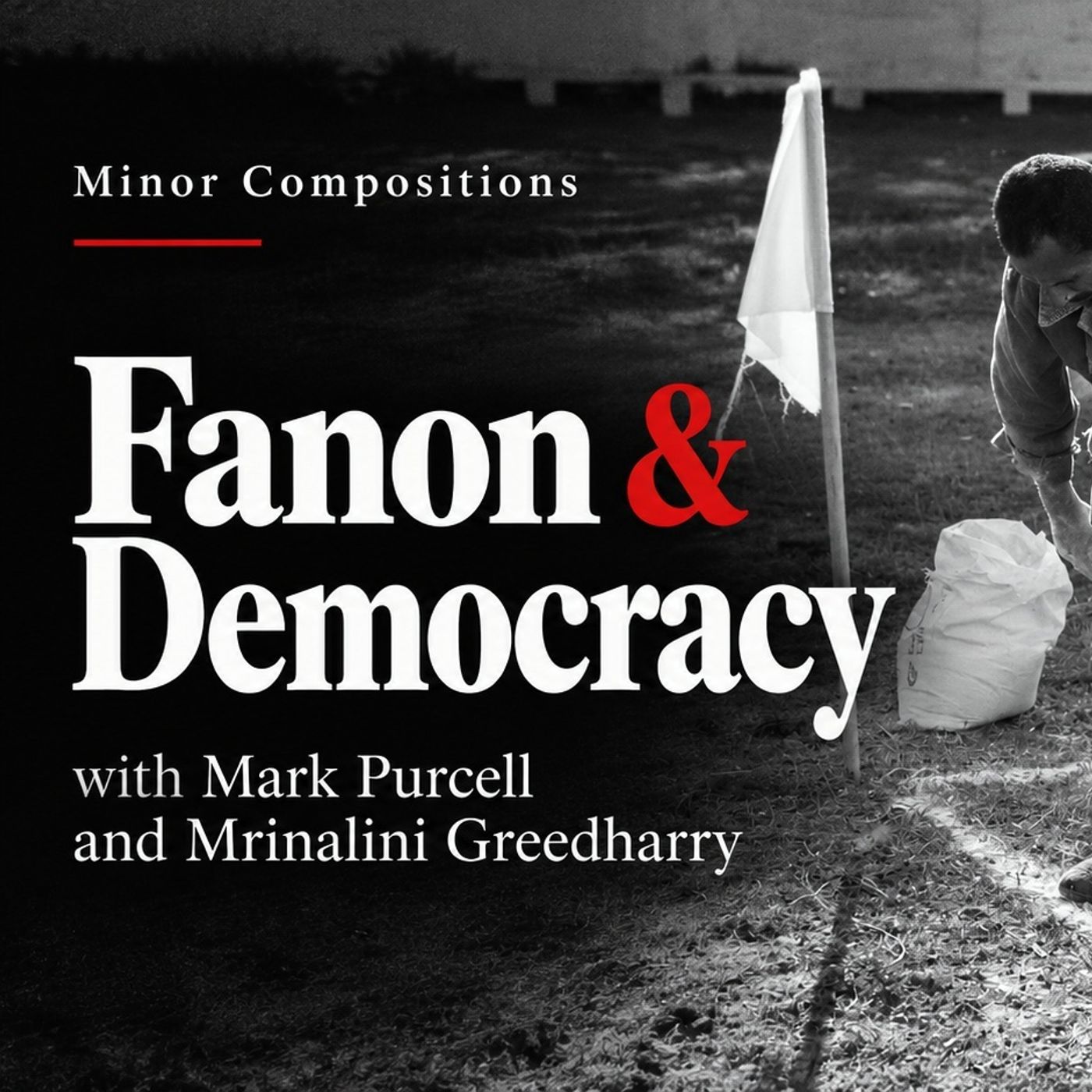
Frantz Fanon is most often read as a thinker of colonial violence, racial domination and revolutionary rupture. But what happens if we attend instead to the Fanon concerned with creation, popular participation, self-management and the capacity of people to build new forms of life together? In this episode, we discuss Mark Purcell’s Discovering Democracy in the Work of Frantz Fanon with Purcell and Mrinalini Greedharry. The book proposes a distinction between a “major Fanon,” organised around negation, critique and the destruction of oppressive structures, and a “minor Fanon” who emerges in moments of affirmation, collective experimentation and democratic self-management. This minor Fanon appears in discussions of Algerian villagers taking responsibility for their own affairs, but also in Fanon’s psychiatric practice and his attempts to create forms of institutional life in which patients participate actively in their own care. The conversation explores both the possibilities and the tensions of this distinction. Can anti-colonialism, anti-racism and anti-fascism be understood primarily as negative projects, or can resistance itself form part of the construction of new relations? How far can creation and affirmation be separated from the work of confronting structures of domination? And might Fanon’s psychiatric practice – shaped through experimentation, failure and encounters with the social and cultural realities of Algeria – complicate any straightforward division between destruction and creation? The discussion moves through Fanon’s relation to institutional psychotherapy, questions of cultural specificity and postcolonial thought, and the importance of recognising the capacities that oppressed people already possess. Purcell draws on Zora Neale Hurston as an example of attending to Black creativity, life and cultural production rather than allowing racism to determine the entire field of attention, while the conversation considers what might be gained – and what might be lost – by shifting political emphasis from opposition toward creation. More broadly, the episode asks what a radical politics of affirmation might look like without abandoning the necessity of resistance: how critique, collective experimentation, cultural production and the creation of new forms of life might coexist rather than being treated as mutually exclusive political choices. More On the BookIntro / Outro: Is It Possible – Hopeless Dregs of Humanity Thumbnail based on a still from Chroniques fidèles survenues au siècle dernier à l’hôpital psychiatrique Blida-Joinville, au temps où le Docteur Frantz Fanon était chef de la cinquième division entre 1953 et 1956 (True Chronicles of the Blida Joinville Psychiatric Hospital in the Last Century, when Dr Frantz Fanon Was Head of the Fifth Ward between 1953 and 1956). Drected by Abdenour Zahzah.
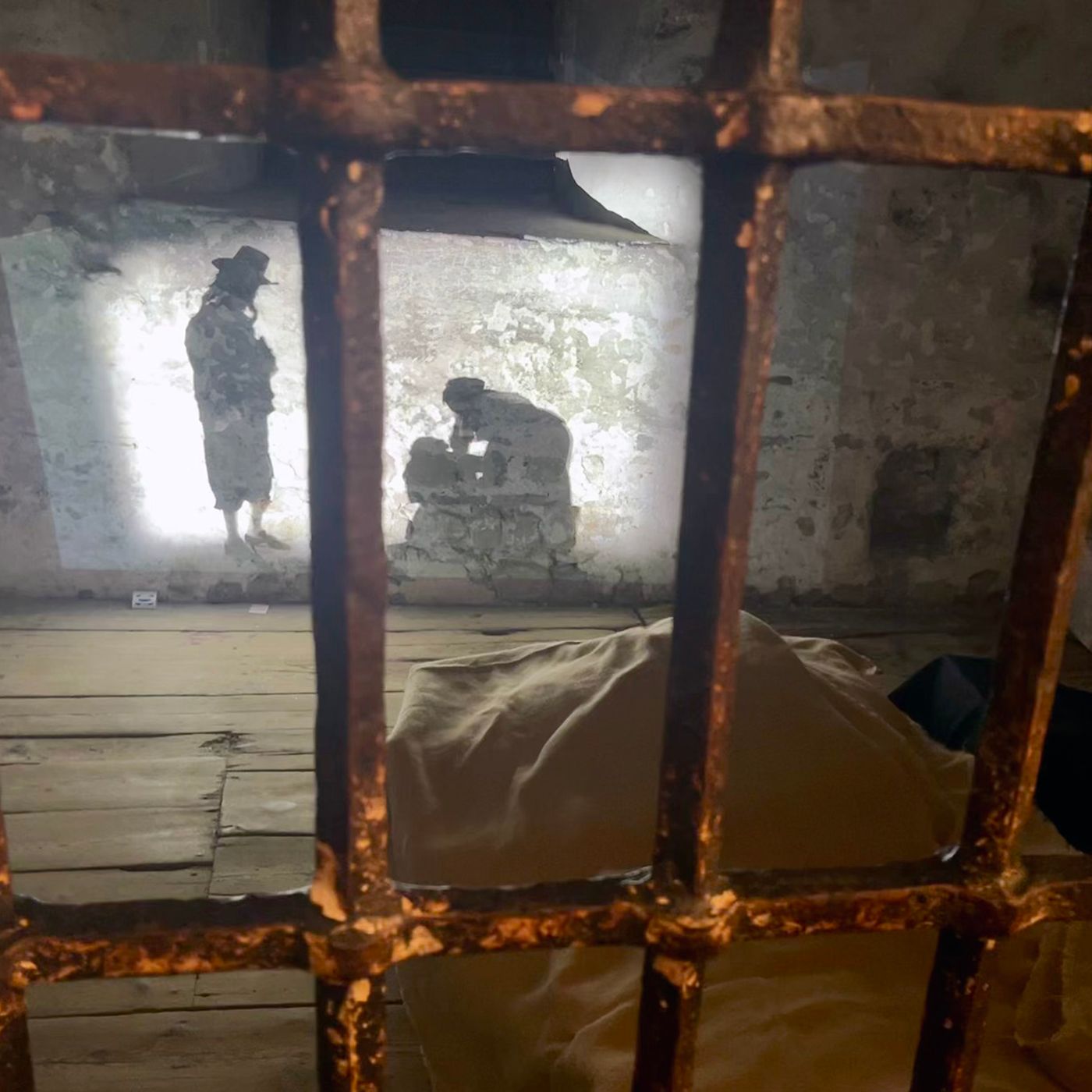
For Heritage Open Days 2026, we took a copy of Silvia Federici’s Caliban and the Witch to Colchester Castle and read several passages inside the building. In 1645, the Castle was used to imprison and interrogate women accused of witchcraft during the East Anglian persecutions associated with Matthew Hopkins. Federici does not mention Colchester itself, but she does single out Essex, noting that most English witch trials occurred here and connecting this concentration to enclosure, land privatisation, poverty and the destruction of collective forms of life. For Federici, the witch hunt was not simply an eruption of superstition. Those accused were disproportionately poor women, while their accusers were often landlords, employers and wealthier neighbours. The persecution of “witches” was also bound up with attacks on forms of knowledge, mutual dependence and social autonomy that stood in the way of a new economic order. Reading Caliban and the Witch inside Colchester Castle makes that history unusually tangible. This was not simply a backdrop to persecution, but part of its infrastructure: a place of imprisonment, interrogation and coercion. There was also something fitting about reading a book so concerned with enclosure on the one day of the year when entry to the Castle was free. Less a remembrance of “witches,” then, than of the people who were made into witches, and of what their persecution tells us about enclosure, poverty, gender, knowledge and power.

What becomes possible when study is detached from education, accreditation and the demand for individual improvement? And what kinds of social relations emerge when study is approached not as preparation for a qualification or career, but as something worth doing in itself? Here are are joined by Eli Meyerhoff, author of Beyond Education: Radical Studying for Another World, and Giovanni Marmont, author of A Studious Use: Designing from the Undercommons. Together they explore study as a collective and intrinsically motivated practice, distinct from the institutional forms that usually organise, measure and give credit for it. Meyerhoff discusses his concept of “modes of study” as a way of historicising education and making its dominant forms appear less inevitable. Drawing on experiences including the Experimental College of the Twin Cities and Abolitionist University Studies, the conversation considers what happens when grades, credits and other external rewards are removed, and when relationships among participants become central to sustaining study. Marmont develops this through his account of study as attentive engagement, collective tuning and shared indebtedness: less a matter of acquiring something for oneself than of becoming increasingly responsive to how our actions are entangled with those of others. The discussion also considers the difficulties involved in creating alternatives. Projects outside universities can easily carry academic assumptions, hierarchies and habits with them, reproducing the very forms they hoped to escape. Free universities, para-academic publishing and other autonomous initiatives therefore raise questions not only about where study happens, but about the social forms through which it is organised. From there, the conversation turns toward media and publishing. Rather than beginning with a predetermined output – a book, podcast or journal – the participants ask what forms of media might grow from the kinds of relationships and practices of study being created. Publications can become points of entry into further encounters rather than finished products: occasions for extending conversations, making connections and sustaining collective inquiry. The episode also introduces Minor Compositions’ emerging formulation Fugitive Study, Autonomous Media: an attempt to think of publishing less as the production of content than as the creation of spaces, relationships and infrastructures through which study can continue to happen. More On Beyond Education: Radical Studying for Another World A Studious Use. Designing from the Undercommons Intro / Outro Music: DNA – Taking Kid To School

In this episode we speak with Abe Walker and Callum Cant about how workers produce knowledge of their own exploitation – and when making that knowledge visible risks strengthening the systems of management and control they oppose. Beginning with Walker’s work on counter-accounting, the conversation explores workers’ attempts to challenge official narratives through alternative records, inquiries and measures. While such practices can expose wage theft, impossible workloads and managerial deception, they may also reproduce the assumptions of productivity, efficiency and accountability embedded in management’s own tools. This leads to a wider discussion of workers’ inquiry, strategic opacity and the problem of becoming legible to fellow workers without becoming more governable by employers. The discussion then turns to quiet quitting, deception, sabotage and other informal refusals that often emerge where collective organization is weak. Against the tendency to dismiss these as merely individual withdrawal, Walker and Cant consider how hidden or dispersed acts of non-compliance might develop into shared forms of struggle. Drawing on Cant and Matthew Lee’s work on the 1926 General Strike, the episode revisits the role of rank-and-file workers who expanded the strike beyond the intentions of official leadership. From small militant networks to mass pickets, workplace marches and solidarity extending beyond particular trades, the strike became a means of creating new collective subjects across workplaces and communities. The conversation concludes by asking what these histories offer workers confronting platform capitalism, algorithmic management and increasingly authoritarian workplaces today: how can workers use employers’ knowledge against them, build power from seemingly minor forms of resistance, and transform refusal into collective action? Abe Walker – Holding labor to ac(count): quiet quitting and the limits of the anti-work imaginary Callum Cant and Matthew Lee – The Future in our Past: The General Strike, 1926/2026
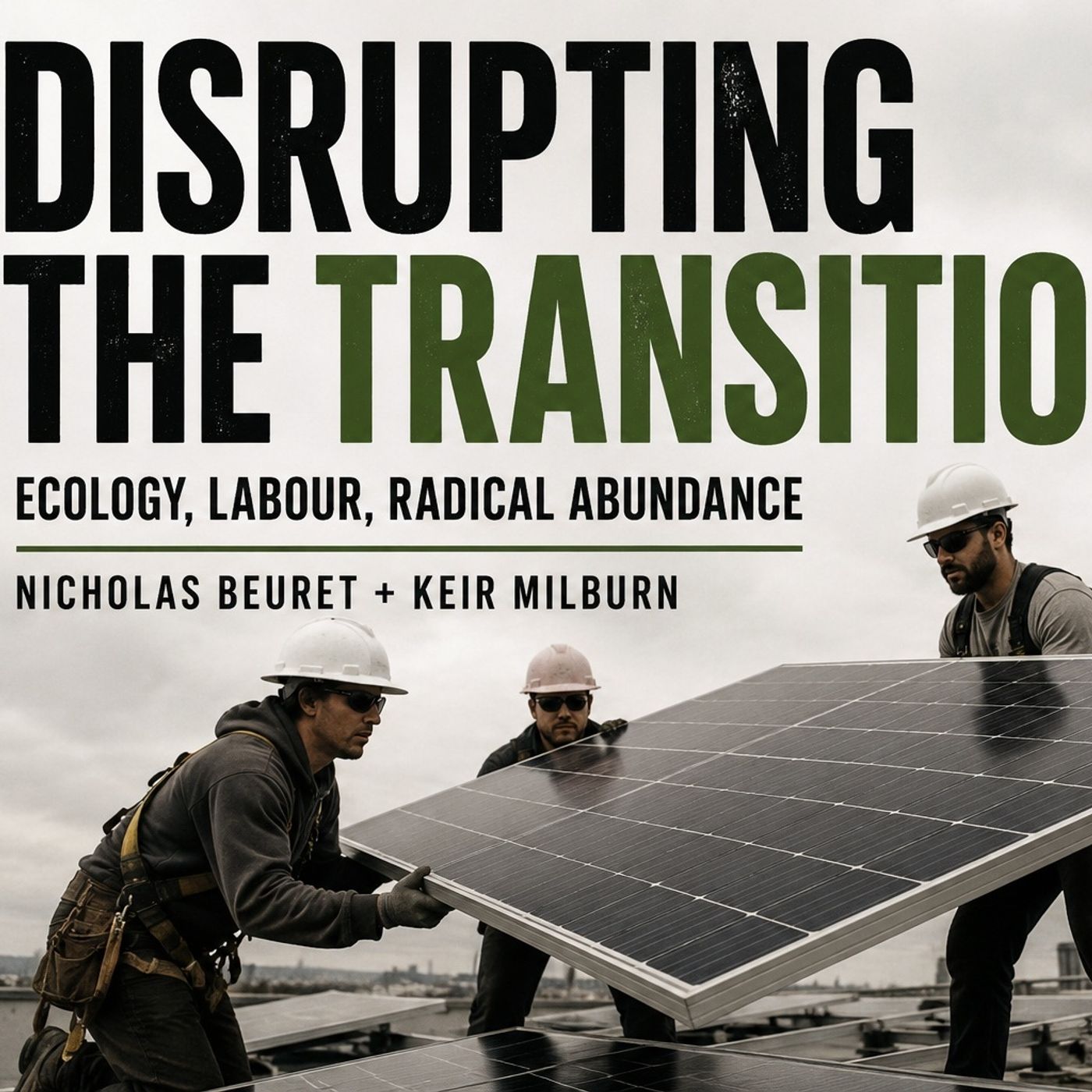
In this episode, we speak with Nicholas Beuret and Keir Milburn about ecological transition as a terrain of class struggle – not simply a technical shift in energy systems, but a contested reorganisation of investment, work, infrastructure and everyday life. They examine how the existing green transition uses ecological crisis to stimulate investment and renew capitalist growth while imposing job losses, higher costs and deteriorating services on ordinary people. From Port Talbot to local conflicts over net zero spending, broken promises have produced a sense of betrayal that the right increasingly exploits, while centrist governments retreat from climate commitments without offering workers a meaningful alternative. Against this politics of managed decline, the conversation develops the idea of radical abundance: less wasteful and extractive production, but more housing, energy, healthcare, free time and democratic control over collective life. Drawing on the Lucas Plan, pharmaceutical commons, workers’ cooperatives, public-common partnerships and community energy, Beuret and Milburn explore how disruption might be combined with the construction of durable alternatives. The question is not only how to resist the transition imposed from above, but how to build the institutions, infrastructures and collective power needed to shape another one. More on the books discussed in this episode Or Something WorseRadical AbundanceBios Nicholas Beuret is a lecturer in environmental politics and economic geography at the University of Essex. With a background in both activism and academia, he explores the intersections of climate change, capitalism, and social justice. His work has been featured in the Guardian, The Ecologist, Open Democracy, and Undercurrents. Nicholas lives in the UK, where he continues to write, teach, and engage in environmental advocacy. Keir Milburn is a writer, researcher, and activist. He has a background as an academic in political economy and organisational theory. He has written over a hundred articles and book chapters in venues ranging from academic journals, such as Urban Studies, to media commentary in outlets such as The Guardian, The Independent, and The Nation. His book Generation Left provoked debate across several countries on generational political divides driven, in part, by generational imbalances in asset ownership. He is co-director of the action-research organisation Abundance.

Comments

Download from Google Play

Download from App Store
 United States