


 Claim Ownership
Missing Pages
Subscribed: 3Played: 62
Subscribe

© Scott McWilliams
Description
Missing Pages is a podcast that explores the history of the United States and critically examines the high school AP US History curriculum. Through deep dives into key events, people, narratives, and themes, I seek to uncover the fascinating stories and overlooked perspectives that make up America's rich and complex past. From colonial times to the present day, no topic is off-limits as we explore the triumphs, tragedies, and everything in between. Get ready for a journey through the missing pages of history.
missingpages.substack.com
missingpages.substack.com
33 Episodes
Reverse

After a few episodes of the big ideas that drove the Revolution and the large scale changes that came as a result, I'm heading back down to the more micro level. This episode—largely—follows the story of two intersecting lives during the most pivotal years of the war.Despite my best efforts, it is difficult to discuss the revolution without eventually circling around the biggest names. While I have been able to bring other voices on to the revolutionary stage, certain people always find their way back. Those closest to, or in, the seats of power get the focus.However, this episode I attempt to bring out the voice of someone who was not rubbing shoulders with Washington or had the ear of King George. Rather, this episode is about a single soldier making his way through the chaos of war and a general trying to aid the rest of the soldiers in fulfilling their mission.As expected, these two men, Joseph Plumb Martin and Baron de Steuben are not mentioned in the AP notes. So I have a lot of work to do to fill in those missing pages…Join me on my journey through American History. Help fill in those missing pages.MusicIntro: Fractured Timeline - SémøOutro: Temporary Guide - Gabe PriceSourcesDrillmaster of Valley Forge - Paul LockhartOrdinary Courage - James Kirby MartinThe Glorious Cause - Robert MiddlekauffThe Fate of the Day - Rick Atkinson Get full access to Missing Pages at missingpages.substack.com/subscribe
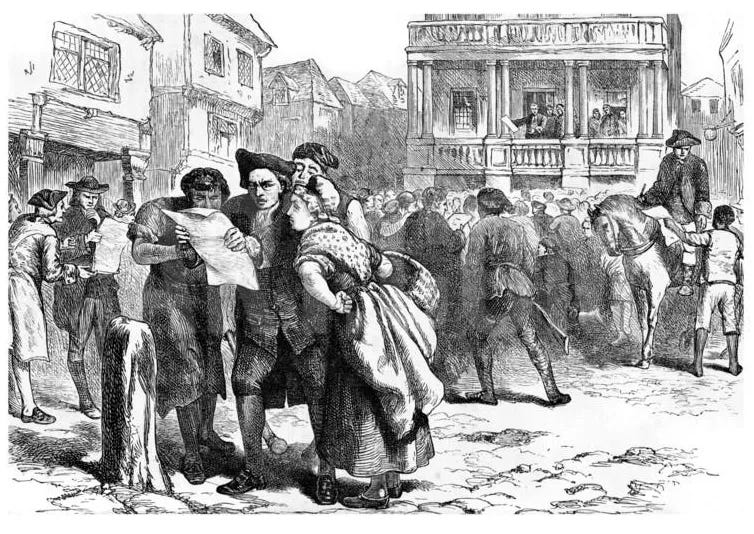
For the first half of this season I have been skirting around the overall reason the American colonists decided to raise their own banner against England. This episode is meant to rectify that by detailing the traditions fought against and the new philosophy fought for.Before “independence” became a common word spoken in American coffeeshops, there was a hope that Britain was on the precipice of becoming a vast, transatlantic empire, and the American colonists hoped to indulge in the comin riches. They had long respected, and even venerated, their English heritage and hoped that the victory over France would bring these two lands closer together, at least spiritually. However, that was not how things shook out.Rather, the British government hoped to reign in the wily colonists at the same time that the colonists asked for a seat at the table. Over the next decade this political disagreement morphed into a disagreement about philosophy and culture, and the question began to be asked by many of the great colonial thinkers: why should we remain in Britain at all?This episode explores the transition in America from subordinate colonies to angry rebels to fledgling republic. I also describe the traditions they were rebelling against, and which they were merely using for their own purpose. As is often the case, the AP notes contain the broad strokes, but are missing the details. So, let’s fill in those missing pages…Join me on my journey through American History and help fill in those missing pages by subscribing below.MusicIntro: Fractured Timeline - SémøOutro: Its Gonna Be Alright - The HazelnutsSourcesThe Radicalism of the American Revolution - Gordon S. WoodThe Ideological Origins of the American Revolution - Bernard BailynOur First Civil War - H. W. BrandsThe Glorious Cause - Robert Middlekauff Get full access to Missing Pages at missingpages.substack.com/subscribe
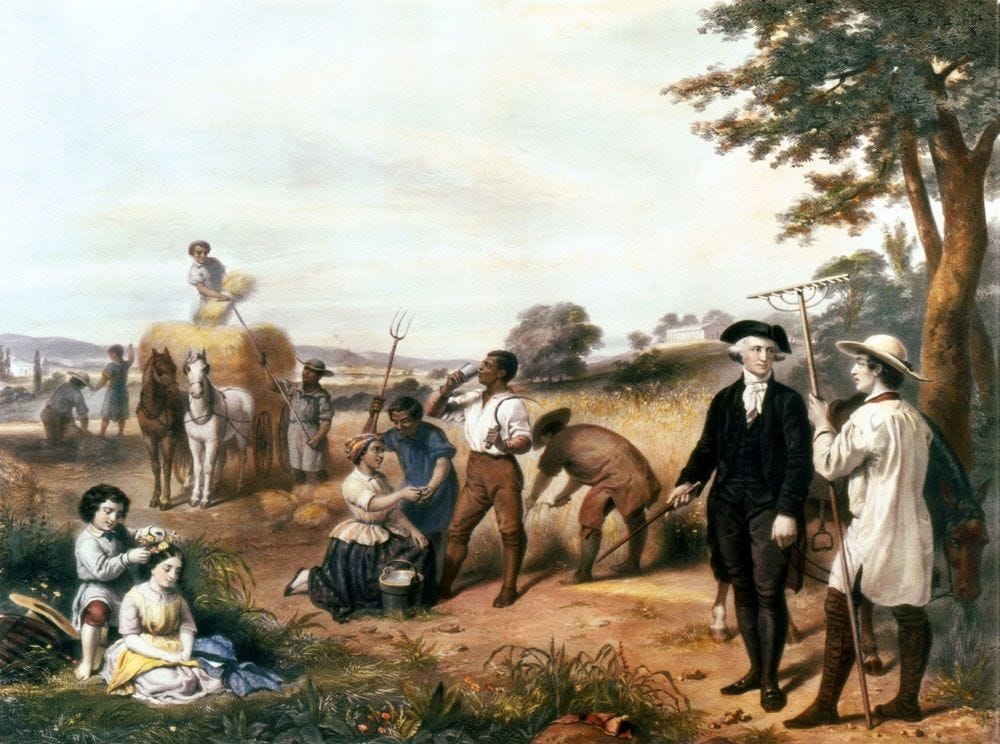
While the American Revolution provided a voice to a people who longed to break free from the toke of the British Government. However, while they decried the slavery they faced from the King, hundreds of thousands of men, women and children remained in chains. This contradition was well understood, but the response to this knowledge did not provide a clear path towards its remedy. It would take nearly a century for this moral stain to begin to be addressed.As has been discussed in previous eras, slavery in the American colonies did not have a universal character even if it was universally accepted as an institution. In each region, the relations between owners and slaves, slaves and free blacks, and slaves themselves reflected those differences. This would have a profound impact on how slavery was viewed as an institution as disruptions from the war settled in.In some new states, emancipation came easier the language of the revolution made it clear that slavery had no place. However, even in these northern states, pragmatism often won out, thus postponing the death of slavery into the next century. In the south, principles were used in the opposite direction to ensure the institution thrived. With each of these argumenst, men would twist in knots trying to recocile their own calls for liberty while depriving others of theres.Throughout it all, blacks, free and in bondage, dealt with the constantly changing winds to find any path towards freedom possible. Whether it was through escape, the courtroom, or paying for one’s own freedom, slaves throughout the colonies found freedom. But they were few when compared to those who remained, and those who just arrived. Depsite the blatant contradiction, slavery was no closer to ending than before the war.Just like last episode, my highschool notes cover the broad changes in this era, but is lacking any detail. So, there are many missing pages to fill in…Join me on my journey through American History. Help fill in those missing pages.MusicIntro: Fractured Timeline - SémøOutro: With the Earth - Narrow SkiesSourcesMany Thousands Gone - Ira BerlinDeath or Liberty - Douglas R. EgertonThe Glorious Cause - Robert Middlekauff Get full access to Missing Pages at missingpages.substack.com/subscribe
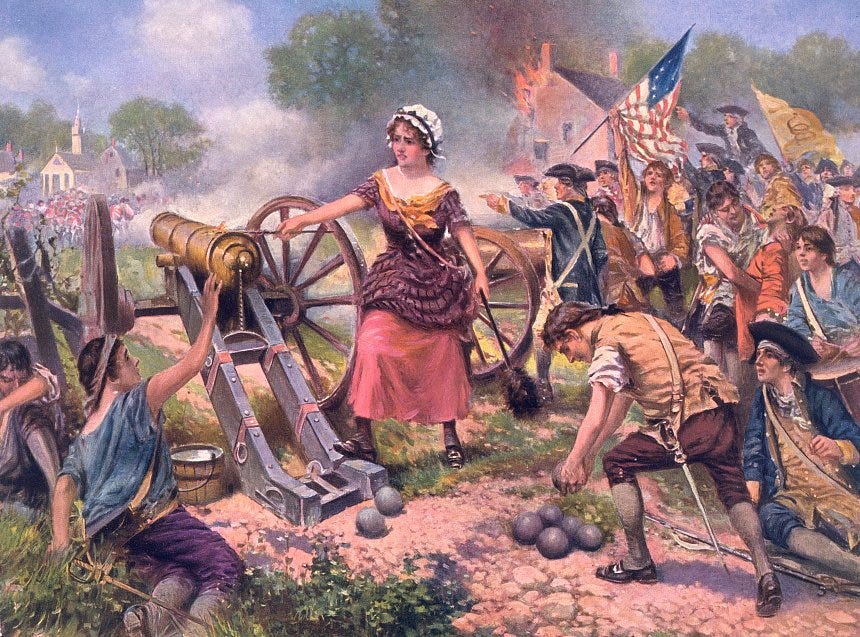
As the war branched out away from Boston and New York, several fronts—and several major battles—were being fought simultaneously. Meanwhile, there were several cultural dynamics at play away from the battlefield. This is the first episode where I try to address both. I start with major battles to ensure there is continuity throughout the season, then transition to the impacts away from the front.When telling the story of a war, the battles, troop movements, and diplomacy often supersede the impacts at home. For much of history, it was women who faced the full effects of the war away from the front. This episode covers the women who were pivotal in the success of the Revolution from their homes—and on the battlefield.Prior to the Revolution, strict hierarchies on the basis of sex abounded in the colonies. Women were subordinate to their husbands and bound to the confines of the home. There were exceptions to this, but they only proved the rule. Furthermore, any women who tried to act outside their station were often shunned and looked down upon.As pressure from the colonies on the empire ramped up in the 1760s, women began to join in on the fight, though still in a limited fashion. But once war broke out, the chaos throughout the colonies brought the war to the women’s doorsteps and forced them to adapt, flee, or join a cause. This disruption gave women a larger role and often a voice, though it was not a simple advancement.My AP notes cover this era, though only in the broadest sense, so there are many missing pages that need to be filled…Join me on my journey through American history. Help fill in those missing pages.MusicIntro: Fractured Timeline - SémøOutro: Moon Mother - Richard FarrellSourcesLiberty’s Daughters — Mary Beth NortonRevolutionary Mothers — Carol BerkinThe Glorious Cause — Robert Middlekauff Get full access to Missing Pages at missingpages.substack.com/subscribe
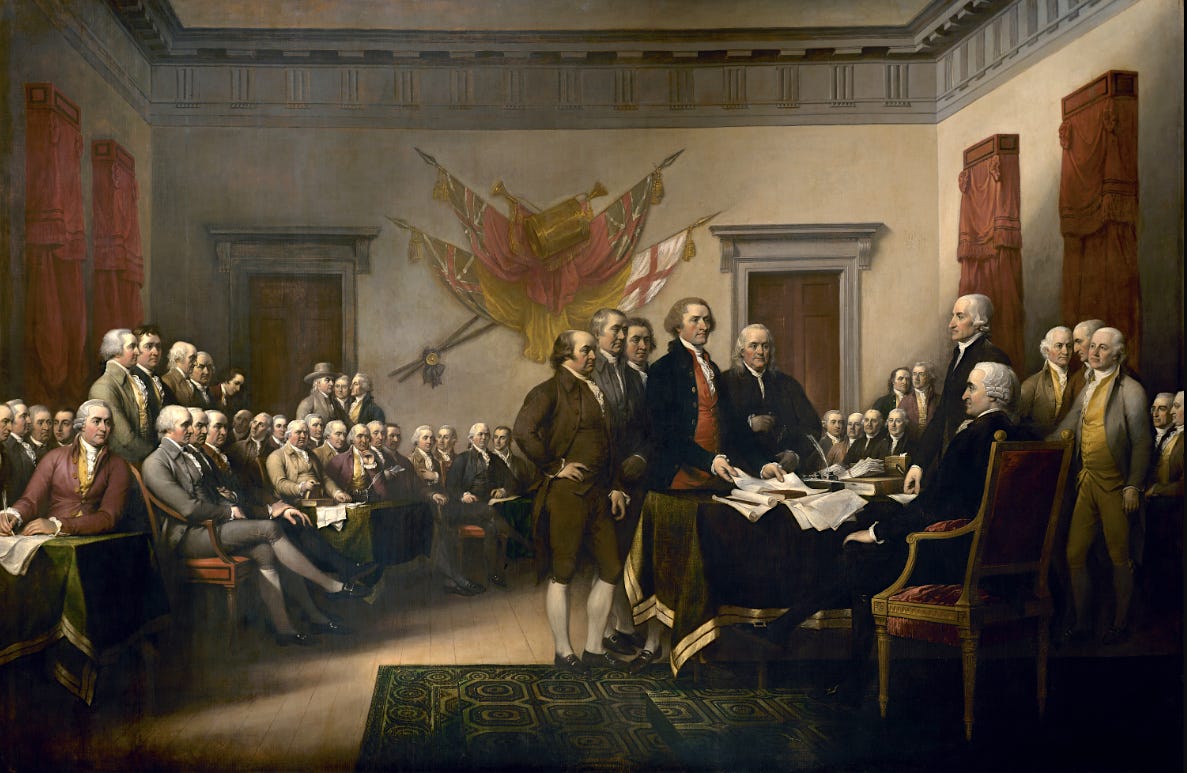
This is a special bonus episode in celebration of the 250th anniversary of the signing (at least by some) of the Declaration of Independence.Every American knows these words and the unalienable rights written out in the Declaration of Independence. We are taught from our earliest school years about life, liberty, and the pursuit of happiness.Looking back into history, the Declaration marks the beginning. Its signing marked for all time the creation of a nation with a certain set of beliefs as its backbone.It was also a beginning for the men who signed it, but this document was also an end. It was the final statement of colonists who had grown disillusioned with their mother country. For the men at the Second Continental Congress, this was also an opportunity to convince the rest of the colonial world that independence was necessary.So we ought to, as good Americans, understand its arguments and purpose, not only for us today, but for the original readers in 1776.Afterward, I also reflect on America today and why I find it difficult to write about what it was, is, and ought to be, but still think it is a wonderful place worth celebrating.Missing Pages is a reader-supported publication. To receive new posts and support my work, consider becoming a free or paid subscriber at missingpage.substack.com. Get full access to Missing Pages at missingpages.substack.com/subscribe

Comments

Download from Google Play

Download from App Store
 United States