


 Claim Ownership
Mobility Innovators Podcast
Subscribed: 8Played: 102
Subscribe

© Mobility Innovation Lab Inc.
Description
Mobility Innovators Podcast, a part of Mobility Innovation Lab, is dedicated to fostering innovation in the transportation and logistics sector, covering the latest developments in transit tech, cleantech, smart cities, and mobility tech space. The host (Jaspal Singh) will invite innovation managers, industry leaders, startup founders, technology experts, investors, consultants, and thought leaders. Mobility Innovation Lab (MIL) is focusing on bridging the gap between the city’s authorities, operators, and industry organizations with new-age technology firms and ideas.
52 Episodes
Reverse
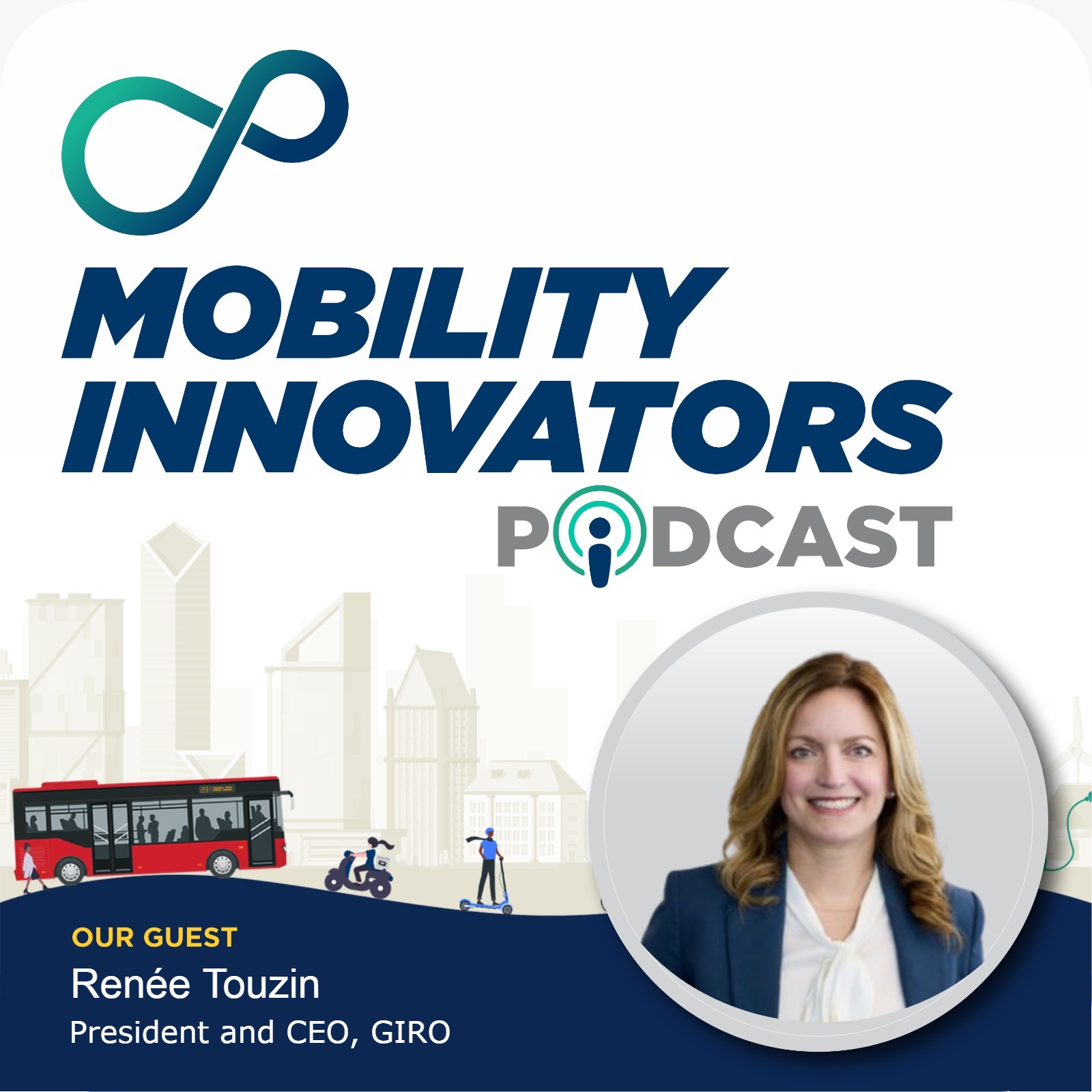
Can artificial intelligence help public transport agencies deliver better service while balancing tight budgets, driver shortages, and the transition to electric buses? In this episode of the Mobility Innovators Podcast, Jaspal Singh speaks with Renée Touzin, President and CEO of GIRO, about the operational decisions shaping public transport—and where artificial intelligence can make a practical difference.Renée Touzin is President and CEO of GIRO, a technology company based in Montreal. She has spent more than 24 years at GIRO and became the President and CEO of the company in January 2024. She joined after earning a master’s degree in computer science and operations research from Université de Montréal. Her path includes roles as business analyst, project manager, executive, and now CEO. Our discussion will be focus on three big mobility themes – Operational complexity, Energy transition and Human-centered optimization.

Public transport is entering a new era where success is no longer measured simply by how many buses or trains are operating, but by how seamlessly people can move throughout a city. Ruter is reimagining urban mobility through digital innovation, autonomous vehicles, artificial intelligence, integrated mobility services, and ambitious sustainability goals. The conversation explores leadership, organizational transformation, and what public transport agencies around the world can learn from Oslo's experience.In this episode of the Mobility Innovators Podcast, Jaspal Singh speaks with Bernt Reitan Jenssen, CEO of Ruter, the public transport authority for Oslo, Norway.They also discuss:• AI agents in public transport• Customer-centric innovation• Autonomous buses and shared mobility• Quantum computing in transit planning• Cybersecurity risks in connected vehicles• Leadership during technological disruption• Building innovative teams• The future of urban mobilityBernt Reitan Jenssen is the Chief Executive Officer of Ruter AS. Jenssen has led Ruter since its inception in 2008, when it was established as a joint administrative company for public transport in Oslo and Akershus. Prior to this, he served for eight years as Executive Vice President at Posten Norge and has also held CEO positions at the logistics companies TNT Norge AS and IL-X Budservice AS.#Mobility #ArtificialIntelligence #AutonomousVehicles #SmartCities #PublicTransport #Innovation #UrbanMobility #Transportation #FutureOfMobility #Leadership
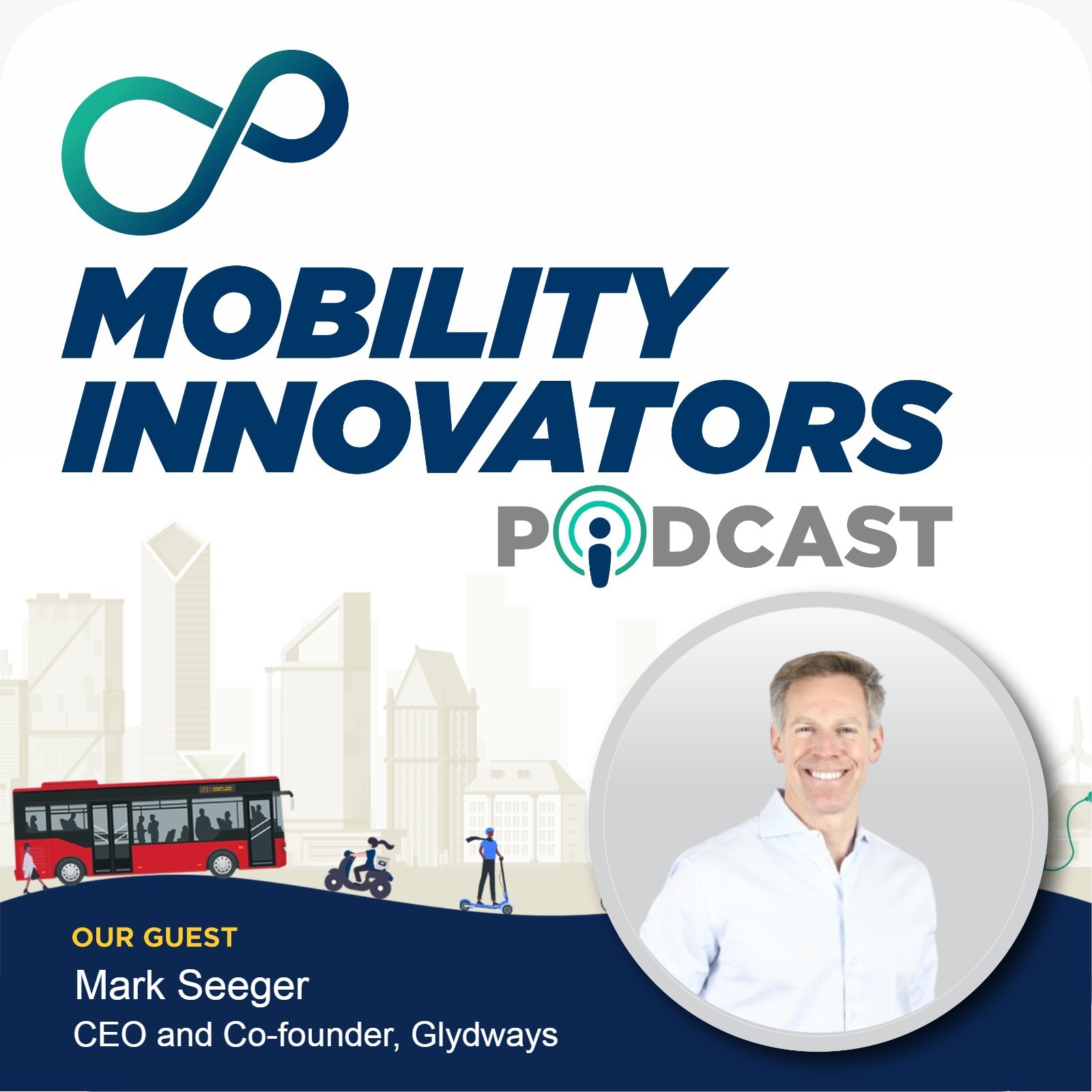
Cities are growing faster than ever, but our transportation systems are struggling to keep up. Advances in AI, autonomy, and digital infrastructure are creating new opportunities to rethink how people move through cities, reduce congestion, and expand access to jobs, education, and social opportunities. The conversation highlights how innovation happens when technology, infrastructure, and human needs are considered together, ultimately creating more sustainable, connected, and opportunity-rich cities.Mark Seeger is CEO and Co-founder of Glydways. Glydways is a form of public transit that can move more people than rail, using less than half of the space, which costs 90% less to build and operate while providing a private and on-demand ride. Prior to founding Glydways, Mark had early careers at NASA and Apple; founded the biodegradable plastics company GreenIdea in Singapore (sold); the electric motorcycle company Mission Motorcycles and Mission Marine; as well built initiatives that focused on low-cost, high-efficiency air-conditioning for third-world countries with his company GeoCool (sold).
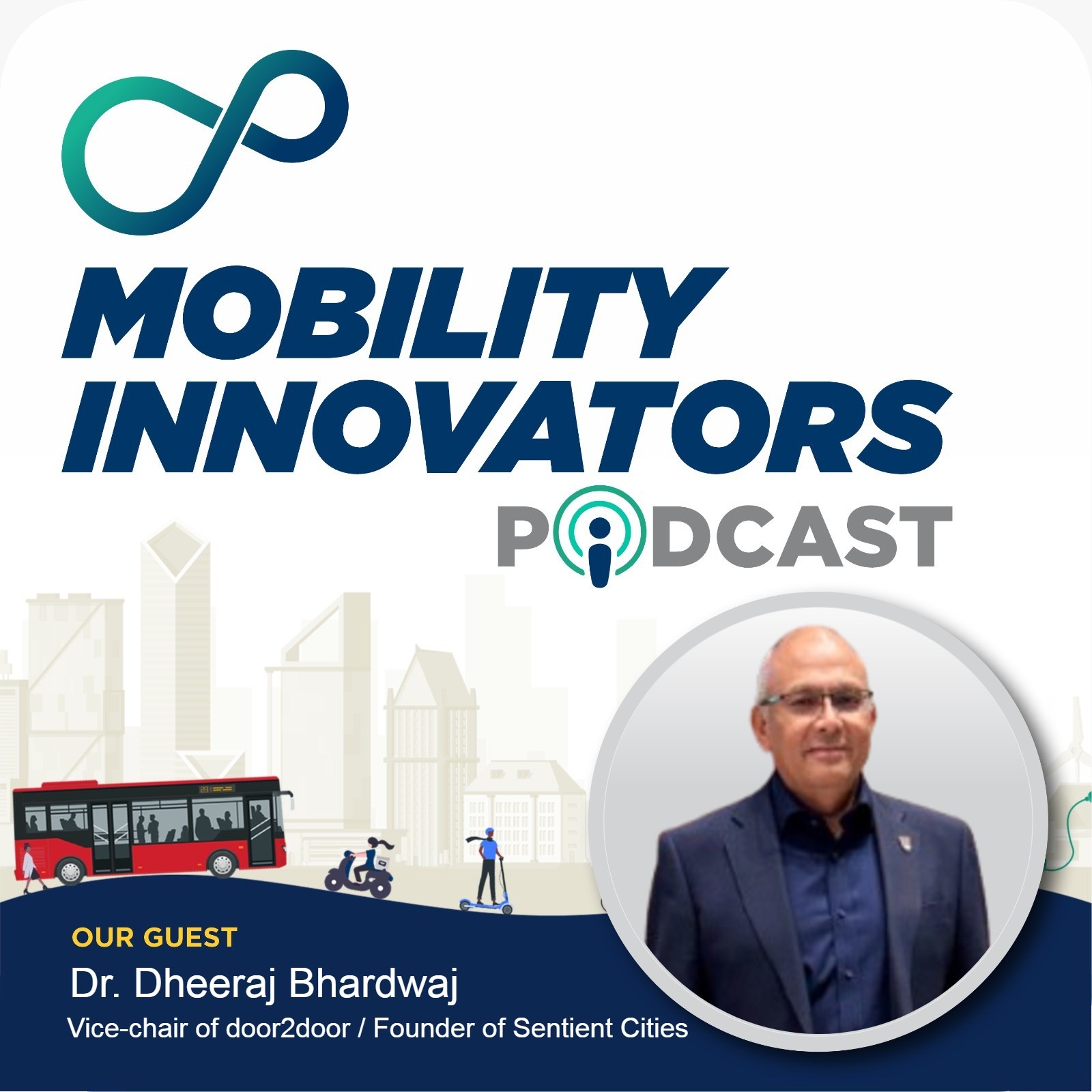
What if public transport systems could think, learn, and respond in real time? Artificial intelligence and real-time data are transforming the future of mobility and public transportation. Ticketing is one of the important component of public transport system. Many cities are moving from paper ticket to digital ticket. ticketing is no longer just about payments but is becoming the intelligence layer of modern transit systems. The concept of “sentient ticketing,” where AI-powered systems can dynamically respond to passenger demand, traffic conditions, events, and operational disruptions in real time.In this episode of @mobilityinnovators Podcast, Dr. Dheeraj Bhardwaj shares why ticketing is no longer just about payments — it’s becoming the intelligence layer of future mobility systems. We discuss sentient ticketing, AI-driven transit, on-demand buses, real-time pricing, mobility super apps, and why traditional transit systems must rethink their future.Dr. Dheeraj Bhardwaj is currently the vice-chair of door2door. Earlier, he was the Group CEO of City Group Company. Prior to City Group, he was the co-founder and CEO of Arnab Mobility, running a micro-mobility platform in the Middle east. He has wide experience in academia, corporate, consulting, and startups in North America, Europe, Asia and the Middle East. He has recently incubated “Sentient Cities” an Open-Source platform helping Cities not just be connected but become aware, adaptive and responsive.
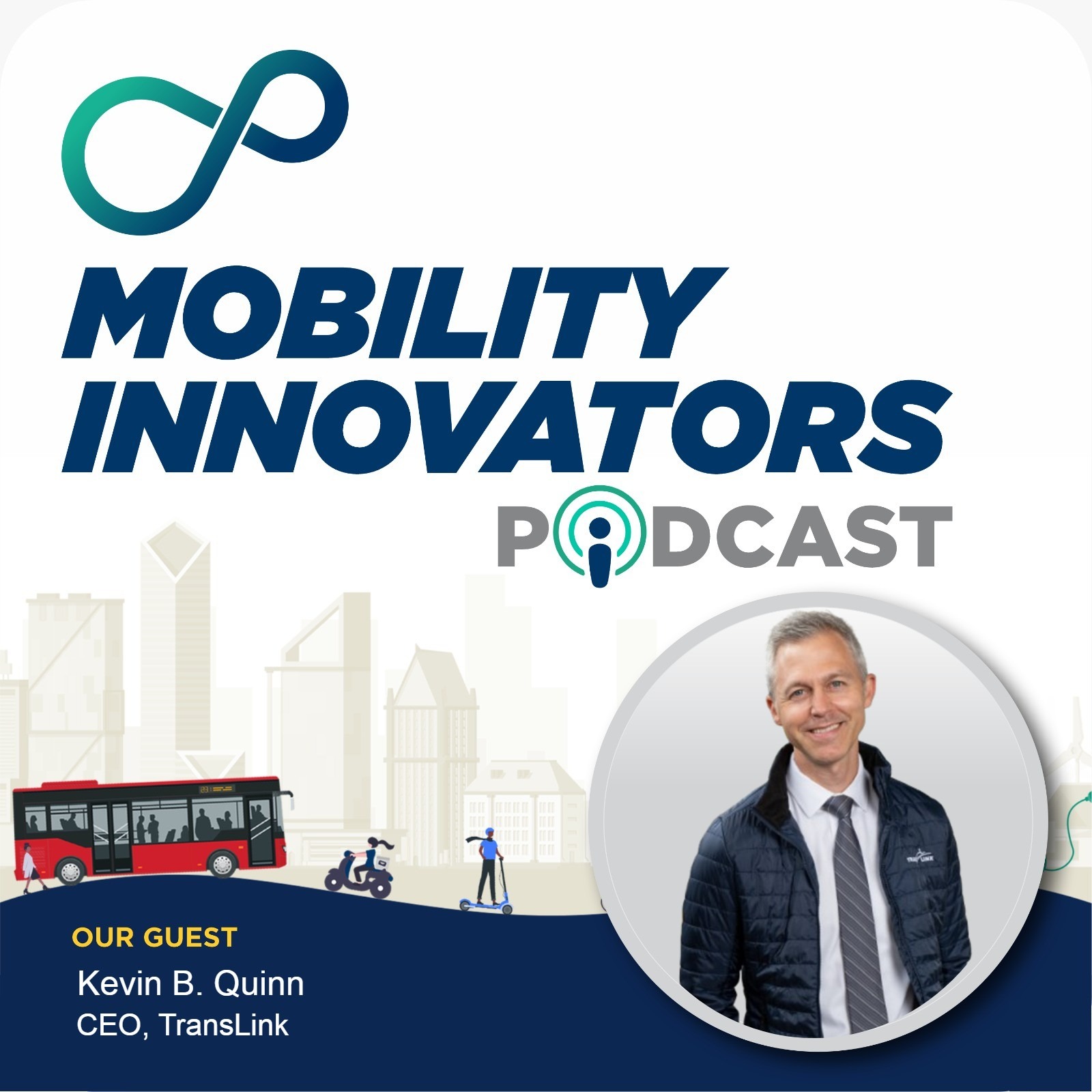
Metro Vancouver is a city that has quietly built one of the most advanced and integrated public transport systems in North America—from automated SkyTrain to strong transit-oriented development. TransLink operates this regional transportation network, serving over 400 million passengers annually across buses, SkyTrain, SeaBus, and commuter rail.The region is now looking ahead to the future—rethinking how transit infrastructure supports growth, sustainability, and changing travel patterns. With its Transport 2050 vision, Metro Vancouver aims to shift from a car-influenced city to a transit-first, people-first region, where around 50% of all trips are made by public transit or active modes like walking and cycling.Kevin Quinn is the CEO of TransLink, the statutory authority responsible for the region’s transportation system. In his role, he oversees planning, operations, and delivery across transit services, as well as key infrastructure including cycling networks, bridges, and the Major Road Network. Under his leadership, TransLink has recovered to over 90% of pre-pandemic ridership, delivered its largest bus service expansion in years, and is advancing major investments in future mobility. Prior to joining TransLink, Kevin served as Administrator and CEO of the Maryland Transit Administration (MTA), where he led one of the largest transit systems in the United States.

Comments

Download from Google Play

Download from App Store
 United States