


 Claim Ownership
Modellansatz - English episodes only
Subscribed: 14Played: 80
Subscribe

℗ & © 2013-2019 - CC BY-ND 3.0
Description
On closer inspection, we find science and especially mathematics throughout our everyday lives, from the tap to automatic speed regulation on motorways, in medical technology or on our mobile phone. What the researchers, graduates and academic teachers in Karlsruhe puzzle about, you experience firsthand in our podcast "The modeling approach".
48 Episodes
Reverse

This episode was recorded in July 2026. Gudrun speaks with Chiara Sabadin. She is currently a researcher in Mathematics Education, with a focus in Diversity, Equality, and Inclusion (DEI) in Mathematics and founder and co-lead of the Women in Mathematics group of the University of Regensburg. Previously, she has completed a PhD in Pure Mathematics in June 2026 at the University of Regensburg, supported by the SFB 1085 “Higher Invariants” and the DFG, with a work on "A cohomological version of Ribet's Method" under the supervision of Prof. Dr. Guido Kings. Even before, she completed her Master in Mathematics through the ALGANT Master program, studying at University of Padova for the first year and at the University of Regensburg for the second. In her free time, Chiara has also started social media channels under the pseudonyme @a_life_with_math with the intent of making mathematics more accessible and inclusive to a broader audience, showing and explaining how maths permeates everyday life and also reflecting on her own experiences as a mathematics researcher and as a woman in the field. Nowadays the ”leaky pipeline” phenomenon of women in mathematics academia, i.e. women in mathematics who opt out of an academic career, is largely recognised. Often the environment in the departments does not feel welcoming to everyone, leading some of their members to face or feel discrimination. Since first-hand experiences are nowhere to be found Chiara and her colleagues Malena Wasmeier and Eleni Hübner-Rosenau made an online survey for mathematics students and researchers in autumn 2025, and, in this episode, Chiara tells us more about it, sharing some insights from it. It consisted of the following open-texted questions: Q1 Do you think that it is important and/or a current issue to discuss about gender diversity and inclusivity in mathematics? Why? Q2 How do you balance work and personal life? In particular, do you think that working in academia affects your personal choices (e.g. creating a family, having children,...)? How and why? Do you think it is a problem? If so, do you have any ideas about solutions? Q3 Gender quotas and their effects: Have you ever experienced positive or negative effects of them? If so, which ones? Have you ever had the feeling ”I am here only because I am a woman/from an underrepresented background - I don’t actually deserve it”? If so, how did you deal with it? Q4 There aren’t so many women/from an underrepresented background mathematicians in advanced roles (e.g. according to M. Infusino, Women in Mathematics Germany, in 2014 only 14% of professors in Germany were women). Have you ever felt a lack of these role models? If so, how do you think this affected you and nowadays affects the future generation of mathematicians? Q5 If you have ever menstruated, have you ever experienced that period “affected” your work life? If so, how? Q6 Mathematicians and women/from an underrepresented background mathematicians are very much stereotyped. Which common misconceptions about them do you think there are and why do you think they aren’t the truth? A total of 125 persons from all over the world, from bachelor students to senior professors, participated in the survey, leading to some interesting reflections.
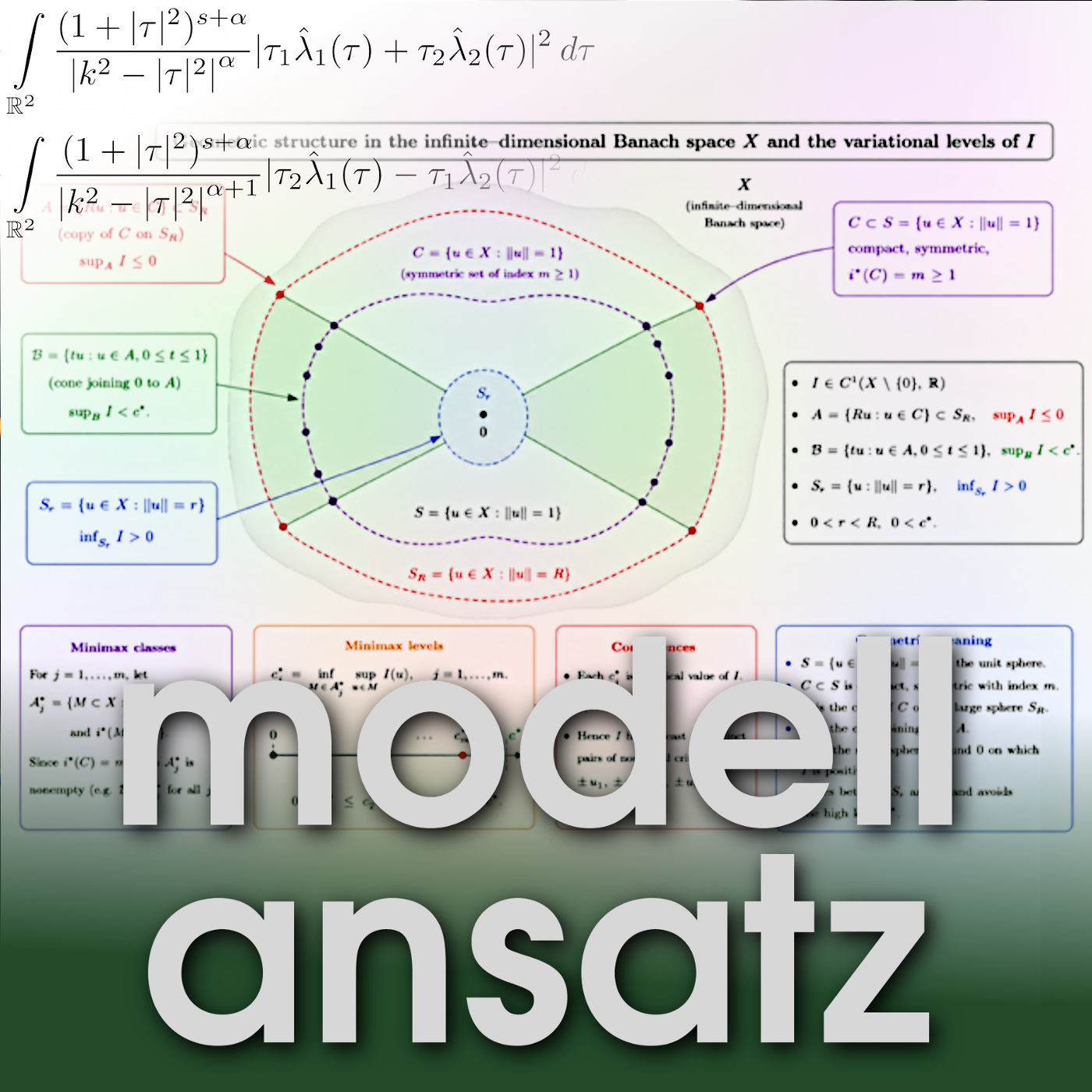
Gudrun talks with Debajyoti Choudhuri. He is staying at KIT as a short term guest. He is Associate Professor in the School of Basic Sciences at IIT Bhubaneswar, India. He did his M.Sc. and Ph.D. in Mathematics at the University of Hyderabad. His research interest lies in the analysis of elliptic PDEs using Functional Analytic and topological methods. In this he touches and has a slight overlap with the research of Gudrun. The conversation starts with the discussion about a small paper which Debajyoti put on the archiv. It is about understanding how to work with the Fractional Laplacian. This means extending the classical Laplace operator Δ to non-integer powers. This operator is the main part in PDEs which model, e.g, anomalous diffusion, probability theory, image processing, finance, and nonlocal mechanics. (-Δ)s, where s is in (0,1). What makes It different to the ordinary Laplacian? While the traditional Laplace operator is local, i.e. it depends only on values of u and its derivatives near x, the fractional Laplacian is nonlocal, it depends on values of u everywhere in space. Thus, for the analytical and numerical treatment one needs very different methods. There are several possible definitions. Some of them can be found in the Wikipedia article which is cited below. On ℝn, the cleanest definition is the Fourier definition which follows the idea: Take the Fourier transform. Multiply by |ξ|2s. Transform back. In the short paper which is discussed the singular integral definition is used: For s in (0,1): (-Δ)^s u(x) = C(n,s) PV ∫ [u(x) - u(y)] / |x - y|^(n + 2s) dy This makes the nonlocality explicit: every point y contributes to the value at x. The method central in studying Laplace problems is variational. It considers an (infinite) family of generalised problems and works on the existence of so-called weak solutions. These problems are formulated with the help of . The weak solution for the Laplace problem is an element of the space H1=W1,2. This means the solution and its (generalised) gradient are bounded in L2 in the domain in which the problem is solved. This has physical meaning and due to known properties (embedding) of Sobolev spaces the pointwise (strong) solutions often can be constructed when enough regularitiy of the weak solutions is proved. Fractional Laplacians naturally live in fractional Sobolev spaces. These are not that easy to connect to physical properties and a few of the equivalent definitions in the context of classical Sobolev spaces are not equivalent any more everywhere. Common approaches for numerics for PDEs including the fractional Laplacian are: Fourier spectral methods (periodic domains), Finite element methods for fractional PDEs, Matrix-function methods (As), Caffarelli–Silvestre extension methods, Quadrature approximations of singular integrals. The Extension trick introduced by Caffarelli and Silvestre in 2007 (their original paper is cited below) is also discussed as part of the short note. p-laplacian augurs well in the sense because the unicity of the definitions of the s-laplacian is still lacking. The conversation then turns to how Debajyoti found his way into mathematics and the topic of PDEs and how life and work feel like in his university.

This episode was recorded in March 2026. Gudrun speaks again with Nadja Klein and Moussa Kassem Sbeyti who work at the Scientific Computing Center (SCC) at KIT in Karlsruhe. As a new person in our conversation we welcome Nicolas Bianco. The research of the scientists in Nadja's MBD Lab is at the intersection of statistics and machine learning. It spans theoretical analysis, method development and real-world applications. Last time we focussed on Baysian statistics. With the help of Nicolas we want to examplify how interdisciplinary work is done and how his journey led him into this field of research. Since in this episode we very much focussed on Nicolas decision process and steps in his carrier we plan to have an episode on the topics later in the year.
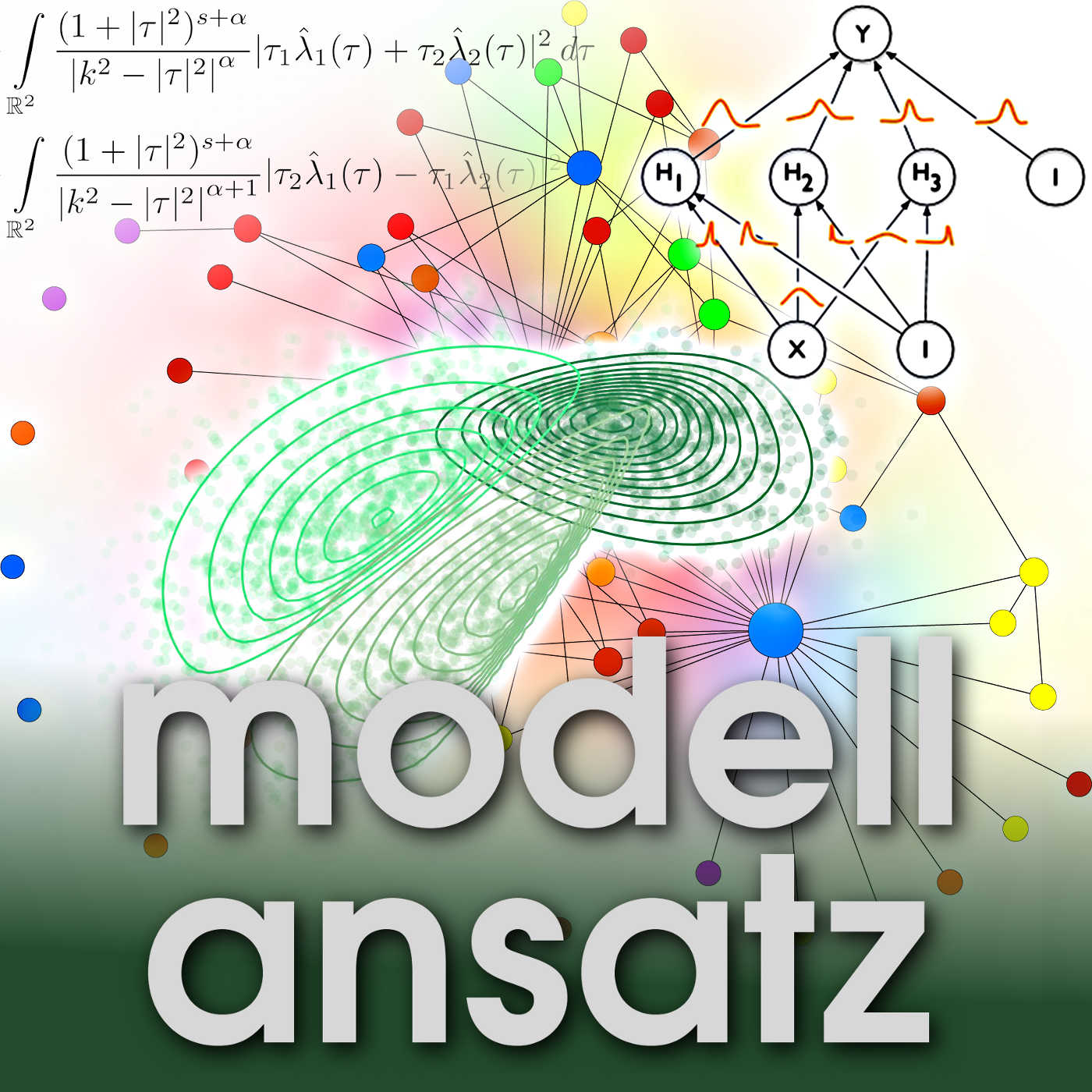
In this episode Gudrun speaks with Nadja Klein and Moussa Kassem Sbeyti who work at the Scientific Computing Center (SCC) at KIT in Karlsruhe. Since August 2024, Nadja has been professor at KIT leading the research group Methods for Big Data (MBD) there. She is an Emmy Noether Research Group Leader, and a member of AcademiaNet, and Die Junge Akademie, among others. In 2025, Nadja was awarded the Committee of Presidents of Statistical Societies (COPSS) Emerging Leader Award (ELA). The COPSS ELA recognizes early career statistical scientists who show evidence of and potential for leadership and who will help shape and strengthen the field. She finished her doctoral studies in Mathematics at the Universität Göttingen before conducting a postdoc at the University of Melbourne as a Feodor-Lynen fellow by the Alexander von Humboldt Foundation. Afterwards she was a Professor for Statistics and Data Science at the Humboldt-Universität zu Berlin before joining KIT. Moussa joined Nadja's lab as an associated member in 2023 and later as a postdoctoral researcher in 2024. He pursued a PhD at the TU Berlin while working as an AI Research Scientist at the Continental AI Lab in Berlin. His research primarily focuses on deep learning, developing uncertainty-based automated labeling methods for 2D object detection in autonomous driving. Prior to this, Moussa earned his M.Sc. in Mechatronics Engineering from the TU Darmstadt in 2021. The research of Nadja and Moussa is at the intersection of statistics and machine learning. In Nadja's MBD Lab the research spans theoretical analysis, method development and real-world applications. One of their key focuses is Bayesian methods, which allow to incorporate prior knowledge, quantify uncertainties, and bring insights to the “black boxes” of machine learning. By fusing the precision and reliability of Bayesian statistics with the adaptability of machine and deep learning, these methods aim to leverage the best of both worlds. The KIT offers a strong research environment, making it an ideal place to continue their work. They bring new expertise that can be leveraged in various applications and on the other hand Helmholtz offers a great platform in that respect to explore new application areas. For example Moussa decided to join the group at KIT as part of the Helmholtz Pilot Program Core-Informatics at KIT (KiKIT), which is an initiative focused on advancing fundamental research in informatics within the Helmholtz Association. Vision models typically depend on large volumes of labeled data, but collecting and labeling this data is both expensive and prone to errors. During his PhD, his research centered on data-efficient learning using uncertainty-based automated labeling techniques. That means estimating and using the uncertainty of models to select the helpful data samples to train the models to label the rest themselves. Now, within KiKIT, his work has evolved to include knowledge-based approaches in multi-task models, eg. detection and depth estimation — with the broader goal of enabling the development and deployment of reliable, accurate vision systems in real-world applications. (...)

Gudrun talks with Polyxeni Spilioti at Aarhus university about spectral geometry. Before working in Aarhus Polyxeni was a postdoctoral researcher in the group of Anton Deitmar at the University of Tübingen. She received her PhD from the University of Bonn, under the supervision of Werner Mueller after earning her Master's at the National and Technical University of Athens (Faculty of Applied Mathematics and Physics). As postdoc she was also guest at the MPI for Mathematics in Bonn, the Institut des Hautes Etudes Scientifiques in Paris and the Oberwolfach Research Institute for Mathematics. In her research she works on questions like: How can one obtain information about the geometry of a manifold, such as the volume, the curvature, or the length of the closed geodesics, provided that we can study the spectrum of certain differential operators? Harmonic analysis on locally symmetric spaces provides a powerful machinery in studying various invariants, such as the analytic torsion, as well as the dynamical zeta functions of Ruelle and Selberg.

Comments

Download from Google Play

Download from App Store
 United States