


 Claim Ownership
Monetary Matters with Jack Farley
Subscribed: 375Played: 20,382
Subscribe
Description
Jack Farley interviews the very best financial minds about macro, markets, and monetary matters. Follow Jack on Twitter @JackFarley96.
203 Episodes
Reverse

Monetary Matters can get 25% off Citrini Bundle (Citrindex AND Citrini Research) here through January 14: https://www.citriniresearch.com/subscribe?coupon=398e4269
The investor known only as Citrini returns to share his thematic watchlist for the new year, aka “26 Trades for 2026.” The conversation pivots from the hardware-focused "phase one" of the AI trade toward "phase two," which focuses on companies utilizing AI to streamline bloated bureaucracies and increase margins. Citrini details his high-conviction "AI Bureaucracy Alpha" framework, identifying firms that could significantly reduce headcounts and improve profitability through automation. Beyond labor, the interview explores critical bottlenecks in the supply chain, specifically highlighting the importance of advanced packaging and custom silicon. They also dive into commodities like natural gas and copper, analyzing how AI data center demand is creating a potential supply squeeze. Finally, Citrini discusses his "Post-Traumatic Supply Disorder" theory, identifying cyclical sectors that are currently showing extreme capital discipline after years of trauma. Recorded December 24, 2025.
Pieces Discussed:“26 Trades for 2026: A Thematic Watchlist for the New Year”: https://www.citriniresearch.com/p/26-trades-for-2026
“Carving Up the TPU: Leftovers for Jensen or Just Gravy on the AI Trade?”: https://www.citriniresearch.com/p/carving-up-the-tpu
“Robotics Update: Revealing Teradyne’s Vulcan Contract Win, Citrini’s China Supply Chain Tour, and Robotics Basket Winners”: https://www.citriniresearch.com/p/robotics-update
Follow Citrini on Twitter https://x.com/Citrini7
Follow Jack Farley on Twitter https://x.com/JackFarley96
Follow Monetary Matters on:
Apple Podcast https://rb.gy/s5qfyh
Spotify https://rb.gy/x56dx5
YouTube https://rb.gy/dpwxez
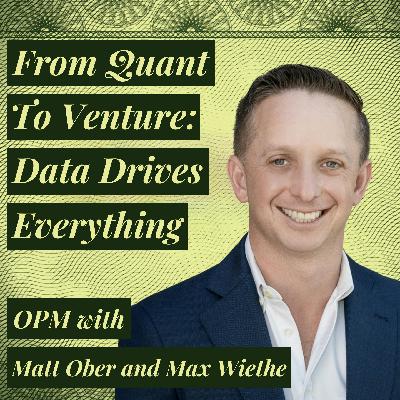
In this episode of Other People’s Money, Matt Ober, General Partner at Social Leverage, discusses how the data economy is evolving for providers, vendors, and investors. He explains how AI is reshaping data business models, highlights emerging data sources in what he calls the “degenerate economy,” and argues that many alternative data sets once considered sources of alpha are rapidly becoming commoditized beta.
Matt also shares how Social Leverage uses data to make seed stage venture investments, how its approach differs from that of mega VC firms, and where the firm is currently focused. He reflects on his career path from quantitative hedge funds to venture capital and how the expanding role of data shaped his trajectory in the investment business.
Before joining Social Leverage, Matt was Chief Data Scientist at Third Point, where he built the firm’s data analytics and technology platform supporting investments across equities, structured credit, venture capital, and cryptocurrency. Earlier, he was Head of Data Strategy at WorldQuant and a founding member of WorldQuant Ventures, focused on private investments in fintech, data, and technology.
Sign up for Matt’s newsletter The Rollup: https://www.mattober.co/
Follow Matt on X: https://x.com/obermattj
Follow Max on X: https://x.com/maxwiethe
Follow Other People’s Money on:
Apple Podcast https://bit.ly/4e7QJ1M
Spotify https://bit.ly/3Yhaazi
YouTube https://bit.ly/3C63VXR
X https://x.com/opmpod
Timestamps:
00:00 Introduction
01:21 The Business of Data
03:28 Data Pricing and AI Impact
04:36 Challenges for Data Companies
07:31 Emerging Data Sets and Buyers
14:25 Social Leverage's Investment Strategy
17:07 Venture Capital Market Dynamics
21:22 Fund of Funds and Network Value
22:40 Insights on Software and AI
25:54 Beehive vs. Substack
29:46 Hedge Fund Journey and Data Evolution
31:41 The Data-Driven Investment Strategy
32:05 Scaling Up: From Millions to Billions
32:24 Global Data Acquisition
32:49 Building a Data-Driven Ecosystem
33:06 Transition to Third Point
33:43 Integrating Data with Investment Processes
34:34 Challenges and Politics in Hedge Funds
35:49 Evaluating Data Sets and Their Impact
37:43 The Evolution of Data in Investment
38:49 The Role of Data in Hedge Fund Success
43:10 From Hedge Funds to Venture Capital
52:08 The Future of Wealth Management
55:00 The Rise of Prediction Markets
59:35 Conclusion and Final Thoughts

Today's episode is brought to you by Teucrium. Learn more at: https://bit.ly/4gfI0fe
Jack welcomes Maria Vassalou, head of the Pictet Research Institute, to discuss global demographic decline and how technological revolution is imperative to prevent economic stagnation. They talk about why aging populations in countries like China, Japan, and Italy pose a fundamental threat to traditional economic growth as dependency ratios are projected to exceed 50%. Maria argues that while these trends seem "gloomy" in isolation, the rise of robotics and AI provides a critical remedy by substituting for scarce labor and significantly boosting productivity. The episode concludes with a look at the "winners" and "losers" of this shift, identifying housing, healthcare, and food as resilient sectors, while cautioning that countries must invest heavily in technology now to avoid long-term GDP flatlining/decline. Recorded December 12, 2025.
“Demographics and Technology” Paper (by Maria Vassalou PhD & Pictet Research Institute): https://www.pictet.com/us/en/about/pictet-research-institute/publications-and-press/demographics-and-technology
More info about Pictet Research Institute: https://www.pictet.com/us/en/about/pictet-research-institute/publications-and-press/FT-coverage-30oct2025
Follow Maria Vassalou on LinkedIn linkedin.com/in/maria-vassalou-ph-d-2b771511
Follow Teucrium on Twitter https://x.com/TeucriumETFs
Follow Jack Farley on Twitter https://x.com/JackFarley96
Follow Monetary Matters on:
Apple Podcast https://rb.gy/s5qfyh
Spotify https://rb.gy/x56dx5
YouTube https://rb.gy/dpwxez
Today's episode is brought to you by Teucrium. Learn more at: https://bit.ly/4gfI0fe
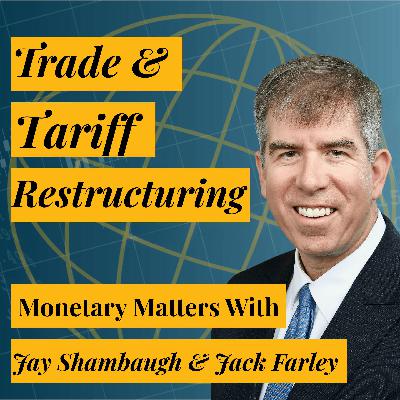
Jay Shambaugh, former Under Secretary of the Treasury for
International Affairs, joins Jack to discuss U.S. economic relations, China,
and more. He draws on his years of expertise to deliver important insights into how America has realigned itself in the world economic order in the second Trump administration. Recorded on December 17th, 2025.
Follow Teucrium on Twitter https://x.com/TeucriumETFs
Follow Jay Shambaugh on Twitter https://x.com/jaycshambaugh
Follow Jack Farley on Twitter https://x.com/jackfarley96
Follow Monetary Matters on:
Apple Podcasts https://rb.gy/s5qfyh
Spotify https://rb.gy/x56dx5
YouTube https://rb.gy/dpwxez

 1
1This Monetary Matters episode is brought to you by Fiscal.ai. Sign up for a 2-week free trial and get 15% off any paid tier at: http://fiscal.ai/mm
Read about Indian Aerospace & Defense and sign up for Dispatches From India: https://www.gymkhanapartners.com/dispatches/major-sector-inflection-india-defense-and-aerospace
Andrei Stetsenko, partner and portfolio manager at Gymkhana Partners, discusses the explosive growth of India's economy, its strategic shift toward global defense and aerospace leadership, and under appreciated small-cap companies.
Follow Andrei on X: https://x.com/astetsen
Follow Jack on X: https://x.com/JackFarley96
Follow Gymkhana Partners on X: https://x.com/GymkhanaFund
Timestamps:
00:00 Introduction to Indian Aerospace
01:26 Gymkhana Partners: Investment Philosophy
04:09 Valuation and Sectoral Differences
05:36 India's Economic Growth
14:34 Government Policies and Reforms
18:20 Indian Consumer Market
26:03 US-India Trade Relations and Tariffs
28:06 Aerospace & Defense Sector in India
31:49 Investment Opportunities in Indian Aerospace
37:43 Complexities of Indian MRO & Sika's Growth
42:41 Defense Sector Opportunities
46:53 Indigenization of Indian Defense Procurement
56:06 HoldCo Dynamics & Maharashtra Scooters
01:05:56 Gymkhana’s Investment Strategy & Performance
01:13:34 AI Investments & Alphabet's Strategy
01:18:19 Conclusion
Disclosure: Andrei’s business partner is Jack's father and Gymkhana Partners is a consulting client of Monetary Matters parent company.
Disclaimer: This presentation is for informational purposes only and should not be construed as investment advice. It is not a recommendation of, nor does it constitute an offer to sell or solicitation of an offer to buy, any security, strategy, or investment product.
The research for this presentation is based on current public information that Farly Capital considers reliable. However, Farley Capital does not represent that the research or the presentation is accurate or complete, and it should not be relied on as such. The views and opinions expressed herein are current as of the date of this report and are subject to change. Past performance is no guarantee of future results. Certain statements contained herein are forward looking. There is no guarantee such forward looking statements will materialize, and results may differ entirely from what is described.
The holdings identified in this presentation do not represent all of the securities purchased, sold, or recommended for Gymkhana Partners L.P. It should not be assumed that investments made in the future will be profitable or will equal the performance of the securities in this list. Past performance does not guarantee future results. Additional information, including (i) the calculation methodology; and (ii) a list showing the contribution of each holding to Gymkhana Partners L.P.’s performance will be provided upon request.
Any market index referred to in this presentation has been selected for purposes of comparing the performance of an investment in Gymkhana Partners L.P. with a well-known, broad-based equity benchmark. Viewers should not consider any comparative index shown in this document to be a performance benchmark for Gymkhana Partners L.P. The statistical data regarding such an index has been obtained from sources believed to be reliable. The nature of such indices differs from that of Gymkhana Partners L.P. Gymkhana Partners L.P. is not restricted to investing in those securities that comprise any such index; its performance may or may not correlate to any such index and should not be considered a proxy for any such index. Historical performance results for indexes generally do not reflect the deduction of transaction and/or custodial charges or the deduction of an investment management fee, the incurrence of which would have the effect of decreasing historical performance results.
Today's episode is brought to you by Teucrium. Learn more at: https://bit.ly/4gfI0fe
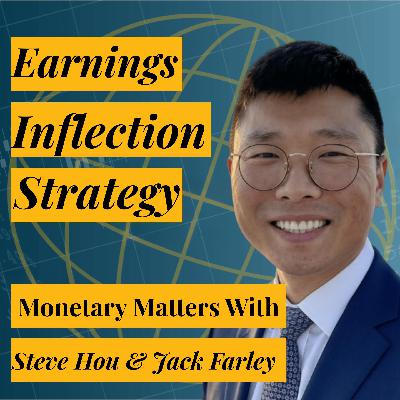
In this episode of Monetary Matters, Jack sits down with Steve Hou, Senior Quant Researcher at Bloomberg, to discuss the structural forces reshaping the global economy. Hou argues that we have entered a "structurally, modestly more inflationary regime" driven by five key forces: Decarbonization, Demographic aging, Deglobalization, Debt/Fiscal Dominance, and a secular rise in global Defense spending. The conversation explores the "Baumol Effect” and Mike Green’s theory of the poverty level.
Hou also provides a deep dive into his "Reformers Index," a quantitative strategy he is working on at Bloomberg Indices that ignores traditional "quality" stocks to find companies at a fundamental inflection point. By identifying firms moving from "bad to less bad,” such as Uber, Palantir, and Robinhood, Hou demonstrates how systematic fundamental momentum can outperform the broader market. Recorded December 12, 2025.
Follow Steve Hou on Twitter https://x.com/stevehou
Follow Steve Hou on LinkedIn https://www.linkedin.com/in/steve-hou-001/
Follow Jack Farley on Twitter https://x.com/JackFarley96
Follow Monetary Matters on:
Apple Podcast https://rb.gy/s5qfyh
Spotify https://rb.gy/x56dx5YouTube https://rb.gy/dpwxez
This episode is brought to you by CAIA.nxt. Learn more about their alternatives education courses for investment advisors and get 10% off with code MMTEN: https://caia.org/content/welcome-monetary-matters-and-other-peoples-money-listeners
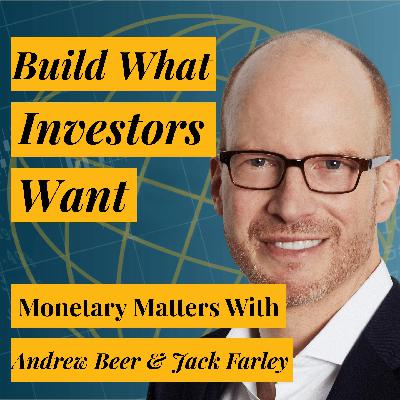
Why do institutional investors continue to flock to hedge funds when the average fund underperforms the S&P 500? In this deep-dive interview, Andrew Beer, founder and managing member of DBI, joins Jack Farley to pull back the curtain on the "broad insanity" of the institutional investment world and the evolution of the multi-strategy "pod" model.
Andrew argues that much of institutional decision-making is driven by "non-economic considerations" and the "principal-agent issue," where allocators are more concerned with career risk and avoiding difficult conversations with investment committees than they are with maximizing returns. We explore why "smooth" returns in private equity and private credit are often used to mask underlying volatility and correlation issues.
Follow Andrew Beer on LinkedIn https://www.linkedin.com/in/andrewdbeer/
Follow Jack Farley on Twitter https://x.com/JackFarley96
Follow Monetary Matters on:
Apple Podcast https://rb.gy/s5qfyh
Spotify https://rb.gy/x56dx5
YouTube https://rb.gy/dpwxez
This episode is brought to you by Fiscal.ai. Sign up for a 2-week free trial and get 15% off any paid tier at: http://fiscal.ai/mm
Over the last 8 years, Yaron Naymark, founder and managing partner of 1 Main Capital, has patiently grown his concentrated long-biased hedge fund by outperforming major equity benchmarks like the S&P 500. Any manager who has been in his shoes though will tell you that outperforming the market isn’t enough to attract the institutional capital necessary to seriously scale a fund. Here he discusses the importance of consistency of communication with investors, how his portfolio management has evolved, and the other operational improvements he has made that have helped spur growth. He also discusses a $20m strategic investment from Cannell Capital he took in 2025 and how he thinks about these types of “seed” deals.
Sign up for 1 Main Capital’s distribution list: https://www.1maincapital.com
Follow Yaron Naymark on X: https://x.com/1MainCapital
Follow Max on X: https://x.com/maxwiethe
Follow Other People’s Money on:
Apple Podcast https://bit.ly/4e7QJ1M
Spotify https://bit.ly/3Yhaazi
YouTube https://bit.ly/3C63VXR
X https://x.com/opmpod
Timestamps
00:00 Introduction and Personal Insights on Investing
00:43 Guest Introduction and Fund Background
00:55 Fund Growth and Milestones
02:41 Challenges and Turning Points
03:20 Marketing and Investor Relations
07:41 Economic Considerations and Fund Management
10:51 Investment Philosophy and Strategy
27:08 Podcasting and Public Engagement
28:55 Transparency in Investment Strategies
29:41 Audience Growth and Distribution
31:03 Pitching Ideas and Raising Capital
32:20 Investment Minimums and Investor Relations
33:37 Marketing and Outreach Strategies
36:57 Switching to Jefferies and Other Service Providers
42:57 Strategic Investment from Cannell Capital
51:54 Hiring an Analyst and Future Plans
55:19 Managing Fund Capacity and Performance
58:40 Conclusion and Contact Information
Today's episode is brought to you by Teucrium. Learn more at: https://bit.ly/4gfI0fe
In this interview, Chanos breaks down why hosting GPUs is a commodity business with low returns and why the depreciation of AI chips (like Nvidia’s) creates a massive financial risk for companies like CoreWeave and Oracle. He also discusses the dangers of private credit, the accounting tricks at Live Nation, and why the "unprofitable" nature of today’s AI customers makes this cycle riskier than the Dotcom era. Recorded on December 11, 2025.
Follow Teucrium on Twitter https://x.com/TeucriumETFs
Follow Jim Chanos on Twitter https://x.com/RealJimChanos
Follow Jack Farley on Twitter https://x.com/JackFarley96
Follow Monetary Matters on:
Apple Podcast https://rb.gy/s5qfyh
Spotify https://rb.gy/x56dx5
YouTube https://rb.gy/dpwxez
Today's episode is brought to you by Teucrium. Learn more at: https://bit.ly/4gfI0fe
Luke Gromen of Forrest For The Trees argues that the US is facing the "Mother of All Crises": a forced choice between losing the AI race to China or destroying the US Treasury market. In this deep dive, we cover why the electrical grid is the ultimate bottleneck, why Bitcoin is flashing a warning signal for 2026, and the mathematical path to $15,000 gold. Recorded December 1, 2025.
Follow Teucrium on Twitter https://x.com/TeucriumETFs
Follow Jack Farley on Twitter https://x.com/JackFarley96
Follow Luke Gromen on Twitter https://x.com/LukeGromen
Follow Monetary Matters on:
Apple Podcast https://rb.gy/s5qfyh
Spotify https://rb.gy/x56dx5
YouTube https://rb.gy/dpwxez

This episode is brought to you by VanEck. Learn more about the VanEck Rare Earth and Strategic Metals ETF: http://vaneck.com/REMXMax
Sam Gaer, CIO of Directional Strategies at Monarq Asset Management, joins Other People’s Money to discuss how he uses quantitative directional strategies to trade crypto assets and produce an institutional quality return stream that has outperformed bitcoin at scale. He explains how his experience as a market maker, executive, and self-taught electronic exchange technologist driving some of the most important technological advances in finance led him to “burn the boats,” leave tradfi, and go all in on building institutional crypto strategies with Monarq. He also discusses how institutional appetite for crypto hedge fund strategies is growing with increased regulatory clarity, greater availability of institutional level funds, and evolving market opportunities in crypto-native and crypto-linked tradfi assets.
Follow Sam Gaer on X: https://x.com/samg67
Follow Monarq on X: https://x.com/monarq_mgmt
Follow VanEck on X: https://x.com/vaneck_us
Follow Max on X: https://x.com/maxwiethe
Follow Other People’s Money on:
Apple Podcast https://bit.ly/4e7QJ1M
Spotify https://bit.ly/3Yhaazi
YouTube https://bit.ly/3C63VXR
X https://x.com/opmpod
Timestamps
00:00 Intro
01:43 Q4 Crypto Volatility
06:21 A Disappointing Year for Crypto Bulls
10:29 Taking Advantage of Extreme Volatility
12:50 Triple Barrier Risk Management
15:43 $REMX
16:26 Responsible Leverage
17:17 Is the 4-Year Cycle Over
21:55 Early Days Pit Trading
24:16 Building Electronic Exchange Technology
26:38 CEO of NYMEX Europe and NYMEX IPO
27:24 Move to FINRA
28:43 Building and Selling a Volatility Hedge Fund
29:15 Burn the Boats
32:14 Joining Monarq
37:14 Differences Between Crypto Fund Managers and TradFi
39:17 Institutional Adoption of Crypto Hedge Funds
44:27 Can Crypto Strategies Scale to Meet the Demand?
47:19 The Crypto TradFi Collision
49:57 The Difference Between Institutional and Non-institutional Quality Crypto Funds
54:13 Hyper Liquid and Other Market Improvements in Crypto
59:26 Will TradFi Take Over Crypto?
01:01:31 Digital Asset Treasuries
01:08:46 The Next Stage for Monarq
Today's episode is brought to you by Teucrium. Learn more at: https://bit.ly/4gfI0fe
Erik Norland, Chief Economist at the CME Group, joins Jack Farley to discuss the wild volatility in commodity markets. With Silver up over 80% in the past year, Erik breaks down the technological shift from photography to solar panels that is driving demand. They discuss the global fiscal situation, where major economies from the US to Brazil are running deficits between 6% and 8% of GDP , creating a bid for gold prices as investors seek assets central banks can't print. Norland also covers copper, oil, and agricultural commodities. Recorded December 4, 2025.
Follow Teucrium on Twitter https://x.com/TeucriumETFs
Follow Erik Norland on LinkedIn uk.linkedin.com/in/erik-norland-a089124
Follow Jack Farley on Twitter https://x.com/JackFarley96
Erik Norland’s articles: google.com/search?q=erik+norland+cme&oq=erik&gs_lcrp=EgZjaHJvbWUqBggAEEUYOzIGCAAQRRg7MgoIARAuGLEDGIAEMgYIAhBFGEAyBggDEEUYPDIGCAQQRRg8MgYIBRBFGD0yBggGEEUYQTIGCAcQRRhB0gEHNTk3ajBqN6gCALACAA&sourceid=chrome&ie=UTF-8
“What’s Driving Platinum and Palladium Prices?”: https://www.cmegroup.com/openmarkets/economics/2025/Whats-Driving-Platinum-and-Palladium-Prices.html
“Four Major Drivers of the Gold-Silver Price Ratio”: https://www.cmegroup.com/insights/economic-research/2025/four-major-drivers-of-the-gold-silver-price-ratio.html
“Is Crude Oil at a Major Inflection Point?”: https://www.cmegroup.com/insights/economic-research/2025/is-crude-oil-at-a-major-inflection-point.html
Follow Monetary Matters on:
Apple Podcast https://rb.gy/s5qfyh
Spotify https://rb.gy/x56dx5
YouTube https://rb.gy/dpwxez
Learn more about the VanEck Rare Earth and Strategic Metals ETF: www.vaneck.com/REMXJack
In this episode of Monetary Matters, Jack sits down with Michael Pettis, Senior Fellow at the Carnegie Endowment, to deconstruct the massive economic imbalances between China and the rest of the world.
For decades, the global economy has relied on a specific mechanism: China suppresses domestic consumption to subsidize manufacturing, and the US runs massive deficits to absorb that excess supply. Pettis argues this model has reached its limit. They discuss the concept of "economic involution," why China’s shift from real estate bubbles to manufacturing bubbles is dangerous for Europe and the US, and why the current tariff regimes are merely shifting trade routes rather than solving the problem. If you want to understand why the trade deficit keeps growing despite political intervention, and what a "Great Rebalancing" actually looks like, this is a must-listen. Recorded on November 24, 2025.
Trade Wars Are Class Wars book:
https://www.amazon.com/Trade-Wars-Are-Class-International/dp/0300244177
Michael Pettis’ Work At Carnegie Endowment For International Peace:
https://carnegieendowment.org/people/michael-pettis?lang=en
Follow VanEck on Twitter https://x.com/vaneck_us
Follow Michael Pettis on Twitter https://x.com/michaelxpettis
Follow Jack Farley on Twitter https://x.com/JackFarley96
Follow Monetary Matters on:
Apple Podcast https://rb.gy/s5qfyh
Spotify https://rb.gy/x56dx5
YouTube https://rb.gy/dpwxez
Monetary Matters listeners can get 20% of Prometheus Macro Substack here: https://www.prometheus-macro.com/subscribe?coupon=a60c1c9f
Aahan Menon, founder of Prometheus Macro and a trusted "quant's quant" for sophisticated hedge funds, joins Jack Farley to explain why his models are signaling a meaningful shift down in risk. While previously striking a bullish tone, Aahan reveals why his institutional strategies have moved from "max bullish" to neutral on equities and commodities.
Aahan breaks down a concerning divergence in the economy: while GDP and spending are being propped up by a surge in AI CapEx and top-heavy consumption, the underlying labor market is weakening. He explains the "circularity" problem of AI investment—eventually, CapEx must turn into consumption, which requires wage growth that is currently stalling.
Later in the conversation, Aahan challenges core macro beliefs, presenting data on why long-term economic forecasting and tracking "rates of change" generate negligible or negative alpha. He also details his current positioning, including being short homebuilders, long French bonds against Japanese JGBs, and his "Crisis Protection" portfolio. Recorded on November 25, 2025.
Follow Aahan Menon on Twitter https://x.com/AahanPrometheus
Follow Prometheus Macro on Twitter https://x.com/prometheusmacro
Follow Jack Farley on Twitter https://x.com/JackFarley96
Follow Monetary Matters on:
Apple Podcast https://rb.gy/s5qfyh
Spotify https://rb.gy/x56dx5YouTube https://rb.gy/dpwxez
This Monetary Matters episode is brought to you by Fiscal AI. Save 30% off any paid tier at for Black Friday: http://fiscal.ai/mm
Jack Farley & Max Wiethe breakdown Michael Burry’s big Nvidia short thesis and the recent projections from HSBC that Open AI will lose nearly half a trillion dollars between now and 2030. They also discuss the recent repricing of Fed rate cuts in December and debate which companies are the biggest losers if AI turns out to be a bubble.
Follow Jack Farley on Twitter https://x.com/JackFarley96
Follow Max on Twitter: https://x.com/maxwiethe
Follow Monetary Matters on:
Apple Podcast https://rb.gy/s5qfyh
Spotify https://rb.gy/x56dx5
YouTube https://rb.gy/dpwxez
Timestamps:
00:00 Intro
00:16 The Biggest Event in Macro
00:55 Breaking Down Michael Burry's Short Thesis for Nvidia
04:47 Semiconductors Are Historically Cyclical
07:08 Is Nvidia a Good Short?
08:25 Criticism of Burry's Analysis
16:38 Fiscal.ai
18:17 Open AI's Massive Loss Projections
24:26 AI Coding Agent Revenues
26:25 Can Nvidia Escape Unscathed?
29:54 Michael Burry's Substack Success
30:54 AI Spending's Impact on GDP
31:56 December Fed Meeting
This episode is brought to you by CAIA.nxt. Learn more about their alternatives education courses for investment advisors and get 10% off with code MMTEN:
https://caia.org/content/welcome-monetary-matters-and-other-peoples-money-listeners
In this episode of Monetary Matters, Jack welcomes Meb Faber, founder of Cambria Funds, to discuss the extreme valuations in the US stock market and where investors can still find value. Meb breaks down historical market cycles, comparing the current AI boom to the railroad bubbles of the past, and explains why "expensive uptrends" can persist longer than logic dictates.
The conversation shifts to the institutional world, where Meb challenges the status quo of major endowments like Harvard and CalPERS, arguing that complex private equity strategies can often be beaten by simple, liquid ETFs. Finally, Meb reveals a tax code loophole (Section 351) that allows investors to swap concentrated stock positions for diversified ETFs on a tax-deferred basis. Recorded on November 20, 2025.
Follow Meb Faber on Twitter https://x.com/MebFaber
Follow The Idea Farm on Twitter https://x.com/theideafarm
Follow Jack Farley on Twitter https://x.com/JackFarley96
Pieces Discussed:
“Exceptional Expectations: U.S. vs. Non-U.S. Equities”: https://www.aqr.com/Insights/Research/White-Papers/Exceptional-Expectations-US-vs-Non-US-Equities
“LEARNING TO LOVE INVESTMENT BUBBLES: WHAT IF SIR ISAAC NEWTON HAD BEEN A
TRENDFOLLOWER?”: https://mebfaber.com/wp-content/uploads/2016/05/SSRN-id1923387.pdf
Follow Monetary Matters on:
Apple Podcast https://rb.gy/s5qfyh
Spotify https://rb.gy/x56dx5
YouTube https://rb.gy/dpwxez

This Other People’s Money episode is brought to you by CAIA.nxt. Learn more about their alternatives education courses for investment advisors and get 10% off with code MMTEN: https://caia.org/content/welcome-monetary-matters-and-other-peoples-money-listeners
James Wang, General Partner at Creative Ventures and author of “What You Need to Know About AI” joins Other People’s Money to discuss the most pressing issues facing venture capital right now including: VC’s collision with public markets, the “RIAifaction” of VC firms, and the reality that there is still too much dry powder propping up venture valuations. Wang also discusses the difficulty of judging VC funds off of typical metrics like MOIC and TVPI, especially when the fund is still in the middle of its life cycle. Wang closes the podcast with his views on AI as expressed in his new book and the reasons why he believes many are being distracted by first-order effects.
Follow James Wang on X: https://x.com/AJamesWang
Read Weighty Thoughts: https://weightythoughts.com
Follow Max on X: https://x.com/maxwiethe
Follow Other People’s Money on:
Apple Podcast https://bit.ly/4e7QJ1M
Spotify https://bit.ly/3Yhaazi
YouTube https://bit.ly/3C63VXR
X https://x.com/opmpod
Timestamps
00:00 Intro
01:22 The Collision of Public and Private Markets
04:13 Venture Capital is Following the Same Path as Other Asset Classes
05:52 Venture's Shifting Role in Portfolios
13:36 Venture Capital Emerging Managers
18:39 Corporate Venture Capital
20:58 The Most Active Venture LPs
22:45 Sovereign Wealth Funds and Strategic Venture
26:56 RIAs and Private Wealth as the Next Source of Capital
31:58 The Emergence of Star Athletes and Actors as VCs
33:41 Most VCs Don't Add Value to Portfolio Companies
35:31 Comparing VC Funds: The Metrics That Lie
43:32 Sneaky VC Marketing Tricks and Marketing Materials
48:33 Reference Checks and Speaking with Founders
50:17 The Dry Powder Bubble
57:41 What You Need to Know About AI
59:47 Tracking AI Progress
01:03:42 The Politics of AI
01:07:32 The Next Stage of Training AI Models
Robert Smith, Corporate Finance Editor at the FT, joins Jack to discuss the recent $12 billion bankruptcy of First Brands Group that has shocked the financial world. He explains the history of First Brands, its collapse, and the company’s ongoing bankruptcy proceedings. Robert also discusses the larger world of private credit and if First Brands is the first of many ‘credit cockroaches.’ The bankruptcy is of particular interest given the fact that it could be a signal of further problems on the horizon of the private credit market. Recorded on November 21st, 2025.
Follow
Jack Farley on Twitter https://x.com/jackfarley96
Follow Monetary Matters on:
Apple Podcasts https://rb.gy/s5qfyh
Spotify https://rb.gy/x56dx5
YouTube https://rb.gy/dpwxez
Follow Robert Smith on Twitter https://x.com/BondHack
Follow Robert Smith on Bluesky https://bsky.app/profile/bondhack.ft.com
Read Robert’s FT Articles https://www.ft.com/robert-smith
First Brands Collapse in a Nutshell https://on.ft.com/48ptTUu
This Monetary Matters episode is brought to you by Fiscal.ai. Sign up for a 2-week free trial and get 15% off any paid tier at: http://fiscal.ai/mm
Dan Krausz of Blue Door Asset Management joins Monetary Matters to argue that the global economy is currently driven by two dominant macro factors: aggressive fiscal policy and Artificial Intelligence. He breaks down the concept of a "three-speed economy," explaining how 6% fiscal deficits create a "liquidity waterfall" that funds the government first while leaving housing and small businesses in a silent recession. Dan posits the contrarian view that the Federal Reserve may actually need an AI productivity boom to manage long-term inflation and debt, making the potential "AI bubble" a necessary economic tool rather than a threat. Finally, he outlines his three critical rules for positioning in this environment, explaining why investors must "avoid the middle" and why the opportunity is shifting from AI infrastructure to implementation. Recorded on November 18, 2025.
Follow Jack Farley on Twitter https://x.com/JackFarley96
Follow Monetary Matters on:
Apple Podcast https://rb.gy/s5qfyh
Spotify https://rb.gy/x56dx5 YouTube https://rb.gy/dpwxez
This Monetary Matters episode is brought to you by Fiscal.ai. Sign up for a 2-week free trial and get 15% off any paid tier at: http://fiscal.ai/mmAs investors’ outlook on AI capital expenditure sours, Jack and Max explore the rising debt issuance to fund artificial intelligence development, and the faltering share prices of companies with exposure to the “AI factor”: the hyperscalers (particularly Oracle), the chip companies, and the neoclouds such as Coreweave and Nebius. Jack then looks at two insurance companies, Kinsale and Palomar, as insurance sector does its part to hold up the S&P 500. Jack and Max also give an update on Chinese fintechs at the end. Recorded on November 21, 2025.Follow Jack Farley on Twitter https://x.com/JackFarley96Follow Max on Twitter: https://x.com/maxwietheFollow Monetary Matters on:Apple Podcast https://rb.gy/s5qfyhSpotify https://rb.gy/x56dx5YouTube https://rb.gy/dpwxez
Timestamps:
00:00 Intro
02:28 Debt Fueled CapEx Boom
08:23 "AI CEOs Are Building a God"
11:24 The Real Speculative Bubble
15:51 NeoCloud Risk
17:53 Fiscal AI
19:11 Healthcare and Insurance Strength
21:38 Kinsale Capital Group
27:38 Factors Benefiting Insurance
29:12 Palomar Holdings
33:48 Jobs Data and December Fed Meeting
37:26 Chinese Fintech Bloodbath
40:32 Conclusion

Comments

Download from Google Play

Download from App Store
 United States