


 Claim Ownership
NACDD
Subscribed: 2Played: 35
Subscribe

© All rights reserved
Description
Podcast by NACDD
71 Episodes
Reverse
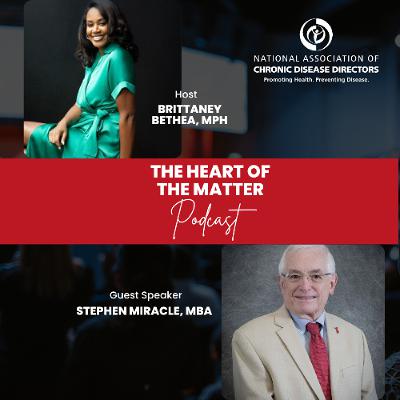
Successes with Self Monitored Blood Pressure: Rural Health Lessons Learned by NACDD
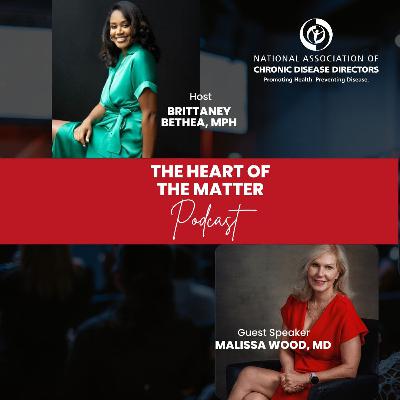
In this episode, Dr. Malissa Wood, Vice President and Chief Physician Executive at the Lee Health Heart Institute, highlights best practices in managing hypertension in pregnancy.

The National Association of Chronic Disease Directors (NACDD) released a new, groundbreaking Social Justice Framework (https://chronicdisease.org/nacdd-releases-transformative-social-justice-framework-to-guide-public-health-practice/), which was created to provide public health practitioners with a blueprint for embedding social justice into the work of chronic disease programs. For American Heart Month 2024, we sit down with Robyn Taylor, NACDD's VP of the Center for Social Justice to understand how the framework could be applied to cardiovascular disease prevention and health promotion.
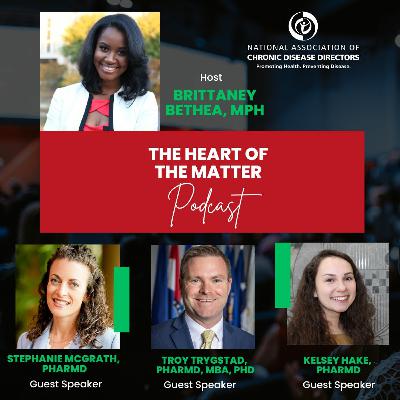
This month's episode features Drs. Stephanie McGrath and Kelsey Hake from the University of Pittsburgh School of Pharmacy (Million Hearts Health Equity Implementation funding recipients) and Troy Trygstad from the Community Pharmacy Enhanced Services Network highlighting successes and lessons learned in state and national pharmacy engagement strategies for cardiovascular disease prevention and health promotion.
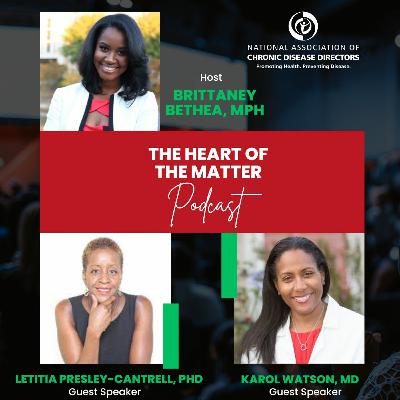
In this episode, Dr. Letitia Presley-Cantrell from the CDC and Dr. Karol Watson from UCLA have a dynamic discussion about the health disparities African American women experience in cardiovascular health.
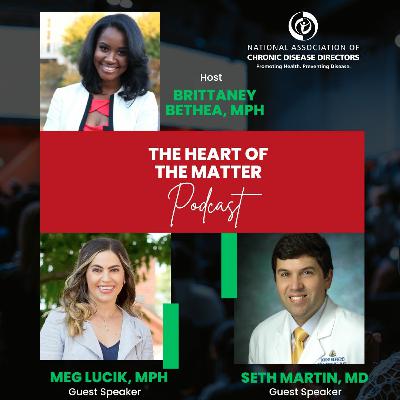
As we close out American Heart Month, the NACDD CVH Team remains committed to invigorating the field of cardiovascular disease and health promotion and helping to set direction for the future. We’re excited to share the inaugural episode of The Heart of the Matter, a new podcast to highlight best practices and innovation in cardiovascular disease prevention and health promotion. Learn more about John Hopkins employee wellness strategies: https://millionhearts.hhs.gov/partners-progress/hospitals-health-systems/johns-hopkins.html.

Episode 3: Board President Kristi Pier begins the conversation with Julia Caplan and Holly Nickel from the Public Health Institute where they focus on community resilience and wellbeing.
Questions asked:
1. Tell me about Health in All Policies. How does it support well-being in all communities?
2. I understand your Health in All Policies work has evolved over the years to focus more on racial equity. What can you tell us about that shift? In an ideal world, what would Health in All Policies look like? What is your vision of a community where health in all policies has been fully adopted?
3. Your program, State of Equity at the Public Health Institute, facilitates the Capitol Collaborative on Race & Equity (CCORE) that arose from your Health in All Policies work. What is the high-level overview of that work? How can or do states engage with CCORE to support cross-sector partnerships?
4. Tell us more about how PHI defines a healthy community? What is the significance of addressing racial equity in supporting resilience in community health?
5. How do the relationships developed through the CCORE training cohorts support community resilience? Are there ways this is being measured or tracked?
6. What are some lessons learned from implementing HiaP and CCORE in California? What recommendations or advice do you have for states and organizations who are just getting started?
Learning Objectives
· Define what makes a resilience-centered program
· Identify areas in which organizations and staff can increase resilience in their teams and communities
· Apply lessons learned from resilience-focused leaders in public health to current and future programs
The 2022 NACDD Board President’s Challenge Podcast examines how to build resilience at all levels of the socioecological model. In this seven-part series Board President Kristi Pier interviews leaders from across the country who are working in public health at the societal, community, interpersonal, and individual levels to learn promising practices and next steps to building environments supportive of resilience and well-being.
Episode 5: Board President Kristi Pier interviews Dan Foy of Gallup to look at resilience and wellbeing and the interpersonal level and how organizations can support employee wellbeing in practice.
Questions asked:
1. Gallup is an a global analytics and advice firm working with leaders to understand and address opportunities within their organizations. They have a wealth of knowledge around trends in the workplace, having collected data on employee engagement from 35 million people across the world. Dan, tell us about your work with Gallup. What are your focus areas? What energizes you most about your role?
2. As we are in year 3 of experiencing a global pandemic, there are more conversations happening around resilience which impacts us on an individual level, but also impacts us at work. Can you tell us more about what’s being tracked related to employee resilience and wellbeing?
3. Have you changed what you’re looking at as a result of changing work environments in response to COVID?
a. Probe: how are you looking at employee wellbeing (social-emotional, physical, financial, intentions to leave or stay with company, connection with colleagues and work etc.)
4. What stands out to you as the most important factor organizations need to attend to if they are going to successfully support employee wellbeing?
5. Gallup recently (March 2022) released new data showing the shift in employee perceptions of their organizations caring about employee wellbeing. What can you tell us about that?
6. What do you see as some of the biggest factors impacting the shift in perceptions? What can be done to address this shift? What are the potential implications if organizations don’t address this?
7. What do you see as the biggest challenges organizations will need to address moving forward as it related to employee resilience and wellbeing? How might they begin tackling these challenges? How can leadership at all levels support organizational efforts to improve resilience and wellbeing?
8. Based on the data, what’s next? What are the next steps organizations should be taking based on resilience and wellbeing?
Learning Objectives
· Define what makes a resilience-centered program
· Identify areas in which organizations and staff can increase resilience in their teams and communities
· Apply lessons learned from resilience-focused leaders in public health to current and future programs
The 2022 NACDD Board President’s Challenge Podcast examines how to build resilience at all levels of the socioecological model. In this seven-part series Board President Kristi Pier interviews leaders from across the country who are working in public health at the societal, community, interpersonal, and individual levels to learn promising practices and next steps to building environments supportive of resilience and well-being.
Episode 6: Board President Kristi Pier continues her conversation with Dan Foy of Gallup to investigate next steps and promising practices in promoting employee wellbeing and resilience.
Questions asked:
1. Gallup is an a global analytics and advice firm working with leaders to understand and address opportunities within their organizations. They have a wealth of knowledge around trends in the workplace, having collected data on employee engagement from 35 million people across the world. Dan, tell us about your work with Gallup. What are your focus areas? What energizes you most about your role?
2. As we are in year 3 of experiencing a global pandemic, there are more conversations happening around resilience which impacts us on an individual level, but also impacts us at work. Can you tell us more about what’s being tracked related to employee resilience and wellbeing?
3. Have you changed what you’re looking at as a result of changing work environments in response to COVID?
a. Probe: how are you looking at employee wellbeing (social-emotional, physical, financial, intentions to leave or stay with company, connection with colleagues and work etc.)
4. What stands out to you as the most important factor organizations need to attend to if they are going to successfully support employee wellbeing?
5. Gallup recently (March 2022) released new data showing the shift in employee perceptions of their organizations caring about employee wellbeing. What can you tell us about that?
6. What do you see as some of the biggest factors impacting the shift in perceptions? What can be done to address this shift? What are the potential implications if organizations don’t address this?
7. What do you see as the biggest challenges organizations will need to address moving forward as it related to employee resilience and wellbeing? How might they begin tackling these challenges? How can leadership at all levels support organizational efforts to improve resilience and wellbeing?
8. Based on the data, what’s next? What are the next steps organizations should be taking based on resilience and wellbeing?
Learning Objectives
· Define what makes a resilience-centered program
· Identify areas in which organizations and staff can increase resilience in their teams and communities
· Apply lessons learned from resilience-focused leaders in public health to current and future programs
The 2022 NACDD Board President’s Challenge Podcast examines how to build resilience at all levels of the socioecological model. In this seven-part series Board President Kristi Pier interviews leaders from across the country who are working in public health at the societal, community, interpersonal, and individual levels to learn promising practices and next steps to building environments supportive of resilience and well-being.
Episode 7: Board President Kristi Pier interviews Lamarr Lewis of Lewis Family Consulting to look at ways we can promote individual wellbeing and resilience.
Questions asked:
1. The work Lewis Family consulting focuses on with public health organizations looks at leadership development centered around building resilience and developing a culture of success. What drew you to supporting organizations in this way? What trends were you noticing in the public health workforce?
2. What do you see as some of the key components impacting resilience among teams and individuals?
3. We know one important factor for resilience is feeling like we are a valued member of the team. What are some best practices to authentically showing our team that they are important? How might this differ between peers and managers?
4. What are some ways we can empower team members to showcase their skills to help build stronger teams?
5. How can we support resilience in our teams as peers? What about as managers?
6. What is the #1 takeaway you hope listeners get today from our conversation? For individuals? For Managers?
Learning Objectives
· Define what makes a resilience-centered program
· Identify areas in which organizations and staff can increase resilience in their teams and communities
· Apply lessons learned from resilience-focused leaders in public health to current and future programs
The 2022 NACDD Board President’s Challenge Podcast examines how to build resilience at all levels of the socioecological model. In this seven-part series Board President Kristi Pier interviews leaders from across the country who are working in public health at the societal, community, interpersonal, and individual levels to learn promising practices and next steps to building environments supportive of resilience and well-being.
Episode 4: Board President Kristi Pier continues the conversation with Julia Caplan and Holly Nickel from the Public Health Institute as they dive deeper into the significance of addressing racial equity to support community resilience.
Questions asked:
1. Tell me about Health in All Policies. How does it support well-being in all communities?
2. I understand your Health in All Policies work has evolved over the years to focus more on racial equity. What can you tell us about that shift? In an ideal world, what would Health in All Policies look like? What is your vision of a community where health in all policies has been fully adopted?
3. Your program, State of Equity at the Public Health Institute, facilitates the Capitol Collaborative on Race & Equity (CCORE) that arose from your Health in All Policies work. What is the high-level overview of that work? How can or do states engage with CCORE to support cross-sector partnerships?
4. Tell us more about how PHI defines a healthy community? What is the significance of addressing racial equity in supporting resilience in community health?
5. How do the relationships developed through the CCORE training cohorts support community resilience? Are there ways this is being measured or tracked?
6. What are some lessons learned from implementing HiaP and CCORE in California? What recommendations or advice do you have for states and organizations who are just getting started?
Learning Objectives
· Define what makes a resilience-centered program
· Identify areas in which organizations and staff can increase resilience in their teams and communities
· Apply lessons learned from resilience-focused leaders in public health to current and future programs
The 2022 NACDD Board President’s Challenge Podcast examines how to build resilience at all levels of the socioecological model. In this seven-part series Board President Kristi Pier interviews leaders from across the country who are working in public health at the societal, community, interpersonal, and individual levels to learn promising practices and next steps to building environments supportive of resilience and well-being.
Episode 1: Board President Kristi Pier begins the conversation with Dr, Ruth Thomas-Squance of the Build Healthy Places Network to look at resilience and wellbeing from a societal perspective.
Questions asked:
1. You are here with us today as the Senior Director of Field Building at the Build Healthy Places Network with a rich background research, health equity, and cross-sector collaboration. Tell us a bit about what led you to this point in your career?
Probe: What motivated you to start focusing on health and social equity across sectors?
2. Your mission at the Building Healthy Places Network is to transform the way organizations work together across the health, community development, and finance sectors to more effectively reduce poverty, advance racial equity, and improve health in neighborhoods across the United States. How is that coming to life through your work with the network?
3. What can you tell us about the importance of cross-sector investments in communities and how does that impact equity and resilience?
4. Tell us about an outcome you’re most proud of as a result of your work at the Build Healthy Network?
5. What state agencies/sectors have you had the most success working with? What would you say were contributing factors to that success?
6. What does building resilience look like to you? How are your programs supporting this?
7. What are some of the lessons learned while moving equity work forward with partners? What recommendations for organizations pursuing this work.
Learning Objectives
· Define what makes a resilience-centered program
· Identify areas in which organizations and staff can increase resilience in their teams and communities
· Apply lessons learned from resilience-focused leaders in public health to current and future programs
The 2022 NACDD Board President’s Challenge Podcast examines how to build resilience at all levels of the socioecological model. In this seven-part series Board President Kristi Pier interviews leaders from across the country who are working in public health at the societal, community, interpersonal, and individual levels to learn promising practices and next steps to building environments supportive of resilience and well-being.
Episode 2: Board President Kristi Pier begins the conversation with Dr, Ruth Thomas-Squance of the Build Healthy Places Network to learn about career highlights in working to support resilience at a societal level.
Questions asked:
1. You are here with us today as the Senior Director of Field Building at the Build Healthy Places Network with a rich background research, health equity, and cross-sector collaboration. Tell us a bit about what led you to this point in your career?
Probe: What motivated you to start focusing on health and social equity across sectors?
2. Your mission at the Building Healthy Places Network is to transform the way organizations work together across the health, community development, and finance sectors to more effectively reduce poverty, advance racial equity, and improve health in neighborhoods across the United States. How is that coming to life through your work with the network?
3. What can you tell us about the importance of cross-sector investments in communities and how does that impact equity and resilience?
4. Tell us about an outcome you’re most proud of as a result of your work at the Build Healthy Network?
5. What state agencies/sectors have you had the most success working with? What would you say were contributing factors to that success?
6. What does building resilience look like to you? How are your programs supporting this?
7. What are some of the lessons learned while moving equity work forward with partners? What recommendations for organizations pursuing this work.
Learning Objectives
· Define what makes a resilience-centered program
· Identify areas in which organizations and staff can increase resilience in their teams and communities
· Apply lessons learned from resilience-focused leaders in public health to current and future programs
The 2022 NACDD Board President’s Challenge Podcast examines how to build resilience at all levels of the socioecological model. In this seven-part series Board President Kristi Pier interviews leaders from across the country who are working in public health at the societal, community, interpersonal, and individual levels to learn promising practices and next steps to building environments supportive of resilience and well-being.
NACDD launched the Cardiovascular Health (CVH) Area Network (CAN) in January 2021 to build connections within eight areas. Quarterly calls are held to facilitate sharing of promising ideas and state-developed resources among those working on CDC-funded 1815 and 1817 Category B strategies.
NACDD launched the Cardiovascular Health (CVH) Area Network (CAN) in January 2021 to build connections within eight areas. Quarterly calls are held to facilitate sharing of promising ideas and state-developed resources among those working on CDC-funded 1815 and 1817 Category B strategies.
NACDD launched the Cardiovascular Health (CVH) Area Network (CAN) in January 2021 to build connections within eight areas. Quarterly calls are held to facilitate sharing of promising ideas and state-developed resources among those working on CDC-funded 1815 and 1817 Category B strategies.
NACDD launched the Cardiovascular Health (CVH) Area Network (CAN) in January 2021 to build connections within eight areas. Quarterly calls are held to facilitate sharing of promising ideas and state-developed resources among those working on CDC-funded 1815 and 1817 Category B strategies.
The Collective Voices for Diabetes: Partnering for Prevention & Management podcast series will inspire listeners to advance their diabetes prevention and management efforts through featured guests' ideas, solutions, and approaches. Through intimate and dynamic conversations hosted by NACDD, the podcast will promote guests’ innovative public health practices, collective approaches, and unique achievements in the field of partnerships for diabetes prevention and management.
Lisa Kocak, BS, MA, Program Director at the Tennessee Department of Health and Mackenzie Leonard, MPH, CHES, at Emory University’s Diabetes Training and Technical Assistance Center share how Tennessee leveraged an already existing regional structure to reenergize and organize their collective approach to diabetes prevention for Tennesseans.
For episode Show Notes and more information about NACDD’s action on diabetes, visit www.chronicdisease.org/CollectiveVoices.
The Collective Voices for Diabetes: Partnering for Prevention & Management podcast series will inspire listeners to advance their diabetes prevention and management efforts through featured guests' ideas, solutions, and approaches. Through intimate and dynamic conversations hosted by NACDD, the podcast will promote guests’ innovative public health practices, collective approaches, and unique achievements in the field of partnerships for diabetes prevention and management.
In this two-part episode, hear stories about innovation, adaptions, and teamwork from the Co-Chairs of Tennessee’s three regional diabetes coalitions: Justin Kirby, PharmD, BCACP, NBC-HWC, Middle Region, Kristy Merritt, BSN, RN, CDCES, West Region, Lynn Russell, MEd, EdD, West Region, and Elizabeth Renfro, BS, MS, East Region.
For episode Show Notes and more information about NACDD’s action on diabetes, visit www.chronicdisease.org/CollectiveVoices.
The Collective Voices for Diabetes: Partnering for Prevention & Management podcast series will inspire listeners to advance their diabetes prevention and management efforts through featured guests' ideas, solutions, and approaches. Through intimate and dynamic conversations hosted by NACDD, the podcast will promote guests’ innovative public health practices, collective approaches, and unique achievements in the field of partnerships for diabetes prevention and management.
In this two-part episode, hear stories about innovation, adaptions, and teamwork from the Co-Chairs of Tennessee’s three regional diabetes coalitions: Justin Kirby, PharmD, BCACP, NBC-HWC, Middle Region, Kristy Merritt, BSN, RN, CDCES, West Region, Lynn Russell, MEd, EdD, West Region, and Elizabeth Renfro, BS, MS, East Region.
For episode Show Notes and more information about NACDD’s action on diabetes, visit www.chronicdisease.org/CollectiveVoices.

Comments

Download from Google Play

Download from App Store
 United States