


 Claim Ownership
NIACast
Subscribed: 128Played: 288
Subscribe

Copyright © 2020 National Iranian American Council. All rights reserved.
Description
Providing an Iranian-American perspective on the current events and policies that shape U.S.-Iranian relations and affect the Iranian-American community.
Checkout the podcast on the NIAC website: https://www.niacouncil.org/tag/niacast/
Checkout the podcast on the NIAC website: https://www.niacouncil.org/tag/niacast/
23 Episodes
Reverse
Jamal and Sina sit down with veteran CIA analyst Paul Pillar to discuss the mysterious explosions that continue to rock Iran and new revelations of authorizations granted to the Agency to wage offensive cyber operations and conduct what some say is a campaign aimed at destabilizing the country.
Read more:
Paul Pillar for National Interest, "The Undeclared War With Iran"
Yahoo News, "Exclusive: Secret Trump order gives CIA more powers to launch cyberattacks"
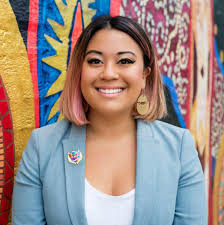
Mana and Assal sat down with Saint Paul Councilwoman, organizer, and former teacher Mitra Jalali one month after the brutal killing of George Floyd at the hands of police. Mitra spoke of her own experience as a Councilwoman close to the site of Floyd's murder and protests and the responsibility of non-Black Iranian Americans to support Black Lives Matter and confront the anti-Blackness within our own community.
Follow Mitra on Twitter @mitrajunjalali and check out this helpful post on Persian terms to talk about anti-Blackness here.
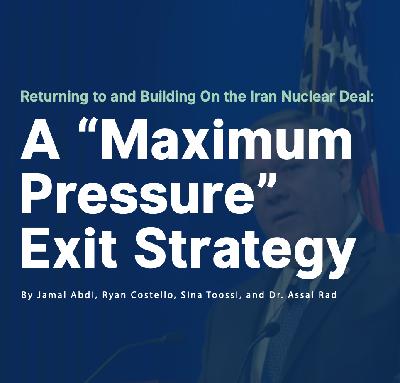
NIAC's new report, "Returning to and Building on the Iran Nuclear Deal: A Maximum Pressure Exit Strategy," outlines how the U.S. can get back to the JCPOA and back to the table with Iran to resolve bilateral and regional challenges -- either under a Biden Administration or a reformed Trump Administration.
This launch event features Joe Cirincione of the Ploughshares Fund, Suzanne DiMaggio of Carnegie Endowment for International Peace, NIAC President Jamal Abdi, and is hosted by France 24 Senior Journalist Sanam Shantyaei.
>> Read the report
>> Watch the event on Youtube
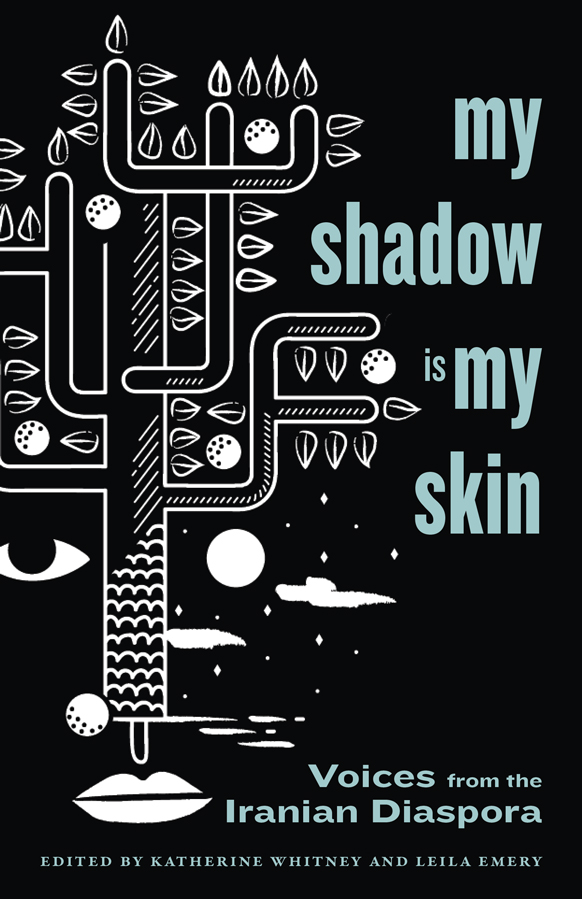
In our final chat with authors featured in "My Shadow is My Skin: Voices from the Iranian Diaspora," Mana and Assal sit down with Shokoofeh Rajabzadeh. Her essay, "My Mom Killed Michael Jackson," explores her travels to Iran and a personal story of longing for a place that is at once familiar, yet out of reach.
Get "My Shadow is My Skin at your local bookstore or here. And check more of Shokoofeh's writing at https://medium.com/@alwaysnotquite1.
Continuing our series of conversations with authors featured in "My Shadow is My Skin: Voices from the Iranian Diaspora," Assal and Mana chat with Dr. Persis Karim, who contributed an essay and the forward for the anthology, and helped bring the entire project together with her work at San Francisco State University's Center for Iranian Diaspora Studies. Both thoughtful and witty, her essay, "In Praise of Big Noses," reflects on the influence of the western aesthetic on the Iranian body.
Get "My Shadow is My Skin at your local bookstore or here.
Jamal, Ryan and Sina discuss The New Yorker piece "Twilight of the Revolution" and a proposal from the rightwing organization JINSA urging Trump to officially pursue "regime collapse" in Iran. Then they look at Sina's recent series in Responsible Statecraft on dangerous proposals from the Democratic side for Iran and how a Biden administration actually should approach the region.
For the second part in our series of conversations with the authors featured in "My Shadow Is My Skin: Voices from the Iranian Diaspora," Assal sat down with Darius Atefar-Peckham, an up and coming poet whose contribution to the anthology, "Learning Farsi," is a reflection on his mother's passing when he was just 3 and the Iranian identity she handed down to him.
"My Shadow is My Skin" is available at your local bookstore or here: https://www.amazon.com/My-Shadow-Skin-Iranian-Diaspora-ebook/dp/B0813R56KR
On the two-year anniversary of the Trump administration's decision to exit the Iran nuclear deal in favor of "maximum pressure" sanctions -- and coinciding with the president's veto of anti-war legislation -- Mana, Ryan, Assal and Jamal reflect on how we got here and where things may be headed.
A new anthology, "My Shadow Is My Skin: Voices from the Iranian Diaspora," presents 30 essays on the Iranian-American experience from a range of authors. Mana and Assal speak with the editors, Katherine Whitney and Leila Emery. Order your copy today through your local bookstore! Also available on Amazon: https://smile.amazon.com/My-Shadow-Skin-Iranian-Diaspora-ebook/dp/B0813R56KR
Mana, Assal and Jamal discuss the Trump administration's new campaign to kill the Iran deal at the UN by claiming the US. is still a participant in the agreement. Then they talk through a troubling update on Sirous Asgari, the Iranian scientist unjustly detained by ICE, who has now contracted coronavirus (16:40).
The U.S. government lost its case against Sirous Asgari. But just moments after a judge dismissed the charges against him, Dr. Asgari was detained by Immigration and Customs Enforcement (ICE) and is being held indefinitely. Now, as he fights for his freedom, he is sounding the alarm about the dangerous conditions in ICE detention facilities that put him and his fellow detainees at risk of contracting coronavirus. This week we speak with attorney Mehrnoush Yazdanyar who is working with Dr. Asgari to help secure his freedom.
(You can sign the petition to ICE here: https://www.change.org/p/ice-field-office-director-new-orleans-save-my-dad-from-ice-s-virus-ridden-detention-centers)
Mana and Jamal discuss the campaign to suspend Iran sanctions during the corona crisis (1:50) and evaluate pro-sanctions talking points from the Wall Street Journal Editorial Board (5:10). Then physician Payam Parvinchiha joins Mana and Assal (15:18) for a group chat about the societal impact of coronavirus, why the U.S. was caught unprepared, and what we can do to fight the pandemic and support our health care workers.
One of the many great things about Yasmin Khan is that she feeds you both knowledge and tasty treats. Yasmin is a writer, cook and campaigner who loves to share people’s stories through food. She's also a regular media commentator and runs cooking classes, pop-up supper clubs and writing retreats around the world. Prior to immersing herself in the fragrances and flavors of the Persian kitchen, Yasmin worked as a human rights campaigner, running national and international campaigns for NGOs and grassroots groups, with special focus on the Middle East. Visit her website at www.thesaffrontales.com, and check her out on Instagram: @thesaffrontales, and on Twitter: @yasmin_khan. And buy her book here! https://www.amazon.com/Saffron-Tales-Recipes-Persian-Kitchen/dp/1408868733 Yasmin and I talked about her new book, The Saffron Tales; how a project like hers opens new eyes to our cuisine, our culture, and our people; why it's important for her to give people a taste of the real Iran; and how a modern take on a classical Gilaki folk song symbolizes what she's trying to do with her own work.
After listening to Narges Bajoghli speak, you might just reconsider your preconceived notions about Iran. She’s a post-doctoral research associate in international affairs at the Watson Institute at Brown University, and recently received her PhD socio-cultural anthropology from New York University. Her research focuses on pro-regime cultural producers in Iran, and is based on fieldwork conducted with Basij, Ansar-e Hezbollah, and Revolutionary Guard media producers in Iran, from 2009 to 2015. Narges is also the co-founder of the non-profit organization Iranian Alliances Across Borders (IAAB), and she’s been featured in media outlets such as the New York Times Magazine, Washington Post, PBS NewsHour, and NPR, among many others. Narges and I talked about the Iran-Iraq war playing a key role in contemporary Iranian politics; the biggest misconceptions about the IRGC and Basij; the relationship between Iran’s government and people; survivors of chemical warfare in Iran; and how a 24-year old 2Pac song speaks to a lot of what’s going on in America today. She tweets at @nargesbajoghli
The world is going to hell in hand basket, and Fatima Ayub wants to talk to you about it. She’s a political scientist currently based in Jordan, with 15 years’ background in conflict, security and human rights issues in the Middle East and South Asia. She currently works with the global consulting firm Adam Smith International seeking solutions to Jordan’s economic challenges and is an associate policy fellow at the European Council on Foreign Relations. She is also a professional contrarian and peddles insight and absurdity on Twitter as @thecynicist. Fatima and I talked about similarities between the problems facing Jordan and other Middle Eastern countries; the failure of politics in the Middle East and in the West; the challenge of parsing through human rights and sectarianism; what the Chilcot Inquiry into the Iraq war tells us about our own failures; and our shared love of Radiohead.
You won't find a better Egypt analyst in the business than Tim Kaldas. He's a fellow at the Tahrir Institute for Middle East policy in Cairo, a visiting professor at Nile University in Cairo, and a professional wedding photographer that you should hire for all of your matrimonial needs. Tim's research focuses on transitional politics in Egypt, regime survival strategies, U.S.-Egypt relations, and much more. His commentary and analysis has been featured on CNN, the BBC, Al Jazeera, and many other media outlets. Tim and I talked about what caused the Egyptian uprisings in 2011, what's happened since then, what potentially lies ahead, the many ways in which regional security is a total mess, and how a late-90's rock and roll song sheds light on the problems in present-day Egypt.
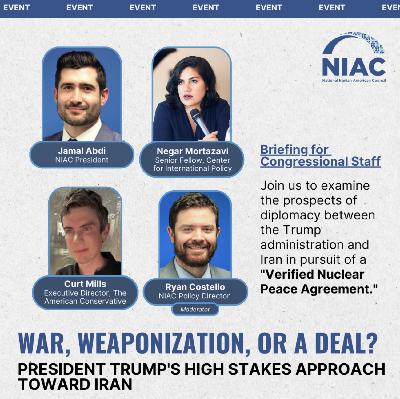
On April 2, 2025, NIAC hosted a Congressional Briefing in the U.S. Senate on the prospect for diplomacy with Iran under the Trump Administration featuring The American Conservative's Curt Mills, Center for International Policy’s Negar Mortazavi, and NIAC President Jamal Abdi, moderated by NIAC Policy Director Ryan Costello. Watch: https://www.youtube.com/watch?v=ym_RrdofI0Y
On May 24, 2022, NIAC hosted a virtual panel to explore the human impact of broad sanctions and hear from diaspora community organizations about the effects on the ground in Cuba, Venezuela, Afghanistan, Yemen, and Iran. The panel featured Arash Azizzada from Afghans For A Better Tomorrow, Dr. Aisha Jumaan from Yemen Relief and Reconstruction Foundation, Dr. Francisco Rodriguez from Oil for Venezuela, Ricardo Herrero of the Cuba Study Group, NIAC Research Director Dr. Assal Rad, and moderator Daniel Jasper of American Friends Services Committee.
Read our letter to the Biden Administration from sanctioned communities here.
NIAC hosted a panel discussion with Neda Maghbouleh (author of The Limits of Whiteness, John Ghazvinian (author of America and Iran: a History, 1720 to the Present), racial justice advocate Niaz Kasravi, NIAC Research Director Assal Rad and moderator Yara Elmjouie to discuss how negative stereotypes of Iran and Iranians help drive harmful U.S. policies that undermine human and civil rights at home and abroad.
Read the NIAC report by Dr. Rad: Othering Iran: How Dehumanization of Iranians Undermines Rights at Home
On May 10, 2022, NIAC hosted Ellie Geranmayeh of the European Council on Foreign Relations, Kelsey Davenport of the Arms Control Association, and sanctions attorney Tyler Cullis for a live discussion on the state of the Iran nuclear negotiations moderated by NIAC's Jamal Abdi. The panel discussed the Trump-era sanctions that are holding up the nuclear agreement, the imminent proliferation risks if there is no deal, and how politics may be preventing Biden from reaching the finish line.
More information is available here.

Comments

Download from Google Play

Download from App Store
 United States