


 Claim Ownership
NWA Founders
Subscribed: 1Played: 1
Subscribe

© BTB LLC 2026
Description
NWA Founders is a Northwest Arkansas business podcast hosted by Cameron Clark and Nick Beyer. The goal is to inspire entrepreneurship in Northwest Arkansas by highlighting the founders, owners and builders driving growth here.
Every other Tuesday, Cameron and Nick sit down on location with the people building companies here: founders, owners and operators from Fayetteville, Rogers, Bentonville, Springdale and across the region. Guests have built coffee roasters, construction firms, software companies, staffing agencies, restaurants, retail brands and family businesses handed down through generations. The conversations run long, usually around 90 minutes, and cover the parts most interviews skip: the early money, the first hire, the year it nearly ended, and what they would do differently.
Every episode, with full transcripts and a searchable archive of every conversation, is at nwafounders.com.
To recommend a guest or ask questions, reach out at [email protected] and follow us on YouTube and LinkedIn for video content.
53 Episodes
Reverse
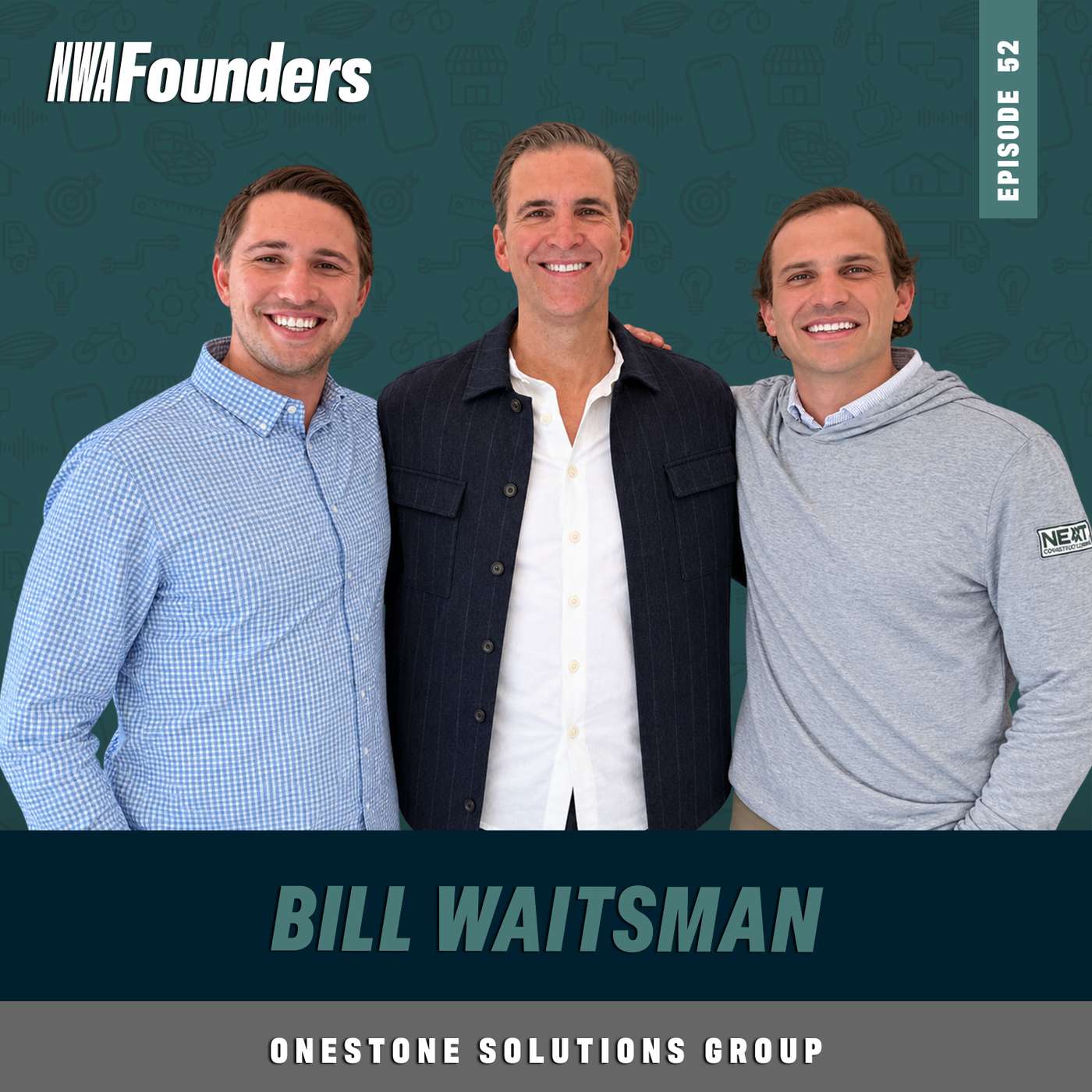
Bill Waitsman joins Cameron Clark and Nick Beyer on the Northwest Arkansas Founders Podcast for an honest look at building businesses—and the relationships that make them possible. From his years on P&G’s Walmart team to co-founding North Star and Harvest Group, launching OneStone, and navigating its eventual sale, Bill shares the lessons behind the milestones. He opens up about the emotional cost of starting over, why success can put partnerships under the greatest strain, and how developing people became his most meaningful measure of success.Key Moments07:16 — The P&G foundation: How working on Walmart’s business shaped Bill’s approach to building customer teams.10:40 — Making the entrepreneurial leap: The mentors, planning, and encouragement that helped Bill leave corporate life.25:25 — Why success tests partnerships: Navigating competing priorities, ownership decisions, and changing goals.33:15 — The knock that changed everything: An unexpected conversation helps Bill regain momentum and launch Harvest.37:21 — Three complementary founder skill sets: The visionary, the operator, and the business-development and culture builder.51:15 — Starting over with 1Stone:Leaving Harvest, entering digital commerce, and building a young, scrappy team.1:16:39 — Redefining success:Measuring legacy through thriving businesses, growing leaders, and future entrepreneurs.Three Key TakeawaysBuild around your strengths—and cover your blind spots.Choose a business that draws on your experience, then bring in complementary talent. Be deliberate about whether that means adding partners or hiring strong leaders.Partnership alignment requires ongoing work. Put expectations and exit provisions in writing, seek outside counsel, and revisit each partner’s goals annually rather than assuming everyone still wants the same thing.The people you develop are a lasting measure of success.Beyond growth or an exit, Bill finds meaning in seeing former team members lead, start companies, and thrive long after working together.
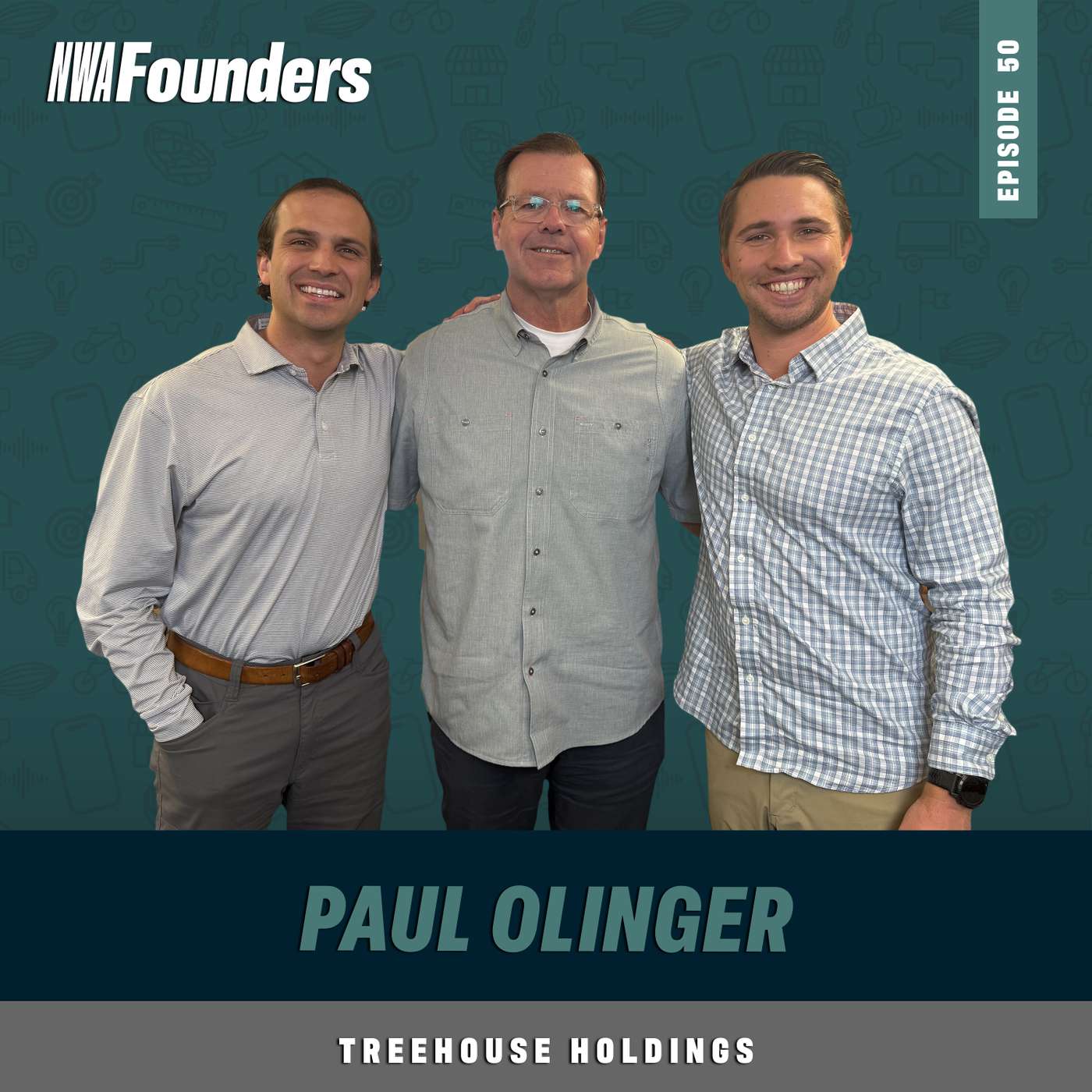
Paul Olinger joins Cameron Clark and Nick Beyer on the Northwest Arkansas Founders podcast to share his journey from a blue-collar upbringing in Oklahoma to a 20-year career at Sam’s Club and Walmart, founding Treehouse Sales and Solutions, and ultimately selling the business to Harvest Group. Along the way, he recounts helping bring Hansen’s energy drinks—the precursor to Monster—to a national audience and developing Great Value single-serve drink mixes. Paul reflects on the customer-first thinking, relentless learning, and trusted relationships that shaped his career, as well as the challenge of replacing clients representing two-thirds of Treehouse’s volume. Throughout the conversation, he credits his Christian faith and his wife Shana’s partnership with guiding his decisions, generosity, and vision for a family legacy that extends beyond financial success.Key Moments00:00 – Cold open and sponsor messages02:33 — Stay a student of your business. Paul explains why entrepreneurial thinking starts with observing the marketplace, identifying unmet customer needs, and putting in the work to solve them.07:34 — Sam Walton’s lesson on competition. Rather than focusing on competitors’ weaknesses, Walton challenged his team to identify what rivals did well—and learn from it.30:19 — The energy drink story before Monster. When Red Bull’s pricing didn’t fit Sam’s Club’s model, Paul found an alternative in Hansen’s Natural, tested it outside its home market, and helped expand it nationally before the company’s Monster rebrand.40:12 — Turning bottled water into a product opportunity. Paul recounts developing single-serve powdered drink mixes and working with a private-label supplier to get Great Value sticks onto Walmart shelves ahead of Crystal Light.48:40 — The rooftop conversation that sparked Treehouse. While hanging Christmas lights, Paul tells Shanna he plans to leave Walmart. Their conversation exposes the strain of his corporate career and sets his entrepreneurial transition in motion.1:11:41 — Building a business with an $80,000 home equity loan. Paul describes financing Treehouse’s modest beginnings, finding early clients, and choosing products he genuinely believed a retail buyer would want.1:30:43 — Rebuilding after losing clients representing 66% of volume. Three major clients announce their departures, prompting a company-wide push for new business that helps Treehouse recover and return to growth.1:35:17 — How generosity opened the door to Harvest Group. A COVID-era initiative letting employees direct donations to nonprofits leads to a LinkedIn connection, an introduction to Harvest’s leadership, and eventually the sale of Treehouse.3 Key TakeawaysKeep learning, and let the customer lead. Paul’s strongest product ideas came from staying curious, listening to consumers, and solving practical problems—not assuming past success made him an expert.Move quickly without compromising trust. Speed helped Paul turn ideas into successful products, but protecting his reputation, choosing clients carefully, and honoring relationships made that success sustainable.Build a business around the legacy you want to leave. Paul and Shanna made faith, family, and generosity part of Treehouse’s operating philosophy—from giving during uncertain times to sharing the proceeds of the sale with employees.
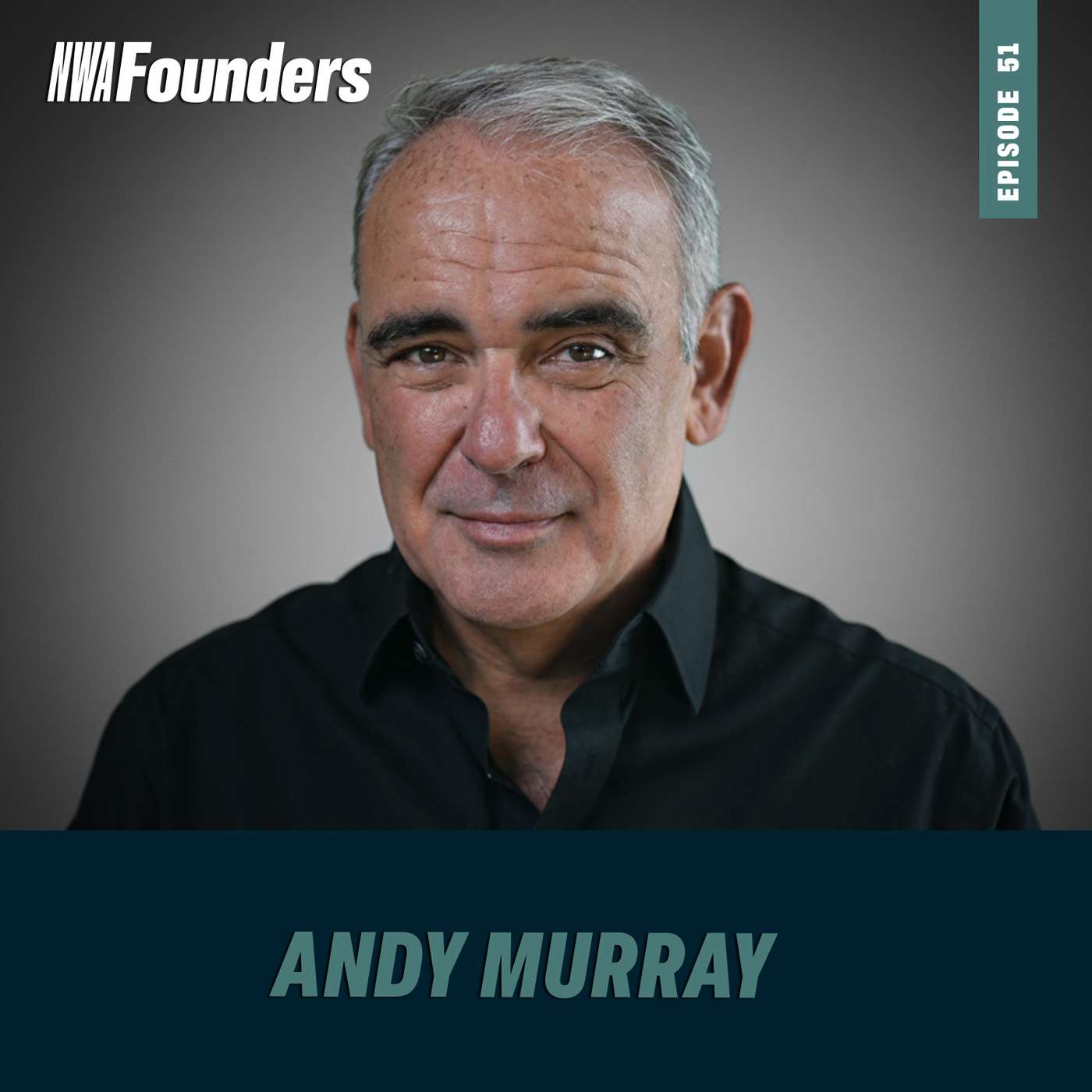
Andy Murray has spent his career at the intersection of entrepreneurship and corporate innovation — and he's done it at the highest levels of both. From riding shotgun in his father's plumbing truck as a kid in Cincinnati, to launching a driveway-sealing business at 16, to spending nine years at Procter & Gamble, to founding what became the shopper marketing industry, to serving as SVP of Marketing at Walmart and Chief Customer Officer at ASDA in the UK, Andy's path has been anything but linear. In this episode of the NWA Founders Podcast, Andy sits down with Cameron Clark and Nick Beyer to trace that journey — the risks, the mentors, the pivots, and the framework he's developed for driving entrepreneurial thinking inside some of the world's largest companies.Along the way, Andy shares the five questions he believes every corporate innovator must answer before launching new work, how a simple Veterans Day ad turned into the Green Light a Vet movement, the origin story of shopper marketing as an industry, the decision to sell his agency to Saatchi & Saatchi, and how asking "what's the biggest problem we could solve" transformed food insecurity efforts in the UK. He also reflects on identifying talent, the difference between being a builder and an owner, and what it means to live a true, good, and beautiful life. Key Moments0:00 – Cold open and introductions4:14 — The Five Questions for Corporate Entrepreneurship — Andy lays out the framework he's used repeatedly inside big companies: define the problem, shape the outcome, identify the biggest barrier, decide how to measure success, and figure out motivation.9:28 — From a 30-Second Ad to the Green Light a Vet Movement — Andy recounts how asking "what's the biggest problem veterans face?" at Walmart turned a routine Veterans Day ad assignment into a multi-year national movement.39:17 — The Birth of Shopper Marketing — Andy describes the all-in gamble on a Walmart baby department project, working around the clock to deliver in six days, and how a $200,000 check from P&G launched an entirely new marketing discipline.57:28 — Builder vs. Owner — Facing an unexpected call from P&G's CMO about going global, Andy shares how a CEO listening tour and a card on his refrigerator helped him realize he was a builder, not an owner — leading to the Saatchi & Saatchi deal.76:15 — Transforming Food Insecurity at ASDA — Andy tells the story of how asking charity partners "what's the single biggest thing we could do together?" led to a £22 million refrigeration infrastructure project that delivered millions of fresh meals across the UK. Key TakeawaysThe answer resides in the question you're asking. Whether it's defining a problem for a startup pitch, asking "is this the biggest idea we could be working on?" at P&G, or interrogating whether a project is worth doing at all, Andy's career demonstrates that asking better questions — not having better answers — is the starting point for bigger ideas and meaningful innovation.Bigger ideas are easier than smaller ideas. Andy learned from mentor Tom Muccio that small ideas still require resources and effort, but big ideas that move hearts and minds attract people who want to help. From Green Light a Vet to the ASDA food insecurity project, framing an ambitious outcome draws collaborators out of the woodwork.Look outside your industry for operational breakthroughs. When his agency struggled with creative workflow bottlenecks during hypergrowth, Andy studied a pediatrician's patient-throughput model to redesign his team's traffic system. The lesson: uncommon inspiration leads to uncommon results.
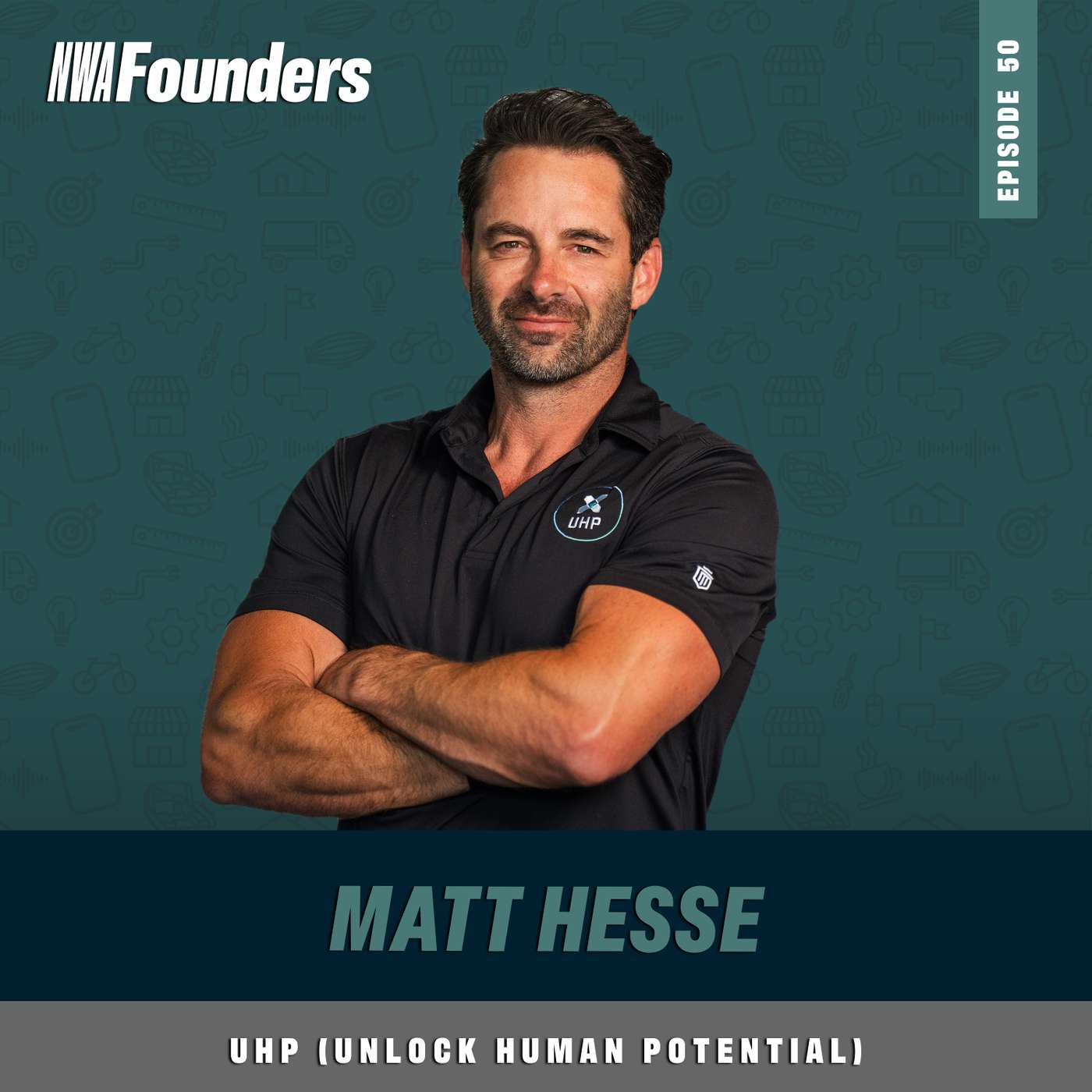
In this milestone 50th episode of the Northwest Arkansas Founders Podcast, host Cameron Clark rides around the UHP (Unlock Human Potential) campus with founder Matt Hesse, a former Army veteran and serial entrepreneur who has dedicated his life to solving the veteran transition crisis. After selling his sports nutrition company, Hesse invested heavily in veteran suicide research and discovered that loss of purpose—not combat trauma—is the primary driver of veteran suffering. In just four years, he has transformed 800 acres of raw Arkansas farmland into a $40+ million campus that trains veterans in human performance, industrial trades, and entrepreneurship, with a goal of serving 1,500 veterans per month by 2031.What makes UHP unique is its preventative approach: rather than treating the symptoms of veteran suffering through therapy and retreats, Hesse's team rebuilds purpose by helping veterans identify what they're passionate about, skilled at, believe in, and value—then channels them into thriving careers. The campus has become a magnet for major partners including Walmart, Google, NASCAR, Raytheon, and Apple, all drawn to Hesse's mission-driven model. The episode weaves together the personal story behind UHP's founding, the business case for investing in veteran talent, and Hesse's broader vision for making Northwest Arkansas a national case study in community-building.Key Moments0:00 – Cold open, sponsor messages and introductions4:30 — Hesse describes UHP as combining "Disneyland, Fort Bragg, and the University of Arkansas" into one campus6:10 — The devastating statistic: 7,300 combat deaths vs. 200,000 veteran suicides over 20 years of the Global War on Terror8:08 — Hesse identifies loss of purpose and identity—not combat trauma—as the primary driver of veteran suffering, explaining why UHP focuses on prevention over treatment50:15 — The transformation story of Mike Gerardo, a Marine who overcame injury, addiction, homelessness, and parole to become a mental health counselor serving veterans59:20 — Hesse unveils plans for a franchise model where veterans graduate from UHP and own a business with zero debt and no capital of their own, making up to $150,000 in under a yearKey TakeawaysPrevention beats treatment. The veteran support ecosystem is heavily weighted toward treating suffering after it happens—therapy, retreats, and symptom management. Hesse argues that the most effective approach is upstream: replacing the sense of purpose veterans lose when they leave the military, before suffering ever takes root.Mission-driven businesses attract extraordinary partners. UHP built the only federally-funded, veteran-only school in the country—navigating legislation that wasn't designed for this model—and in doing so attracted Fortune 1 partners (Walmart), defense giants (Raytheon, Lockheed Martin), tech leaders (Google, Apple), and state-level support. When the mission is authentic, resources follow.Northwest Arkansas is becoming a national case study. Hesse's decision to build UHP in Bentonville wasn't transactional—it was driven by the quality of people, servant-leadership culture, and the Walton family legacy of investing in community. He believes that in a few years, the region will be studied as a "one of one" example of what happens when values-driven leadership, corporate investment, and entrepreneurial grit converge in one place.
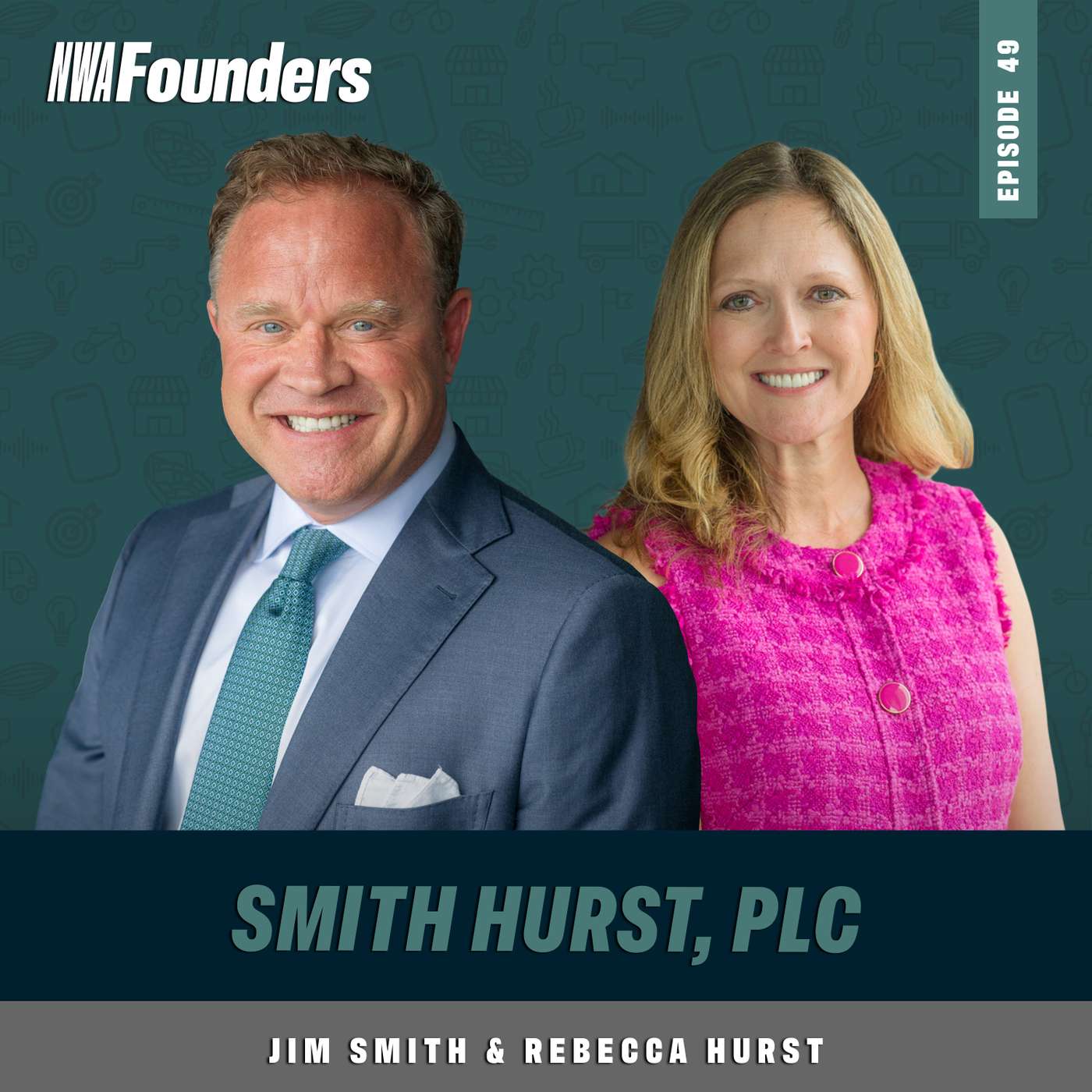
In this episode of the Northwest Arkansas Founders podcast, hosts Cameron Clark and Nick Beyer sit down with Jim Smith and Rebecca Hurst, the co-founders of Smith Hurst law firm and Emeraude (a multifamily office and business services platform). Jim and Rebecca share their parallel journeys — both with accounting degrees, both with tax LLMs from NYU — and trace the arc of their careers from the Friday firm (Arkansas's largest law firm) to launching Smith Hurst in 2011. They discuss the evolution of family offices in Northwest Arkansas, the explosive growth of the region's M&A and private equity landscape, and the strategic decision to expand beyond legal services into Emeraude, which provides family office and back-office business services to entrepreneurs and wealthy families.Throughout the conversation, Jim and Rebecca reflect on the relationships and timing that fueled their early success — from landing the Rockfish/WPP deal out of the gate, to the $83 million Acumen Brands capital raise in 2013. They cover practical topics like how M&A attorneys get paid (hourly, not success fees, to maintain objectivity), when to involve counsel in a deal (ideally before the letter of intent), and how AI is transforming legal practice. They also share the Wizard of Oz–inspired origin of the Emeraude name, discuss the $124 trillion wealth transfer ahead, and close with personal reflections on success, purpose, and the once-in-a-lifetime opportunity of building a business in Northwest Arkansas.Key moments:0:00 – Cold open, sponsor messages and backgrounds13:45 — Their competitive edge: relationships, not the firm name — 738 files moved in two weeks14:30 — Landing the Rockfish/WPP acquisition deal out of the gate, giving the new firm instant credibility17:30 — Acumen Brands' $83M capital raise from General Atlantic, a top-five Q1 2013 PE deal45:35 — Why Smith Hurst bills hourly instead of success fees: maintaining objectivity51:18 — The Wizard of Oz / Emerald City story behind the Emeraude name75:55 — What's next: staying relevant as big players arrive in NWAThree key takeaways:Relationships are the real currency. When Jim and Rebecca left the Friday firm — the largest in Arkansas — 738 client files moved with them in the first two weeks. The business belonged to the relationships they'd built, not the firm name on the door. Jim emphasizes that most deals come through client and accountant referrals, and that the shift from legal advice to business strategy happens naturally over years of working alongside founders in the boardroom.Objectivity is worth more than a success fee. Smith Hurst deliberately charges hourly rather than taking a percentage of deal value, so clients never have to wonder whether the attorney's advice is driven by a personal financial stake in closing. Jim frames this as a trust principle: "We don't want them to feel that they're at risk that we're not giving them sound advice because we don't get paid if they don't close a deal." The same logic drives Emeraude — they facilitate, advise, and connect, but they don't manage assets or sell insurance, keeping their counsel independent.Northwest Arkansas is a once-in-a-lifetime window — and the clock is ticking. Both guests stress that the region's legitimacy as a market for private equity, venture capital, and talent is no longer a question. But Jim warns that bigger players will inevitably arrive as the population climbs toward 750,000 and beyond, and local firms must keep sharpening their edge. His advice to anyone on the fence: "Make the call" — whether for a family office, business services, or a career move — because the opportunity in NWA is as rare as it gets.

Comments

Download from Google Play

Download from App Store
 United States