


 Claim Ownership
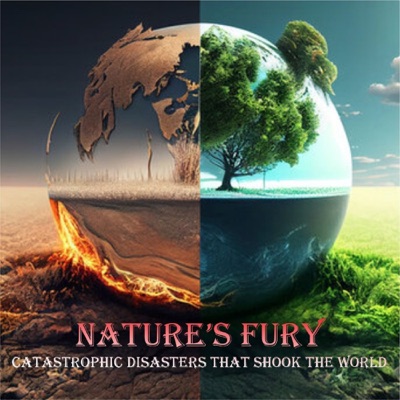
Nature’s Fury: Catastrophic Disasters that Shook the World
Subscribed: 9Played: 32
Subscribe

© Copyright 2024 All rights reserved.
Description
This podcast explores the most devastating natural disasters in human history, delving into how these catastrophic events reshaped the world. Each episode presents a deep dive into specific disasters, examining their causes, the immense destruction they caused, and the emotional and social aftermath. Listeners will experience a blend of factual storytelling and powerful, heart-wrenching human experiences to better understand the terrifying power of nature.
37 Episodes
Reverse
On October 8, 1871, a small fire in a barn ignited one of the most devastating urban disasters in American history. Fueled by dry weather, strong winds, and a city built largely of wood, the blaze raged through Chicago for nearly 30 hours, destroying more than 17,000 buildings and leaving 100,000 people homeless. At least 300 lives were lost, and the city’s business district was completely erased.
The fire crossed the Chicago River, overwhelmed exhausted firefighters, and evolved into a true firestorm, with embers igniting entire neighborhoods at once. Residents fled toward Lake Michigan and open spaces as their city burned around them.
Yet from the ashes came transformation. Chicago rebuilt with fire-resistant materials, stricter building codes, and modern infrastructure. The disaster directly influenced the rise of steel-frame construction and skyscrapers, reshaping urban design across the United States.
The Great Chicago Fire was more than a tragedy—it was a turning point that redefined how cities are built, proving that from destruction can come reinvention and resilience.
During the 1970s, the Sahel region of Africa experienced one of the deadliest natural disasters in modern history—not through sudden destruction, but through years of relentless drought. Rainfall across countries such as Mali, Niger, Chad, Burkina Faso, and Mauritania dropped by up to 40 percent, causing crops to fail, rivers and wells to dry up, and millions of livestock to perish.
The disaster unfolded slowly, allowing hunger and disease to spread silently. Entire villages were abandoned as families migrated in search of food and water. By the end of the decade, an estimated one to two million people had died, while tens of millions were displaced. Malnutrition weakened populations, turning preventable diseases into mass killers.
Human actions worsened the catastrophe. Overgrazing, deforestation, and poor land management, combined with shifting global climate patterns, accelerated desertification and stripped the land of resilience. The world’s response was slow, exposing deep failures in early warning systems and humanitarian coordination.
The Sahel Drought became a turning point in global disaster response. It led to the creation of modern famine early-warning systems, reshaped humanitarian aid strategies, and marked one of the first clear links between climate variability and large-scale human suffering. More than a regional tragedy, it stands as a warning that the deadliest disasters may arrive quietly—and be ignored until it is too late.
On January 26, 2001, during India’s Republic Day celebrations, a massive magnitude 7.7 earthquake struck the state of Gujarat. In less than a minute, entire cities and villages were reduced to rubble. The historic city of Bhuj suffered catastrophic damage, while Anjar, Bhachau, and numerous rural communities were almost completely destroyed.
More than 20,000 people were killed, 200,000 injured, and nearly 400,000 homes collapsed. Roads split apart, hospitals were overwhelmed, and survivors dug through debris with their bare hands searching for loved ones. Rescue teams from India and around the world fought to save those trapped beneath ruins.
The economic and emotional toll was immense, but the disaster also marked a turning point. Gujarat launched one of the largest reconstruction programs in Indian history, rebuilding cities with earthquake-resistant designs and stricter building codes. Nationally, India created the National Disaster Management Authority, improved seismic zoning, and expanded emergency response systems.
The Gujarat earthquake remains one of India’s most devastating natural disasters — a moment when immense loss spurred profound changes in preparedness, engineering, and national resilience.
In October 2012, Hurricane Sandy evolved into a massive hybrid storm — part hurricane, part nor’easter — and slammed into the U.S. East Coast with unprecedented power. Stretching nearly 1,000 miles, Sandy generated a 14-foot storm surge that flooded New York City’s subways, shut down hospitals, and plunged Lower Manhattan into darkness.
New Jersey’s coastal towns were devastated, with homes swept away, boardwalks destroyed, and entire neighborhoods submerged. In Queens, a storm-driven electrical fire burned more than 120 homes in Breezy Point, while Staten Island suffered some of the storm’s deadliest impacts as residents were overwhelmed by surging waves.
Sandy killed over 160 people, caused $70 billion in damage, and left millions without power. The storm exposed the vulnerability of modern coastal cities and triggered major infrastructure changes, including floodwalls, reinforced dunes, elevated electrical systems, and redesigned transit entrances.
More than a natural disaster, Sandy became a warning about rising seas and the growing power of climate-amplified storms — a moment when one of the world’s most advanced cities was forced to confront the unstoppable strength of nature.
On May 6, 1937, the German airship Hindenburg, the largest flying machine ever built, burst into flames while attempting to land in Lakehurst, New Jersey. In just 34 seconds, the hydrogen-filled zeppelin collapsed to the ground in a fiery inferno, killing 36 people and marking the sudden, dramatic end of the airship era.
The Hindenburg had been a symbol of luxury and technological ambition, capable of crossing the Atlantic with elegance unmatched by airplanes of the time. But a spark — likely caused by static electricity igniting a hydrogen leak — turned the airship into a fireball captured on film and radio. Reporter Herbert Morrison’s anguished cry, “Oh, the humanity!”, immortalized the tragedy.
Though 62 passengers and crew survived, the disaster shattered public confidence in air travel by zeppelin. Hydrogen-filled airships were immediately abandoned, clearing the way for the rise of modern airplanes and advancing aviation safety standards.
The Hindenburg Inferno remains one of the most iconic technological disasters in history — a stark reminder that human innovation must always respect the hazards of nature and the materials we rely upon.
On the night of January 31, 1953, a rare and deadly combination of a deep Atlantic storm, hurricane-force winds, and high tides created a massive storm surge that overwhelmed coastal defenses in the Netherlands and eastern England. Dikes collapsed, seawater swept across the low-lying Dutch provinces of Zeeland, South Holland, and North Brabant, and entire villages were submerged in darkness.
By morning, more than 1,800 people in the Netherlands and over 300 in England had died. Boats replaced cars, helicopters rescued families from rooftops, and vast stretches of farmland became temporary seas. Communication failures meant many received no warning at all.
The catastrophe exposed the vulnerability of countries living below sea level and sparked one of the greatest engineering responses in history: the Delta Works — a colossal system of storm surge barriers, dikes, and floodways now considered one of the Seven Engineering Wonders of the Modern World. In England, the tragedy also accelerated the creation of the Thames Barrier to protect London.
The 1953 North Sea Flood stands as a stark reminder of nature’s power and the importance of strong, forward-thinking coastal defenses — lessons that resonate even more in today’s era of rising seas and climate change.
On March 27, 1964, a magnitude 9.2 megathrust earthquake — the second strongest ever recorded — struck southern Alaska, shaking the Earth for nearly five minutes. The violent rupture along the Aleutian subduction zone caused the ground to rise and fall by as much as 30 feet, devastating cities like Anchorage, Valdez, and Seward.
The quake triggered massive tsunamis that swept through coastal Alaska and raced across the Pacific, striking California, Oregon, and Hawaii. In total, 131 people died, and thousands were displaced as homes, harbors, and entire towns were destroyed.
But the Great Alaska Earthquake was more than a tragedy — it was a turning point. Scientists studying the event uncovered key evidence confirming the emerging theory of plate tectonics, revolutionizing our understanding of how Earth’s crust moves and reshapes itself.
In its aftermath, the U.S. established the National Tsunami Warning Center to better detect and respond to future threats. The landscape of Alaska was forever altered — both physically and scientifically — leaving behind a legacy of resilience and discovery born from the planet’s unimaginable power.
On November 25, 1833, a colossal magnitude 8.7–9.2 earthquake struck off the coast of southern Sumatra, Indonesia, along the Sunda Megathrust fault. The quake unleashed enormous tsunamis that devastated coastal settlements, with waves reaching over 10 meters high and traveling as far as Sri Lanka and western Australia. Thousands perished, but with limited communication and record-keeping under Dutch colonial rule, much of the tragedy went unnoticed by the world.
Nearly two centuries later, scientists uncovered the geological evidence—coral uplift patterns and sediment deposits—that revealed the true scale of the 1833 event. It was, in fact, strikingly similar to the 2004 Sumatra–Andaman earthquake, which triggered one of the deadliest tsunamis in recorded history.
Both disasters originated along the same fault system, causing massive seafloor displacement and ocean-wide tsunamis. But while 1833 unfolded in silence, 2004 occurred in a connected world—one that could witness its horror but still lacked an effective tsunami warning system.
The 1833 quake stands as a grim reminder that nature’s cycles are long, not forgotten. It taught scientists about the recurring megathrust events of the Indian Ocean and the importance of remembering the lessons buried in history. Because when the Earth moves again—as it surely will—the past may be the only warning we have.
In March 1888, the northeastern United States was hit by one of the most severe blizzards in its history. Known as “The Great Blizzard of 1888” or “The White Hurricane,” the storm buried cities under up to 50 feet of snow, killed more than 400 people, and brought the region to a complete standstill.
Beginning on March 11, a collision between warm Atlantic air and a powerful Arctic cold front unleashed snow, ice, and hurricane-force winds from Washington, D.C. to Maine. In New York City, gusts reached 80 miles per hour, paralyzing trains, sinking ships, and cutting telegraph lines. Entire towns disappeared beneath drifts, and thousands were trapped in their homes for days.
The blizzard exposed the vulnerabilities of modernizing America. Telegraph poles snapped, elevated trains froze, and communication across the East Coast collapsed. When the storm finally cleared after four days, devastation stretched from Pennsylvania to Massachusetts.
But out of ruin came change. The disaster inspired New York City to bury its electrical and telegraph lines underground, develop its subway system, and strengthen national weather forecasting efforts.
The Blizzard of 1888 remains a defining moment in U.S. history—a chilling reminder that even in an age of progress, nature’s fury can silence the greatest of cities and turn civilization into a snowbound wilderness.
In the spring of 1927, relentless rain overwhelmed the Mississippi River, leading to one of the most destructive floods in American history. Levees burst, submerging 27,000 square miles across Arkansas, Mississippi, and Louisiana. The river expanded to over 60 miles wide in places, displacing nearly 700,000 people and leaving towns, farms, and entire communities underwater.
The disaster exposed deep racial and social inequalities in the South. Poor farmers—especially African American sharecroppers—suffered the most, trapped in overcrowded levee camps and often forced to work on flood control instead of being evacuated. Relief efforts were slow, but Herbert Hoover’s leadership during the crisis elevated him to national prominence, paving his path to the presidency.
The flood’s aftermath was catastrophic: homes destroyed, farmlands buried under mud, and an economy in ruins. Yet it also reshaped U.S. policy. The Flood Control Act of 1928 gave the federal government responsibility for managing the Mississippi, launching massive levee and spillway projects that still define the river today.
The Great Mississippi Flood of 1927 was more than a natural disaster—it was a turning point. It revealed the power of nature, the limits of human control, and the enduring resilience of those who rebuilt in the shadow of the river that both gave and destroyed their lives.
In January 1700, a massive tsunami struck the shores of Japan without any preceding earthquake. Villagers were caught off guard as the sea suddenly receded and then roared back in towering waves. With no shaking felt, the Japanese called it an “orphan tsunami” — a wave with no apparent parent.
Centuries later, scientists discovered the origin of that mysterious tsunami across the Pacific Ocean. Along the coastlines of what is now Washington, Oregon, and British Columbia, Native American oral histories told of a night when the earth shook violently and whole villages were swallowed by the sea. Geological studies confirmed the stories: a magnitude 9.0 megathrust earthquake along the Cascadia Subduction Zone had struck on January 26, 1700, triggering a massive tsunami that crossed the ocean and hit Japan ten hours later.
This event—known today as the 1700 Cascadia Earthquake and Tsunami—was one of the most powerful in history. And with Cascadia’s cycle of megaquakes occurring every 300–500 years, scientists warn that the next one is due.
The Orphan Tsunami of 1700 isn’t just a mystery solved — it’s a warning from the past to the present: the wave that once connected continents may one day return.
On April 25, 2015, a magnitude 7.8 earthquake struck Nepal, shaking the Himalayan nation to its core. In under a minute, centuries-old temples in Kathmandu crumbled, entire villages collapsed into rubble, and deadly avalanches roared down the slopes of Mount Everest, killing climbers at Base Camp.
The disaster claimed nearly 9,000 lives, injured more than 22,000, and left millions without homes. Remote mountain communities were devastated—some losing more than 90% of their buildings. With roads blocked and aftershocks continuing for weeks, rescue efforts were slow and perilous.
The global community responded swiftly, with international aid teams, helicopters, and relief supplies pouring in. Yet, in many places, survival in the early days depended most on neighbors helping neighbors.
Beyond human loss, Nepal suffered a deep cultural wound, as iconic heritage sites and ancient temples were reduced to ruins. But amid the devastation arose powerful stories of resilience and unity. Villages rebuilt using stronger designs, volunteers restored historic sites, and life slowly returned to the highlands and valleys.
The Nepal Earthquake remains a profound reminder of both nature’s destructive power and humanity’s ability to rise from the ruins.
On the night of December 2–3, 1984, in Bhopal, India, a pesticide plant owned by Union Carbide leaked 40 tons of methyl isocyanate gas into the air. The toxic cloud spread silently across the sleeping city, suffocating thousands within hours. Victims awoke choking, their eyes burning, their lungs collapsing.
The immediate toll was horrific: 3,000–8,000 deaths in the first days. Over time, more than 15,000 people were officially recorded dead, with half a million survivors suffering long-term health problems including lung disease, blindness, reproductive disorders, and birth defects in later generations. Even decades later, contaminated soil and water around the abandoned plant continued to poison communities.
Legal and moral accountability became a global controversy. Union Carbide paid a $470 million settlement in 1989—widely seen as inadequate—and its successor, Dow Chemical, has faced continuing pressure to fund cleanup and compensation.
The Bhopal disaster stands as a grim reminder of the dangers of negligence and corporate cost-cutting. It reshaped industrial safety laws worldwide and highlighted the need for stronger protections for vulnerable communities. Yet, for survivors in Bhopal, justice and healing remain incomplete, as the tragedy’s shadow still lingers nearly four decades later.
On December 26, 2004, a magnitude 9.1–9.3 undersea earthquake off Sumatra triggered one of the deadliest natural disasters in human history. The resulting tsunami waves, some rising over 100 feet high, devastated coastlines across the Indian Ocean, striking Indonesia, Thailand, Sri Lanka, India, the Maldives, and even reaching East Africa.
In just a few hours, more than 230,000 people lost their lives, with Indonesia suffering the greatest toll. Entire villages were erased, millions displaced, and survivors faced hunger, disease, and trauma. Lacking a tsunami warning system, communities had no chance to escape the surging waters.
The tragedy sparked an unprecedented global response. Billions of dollars in aid flowed in, relief teams mobilized worldwide, and a new Indian Ocean tsunami warning network was established. Communities slowly rebuilt from the ruins, showing extraordinary resilience despite unimaginable loss.
The Boxing Day Tsunami was not only a disaster but also a wake-up call: a reminder of the ocean’s destructive potential, the importance of preparedness, and the unbreakable spirit of humanity in the face of overwhelming tragedy.
In April 2010, Iceland’s glacier-capped volcano Eyjafjallajökull erupted after nearly two centuries of dormancy. Though modest in size compared to historic eruptions, its impact was global. When molten magma met the glacier’s ice, powerful steam-driven explosions hurled a massive ash cloud into the atmosphere.
Winds carried the ash over Europe, forcing aviation authorities to ground flights for nearly a week. More than 100,000 flights were canceled, affecting an estimated 10 million passengers and costing airlines $2 billion in losses. Airports became shelters for stranded travelers, and global supply chains faltered.
Locally, Iceland faced flooding, ashfall, and damaged farms, though remarkably, no lives were lost. Globally, the event was a wake-up call, showing how even a relatively small eruption could disrupt modern systems of travel and commerce.
The Eyjafjallajökull eruption stands as a reminder that disruption can be as devastating as destruction—and that nature can halt even the busiest skies with little more than an invisible cloud of ash.
In the summer of 2003, Europe was gripped by a heatwave of unprecedented intensity. For weeks, a high-pressure system trapped hot air over the continent, pushing temperatures beyond 104°F (40°C) in countries like France, Italy, and Spain. The relentless heat turned cities into ovens, strained hospitals, and withered crops across vast regions.
By the time it ended, the heatwave had claimed an estimated 70,000 lives, making it one of the deadliest climate-related disasters in modern history. The elderly, isolated, and vulnerable were hardest hit, many dying quietly in stifling apartments without air conditioning. In France alone, nearly 15,000 people perished in August.
The disaster also left deep environmental and economic scars. Rivers shrank, nuclear plants cut output, and wildfires consumed thousands of square miles of forest. Agriculture suffered devastating losses, costing Europe more than $15 billion.
The 2003 heatwave was a wake-up call, widely linked to climate change, and it forced governments to rethink preparedness. Many countries introduced heatwave response plans, early warning systems, and cooling centers. While later heatwaves would come, none would find Europe as unprepared again.
This episode highlights not only the immense toll of that summer but also the urgent reality that extreme heat, once rare, is becoming the new normal in a warming world.
In August 1992, Hurricane Andrew roared into southern Florida as a Category 5 hurricane with winds over 165 mph, one of the most powerful storms ever to strike the United States. Compact but ferocious, Andrew devastated Homestead and surrounding communities, obliterating neighborhoods, crippling infrastructure, and leaving more than 250,000 people homeless.
The storm claimed 65 lives in Florida and Louisiana and caused an estimated $25 billion in damage, at the time the costliest natural disaster in U.S. history. Relief efforts were hampered by slow government response, exposing weaknesses in FEMA and state agencies, and prompting sweeping reforms in disaster management.
Andrew also reshaped Florida’s future: stricter building codes were enacted, insurance practices overhauled, and emergency planning improved nationwide. Though scars lingered for decades, the disaster highlighted both the destructive force of nature and the resilience of communities determined to rebuild.
On March 11, 2011, Japan was struck by a magnitude 9.0 earthquake, the strongest in its recorded history. The quake triggered a massive tsunami with waves over 40 feet high, which devastated coastal communities, claiming over 18,000 lives. But the catastrophe did not end there. The tsunami crippled the Fukushima Daiichi Nuclear Power Plant, flooding its backup generators and disabling critical cooling systems.
Within days, three nuclear reactors melted down, releasing radioactive material into the air and sea. Explosions ripped apart reactor buildings, and over 150,000 residents were evacuated from a wide exclusion zone. The contamination of farmland, fisheries, and homes left many displaced permanently.
Though not as severe as Chernobyl, Fukushima was rated a Level 7 nuclear disaster, shaking global confidence in nuclear energy. It led countries like Germany to begin phasing out nuclear power and forced Japan to overhaul its energy strategy. The cleanup, decontamination, and decommissioning of the plant are expected to take decades.
Despite the tragedy, the disaster revealed stories of courage—most notably the “Fukushima 50”, workers who risked their lives to stabilize the reactors. The Fukushima crisis stands as a stark reminder of how natural and man-made vulnerabilities can collide, creating a disaster far greater than the sum of its parts.
The Bhola Cyclone struck East Pakistan (now Bangladesh) and India’s West Bengal on November 12, 1970, becoming the deadliest tropical cyclone in recorded history. With winds of 115 mph and a storm surge more than 20 feet high, it wiped out entire villages, drowning hundreds of thousands. The death toll reached an estimated 500,000 people, as survivors faced starvation, disease, and devastation of farmland and livestock.
Beyond the natural destruction, the government’s slow and inadequate relief response fueled anger in East Pakistan, deepening feelings of neglect. The disaster became a political catalyst, contributing to the rise of the Awami League, the Bangladesh Liberation War, and ultimately the creation of Bangladesh in 1971.
The Bhola Cyclone was not only a natural tragedy but also a turning point in history, demonstrating how vulnerable societies can be forever reshaped by the fury of nature.
On September 1, 1923, a magnitude 7.9 earthquake struck Japan’s Kanto region, devastating Tokyo and Yokohama. But the worst was yet to come. The quake ignited hundreds of fires, fueled by overturned stoves and broken gas lines, which merged into a massive firestorm driven by strong winds.
The inferno consumed entire districts, with temperatures so intense that iron warped and glass melted. One of the greatest tragedies occurred at the Rikugun Honjo Hifukusho army depot, where nearly 38,000 people perished in minutes. Adding to the devastation, a tsunami swept coastal areas, claiming more lives.
By the end, around 140,000 people were dead or missing, and over half a million homes were destroyed. The disaster spurred major reforms in urban planning, building codes, and disaster preparedness, while leaving a permanent mark on Japanese history and collective memory.

Comments

Download from Google Play

Download from App Store
 United States