


 Claim Ownership
Nature Signals Podcast
Subscribed: 0Played: 7
Subscribe

© Ruth Thornton LLC
Description
A newsletter about nature, the animals and plants that share the world with us and the human actions affecting it - both good and bad.
ruththornton.substack.com
33 Episodes
Reverse

PFAS, often called “forever chemicals,” are common toxic pollutants that are now ubiquitous in the environment. But what does their presence in fish and drinking water mean for the health of people and wildlife?In this episode, we examine a study by researchers at Indiana University and the Ecology Center in Ann Arbor, Michigan that found at least one of 14 PFAS chemicals in every fish tested in Michigan’s Huron and Rouge River watersheds. Researchers also found particularly high levels in fish livers and eggs, raising concerns about wildlife that eat fish whole. Even the levels in the filets could exceed Michigan’s fish consumption guidelines.We hear from Erica Bloom and senior scientist Gillian Miller of the Ecology Center, Cheryl Murphy, director of Michigan State University’s Center for PFAS Research, and Gary Ankley, a former toxicologist at the U.S. Environmental Protection Agency.The discussion explores PFAS health risks, gaps in scientific knowledge about thousands of these chemicals that are still manufactured and released into the environment, and new technologies that could help researchers identify harmful compounds and reduce exposure.Learn why PFAS contamination is a growing environmental and public health concern—and what science is doing to address it.The written article is available on my website here: ruththornton.com. Key Points:1:29 - PFAS contamination was found in every fish studied3:51 - Only a handful of thousands of PFAS chemicals are regulated5:24 - How scientists are studying the 'forever chemicals'7:27 - Growing awareness of the problem can lead to reducing our exposure Links to resources:Capozzi et al., 2023: From watersheds to dinner plates: Evaluating PFAS exposure through fish consumption in Southeast Michigan. Chemosphere, 345:140454.US EPA Toxicity Forecasting: ToxCastNational Institute of Environmental Health Sciences: Perfluoroalkyl and polyfluoroalkyl substances (PFAS).European Food Safety Authority: Per- and polyfluoroalkyl substances (PFAS).U.S. Environmental Protection Agency: PFAS explained.Michigan PFAS in Drinking Water RulesMichigan Eat Safe Fish GuidesGreen Choice Lifestyle's Products with PFAS to Avoid guide Get full access to Nature Signals at ruththornton.substack.com/subscribe

In this anniversary episode of Nature Signals, environmental journalist and science writer Ruth Thornton reflects on one year of sharing science-based stories about nature, wildlife and biodiversity conservation. She discusses her journey from conservation professional to environmental journalist, tracing how childhood adventures in the Austrian Alps and American national parks inspired a lifelong passion for nature and wildlife.Ruth explains why, after more than 20 years working in conservation, she returned to school midcareer to pursue a master’s degree in journalism and how her hands-on field experience shapes her approach to writing about nature.Looking ahead, Ruth shares her plans for Nature Signals, including articles building on each other to form a more complete picture of the state of biodiversity. She also discusses her commitment to rigorous research, independent fact-checking and accurate environmental journalism in an era of widespread disinformation and AI.Explore Nature Signals for evidence-based insights into conservation, biodiversity loss, ecology and solutions for protecting the natural world. The written article is available on my website here: ruththornton.com.#EnvironmentalJournalism #ScienceWriting #Biodiversity #Conservation #Wildlife #NaturePodcast #PersonalEssayKey points:1:06 - What led me to change my career4:34 - Where Nature Signals is headed6:43 - A word on fact-checking and essay schedules7:53 - A note on AI8:20 – How to support my writing Get full access to Nature Signals at ruththornton.substack.com/subscribe

In this episode, we explore why the global insect decline matters far beyond pollination. A new paper in the journal Nature Reviews Biodiversity brings together findings from nearly 300 studies to document the many ways insects support wildlife and ecosystems.Eliza Grames, an assistant professor at Binghamton University and a lead author of the review, explains how insects serve as food for birds, bats, mammals, reptiles and amphibians—and provide a surprising range of other services. They help build shelters, protect nests, recycle nutrients, control disease-carrying insects and even contribute to wound care and grooming among some animals.We also discuss the growing insect biodiversity crisis, including evidence that insect abundance and biomass are declining by an average of 1% to 2% a year. Chris Elphick, a professor at the University of Connecticut and a contributor to the study, explains why insect conservation should be considered part of wildlife conservation.The researchers also offer a hopeful message: because many insects reproduce quickly, the right conservation efforts can sometimes produce rapid results.The written article is available on my website here: ruththornton.com.#Insects #BiodiversityCrisis #InsectDecline #Conservation #Wildlife #InsectApocalypse Links to resources:Cooke et al., 2026: The importance of insect biodiversity for vertebrates. Nature Reviews Biodiversity.Status of Insects: An international Research Coordination Network.National Science FoundationScience, 4/25/2026, by Jeffrey Mervis: Trump fires every member of the U.S. National Science Foundation's governing body.The New York Times, 10/2/2026, by Adam Sella, Christopher Flavelle and Irena Hwang: Agency diverted $1.4 Billion in science funds mandated by Congress.Edwards et al., 2025: Rapid butterfly declines across the United States during the 21st century. Science, 387(6738): 1090-1094.Tamburini et al., 2019: Pollination contribution to crop yield is often context-dependent: A review of experimental evidence. Agriculture, Ecosystems & Environment, 280: 16-23. Get full access to Nature Signals at ruththornton.substack.com/subscribe
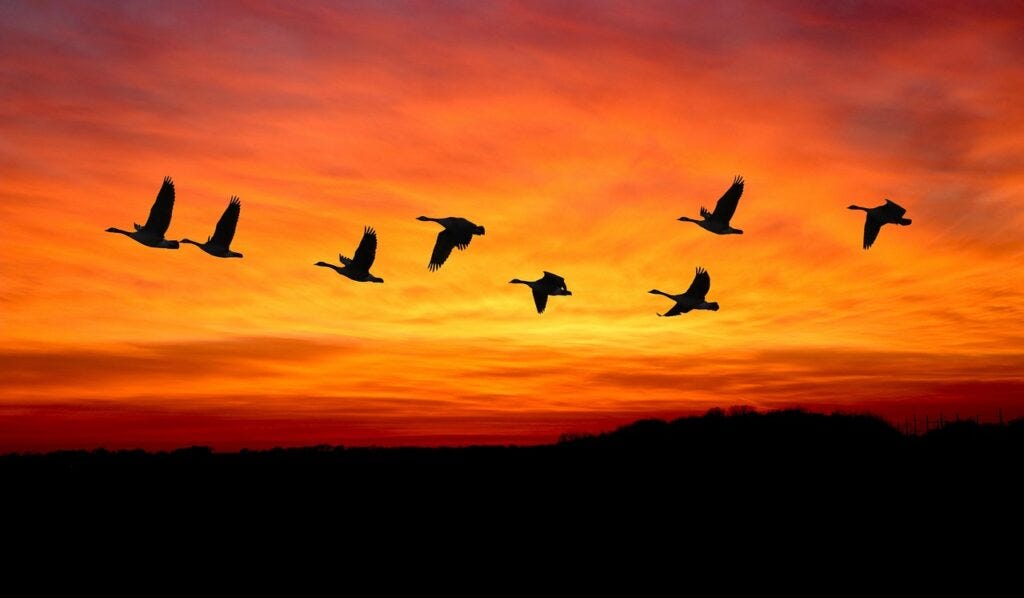
This episode explores the latest biodiversity news, from bird migration and animal behavior to the growing threat of climate change to coral reefs.We begin with the annual fall migration, examining why artificial light can be dangerous for birds and how dimming lights at night may help prevent deadly collisions with buildings. The New York Times reporter Ishani Desai cites Adriaan Dokter of Cornell University’s BirdCast, who says that at least one billion birds die each year after striking buildings. We also discuss a BirdLife International report, reported by the Guardian’s Patrick Barkham, finding that one in nine migratory bird species are threatened with extinction.Then, Scientific American’s Clarissa Brincat explores whether birds actually enjoy flying, drawing on research led by behavioral biologist Jorg Massen at Utrecht University in the Netherlands. We also look at remarkable tool use and social learning in critically endangered pygmy raccoons, discovered by researchers at Miami University and reported by Isabel Gil with Scientific American.Finally, Vox reporter Benji Jones examines efforts to identify heat-tolerant corals as warming oceans put reefs under increasing pressure.Together, these stories offer a snapshot of biodiversity threats—and the scientific efforts to understand and protect the natural world.The written article is available on my website here: ruththornton.com.Key points:0:55 – Help migrating birds by dimming your lights at night.3:03 - One in nine migratory bird species are threatened with extinction.4:24 - Do birds actually enjoy flying? The answer appears to be yes.7:09 - An endangered young raccoon made her own toy, then taught her family how to do it.8:50 - Oceans are getting hotter - now scientists are racing to identify coral reefs that can tolerate the heat.Links to articles and other resources:• The New York Times, 9/12/2026, by Ishani Desai: As millions of birds migrate, residents are asked to turn off the lights. • Live bird migration maps: CornellLab BirdCast• The Guardian, 9/11/2026, by Patrick Barkham: One in nine migratory birds threatened with extinction, global report says. • BirdLife International: State of the World's Birds• Scientific American, 9/8/2026, by Clarissa Brincat: Do birds enjoy flying? Scientists asked cockatoos.• Massen et al., 2026: Do birds enjoy flying? An analysis of affect after flight in galah (Eolophus roseicapilla). Behavior, 2026.• Scientific American, 3/11/2025, by Jacek Krywko: The secret to understanding animal consciousness may be joy. • Scientific American, 9/3/2026, by Isabel Gil: This tiny raccoon turned trash into toys - and taught her family how, too. • O'Neil, Szydlowski and Rivas-Camo, 2026: Preliminary evidence of material culture in the critically endangered pygmy raccoon (Procyon pygmaeus). Wild, 3(3), 33.• Video: Raccoons making toys!• International Union for Conservation of Nature Red List: Pygmy raccoon (Procyon pygmaeus).• Vox, 8/25/2026, by Benji Jones: Inside the race to buy coral reefs more time.• Ferrario et al., 2014: The effectiveness of coral reefs for coastal hazard risk reduction and adaptation. Nature Communications, 5: 3794. • Reguero et al., 2021: The value of U.S. coral reefs for flood risk reduction. Nature Sustainability, 4: 688-698. Get full access to Nature Signals at ruththornton.substack.com/subscribe
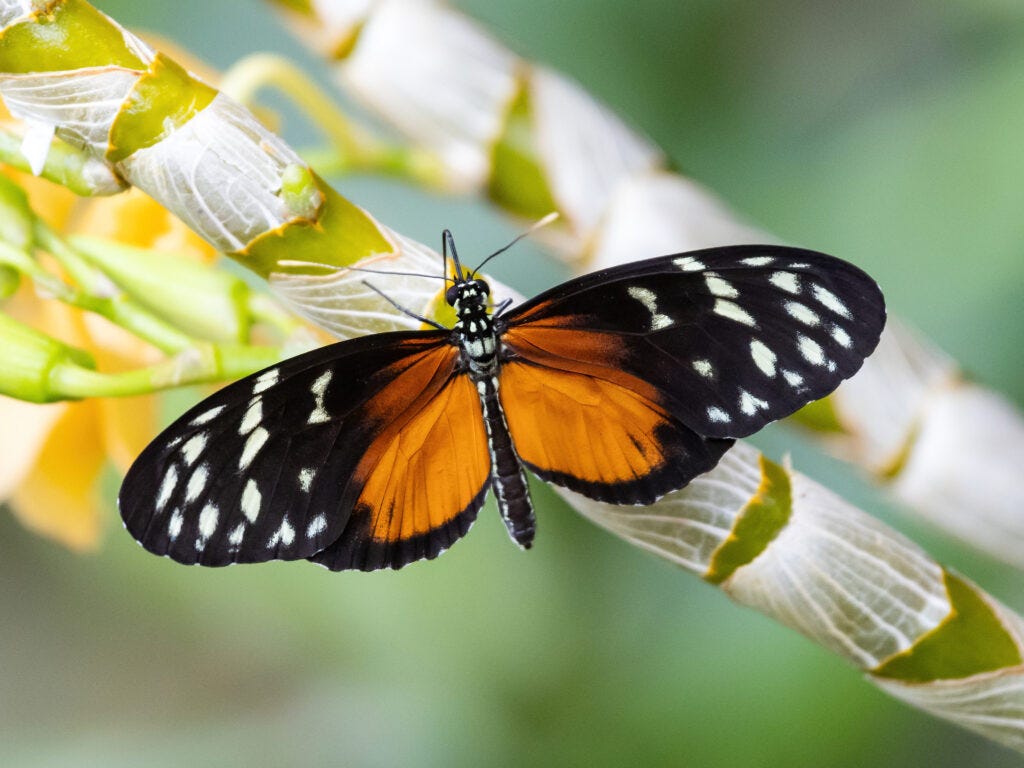
Butterflies are on the move — and climate change and habitat loss are largely to blame.A new global study offers one of the most comprehensive looks yet at how butterfly species are responding to a changing planet. Researchers found evidence that 1,758 species — nearly 10% of known butterfly species — have changed where they live.Many are expanding into new areas, often moving toward cooler regions as temperatures rise. Others are disappearing from parts of their historic ranges. Climate change and extreme weather are major drivers of these shifts, while habitat loss and agriculture are shrinking ranges in many regions.But scientists say the true scale of the changes could be much larger. Monitoring is far more limited in tropical countries, home to most of the world’s insect diversity, leaving major gaps in our understanding of butterfly populations.We hear from two leading butterfly researchers, Shawan Chowdhury, lead author of the study and head of the Global Change Ecology Lab at Monash University in Australia, and Nick Haddad, professor of integrative biology at Michigan State University, about why expanding into new areas may not always protect species from decline and how protecting connected habitats could help butterflies adapt to human-caused environmental changes.The written article is available on my website here: ruththornton.com.Links to resources:Chowdhury et al., 2026: Extensive climate-induced range shifts in butterflies across the globe. Nature Ecology & Evolution, 2026.Chowdhury et al., 2026: A framework for the strategic conservation of tropical insects. BioScience, 2026: biag136.Edwards et al., 2025: Rapid butterfly declines across the United States during the 21st century. Science, 387(6738): 1090-1094.Pinkert et al., 2022: Global geographical and latitudinal variation in butterfly species richness captured through a comprehensive country-level occurrence database. Global Ecology and Biogeography, 31:830-839.Citizen science: iNaturalist Key points:1:48 - Regional differences in butterfly movements2:25 - What caused butterflies to move3:08 - Information gaps in the tropics4:12 - More species could be moving without scientists' knowledge5:04 - Range expansions can be a mixed blessing5:30 - Protecting butterflies in the face of climate change, habitat loss and pesticides7:09 - What you can do Get full access to Nature Signals at ruththornton.substack.com/subscribe

Comments

Download from Google Play

Download from App Store
 United States