


 Claim Ownership
New Era FinTech Podcast
Subscribed: 2Played: 39
Subscribe

© New Era FinTech Podcast
Description
A podcast about FinTech, banking, digital transformation and the world around it, with a strong focus on the Middle East region
64 Episodes
Reverse

In this episode, I'm exploring the capabilities of ChatGPT's Agent tool, demonstrating its ability to manage rather simple tasks such as accepting LinkedIn requests. I wanted to record the capability -- as it is today -- for posterity. As they say, this is the 'worst' that the technology will be -- it should, theoretically, always be improving. So what's it like? How good is it? Watch along. I'll show you how it moves the cursor around its screen, navigating and completing (ultra simple!) tasks on my behalf. Then I briefly discuss the implications of this kind of technology for businesses and workers. You might want to watch this one on Spotify if you'd like to see the screenshare -- otherwise, I do my best to narrate what I'm seeing!

In this episode, I recently sat down with my former colleague Mustafa Zafarullah , to explore the evolving world of wholesale and digital banking in Oman and the wider GCC. Mustafa has 20+ years of banking experience across conventional and Islamic finance. He shares fascinating insights into how corporates are demanding greater autonomy through API banking, self-administration, and real-time reconciliation. We discuss the growing role of FinTech partnerships, the challenges banks face balancing innovation with cost (or the famous 'ROI' phrase!) and why hyper-personalisation will be key for digital banks. Mustafa also offers advice for those looking to enter the sector, his thoughts on AI’s potential in wholesale banking and even some travel tips for anyone considering a visit to Muscat/Oman!Thank you for taking the time, Mustafa! You can connect and find out more about Mustafa via his LinkedIn profile.
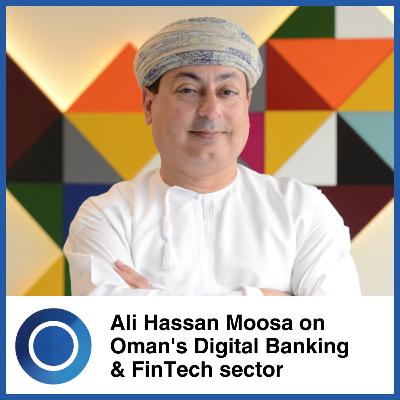
In this episode, I had the pleasure of reconnecting with the brilliant Mr. Ali Hassan Moosa, one of the most experienced and thoughtful voices in Oman’s banking and fintech sector. We explored the evolution of digital banking in Oman over the last decade, from legacy system upgrades to the recent launch of a forward-thinking digital banking regulatory framework.Mr. Ali shared insights from his time leading the Oman Banks Association, reflecting on the challenge of uniting competitive banks around shared goals like financial inclusion, digital literacy, and sector-wide modernisation. We discussed the rapid rise of electronic payments (boosted by COVID) and the enthusiastic adoption of services like Apple Pay and Google Pay by Oman’s young population.We also covered the country’s FinTech landscape: The cautious but growing collaboration between banks and fintechs, the potential of crowdfunding, and the role of regulators in encouraging innovation. Ali offered practical advice for international FinTechs eyeing Oman, and we ended with a warm invitation to experience Oman’s unmatched natural beauty and hospitality (ideally in the cooler months!)As always, it was a privilege to learn from someone who’s helped shape the sector and who continues to guide the next generation as an advisor, educator, and champion for progress.As mentioned in the episode, you can reach out to Mr Ali directly via his LinkedIn.

In this episode, I explore the complexities around who truly owns AI within a bank. I talk about the strategic and operational ambiguity that often gets in the way of successful implementation, and why moving from Proof-of-Concept ("PoC") to production is such a challenge. I examine the roles of different teams across the organisation, the political dynamics that can slow progress, and the vital importance of senior leadership stepping up to take real ownership. I also highlight the risks of leaving things vague and the need for a clear, structured approach to deploying AI across the financial sector.

In this episode I'm tackling the critical need for banks to focus on learning about AI rather than rushing into Proof-of-Concepts and implementations. I take a look at the macro current state of AI in financial institutions, highlighting that while there are some outliers, the majority are not actively utilising AI technologies in any compelling manner beyond "a bit of Microsoft Copilot". I also discuss the importance of building a foundational understanding of AI across all levels of an organisation - and I point to the Lloyds Bank Data & AI Summer School initiative as a positive example of this. You can read more on Rohit Dhawan's post here. (Rohit is the Group Head of AI at Lloyds). In summary, I think the best approach -- right now -- is to try and encourage a culture of curiosity and continuous learning amongst your colleagues. Chapters00:00 The Urgency of Learning AI in Banking02:36 Understanding the AI Landscape in Financial Institutions05:34 The Importance of AI Literacy08:16 Challenges with Proof of Concepts10:10 Building a Culture of Curiosity and Learning12:58 Case Study: Lloyds Bank's Summer School Initiative15:45 Encouraging Engagement in Learning Initiatives

In this episode, I'm discussing the importance of learning when it comes to AI. Learning for board members, executives, team leaders and employees. Only when you've got a basic grasp on what the current range of technology can do, are you in the best position to decide how to move forward. Too many financial service organisations I see have pulled the trigger out of hope -- and ended up spending a lot of money for very little tangible outcomes. Playing, testing, learning, these are seriously important in today's environment. Have a listen and see what you make of it. And if you need any help with learning and executive education, drop me a note: I'm ewan@ned.partners. TakeawaysAI strategies in banks often rely on simple solutions like Microsoft Co-Pilot.Many executives are unaware of the actual AI capabilities in their organisations.Proof of concepts (POCs) are essential but can easily lead to failures.Learning about AI should be a priority for executives and teams.Understanding the basics of AI can help demystify the technology.Generative AI is not (yet!) a superhuman solution but a set of procedures.Automation can significantly reduce the time spent on laborious tasks.Structured learning combined with practical application is key to success.Curiosity about technology can lead to innovative solutions.Organisations should not be embarrassed to focus on learning about AI.Chapters00:00 The AI Landscape in Financial Services02:45 Understanding AI Implementation Challenges05:32 The Importance of Learning in AI08:16 Navigating Proof of Concepts11:02 Structured Learning and Curiosity in AI13:34 Practical Applications and Future of AI

Here's a quick episode focusing on a quick experience I had this morning with Google's Gemini AI -- suffice to say, I don't think it met my expectations!

In this episode, I meet Sal Ghaznavi, an executive with 18 years of cross-sectoral work experience, spanning across the UAE, Ireland, Bermuda, and Pakistan, with experience working within FinTech and tech startups.
Sal has held key finance and commercial leadership positions at Careem (Uber) - the Middle East, North Africa, and Pakistan’s first and largest unicorn, operating in the ride-hailing, food and grocery delivery, and digital payments space.
Sal shares valuable insights into the business environment and opportunities in the Middle East, particularly in the UAE. He highlights the region's high smartphone and internet penetration rates, the approachable regulators, and the government's focus on making the UAE a leader in various industries. Sal also discusses the safety and security of living in the UAE, the cost of living, and the growth potential for businesses.
He advises individuals interested in working in the UAE to network, conduct thorough research, and understand the cultural dynamics of the region.
For FinTech companies looking to expand into the UAE, Sal emphasises the importance of having 'boots on the ground', building relationships, and understanding the regulatory landscape.
You can find out more and connect with Sal via his LinkedIn profile.
Takeaways
The UAE offers tremendous growth opportunities for businesses, with a welcoming and approachable regulatory environment.
The region has high smartphone and internet penetration rates, making it conducive for internet-based companies.
Living in the UAE is safe and secure, with a diverse and multicultural environment.
For individuals interested in working in the UAE, it is important to network, do thorough research, and understand the cultural dynamics of the region.
Fintech companies looking to expand into the UAE should have boots on the ground, build relationships, and understand the regulatory landscape.
Chapters
00:00 Remote Recording and Audio Quality
01:49 Sal's Background and Experience in the Middle East and Europe
04:46 Tech Startups and Super Apps in the Middle East
09:42 Living in the UAE: Safety, Diversity, and Growth Opportunities
14:18 The Cost of Living in Dubai
18:25 Finding Job Opportunities in the UAE
20:46 Advice for Moving to the UAE
24:28 Expanding Fintech into the GCC Market
28:48 Approaching the GCC Market as a Supplier or Vendor
31:53 Sal Ghaznavi's Move to London and Opportunities in the Fintech Industry
32:35 Contacting Sal Ghaznavi on LinkedIn
Keywords
UAE, Careem, Uber, Middle East, Europe, business expansion, fintech, opportunities, safety, security, cost of living, growth potential, networking, relationships, regulatory landscape

In this episode, I show you a series of screenshots I took as I walked through the process of requesting a replacement debit card using Santander UK's chatbot, Sandi.
This might be one of those episodes that you might want to watch, rather than just listen to -- you can watch on Spotify, or you can watch the video on the podcast's YouTube channel.
Summary
Ewan reviews the chatbot capabilities of Santander UK. He compares it to other banks and highlights the strengths and weaknesses of their chatbot systems. Ewan is impressed with Santander's chatbot, called Sandi, as it efficiently handles a simple task of replacing a damaged debit card. He praises Santander for its user-friendly interface, quick response time, and seamless process. Ewan encourages other banks, such as NatWest and Lloyds, to improve their chatbot capabilities to match Santander's level of efficiency.
Sound Bites
"This is best in class. Absolutely best in class."
"NatWest, read this and weep."
"Santander, thank you very much for making such a great capability."
Chapters
00:00 Introduction to Chatbots and Santander UK
02:17 Comparing Chatbot Capabilities: Santander vs. NatWest vs. Lloyds
06:09 The Importance of Simplicity in Chatbot Interactions
09:03 Santander UK's Best-in-Class Chatbot Experience
10:31 Encouraging Banks to Improve Chatbot Capabilities
Takeaways
Santander UK's chatbot, Sandi, provides a best-in-class user experience for replacing a damaged debit card.
Santander's chatbot is efficient, user-friendly, and provides quick responses.
Other banks, such as NatWest and Lloyds, have room for improvement in their chatbot capabilities.
Ewan MacLeod encourages banks to prioritize user experience and streamline their chatbot processes.
Keywords
chatbots, Santander UK, Sandi, customer service, banking, user experience

Welcome to the second episode in our dedicated Corporate Venture Capital ("CVC") series here on New Era FinTech Podcast.
Today we're meeting Simon Hardie, CEO and founder of Findexable. Simon discusses the importance of innovation in the CVC space and. emphasizes the need for organizations to have a clear understanding of what innovation means to them and to measure its impact.
Hardie also highlights the opportunities in emerging markets, particularly in the Middle East and Africa, where there is still significant room for growth in the fintech sector.
Simon advises organizations to conduct deep research and gain insights into the market and potential investment opportunities. Additionally, he stresses the importance of having the right team, stakeholders, and decision-making processes in place for successful CVC initiatives.
If you'd like to find out more about Simon, he's available on LinkedIn. His company website is http://www.findexable.com.
Chapters
00:00 Background and Introduction to Findexable
06:12 Challenges and Tensions in Financial Services Innovation
09:13 Success Factors for Corporate Venture Capital
11:28 Opportunities in the Marketplace and Middle East Africa
20:17 Working with Findexable and Best Practices
25:43 Conclusion and Contact Information
Takeaways
Organizations need to have a clear understanding of what innovation means to them and measure its impact.
Emerging markets, particularly in the Middle East and Africa, offer significant opportunities for growth in the fintech sector.
Deep research and insights are crucial for identifying market opportunities and potential investments.
Having the right team, stakeholders, and decision-making processes in place is essential for successful corporate venture capital initiatives.
Keywords
simon hardie, findexable, innovation, corporate venture capital, CVC, financial services, emerging markets, Middle East, Africa, research, insights, team, decision-making

Welcome to the first episode in our dedicated Corporate Venture Capital ("CVC") series here on the New Era FinTech Podcast.
In today's episode, Grant Niven, founder and partner of Mingzulu joins me to discuss the role of CVC in the fintech and financial services ecosystem.
Grant gives us an overview of his background in financial services as well as his experience working with growth-stage founders, established banks, and the investment community.
Together we define the concept of CVC and explore the different types of CVC methodologies generally in use. We set out the main drivers behind why financial institutions choose to engage in CVC, (i.e. maximizing returns, strategic alignment, speed to market) -- and we discuss the challenges and considerations in setting up a CVC unit within an organization such as a bank.
Grant shares insights on the questions and concerns financial institutions have when considering CVC and the need for a clear understanding of the value CVC can bring to the organization.
If you'd like to discuss financial services CVC with Grant and the team, reach out to him directly on LinkedIn here: Grant Niven. His company website is here: Mingzulu.com.
Standby for the next CVC series episode coming very shortly! If you've any recommendations for individuals we should be featuring across the CVC series, please send me a note to ewan@ned.partners.
Takeaways
Corporate venture capital (CVC) is a strategic investment by a corporation in external startups or ventures, with objectives that go beyond financial returns.
CVC allows established organizations to innovate, partner with startups, and gain access to new technologies and markets.
The main types of CVC methodologies include financial returns-focused, strategic-focused, and hybrid models that balance both objectives.
Organizations engage in CVC to maximize returns, achieve strategic alignment, and gain speed to market.
Setting up a CVC unit within an organization requires careful consideration of the strategic intent, operationalization, and governance. The founder community in the Middle East is generally open to the idea of corporate venture capital (CVC) and sees it as an opportunity for growth and scaling.
Speed and alignment are crucial in CVC partnerships, and founders look for organizations that can move quickly and provide long-term support.
Clear strategy and top-down support from the organization are essential for successful CVC initiatives.
Diversity in cap tables and collaboration with other investors can be attractive to founders.
Financial institutions considering CVC need to have a clear understanding of the value it can bring to the organization and align it with their strategic goals.
Internal processes and governance can be a challenge in implementing CVC, and organizations may need to consider external partnerships.
The Middle East offers significant opportunities for growth and innovation in the CVC space, particularly in sectors like e-commerce and telecommunications.
Governments and central banks play a role in supporting the CVC ecosystem through initiatives like sandboxing and regulatory transformation.
Chapters
00:00 Introduction to CVC in Fintech
02:50 Understanding CVC: Strategic Alignment and Financial Gain
07:35 Differentiating CVC from Traditional Venture Capital
13:49 CVC as a Tool for Innovation and Brand Enhancement
22:49 CVC's Need for Speed and Operationalization
24:01 Engaging with Founders in the CVC Journey
24:57 The Challenges of Funding for Founders
26:41 Strategic Alignment and Acceleration Opportunities
27:36 Diversity of Cap Tables and Complementary Investors
28:10 The Appeal of CVC for Founders
29:50 Setting Up a Successful CVC
35:31 Outsourcing CVC to Established Players
41:16 The Growth Potential of CVC in the Middle East and Africa

In today's episode, I'm sitting down with Eric Fulwiler, Co-Founder and CEO of Rival, the digital marketing powerhouse. Eric's storied background with the likes of 11:FS (he was CMO) and VaynerMedia (the GaryV company) means he's precisely the guy I wanted to put in front of you to discuss your marketing. FinTech companies tend to really struggle with Sales and Marketing. I know dozens who find it such a hard nut to crack. So I spent this episode firing questions at Eric about how FinTech CEOs should really be thinking about managing their Marketing -- and by extension, their sales. Eric gives nugget after nugget of perspective that I think will be useful for almost every FinTech leader.
In more detail
In this conversation, Ewan and Eric discuss the challenges that fintech companies face when it comes to marketing and engaging with banks. Eric emphasizes the importance of crafting a differentiated narrative and focusing on relevant, authentic, and differentiated content experiences to earn the attention of the target audience. He also suggests that marketing should be more like a media company, with a focus on collecting, retaining, and monetizing attention. Eric highlights the need for marketing to generate future demand and tells a story that is different and adds value to the audience. He also mentions some companies that are doing good work in this space, such as Strise and Move.
Takeaways
Craft a differentiated narrative and focus on relevant, authentic, and differentiated content experiences to earn the attention of the target audience.
Marketing should function more like a media company, with a focus on collecting, retaining, and monetizing attention.
Tell a story that is different and adds value to the audience, rather than just focusing on the features of the product or technology.
Build a brand that is recognized and trusted by the target audience, which can lead to warm leads and stronger relationships.
Consider innovative and differentiated approaches to marketing, such as hosting unique events or partnering with mini media companies.
Utilize paid advertising effectively to distribute content and experiences to the target audience.
Consider acquiring or partnering with mini media companies to leverage their existing awareness and trust with the target audience.

Here's a screenshot walkthrough of the HSBC UK chatbot -- calling it Conversational AI is somewhat of a stretch. I've also recorded this for my other project, Conversational AI News. I would recommend you watch this one on Spotify so you can follow along with the screens, or you can find it on my LinkedIn profile or directly on the Conversational AI post.

In this episode, I'm putting the Lloyds Bank chatbot head-to-head with the NatWest chatbot and see how both systems handle the same enquiry.
At the start of the episode, I begin by outlining the concept of Conversational AI chatbots and then I do a screenshot walk-through of each chatbot's responses as I experienced it.
This episode is best watched, rather than listened to - so I would recommend checking it out via Spotify so you can see the video.

In this episode, I'm talking with Dan Ilett of Tollejo about sales and marketing techniques for FinTech companies selling to banks. We discuss the importance of building relationships, understanding customer needs, and differentiating from competitors. Dan emphasizes the need for collaboration between sales and marketing teams and the value of listening to customers. He also introduces the concept of "The Mirror", a research approach that helps companies gather feedback from customers and align their messaging and positioning. Dan recommends engaging with advisors and focusing on nurturing relationships with potential customers. Something very close to my heart -- because I've been going on about this for a long time.
If you'd like to discuss these ideas with Dan, drop him a note via his LinkedIn profile or direct at dan at tollejo.com.
Takeaways
Building relationships and understanding customer needs are crucial for FinTech companies selling to banks.
Collaboration between sales and marketing teams is essential for effective sales and marketing strategies.
Listening to customers and gathering feedback through research programs like the Mirror can help companies align their messaging and positioning.
Engaging with advisors and nurturing relationships with potential customers are effective tactics for driving sales.
Sound Bites
"Getting known before you walk in the door is one of the most important things you can do in this space."
"The most important column in your pipeline is the nurture column."
"Most companies have more relationships than they think."
Chapters
00:00 Introduction: Selling to Banks in FinTech
01:07 Background and Building Communities
03:21 The Value of Executive Summaries in Bids
06:06 The Importance of Getting Known Beforehand
07:25 The Limitations of Cold Calling
09:40 The Power of Third Party Validation
13:34 The Role of Marketing and Sales Collaboration
14:16 The Importance of Listening to Customers
16:37 Understanding Customer Needs and Aligning Messaging
16:46 The Mirror: Gathering Feedback and Insights
18:08 Aligning the Team's Understanding of Value Proposition
20:30 Differentiation in Messaging and Positioning
22:35 Building Relationships and an Advisory Board
32:50 Starting with a Listening Exercise
Keywords
sales, marketing, FinTech, banks, relationships, customer needs, differentiation, collaboration, listening, Mirror, research, advisors, nurturing

In today's episode, I'm discussing the opportunity of launching an eSIM roaming offering for your bank. I think this can be a compelling additional service feature (and fee earner) for many institutions. I talk through my thinking and give some suggestions for the vendors that banks might consider to talk with including (in no particular order) gigs.com, 1Global, Airalo and Holafly. Also Breeze given their recent announcement with Western Union. Other vendors are available I'm sure! (I don't have any relationships with these companies.)

In today's episode, I'm discussing the importance of getting out from behind your desk (again). This was inspired by a conversation I had with a bank CIO last week discussing techniques and ideas of 'staying up to date' when you're surrounded by pressure on a constant basis! This one is mostly aimed at senior executives working in banks. Let me know what you think!

In today's episode, I am discussing roundtables. This is an ultra-compressed version of the workshops I regularly host for FinTechs interested in learning how to host effective roundtables for bank executives. I've been to a lot of them as a bank executive and I've experienced some great ones... and some not-so-great ones. I have compressed many of the points into this episode -- so if you've got a roundtable coming up, I hope this can be useful. As always, if you need any advice or perspective, or if you need someone to host your upcoming roundtable, please reach out.

I have long been a fan of identity and authentication player, Uqudo and today I'm bringing you an interview with their Chief Operating Officer, Tom Green. I asked Tom to give us an overview of Uqudo and the company's offerings and to comment on some of the trends he is seeing in the wider marketplace around the topic of digital identity and verification. You can find Tom's profile on LinkedIn right here.

I have been banging on about the importance of the right sales methodology for FinTech companies for the longest time. In today's episode, I sit down with Sales expert, James Barker of Tech Market Access, to discuss the business of sales. James talks about his approach to enabling financial technology vendors to best engage and then convert prospects. You can find James on his LinkedIn profile.

Comments

Download from Google Play

Download from App Store
 United States