


 Claim Ownership
Not Another CEO Podcast
Subscribed: 7Played: 146
Subscribe

© 2026 Not Another CEO
Description
Our mission is to bend the curve for Founders and CEOs. At Not Another CEO, we know there’s no formula for running a business. Leadership is forged through unique journeys, real challenges, and hard lessons. Our exclusive content showcases unfiltered stories and practical guidance from those who’ve crawled through the trenches. Our platform offers the largest library of CEO insights and how-to guides, sourced directly from a diverse community of leaders. Find our full video library, detailed playbooks, deep dives, and lessons learned on our Substack here ➡️ https://notanotherceo.substack.com/
123 Episodes
Reverse

Your customers don’t want AI. They want the outcome AI delivers.Sean Desmond is the president and CEO of nCino, the software that banks and credit unions use for lending and account opening. He took over from the founder in February 2025, right as AI hit its inflection point. His starting question was never what AI could do, only what his customers actually want. That answer shaped how nCino builds, prices and runs the company.nCino powers lending and banking operations for more than 1,550 financial institutions in over 20 countries, from community banks and credit unions to Wells Fargo and Barclays. In this episode, Sean explains how he rebuilt a 1,600-person company around that idea, and what other CEOs can take from it.Takeaways:1. Leadership Is About Alignment, Not Expertise: As a CEO, your role shifts from being the person with all the answers to bringing people together around a shared mission. Consistent communication and alignment help the entire team move in the same direction.2. Don't Change Everything When You Become CEO: Stepping into the CEO role doesn't mean you need to reinvent the company. Understand what is already working, build on the existing strengths, and recognise where new opportunities can help the business evolve.3. Customers Want Automation, Not AI: AI should be a means to solve real customer problems, not a goal in itself. Focus on automating processes, reducing friction, and helping customers get things done faster rather than simply adding AI features.4. Lead by Example to Drive AI Adoption: Successful AI adoption requires both top-down direction and bottom-up experimentation. Encourage employees to find ways to use AI in their daily work, celebrate those improvements, and demonstrate its value through your own use of the technology.5. Career Growth Comes From Curiosity and Initiative: Focus on doing your current job well, understanding the product, and helping the team succeed. The people who keep learning, take initiative, and stay curious are often the ones who create the biggest opportunities for themselves.Quote of the show:Focus on what's right in front of you. Do the best job you possibly can, and don't forget that part of your job is to be a really good teammate and work well with others. - Sean Desmond, CEO of nCino,Inc.Guest Featured in this Episode: Sean Desmond, CEO of nCino,Inc.LinkedIn: https://www.linkedin.com/in/sean-desmond-966160/nCino,Inc: https://www.ncino.com/We also break this episode down into a full write-up on Substack, where we turn every conversation into a practical playbook with the biggest lessons, frameworks, and strategies discussed in each episode.Chapters:00:00 Trailer01:43 The One Change with the Biggest Impact at Encino05:18 Repeating the Message09:06 The First 100 Days as CEO14:07 Bottoms-Up or Top-Down AI17:13 Intelligence at Work and Innovation Fridays20:15 Moving to Consumption Pricing24:03 The SaaS "Apocalypse" Narrative28:52 Using AI Personally: The CEO Agent Stack34:20 The "Motor" of Top Performers40:04 The 2030 Vision49:19 Advice to His Earlier Self
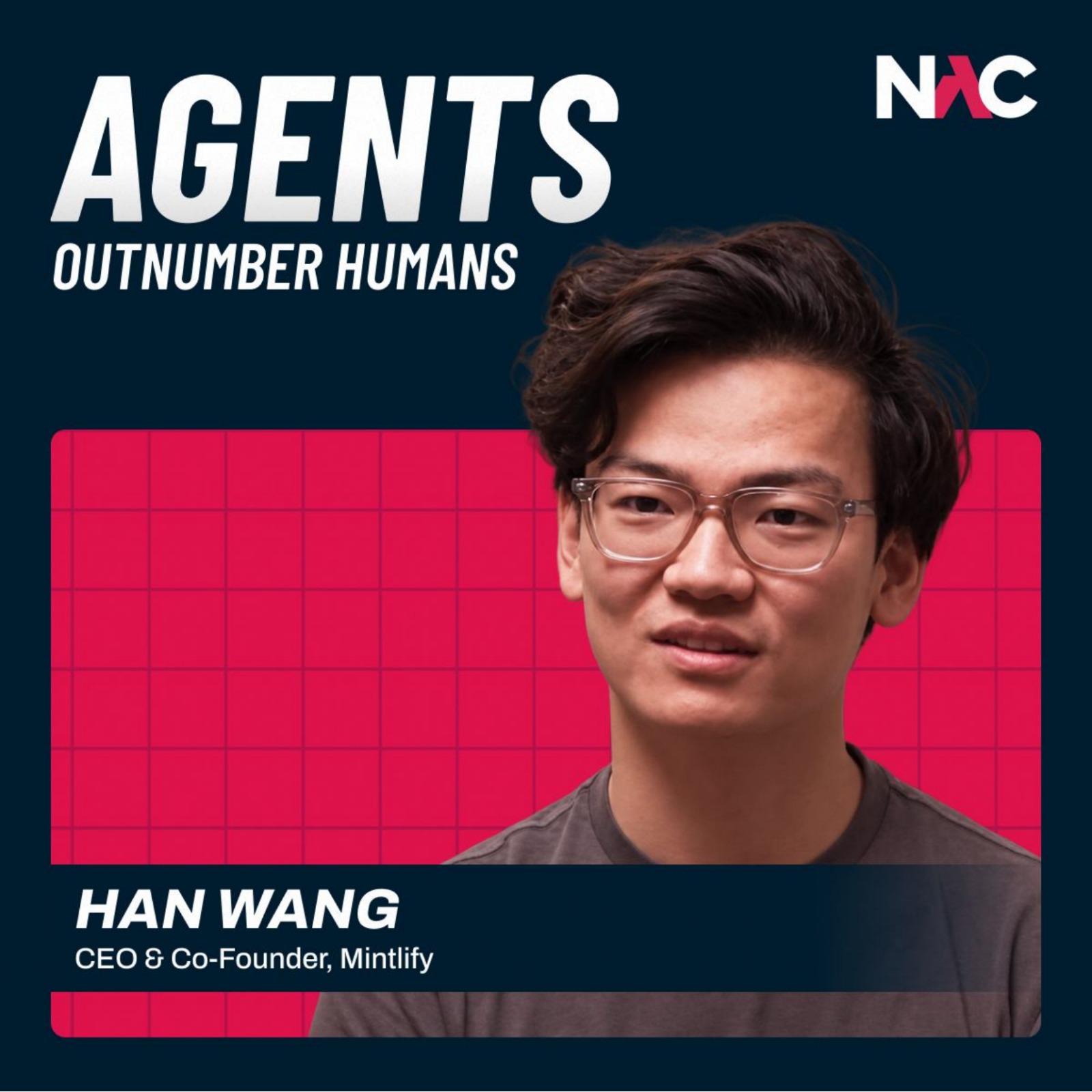
Agents are now viewing docs more than humans. They make up roughly 80% of the traffic to Mintlify's docs, even as those docs reach over 100 million people a month. In January, it was the reverse.In under a year, the main readers of developer docs went from people to AI agents. The company behind that shift is Mintlify, which powers docs and knowledge bases for more than 20,000 companies, including Anthropic, Microsoft and Amazon.On this episode of Not Another CEO, David Politis talks with Han Wang, co-founder and CEO of Mintlify. Mintlify raised a $45 million Series B at a $500 million valuation, co-led by a16z and Salesforce Ventures. Han walks through the pivots that came before it, including the sleepless week that led to the idea, and how he runs and hires for a company that keeps changing.Takeaways:1. Keep the problem, change the solution. Han pivoted about three times during YC and about twice more after, but every idea circled the same problem: helping developers learn to build with a product. Each failure fed the next attempt, unlike founders who jump from fintech to construction tech to logistics.2. Customers will hand you the answer. At pivot number seven, Han was lying awake wondering what to tell his investors. Customers had been asking why he didn’t just power their docs. He kept not wanting to, then built a prototype in a weekend.3. Investors are guessing too. Han says investors are acting on their best guesses and know it. The one thing he’d look for is former operating experience, ideally a founder, because they talk about how to hit the number, not just the number itself.4. Hire for slope, then talk candidates out of the job. Startup roles change fast, so Han hires for growth. He runs an anti-sell on finalists, explaining why they shouldn’t join and what it will take to grow into the role.5. AI made coding obsolete, not judgment. Han says product sense, system design and collaboration still matter. His interviews now lean on those, and LeetCode-style rounds and simple take-homes are gone.6. Your job resets every few months. Scaling from two people to 100+ meant handing off what he used to do himself. Han says every few months he looks at his job and thinks he was bad at it, and the founder can’t easily be swapped out.Quote of the showThe one living constant is to constantly trust your instincts and know how to rightly prioritize what really matters in front of you. - Han Wang, CEO & Co-Founder, MintlifyGuest Featured in this Episode: Han Wang, CEO & Co-Founder, MintlifyLinkedIn: https://www.linkedin.com/in/handotdev/Mintlify: https://mintlify.com/We also break this episode down into a full write-up on Substack, where we turn every conversation into a practical playbook with the biggest lessons, frameworks, and strategies discussed in each episode.Chapters:00:00 Trailer00:56 Meet Han Wang, CEO of Mintlify02:11 The Sunday habit: what really matters right now04:57 What Mintlify does and why agents are now 80% of docs traffic07:17 Eight pivots: how Mintlify found the "obvious" business11:43 Pivot seven: the sleepless week and the docs idea14:06 Founder-market fit and why pivots should compound16:50 Why investors are guessing too22:09 The one thing to look for in an investor25:27 Mintlify's culture: top-down, in-office and relocating to SF32:49 Hiring for growth over experience37:06 The anti-sell: talking candidates out of the job39:37 How AI changed the engineering interview42:46 The hardest part: growing as a CEO49:07 Why the founders you look up to are struggling too53:38 What Mintlify looks like in 203054:48 Han's immigrant upbringing, the dropout and his parents57:52 Han's support system59:35 Advice to his younger self: dream bigger

Scott Staples asked one question when he became CEO of First Advantage: can someone show me the strategy document?The answer was no. There wasn't one. The company was 15 years old, doing $400 million in revenue, and had just lost some of its biggest customers. Ten years later, revenue is at $1.6 billion. Four times the revenue, same company, same industry.Scott is the CEO of First Advantage, a background screening company that runs more than 200 million screens a year for over 80,000 customers worldwide, including roughly two thirds of the Fortune 100, across 200 countries and territories. He inherited First Advantage in 2017, when it was losing revenue and clients, and turned it into the fastest growing player in the industry within a year.Here were my biggest takeaways.Fix the culture before anything else. When Scott arrived, the real problem wasn't go to market or product. It was silos. Finance doing its own thing, sales doing its own thing, nobody talking to each other. He rebuilt the culture around teamwork first. As he put it, when you're trying to turn a ship in an ocean, you need teamwork.Find the core problem first. Scott asked for the company's strategy document on day one. There wasn't one. Instead of guessing at fixes, he got every leader in a room and diagnosed the real issue from zero.Show up, even without the answers. Scott personally visited 20 to 30 of the company's biggest customers in his first weeks. Over and over he heard the same thing: no one's been here in over a year.Match your pitch to your buyer. First Advantage had one sales rep calling on a bank in the morning, a retailer at lunch, and a hospital network in the afternoon, same pitch, three completely different buyers. Scott did a massive reorg of the company around verticals instead.The next fraud fight is AI versus AI. Candidates are using AI to fake resumes, credentials, and now entire job interviews. Scott says about 300 US companies have already reported that they inadvertently hired North Korean agents.Quote of the Show:"When you're trying to change a company, when you're trying to turn a ship in an ocean, you need teamwork. So I think the biggest thing that I focused on, which is the most important thing, was addressing culture and fixing culture."Scott Staples, CEO, First Advantage.Guests Featured in this episode:LinkedIn: https://www.linkedin.com/in/scottdavidstaples/First Advantage: https://fadv.com/We also break this episode down into a full write-up on Substack, with the exact playbook Scott used to fix the culture and rebuild the strategy from scratch, we're building out a full library of playbooks and lessons from every episode on Substack.Sources:ClearanceJobs (May 17, 2024) – “U.S. Companies Tricked by North Korean IT Workers: DOJ Unveils Complex Fraud Network”https://news.clearancejobs.com/2024/05/17/doj-reveals-u-s-companies-unwittingly-hired-north-korean-it-workers/Gartner (July 31, 2025) – “Gartner Survey Shows Just 26% of Job Applicants Trust AI Will Fairly Evaluate Them”https://www.gartner.com/en/newsroom/press-releases/2025-07-31-gartner-survey-shows-just-26-percent-of-job-applicants-trust-ai-will-fairly-evaluate-themChapters:00:00 - Trailer01:05 - Intro02:22 - Fixing Culture First: The One Thing He'd Do Again04:53 - Finding the Core Problem08:14 - The Listening Tour: Buying Time with Customers22:59 - Matching the Pitch to the Buyer33:28 - The Bad AI Epidemic in Hiring47:17 - The Biggest Challenge Faced as CEO54:10 - Where First Advantage Will Be in 3 Years57:05 - Advice to His Younger Self
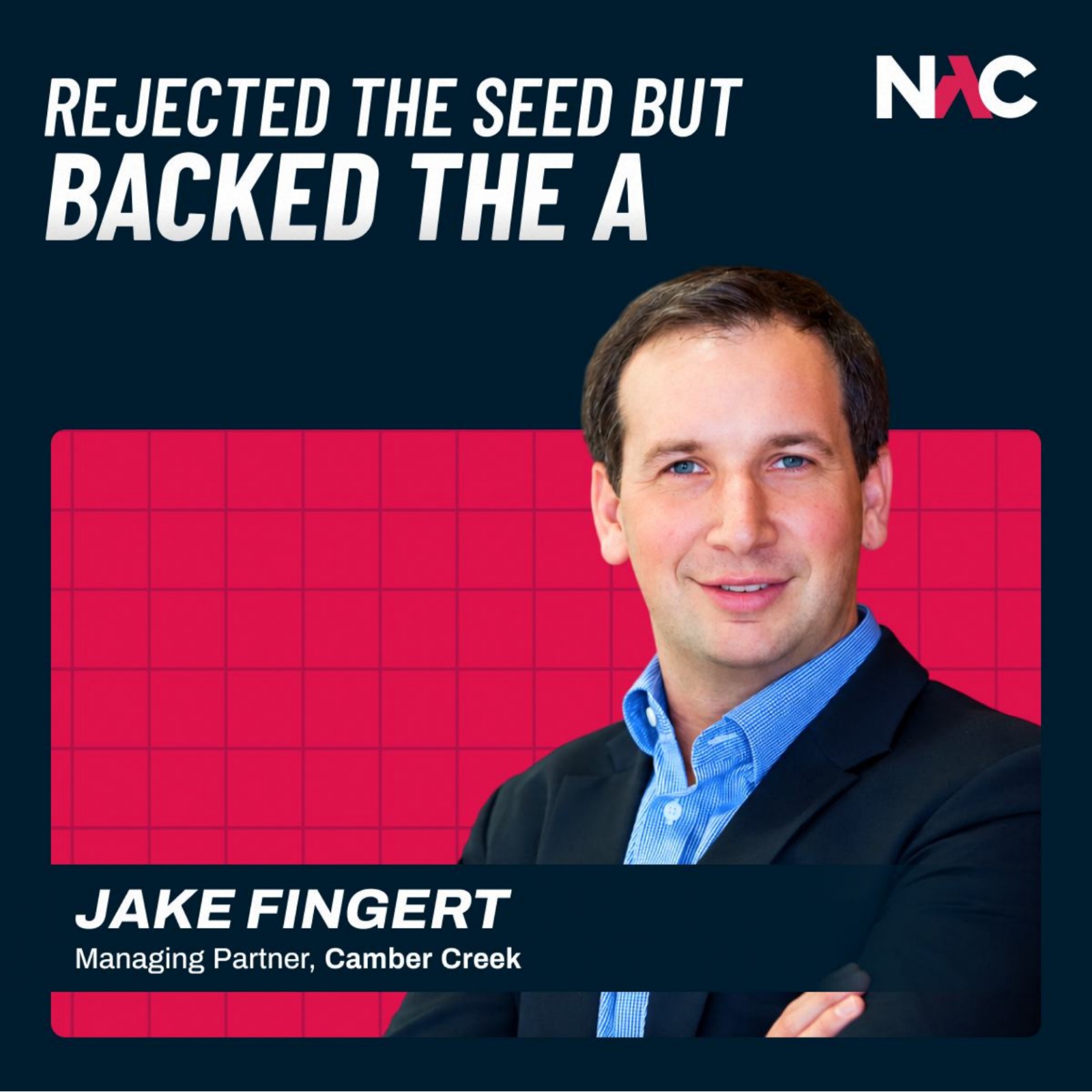
He rejected a founder’s seed round. When that founder went out to raise his Series A, Jake’s firm was the first call he made.Jake is the Managing Partner at Camber Creek, a venture firm that invests in proptech and fintech, has nearly $1 billion under management and has backed more than 50 companies, including Bilt Rewards. Before venture, he worked in consulting at Deloitte and BCG, then in government, first at GSA and then as a senior policy advisor on the National Economic Council in the Obama White House.He and David have known each other for over 25 years. In this episode of Not Another CEO, he explains how he decides whether to back a founder, what founders get wrong about his side of the table, and what the White House taught him about building companies.Here are the best takeaways from the episode:1. Resilience beats everything: Jake backs founders who found a problem with no good solution and will do whatever it takes to solve it, not people drawn to the Silicon Valley or YC image. Very few companies become multibillion dollar successes overnight, so he wants the founder who can keep going through the hard stretches.2. A no can be a request for proof: Jake passed on Bilt’s seed round but told the founder to stay in touch. Over the next 12 months the founder did what he said he would, including partnerships with banks, airlines and hotels, and Camber Creek was the first call for the next round.3. Self-awareness is a filter: Jake would rather hear what you got wrong than hear that everything is perfect. A founder who can’t name what keeps them up at night is a quick pass, because it shows a lack of self-awareness and empathy for customers, employees and investors.4. He decides fast, then verifies: About 30 minutes tells Jake whether he wants to partner with someone for ten years. Customers, other investors and even a college roommate then tell him whether that person will build a big company.5. Bring your board questions you can’t answer yourself: The most common pitfall Jake sees is founders asking questions they already know the answer to. Send the financials in advance and spend the meeting on real strategic choices, with board members who bring different backgrounds.Quote of the Show“To me, one of the biggest turn offs is when I meet a founder and I say, you know, what keeps you up at night? And they say nothing.” - Jake Fingert, Managing Partner, Camber CreekGuest featured in this episode: Jake Fingert, Managing Partner, Camber CreekLinkedIn: https://www.linkedin.com/in/jake-broder-fingert-a4388b3/Camber Creek: https://cambercreek.com/We also break this episode down into a full write-up on Substack, where we turn every conversation into a practical playbook with the biggest lessons, frameworks, and strategies discussed in each episode.Chapters:00:00 Introduction02:07 The one trait Jake looks for in founders03:53 Passing on Bilt's seed round08:23 The red flag: "nothing keeps me up at night"10:21 How fast a VC decides15:25 How to run a board meeting22:53 From GSA to the White House27:23 What founders don't understand about VCs33:13 How Jake has changed in ten years38:00 Is this 2021 again?42:53 Moats and founder-led sales in the AI era55:15 What to teach your kids: AI tools and finding truth
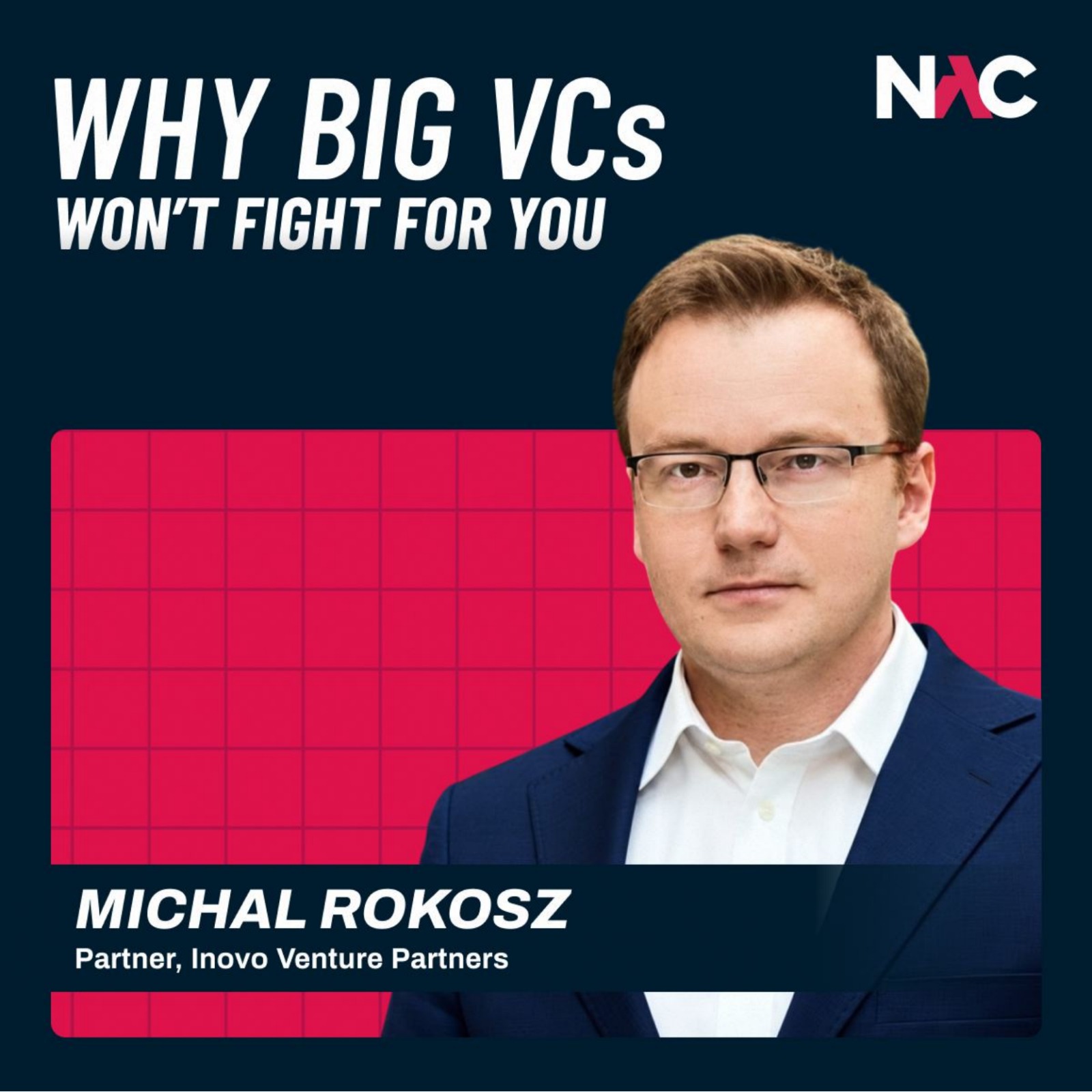
Big funds may not fight for you unless you’re in their top 5% of companies, and Michal Rokosz explains how to tell which kind of investor you’re talking to.Michal is a partner at Inovo Venture Partners, a Warsaw-based seed fund and one of the leading early-stage investors in Central and Eastern Europe. Before investing he was an operator, as managing director at foodpanda and COO at Booksy, and he has backed more than 25 companies.In this conversation with David Politis, he breaks down how fast VCs decide, why capital can beat operational excellence, and how his region went from copying proven startups to building frontier AI companies.Key takeaways1. Investors decide faster than you think: Michal can often tell within the first five minutes whether a founder is an outlier, and the full decision takes about two weeks. His fund found that its fastest investments tended to perform best.2. Your backstory is part of the pitch: From an Olympiad win to an overnight drive for a missing part, the stories founders skip are often what set them apart. Michal says a founder who can’t explain why they’re exceptional will lose to one who can.3. More money can beat better operations: At foodpanda, his team was less efficient than several competitors but had more funding, and that was enough to win. In AI, the same logic means a company that grabs the market while losing money can beat one that gets the economics right first.4. A VC isn’t grading your business: Michal says his job is to find the anomalies. A fund needs one or two companies to return the whole fund, so a founder with a lower ceiling shouldn’t expect the same valuation as one with a higher ceiling.5. Big funds may not fight for you: Outside a large fund’s top 5% of companies, you may get little attention, while a smaller fund may treat you as one of its most important bets. Talk to a few of an investor’s founders before you sign.6. Not every founder should raise venture capital: Michal argues that some founders are better off bootstrapping to a profitable business, and that VC only makes sense if you’re aiming to build something huge.Quote of the Show :“If I have like five times more money and I'm 20% less efficient, I'm still going to win” - Michal Rokosz, Partner at Inovo Venture PartnersGuest Featured in this Episode: Michal Rokosz, Partner at Inovo Venture PartnersLinkedIn : https://www.linkedin.com/in/mrokosz/Inovo Venture Partners : https://www.linkedin.com/company/inovovc/home/We also break this episode down into a full write-up on Substack, where we turn every conversation into a practical playbook with the biggest lessons, frameworks, and strategies discussed in each episode.Chapters:00:00 Meet Michal Rokosz02:07 What Inovo looks for in a founder04:07 Why your backstory is the pitch09:23 How fast Inovo decides to invest11:10 Viktor and the founder who killed his own project16:40 Why big VCs won't fight for you19:56 How Central and Eastern Europe has changed28:00 Are we in an AI bubble?31:21 Why VCs need a company that can return the fund36:21 Two founders, one wins by losing money41:15 What founders get wrong about VCs43:04 Why Michal loves being an investor

Comments

Download from Google Play

Download from App Store
 United States